Browse the collection
 Image
Beneath a vast Queensland sky scattered with billowing cumulus clouds, a midnight-green John Deere tractor navigates the rich agricultural landscape during late afternoon's golden light. The precision machine traverses a meticulously prepared field, its powerful wheels tracking perfectly parallel lines across the dark earth, revealing the methodical approach of modern grain cropping. Crisp white farm buildings and elegant eucalyptus trees punctuate the distant horizon, creating a quintessential Australian rural panorama that speaks to generations of agricultural expertise. Gleaming metal silos stand sentinel in the background, testament to the region's grain production infrastructure and the careful management of agricultural resources. The tractor's extended spray boom suggests ongoing cultivation work, likely preparing the ground for a new season's planting or applying essential nutrients to nurture the emerging crop. This scene captures the elegant intersection of technological innovation and timeless agricultural practice, where human skill and mechanical precision transform the landscape with calculated grace.
 Image
Rural serenity unfolds across a verdant Queensland grain field, where a powerful John Deere tractor navigates through early morning light, pulling a sophisticated crop spraying rig. The expansive green paddock stretches beneath a dramatic sky filled with billowing cumulus clouds, creating a sweeping landscape that epitomizes modern Australian agricultural precision. A yellow and blue agricultural sprayer extends its long boom across the emerging crop, meticulously distributing nutrients or crop protection solutions with calculated efficiency. The tractor, a vibrant green and yellow beacon of agricultural technology, moves methodically, its substantial wheels leaving measured tracks through the carefully tended field. Soft cloud shadows dance across the landscape, highlighting the rich textures of the young grain crop and the sophisticated machinery that supports contemporary farming practices. This scene captures the essence of Queensland's agricultural prowess - a harmonious blend of cutting-edge equipment, fertile land, and expansive skies that define the region's agricultural heritage.
 Image
Maremma sheepdogs stand vigilant among a diverse herd of goats in a sun-dappled paddock, capturing the essence of pastoral guardianship in rural Queensland. The white, thick-coated dogs blend seamlessly with their charges - a mix of brown, white, and grey goats grazing in a dry, open landscape scattered with eucalyptus trees. Dusty ground and sparse vegetation speak to the challenging agricultural conditions of the region, while the carefully maintained fence line suggests thoughtful livestock management. These Maremma dogs, renowned for their protective instincts, demonstrate the traditional Australian farming practice of using livestock guardian dogs to protect herds from predators. The soft, cream-colored coats of the dogs contrast beautifully with the varied colors of the goats, from rich chocolate brown to pristine white, creating a striking tableau of agricultural symbiosis. This scene epitomizes the resilience and innovative spirit of Queensland's pastoral farming communities, where intelligent animal husbandry techniques ensure the survival and prosperity of livestock in harsh environmental conditions.
 Image
Boer goat herd guarded by a vigilant white livestock guardian dog in a sparse, sunlit Queensland paddock. The mixed breed goat mob displays classic Boer characteristics - robust white bodies with rich brown head markings, standing alertly among scattered gum trees on dry, leaf-strewn ground. A majestic white guardian dog, likely a Maremma or similar pastoral breed, moves protectively among the herd, embodying the critical role of predator protection in Australian small livestock management. The scene captures the harsh beauty of rural Australian agricultural landscapes - a sun-drenched, open woodland setting with scattered eucalyptus trees providing minimal shade, highlighting the resilience of both animals and farming systems in challenging environmental conditions. The goats appear healthy and well-conditioned, testament to careful pastoral management in a demanding landscape. This image powerfully illustrates the symbiotic relationship between working dogs and livestock, a cornerstone of sustainable agricultural practice in regional Queensland.
 Image
Great Pyrenees Livestock Guardian Dog Protecting Goat Herd in Dry Woodland Pasture Radiant sunlight filters through sparse eucalyptus and gum trees across a rugged Queensland pastoral landscape, casting long shadows over a dispersed herd of white and dark-colored goats. A magnificent Great Pyrenees livestock guardian dog stands sentinel amid the herd, its thick white coat gleaming against the dusty, rocky terrain. The dry season's impact is evident in the parched ground and sparse vegetation, highlighting the critical role of these guardian dogs in protecting valuable livestock under challenging environmental conditions. Scattered across the undulating paddock, the goats move with casual confidence, their varied coat patterns of white, black, and brown creating a dynamic visual texture against the weathered earth. The guardian dog maintains a vigilant posture, strategically positioned to monitor potential threats in this open woodland setting. This scene epitomizes the resilience of Australian agricultural practices, where specialized working dogs play a crucial role in livestock management across remote and challenging landscapes.
 Image
Boer goats cluster in a sun-drenched paddock beneath eucalyptus trees, their distinctive white bodies and rich brown heads creating a striking pastoral tableau. Set in a classic Queensland dry landscape, the herd stands on rocky, well-trodden ground surrounded by silvery gum trees and clear blue skies typical of the Australian interior. These robust meat goats represent an increasingly important agricultural sector, their muscular frames and alert postures demonstrating the hardiness required to thrive in challenging rural environments. Variations in coat color - from pure white to deep chocolate and mottled combinations - highlight the genetic diversity within this managed herd. The scene captures the quiet industriousness of Australian livestock farming, where carefully bred animals adapt to harsh conditions with remarkable resilience. Sparse ground and scattered tree coverage suggest this is likely a dry season, with the goats clustered near a boundary fence in the mid-morning light.
 Image
Cattle cluster beneath the iconic windmill on a parched Queensland cattle station, their diverse hides ranging from rich chocolate brown to silvery grey. The dry, rust-colored earth stretches out beneath a cloudless azure sky, revealing the harsh realities of pastoral life in the Australian outback. Sturdy Brahman and crossbred cattle huddle together, seeking respite from the intense midday heat near the tall metal windmill - a critical water infrastructure that symbolizes rural resilience. The landscape speaks of endurance, with scattered sparse vegetation and the windmill standing as a sentinel of agricultural persistence in an unforgiving environment. This scene captures the essence of extensive beef production in northern Australia, where livestock must adapt to challenging climatic conditions and rely on strategic water management.
 Image
Nestled in a lush Queensland orchard, a row of pristine white beehives stands sentinel against a backdrop of verdant trees and a brilliantly blue spring sky. The meticulously arranged hive boxes are perched on sturdy metal stands, creating a uniform line across the dry, ochre-colored ground. Soft white clouds drift lazily overhead, casting gentle shadows on the landscape and highlighting the agricultural precision of the apiary. Each hive represents a complex ecosystem of pollination and honey production, crucial to the region's agricultural success. The carefully maintained orchard and strategically placed beehives speak to the sophisticated approach of modern agricultural practices, where every element is purposefully positioned to maximize productivity and ecological balance.
 Image
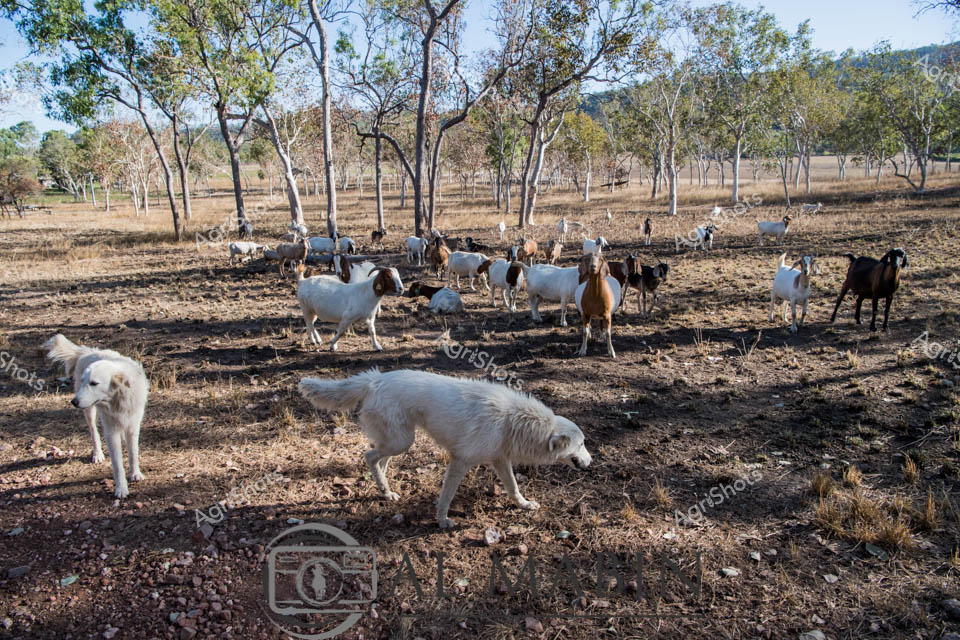
White Maremma guardian dogs patrol a sparse, dry woodland paddock in rural Queensland, standing watch over a mixed herd of white, brown, and black goats. The arid landscape reveals scattered eucalyptus trees casting sparse shadows across rocky, sun-baked ground, indicating a dry season typical of Australia's harsh interior. These skilled livestock protection dogs, bred to defend herds against predators, move strategically around the goats, their thick white coats a stark contrast against the dusty earth and pale tree bark. The scene captures the resilience of Australian agricultural practices, where carefully selected working dogs and adaptable livestock thrive in challenging environmental conditions. Sparse ground vegetation and scattered rocks suggest this is likely a grazing area in a semi-arid region, demonstrating the robust nature of pastoral farming in Queensland's challenging landscapes. The image embodies the symbiotic relationship between working dogs and livestock, a testament to the ingenuity of rural Australian farm management.
 Image
Great Maremma Guardian at Work: Central Queensland Goat Paddock A pristine white Maremma sheepdog stands alertly among a scattered herd of black and white goats in a sun-drenched, sparse woodland landscape. The arid central Queensland pasture reveals dry, compacted earth with scattered grass tufts, surrounded by sparse eucalyptus trees creating dappled shadows. This classic livestock guardian breed demonstrates its centuries-old protective instinct, positioned centrally among the goats with a confident, watchful demeanor. The stark white fur of the Maremma creates a striking visual contrast against the brown and burnt landscape, highlighting the dog's role as a protective sentinel. Native to Italy but perfectly adapted to Australian agricultural conditions, the Maremma provides crucial predator protection for small livestock herds in challenging rural environments. The scene captures the essence of modern Australian pastoral farming - resilient animals working symbiotically in harsh, beautiful terrain.
 Image
Boer goats stand alert in a sun-dappled paddock, their distinctive white bodies and rich brown heads creating a striking contrast against the dry, leaf-strewn ground of a classic Australian rural landscape. The hardened earth and scattered eucalyptus trees reveal a classic Queensland pastoral scene, likely during the dry season when the landscape takes on a burnished, golden-brown palette. These robust meat goats, prized for their genetic qualities and adaptability to harsh environments, display the muscular confirmation and calm demeanor that makes them increasingly popular in Australian agricultural production. Each animal stands with a quiet strength, their alert ears and steady stance reflecting the resilience required to thrive in challenging agricultural conditions. Soft morning light filters through the gum trees, casting dappled shadows and highlighting the goats' sleek coats and powerful physiques. This image captures the essence of modern Australian livestock farming - efficient, pragmatic, and perfectly adapted to challenging environmental conditions.
 Image
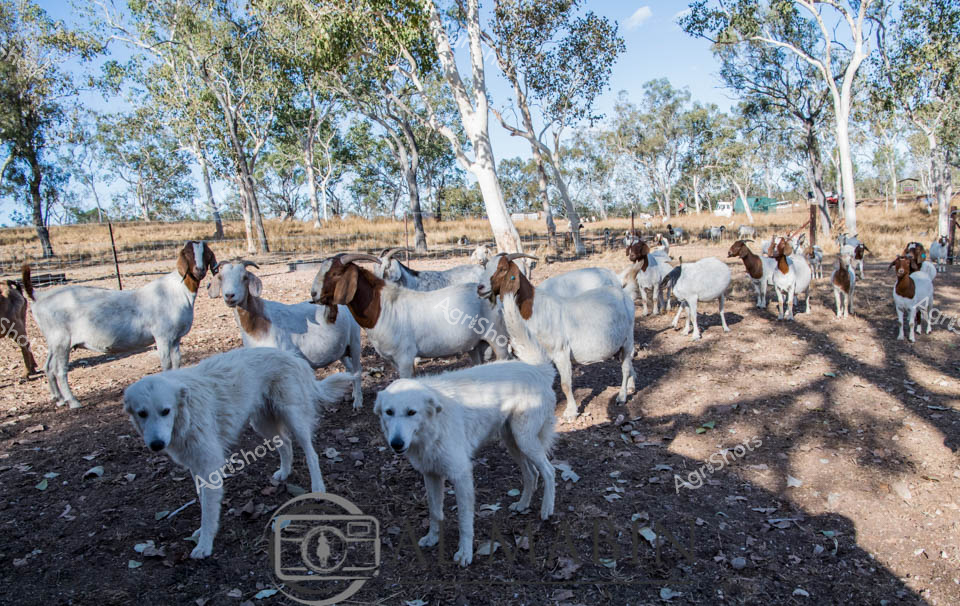
Australian Boer and dairy goat herd rests in the dappled shade of eucalyptus trees during a scorching mid-day in rural Queensland. White and brown-spotted Boer goats cluster together on dusty, rock-strewn ground, their robust frames and distinctive markings telling of careful pastoral breeding. Two magnificent white Great Pyrenees livestock guardian dogs stand vigilant among the herd, their thick coats providing protection against both sun and potential predators. The sparse woodland setting speaks to the challenging agricultural landscape of northern Queensland - sparse grass, weathered gum trees, and a fence line suggesting carefully managed grazing territory. Soft blue sky and golden earth tones create a sense of serene pastoral productivity, highlighting the symbiotic relationship between working dogs and livestock in Australia's agricultural ecosystem. This scene captures the resilience and strategic animal husbandry characteristic of Queensland's challenging rural environments.
 Image
Boer goats cluster in the dappled shade of a dry woodland paddock, their white and rich chestnut coats contrasting against the sun-bleached ground and silvery eucalyptus trees. This robust herd, tagged for identification, represents a thriving agricultural enterprise in rural Queensland, where pastoral landscapes support extensive goat farming. The animals display the characteristic muscular build and distinctive coloration of the Boer breed - prized for meat production and adaptability to harsh Australian conditions. Scattered fallen leaves and compacted earth suggest late dry season conditions, with sparse ground cover and open woodland providing natural grazing environment. Yellow ear tags mark individual animals, indicating professional herd management and tracking, while the fenced enclosure demonstrates structured agricultural practice. The scene captures the resilience of Australian livestock farming, where carefully bred goats transform challenging terrain into productive agricultural assets.
 Image
Golden hour sunlight breaks through wispy clouds, illuminating a quintessential Australian agricultural scene of grain silos and precision farming equipment. A John Deere tractor with a yellow crop sprayer stands ready on a dusty rural yard, representing the sophisticated agricultural technology of modern farming. A seasoned agricultural worker in a vibrant blue work shirt and dark jeans stands confidently beside the machinery, his posture reflecting decades of farming experience and connection to the land. Multiple Twister-branded grain silos rise in the background, their metallic surfaces catching the warm evening light, symbolizing the critical infrastructure of grain storage and agricultural productivity. The expansive sky and open ground suggest a Queensland agricultural setting, with the carefully maintained equipment and clean yard indicating a well-managed, professional farming operation. This image captures the intersection of technological innovation, agricultural expertise, and the enduring spirit of Australian rural enterprise.
 Image
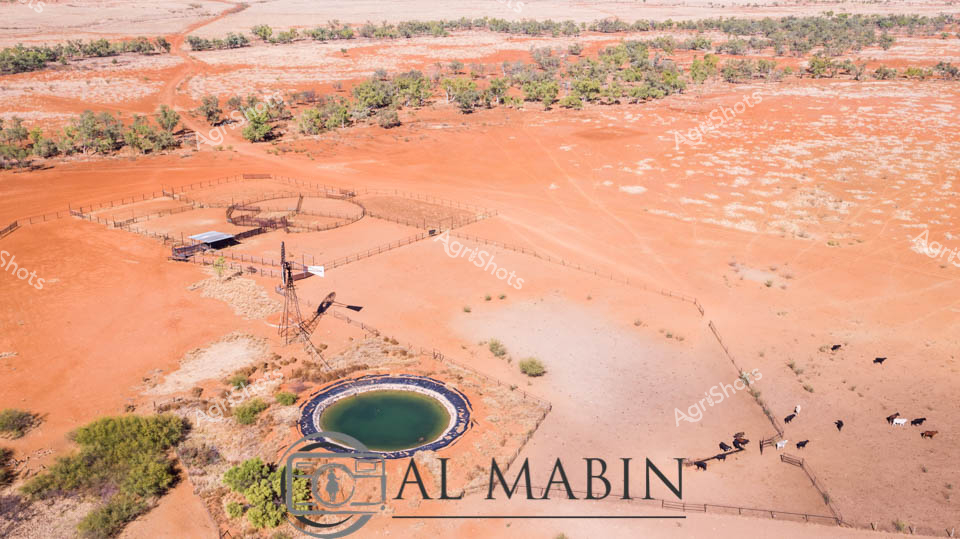
Aerial view of an arid Queensland cattle station, where the rusty-red earth stretches beneath a harsh Australian outback landscape. A circular water reservoir, rimmed in blue, sits like a jewel amid the parched terrain, surrounded by carefully constructed livestock paddocks and fenced areas. A classic windmill stands sentinel, providing critical water infrastructure for the cattle clustered along a narrow track leading to the water source. Sparse eucalyptus trees line the boundaries, offering minimal shade against the unforgiving desert environment. Weathered fence lines and strategic water management reveal the sophisticated engineering required to sustain cattle farming in these extreme conditions, where every drop of water and blade of vegetation is precious.
 Image
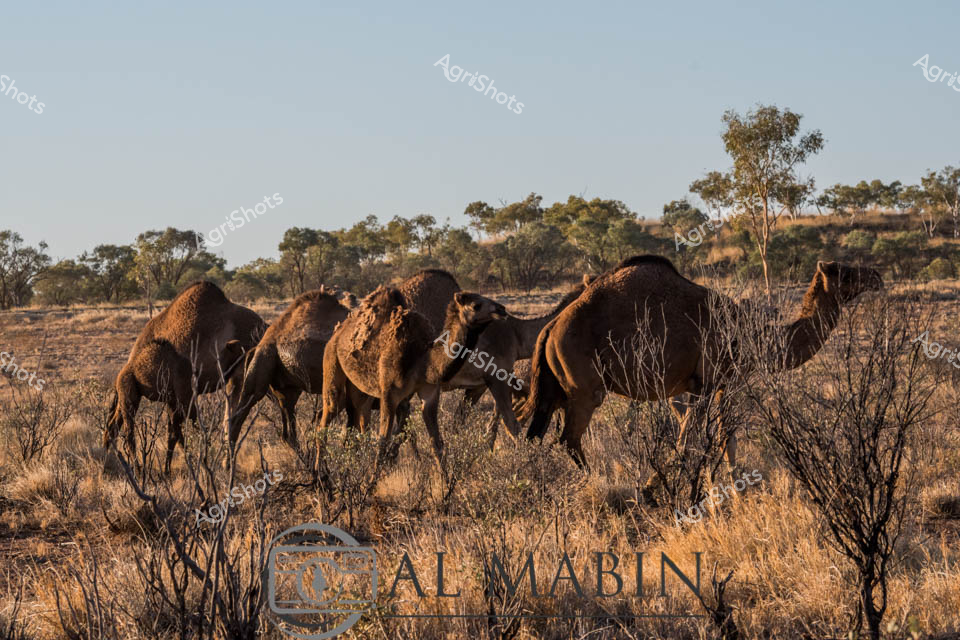
Wild camels roam the sun-drenched arid landscape of a Queensland pastoral station, their rich mahogany and chestnut-colored hides blending seamlessly with the golden grasslands and sparse eucalyptus woodland. The harsh, drought-hardened terrain stretches beneath a pale blue morning sky, capturing these feral dromedaries in their natural Australian outback environment. Muscular and hardy, the small herd moves with a deliberate, unhurried gait through the sparse scrubland, their distinctive humps silhouetted against the sparse vegetation and rocky ground. Each camel displays the robust adaptation that has enabled these introduced species to thrive in Australia's challenging central desert regions, where they have become a significant feral population. The warm, amber-toned light accentuates their textured coats and powerful physiques, highlighting the rugged beauty of these remarkable animals that have become an unexpected part of Australia's agricultural and ecological landscape. The scene embodies the raw, unforgiving nature of the continent's interior, where survival requires resilience and strength.
 Image
Limestone karst landscapes rise from the arid savanna woodlands of northern Australia, a rugged geological marvel etched into the Queensland landscape. Weathered grey stone formations jut dramatically from the sparse vegetation, creating a sculptural terrain of sharp pinnacles and fractured rock surfaces. The expansive vista stretches across multiple terrain layers - rocky outcrops in the foreground giving way to scattered eucalyptus and spinifex grasslands, with distant blue-tinged mountain ranges defining the horizon under a cloudless azure sky. This challenging terrain represents the resilient heart of Australia's pastoral regions, where generations of station owners have navigated difficult landscapes to establish agricultural enterprises. The rocky ground speaks to the tenacity required to work the land, with sparse vegetation revealing the harsh environmental conditions that define central Queensland's agricultural frontier. The scene captures the raw, uncompromising beauty of Australia's interior - a landscape of geological complexity and sparse, determined life.
 Image
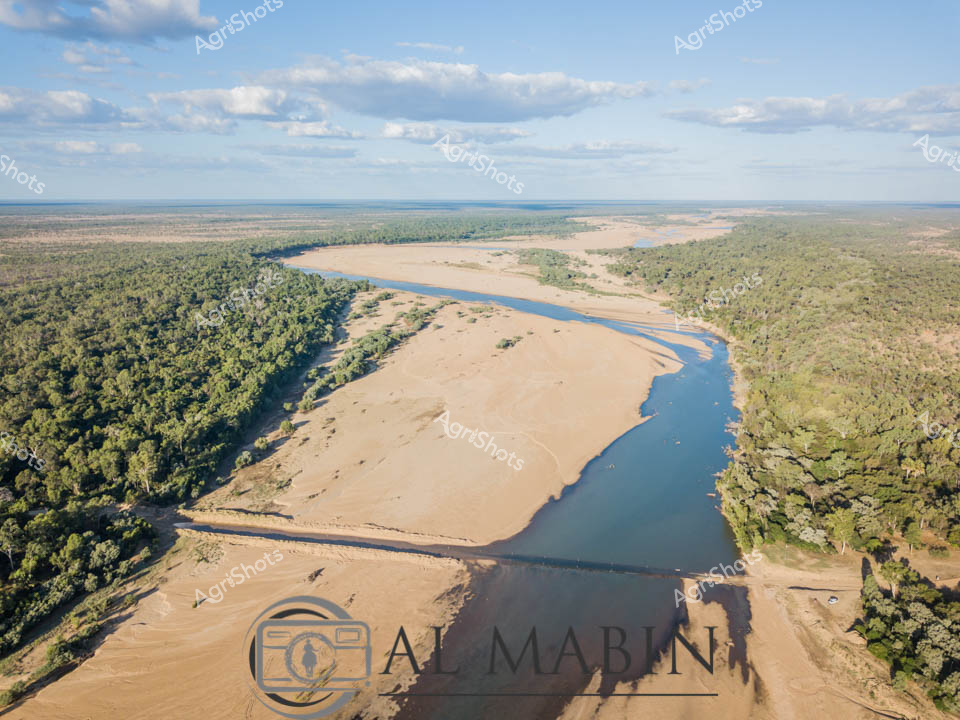
Serpentine currents of blue water carve through the expansive Queensland landscape, revealing the dramatic topography of a remote pastoral station. Dense eucalyptus forests frame sandy riverbanks, creating a sweeping vista that captures the raw beauty of Australia's northern agricultural frontier. The river meanders between verdant green woodland and ochre-toned sandy flats, displaying the harsh yet magnificent environmental transitions characteristic of Gulf Country. Soft clouds drift across a vast cerulean sky, casting subtle shadows on the undulating terrain below. This aerial perspective showcases the immense scale of pastoral landscapes, where water resources are critical to sustaining livestock and agricultural operations across hundreds of square kilometers. The image embodies the resilience and spatial grandeur of Queensland's agricultural heartland, where strategic water management defines survival and productivity in an challenging ecosystem.
 Image
Beneath the searing midday sun, a classic Australian windmill stands sentinel over a parched pastoral landscape. The steel windmill, with its intricate wheel of metal blades, rises from a corrugated iron water tank, casting a stark silhouette against the cloudless cerulean sky. Sparse, weathered gum trees dot the dusty earth, their muted green foliage offering subtle contrast to the arid surroundings. This iconic rural infrastructure speaks to generations of agricultural resilience in the Queensland outback, where water management is critical for cattle stations surviving in harsh, sun-scorched terrain. The windmill's traditional design - a testament to practical engineering - captures the essence of remote Australian farming, where every drop of water is precious and wind-powered technology remains a reliable solution for stock water supplies. The brilliant sunlight creates a dramatic backlight, emphasizing the windmill's structural geometry and highlighting the unforgiving yet beautiful emptiness of the inland pastoral landscape.
 Image
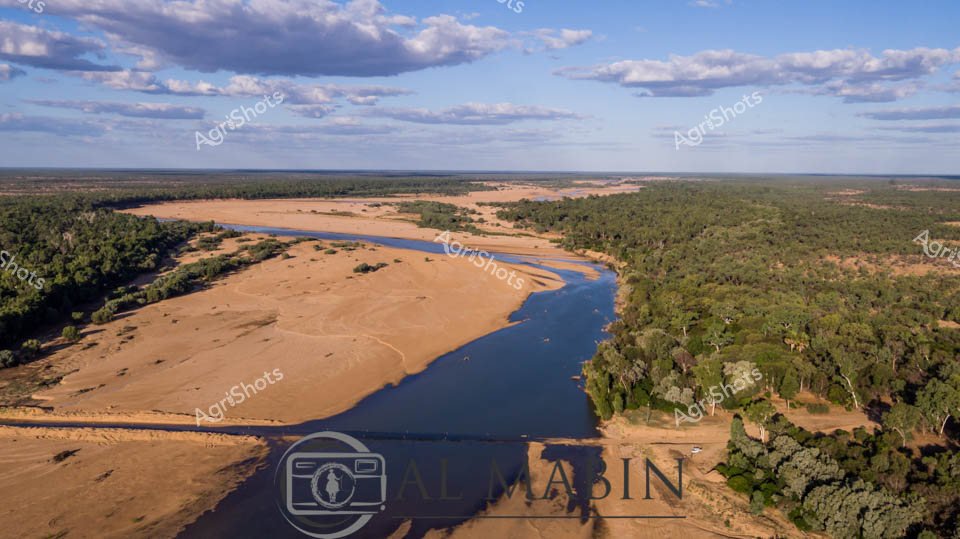
Serpentine waters of the Gulf Country river wind through a vast Queensland pastoral landscape, revealing the raw beauty of Australia's inland terrain. The waterway cuts a deep blue path between ochre sandy banks and dense green riparian woodlands, showcasing the dramatic contrasts of this remote agricultural region. Expansive floodplains stretch toward a cloudscape of soft blue and silvery cumulus, highlighting the immense scale of the pastoral station environment. Eucalyptus and native vegetation cloak the riverbanks, creating a verdant border against the arid sandy plains, demonstrating the resilient ecosystems of northern Queensland. The aerial perspective captures the intricate relationship between water, land, and vegetation - a quintessential representation of the challenging and beautiful agricultural landscapes that define Australia's northern territories. This vista embodies the spirit of outback stations: robust, untamed, and magnificently sparse, where water is the lifeblood of survival and agricultural enterprise.
 Image
Dusty River Red Gum Sentinel on Parched Outback Track Weathered river red gums cast long shadows across a rust-colored dirt road, their gnarled branches testament to decades of harsh Australian inland conditions. The landscape speaks of resilience - a sun-baked earth punctuated by ancient eucalyptus trees clinging tenaciously to life in what appears to be a drought-affected Queensland station country. Wispy cirrus clouds drift across a pale blue sky, offering a delicate contrast to the rugged, sunburnt terrain below. The road winds between these venerable trees, their roots exposed and bark weathered, creating natural sentinels that have witnessed countless dry seasons. Scattered native grasses struggle between the trees, their muted browns and greys blending seamlessly with the surrounding landscape. This scene captures the raw, unforgiving beauty of the Australian outback - a landscape of survival, where each tree and patch of earth tells a story of endurance against relentless environmental challenges.
 Image
Dusty ochre earth and weathered concrete form the backdrop of a quintessential outback water infrastructure, capturing the resilience of pastoral life in remote Queensland. A substantial circular water tank rises against a cloudless azure sky, its base stained and textured by years of mineral deposits and harsh environmental exposure. A solitary eucalyptus tree provides sparse shade near a concrete trough, where water collects to sustain a small herd of cattle barely visible in the background. Rugged metal railings frame the watering point, their utilitarian design speaking to generations of rural engineering and survival in Australia's unforgiving inland landscapes. The scene epitomizes the stark beauty of pastoral infrastructure - functional, enduring, and intrinsically connected to the survival of livestock in arid grazing territories.
 Image
Sprawling across the rugged landscape of Queensland's Gulf Country, this aerial view captures the essence of a remote cattle station nestled beside a tranquil river. Lush green palm trees and mature trees create a verdant oasis around a cluster of white and blue tin-roofed buildings, contrasting sharply with the dry, sparse terrain surrounding the homestead. The winding river reflects the sky like a mirror, providing a lifeline to this isolated pastoral property where generations of farmers have carved out a living in one of Australia's most challenging agricultural regions. Neat grassy paddocks and strategically positioned outbuildings demonstrate the careful planning required to manage a successful station in this harsh environment. Dirt tracks wind between the structures, hinting at the constant movement of work vehicles and the daily rhythms of station life. This image encapsulates the resilience, spaciousness, and raw beauty of Australia's northern pastoral landscape - a testament to human adaptation and agricultural persistence in an unforgiving wilderness.
 Image
Aerial vista of a remote Queensland cattle station nestled beside a winding river, capturing the expansive and rugged essence of Australia's northern pastoral landscape. A blue-roofed homestead and clustered outbuildings emerge from a green oasis amid the sun-bleached, sparse woodland terrain, with a dusty station road cutting a straight line through the surrounding bushland. The serpentine river reflects soft afternoon light, its banks lined with sparse vegetation, contrasting against the dry, ochre-toned earth of the surrounding savanna. Distant horizons blend earth and sky, with scattered clouds casting subtle shadows across the undulating landscape, revealing the immense scale of this agricultural enterprise. The scene epitomizes the resilience and strategic positioning of rural Australian settlements, where carefully chosen locations provide access to water and strategic transportation routes. This panoramic view encapsulates the challenging yet magnificent environment of northern Queensland's cattle country, where generations of farmers have carved sustainable livelihoods from seemingly inhospitable terrain.