Browse the collection
 Image
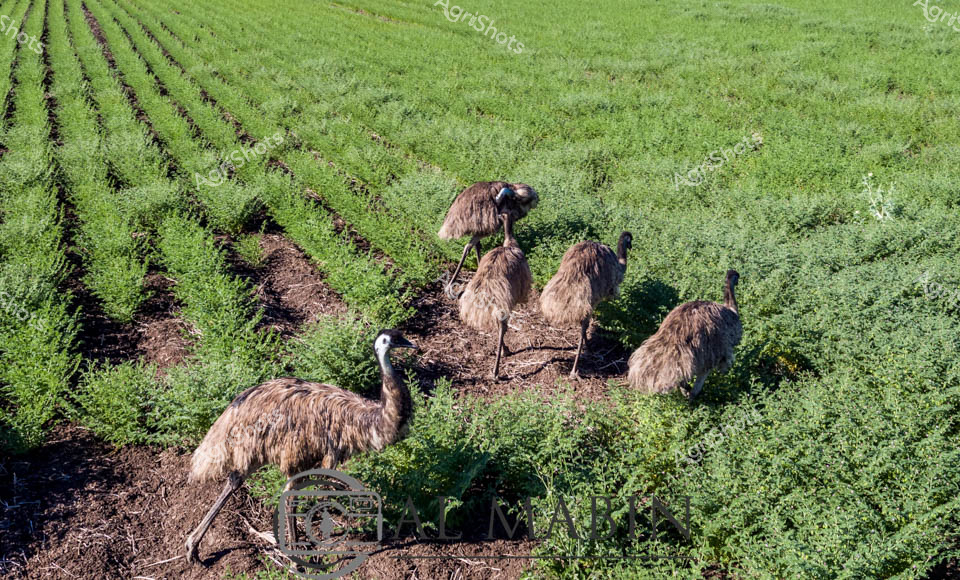
Nestled in the verdant expanse of a Queensland chickpea field, a small mob of emus stands amidst neat, parallel rows of vibrant green crops. The flightless birds, with their distinctive shaggy brown plumage, create a striking contrast against the lush agricultural landscape, their long necks and alert postures suggesting a keen awareness of their surroundings. Sunlight bathes the scene, casting defined shadows and highlighting the textural interplay between the carefully cultivated crop rows and the wild, untamed presence of these iconic Australian birds. The emus appear relaxed yet vigilant, strategically positioned along the field's cultivation lines, their earthy brown feathers blending subtly with the exposed soil between the verdant plants. This unexpected intersection of wild fauna and structured agriculture captures the unique character of Queensland's agricultural regions, where nature and farming coexist in a delicate, dynamic balance. The precise geometric lines of the chickpea plantation stretch into the distance, creating a mesmerizing visual rhythm that underscores the meticulous approach of modern Australian farming.
 Image
Delicate day-old quail chicks nestle in weathered, sun-worn hands, showcasing the intimate care of modern poultry farming. Two young chicks - one pale cream and one dark charcoal - rest against the soft palm, their downy feathers ruffled and alert, symbolizing the fragile beginnings of agricultural livestock production. The rich, textured background suggests a controlled farm environment, likely a specialized quail breeding facility in Queensland's agricultural heartland. Soft, filtered light emphasizes the subtle color variations of the chicks' plumage, from mottled cream to deep graphite, highlighting the genetic diversity carefully managed in contemporary avian breeding programs. The image captures a moment of gentle handling, representing the precision and nurturing approach of professional poultry farmers who understand that successful agricultural outcomes begin with meticulous early-stage care. These miniature birds represent the future of a carefully curated agricultural product, embodying the delicate balance between nature and strategic farming practices.
 Image
Durrell Hills Station: A quintessential Queensland pastoral landscape sprawls beneath the lens, revealing the intricate infrastructure of a remote agricultural property. Grey-blue metal sheds and workshops cluster around a central complex, with a distinctive "Durrell Hills" sign marking the administrative building. Dusty red earth tracks wind between structured paddocks and sparse eucalyptus woodland, showcasing the challenging terrain of inland Australia. Water tanks and curved livestock infrastructure hint at the property's primary agricultural purpose, while a tennis court suggests a touch of recreational amenity in this isolated setting. The aerial perspective captures the expansive scale of the station, with its carefully positioned buildings nestled among weathered grasslands and scattered tree lines - a testament to strategic rural design in a harsh environmental context. Soft green and grey-brown tones dominate the landscape, illustrating the resilient character of Queensland's agricultural heartland.
 Image
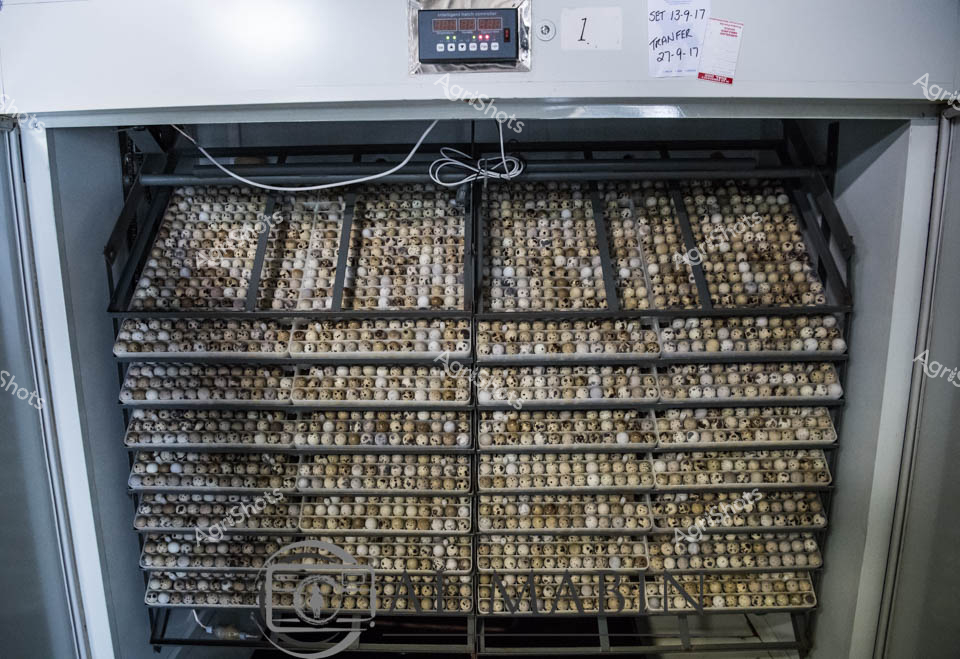
Climate-controlled precision defines this industrial quail egg incubation chamber, meticulously organized across multiple stacked trays. Hundreds of delicate, speckled ivory and tan quail eggs nestle uniformly in precise grid formations, each carefully positioned for optimal hatching conditions. The digital control panel above monitors temperature and humidity with scientific accuracy, representing the pinnacle of modern avian agricultural technology. Soft ambient lighting highlights the subtle color variations of the eggs, from pale cream to warm beige, creating a textural landscape of potential life. This sterile, methodical environment exemplifies Queensland's advanced poultry breeding techniques, where every egg represents a calculated investment in sustainable agricultural production. The uniform arrangement speaks to the precision and care inherent in contemporary egg production, transforming what was once a natural process into a carefully engineered system of biological optimization.
 Image
Nestled in the palm of a weathered hand, a delicate baby quail rests with downy feathers softly ruffled, embodying the tender care of Australian poultry farming. The young bird's pale, mottled plumage speaks to the fragility of early life in large-scale farming environments, where each chick represents potential and carefully managed growth. Soft earth tones in the background suggest a controlled agricultural setting, likely in the expansive farming regions of Queensland, where precision and attentive husbandry are paramount to successful poultry production. The intimate close-up reveals the gentle contact between human and bird, highlighting the nuanced relationship between farmer and livestock - a moment of connection that underscores the meticulous care required in modern avian agriculture. Warm, protective fingers cradle the tiny creature, demonstrating the delicate balance of nurture and management that defines contemporary Australian agricultural practices. This image captures the essence of professional bird rearing - a blend of scientific approach and compassionate handling that ensures the health and potential of each individual chick.
 Image
Industrial quail production in a densely populated indoor aviary, revealing the tightly controlled environment of modern agricultural bird farming. Hundreds of plump quail crowd the floor, their mottled gray-brown feathers creating a textured carpet across a dark substrate, with bright red-and-white automatic feeding and watering stations strategically positioned throughout the space. Overhead lighting casts a clinical illumination, highlighting the precise rows of feeders and the uniform density of the bird population, demonstrating the efficiency of contemporary large-scale poultry management techniques. The birds huddle close together, their small bodies creating a living landscape of feathered uniformity, illustrating the industrial scale of quail production for meat and egg markets. Crisp red-topped feed dispensers contrast sharply with the soft earth tones of the birds, creating a visual representation of agricultural technology's role in contemporary food production. The image captures the mechanical precision of large-scale avian husbandry, where every element is carefully controlled to maximize productivity and economic output.
 Image
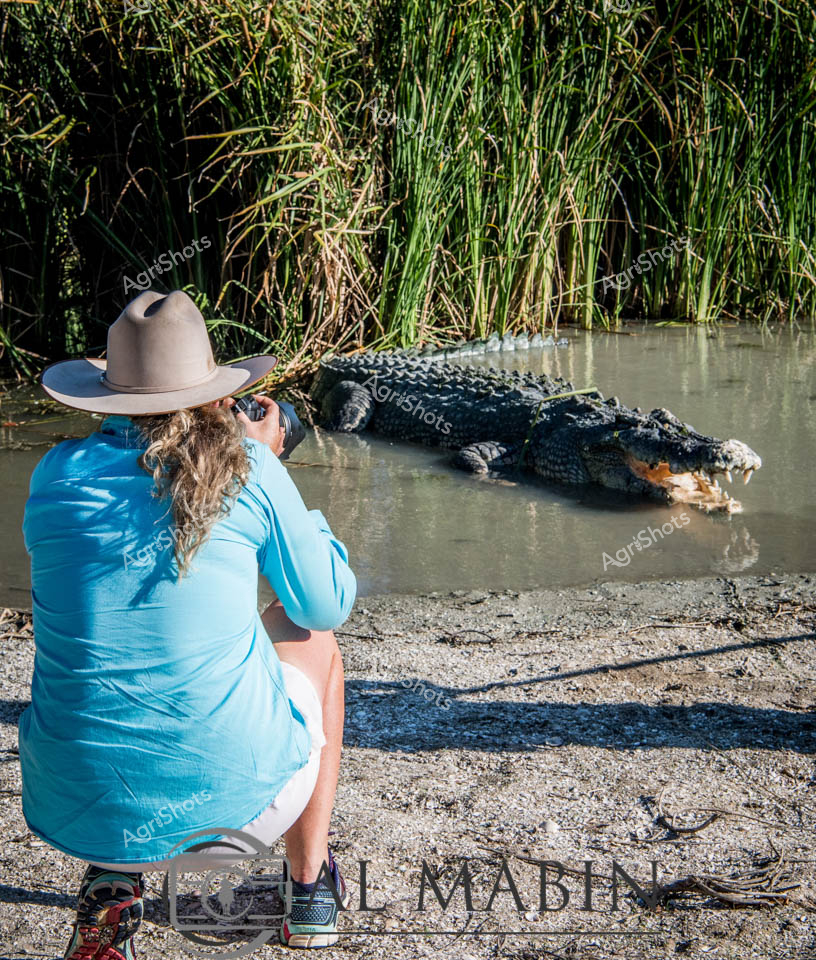
Crouched in a blue shirt and wide-brimmed explorer's hat, a wildlife photographer captures an intimate moment with a massive saltwater crocodile basking in a murky Queensland waterway. The prehistoric predator stretches across the shallow waters, its scaled back and powerful tail breaking the surface against a backdrop of dense green reeds and grasses. Precise and patient, the photographer maintains a careful distance, documenting the raw power and prehistoric beauty of this apex reptilian hunter in its natural habitat. Weathered gravel and mud frame the scene, highlighting the rugged terrain of Australia's northern wilderness. The crocodile's textured skin gleams with moisture, reflecting the harsh tropical light that defines the landscape. This moment encapsulates the wild, untamed spirit of Queensland's remote waterways, where ancient creatures still reign supreme in their timeless domain.
 Image
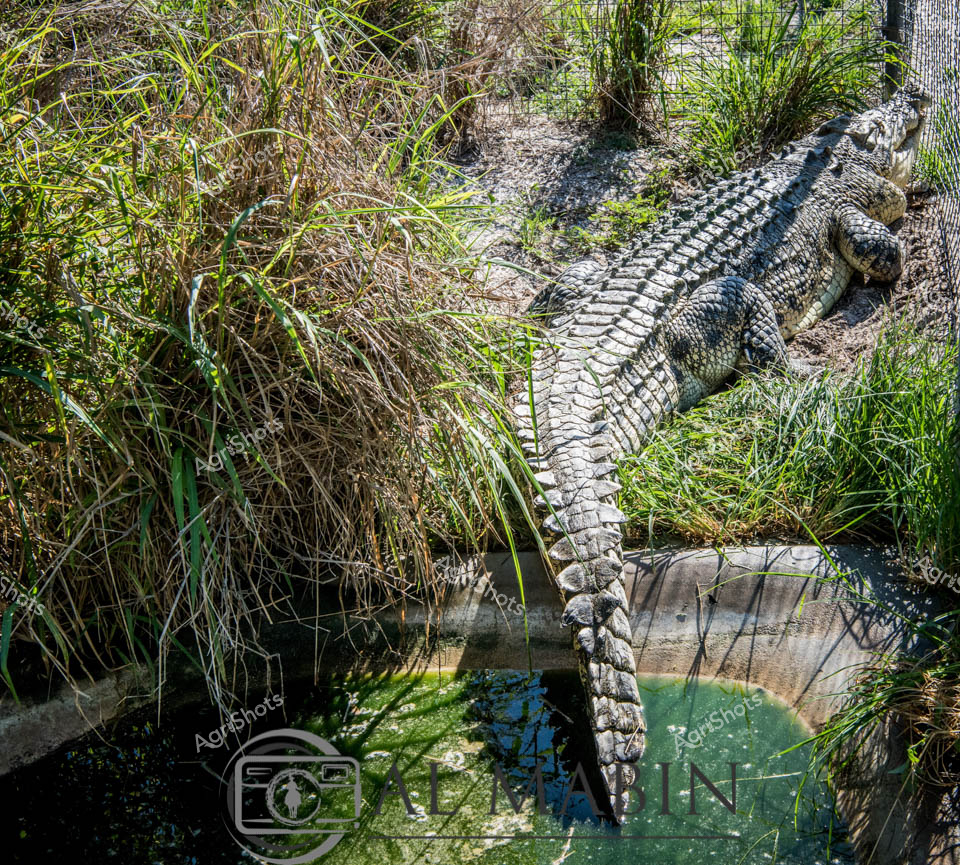
Saltwater crocodile rests in a carefully maintained habitat, its armored scales gleaming with prehistoric precision against the lush grass and murky waterway. The expansive reptile stretches across a constructed concrete channel, its muscular body a testament to the raw power of Australia's apex predator. Verdant grasses frame the enclosure, their sun-dappled blades creating a textural contrast to the crocodile's hard, ridged exterior. Filtered sunlight casts intricate shadows, highlighting the creature's remarkable prehistoric design and adaptation to Queensland's tropical landscape. The water below reflects a deep green, suggesting the rich ecological environments where these ancient hunters thrive. This captivating scene reveals the delicate balance between wildlife conservation and controlled habitat management, quintessential to understanding Australia's complex ecological systems.
 Image
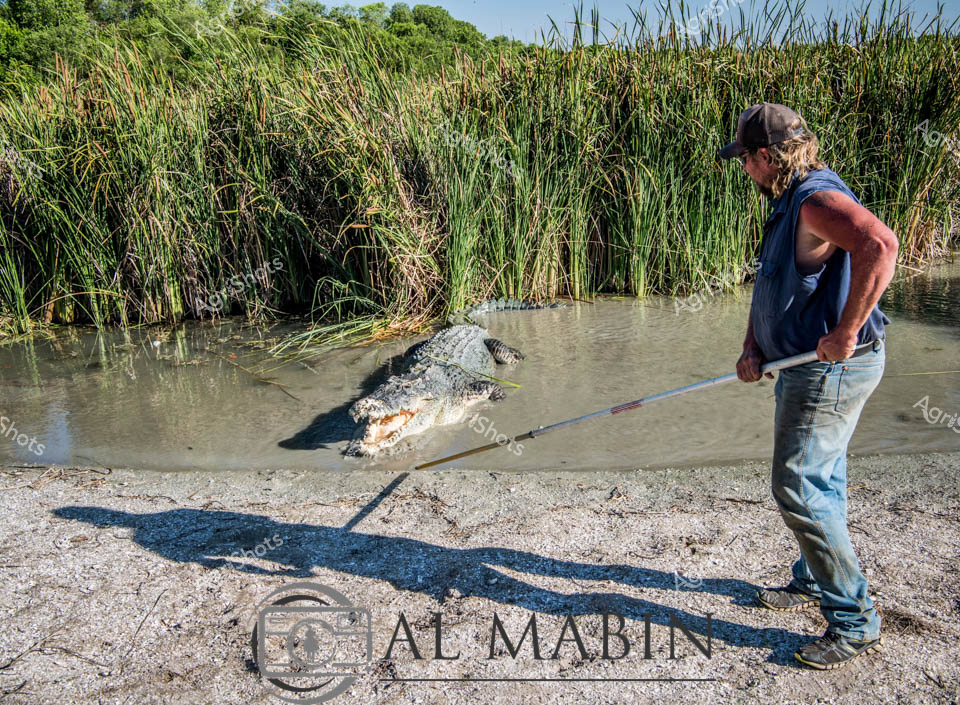
Saltwater Crocodile Management in Queensland Wetlands A seasoned wildlife handler stands poised beside a murky waterway, wielding a long restraining pole near a massive saltwater crocodile. Dense reeds and tall grasses frame the water's edge, creating a quintessential Queensland wetland landscape. The crocodile, a prehistoric predator of immense power, rests partially submerged in the muddy shallows, its scaled hide a mottled gray-green that blends seamlessly with the surrounding aquatic environment. The handler, dressed in well-worn blue work attire and a cap, demonstrates the careful management required in regions where human settlements interface with dangerous wildlife. His measured stance and professional equipment highlight the delicate balance between conservation, safety, and respecting these ancient creatures' habitat. The harsh sunlight casts a long shadow, emphasizing the potential danger and raw intensity of crocodile management in Australia's northern territories.
 Image
Battery-raised quail huddle densely across the floor of a climate-controlled agricultural breeding facility, illuminated by warm red heat lamps suspended from a triangular metal truss framework. The compact birds crowd together, their soft feathered bodies creating a textured landscape of muted browns and greys beneath the strategic overhead lighting. Precision-engineered red feeders stand at regular intervals, providing automated nutrition to the tightly packed flock. Industrial metal infrastructure frames the scene, with bright light filtering through, suggesting a carefully managed environment designed for maximum efficiency in small-scale poultry production. The image captures the intense, controlled nature of modern agricultural quail farming, where every element is systematically arranged to optimize bird health and production output. Crisp lighting and geometric lines contrast with the organic, living texture of the closely packed birds, revealing the sophisticated intersection of technology and animal husbandry in contemporary agricultural practice.
 Image
Nestled within a triangular steel-framed shed, hundreds of quail huddle together under warm red heat lamps, creating an intricate living landscape of feathered bodies. The dense flock fills the entire floor space, their mottled brown and grey plumage creating a textured carpet beneath the industrial infrastructure. Precision-engineered red feeders punctuate the space, providing crucial nutrition in this controlled agricultural environment. Soft ambient lighting filters through the shed's angular structure, casting dramatic shadows and highlighting the carefully managed conditions of modern intensive quail farming. The overhead framework of white and grey poles creates a geometric perspective, emphasizing the systematic approach to poultry production. This image captures the intersection of agricultural technology and animal husbandry, revealing the carefully controlled world of commercial quail breeding in Queensland's agricultural sector.
 Image
Newly hatched quail chicks huddle together under warming lights in a meticulously organized large-scale farming environment. Turquoise feed trays dot the landscape of golden bedding material, creating a geometric contrast against the mass of tiny grey-brown feathered bodies. Pristine white and red water dispensers stand sentinel around the brood, ensuring optimal hydration and temperature control. The image captures the precision of modern agricultural practices, with each element carefully positioned to support the vulnerable young birds' early development. Soft shadows and uniform lighting reveal the intricate texture of the bedding and the delicate forms of the chicks, highlighting the scientific approach to poultry farming.
 Image
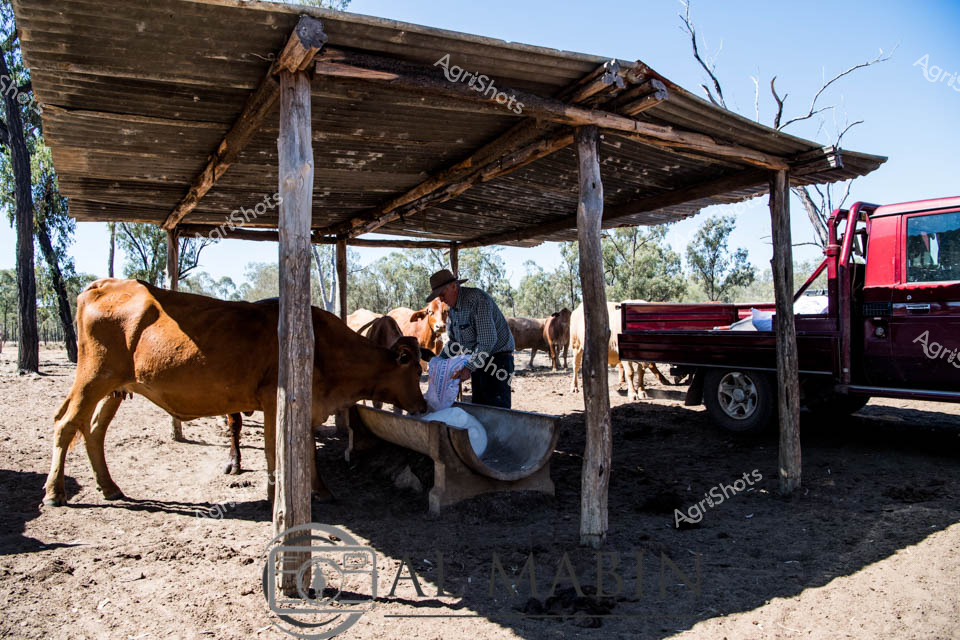
Dusty red earth and weathered timber define this quintessential Queensland cattle station scene. A rugged wooden shelter provides shade for cattle, with a rich reddish-brown beast standing close to a worker preparing a mineral supplement lick. The sparse landscape of scattered eucalyptus trees speaks to the harsh agricultural environment, while a deep maroon utility truck sits nearby, ready for ranch work. An experienced stockhand in a classic checked shirt carefully manages the cattle supplement, likely a critical nutritional intervention during the dry season. The ground is parched and compact, highlighting the challenging conditions of outback cattle farming, where strategic supplementation can make the difference between thriving and surviving herds. Robust infrastructure like this simple but functional shelter demonstrates the ingenuity of Australian agricultural workers adapting to demanding rural landscapes.
 Image
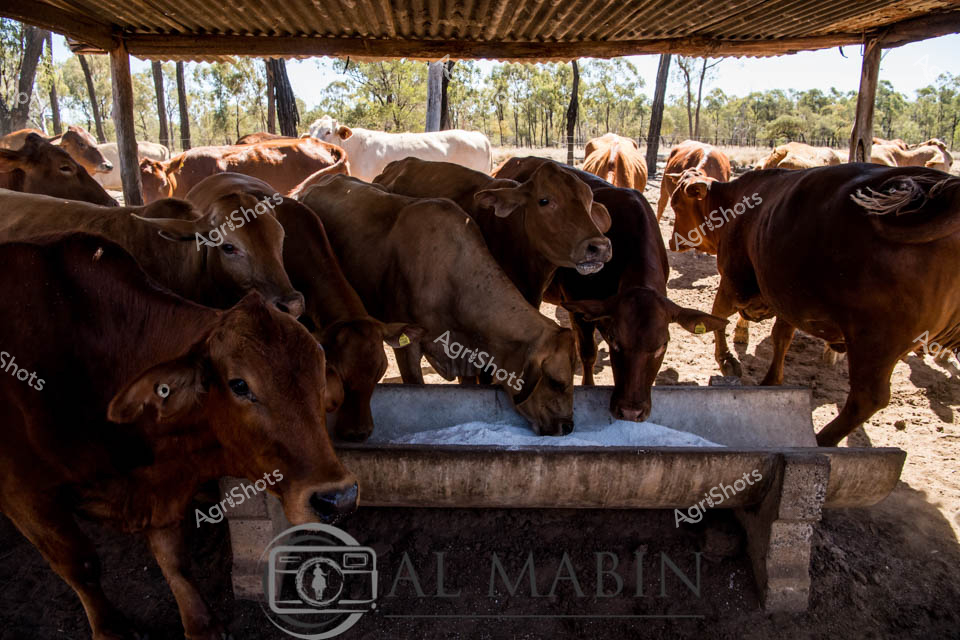
Brahman-cross cattle cluster beneath a rustic timber-framed shelter, eagerly consuming mineral supplement from a weathered concrete feed trough. The arid Queensland pastoral landscape stretches behind them, golden grasslands and sparse eucalyptus trees defining the classic station environment. Rich russet and chocolate-brown coats gleam in the harsh midday sunlight, with a few white-flecked animals standing out among the herd. These resilient beef cattle, typical of northern Australian agricultural regions, demonstrate the daily nutritional management crucial to maintaining livestock health in challenging dry season conditions. Yellow ear tags punctuate their earthy coloration, a subtle marker of systematic livestock tracking and management. The tight grouping around the supplementary feed trough reveals the animals' collective instinct and the critical role of strategic feeding in maintaining cattle condition during sparse grazing periods, embodying the resourceful spirit of Queensland's pastoral enterprises.
 Image
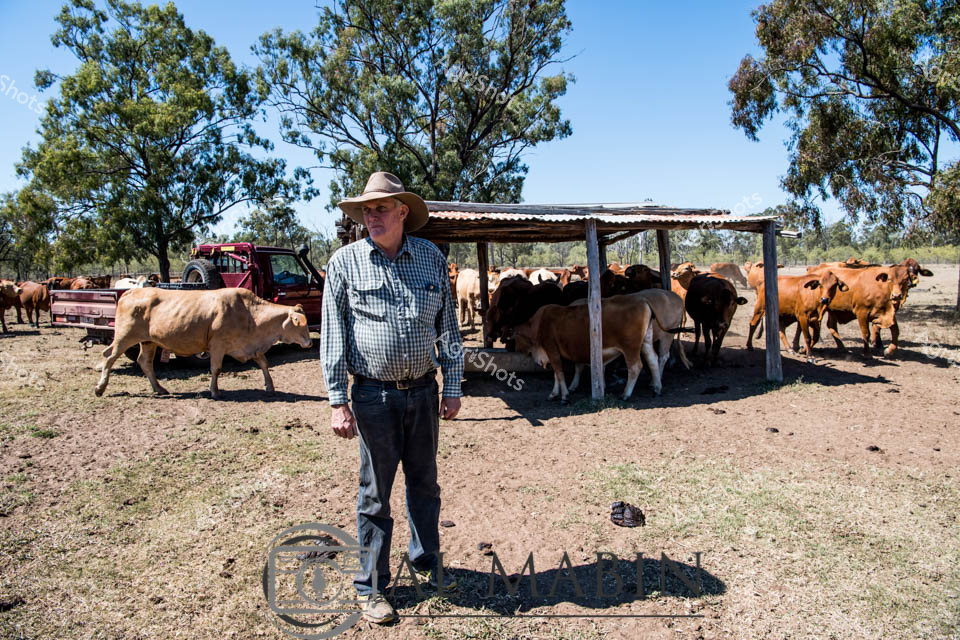
Bathed in brilliant Queensland sunlight, an experienced cattle station manager stands amid a herd of robust beef cattle, embodying the resilience of rural Australian agriculture. Wearing a classic checked work shirt, wide-brimmed sun hat, and practical dark jeans, he surveys the livestock gathered around a corrugated iron shelter in a dry, eucalyptus-lined paddock. The cattle - a mix of rich chestnut and deep brown colors - represent a carefully managed beef herd, with some sheltering from the midday heat under the rustic lean-to structure. A weathered red utility vehicle sits in the background, a quintessential piece of station equipment that speaks to the demanding yet essential work of managing large-scale cattle operations in central Queensland. The landscape is quintessentially Australian - sparse grassland, scattered gum trees, and a cloudless blue sky suggesting the harsh but productive environment of outback cattle country. This image captures the essence of Australian agricultural enterprise: resilience, practical innovation, and a deep connection to the land.
 Image
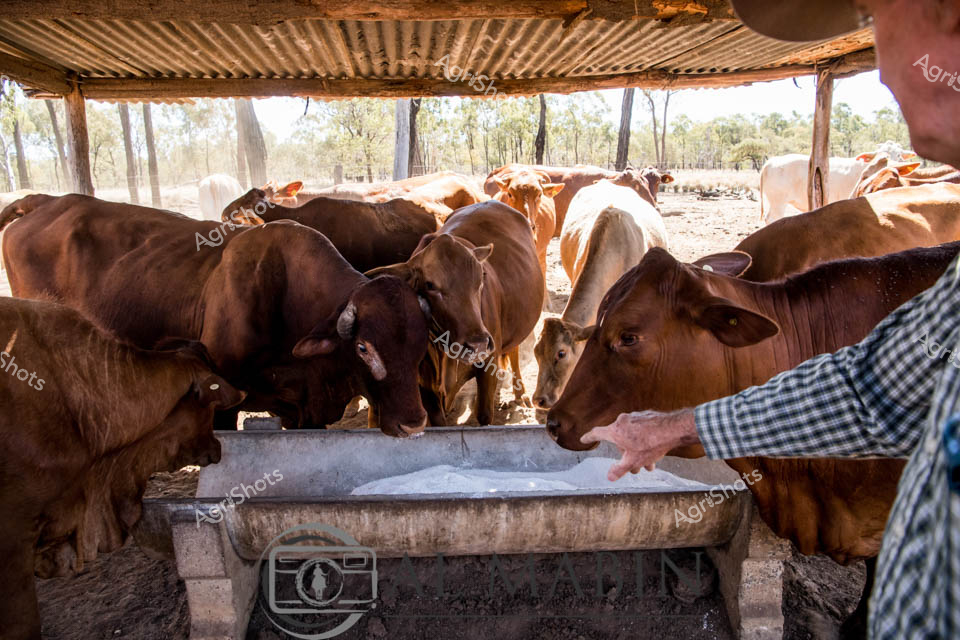
Dusty sunlight filters through a rustic corrugated iron shelter on a Queensland cattle station, where a herd of rich mahogany and cream-colored beef cattle cluster around a concrete mineral supplement trough. A weathered farm worker's hand in a blue and white gingham sleeve reaches out, guiding the livestock's attention to the nutritional lick block - an essential practice for maintaining cattle health in the arid pastoral landscape. Slender gum trees stand sentinel in the background, casting long shadows across the parched earth, highlighting the harsh yet resilient environment of outback cattle farming. The cattle - likely Brahman or Brahman-cross breeds renowned for their heat tolerance - press closely together, their muscular bodies gleaming with varying shades of burnt sienna and tan, demonstrating the robust genetics developed for surviving in challenging Australian agricultural conditions. This intimate scene captures the daily rhythm of station life, where careful animal husbandry and strategic nutritional management are critical to sustainable beef production in one of the world's most demanding agricultural terrains.
 Image
Twisted river gums arch gracefully over a tranquil waterway, their weathered bark and sinuous branches casting intricate shadows on the translucent green water. The scene captures a quintessential Australian riparian landscape, likely in regional Queensland, where ancient eucalyptus trees have shaped the riverbank ecosystem for generations. Smooth water flows with a soft, blurred momentum, revealing the gentle current beneath the surface, while the surrounding landscape speaks of resilience and endurance. Pale tree trunks contrast against the verdant background, their gnarled forms telling silent stories of survival in harsh Australian conditions. Scattered grasses and exposed tree roots frame the waterway, creating a natural composition that embodies the raw, untamed beauty of the Australian wilderness. This image represents the delicate interconnection between water, vegetation, and landscape in a typical Queensland river system, highlighting the subtle complexity of rural environmental systems.
 Image
Pristine white cotton bolls stretch across the expansive Queensland landscape, punctuated by a gleaming green John Deere cotton picker methodically harvesting the field. The machine moves with precision, guided by advanced GPS technology, creating distinct lanes of harvested and unharvested terrain. Brilliant sunlight captures the stark contrast between the crisp white cotton and the rich brown earth, revealing the meticulous nature of modern agricultural practices. The mechanical harvester towers above the crop, its vibrant green paintwork standing out dramatically against the sea of fluffy white cotton bolls ready for collection. Dust billows softly behind the machine, a testament to the dry Queensland climate and the intricate dance of agricultural technology transforming raw landscape into valuable agricultural produce. This aerial perspective captures the extraordinary scale and efficiency of contemporary cotton farming, where cutting-edge machinery transforms vast agricultural landscapes with remarkable speed and precision.
 Image
Brahman cattle cluster in a weathered timber yard under the dappled shade of eucalyptus trees, capturing the harsh realities of Australian cattle station life. Rustic post-and-rail timber yards contain a herd of lean, copper-toned Brahman cattle, their distinctive humps and loose skin revealing their adaptability to Australia's unforgiving northern landscapes. The dirt-packed ground and sparse vegetation speak to the challenging environment of what appears to be a Queensland cattle station during the dry season, with harsh sunlight casting sharp shadows across the enclosure. One beast moves deliberately between the roughly hewn wooden gates, demonstrating the steady movement of livestock in these remote agricultural settings. Weathered timber, muscular cattle, and the scattered ghost gums create a quintessential Australian pastoral scene that epitomizes the resilience of both landscape and livestock.
 Image
Meandering through a quintessential Queensland woodland, this serene river scene captures the raw essence of Australia's inland waterways. Silvery-green eucalyptus trees with twisted, weathered branches line the banks, their pale bark contrasting against the deep green-blue waters. The stream flows languidly, creating gentle curves through the landscape, with fallen timber and exposed roots creating intricate natural structures along the waterline. Dappled sunlight filters through the canopy, casting soft shadows and highlighting the textural complexity of the riverine environment. This image speaks to the resilient ecosystem of rural Queensland, where water is a precious lifeline threading through rugged bushland. The scene embodies the quiet strength of Australian landscapes - untamed, complex, and breathtakingly beautiful in its natural state.
 Image
Brahman-cross cattle cluster around a concrete feed trough under a rustic tin shelter, their rich chestnut and chocolate-brown coats gleaming in the harsh midday Queensland sun. The dry woodland landscape of sparse eucalyptus trees stretches behind them, revealing the classic environment of a remote Australian cattle station. These robust animals lean intently into the mineral supplement trough, their muscular bodies pressed close together as they eagerly consume essential nutrients that sustain them through the challenging dry season. Each beast displays the distinctive characteristics of Brahman-cross breeding - thick, loose skin and prominent humps that enable superior heat and insect resistance crucial for northern Australian pastoral conditions. The ground is packed hard and dusty, contrasting with the metallic feed trough and weathered timber posts of the sheltered feeding area. This scene captures the pragmatic resilience of cattle farming in Australia's challenging northern pastoral zones, where careful supplementary feeding ensures livestock health in unforgiving environmental conditions.
 Image
Gnarled paperbarks lean precariously over a tranquil river, their silvered trunks and twisted branches creating a natural archway across emerald-green waters. The scene captures a quintessential Queensland waterway, where ancient melaleuca trees demonstrate remarkable resilience, their exposed root systems gripping the eroded riverbank. Soft grasses line the water's edge, punctuated by tufts of sedge, while the dappled sunlight filters through the intricate canopy, casting shifting shadows on the water's surface. This landscape speaks to the enduring character of Australian riparian ecosystems - robust, weathered, yet teeming with life and subtle beauty. The interplay of water, earth, and vegetation reveals the delicate balance of inland waterways, where each gnarled tree and gentle bend in the river tells a story of survival and adaptation. The muted greens and browns create a serene palette that epitomizes the raw, understated elegance of Queensland's natural environments.
 Image
Dusty emerald chickpea fields ripple beneath a flock of native emus, their magnificent brown-feathered bodies moving languidly through dense ground cover in rural Queensland. Five robust birds navigate the verdant agricultural landscape with deliberate, prehistoric grace - long necks extended, muscular legs moving with surprising delicacy among the low-growing legume plants. The emus blend seamlessly into the lush green environment, their camouflage-like plumage creating a natural harmony between wildlife and cultivated cropland. Sunlight filters through the dense vegetation, casting subtle shadows that accentuate the birds' powerful silhouettes and the textured agricultural terrain. This image captures the quintessential Australian agricultural tableau - where native fauna and carefully tended crops coexist in a delicate, interconnected ecosystem. The scene speaks to the resilience and adaptability of both the wildlife and the farmers who steward these productive landscapes.
 Image
Beneath an expansive Queensland sky, an experienced agricultural worker bends carefully through a lush chickpea field, examining the crop's growth and health. Wearing a classic rural ensemble of a blue and white checkered button-up shirt, faded denim jeans, and a protective wide-brimmed hat, the farmer methodically inspects the verdant plants stretching across the horizon. The early morning light casts a soft clarity over the agricultural landscape, revealing neat rows of vibrant green chickpea plants with delicate feathered leaves swaying gently in the subtle breeze. His weathered hand reaches down to touch the crop, demonstrating the intimate connection between farmer and land - a quintessential moment of agricultural stewardship and careful observation. The background reveals a typical Queensland rural vista: flat, expansive farmland meeting distant treelines under a pristine blue sky, representing the vast agricultural landscapes that are the backbone of Australia's farming communities. This image captures the essence of modern agricultural practice - precise, attentive, and deeply connected to the natural environment.