Browse the collection
 Image
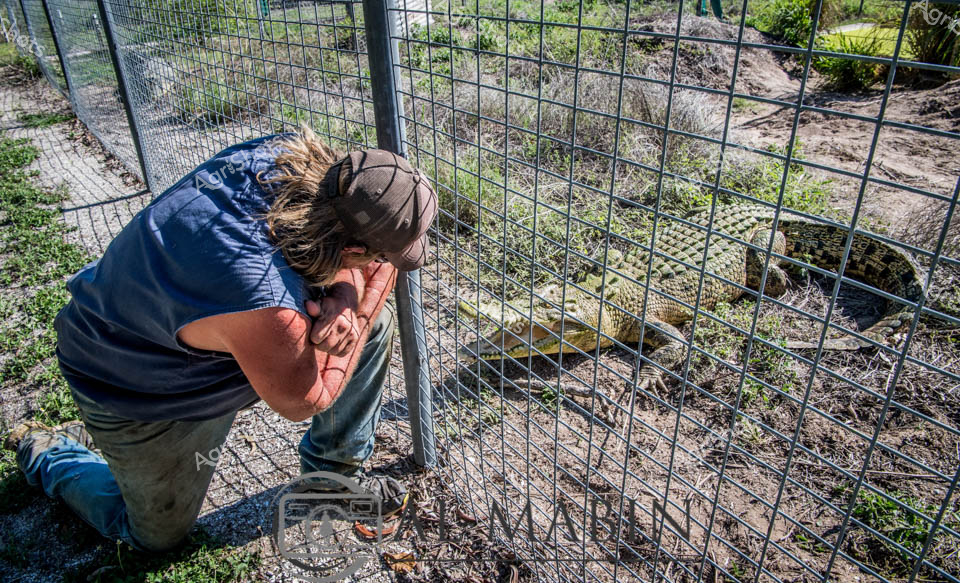
A wildlife caretaker crouches intently beside a wire enclosure, studying a large saltwater crocodile nestled within a sandy, vegetation-bordered habitat. The scene captures an intimate moment of professional observation, with the caretaker wearing a navy blue shirt, olive green pants, and a brown cap, leaning close to the robust wire mesh barrier. The crocodile, a prehistoric marvel of Australia's northern landscapes, rests partially camouflaged against the earthen ground, its scaled skin blending with the textured substrate. Harsh midday sunlight casts sharp shadows, highlighting the rugged terrain and the intricate wire fencing that separates human from prehistoric predator. The environment suggests a wildlife conservation facility, likely in tropical Queensland, where these magnificent reptiles are studied, protected, and understood. The caretaker's posture - hunched, focused, almost reverential - speaks to the deep respect and scientific curiosity that defines modern wildlife management and conservation efforts.
 Image
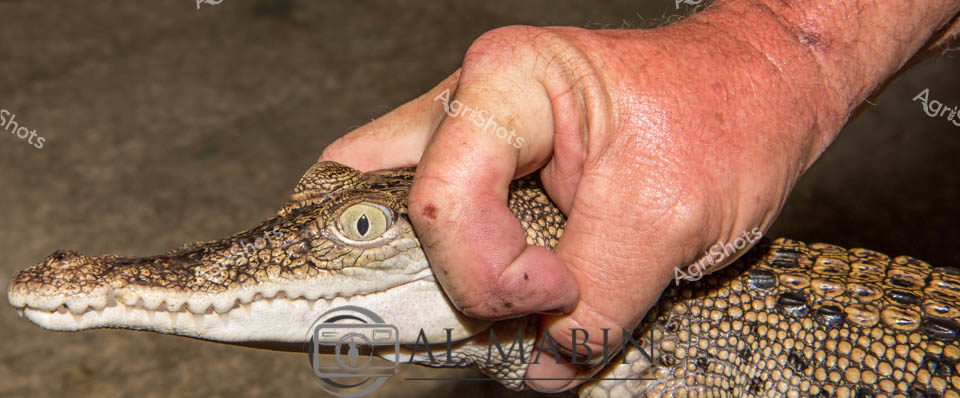
A weathered hand grips the powerful jaw of a young saltwater crocodile, revealing the intricate textural landscape of scaled reptilian skin against sun-reddened human flesh. The crocodile's remarkable eye - a golden, vertically-slit pupil surrounded by delicate scales - gazes with prehistoric intensity, showcasing the remarkable prehistoric predator that is central to Queensland's northern ecosystems. Intricate scales cascade across the crocodile's body in a mosaic of golden-browns and cream, each scale a testament to the species' remarkable evolutionary adaptation. This close-quarter interaction speaks to the complex relationship between humans and wildlife in Australia's challenging tropical environments, where crocodile management and conservation demand intimate knowledge and respect. The blurred background suggests a controlled setting, likely a research facility or wildlife management site where scientific observation and species preservation intersect. The image captures a moment of careful restraint and scientific curiosity, highlighting the raw power and prehistoric beauty of one of Australia's most iconic predatory species.
 Image
Cattle cool off in a sparse waterhole during the height of the dry season on a Queensland cattle station. Mixed herds of beef cattle—a blend of dark and light colored breeds—wade deeply into the muddy water, seeking relief from the scorching inland heat. A stark, leafless tree stands sentinel in the waterhole, its bleached branches a testament to the harsh pastoral landscape. Dusty golden grasslands stretch to the distant treeline, punctuated by sparse vegetation that hints at the challenging agricultural conditions of the Australian interior. The cattle cluster tightly, some fully submerged with only their heads visible, creating a living tableau of survival and adaptation in this unforgiving terrain. The muted browns, grays, and ochres of the landscape contrast sharply with the movement of the cattle, capturing the resilience of livestock and graziers in Queensland's arid pastoral zones.
 Image
Dusty golden light bathes a remote Queensland cattle station waterhole, where a herd of mixed breed cattle wade through shallow waters during a strategic muster. The serpentine waterway curves through arid brown grasslands, with a stark, leafless white tree standing sentinel in the midst of the crossing. Brahman-cross and red Droughtmaster cattle navigate the water cautiously, their varied coat colors ranging from deep russet to black and white patches, creating a living mosaic against the muted landscape. Stockmen guide the herd with practiced movements, slowly directing the cattle through the water crossing to consolidate and move them to another part of the vast station property. The aerial perspective reveals the intricate choreography of mustering - a delicate dance of human skill and animal instinct played out across the unforgiving Australian pastoral landscape. This scene captures the essence of northern Australian cattle management: resilience, patience, and adaptation to a challenging environment where water is both a lifeline and a strategic point of control.
 Image
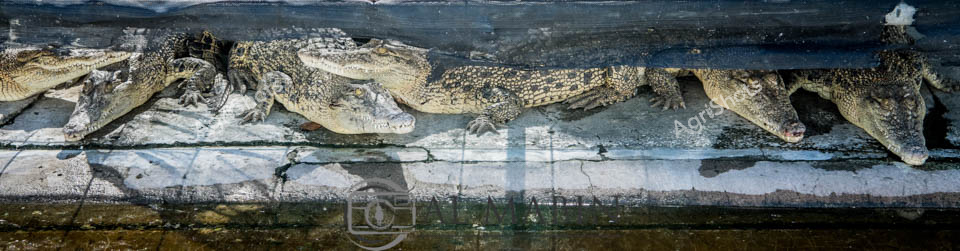
Sprawled across a weathered concrete bank, a congregation of saltwater crocodiles bask in the muted light of an overcast Queensland day. Their armored, mottled skin—a complex tapestry of olive, tan, and charcoal—reflects the rugged texture of their environment. Powerful bodies press against each other, creating a prehistoric tableau of prehistoric predators in repose, their scaled forms blending and overlapping in a mesmerizing composition of prehistoric precision. The reptiles' characteristic ridged backs and muscular forms suggest immense potential energy, even in their seemingly languid state. Hints of water and stone frame the scene, with a subtle reflective surface beneath the crocodiles adding depth and a sense of primordial stillness. This image captures the raw, prehistoric essence of Queensland's apex aquatic predators, revealing the complex social dynamics and remarkable adaptation of these ancient creatures in their native habitat.
 Image
Brahman cattle wade through a shallow waterway on a vast, arid Queensland cattle station, creating a mesmerizing tableau of rural Australian pastoral life. The herd - a mix of rich chocolate, cream, and black-coated Brahman breeds - clusters together in the water, their muscular bodies reflecting the muted tones of the surrounding landscape. Bare, silvered trees stand sentinel on the water's edge, framing a horizon of sparse grasslands and distant scrubland under a softly clouded sky. This scene captures the resilience of cattle adapted to harsh inland environments, demonstrating their ability to navigate challenging terrain and seasonal water sources. The waterhole serves as a critical lifeline, providing essential hydration for the livestock during the dry season. The image embodies the essence of Australian cattle farming - a delicate balance of animal husbandry, landscape management, and survival in one of the world's most unforgiving agricultural environments.
 Image
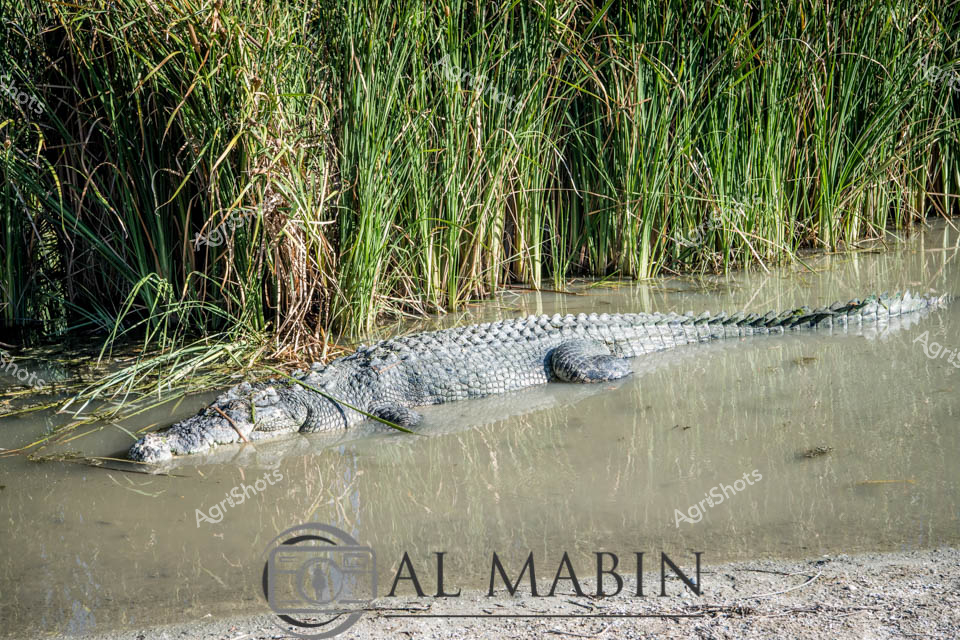
Saltwater crocodile basking in a tranquil Queensland wetland, its armored prehistoric body perfectly camouflaged against the murky shallow waters and dense reed banks. The massive reptile stretches almost the full width of the waterway, its scaled skin a mottled gray-green that blends seamlessly with the surrounding papyrus and river grasses. Sharp ridges along its spine and powerful muscular form reveal the apex predator's prehistoric lineage, a living fossil unchanged for millions of years. Soft afternoon light filters through the reeds, casting subtle reflections on the water's surface and highlighting the creature's remarkable adaptation to this rich subtropical ecosystem. The waterway appears calm and primordial, a snapshot of wild Queensland wilderness where these ancient hunters remain masters of their domain.
 Image
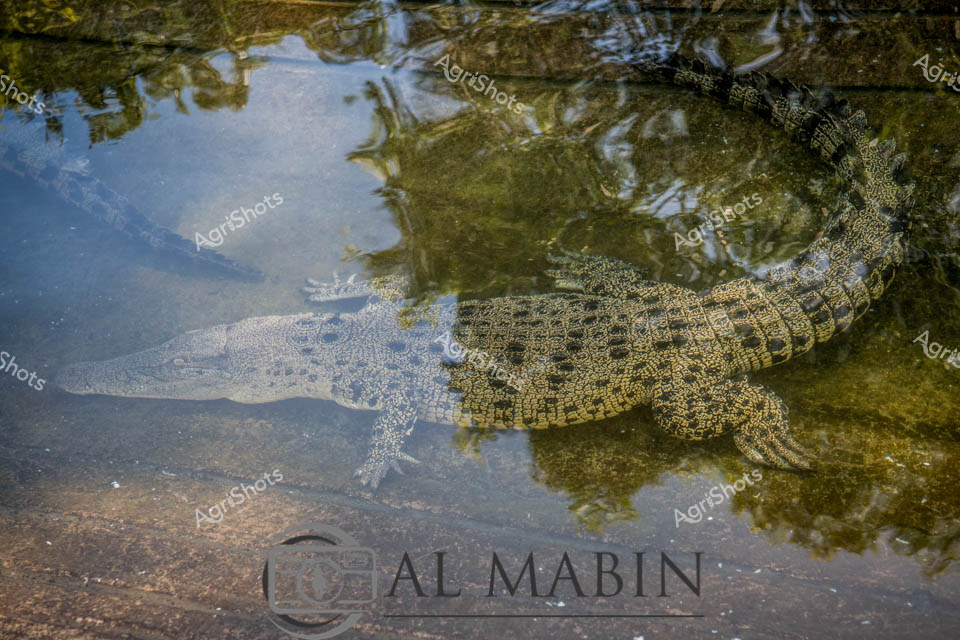
Basking in the murky shallows of a Queensland waterway, a prehistoric predator rests in dappled light. The saltwater crocodile's textured, olive-green scales blend seamlessly with the algae-tinged water, its muscular form a testament to millions of years of evolutionary perfection. Reflections of overhanging vegetation ripple across the water's surface, creating a camouflage that speaks to the crocodile's masterful adaptation to its environment. The reptile's prehistoric silhouette stretches across the frame, partially submerged, with its powerful tail and robust body revealing the raw power of one of Australia's most iconic apex predators. Subtle variations in the creature's scale pattern - from muted greens to deeper olive tones - highlight the intricate natural armor that has made these animals survivors since the age of dinosaurs.
 Image
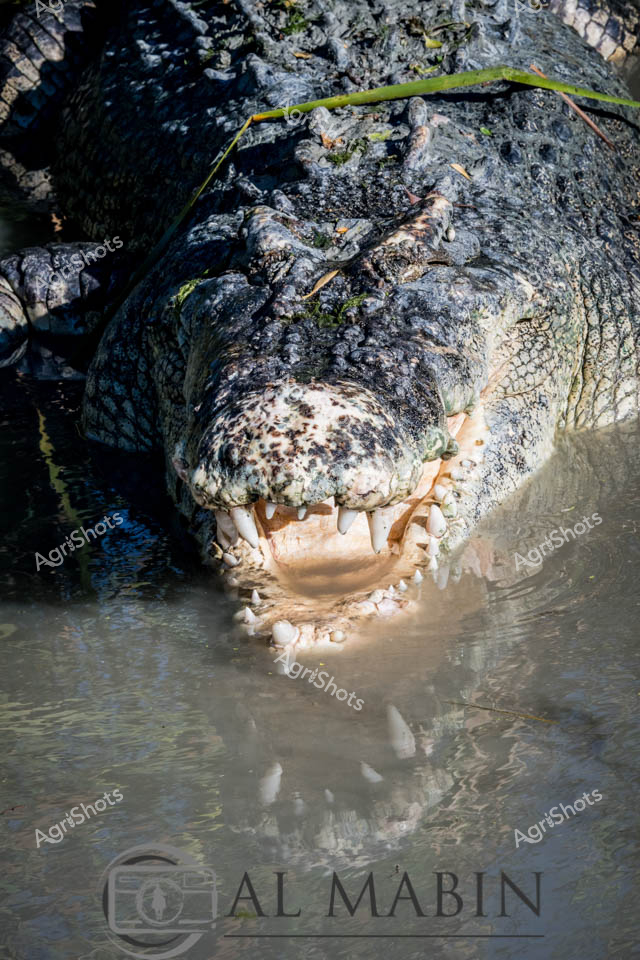
Saltwater crocodile basking in a murky waterway, its prehistoric form a testament to survival. The massive reptile's scaled hide, mottled in shades of gray and charcoal, emerges partially from the water, revealing a formidable jaw lined with razor-sharp teeth. A delicate green frond drapes across its armored back, creating a stark contrast between the brutal predator and the fragile vegetation. Sunlight catches the creature's textured skin, highlighting the intricate patterns of its evolutionary armor. The crocodile's partially open mouth suggests a moment of quiet menace, a reminder of the apex predators that inhabit Queensland's northern waterways. This powerful image captures the raw, primordial essence of one of Australia's most iconic wildlife species, embodying the untamed wilderness of tropical Queensland.
 Image
Saltwater crocodile basking in a murky Queensland waterway, its armored scales glistening with moisture and reflections from surrounding reed-filled shallows. The massive predator stretches across the frame, powerful muscular body partially submerged, revealing the intricate textural patterns of its prehistoric-looking hide. Sharp teeth are visible in a partially open mouth, highlighting the raw predatory power of this apex reptilian hunter. Dense papyrus and river grasses frame the scene, creating a natural backdrop that speaks to the crocodile's primordial habitat in northern Australian waterways. The muted green and grey tones of the environment blend seamlessly with the crocodile's rugged coloration, emphasizing the animal's perfect camouflage in its natural ecosystem.
 Image
Newly hatched quail chicks huddle together under warming lights in a meticulously organized large-scale farming environment. Turquoise feed trays dot the landscape of golden bedding material, creating a geometric contrast against the mass of tiny grey-brown feathered bodies. Pristine white and red water dispensers stand sentinel around the brood, ensuring optimal hydration and temperature control. The image captures the precision of modern agricultural practices, with each element carefully positioned to support the vulnerable young birds' early development. Soft shadows and uniform lighting reveal the intricate texture of the bedding and the delicate forms of the chicks, highlighting the scientific approach to poultry farming.
 Image
Nestled within a triangular steel-framed shed, hundreds of quail huddle together under warm red heat lamps, creating an intricate living landscape of feathered bodies. The dense flock fills the entire floor space, their mottled brown and grey plumage creating a textured carpet beneath the industrial infrastructure. Precision-engineered red feeders punctuate the space, providing crucial nutrition in this controlled agricultural environment. Soft ambient lighting filters through the shed's angular structure, casting dramatic shadows and highlighting the carefully managed conditions of modern intensive quail farming. The overhead framework of white and grey poles creates a geometric perspective, emphasizing the systematic approach to poultry production. This image captures the intersection of agricultural technology and animal husbandry, revealing the carefully controlled world of commercial quail breeding in Queensland's agricultural sector.
 Image
Clusters of young quail huddle tightly together on a bed of golden straw, their delicate feathered bodies creating a mesmerizing mosaic of mottled gray and white plumage. The large-scale farming environment captures the early stages of poultry production, with hundreds of tiny birds packed closely, their soft downy forms creating a living carpet across the enclosure. Soft shadows and warm lighting reveal the intricate feather patterns and subtle variations in coloration, highlighting the uniformity and density of this commercial quail breeding operation. Each small bird sits nearly motionless, their collective presence speaking to the precision and scale of modern agricultural practices in Queensland's poultry industry. The image conveys both the efficiency of controlled farming environments and the remarkable uniformity of young livestock at this critical growth stage.
 Image
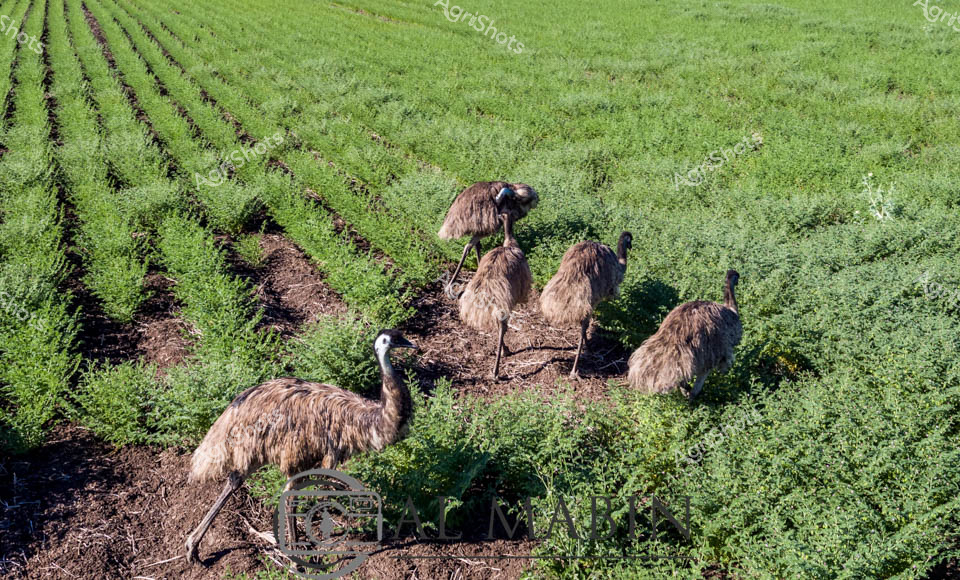
Nestled in the verdant expanse of a Queensland chickpea field, a small mob of emus stands amidst neat, parallel rows of vibrant green crops. The flightless birds, with their distinctive shaggy brown plumage, create a striking contrast against the lush agricultural landscape, their long necks and alert postures suggesting a keen awareness of their surroundings. Sunlight bathes the scene, casting defined shadows and highlighting the textural interplay between the carefully cultivated crop rows and the wild, untamed presence of these iconic Australian birds. The emus appear relaxed yet vigilant, strategically positioned along the field's cultivation lines, their earthy brown feathers blending subtly with the exposed soil between the verdant plants. This unexpected intersection of wild fauna and structured agriculture captures the unique character of Queensland's agricultural regions, where nature and farming coexist in a delicate, dynamic balance. The precise geometric lines of the chickpea plantation stretch into the distance, creating a mesmerizing visual rhythm that underscores the meticulous approach of modern Australian farming.
 Image
Delicate day-old quail chicks nestle in weathered, sun-worn hands, showcasing the intimate care of modern poultry farming. Two young chicks - one pale cream and one dark charcoal - rest against the soft palm, their downy feathers ruffled and alert, symbolizing the fragile beginnings of agricultural livestock production. The rich, textured background suggests a controlled farm environment, likely a specialized quail breeding facility in Queensland's agricultural heartland. Soft, filtered light emphasizes the subtle color variations of the chicks' plumage, from mottled cream to deep graphite, highlighting the genetic diversity carefully managed in contemporary avian breeding programs. The image captures a moment of gentle handling, representing the precision and nurturing approach of professional poultry farmers who understand that successful agricultural outcomes begin with meticulous early-stage care. These miniature birds represent the future of a carefully curated agricultural product, embodying the delicate balance between nature and strategic farming practices.
 Image
Durrell Hills Station: A quintessential Queensland pastoral landscape sprawls beneath the lens, revealing the intricate infrastructure of a remote agricultural property. Grey-blue metal sheds and workshops cluster around a central complex, with a distinctive "Durrell Hills" sign marking the administrative building. Dusty red earth tracks wind between structured paddocks and sparse eucalyptus woodland, showcasing the challenging terrain of inland Australia. Water tanks and curved livestock infrastructure hint at the property's primary agricultural purpose, while a tennis court suggests a touch of recreational amenity in this isolated setting. The aerial perspective captures the expansive scale of the station, with its carefully positioned buildings nestled among weathered grasslands and scattered tree lines - a testament to strategic rural design in a harsh environmental context. Soft green and grey-brown tones dominate the landscape, illustrating the resilient character of Queensland's agricultural heartland.
 Image
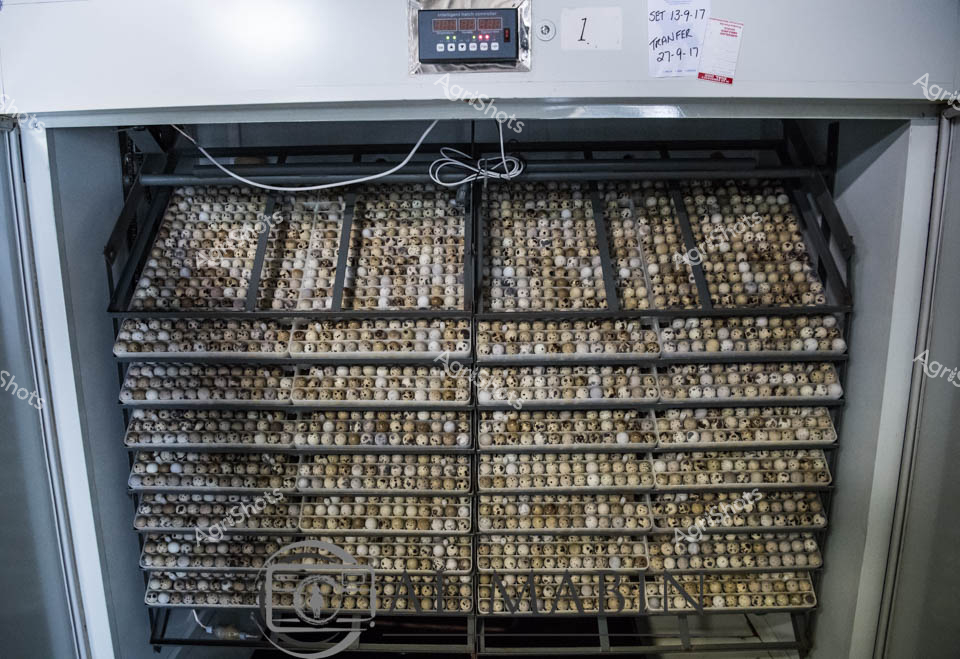
Climate-controlled precision defines this industrial quail egg incubation chamber, meticulously organized across multiple stacked trays. Hundreds of delicate, speckled ivory and tan quail eggs nestle uniformly in precise grid formations, each carefully positioned for optimal hatching conditions. The digital control panel above monitors temperature and humidity with scientific accuracy, representing the pinnacle of modern avian agricultural technology. Soft ambient lighting highlights the subtle color variations of the eggs, from pale cream to warm beige, creating a textural landscape of potential life. This sterile, methodical environment exemplifies Queensland's advanced poultry breeding techniques, where every egg represents a calculated investment in sustainable agricultural production. The uniform arrangement speaks to the precision and care inherent in contemporary egg production, transforming what was once a natural process into a carefully engineered system of biological optimization.
 Image
Nestled in the palm of a weathered hand, a delicate baby quail rests with downy feathers softly ruffled, embodying the tender care of Australian poultry farming. The young bird's pale, mottled plumage speaks to the fragility of early life in large-scale farming environments, where each chick represents potential and carefully managed growth. Soft earth tones in the background suggest a controlled agricultural setting, likely in the expansive farming regions of Queensland, where precision and attentive husbandry are paramount to successful poultry production. The intimate close-up reveals the gentle contact between human and bird, highlighting the nuanced relationship between farmer and livestock - a moment of connection that underscores the meticulous care required in modern avian agriculture. Warm, protective fingers cradle the tiny creature, demonstrating the delicate balance of nurture and management that defines contemporary Australian agricultural practices. This image captures the essence of professional bird rearing - a blend of scientific approach and compassionate handling that ensures the health and potential of each individual chick.
 Image
Industrial quail production in a densely populated indoor aviary, revealing the tightly controlled environment of modern agricultural bird farming. Hundreds of plump quail crowd the floor, their mottled gray-brown feathers creating a textured carpet across a dark substrate, with bright red-and-white automatic feeding and watering stations strategically positioned throughout the space. Overhead lighting casts a clinical illumination, highlighting the precise rows of feeders and the uniform density of the bird population, demonstrating the efficiency of contemporary large-scale poultry management techniques. The birds huddle close together, their small bodies creating a living landscape of feathered uniformity, illustrating the industrial scale of quail production for meat and egg markets. Crisp red-topped feed dispensers contrast sharply with the soft earth tones of the birds, creating a visual representation of agricultural technology's role in contemporary food production. The image captures the mechanical precision of large-scale avian husbandry, where every element is carefully controlled to maximize productivity and economic output.
 Image
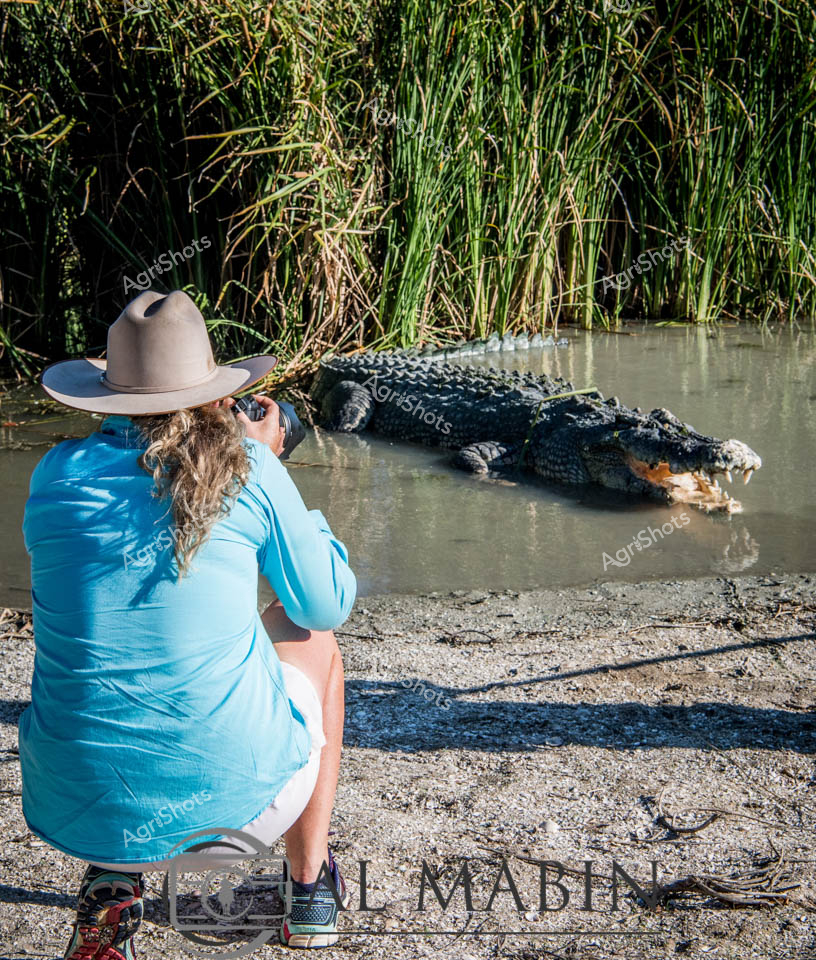
Crouched in a blue shirt and wide-brimmed explorer's hat, a wildlife photographer captures an intimate moment with a massive saltwater crocodile basking in a murky Queensland waterway. The prehistoric predator stretches across the shallow waters, its scaled back and powerful tail breaking the surface against a backdrop of dense green reeds and grasses. Precise and patient, the photographer maintains a careful distance, documenting the raw power and prehistoric beauty of this apex reptilian hunter in its natural habitat. Weathered gravel and mud frame the scene, highlighting the rugged terrain of Australia's northern wilderness. The crocodile's textured skin gleams with moisture, reflecting the harsh tropical light that defines the landscape. This moment encapsulates the wild, untamed spirit of Queensland's remote waterways, where ancient creatures still reign supreme in their timeless domain.
 Image
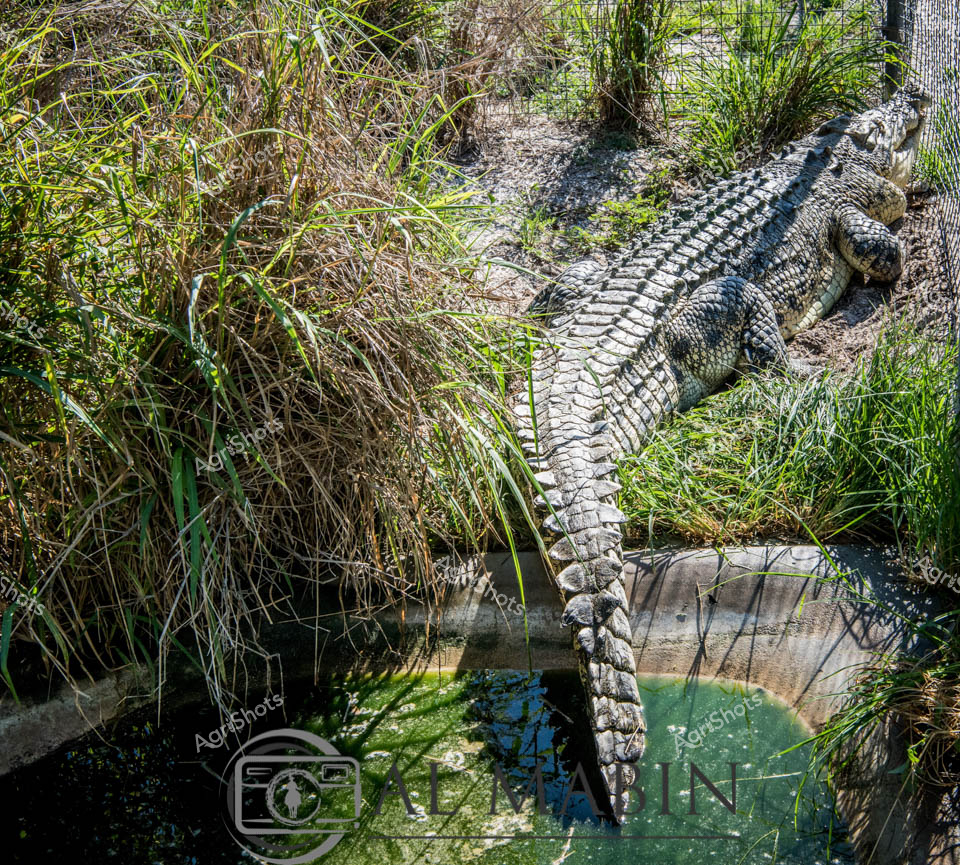
Saltwater crocodile rests in a carefully maintained habitat, its armored scales gleaming with prehistoric precision against the lush grass and murky waterway. The expansive reptile stretches across a constructed concrete channel, its muscular body a testament to the raw power of Australia's apex predator. Verdant grasses frame the enclosure, their sun-dappled blades creating a textural contrast to the crocodile's hard, ridged exterior. Filtered sunlight casts intricate shadows, highlighting the creature's remarkable prehistoric design and adaptation to Queensland's tropical landscape. The water below reflects a deep green, suggesting the rich ecological environments where these ancient hunters thrive. This captivating scene reveals the delicate balance between wildlife conservation and controlled habitat management, quintessential to understanding Australia's complex ecological systems.
 Image
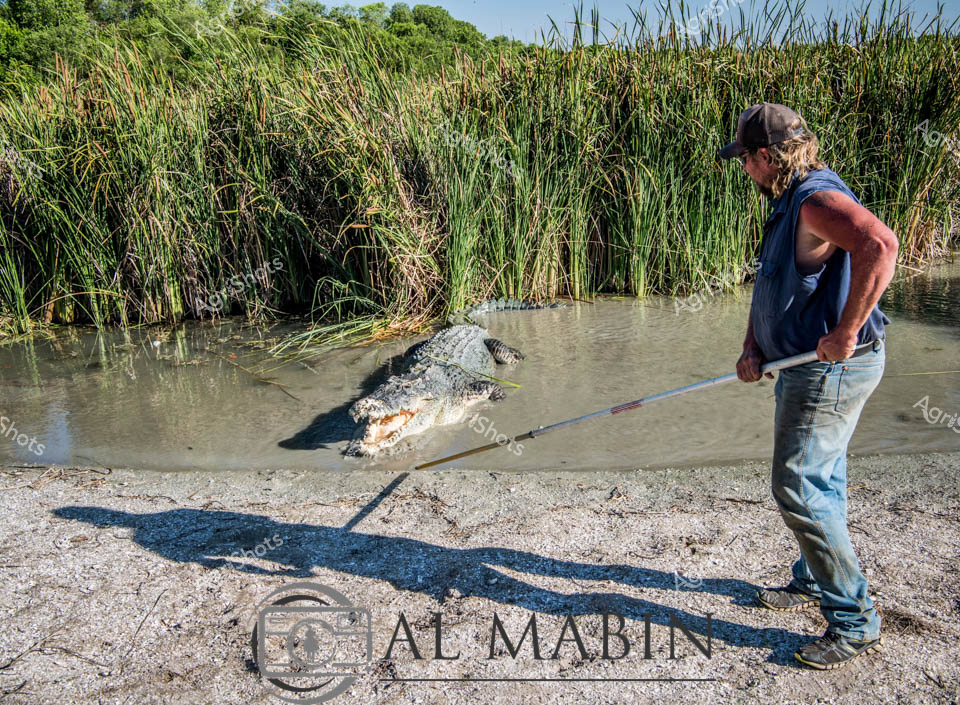
Saltwater Crocodile Management in Queensland Wetlands A seasoned wildlife handler stands poised beside a murky waterway, wielding a long restraining pole near a massive saltwater crocodile. Dense reeds and tall grasses frame the water's edge, creating a quintessential Queensland wetland landscape. The crocodile, a prehistoric predator of immense power, rests partially submerged in the muddy shallows, its scaled hide a mottled gray-green that blends seamlessly with the surrounding aquatic environment. The handler, dressed in well-worn blue work attire and a cap, demonstrates the careful management required in regions where human settlements interface with dangerous wildlife. His measured stance and professional equipment highlight the delicate balance between conservation, safety, and respecting these ancient creatures' habitat. The harsh sunlight casts a long shadow, emphasizing the potential danger and raw intensity of crocodile management in Australia's northern territories.
 Image
Battery-raised quail huddle densely across the floor of a climate-controlled agricultural breeding facility, illuminated by warm red heat lamps suspended from a triangular metal truss framework. The compact birds crowd together, their soft feathered bodies creating a textured landscape of muted browns and greys beneath the strategic overhead lighting. Precision-engineered red feeders stand at regular intervals, providing automated nutrition to the tightly packed flock. Industrial metal infrastructure frames the scene, with bright light filtering through, suggesting a carefully managed environment designed for maximum efficiency in small-scale poultry production. The image captures the intense, controlled nature of modern agricultural quail farming, where every element is systematically arranged to optimize bird health and production output. Crisp lighting and geometric lines contrast with the organic, living texture of the closely packed birds, revealing the sophisticated intersection of technology and animal husbandry in contemporary agricultural practice.
 Image
Battery-raised quail huddle densely beneath red heat lamps in a triangular steel-framed shed, creating a striking landscape of feathered bodies and industrial infrastructure. Crisp white structural supports define the interior's geometric perspective, drawing the eye through a corridor of tightly packed birds illuminated by warm crimson lighting. The quail are clustered shoulder-to-shoulder across the shed's expansive floor, their mottled grey-brown plumage creating a textured carpet of avian livestock. Precise rows of heating elements provide critical temperature regulation, essential in this controlled agricultural environment designed for efficient protein production. Soft shadows and dramatic lighting underscore the industrial precision of modern poultry farming, where every square centimetre is optimized for maximum yield. The scene captures the intersection of agricultural technology and animal husbandry, revealing the structured, mechanized approach to contemporary quail production in Queensland's agricultural sector.