Browse the collection
 Image
A mixed herd of beef cattle stands closely together in a dusty paddock, featuring both Brahman cattle with their characteristic humped backs and other beef breeds in various shades of brown, tan, and darker colors. The cattle appear alert and healthy, clustered together under partly cloudy skies with eucalyptus trees visible in the background. This scene captures typical Australian beef cattle operations, showcasing the diverse breeding stock common in extensive grazing systems across rural stations.
 Image
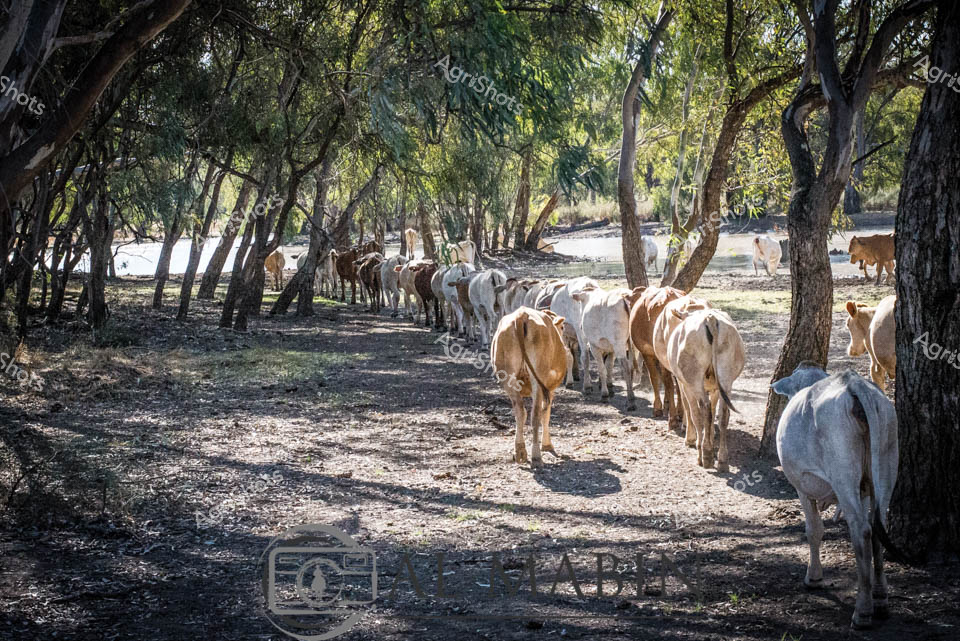
Brahman cattle track dusty shadows beneath a canopy of gnarled eucalyptus trees, their distinctive humped shoulders and loose skin rippling with each measured step along a classic Australian stock route. The mid-morning light filters through silvery-green foliage, casting dappled patterns across the earth worn smooth by generations of livestock movement. Fawn and white cattle move with disciplined precision, their muscular hindquarters and distinctive ear shapes marking them as heat-tolerant Brahman breed - perfectly adapted to traversing challenging inland landscapes. Tightly packed in single file, the herd demonstrates the timeless rhythm of droving - a quintessential practice of Australian pastoral culture that has shaped rural economies for centuries. The path winds between weathered tree trunks, telling a silent story of patient navigation and generational agricultural knowledge. This image captures the raw essence of cattle management - a delicate choreography of animal instinct and human guidance playing out in the harsh yet beautiful Australian bush.
 Image
The captures the raw essence of Australian livestock transport on a sunbaked stock route. Gleaming white utility vehicles and robust horse floats cluster among silvery eucalyptus trees, with a chestnut horse standing quietly beside the trailer under a brilliant cobalt sky. The dry golden grasslands and scattered paddock trees speak to the harsh beauty of rural inland landscapes, where droving remains a timeless agricultural practice. Rugged stock trailers with their distinctive aluminum sides reflect decades of specialized rural engineering, designed to safely move livestock across vast distances. Weathered tire tracks and trampled grass underscore the functional pragmatism of this mobile livestock operation, with each vehicle and trailer positioned purposefully in the sparse woodland setting. The scene epitomizes the resilience and adaptability of Australian pastoral culture - a moment of quiet preparation before another journey across challenging terrain.
 Image
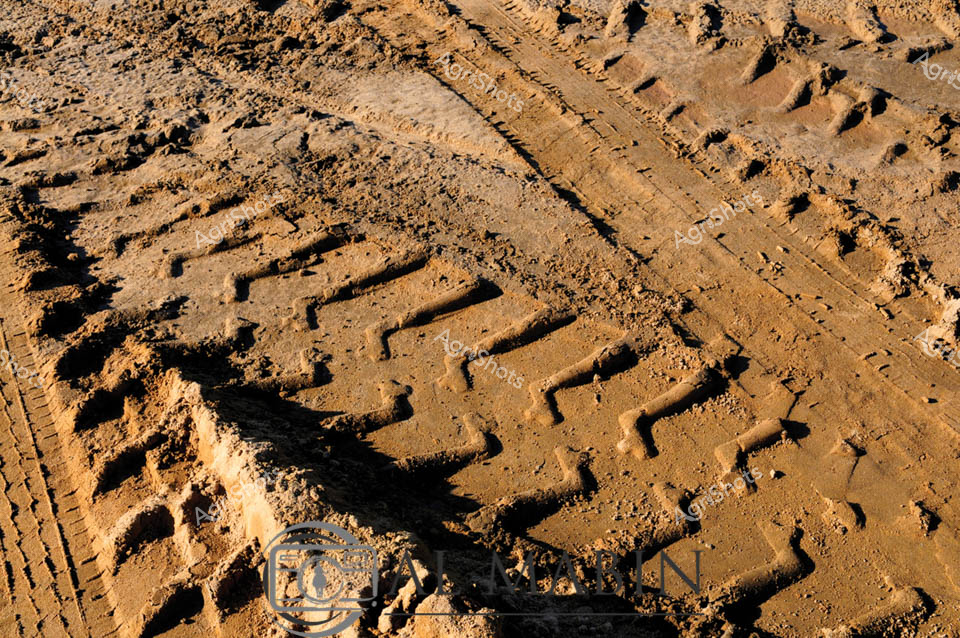
Deep tire tracks and boot prints create intricate patterns in the rich brown soil texture, revealing the heavy traffic of a droving operation along this stock route. The churned earth displays a complex web of impressions from cattle hooves, vehicle tires, and farm workers, creating a detailed record of livestock movement across the paddock. Shadows cast by the late afternoon sun accentuate the depth and texture of each impression in the compacted dirt surface. This weathered terrain showcases the intensive use typical of Australian cattle stations during mustering and droving activities.
 Image
A large herd of Brahman cattle moves through dusty paddocks during droving operations, their distinctive humped silhouettes backlit by golden evening light. Thick clouds of dust rise from the dry earth as the cattle traverse the stock route, creating an atmospheric haze that filters the warm sunlight streaming through scattered trees. The scene captures the quintessential Australian cattle station experience, where hundreds of beef cattle are being moved across the landscape in a carefully orchestrated droving operation. The dramatic lighting and swirling dust perfectly illustrate the challenging yet rewarding nature of large-scale cattle management in rural Australia.
 Image
A heartbreaking scene of canine confinement reveals multiple dogs packed tightly into rusty, wire-mesh cages. A dark blue and tan cattle dog stands outside the stacked metal enclosures, appearing restless and disconnected from the other confined animals. Multiple dogs are visible in the cramped lower and upper cages, their faces pressed against the wire mesh, displaying signs of distress and limited mobility. The cages are weathered and rusted, with metal framework creating a grid-like barrier that restricts movement. Several items are scattered on the ground in front of the cages, including what appear to be red and yellow objects, possibly dog toys or equipment. The environment suggests a challenging situation for these animals, with minimal space and harsh containment conditions. The cattle dog standing outside appears alert and healthy in contrast to the cramped conditions of the caged dogs. The image powerfully illustrates issues of animal welfare and the potential challenges faced in animal management or breeding environments. The tight framing and multiple layers of cages emphasize the sense of confinement and restricted freedom for these animals.
 Image
A man working as a farmer sits astride his green dirt bike on a dusty stock route, taking a moment's pause during droving operations. Wearing a classic wide-brimmed hat and checkered shirt, he embodies the modern Australian stockman who combines traditional cattle work with contemporary motorbike technology. The arid landscape stretches behind him with scattered trees dotting the horizon, typical of remote station country where livestock are moved along established droving routes. His motorbike serves as an essential tool for mustering and moving cattle across the vast paddocks of the Australian outback.
 Image
Australian Working Dog on Remote Stock Route A lean, alert kelpie-cross working dog stands poised on a rugged, stony terrain typical of Australia's inland stock routes. Its black and tan coat blends perfectly with the rocky ground, showcasing the breed's natural camouflage and adaptability to harsh pastoral landscapes. Muscular and lean, the dog displays the classic physique of a high-performance droving breed - alert ears, intent gaze, and a ready stance that speaks to generations of selective breeding for intelligence and endurance. The mottled earth beneath its paws tells a story of drought-hardened ground, scattered with gravel and sparse vegetation, capturing the unforgiving nature of Australian rural working environments. Subtle markings of tan and white break up the dog's primarily black coat, a coloration that has evolved to work effectively in tracking and moving livestock across challenging terrain. This image encapsulates the spirit of Australian pastoral work - resilience, skill, and an unbreakable connection between working dogs and the landscape they serve.
 Image
Brahman cattle cluster along a tranquil waterway, their diverse coat colors ranging from silvery grey to rich mahogany brown, seeking refuge from the harsh Australian outback heat. Ancient eucalyptus trees frame the scene, casting dappled shadows across the waterhole where the herd drinks deeply, their muscular bodies reflecting in the still blue surface. This timeless droving landscape captures the resilience of pastoral life, where cattle traverse traditional stock routes through remote woodland settings, maintaining centuries-old agricultural practices. The cattle - predominantly Brahman breed with their distinctive humped shoulders and loose skin - demonstrate remarkable adaptation to challenging environmental conditions, clustered together for both hydration and social connection. Soft midday light filters through gnarled tree branches, highlighting the textural landscape of weathered tree bark, dusty ground, and reflective water, creating a quintessential Australian rural tableau that speaks to the enduring relationship between livestock, landscape, and generational farming heritage.
 Image
A close-up study of parched, weathered earth reveals the intricate texture of agricultural terrain. Granular soil particles in warm ochre and sandy brown tones create a complex mosaic of broken, sun-baked ground. Miniature rock fragments and mineral specks cluster together, telling a story of drought and resilience characteristic of Australia's challenging agricultural landscapes. Sparse grass shoots peek through the edges, suggesting the potential for regeneration even in harsh conditions. This intimate landscape portrait captures the fundamental substrate of farming - the ground itself - in all its raw, weathered complexity. The image speaks to the foundational role of soil in agricultural ecosystems, highlighting its detailed, almost sculptural qualities that often go unnoticed but are critical to agricultural survival.
 Image
Brahman cattle cluster around a tranquil dam in the heart of an expansive pastoral landscape, their burnished brown and reddish coats gleaming under the crisp, clear blue sky. The herd, a testament to resilient Australian beef breeding, drinks methodically from the water's edge, creating a living semicircle that traces the dam's perimeter. Dry golden grasslands stretch toward a distant treeline of eucalyptus, punctuating the horizon with scattered woodland sentinels. These robust Brahman cattle, renowned for their heat and pest resistance, represent the backbone of northern Australian cattle production, their muscular frames and distinctive humps reflecting generations of careful breeding adapted to harsh environmental conditions. The scene captures a quintessential moment of pastoral life - livestock gathering at a critical water source during what appears to be a dry season, when every drop becomes precious. The image speaks to the endurance of Australian agricultural practices, the symbiotic relationship between livestock, landscape, and the fundamental resource of water that sustains both animal and industry.
 Image
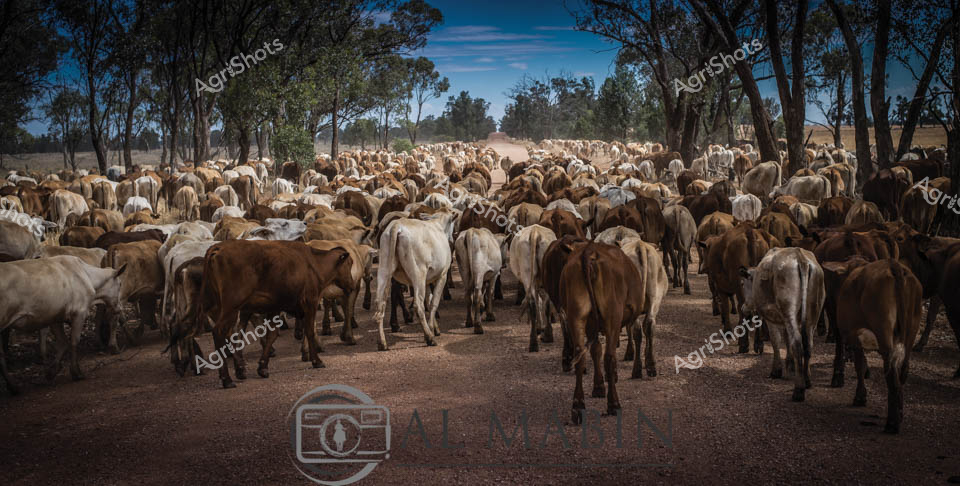
Australian cattle droving captures the timeless rhythm of the pastoral landscape, where a vast herd of mixed Brahman and beef cattle traverse a dusty stock route flanked by towering gum trees. Rich earthy tones of chestnut, cream, and deep brown dominate the herd, their muscular bodies creating a living tapestry of movement and texture against the rusty dirt track. The soft blue sky and dappled light filtering through eucalyptus trees evoke the classic Australian pastoral scene, with dust rising subtly around the hooves, suggesting the slow, deliberate progress of the mob. This quintessential droving image represents the enduring spirit of rural Australia - where cattle are moved across vast distances using traditional methods that have sustained agricultural communities for generations. The dense clustering of animals, their varied coloration, and the sense of steady forward momentum speak to the skill of stockmen and the resilience of cattle adapted to challenging landscapes. Every element captures the raw beauty of outback livestock management - a testament to the connection between land, animals, and the people who work them.
 Image
A cowboy on horseback oversees a large herd of Brahman cattle drinking and cooling off in a muddy river during droving operations. The distinctive humped Brahman cattle, displaying various shades of brown, white, and grey, crowd the water's edge and wade into the shallow river to drink and escape the heat. The mounted stockman, wearing a wide-brimmed hat and positioned on his brown horse along the riverbank, maintains watch over the herd as part of traditional cattle mustering along this stock route. This scene captures the timeless practice of moving cattle across the Australian landscape, where access to water sources becomes crucial for both livestock welfare and successful droving operations.
 Image
Australian Cattle Dog: Steadfast Companion of the Outback A lean and alert Australian Cattle Dog rests on the dusty, ochre-colored earth, embodying the resilience of rural working breeds. His midnight-black and tan coat gleams in the golden afternoon sunlight, muscles relaxed but still poised with the focused energy characteristic of these intelligent herding dogs. Bred for the harsh conditions of Australian pastoral landscapes, this canine represents generations of selective breeding to create the ultimate livestock management partner. His keen eyes scan the surrounding terrain, alert to potential livestock movement, with a posture that suggests years of disciplined stock route work. The dog's compact, muscular frame and alert ears reflect the breed's reputation for endurance and unwavering work ethic in managing cattle across vast, challenging agricultural terrains. The rich, textured ground beneath him—a mix of red dirt, small stones, and sparse ground cover—speaks to the unforgiving yet beautiful Australian rural environment where these dogs are indispensable working companions.
 Image
Dusty golden light filters through eucalyptus trees as a mob of stockhorses moves steadily across a parched pastoral landscape. Silhouetted against the warm morning haze, these powerful Australian working horses walk in disciplined formation, their muscular frames casting long shadows on the cracked, dry earth. The scene captures the timeless rhythm of droving - an iconic practice of moving livestock across vast agricultural territories, where horses remain critical partners in managing cattle and sheep across remote station country. Each horse moves with quiet purpose, their collective movement creating a living tableau of rural Australian resilience and connection to land. Soft dust clouds rise beneath their hooves, a signature of the unforgiving inland terrain, while sparse gum trees provide subtle framing to this quintessential outback tableau. The muted earth tones and atmospheric light speak to the enduring spirit of Australian pastoral tradition, where horses continue to play a fundamental role in agricultural life.
 Image
A weathered stockman in a wide-brimmed hat looks out through the window opening of a weathered adobe building along a historic stock route. The aged earthen walls with their characteristic orange-brown coloring frame the droving figure, who appears to be taking shelter or surveying the surrounding landscape. Beyond the window, scattered trees dot the rural terrain under an overcast sky, creating a scene that captures the enduring connection between Australia's droving heritage and the remote pastoral landscapes where stockmen have traveled these traditional routes for generations.
 Image
A yellow road sign warns drivers of livestock in the next 5 kilometers, featuring black silhouettes of cattle on the droving stock route. The weathered metal sign stands against a backdrop of arid Australian landscape, indicating an active cattle corridor where stock movement occurs. This essential rural infrastructure alerts motorists to potential cattle crossings along traditional droving routes used for moving livestock between stations and markets.
 Image
A saddled horse stands quietly beneath sparse trees on a stock route, showcasing the enduring tradition of droving in the Australian outback. The distinctive leather saddle and bridle equipment highlight the working relationship between horse and rider in cattle mustering operations. Scattered trees provide minimal shade across the dusty, sun-baked landscape typical of remote station country. This scene captures the timeless methods of livestock management where horses remain essential tools for navigating vast pastoral properties and moving cattle along traditional droving routes.
 Image
A tender moment unfolds across the dusty, sun-bleached grasslands of the Australian pastoral landscape - a rich mahogany-colored beef cow gently nuzzles her young calf. The pair stand amidst weathered golden grasses, their muscular forms characteristic of robust Brahman cattle bred for resilience in harsh outback conditions. Soft early morning light casts long shadows, highlighting the intricate textures of their short, sleek coats and the delicate interaction between mother and offspring. The calf, slightly smaller and a shade lighter, appears tentative yet secure under the protective gaze of its parent, embodying the quiet strength and nurturing spirit of cattle breeding across Australia's expansive stock routes. Their proximity speaks to the deep familial bonds of cattle herds, survivors of challenging drought-prone environments where only the hardiest animals and most skilled stockmen prevail. This intimate portrait captures the essence of Australian beef production - not just an agricultural industry, but a profound connection between animal, land, and generations of pastoral tradition.
 Image
Australian Working Dog: Blue Heeler Puppy A young blue heeler - quintessential Australian cattle dog - rests quietly on weathered golden straw, its compact muscular frame embodying the resilience of rural working breeds. The puppy's sleek blue-black coat with rich tan markings highlights its genetic lineage as a precision livestock herding companion, bred for the challenging Australian pastoral landscape. Alert and intelligent, the dog's keen eyes and erect ears suggest an innate readiness for work, even in moments of rest. Subtle patches of lighter fur and a gleaming collar indicate this is a well-cared-for working animal, likely being trained for droving or station management. The soft, textured straw beneath the puppy creates a warm, earthy backdrop that speaks to the agricultural environment - a classic scene of rural Australian life where working dogs are essential partners in livestock management. Every line of this young heeler's body represents generations of selective breeding for intelligence, stamina, and unwavering dedication to the demanding work of mustering and controlling livestock across vast stations and stock routes.
 Image
Two stockmen on horseback conduct cattle droving operations across a sun-dried paddock, with their working dogs positioned nearby ready to assist with mustering. The mounted riders, wearing traditional wide-brimmed hats, oversee a small mob of Brahman cattle grazing in the golden grassland under expansive blue skies dotted with white clouds. Additional horses stand at rest while the cattle dogs remain alert, showcasing the coordinated teamwork essential for effective livestock management on this rural Australian cattle station.
 Image
A stockman on horseback navigates through thick dust clouds while droving cattle along a traditional stock route. The rider, wearing a light-colored shirt and hat, expertly guides their horse through the swirling dirt as livestock move ahead through the sparse vegetation. Dust billows dramatically around the horse and rider, creating an atmospheric scene that captures the challenging conditions of moving cattle across rural Australian terrain. This dynamic moment showcases the enduring tradition of droving, where skilled horsemen move stock through remote countryside using time-honored techniques.
 Image
Black and white cattle drift across an expansive pastoral landscape, embodying the timeless spirit of Australian cattle country. A stoic Brahman beast stands prominent in the foreground, its distinctive muscular frame and pronounced ear characteristics defining the breed's resilient heritage. The monochromatic image captures a dense herd moving with quiet determination, suggesting a stock route droving scene where generations of cattlemen have guided herds across challenging terrain. Soft atmospheric dust hazes the background, creating a sense of depth and movement that speaks to the rhythmic, ancient choreography of cattle migration. Textural details reveal the animals' powerful musculature and weathered hides, each beast carrying the genetic legacy of tropical adaptation perfected over decades of Australian pastoral breeding. The composition communicates both the individual strength of each animal and the collective endurance of the herd - a quintessential representation of Australia's profound agricultural narrative.
 Image
A man working as a stockman sits confidently on his chestnut horse during cattle droving operations on a rural Australian station. The experienced horseman, wearing a distinctive brown hat and blue work shirt, pauses among the golden grassland while a large herd of cattle grazes peacefully in the background. The sun-drenched paddock stretches toward a tree line, creating the perfect backdrop for this quintessential stock route scene. This image captures the enduring tradition of horseback cattle mustering that remains central to Australian livestock management.