Browse the collection
 Image
Image
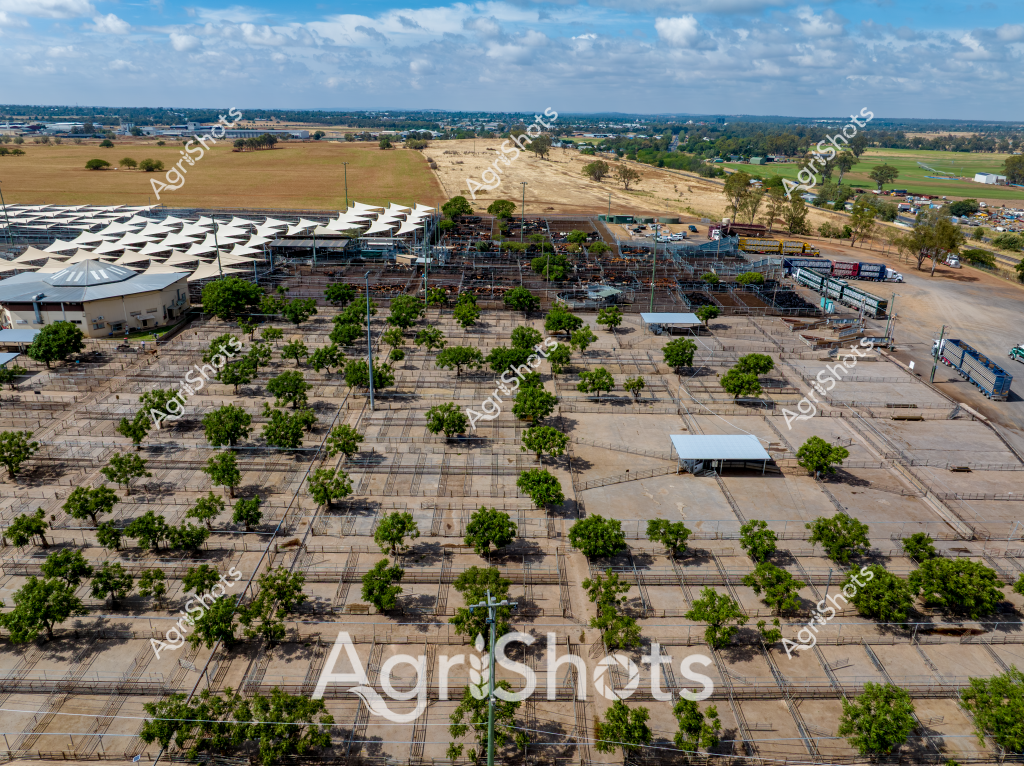
An expansive livestock processing facility captures the essence of Australian agricultural infrastructure, with a meticulously organized layout of multiple cattle yards and shade trees. The aerial view reveals a complex network of fenced paddocks, strategically positioned shelters, and a modern facility with distinctive white-peaked roofing structures. Mature trees are systematically planted throughout the concrete and dirt yards, providing natural shade and breaking up the geometric lines of the infrastructure. The surrounding landscape showcases a classic Australian rural setting, with golden dry paddocks extending to the horizon, punctuated by scattered trees and distant agricultural buildings. The facility appears to be a large-scale cattle processing center, with multiple holding yards, movement gates, and covered processing areas designed for efficient livestock management. The blue sky with scattered white clouds suggests a typical warm Australian day, highlighting the expansive nature of rural agricultural operations. Robust infrastructure and careful landscape design demonstrate the sophisticated approach to livestock management in contemporary Australian agriculture, balancing functional efficiency with environmental considerations. The image represents a sophisticated livestock processing facility that integrates architectural design, animal welfare considerations, and operational efficiency in a comprehensive agricultural setting.
 Image
Image
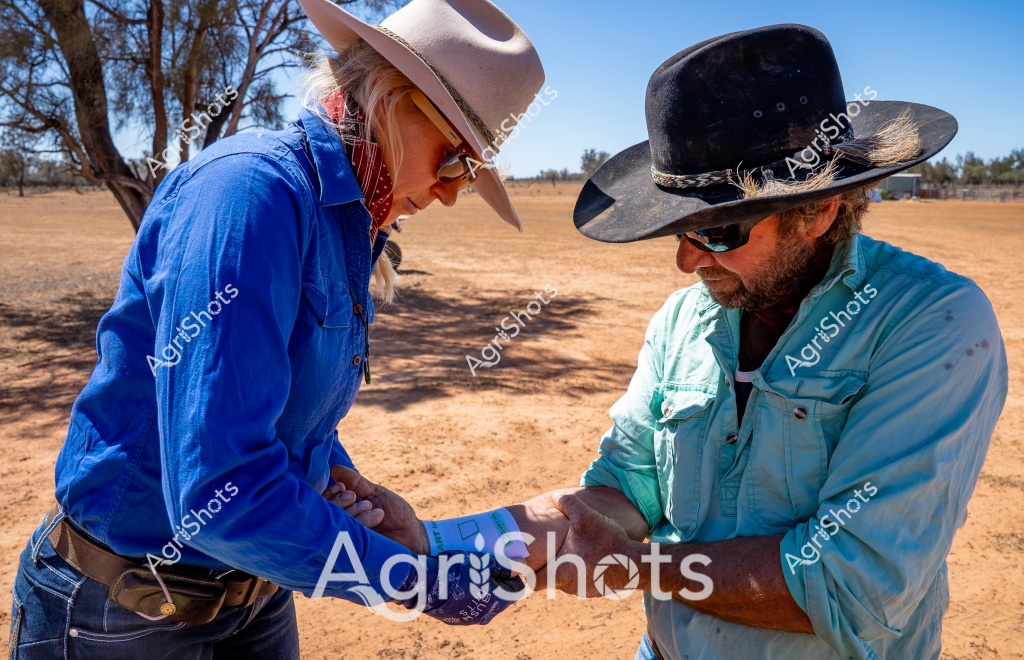
Two agricultural workers stand in a dry, arid landscape, shaking hands in what appears to be a moment of professional collaboration or agreement. A woman wearing a blue long-sleeved shirt and a light-colored wide-brimmed hat stands alongside a man in a light blue shirt and a black wide-brimmed hat with sunglasses. The background reveals a sparse, dusty terrain with scattered trees, indicating a remote rural Australian setting typical of drought-affected regions. The intense handshake suggests a serious discussion, potentially related to farming, livestock management, or agricultural operations. Their attire - robust work shirts, protective hats, and practical clothing - reflects the hardworking nature of rural professionals dealing with challenging environmental conditions. The sandy ground and sparse vegetation in the background highlight the tough agricultural landscape they are working in, potentially discussing strategies for managing livestock or crop production during difficult environmental circumstances. The image captures the spirit of Australian agricultural resilience, with two professionals engaged in what seems to be an important conversation amid a harsh, sun-drenched rural environment. Their body language and setting communicate the collaborative and determined nature of farming communities facing environmental challenges.
 Image
Image
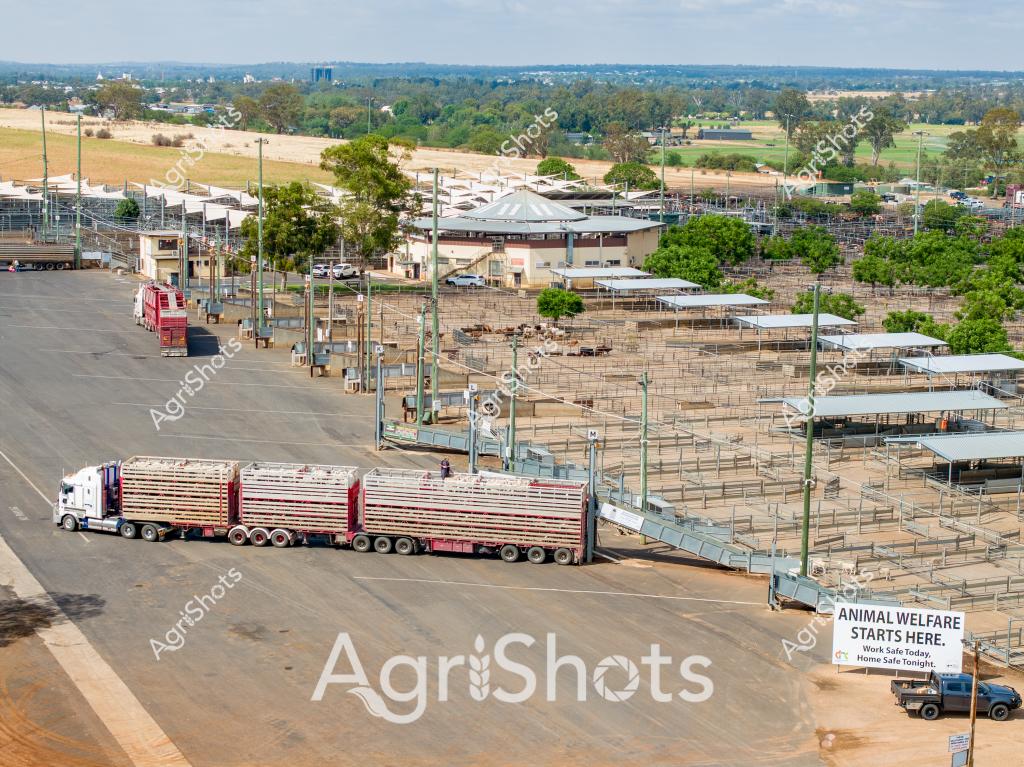
This image captures a comprehensive view of a livestock sale yard or agricultural processing facility, likely in an Australian rural setting. A large, multi-trailer livestock transport truck is positioned at the entry point of an expansive facility with multiple covered holding pens and infrastructure. The "Animal Welfare Starts Here" sign prominently indicates the facility's commitment to ethical livestock handling practices. The landscape reveals a broad agricultural setting with green trees and distant urban structures visible on the horizon, suggesting this is near a regional town or city. Multiple steel-framed holding pens with white shade covers are systematically arranged, demonstrating a modern, structured approach to livestock management. Green steel support poles create a grid-like framework throughout the facility, enabling efficient animal movement and processing. The transport truck appears to be a standard Australian road train configuration, with multiple trailers designed for long-distance livestock transportation, typical of cattle or sheep movements across vast pastoral regions. The facility's infrastructure suggests this is a sophisticated livestock sales yard, likely used for cattle or sheep auctions, with carefully designed loading ramps and holding areas to ensure animal welfare and efficient agricultural commerce. The scene represents a key node in Australia's agricultural supply chain, where livestock are professionally managed, transported, and traded with systematic precision and care.
 Image
Image
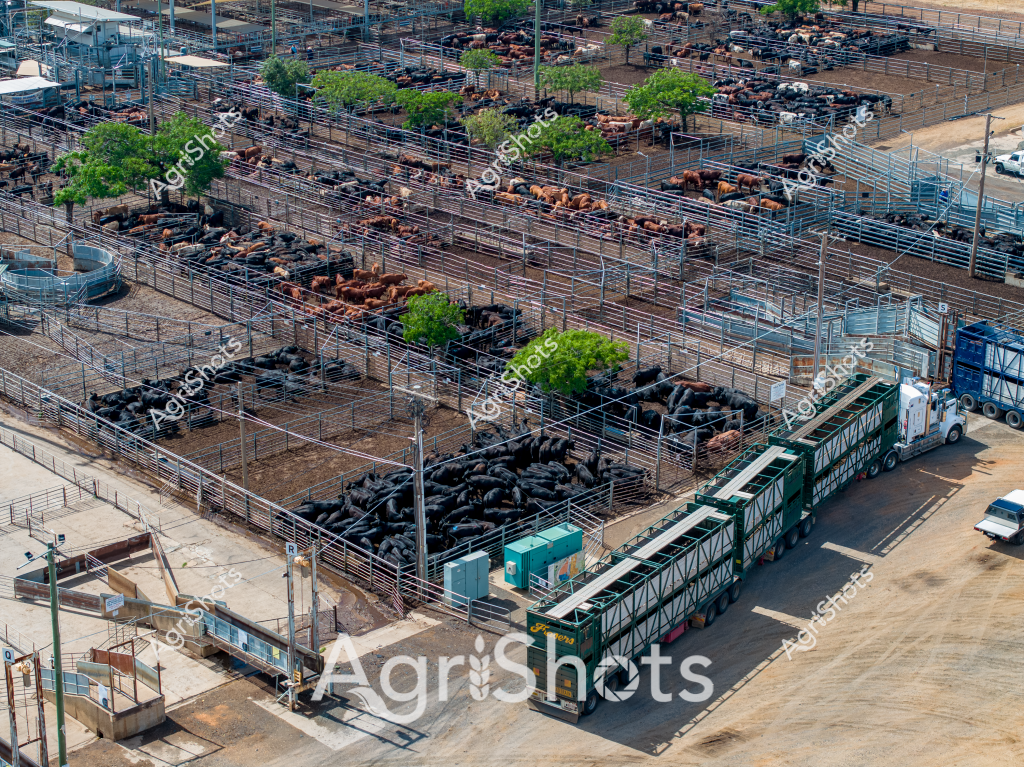
An expansive aerial view of a modern cattle saleyard reveals multiple interconnected metal-fenced paddocks densely populated with beef cattle. Rows of dark and reddish-brown cattle are strategically distributed across the compound, with small green trees and shade structures interspersed between the pens to provide relief from the harsh environment. A large green livestock transport trailer is positioned at the edge of the facility, ready for loading or unloading cattle, while industrial infrastructure including water tanks and processing equipment are visible throughout the site. The ground appears dry and compacted, typical of large-scale livestock management systems, with precise metal fencing creating a geometric pattern of controlled movement and segregation. The aerial perspective highlights the scale and industrial efficiency of modern beef cattle production, where large numbers of animals can be systematically managed, monitored, and prepared for market. Dusty earth tones and the structured layout emphasize the calculated approach to livestock farming in what appears to be an arid or semi-arid agricultural region.
 Image
Image
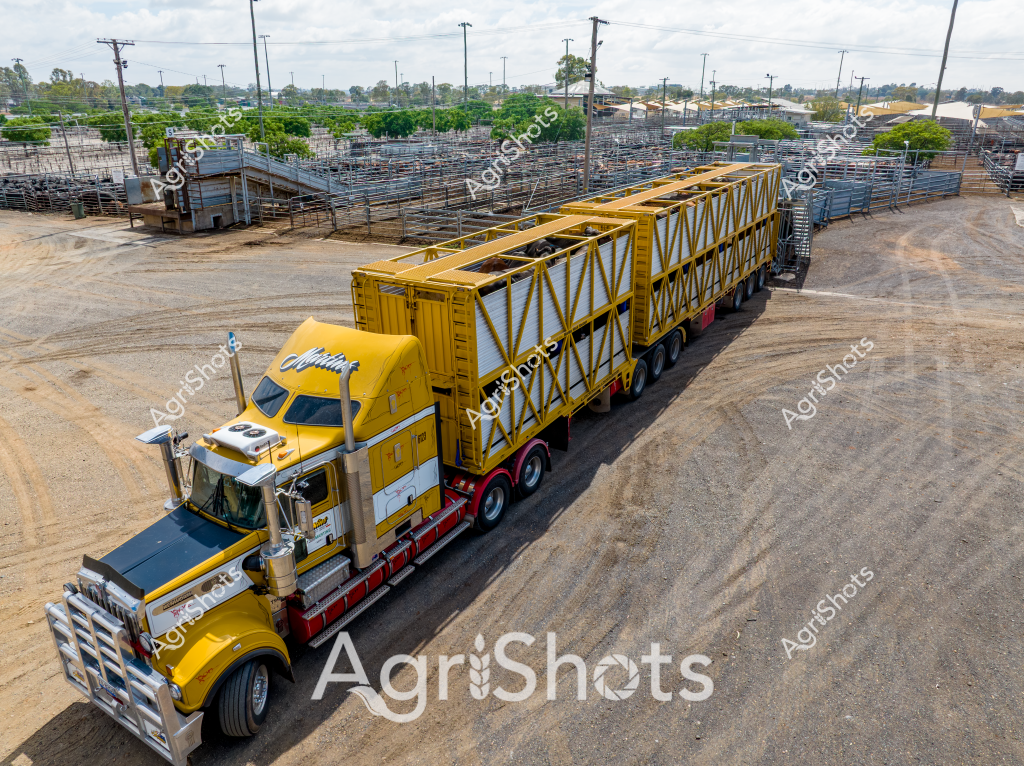
A powerful yellow road train truck stands ready in a rural livestock loading yard, its massive trailer configured for transporting livestock across vast Australian distances. The heavy-duty truck, featuring a striking yellow and white color scheme, is connected to an extended multi-tiered trailer designed specifically for cattle or sheep transportation. Surrounding the truck are multiple steel cattle yards with interconnected metal fencing, typical of large agricultural processing facilities in rural Australia. The dusty dirt ground and numerous utility poles in the background suggest this is a substantial livestock handling facility, likely located in a regional agricultural district. The truck's robust construction - with a prominent bullbar and high ground clearance - indicates it is purpose-built for challenging rural transportation routes across rugged Australian terrain. The expansive yard infrastructure and specialized transport vehicle represent the sophisticated livestock logistics systems that are critical to Australia's agricultural export industries.
 Image
Image
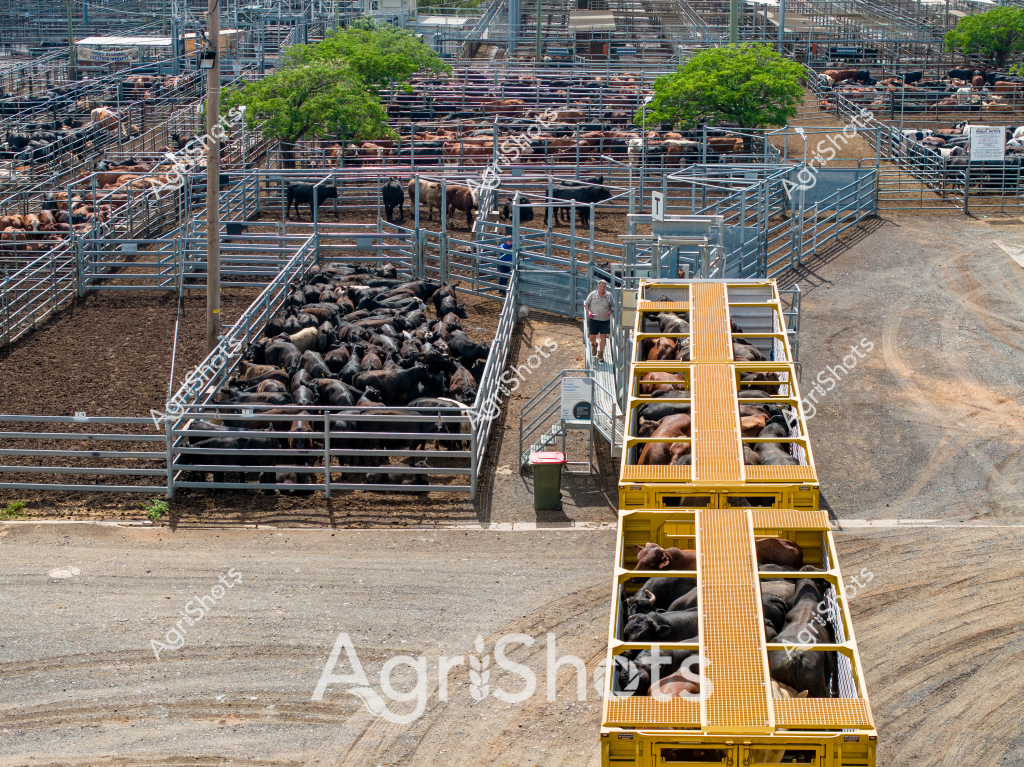
A bustling livestock processing facility showcases multiple pens of black cattle in a complex metal yard system. A series of bright yellow multi-level loading decks stand ready for animal transportation, with cattle carefully sorted and positioned on different compartment levels. A person wearing light-colored clothing can be seen standing on one of the elevated walkways, monitoring the livestock movement and sorting process. The facility appears meticulously organized, with multiple interconnected metal pen sections allowing efficient animal management and movement. Green trees punctuate the background, providing some natural contrast to the industrial agricultural infrastructure. The ground is dusty and compact, typical of a high-traffic livestock handling area, with precise metal fencing defining each processing zone. The scene represents a professional cattle handling operation, demonstrating the sophisticated infrastructure required for modern livestock transportation and management. The yellow transport decks and intricate metal pen system highlight the technical precision involved in moving and sorting livestock, showcasing Australia's advanced agricultural logistics and animal handling practices.
 Image
Image
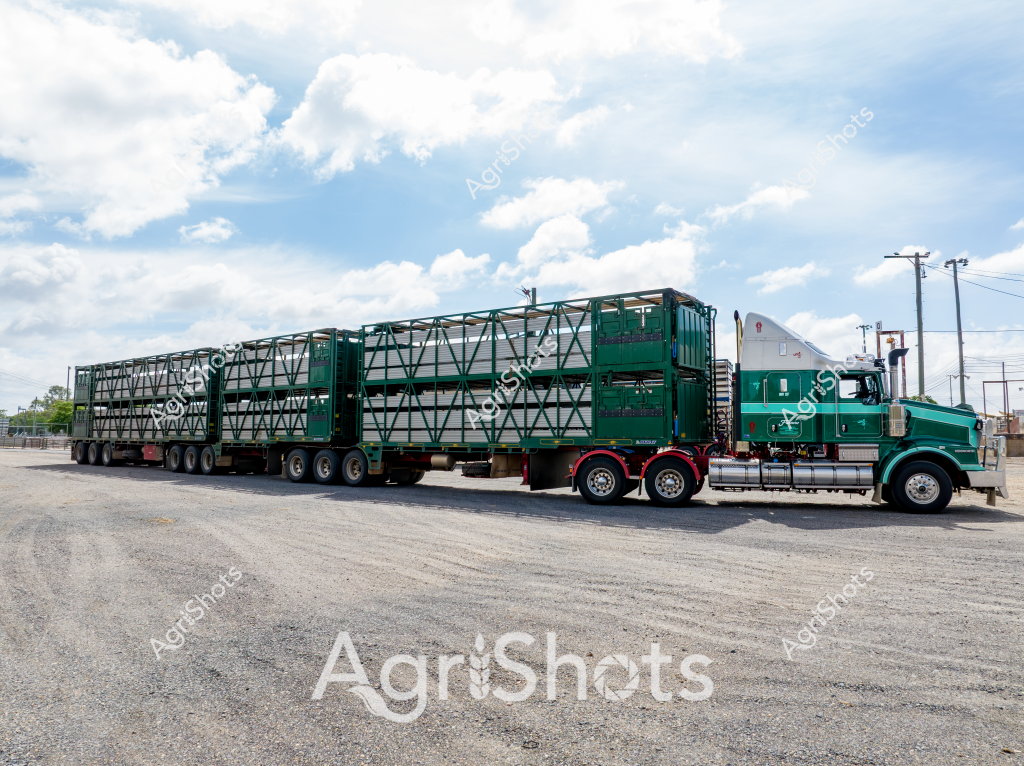
A massive green livestock transport truck with multiple trailers dominates this agricultural logistics scene. The heavy-duty truck, likely a Western Star model, is equipped with three-tiered stock crates designed for safely transporting large numbers of cattle or sheep across rural Australian landscapes. Parked on a gravelly yard with electrical poles and cloudy blue skies in the background, the truck represents the critical transportation infrastructure of Australia's livestock industry. The green and white color scheme of the truck and trailers suggests a professional livestock transport operation, with robust engineering specifically designed to handle long-distance animal transportation in challenging outback conditions. The multiple-trailer configuration indicates the truck's capacity to move significant numbers of livestock efficiently between stations, saleyards, or to market. The image captures the scale and specialized nature of agricultural transportation in Australia, where vast distances and large herds require sophisticated logistics and purpose-built equipment. The truck's sturdy construction and multi-axle design reflect the demanding requirements of moving livestock across some of the world's most challenging agricultural terrains.
 Image
Image
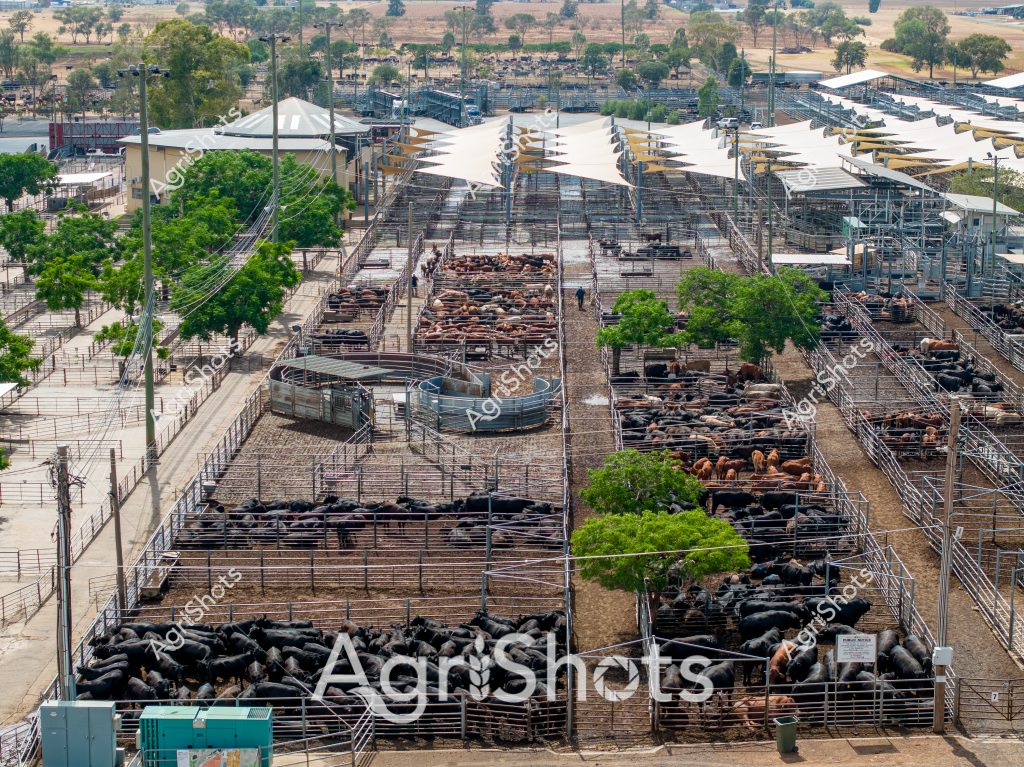
A comprehensive aerial view of a modern livestock saleyard, featuring multiple large fenced paddocks housing black and reddish-brown cattle. Crisp white shade structures span the facility, providing protection for the animals against intense sunlight. Circular water troughs are strategically positioned within the paddocks, ensuring hydration for the densely grouped cattle. Neatly arranged metal fencing and infrastructure create a systematic grid-like layout, with green trees interspersed between the pens, softening the industrial agricultural landscape. The surrounding terrain appears dry and dusty, typical of an inland Australian cattle-rearing region, with sparse vegetation and distant tree lines visible on the horizon. The scene demonstrates the scale and precision of contemporary beef cattle management, showcasing how advanced agricultural practices support large-scale livestock production.
 Image
Image
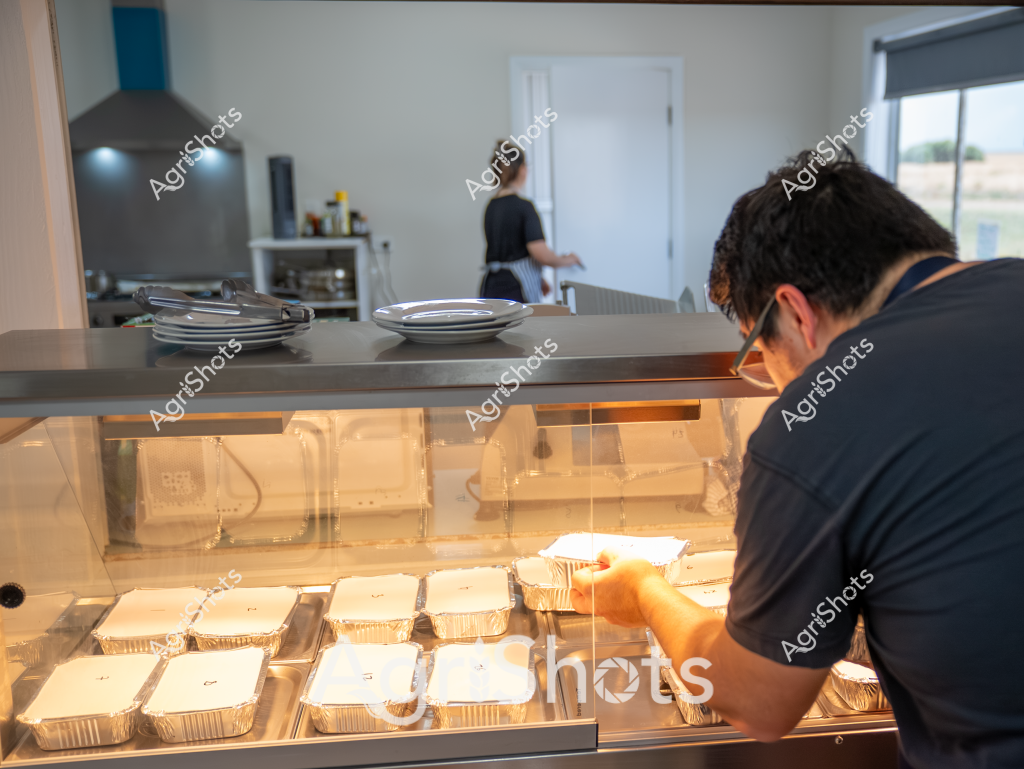
A professional kitchen scene captures a worker preparing pre-packaged meals in aluminium trays. A person wearing a dark shirt is carefully arranging multiple uniform food containers in a heated display cabinet, with stainless steel surfaces and kitchen equipment visible in the background. The precise arrangement of identical aluminium food trays suggests a commercial food preparation environment, likely for catering, meal delivery, or institutional food service. Warm lighting illuminates the gleaming metal surfaces and packaged meals, highlighting the systematic and hygienic approach to food preparation. Another person can be seen in the background working in the kitchen, indicating a busy, collaborative workspace dedicated to efficient meal production.
 Image
Image
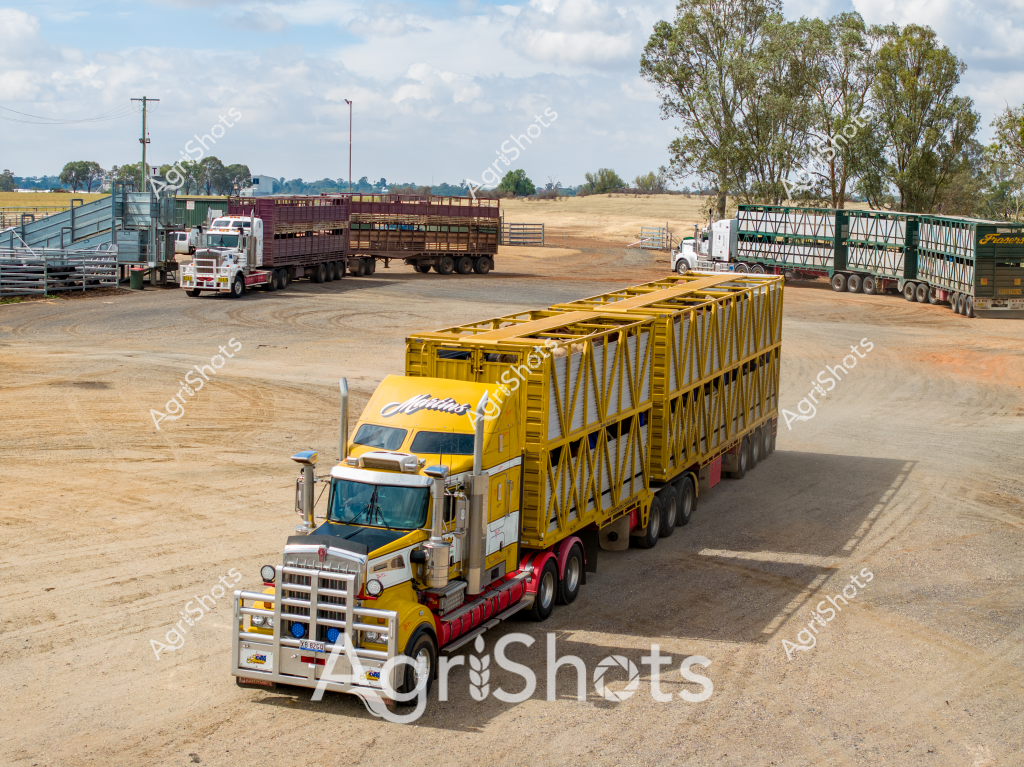
A bright yellow Roadtrain truck with an impressive multi-trailer livestock configuration dominates this rural transport yard in what appears to be an Australian agricultural setting. The heavy-duty truck, featuring a distinctive yellow cabin and robust bullbar, is hauling multiple yellow-framed stock crates designed for transporting livestock across long distances. Surrounding the truck are other similar livestock transport vehicles parked on a dusty, compacted earth yard, with eucalyptus trees and rural landscape visible in the background. Industrial livestock transportation infrastructure is evident, with loading ramps and gates positioned around the yard, highlighting the critical role of specialized trucks in moving cattle, sheep, or other farm animals across vast Australian agricultural regions. The scene captures the robust and essential nature of livestock logistics, showcasing the heavy-duty equipment required to support Australia's extensive agricultural supply chain.
 Image
Image
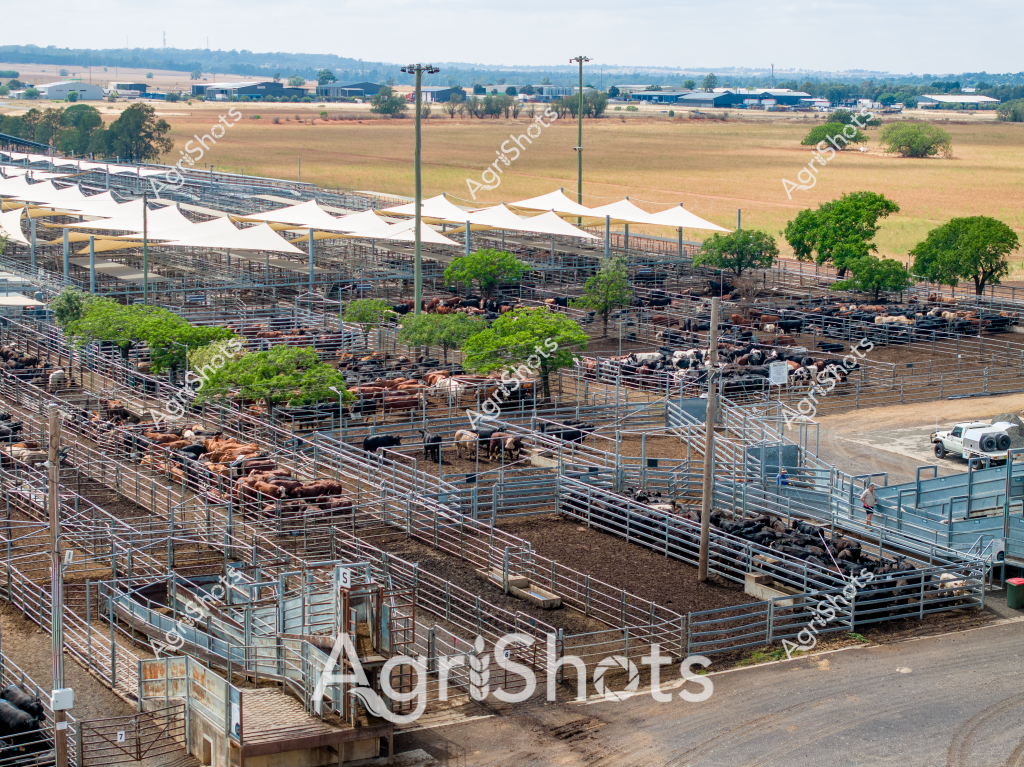
A comprehensive livestock holding facility spreads across a rural landscape, featuring multiple steel-fenced yards housing diverse cattle herds. White shade structures provide protection for the animals, while carefully positioned green trees offer additional shelter and visual breaks between the paddocks. Multiple breeds of cattle - including some with reddish-brown coats and others with darker markings - are grouped in separate enclosures, indicating a professional cattle management operation. Tall light poles provide illumination across the extensive yards, and a white utility vehicle is parked near the processing area, suggesting active agricultural management. The surrounding landscape reveals a broad, flat terrain with distant farm buildings and tree lines, typical of an Australian cattle station or agricultural precinct. The systematic layout demonstrates sophisticated livestock infrastructure, with meticulously organized zones for animal sorting, movement, and temporary holding.
 Image
Image
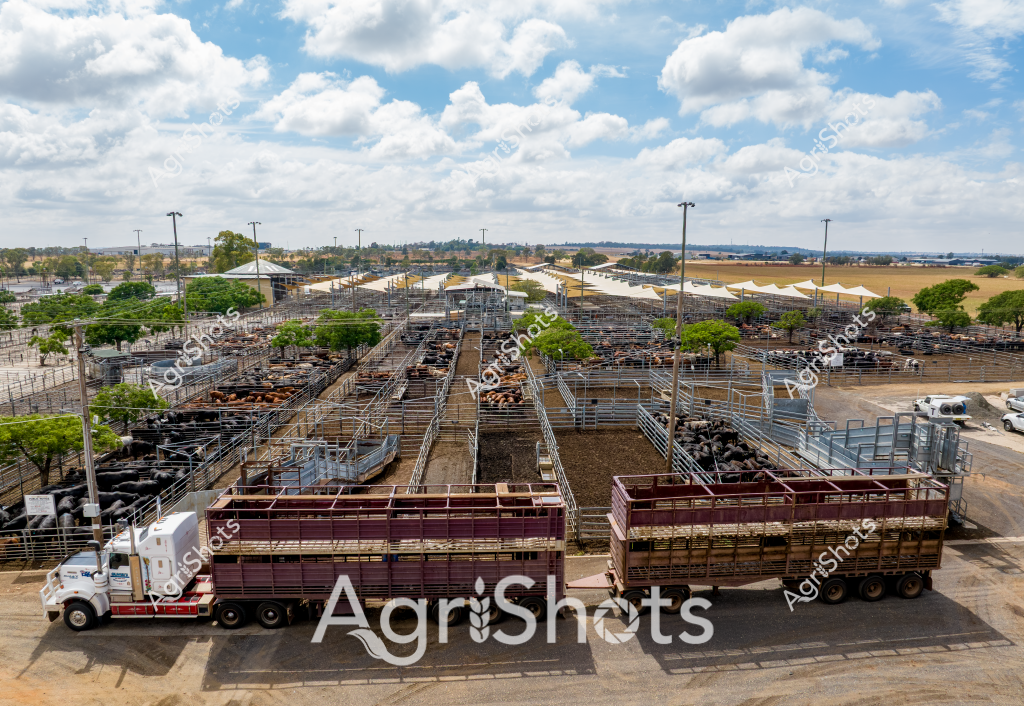
A sprawling livestock saleyard in an open rural landscape, with multiple metal cattle pens stretching across the scene under a bright, cloud-dotted sky. Rows of black cattle are penned in carefully organized enclosures, with green trees interspersed between the metal fencing and walkways. Two large livestock transport trucks with burgundy trailers are parked in the foreground, ready to load or unload cattle. The facility appears to be a modern, well-organized beef cattle operation, with high metal fencing, shade structures, and carefully planned infrastructure designed for efficient animal management. Tall light poles dot the landscape, providing illumination for round-the-clock operations, while the surrounding terrain shows a gently rolling horizon with farmland and distant treelines visible in the background. The scene captures the scale and precision of contemporary Australian cattle farming, showcasing the infrastructure required to manage large herds in a systematic and controlled environment. Metallic fencing, carefully arranged pens, and strategic placement of trees and shade structures demonstrate the sophisticated approach to livestock management in modern agricultural practices.
 Image
Image
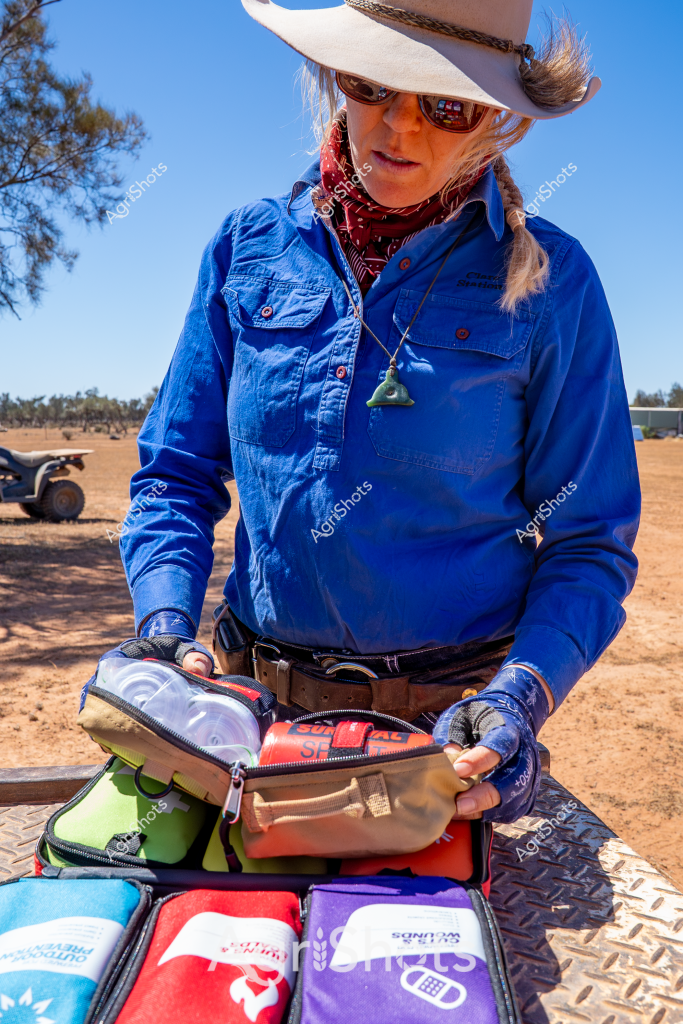
A woman agricultural worker stands in a dusty, arid rural setting, organizing medical or first aid kits on the tray of an all-terrain vehicle. Wearing a crisp blue long-sleeved work shirt, white wide-brimmed hat, and protective sunglasses, she carefully arranges multiple colored pouches and cases. A red bandana is tied around her neck, providing additional sun protection in the harsh outback environment. The metal vehicle tray beneath her has a textured surface, and an ATV is partially visible in the background, suggesting she is preparing equipment for remote work or emergency response in a challenging agricultural landscape. Her careful, methodical approach to organizing the kits indicates the importance of being prepared in isolated rural locations where quick medical access might be limited.
 Image
Image
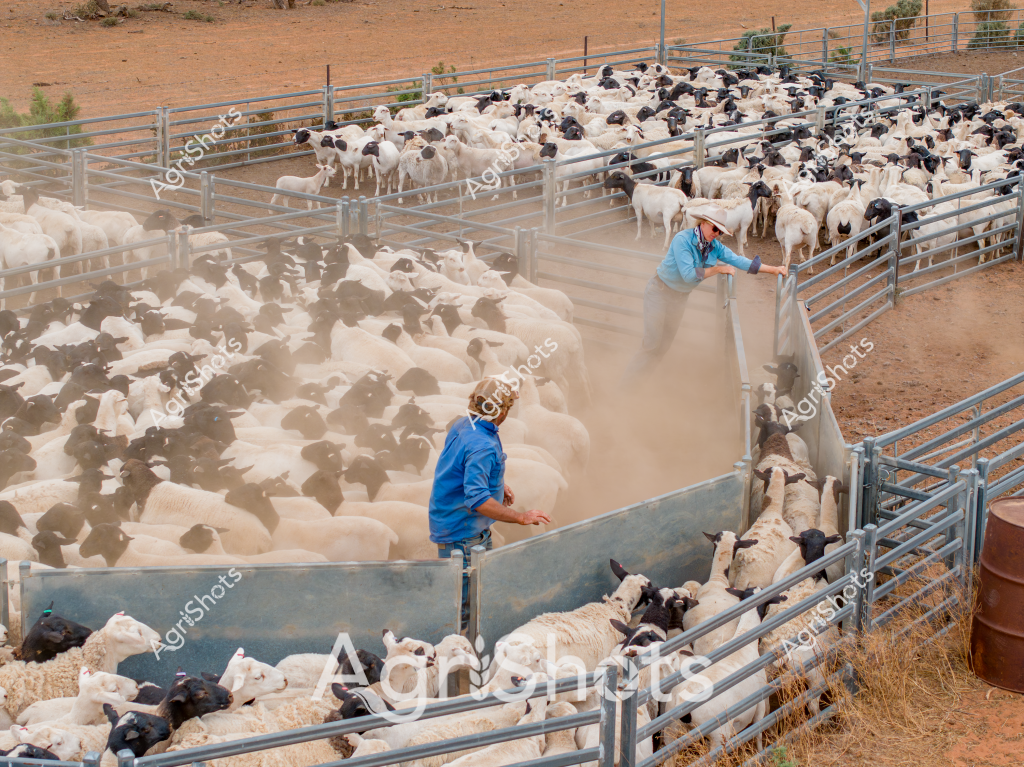
A comprehensive livestock loading operation unfolds at a modern cattle saleyard, with multiple steel-railed livestock pens housing numerous beef cattle under white shade structures. Two large livestock transport trucks - one white and one burgundy - are positioned for loading, with men in work attire moving between the trailers and pens. The cattle, a mix of brown and black breeds, are carefully sorted across different paddocks with green trees providing background shade. Surrounding the facility is a dry, open landscape with golden-brown pastures stretching toward the horizon, typical of an Australian agricultural setting. The scene captures the systematic efficiency of commercial cattle transportation, with carefully designed infrastructure supporting the movement of livestock across vast agricultural territories.
 Image
Image
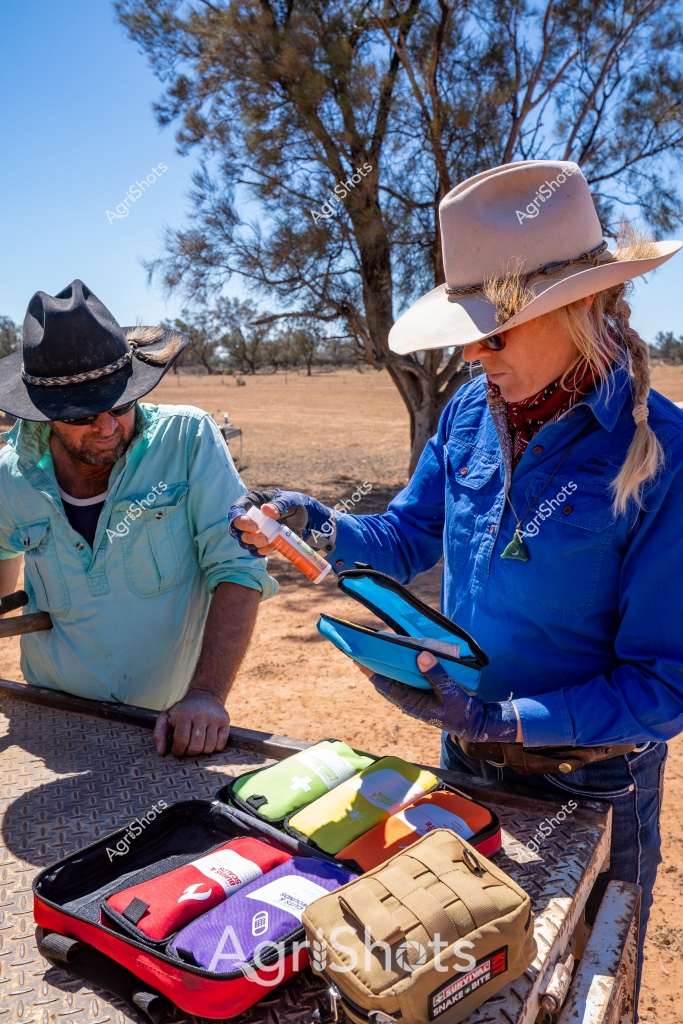
A woman and a man wearing wide-brimmed bush hats are working together in a dry, sun-drenched rural landscape, performing what appears to be a field medical or veterinary procedure. The woman, dressed in a bright blue work shirt, is carefully handling a medical implement while the man in a light blue shirt looks on. They are standing at a vehicle or utility tray with an organized first aid or field medical kit spread out, featuring several color-coded pouches and equipment. The background shows a classic Australian outback scene - sparse trees with a dusty, golden-brown ground stretching to the horizon under a clear blue sky. Their professional demeanor and well-organized equipment suggest they are likely agricultural workers, possibly veterinarians, researchers, or station staff conducting animal health checks or emergency field treatment. Their clothing - sturdy work shirts, protective hats, and practical work gear - is typical of rural Australian professionals who must be prepared for challenging outdoor conditions. The scene captures the meticulous and prepared nature of modern agricultural work, where health monitoring and rapid response are critical to maintaining livestock and farm operations.
 Image
Image
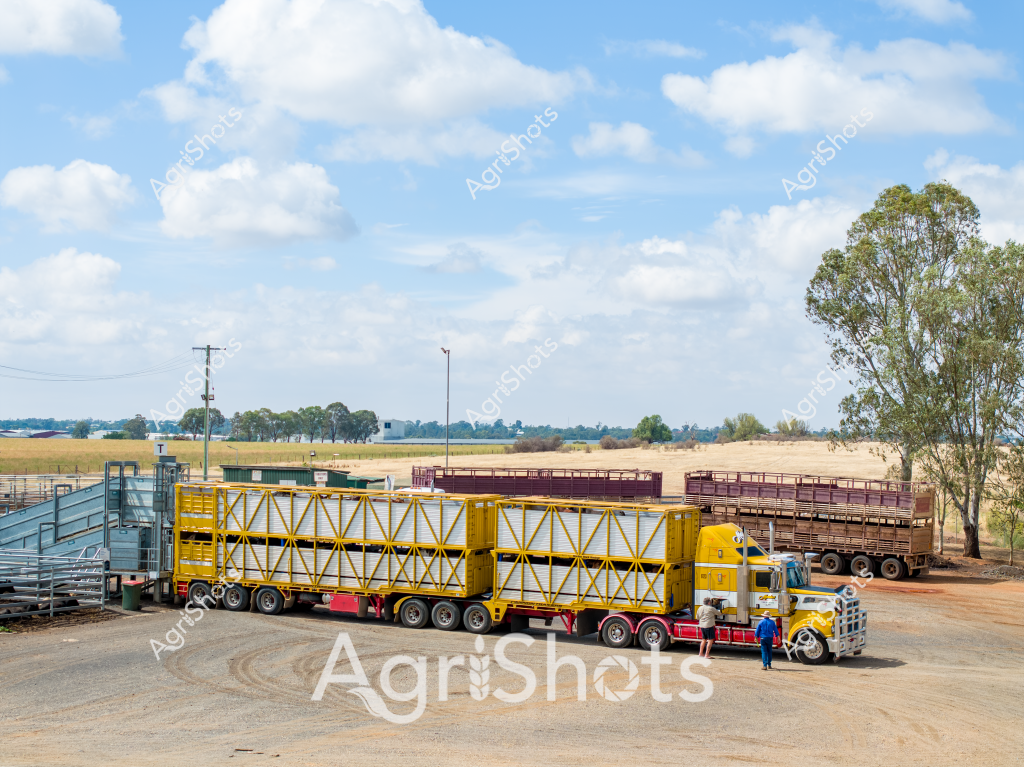
A massive yellow and white livestock transport truck is parked at a rural loading yard, ready for cattle transportation. The long, multi-tiered trailer is designed with sturdy metal crates for safely moving livestock across Australian agricultural regions. A man in blue workwear stands near the truck, indicating the professional livestock transport operations typical of large cattle stations. Surrounding the truck, the landscape features eucalyptus trees, dry golden grasslands, and a bright blue sky with scattered white clouds. Electrical poles and rural infrastructure are visible in the background, suggesting this is a standard livestock loading area in an agricultural setting. The truck's bright yellow and white color scheme stands out against the earthy tones of the paddock, highlighting the essential role of specialized transportation in Australian agricultural operations.
 Image
Image
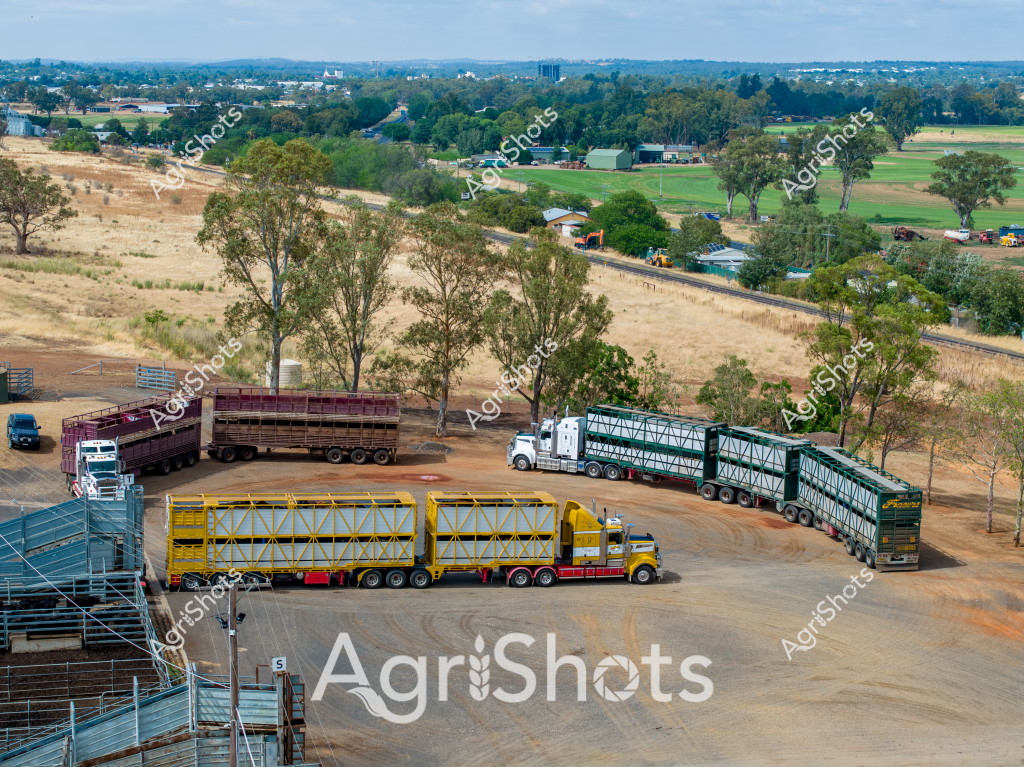
A detailed aerial view of a livestock transport depot in rural Australia, showcasing multiple large semi-trailers designed for cattle and livestock movement. The trucks feature distinctive yellow, white, and green trailers with multi-tiered livestock crates, parked on a dusty dirt yard surrounded by eucalyptus trees and expansive paddocks. The landscape reveals a patchwork of dry golden grasslands and green agricultural fields stretching to the distant horizon, with trees and rural infrastructure dotting the background. These specialized livestock transport vehicles, likely used for moving cattle between stations or to market, demonstrate the sophisticated logistics of Australia's extensive beef and livestock industry. The scene captures the scale and complexity of agricultural transportation in a typical rural Australian setting, with the multi-trailer trucks highlighting the substantial distances and specialized equipment required to move livestock across vast agricultural regions.
 Image
Image
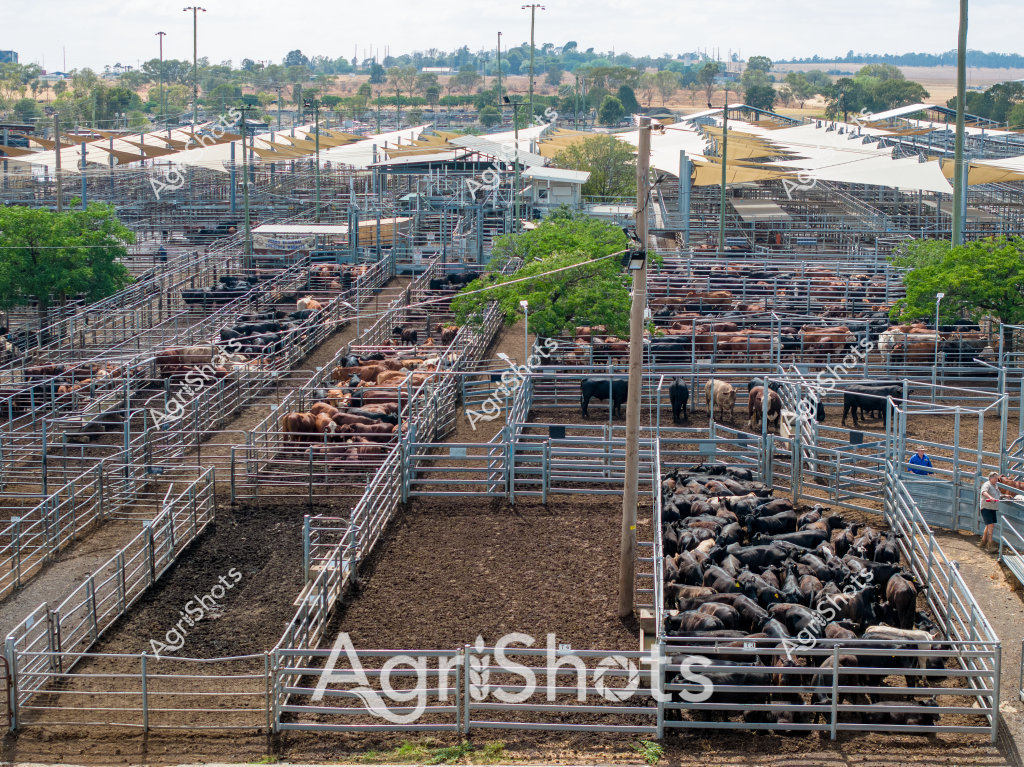
A vast cattle saleyard extends across the landscape, with multiple metal pen enclosures housing hundreds of black and brown cattle. The expansive facility features galvanized steel fencing dividing the pens, with shade structures in tan and white providing cover for the livestock. Densely packed groups of cattle occupy different sections, standing on bare dirt areas between green vegetation patches. Tall light poles and infrastructure buildings are visible in the background, indicating this is a large-scale commercial beef production facility. The scene captures the industrial scale of modern cattle farming, with precise grid-like pen arrangements and systematic livestock management. Multiple breeds and colors of cattle can be seen, suggesting a mixed herd being prepared for market.
 Image
Image
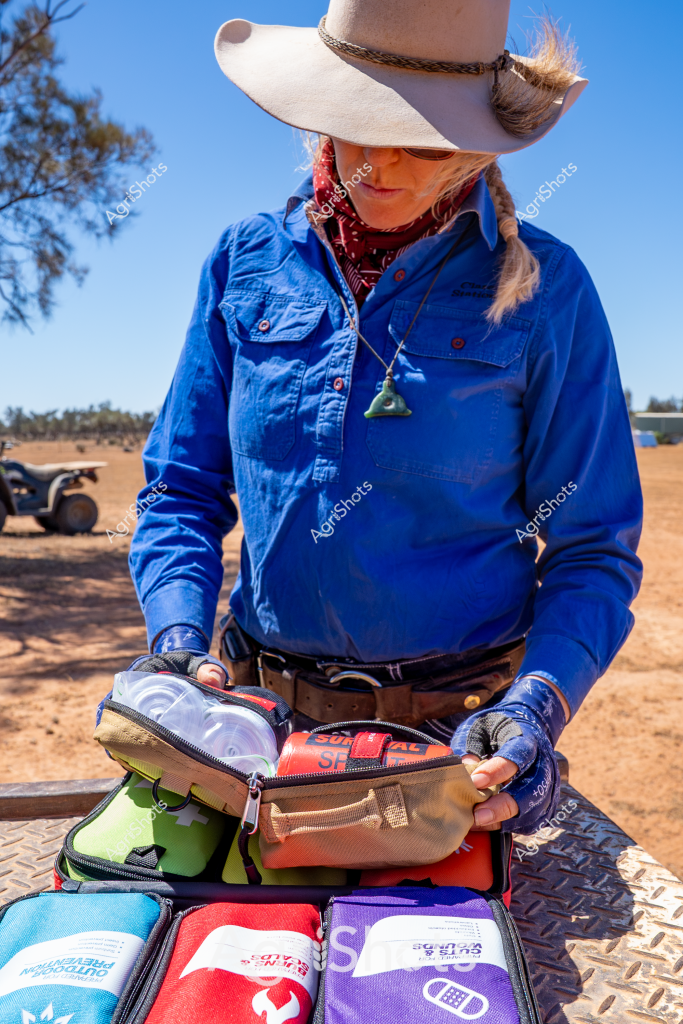
A woman wearing a wide-brimmed hat and blue work shirt carefully organizes a first aid or emergency medical kit on what appears to be a rural equipment surface. Her red bandana and agricultural-style work attire suggest she is a professional working in a remote or farm environment, likely preparing medical supplies for potential workplace or livestock management needs. The kit contains multiple colored pouches in red, white, purple, and blue, indicating a comprehensive emergency response package designed for rural or agricultural settings. The background reveals a dusty, open landscape with hints of farm equipment and trees, typical of an Australian agricultural working environment. Her gloved hands and focused posture demonstrate professional preparedness and attention to critical safety protocols in potentially challenging outdoor work conditions. The scene captures the essential medical readiness required in remote agricultural workplaces, where quick access to emergency supplies can be crucial for worker and animal safety. The carefully organized medical kit reflects the methodical and practical approach characteristic of Australian rural professionals.
 Image
Image
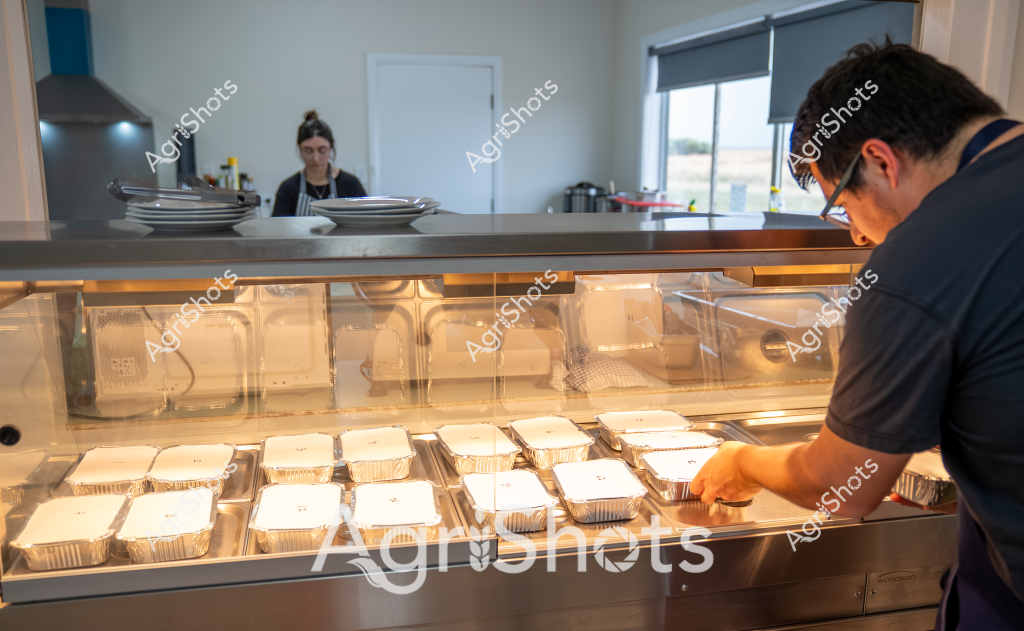
A man in a dark uniform carefully arranges pre-prepared meals in aluminum takeaway containers inside a commercial kitchen display cabinet. The stainless steel food preparation area features a clean, professional workspace with a woman working in the background near kitchen equipment. Neatly organized meal containers are precisely positioned under warm display lighting, suggesting a commercial catering or food service operation. The kitchen appears modern and well-organized, with a sleek counter separating the preparation area from the service zone. Soft natural light filters through a window, adding a bright, clean atmosphere to the food preparation environment.
 Image
Image
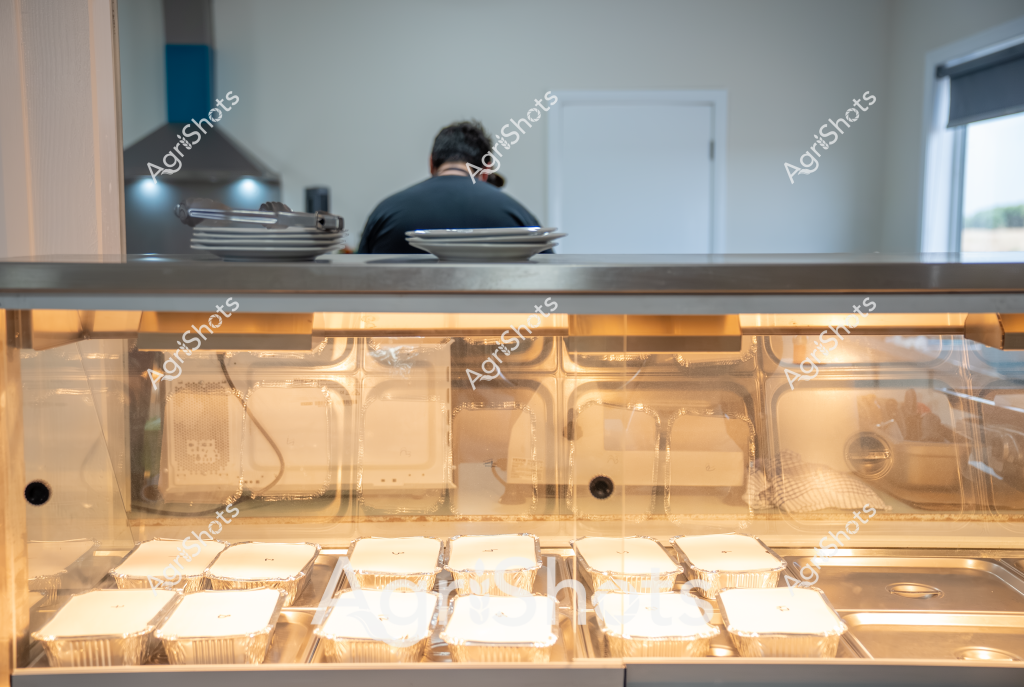
A commercial kitchen workspace is revealed through a service counter, with a person in a dark shirt working at the back preparing food. In the foreground, a professional food display case contains multiple aluminum takeaway containers neatly arranged in rows, illuminated by warm lighting that highlights the pristine food preparation area. The stainless steel countertop and clear display case suggest a modern, hygienic food service environment, likely a restaurant, café, or catering kitchen. Overhead lighting and a window provide ambient illumination, creating a clean and organized workspace. The scene captures the behind-the-scenes precision of food preparation, with carefully arranged meal containers ready for service.
 Image
Image
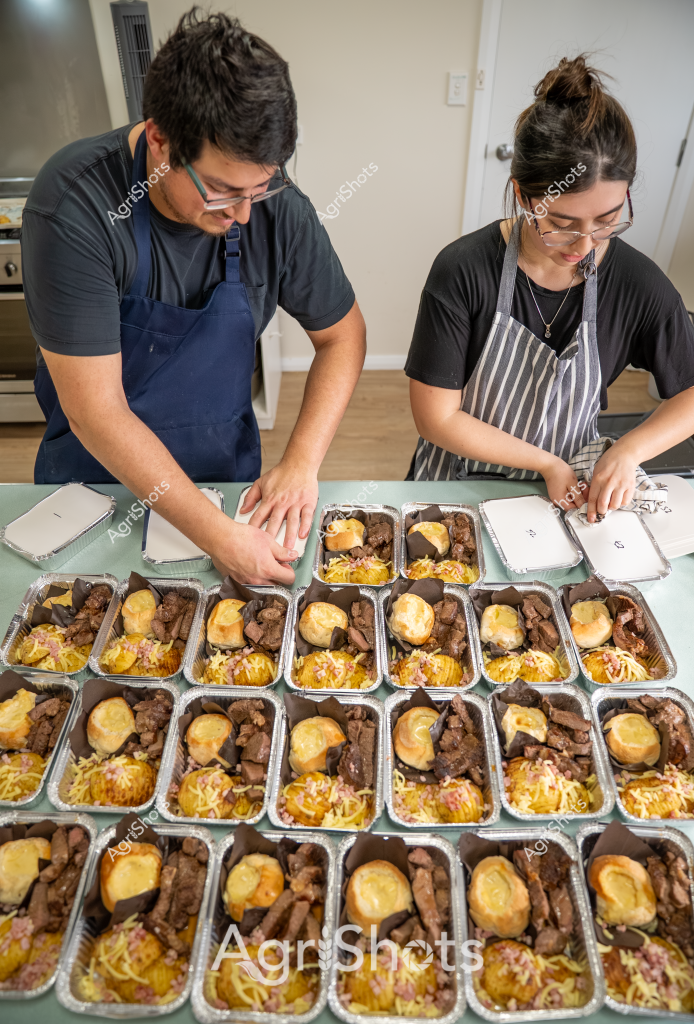
Two individuals in aprons carefully prepare a large batch of meal trays in what appears to be a commercial kitchen or food preparation space. A man wearing a navy blue apron and a woman in a striped gray apron are meticulously arranging multiple aluminum food containers, each filled with a consistent meal composition. The trays contain what looks like beef or meat chunks, golden-topped potatoes or bread rolls, and a bed of yellow-orange shredded ingredients, likely cheese or a similar garnish. The scene demonstrates precision and coordination, with rows of identically portioned meals systematically laid out across the surface. Their focused demeanor and professional kitchen attire suggest this is likely a commercial food service operation - potentially catering, meal preparation for an institution, or a large-scale food delivery service. The uniform presentation of each tray indicates careful attention to portion control and consistent quality. The kitchen environment appears clean and organized, with neutral walls and a light-colored work surface. Both individuals are wearing glasses and dark shirts underneath their aprons, and they work side by side with concentrated effort to complete the meal preparation process.
 Image
Image
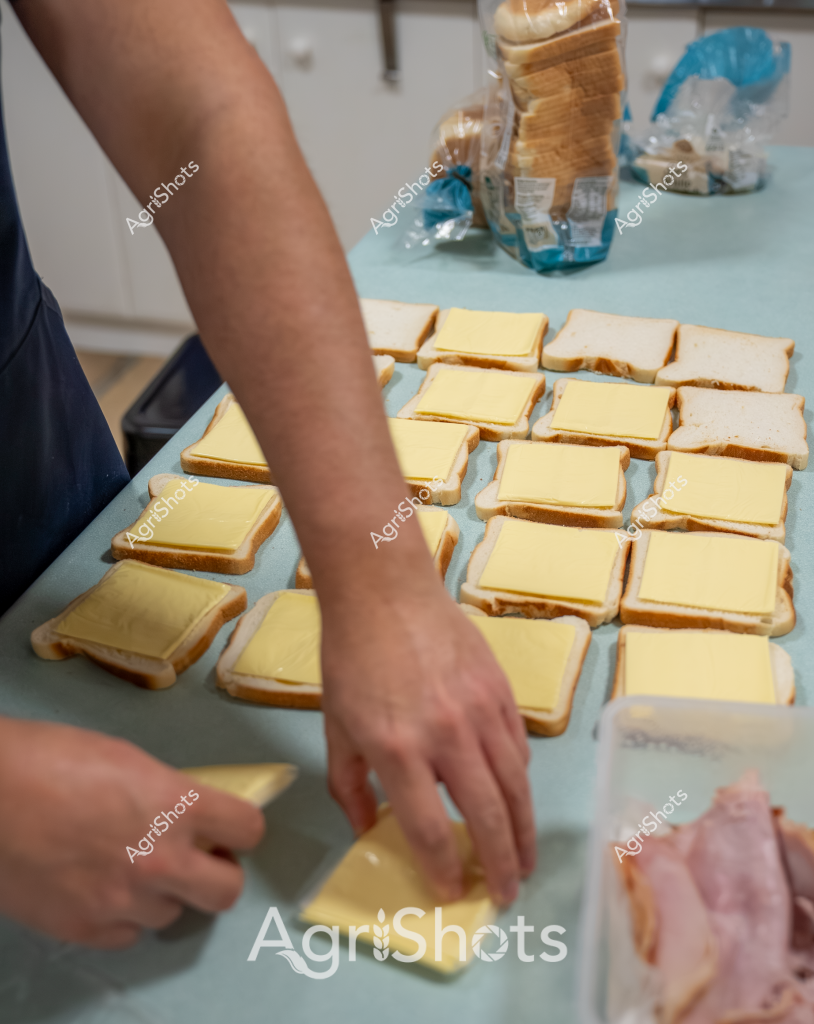
A woman's hands are carefully preparing a batch of cheese sandwiches in what appears to be a home kitchen. Multiple slices of white bread are neatly arranged on a light blue surface, with square yellow cheese slices placed precisely on each piece of bread. Bread bags and other ingredients are visible in the background, suggesting a sandwich preparation process. The image captures an orderly, methodical approach to making multiple sandwiches, with the hands positioned carefully to place each cheese slice with precision. The clean, organized workspace and systematic arrangement of ingredients convey a sense of careful food preparation.
 Image
Image
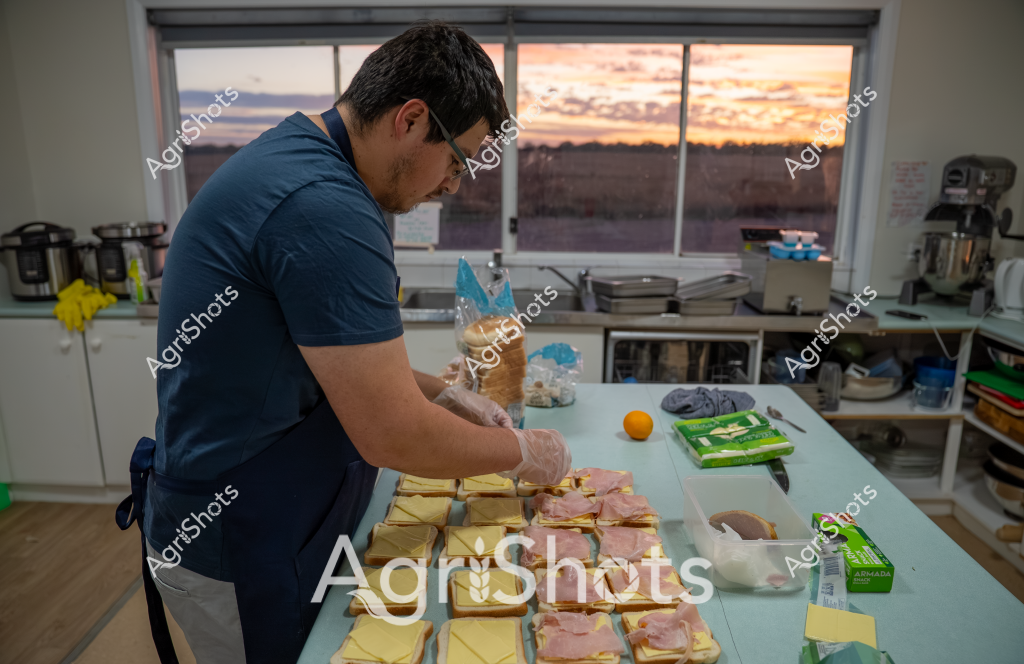
A professional preparing sandwiches in a commercial kitchen, with a stunning sunset visible through large windows behind him. The man, wearing a navy blue shirt and food preparation gloves, is carefully assembling multiple sandwich portions on a clean work surface. Slices of yellow cheese and pink ham are meticulously laid out across several bread bases, suggesting a systematic food preparation process. Kitchen equipment like industrial mixers and appliances are visible in the background, while a warm, golden sunset casts a beautiful glow through the windows, creating a serene atmosphere in the workspace. An orange sits nearby, and green packaging suggests a professional catering or food service environment.