Browse the collection
 Image
Fallow deer gather in a lush Tasmanian pasture, their velvety antlers catching the soft midday light against a backdrop of eucalyptus forest and expansive blue skies. Two magnificent stags dominate the foreground, their dappled white and tan coats gleaming with health, displaying the pristine condition of carefully managed deer farming. In the middle distance, another deer stands alert, while additional herd members graze peacefully across the verdant paddock. The close-up perspective reveals intricate details of their soft muzzles, intelligent eyes, and the delicate texture of their antler velvet - a testament to the precision of modern venison livestock breeding. This scene captures the essence of Tasmania's thriving deer farming industry, showcasing the animals' natural grace and the region's exceptional agricultural landscape. The composition speaks to the careful husbandry and environmental stewardship that defines premium Australian livestock production.
 Image
Aerial view of a state-of-the-art dairy facility nestled in the lush Tasmanian agricultural landscape. A large herd of black and white Holstein dairy cows congregates within a meticulously designed steel and concrete feeding and milking complex, showcasing modern agricultural precision. Crisp white and gray structures including a expansive shed, robotic milking stations, and gleaming cylindrical storage tanks punctuate the verdant green pasture edges. The systematic layout reveals advanced technological integration, with carefully engineered walkways and automated feeding systems that demonstrate Tasmania's cutting-edge approach to livestock management. Neat dirt and concrete pathways connect different zones of the operation, highlighting the strategic infrastructure that supports efficient milk production. The overhead perspective captures the intersection of agricultural tradition and innovative farming technology, revealing how contemporary dairy operations balance animal welfare, productivity, and environmental considerations in a single, harmonious ecosystem.
 Image
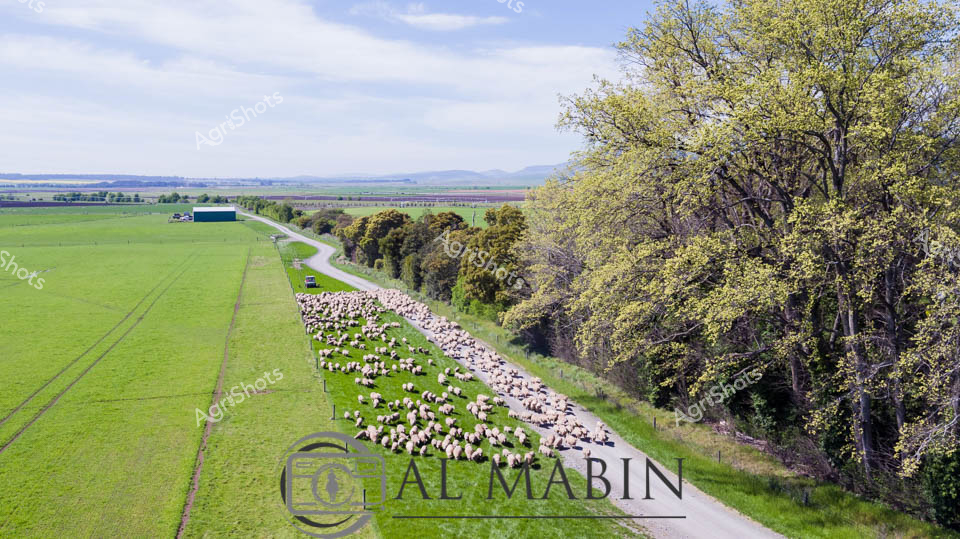
Merino ewes stream along a verdant irrigation channel, their woolly forms creating a sinuous river of white and cream against the lush spring pastures of Tasmania. A centre pivot irrigator stands sentinel in the distance, testament to the precision of modern agricultural practices in this fertile landscape. The pastoral scene unfolds beneath a soft blue sky, with mature trees lining the farm track offering a textured green boundary to the meticulously managed grasslands. Hundreds of sheep move with quiet purpose, their dense fleeces hinting at the renowned wool quality of Tasmanian agriculture. The early morning light casts a golden-green glow across the landscape, highlighting the undulating terrain and the carefully maintained farm infrastructure. This image captures the essence of Tasmanian sheep farming - a harmonious blend of natural beauty, agricultural expertise, and sustainable land management.
 Image
Nestled in the lush Tasmanian landscape, this aerial view captures the essence of modern agricultural precision at the agricultural property. A gleaming centre pivot irrigation system stretches across emerald-green pastures, its elegant metal framework promising efficient water distribution for livestock grazing. The white-roofed sheds and infrastructure blend seamlessly with the verdant paddocks, while dramatic blue-green mountains rise in the background, creating a quintessential Tasmanian rural vista. Carefully maintained sheep yards sit adjacent to the irrigator, suggesting a well-managed mixed farming operation that balances cutting-edge technology with traditional pastoral practices. The late spring or early summer scene radiates a sense of agricultural productivity, with mature trees framing the property and creating a picturesque balance between cultivated land and natural bushland. This image exemplifies the sophisticated approach of contemporary Tasmanian agriculture, where technological innovation meets breathtaking natural landscape.
 Image
Verdant grasslands stretch beneath billowing cumulus clouds in this quintessential Tasmanian pastoral landscape. A herd of sleek black Angus cattle graze and drink from a tranquil lakeside, their dark coats contrasting against the sun-bleached grasses and verdant riverside vegetation. Rolling hills dotted with scattered eucalyptus trees frame the background, creating a classic Australian rural vista that speaks to generations of agricultural heritage. A weathered utility trailer sits quietly near the herd, suggesting ongoing farm management and mobility. The terrain reveals a delicate ecosystem where livestock and landscape coexist, with tussock grasses and native shrubs providing natural grazing grounds. This serene scene captures the essence of Tasmanian beef cattle farming - a harmonious blend of rugged natural beauty and careful agricultural stewardship, where each animal is part of a carefully managed agricultural tradition.
 Image
Merino ewes stream along a verdant pastoral roadway, their woolly forms creating a living river against the lush green pastures of Tasmania's northern agricultural region. Mountains rise in soft blue silhouettes across the distant horizon, framing expansive irrigated farmlands checkered with various crop hues. A centre pivot irrigation system gleams in the mid-distance, testament to the sophisticated agricultural practices of this rich farming landscape. The pastoral scene pulses with the rhythm of agricultural life - sheep moving purposefully, surrounded by vibrant spring greenery and mature trees bursting with new season growth. Soft cloud wisps drift across a powder blue sky, suggesting perfect conditions for livestock movement and farm operations.
 Image
Merino wethers cluster together on a rocky, sun-drenched paddock near the highland plains of Tasmania, their dense, silvery-grey fleece reflecting the harsh midday light. Rolling pastoral landscapes unfold behind them - verdant green crop fields punctuated by scattered eucalyptus and pine windbreaks, with rugged blue-tinted mountains forming a distant backdrop. The flock stands tightly packed, their woolly bodies creating a unified mass of texture and movement across the dry, stone-strewn ground, suggesting recent mustering activity. Late summer heat radiates across the undulating terrain, creating a sense of stillness and endurance characteristic of Australian agricultural landscapes. The image captures the resilience of both the landscape and the livestock, highlighting the intricate relationship between land, animals, and agricultural practice in Tasmania's central highlands.
 Image
The masterful agricultural portrait captures a quintessential Tasmanian sheep farming landscape. A dense flock of robust merino sheep cluster on a lush emerald pasture, surrounded by a sophisticated centre pivot irrigation system that gleams silver-grey against the verdant paddock. Mature pine and deciduous trees frame the background, with distant blue mountains softening the horizon, suggesting this is a well-established pastoral property in Tasmania's rich agricultural heartland. The metallic irrigation infrastructure demonstrates modern farming precision, contrasting beautifully with the organic movement and woolly texture of the tightly grouped sheep. White agricultural buildings and clean fencelines underscore the meticulous management of this agricultural enterprise. The crisp blue sky and vibrant green landscape evoke spring or early summer, a season of renewal and potential in the agricultural calendar, when pastures are rich and livestock are in prime condition.
 Image
Precision dairy technology transforms traditional milking practices in this intimate mechanical landscape. DeLaval robotic milking arms cluster together, their sleek grey mechanical forms connected by a web of blue hydraulic lines and flexible conduits. The industrial interior of the milking shed reveals a pristine, high-tech environment where automation meets agricultural science, with metallic panels and sophisticated equipment replacing manual labor. These sophisticated robotic milkers represent the cutting edge of agricultural innovation, allowing continuous, precise dairy production with minimal human intervention. The complex arrangement of articulated arms and connection points demonstrates the intricate engineering required to efficiently harvest milk from dairy herds. Sophisticated sensors and pneumatic systems enable each robotic arm to precisely locate, attach, and extract milk, showcasing how modern agricultural technology has revolutionized one of humanity's oldest food production processes.
 Image
In the golden light of early morning, a dairy professional stands confidently amid the gleaming metal infrastructure of a modern milking facility. Sleek metal gates and walkways frame a herd of Holstein cattle, their black and white forms clustered within precision-engineered livestock pens. Her warm smile radiates passion for agricultural innovation, reflecting the cutting-edge robotic dairy technology surrounding her. Mountains rise softly in the background, creating a quintessential Tasmanian agricultural landscape that speaks to generations of farming expertise. The silvery-grey metals of the dairy infrastructure contrast beautifully with the earthy tones of the cattle yard and the lush green pastures beyond, embodying the sophisticated intersection of traditional farming and contemporary agricultural science. Her black hoodie and relaxed posture suggest both professional pride and deep comfort in this high-tech agricultural environment.
 Image
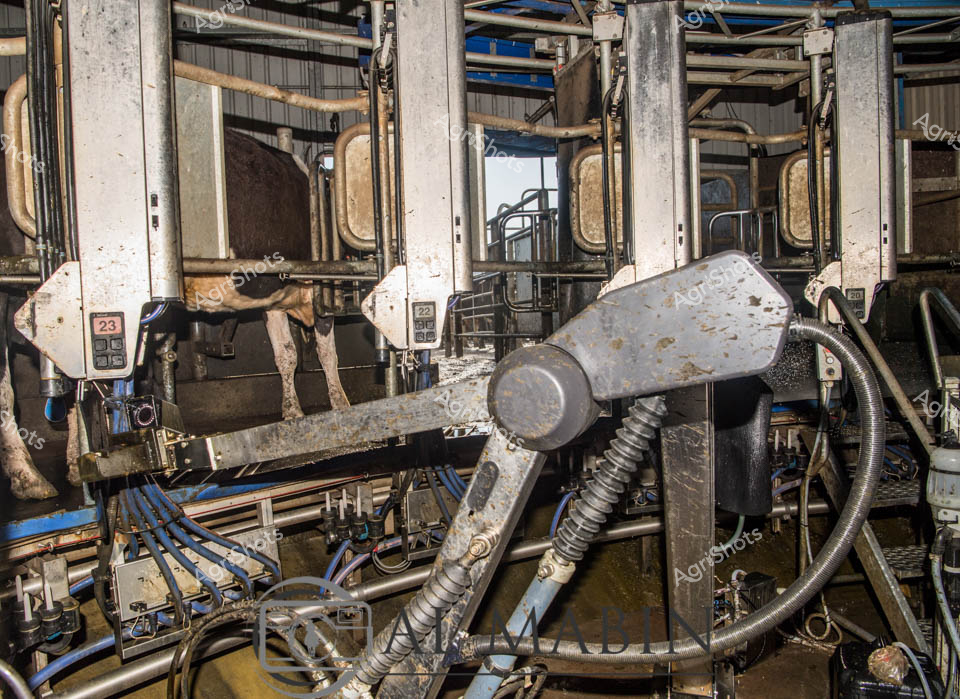
Precision and automation converge in this intimate portrait of modern dairy technology. Gleaming robotic milking arms stand poised within a sophisticated milking parlour, their mechanical limbs engineered to gently extract milk from Holstein dairy cows. Industrial concrete columns and blue-tinted infrastructure frame the sophisticated machinery, revealing a high-tech environment where agricultural tradition meets cutting-edge innovation. Intricate networks of blue hydraulic lines, flexible metal conduits, and digital control panels demonstrate the complex engineering behind automated livestock management. Numbered stations (visible as tags 22 and 23) indicate the systematic approach to each animal's milking process, showcasing how contemporary Tasmanian dairy farms optimize efficiency and animal welfare through technological intervention. The metallic greys, industrial textures, and strategic positioning of equipment highlight the precision of this automated agricultural ecosystem, where every mechanical movement is calculated to support sustainable milk production.
 Image
Holsteins stand patiently in a sophisticated robotic milking carousel at an advanced Tasmanian dairy farm. The circular milking platform, stained with algal green at its base, is a testament to the blend of agricultural tradition and cutting-edge technology. Sleek metal railings and automated equipment frame the black and white dairy cows, each wearing a distinctive yellow ear tag, positioned precisely within individual stalls. Corrugated metal walls and overhead piping create an industrial backdrop that speaks to the precision of modern agricultural practices. The blue accents of robotic milking equipment contrast with the monochromatic cow hides and metallic infrastructure, highlighting the farm's commitment to efficient, technology-driven milk production. This image captures the quiet efficiency of contemporary dairy farming, where animal welfare and technological innovation converge to support Australia's critical agricultural sector.
 Image
Modern Dairy Innovation: Precision Milking in Tasmania Sleek Holstein dairy cows stand precisely positioned within a state-of-the-art robotic milking system, their black and white markings contrasting against gleaming stainless steel infrastructure. Automated milking arms curve gracefully around their udders, representing the pinnacle of agricultural technology and precision farming. Cool blue hydraulic lines and metallic mechanical components create a complex network of precision engineering, while weathered concrete walls suggest a traditional dairy shed transformed by cutting-edge automation. Digital control panels numbered 8, 9, and 10 indicate individual milking stations, highlighting the systematic approach to livestock management in contemporary Tasmanian dairy operations. The environment speaks to efficiency and technological advancement, where generations of farming knowledge merge seamlessly with sophisticated robotic technologies. Each carefully positioned element reveals a meticulous approach to animal care, milk production, and agricultural innovation that defines modern Australian dairy farming.
 Image
Gleaming stainless steel and precision engineering define this modern dairy milking parlour, showcasing the pinnacle of agricultural technology. The circular rotary milking platform reveals a series of Holstein dairy cows secured in individual stations, their black and white markings visible against the metallic infrastructure. Sophisticated blue and white pneumatic milking clusters hang ready to attach to each cow's udders, representing the cutting-edge automation transforming dairy farming in Tasmania. Flexible corrugated tubes and intricate piping systems snake through the milking shed, connecting each station to the central milk collection system with remarkable mechanical efficiency. The concrete floor and industrial overhead structure suggest a purpose-built facility designed for maximum hygiene and productivity, reflecting the advanced agricultural practices of contemporary Australian dairy operations.
 Image
Aerial panorama of a classic Tasmanian sheep station, capturing the expansive rural landscape with its meticulously organized agricultural infrastructure. A weathered woolshed and interconnected livestock yards anchor the scene, surrounded by golden dry pastures that speak to the late summer season. Curved fenced paddocks guide a mob of sheep through a strategic handling system, with water tanks and outbuildings strategically positioned across the property. Two white utility vehicles rest near the yards, essential tools for mustering and farm management. The blue-grey buildings contrast against the ochre landscape, creating a striking visual representation of Tasmania's agricultural resilience. Mature eucalyptus trees provide strategic windbreaks, defining property boundaries and offering shade to the working farm environment. The image captures the precision and scale of modern sheep farming, where generations of agricultural knowledge are embedded in every carefully planned infrastructure and land management detail.
 Image
Precision agriculture meets dairy innovation in this intimate glimpse of a modern milking parlour. Gleaming stainless steel robotic milking stations stand in perfect alignment, each numbered unit poised to efficiently extract milk from Holstein dairy cows. Blue hydraulic lines and mechanical arms create a complex technological choreography, representing the pinnacle of agricultural automation. Soft-tone metal panels and industrial infrastructure frame the methodical process of milk production, with numbered stations (10 and 11 visible) suggesting a systematically organized workflow. The controlled environment captures the intersection of animal husbandry and cutting-edge technological efficiency, where traditional farming meets 21st-century engineering. Cool blue and metallic silver tones dominate the scene, reflecting the clinical precision of contemporary dairy operations, while the rhythmic positioning of cattle reveals the seamless integration of animal and machine in contemporary agricultural practice.
 Image
Robotic milking technology transforms the dairy landscape in this state-of-the-art milking shed. Sleek black and white Holstein dairy cows stand quietly in a precisely engineered metal framework, their yellow identification tags gleaming against their dark coats. Sophisticated blue and silver automated milking equipment curves around the circular milking platform, with a large blue robotic milking unit positioned to efficiently extract milk without direct human intervention. The galvanized steel infrastructure and metal piping create a clinical, high-tech environment, while the green algal growth on the concrete base suggests the humid, moisture-rich conditions of a Tasmanian dairy farm. Cutting-edge precision agriculture meets traditional livestock husbandry in this seamless integration of technology and animal management, representing the future of efficient, data-driven dairy production. The metallic blues, greys, and whites of the equipment contrast dramatically with the deep black and white patterns of the calm, stationary cattle, capturing a moment of agricultural innovation.
 Image
Cutting-edge robotic milking technology transforms dairy production in this state-of-the-art DeLaval milking carousel. Holstein Friesian dairy cows stand calmly in gleaming metal stalls, seamlessly integrated into an automated circular milking platform that rotates smoothly, allowing each animal to be efficiently milked without human intervention. Blue and silver mechanical components arch overhead, representing the pinnacle of agricultural innovation, with precision engineering enabling continuous, stress-free milk extraction. The expansive corrugated shed creates an industrial yet purposeful atmosphere, highlighting Tasmania's advanced agricultural capabilities and commitment to technological efficiency in livestock management. Sophisticated sensors and pneumatic systems connect each cow to the automated milking infrastructure, demonstrating how modern farming integrates animal husbandry with sophisticated technological systems. The scene captures a pivotal moment in agricultural evolution, where traditional farming meets cutting-edge automation, ensuring consistent, high-quality milk production with minimal manual labor.
 Image
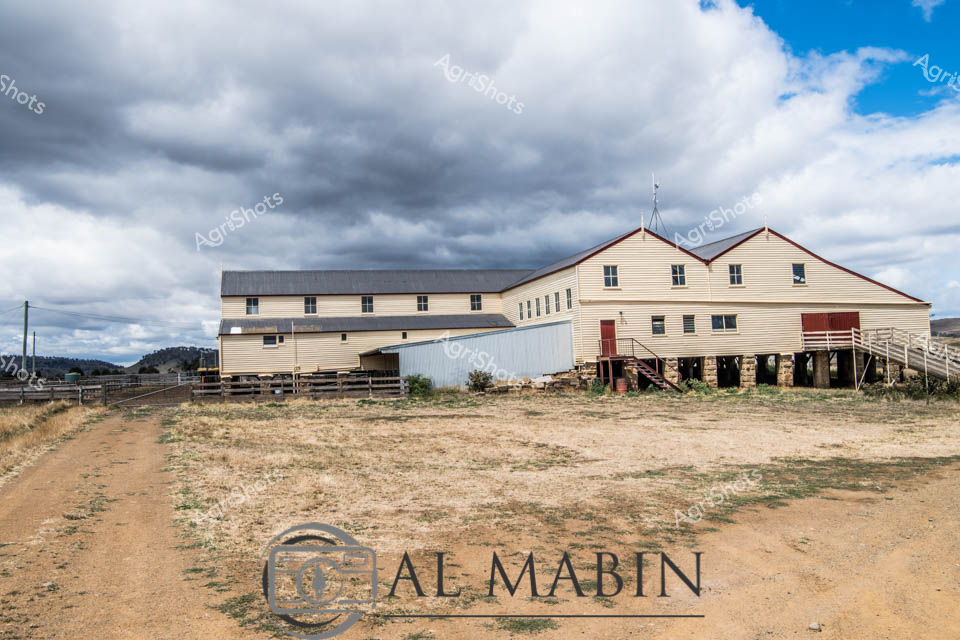
The lens captures the rugged essence of a Tasmanian woolshed, standing resolute against a dramatic cloudscape of steel-grey and brilliant blue. The weathered timber structure, elevated on sturdy stumps, speaks to generations of pastoral heritage, its pale cream cladding contrasting sharply with the parched golden grasslands surrounding it. Expansive sheep yards radiate from the building, their wooden fences creating geometric lines across the sun-bleached landscape, hinting at the rhythmic work of shearing and livestock management that has shaped this rural terrain. Clouded skies suggest the unpredictable maritime climate of Tasmania, where pastoral operations must be resilient and adaptable. The woolshed's architectural design - with its multiple levels and strategic openings - reveals sophisticated understanding of airflow, sheep handling, and the practical demands of wool production. Rust-red accents on doorways and structural elements provide warm punctuation to the neutral palette, reflecting the robust and no-nonsense character of Australian agricultural infrastructure. This image is a powerful testament to the enduring spirit of Tasmania's agricultural landscape - a scene where human enterprise and natural environment converge in a timeless, intricate dance of survival and productivity.
 Image
The Homestead: A quintessential Tasmanian heritage residence nestled in a verdant rural landscape. This magnificent late 19th-century architectural gem showcases classic Victorian-era design with its rich terracotta-red roof, intricate brick detailing, and elegant domed central tower. A meandering dirt driveway winds through lush green lawns, framed by mature trees and soft landscaping, leading to the grand homestead that speaks of pastoral elegance and historical significance. The building's symmetrical facade features decorative brick chimneys, ornate verandah details, and a distinctive rounded turret, embodying the refined architectural sensibilities of early European settlers in Tasmania. Soft cloud-dappled skies and the carefully maintained grounds suggest a property of considerable historical and cultural importance, representing the refined agricultural heritage of rural Tasmania.
 Image
A large flock of sheep gathers in a cleared paddock during mustering operations in rural Tasmania, with working dogs positioned nearby to assist with livestock management. The rolling hills and eucalyptus trees create a典型的 Australian agricultural landscape under dramatic cloudy skies. The scene captures the essence of sheep farming in Tasmania's pastoral regions, where Merino flocks are moved between paddocks for grazing management. This pastoral scene demonstrates traditional livestock handling methods still widely used across Australian sheep stations.
 Image
A large flock of sheep moves through a rural paddock in Tasmania as two Toyota utility vehicles with stock crates position nearby for the mustering operation. Working dogs assist in moving the sheep across the dry grassland, with the vehicles strategically placed to guide the livestock movement. The scene captures typical sheep mustering activity against a backdrop of rolling hills and scattered eucalyptus trees under partly cloudy skies. This pastoral landscape showcases traditional Australian sheep farming operations in Tasmania's agricultural regions.
 Image
A flock of sheep moves along a dirt road beside a large dam in Tasmania's rural landscape, with working dogs helping to muster the livestock. The golden grassland stretches across rolling hills under a cloudy sky, while wire fencing lines the property boundaries. A vehicle can be seen in the distance supporting the mustering operation, capturing the essence of traditional sheep farming in Tasmania's pastoral country.
 Image
Merino ewes cluster tightly on a rocky, undulating paddock in Tasmania's central highlands, their dense woolly fleeces a uniform silvery-grey against the muted earth tones of late summer pasture. Rolling hills stretch into the distant blue-green landscape, punctuated by isolated eucalyptus and poplar trees marking property boundaries. The flock huddles instinctively, a living testament to generations of careful breeding and agricultural management in this challenging high country terrain. Scattered stones and sparse ground vegetation reveal the marginal grazing conditions that have shaped these resilient sheep, bred to thrive in Tasmania's variable climate. Verdant green crop fields in the middle distance contrast with the drier foreground, highlighting the sophisticated land management practices of this agricultural region. The image captures the quintessential Australian pastoral scene - a moment of calm in the rhythmic cycle of sheep farming that has defined rural Tasmanian economics and culture for generations.