Browse the collection
 Image
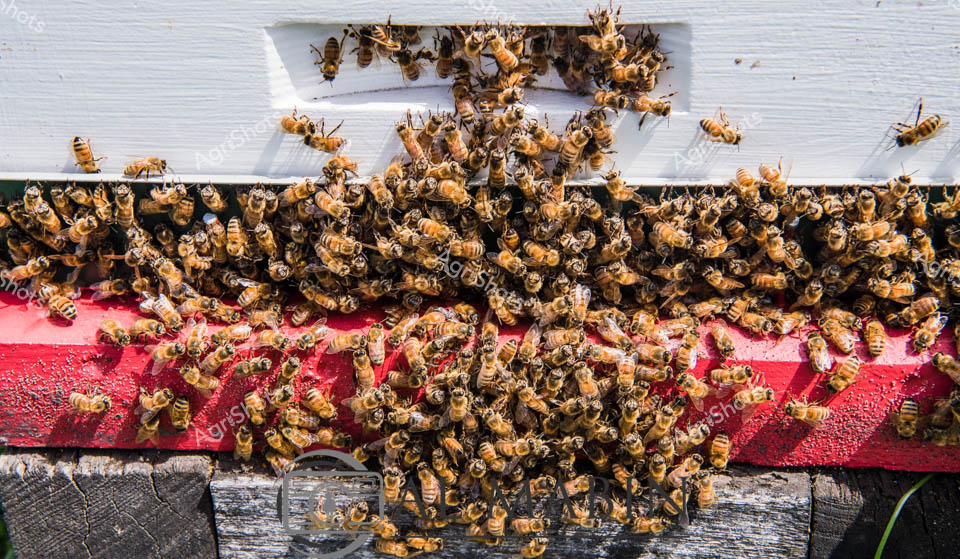
Hundreds of honey bees cluster densely around the entrance of a white wooden hive box in this active apiary scene from Tasmania's Upper Mersey Valley Region. The industrious bees cover the bright red landing board and wooden frames, with many more flying around the hive entrance during this busy spring pollination period. The thriving colony demonstrates the vital role these bees play in honey production and agricultural pollination across the region.
 Image
A brown and tan working dog with distinctive kelpie markings lies chained on wooden decking in a sheep yard setting in Tasmania. The alert farm dog displays the characteristic coloring and alert expression typical of Australian working breeds used for livestock management. The weathered timber flooring and rural setting capture the authentic atmosphere of Tasmanian agricultural operations where working dogs are essential for sheep handling and yard work.
 Image
Weathered ram standing resolute in a Tasmanian sheep yard, his magnificent fleece a testament to generations of careful merino breeding. Tight, dense wool curls in silvery-grey clusters, covering his powerful frame and revealing the hallmarks of a premium stud animal. Massive curved horns arc dramatically on either side of his head, while his pink-tinged nose and calm expression speak to generations of selective agricultural refinement. The background hints at a lush pastoral landscape - green pastures and weathered wooden fencing suggesting the rich agricultural heritage of Tasmania's midlands. This ram embodies the quiet strength of Australian livestock breeding: robust, meticulously developed, perfectly adapted to challenging rural environments. His presence captures the essence of Tasmania's renowned wool industry - a living sculpture of agricultural expertise and natural resilience.
 Image
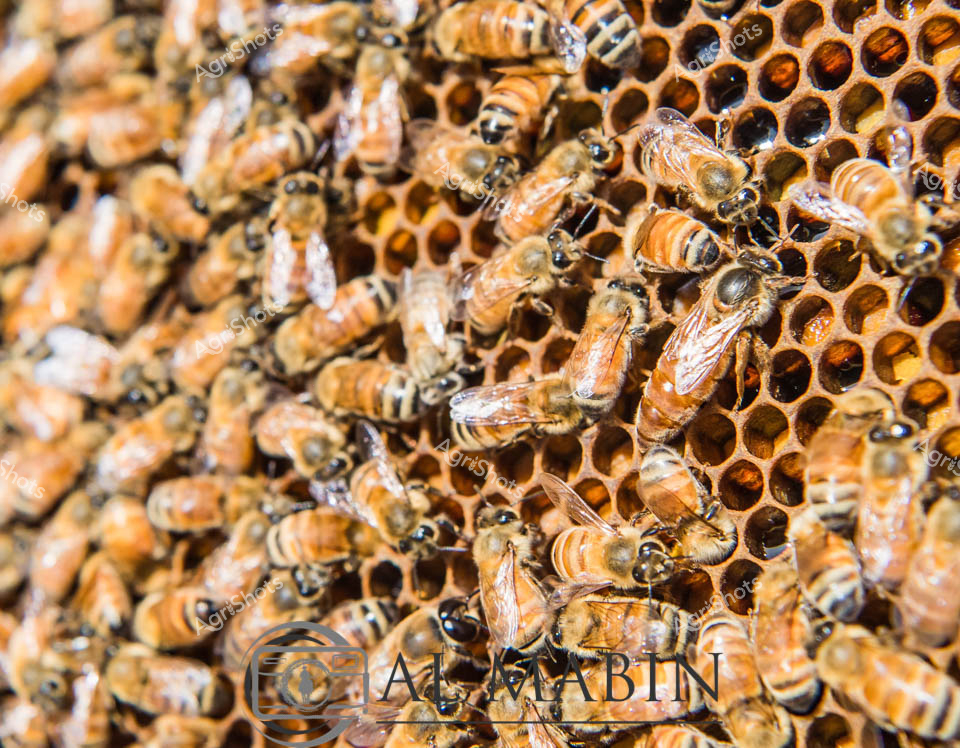
A bustling honeybee colony thrives on their hexagonal honeycomb structure in this detailed apiary scene from Tasmania's Upper Mersey Valley Region. Worker bees with distinctive striped abdomens move purposefully across the wax cells, some filled with golden honey while others contain developing brood, capturing the essential pollination activities of spring. The intricate geometric patterns of the hive reveal the remarkable engineering skills of these industrious insects as they tend to their colony's needs. This intimate view showcases the vital role of bee hives in agricultural ecosystems, where these pollinators support crop production and honey harvesting throughout the Tasmanian countryside.
 Image
A detailed close-up view reveals hundreds of busy honeybees working diligently across the hexagonal honeycomb structure of their hive in Tasmania's Upper Mersey Valley Region. The wooden frame is densely populated with worker bees, their golden-brown bodies creating a living carpet as they tend to their spring pollination duties. The intricate wax comb displays the classic six-sided cell pattern where bees store honey and raise their young, showcasing the remarkable engineering of these industrious insects. This intimate apiary scene captures the essential agricultural partnership between beekeepers and their hives, highlighting the critical role these pollinators play in Tasmania's farming ecosystem during the active spring season.
 Image
A beekeeper in protective gear tends to a busy hive frame covered with hundreds of honey bees during spring in Tasmania's Upper Mersey Valley Region. The figure works carefully with the active colony, placing their hand near the wooden frame as the bees cluster densely across the honeycomb structure. This close-up view captures the essential work of apiary management and the vital role of bees in pollination throughout the agricultural landscape.
 Image
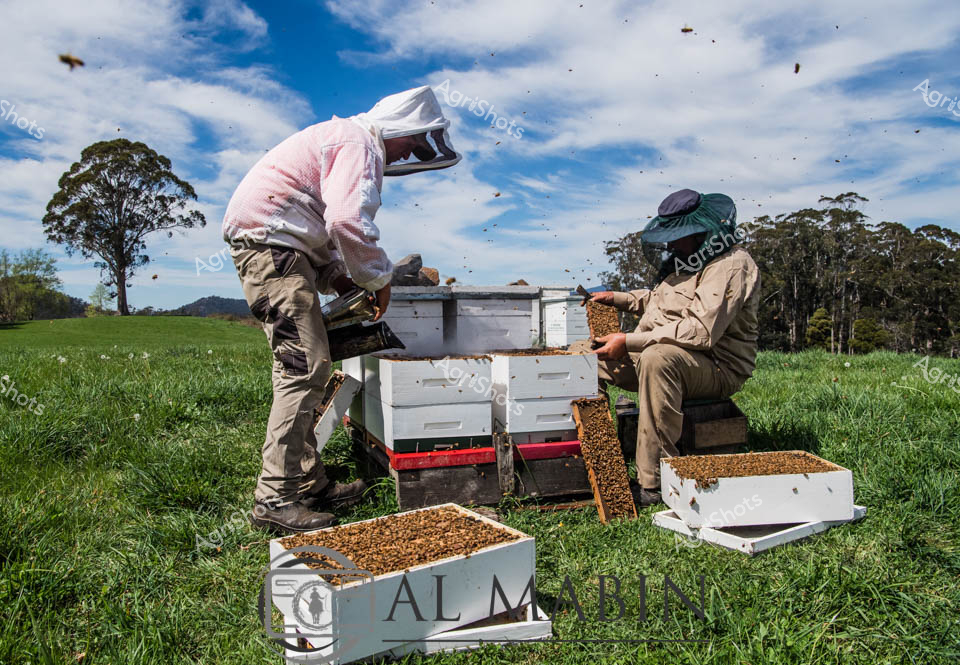
Two beekeepers work methodically with their bee hives in a lush green paddock during spring in Tasmania's Upper Mersey Valley Region. The beekeepers wear protective gear including hats with veils as they inspect frames thick with bees from their white wooden hive boxes. Multiple hive supers are stacked and spread across the grass, with thousands of bees actively flying around the apiary site. This pollination operation showcases the vital role of beekeeping in Tasmania's agricultural landscape, with the scenic rural setting providing an ideal environment for honey production.
 Image
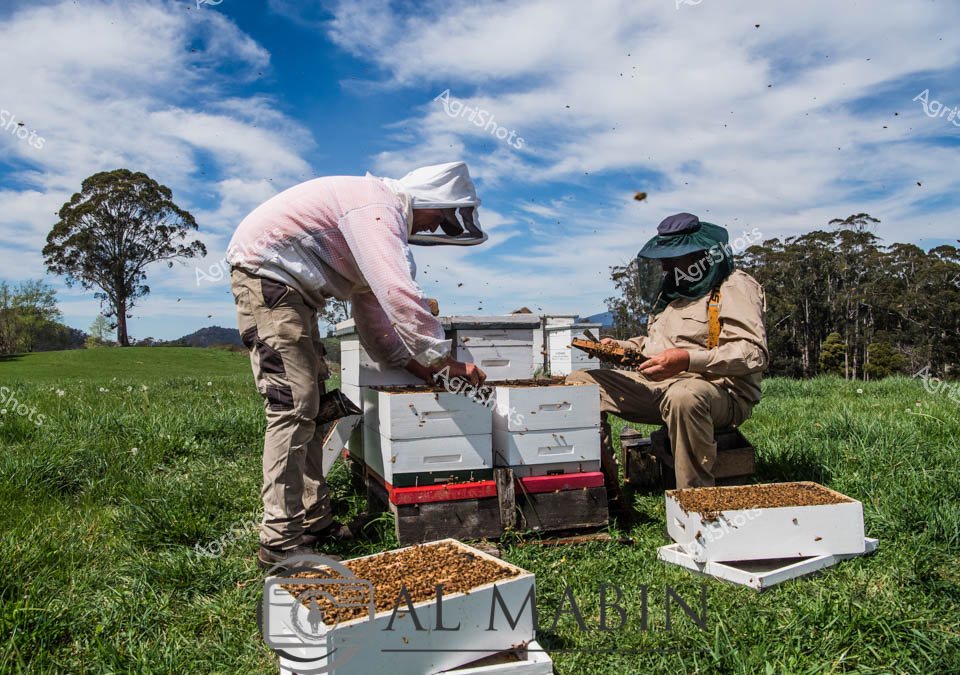
Two beekeepers work together managing bee hives in a spring apiary scene in Tasmania's Upper Mersey Valley Region. One beekeeper wearing protective gear and a veil inspects the hive boxes while bees swarm around the white wooden hive structures scattered across the green paddock. The second beekeeper sits nearby examining honeycomb frames, with both working to maintain the colony during the active pollination season. The rural landscape features eucalyptus trees under a partly cloudy sky, creating an ideal environment for honey production.
 Image
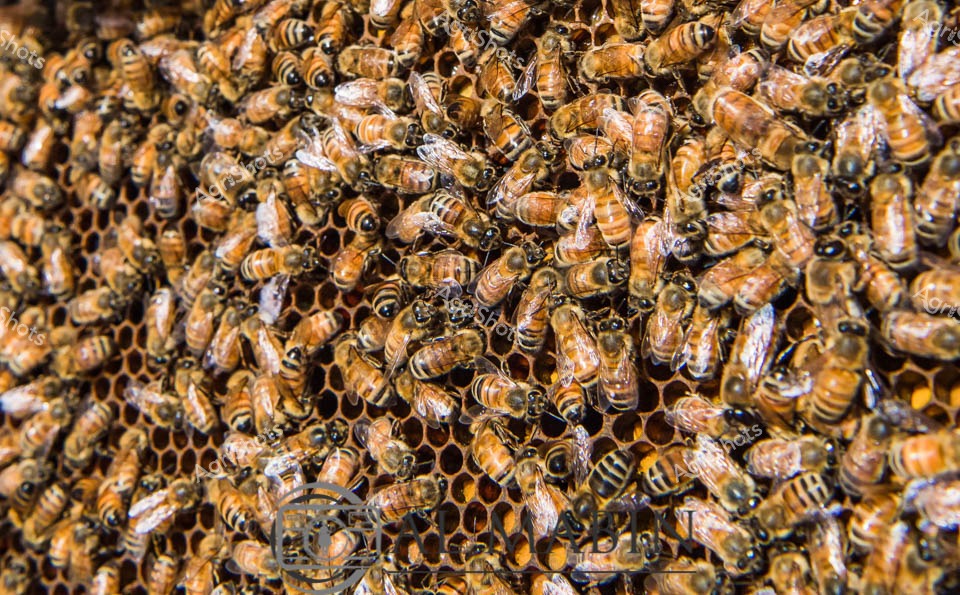
A bustling bee hive reveals hundreds of honey bees clustered densely across dark hexagonal honeycomb cells during spring in Tasmania's Upper Mersey Valley Region. The amber-colored worker bees with distinctive black and brown striped abdomens move actively across the comb structure, their busy activity highlighting the essential pollination work and honey production that sustains both the apiary and surrounding agricultural landscape. The intricate hexagonal pattern of the hive provides a geometric backdrop to this fascinating glimpse into the complex social organization of these vital pollinators, showcasing the industrious nature that makes bee hives such crucial components of Tasmania's spring agricultural ecosystem.
 Image
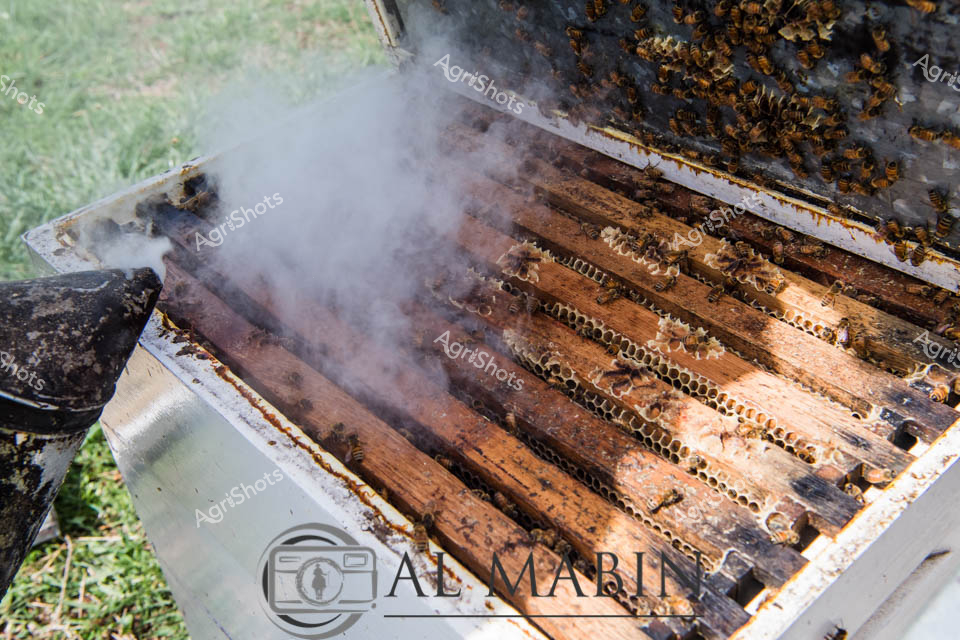
Smoke billows gently from a bee smoker, calming a bustling hive of honeybees in the lush Upper Mersey Valley region of Tasmania. Wooden frames reveal intricate honeycomb structures, golden with fresh honey and teeming with industrious bees moving across their carefully constructed chambers. The soft grey smoke drifts through the apiary, a traditional beekeeping technique that helps manage the colony during inspection, allowing the beekeeper to carefully assess the hive's health and honey production. Weathered wooden hive boxes sit against a backdrop of verdant green grass, capturing the essence of spring in Tasmania's rich agricultural landscape. Sunlight catches the hexagonal wax cells, highlighting the remarkable precision of these tiny pollinators as they work tirelessly within their carefully organized community. This intimate glimpse into apiculture reveals the delicate balance between human intervention and the remarkable natural systems of honeybee colonies.
 Image
A magnificent Merino ram with impressive curved horns stands prominently in the foreground of these sheep yards in Tasmania. The ram's thick, woolly fleece displays the characteristic fine wool quality that Merino sheep are renowned for, while his alert expression and sturdy build exemplify the breeding standards of a quality stud operation. In the background, a farm worker wearing a hat observes the livestock from behind the metal rail fencing, highlighting the careful management and selection processes that are essential to successful sheep breeding. The clear blue sky and rural setting capture the essence of Tasmanian pastoral farming, where premium wool production and livestock breeding form the backbone of the agricultural economy.
 Image
Nestled on weathered wooden sheep yards, a chocolate and tan working dog rests with quiet intensity. The alert kelpie breed, renowned for its intelligence and endurance in Australian pastoral settings, appears momentarily still, its rich brown and burnt orange coat contrasting against the aged timber slats. One front leg stretched forward, ears slightly pricked, the dog exhibits the characteristic focus and compact musculature of a skilled herding companion. Its fur shows subtle variations of color - deep chocolate at the back, transitioning to warm amber-orange at the legs, with a hint of white markings breaking the rich tones. The close-up perspective captures the dog's profound connection to the rural landscape, embodying generations of breeding refined for the challenging demands of Australian sheep farming. This intimate portrait speaks to the unbreakable bond between working dogs and the agricultural traditions of Tasmania's rugged pastoral regions.
 Image
Honey Harvest in the Upper Mersey Valley A weathered hand carefully lifts a honey-laden frame teeming with thousands of industrious honeybees in the lush green pastures of Tasmania's Upper Mersey Valley. The wooden frame is almost completely obscured by a dense carpet of golden-brown bees, their bodies clustered together in an intricate living mosaic that speaks to the remarkable social structure of these crucial pollinators. Soft morning light filters through a misty background of distant trees, suggesting early spring when bee colonies are at their most active. Each bee moves with purposeful precision, a testament to the sophisticated communication and collective effort that defines their species. The intimate connection between the beekeeper's experienced hand and the vibrant bee colony captures the delicate symbiosis of apiary management - a critical agricultural practice that supports both local ecosystems and broader agricultural productivity. This moment of harvest represents the culmination of months of careful hive management, where human skill and natural wonder converge in the production of pure, golden honey.
 Image
A bustling apiary scene captures hundreds of bees swarming across wooden hive frames during spring pollination season in Tasmania's Upper Mersey Valley Region. White smoke drifts through the active bee colony as the insects move energetically across the honey-laden hive structures. The wooden bee hives reveal the intricate workings of a productive apiary, with bees clustered densely on multiple frames. This dynamic spring activity showcases the essential role of bees in Tasmania's agricultural pollination cycle.
 Image
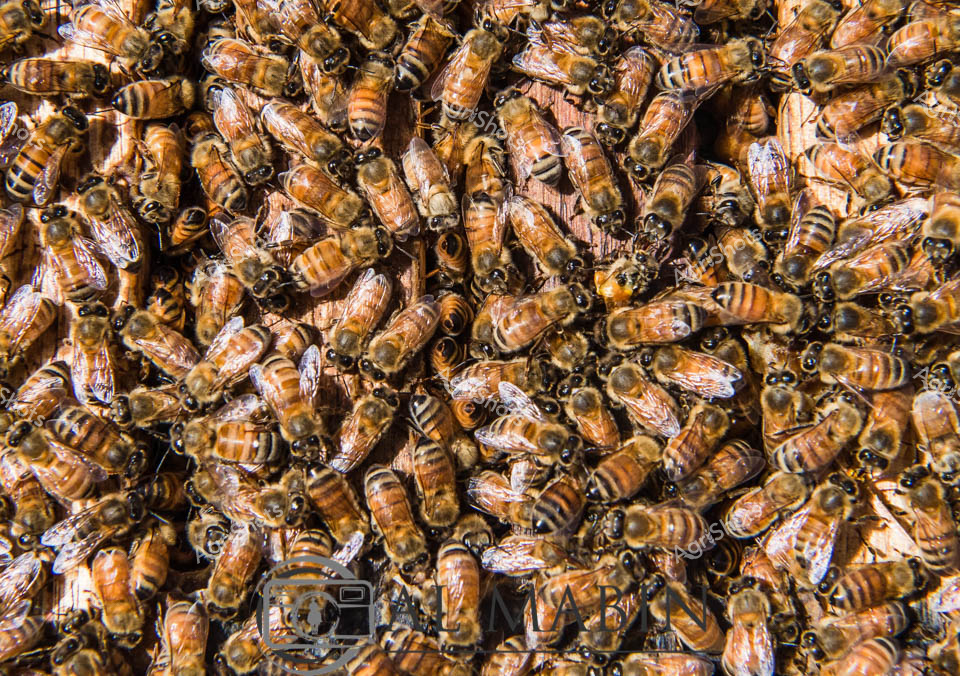
Thousands of honeybees cluster densely together on their hive frames during spring in Tasmania's Upper Mersey Valley Region. The working bees display their distinctive golden-brown striped bodies as they tend to their hive duties, creating the intricate patterns essential for honey production and pollination activities. This bustling apiary scene captures the industrious nature of these vital pollinators as they work collectively within their bee hives.
 Image
Merino sheep handling facilities gleam under a crisp Tasmanian spring morning, with precision-engineered steel yards providing a modern agricultural workspace. A robust red quad bike sits ready beside robust metal livestock gates, signaling the preparation for sheep management activities. The galvanized steel yard infrastructure creates a systematic pathway, designed to minimize stress during animal movement and health checks. Lush green pastures stretch beyond the covered handling area, revealing distant mountain ranges and scattered eucalyptus trees typical of the Tasmanian rural landscape. Overhead, a sturdy metal roof provides shelter and consistent working conditions, while the clean, ordered design reflects contemporary agricultural best practices. The scene captures the intersection of sophisticated farming technology and the timeless rhythms of pastoral production, where careful animal husbandry meets cutting-edge agricultural engineering.
 Image
This black and white photograph captures a detailed view of a rugged leather work vest or harness, crafted from Australian-made leather. The garment features multiple structured pouches and pockets, with intricate pleated or gathered sections creating textural visual interest. Metallic rivets and press studs secure various compartments, while thin cords or straps weave between the leather panels, suggesting a utilitarian design for agricultural or industrial work. The worn leather has a rich, weathered patina that speaks to hard use and durability, mounted against a textured wooden background that enhances the item's rugged, functional aesthetic. The monochrome treatment emphasizes the intricate details, textures, and craftsmanship of this robust piece of work equipment.
 Image
A magnificent Merino ram with impressive curved horns stands prominently in the foreground of these sheep yards in Tasmania, his thick woolly fleece displaying the characteristic density prized in Australian wool production. Behind him, a farmer wearing a wide-brimmed hat stands with crossed arms among the wooden yard rails, overseeing the flock during what appears to be a routine livestock handling operation. The ram's alert expression and robust build exemplify the quality breeding stock typical of Tasmanian sheep studs, while the clear blue sky and rural setting capture the essence of Australian pastoral farming. This scene perfectly represents the enduring partnership between dedicated farmers and the Merino sheep in Tasmania's thriving wool industry.
 Image
Precision and purpose define this compelling agricultural portrait of Merino rams gathered in a meticulously maintained pastoral setting. A tightly clustered group of robust rams stands confidently on lush green pasture, framed by stark winter trees and sturdy steel yard fencing. The silvery-grey wooled rams exhibit the quintessential muscular confirmation of high-quality stud livestock, their dense fleeces suggesting exceptional genetic lineage. Bare deciduous trees in the background indicate late winter or early spring, a critical season for agricultural breeding programs. The perspective through steel rails creates a structured, intentional composition that emphasizes the rams' collective strength and the calculated precision of modern sheep breeding.
 Image
Draped in a vibrant coral-red work shirt, an experienced wool assessor meticulously examines a freshly shorn Merino fleece in a dimly lit woolshed. Her glasses perched carefully as she evaluates the wool's quality, her weathered hands moving with the practiced precision of decades of agricultural expertise. The dense, creamy white fleece spreads across the sorting table, its intricate crimp and texture telling a story of careful breeding and pastoral management. Soft night-time lighting casts shadows around her, highlighting the intimate connection between this seasoned professional and the wool production process that is so crucial to Australian agricultural heritage. Her concentrated gaze and deliberate movements speak to the meticulous craft of wool assessment, a skill that requires both technical knowledge and intuitive understanding of sheep genetics and fibre quality. This moment captures the essence of Tasmania's rich wool industry - a blend of tradition, expertise, and ongoing agricultural innovation.
 Image
This evocative leather work harness captures the artisan craft of Australian leather production, suspended against weathered timber boards. Handcrafted from rich brown and deep charcoal leather, the piece showcases multiple pouches and intricate gathered leather sections connected by delicate wire or cord. The harness displays meticulous Australian leatherwork, with precisely positioned metal snap fasteners and carefully constructed compartments suggesting a functional design for rural trades or craftspeople. Subtle variations in leather tones - from russet to chocolate to near-black - create depth and texture, while the worn wooden background emphasizes the rugged, utilitarian nature of the piece. Faint blue markings and the "Australian Made" stamp underscore the local provenance and skilled manufacturing heritage. The composition speaks to traditional leather craftsmanship, embodying the precision and durability essential in rural Australian manufacturing and design.
 Image
Verdant hemp seedlings emerge in precise, undulating rows across a rich, dark soil landscape. Meticulously planted with agricultural precision, the young plants display vibrant lime-green leaves against the deep brown earth, creating a striking geometric pattern that stretches toward distant forested hills. This Tasmanian agricultural scene captures the early stages of hemp cultivation, with carefully spaced plants representing the meticulous care of modern crop management. Soft overcast light bathes the field, highlighting the textural contrast between the fresh green shoots and the freshly turned soil, while the surrounding landscape of rolling hills and dense tree lines provides a quintessential Australian rural backdrop. Each row tells a story of careful preparation, sustainable farming, and the potential of Tasmania's rich agricultural landscape.
 Image
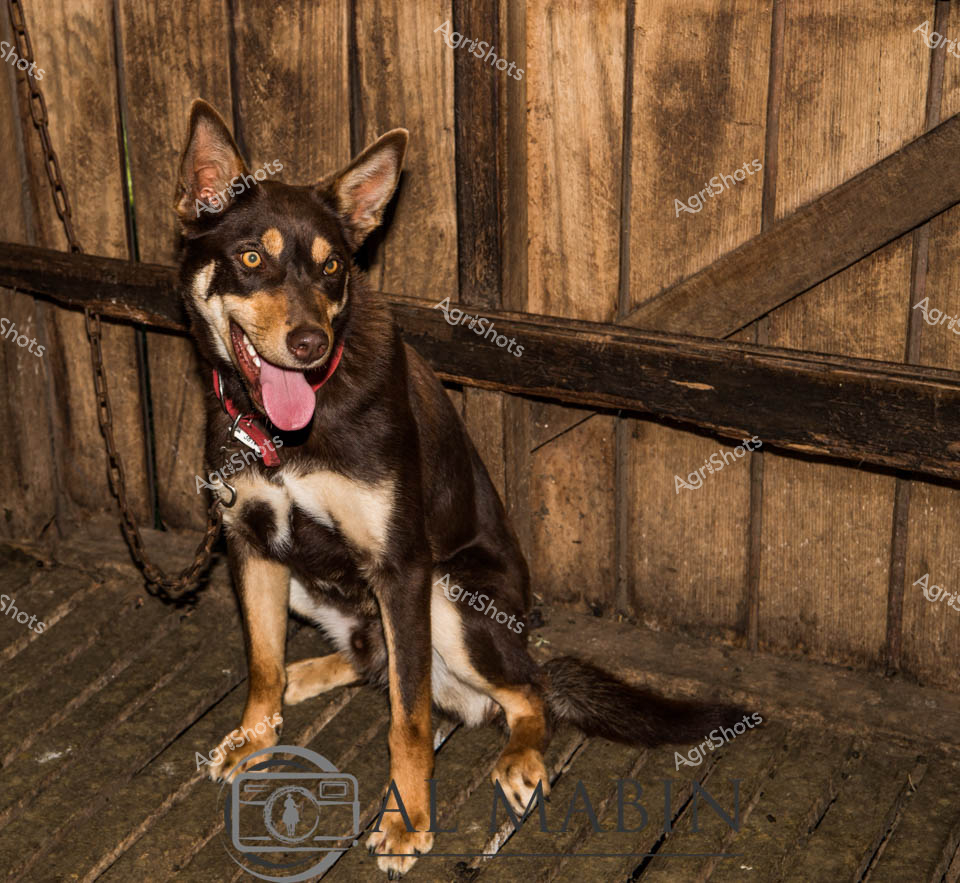
Kelpie on High Alert: A Rustic Timber Yard Scene A vibrant Kelpie herding dog sits attentively within a weathered timber sheep yard, embodying the quintessential Australian rural working dog breed. Her rich chocolate and tan coat contrasts against the aged wooden planks, with alert golden-yellow eyes scanning the environment with intense focus. The dog wears a vivid red collar, signaling her status as a trained working animal, and her pink tongue hangs out with an energetic, ready-to-work expression. Rough-hewn timber beams frame the scene, suggesting this is a classic Tasmanian farm infrastructure - a sturdy, functional space designed for livestock management. Her muscular frame and keen posture demonstrate why Kelpies are renowned as exceptional herding dogs, bred to work tirelessly in challenging agricultural landscapes. The atmospheric lighting and textured wooden backdrop evoke the timeless connection between Australian working dogs and the rural agricultural landscape, capturing a moment of quiet preparedness in the daily rhythm of farm life.
 Image
Green River Valley onion harvest spreads across rust-red volcanic soils, pristine white clouds billowing against a azure Tasmanian sky. Rows of pale green onion stalks emerge from rich earthen ground, their slender forms creating a rhythmic landscape of agricultural precision. Plump white bulbs nestle partially underground, revealing the promise of a robust harvest in this meticulously cultivated field. Distant mountain ranges frame the horizon, providing a dramatic backdrop to the uniform agricultural landscape. Each onion plant stands with remarkable symmetry, demonstrating the careful cultivation and ideal growing conditions of this renowned agricultural region. The image captures the essence of Tasmanian agricultural productivity - a testament to the careful stewardship of the land and the sophisticated farming practices that define Australia's premium produce sectors.