Browse the collection
 Image
Image
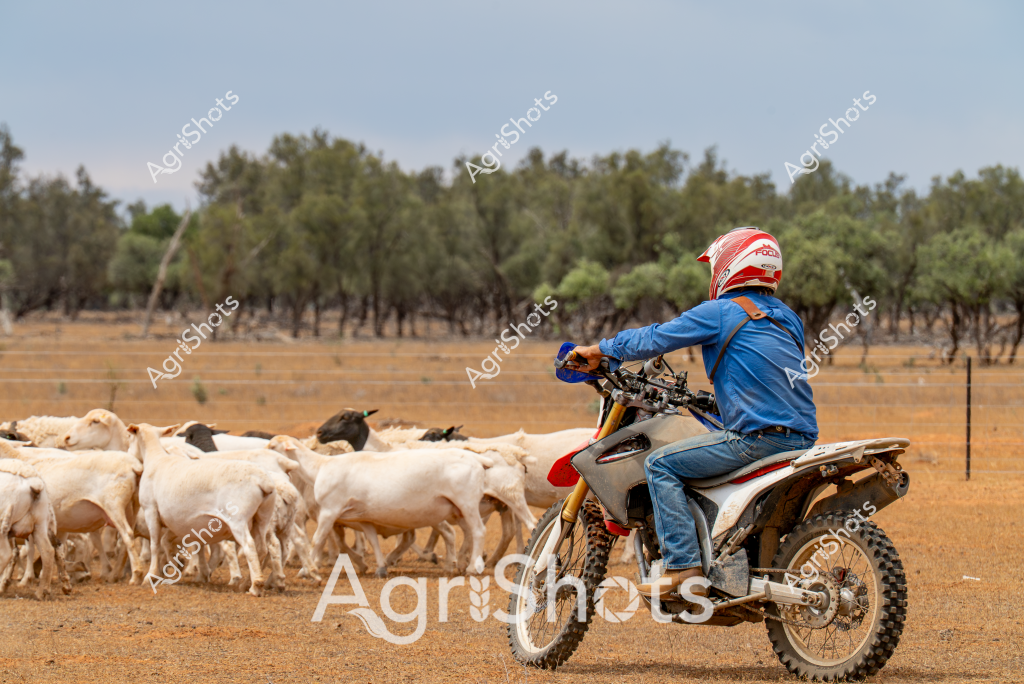
A man on a dirt bike carefully herds a flock of white sheep across a dry, golden paddock with scattered trees in the background. Wearing a blue long-sleeved shirt and a red and white helmet, the rider uses the motorcycle to guide the compact group of sheep, which appear to be predominantly light-colored with a few dark-marked animals mixed in. The landscape suggests an arid Australian rural setting, with sparse vegetation and a muted color palette of browns and greens. The dirt bike serves as a modern tool for livestock management, allowing the rider to efficiently move and control the sheep across the open terrain. This scene captures the essence of Australian pastoral farming, where technology and traditional livestock management techniques converge in the challenging outback environment.
 Image
Image
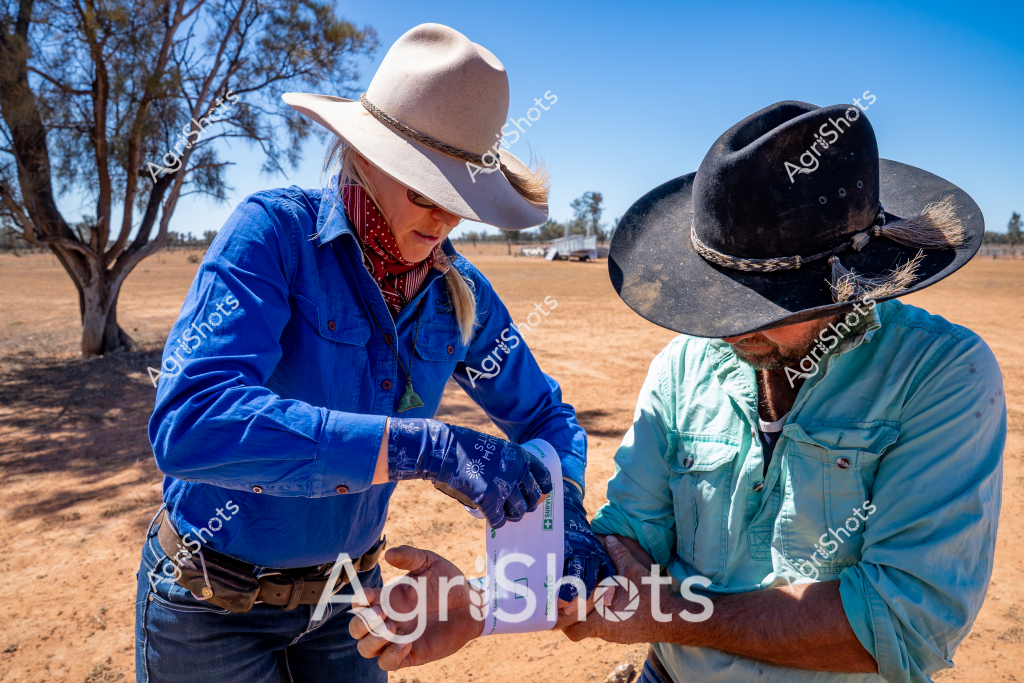
In the arid Australian outback, a woman in a bright blue work shirt and white wide-brimmed hat carefully handles what appears to be a sample or testing container alongside a man wearing a light turquoise shirt and a dark black stockman's hat. The dry, dusty landscape surrounds them, with a lone tree and parched ground stretching into the distance under a brilliant blue sky. Both workers are wearing protective gloves, suggesting they are conducting some form of agricultural testing or livestock health assessment. Their clothing - sturdy work shirts, robust hats, and practical work gear - speaks to the rugged nature of rural Australian agricultural work, where professionals must be prepared for harsh environmental conditions. The scene captures the essence of professional agricultural fieldwork, with careful attention to detail and protection against the unforgiving Australian rural environment.
 Image
Image
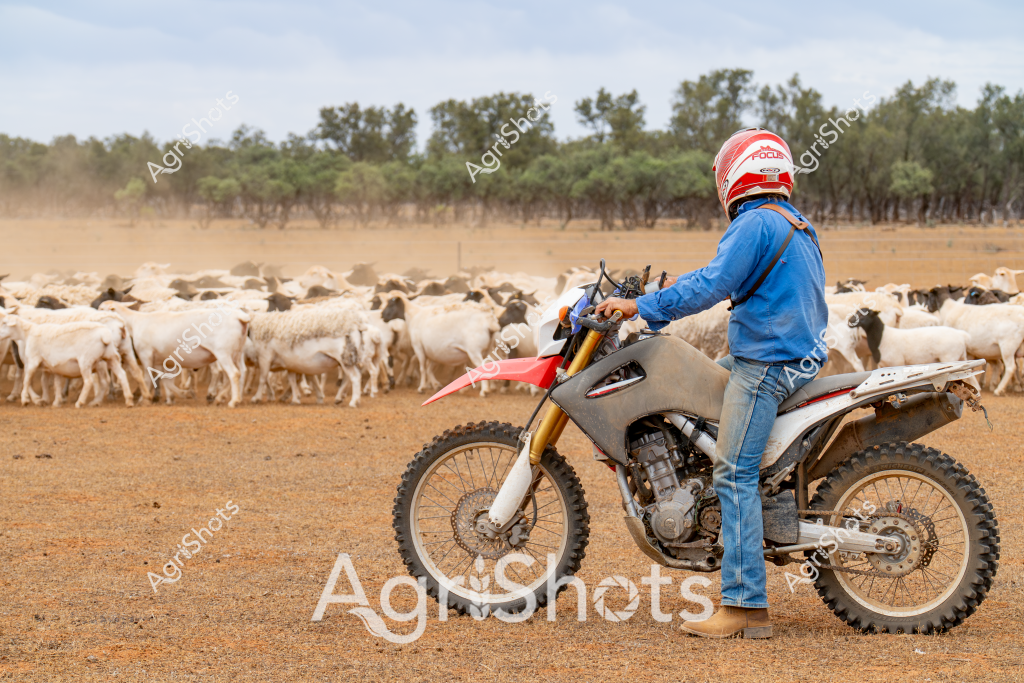
A man on a dirt bike manages a large herd of white goats in a dry, sparse landscape. Wearing a blue long-sleeved shirt, jeans, and a red and white protective helmet, the rider navigates his off-road motorcycle through the dusty paddock. A substantial mob of goats, predominantly white with some darker-colored animals, clusters together in the background, surrounded by sparse trees and scrubland. The arid environment suggests this is likely a station or large pastoral property in outback Australia, where motorcycles have become an essential tool for livestock management. The scene captures the modern approach to mustering and moving livestock, showcasing how technology and traditional farming practices intersect in rural Australian agriculture.
 Image
Image
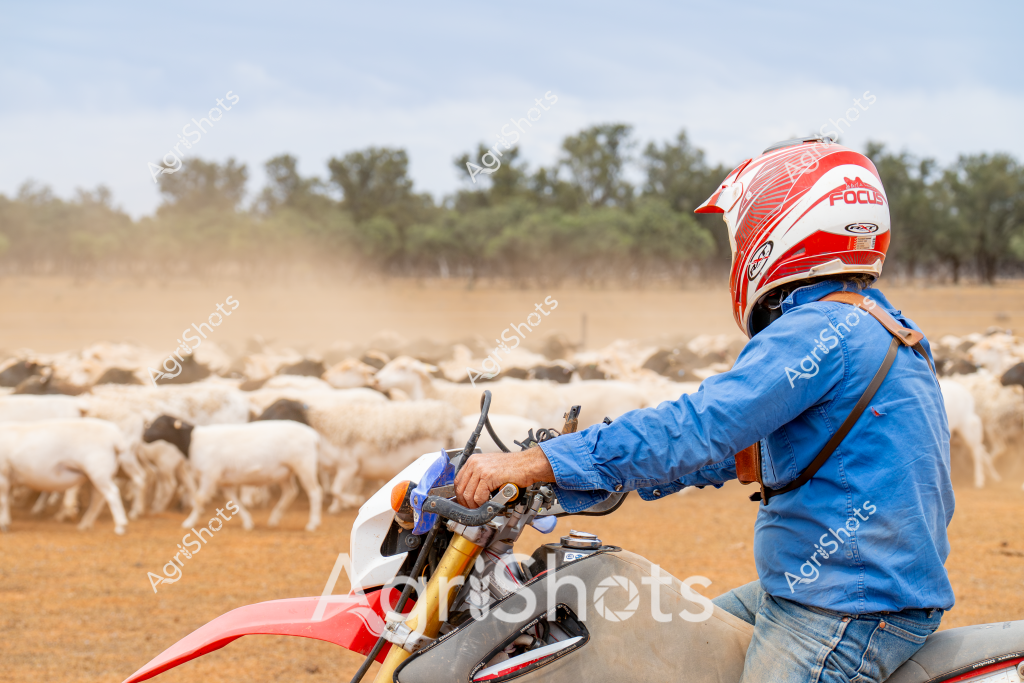
A man on a dirt trail rides a red and white motorcycle through a dusty paddock, herding a large flock of white sheep. Wearing a blue denim shirt and a red and white helmet, the rider skillfully navigates the motorcycle among the sheep, kicking up dry earth in his wake. The landscape is typical of an Australian rural setting, with sparse trees and golden-brown grassland stretching to the horizon. The scene captures the dynamic interaction between modern agricultural technology and traditional livestock management, showcasing the versatility of motorcycle mustering in managing sheep across vast, arid terrain. The red motorcycle provides a vibrant contrast against the muted tones of the dry landscape and the white woolly bodies of the sheep.
 Image
Image
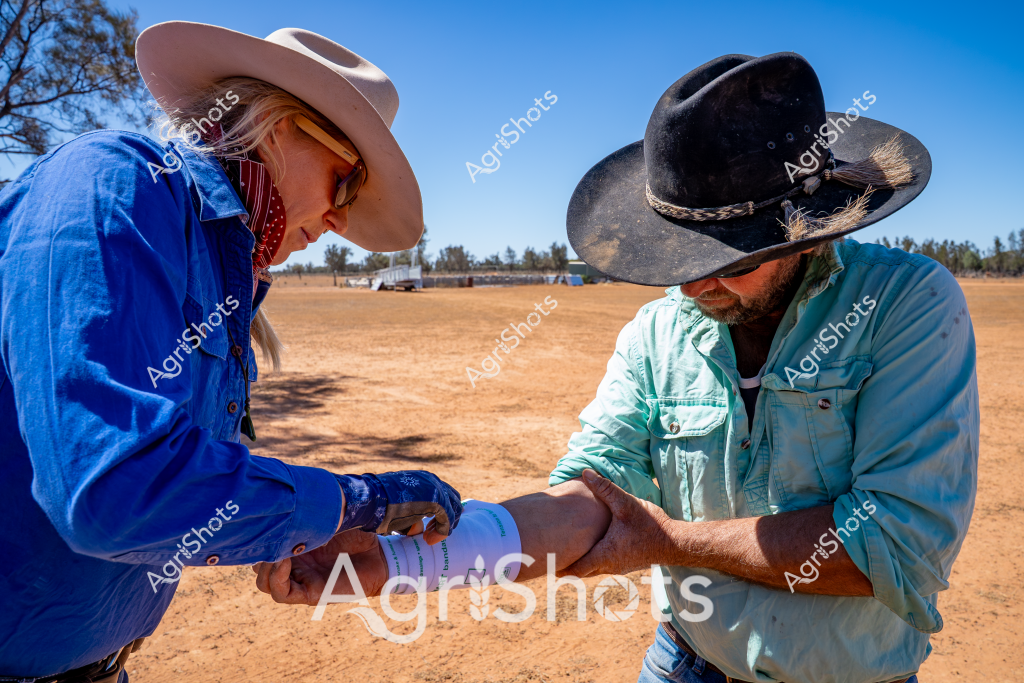
A woman in a blue long-sleeved shirt and a light cowboy hat and a man wearing a light blue shirt and a black cowboy hat are standing in a dry, dusty rural setting. The scene appears to be on an Australian agricultural property, with sparse trees and farm infrastructure visible in the background. The two are engaged in what seems to be a medical or veterinary procedure, with the woman carefully attending to the man's arm, potentially applying a bandage or performing some kind of treatment. Their clothing and wide-brimmed hats suggest they are experienced rural workers, likely dealing with the challenging conditions of an arid agricultural landscape. The ground is a parched, reddish-brown color, indicating dry conditions typical of many parts of rural Australia. The detailed interaction and professional attire suggest this could be a routine medical check or emergency treatment in a remote farming environment, highlighting the self-reliant nature of agricultural workers who often must provide immediate care in isolated locations.
 Image
Image
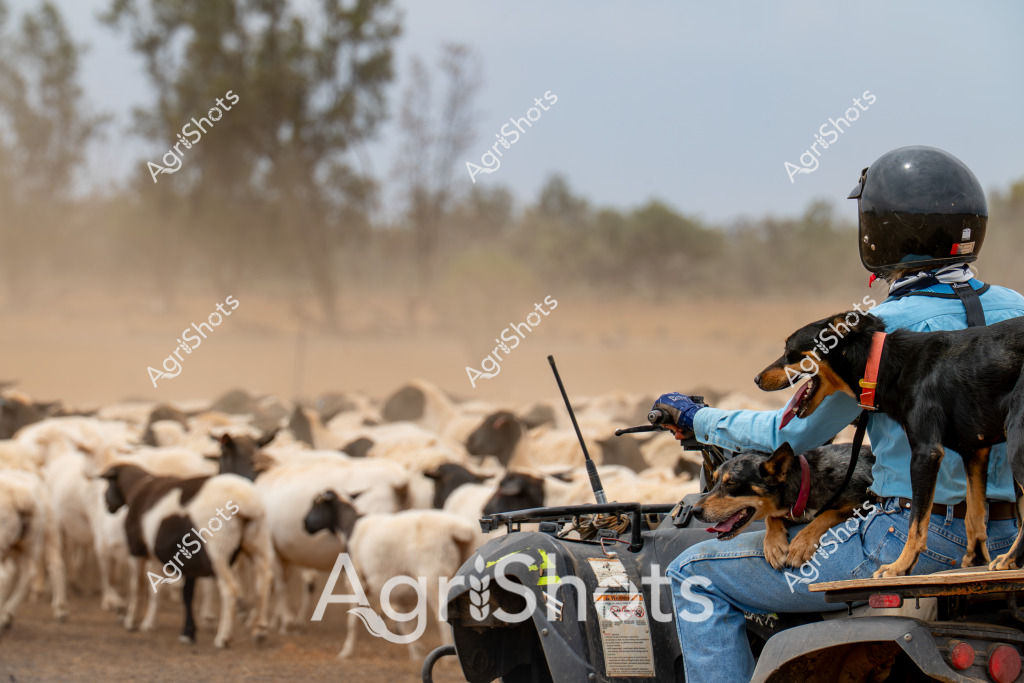
A stockman wearing a blue shirt and helmet sits on an all-terrain vehicle (ATV) with working dogs, mustering a large flock of mixed-breed sheep across a dusty, arid landscape in rural Australia. Two alert herding dogs perch on the ATV, their keen eyes tracking the movement of the sheep, which appear to be a combination of white and dark-fleeced animals. The dry paddock stretches out with sparse trees and golden-brown vegetation in the background, indicating challenging drought conditions typical of the Australian outback. Dust rises from the ground as the sheep move, creating a hazy atmosphere that speaks to the harsh environmental conditions faced by livestock and farmers. The scene captures the essential partnership between the stockman, his working dogs, and the sheep - a quintessential image of Australian agricultural resilience and traditional livestock management techniques.
 Image
Image
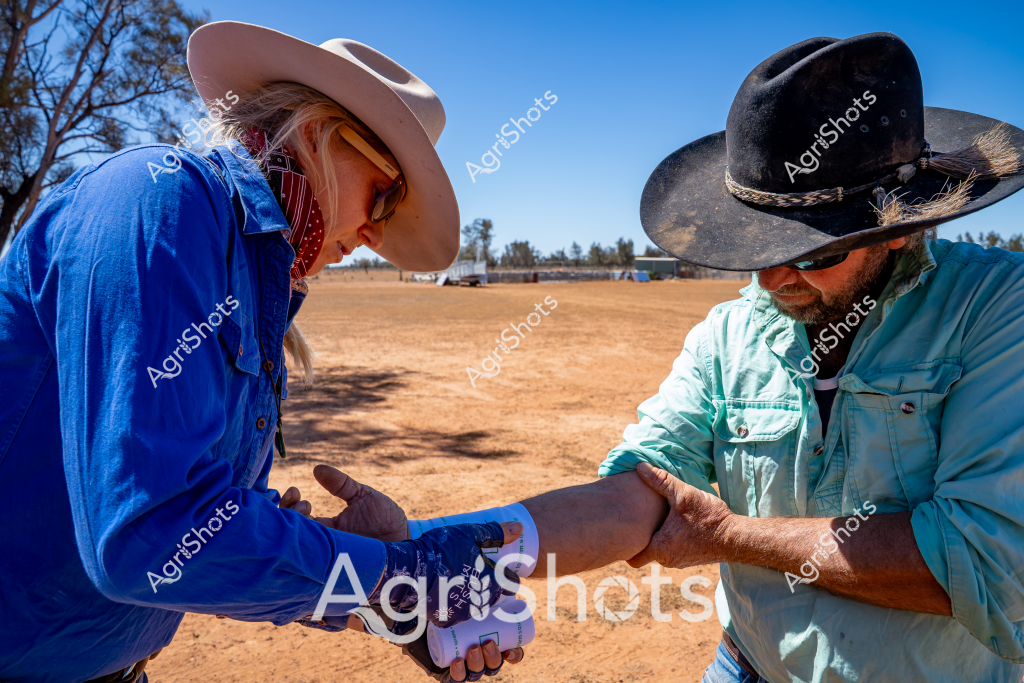
Two rural workers perform a medical check on an arm in an arid Australian landscape. A woman in a bright blue long-sleeved shirt and light-colored wide-brimmed hat carefully examines the arm of a man wearing a light blue shirt and a dark, well-worn wide-brimmed hat. The background reveals a dry, dusty paddock with sparse trees and farm infrastructure, indicating a remote station or rural property. The bright blue sky suggests a clear, hot day typical of the Australian outback. Their protective clothing, including long sleeves and wide-brimmed hats, demonstrates practical preparation for working in harsh environmental conditions. The careful, close interaction suggests a professional medical assessment or workplace injury check, highlighting the collaborative and supportive nature of rural work environments.
 Image
Image
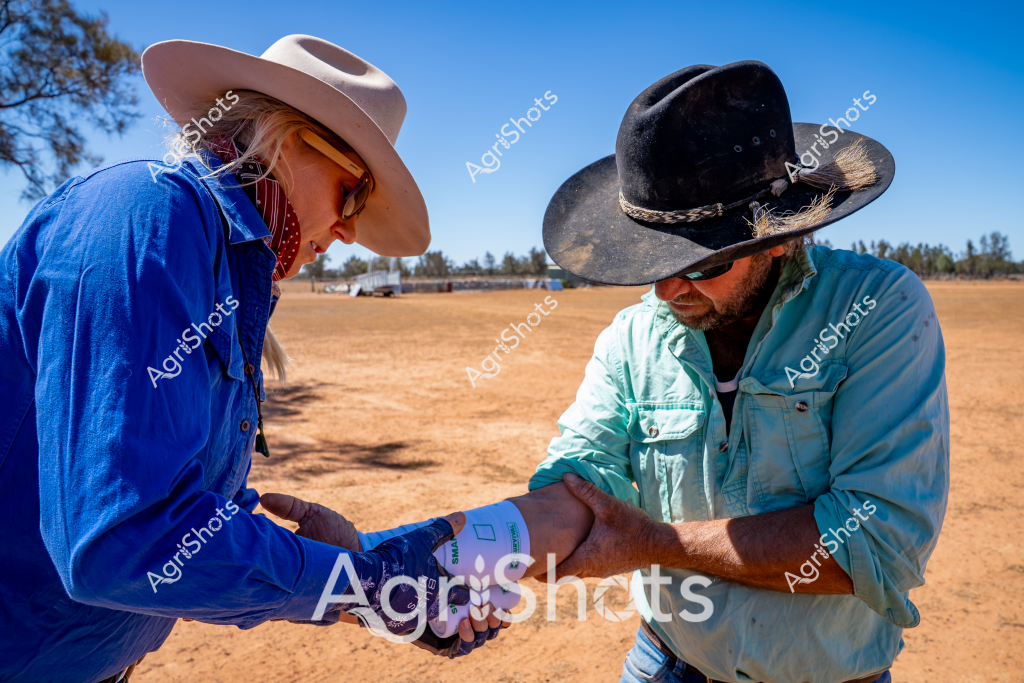
Two people stand in a dry, sun-drenched rural landscape, engaged in a close interaction. A woman wearing a blue long-sleeved shirt and a light cream cowboy hat is carefully examining the arm of a man in a light blue-green shirt and a dark wide-brimmed hat. Their posture suggests a professional medical or veterinary assessment, with the landscape of dusty ground and sparse trees in the background indicating an outback or rural Australian setting. The scene appears to capture a moment of agricultural health monitoring, potentially a routine check or treatment process. Both individuals are wearing protective work clothing typical of rural Australian settings - sturdy shirts, wide-brimmed hats for sun protection, and work gloves. The bright blue sky and arid ground suggest a hot, dry day in a farming or station environment. Their focused body language and close proximity indicate a professional interaction, likely related to livestock health, farm work, or medical assessment. The landscape behind them is characteristic of Australian agricultural regions - open, sparse, with a sense of expansive remote terrain typical of cattle stations or rural properties.
 Image
Image
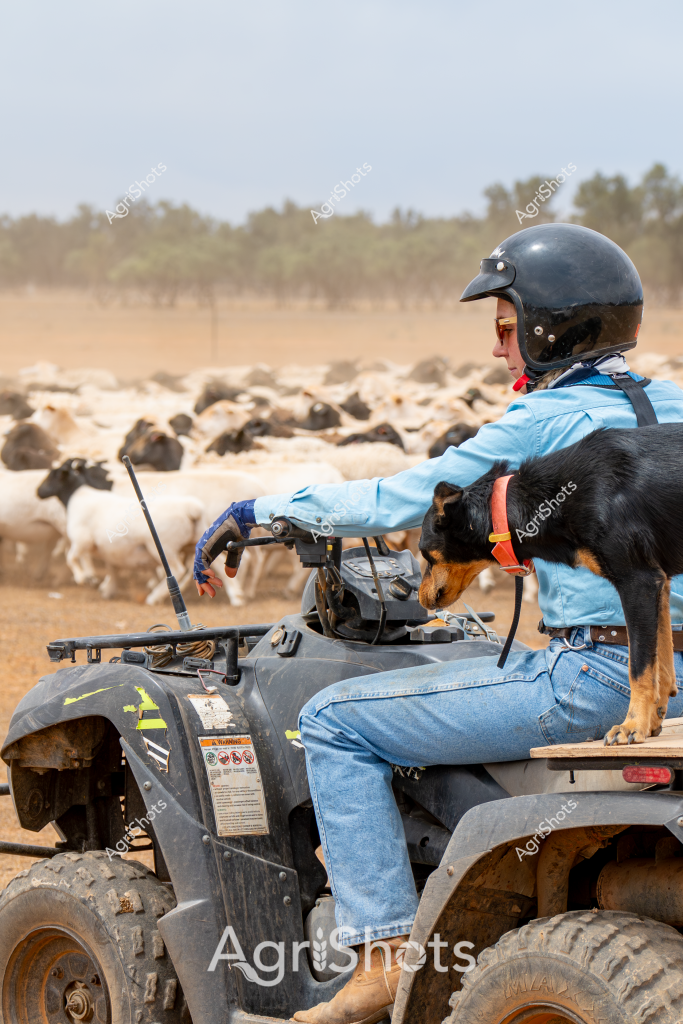
A skilled stockman sits on an all-terrain vehicle (ATV) in a dry, dusty paddock, carefully managing a large herd of sheep. Wearing a black safety helmet, blue work shirt, and denim jeans, the stockman is accompanied by a working dog, likely a trained Australian Kelpie, sitting beside him on the quad bike. The surrounding landscape is typical of an arid Australian rural setting, with scattered trees and sparse vegetation in the background, indicating potential drought conditions. The herd of sheep, predominantly white with some darker individuals, are densely grouped together, creating a textured mass across the parched ground. The stockman's ATV is a robust, well-used machine, covered in dust and equipped with practical accessories for farm work. The scene captures the essence of Australian livestock management - a lone stockman using modern equipment and a skilled working dog to control and move a large flock across challenging terrain. The muted color palette of browns, tans, and blues reflects the harsh rural environment, showcasing the resilience and adaptability required in Australian agricultural practices. This image epitomizes the day-to-day work of livestock management in remote, arid regions of Australia.
 Image
Image
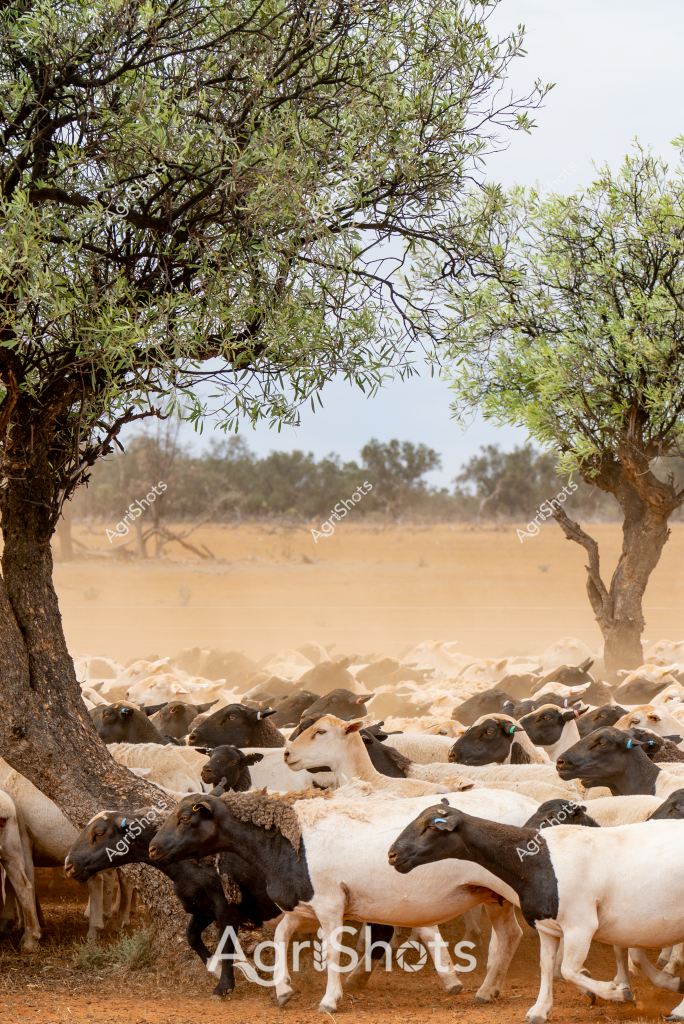
A large flock of white and black sheep huddle beneath olive trees in a dusty, arid landscape. The sheep, a mix of light-colored and dark-colored individuals, are densely packed together, seeking shade from the harsh midday sun. Sparse, twisted trees with silvery-green foliage frame the scene, their branches spreading wide to provide minimal protection from the heat. The ground is a pale, dry earth tone, suggesting a drought-affected or semi-arid region typical of Australian pastoral lands. The sheep appear calm and stationary, clustered tightly together in a survival strategy against the harsh environmental conditions. This image captures the resilience of livestock in challenging Australian agricultural landscapes, where animals must adapt to sparse vegetation and demanding climate conditions.
 Image
Image
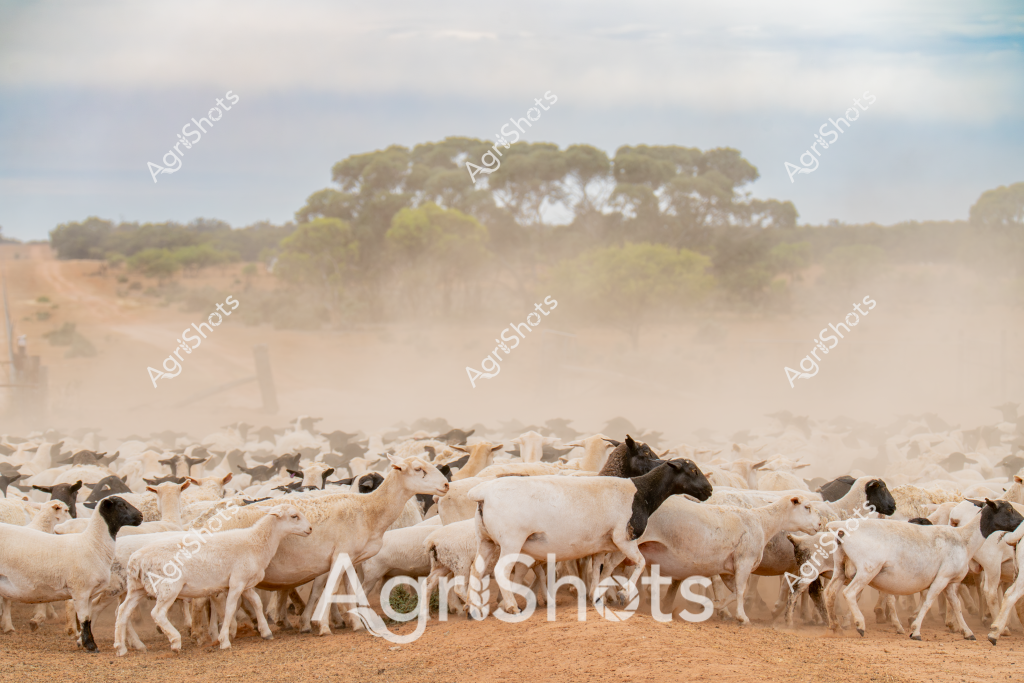
A large flock of light-colored sheep moves across a dusty rural landscape, kicking up a dense cloud of earthen particles. The mob comprises predominantly white sheep with some black-headed individuals scattered throughout the herd, creating a distinctive visual pattern against the dry, compacted ground. Sparse trees and vegetation line the distant horizon, suggesting an arid Australian pastoral setting, likely in a region experiencing dry seasonal conditions. The sheep appear to be moving with purpose, potentially being mustered by unseen livestock managers, their dense clustering indicating coordinated movement across the sparse paddock. The warm, muted color palette of beige earth, pale sheep, and soft green-gray vegetation captures the quintessential Australian rural landscape, highlighting the resilience of both the livestock and the environment. The scene evokes the challenging conditions of Australian sheep farming, where careful management and adaptation are critical to survival. The dust cloud surrounding the sheep emphasizes the intensity of their movement and the dry, potentially drought-affected terrain they traverse.
 Image
Image
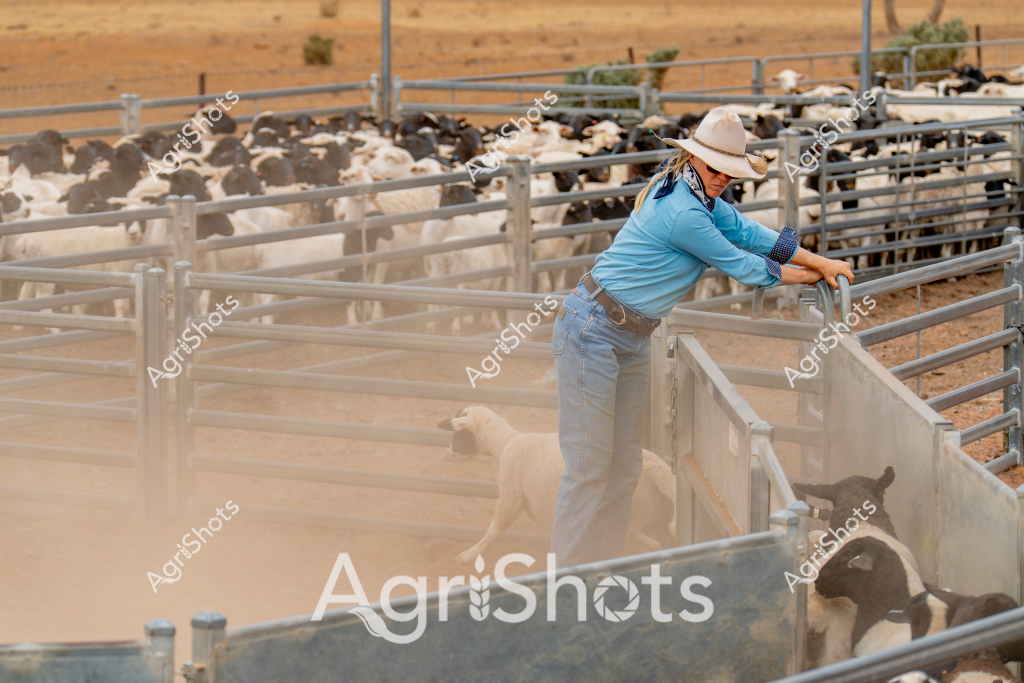
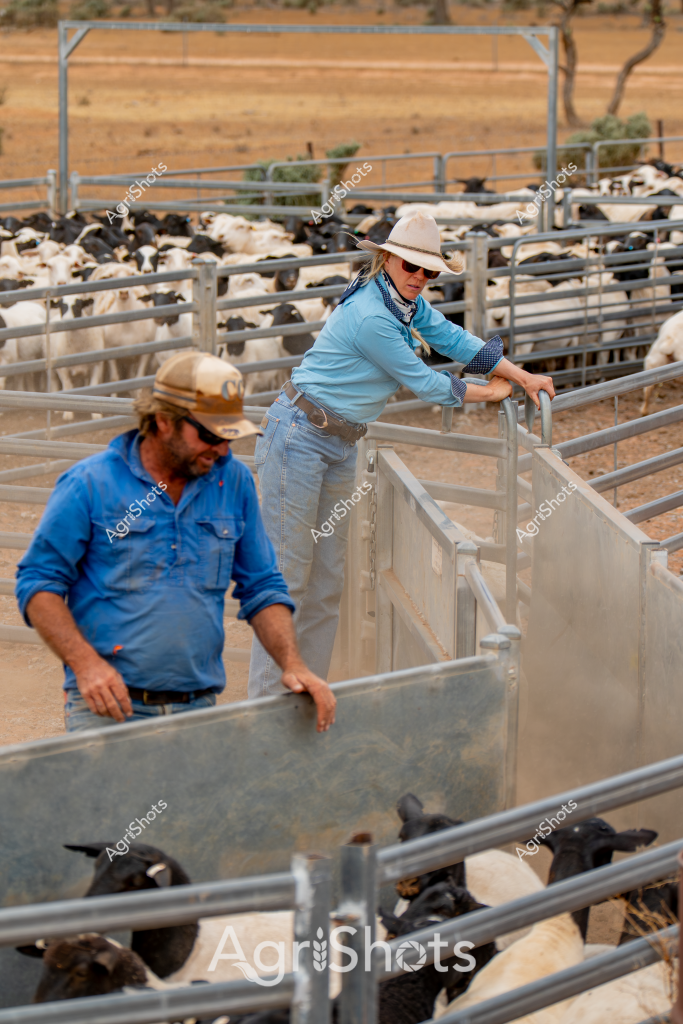
A woman stockman in a blue long-sleeved shirt, light-colored cowboy hat, and blue jeans works within a dusty livestock yard, managing a pen of sheep. Multiple groups of sheep - some white and some dark-colored - are corralled in metal livestock gates and fencing. The surrounding landscape appears dry and arid, with sparse vegetation and sandy ground, typical of an Australian rural or outback setting. The stockwoman is leaning over a metal gate, carefully managing the sheep movement, demonstrating skilled and precise livestock handling techniques. Dust rises around her feet, creating a textural element that emphasizes the dynamic agricultural environment and the physical nature of farm work. The scene captures the essential role of experienced livestock managers in Australian agricultural operations, highlighting the challenging yet critical work of managing herds in demanding environmental conditions.
 Image
Image
A woman and a man are working together in a livestock yard, managing a flock of black and white sheep. The woman, wearing a white hat, light blue long-sleeved shirt, and blue jeans, leans against a metal livestock gate in the foreground. A man in a blue work shirt stands nearby, both carefully monitoring the sheep contained within the metal yard fencing. The livestock yard appears to be in a dry, arid landscape with sandy ground and sparse vegetation visible in the background. Metal livestock gates and fencing create a systematic pen system, typical of Australian rural livestock management. Multiple groups of sheep - both black and white - are clustered within the different fenced sections, suggesting this is likely a sheep station or farm in an inland region. The scene captures the careful, methodical work of livestock management, with the workers positioned strategically to control and monitor the animal movement. Their clothing - practical work shirts, jeans, and a protective hat - reflects the functional approach to agricultural work in challenging rural environments. The metal infrastructure and careful positioning of the workers demonstrate the professional approach to sheep farming in what appears to be a challenging, dry Australian landscape.
 Image
Image
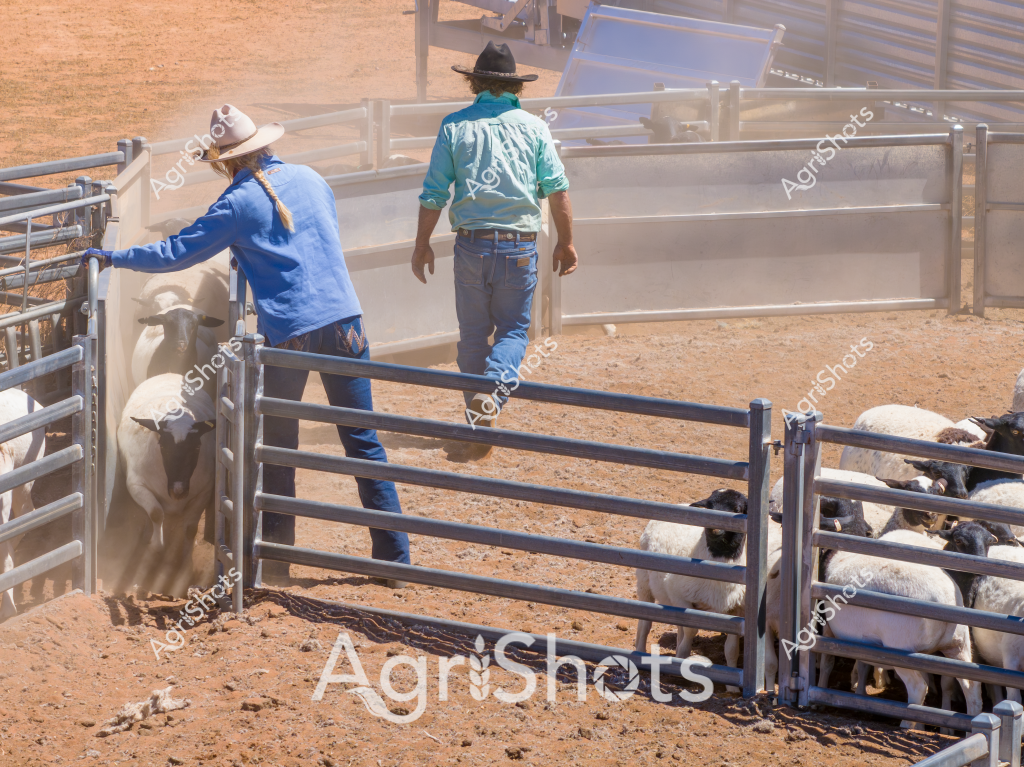
Two people work in a dusty livestock yard, managing sheep in metal holding pens. A woman in a blue jacket and a person in a turquoise shirt with a wide-brimmed hat are positioning themselves near the metal gates and fencing. The ground is a dry, packed earth color, typical of an arid Australian agricultural setting. Multiple white sheep are contained within the sturdy metal yard sections, suggesting this is a routine livestock management activity. The scene captures the practical, no-nonsense approach of Australian farm workers handling livestock in a challenging rural environment, with the metal infrastructure providing structured control and movement of the animals. The workers are positioned strategically around the pens, likely preparing to move, sort, or inspect the sheep. Their robust clothing - denim jeans, practical shirts, and protective hats - reflects the functional nature of agricultural work. The metallic gray of the livestock yards contrasts with the earthy tones of the ground and the white of the sheep, creating a typical Australian rural landscape scene focused on livestock management.
 Image
Image
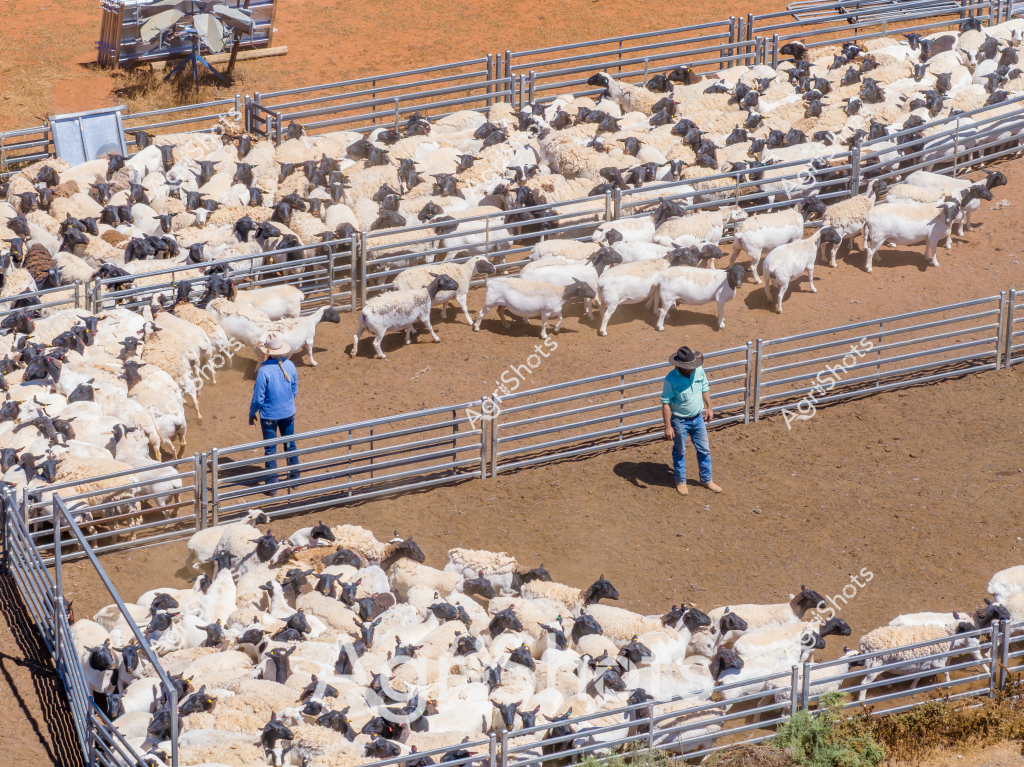
A large flock of white and dark-colored sheep are densely packed into multiple metal livestock yards under a bright, arid landscape. Two men in work attire - one wearing a blue shirt and the other in a teal-colored shirt - stand near the fenced pens, appearing to be managing the livestock gathering. The sandy-colored ground and metal yard infrastructure suggest this is a typical sheep farming scene, likely in an Australian inland or pastoral region. The sheep appear to be a mixed breed, with some showing distinct white wool and others having darker coloration, potentially representing a Merino or cross-bred flock. The tight arrangement of the animals and the systematic metal fencing highlight the organized approach to livestock management in Australian agriculture. The aerial perspective provides a comprehensive view of the scale of the sheep operation, showing how modern farming techniques utilize structured yards to control and manage large numbers of livestock efficiently. Shadows cast by the animals and the workers emphasize the midday lighting and the dry, open landscape typical of Australian sheep farming regions.
 Image
Image
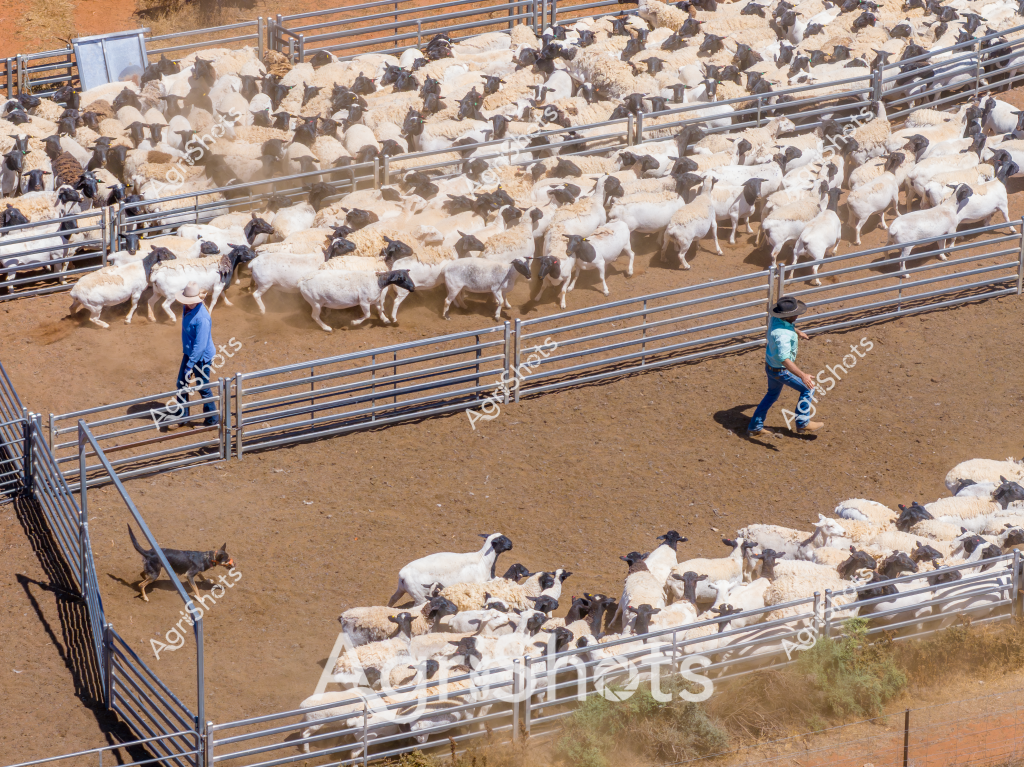
A large flock of white sheep with black heads, likely Dorper or Suffolk cross-breed, are being herded through a series of metal livestock yards by two stockmen. One man in a bright blue shirt and the other in a light blue shirt carefully guide the sheep through the segmented metal gates and pens, creating a dynamic scene of rural livestock management. The dusty, reddish-brown earth and sparse vegetation in the background suggest an arid or semi-arid Australian agricultural setting, typical of regions in Western Australia, Northern Territory, or parts of Queensland. The precise movement of the sheep and the strategic positioning of the stockmen demonstrate the skill and efficiency required in managing large livestock herds in challenging agricultural environments. Shadows cast by the animals and workers highlight the intense midday sunlight characteristic of Australian pastoral landscapes.
 Image
Image
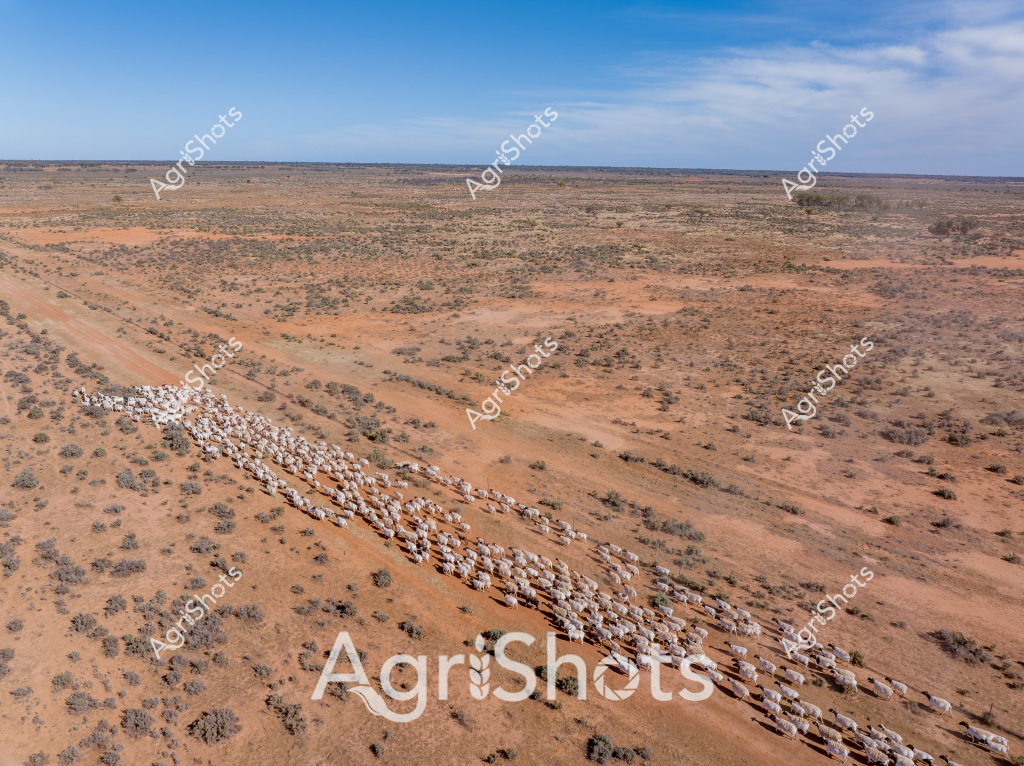
A large herd of white cattle traverses a dusty, arid landscape in the Australian outback, their white coats standing out against the reddish-brown earth and sparse scrubland. The aerial view captures a long, winding mob of livestock moving along a dirt track, surrounded by a classic Australian semi-desert terrain of scattered low bushes and occasional trees. The landscape stretches to a distant horizon under a pale blue sky with wispy clouds, showcasing the vast, open expanses typical of remote pastoral regions. The cattle appear to be moving purposefully, likely being mustered by unseen stockmen across what seems to be a remote cattle station in central Australia. The scene demonstrates the challenging environment of Australian livestock farming, where herds must traverse vast, dry landscapes to find grazing and water. The intricate pattern of the herd's movement creates a striking visual contrast against the ochre and rust-colored ground, highlighting the resilience of both the cattle and the agricultural workers who manage them in these harsh conditions.
 Image
Image
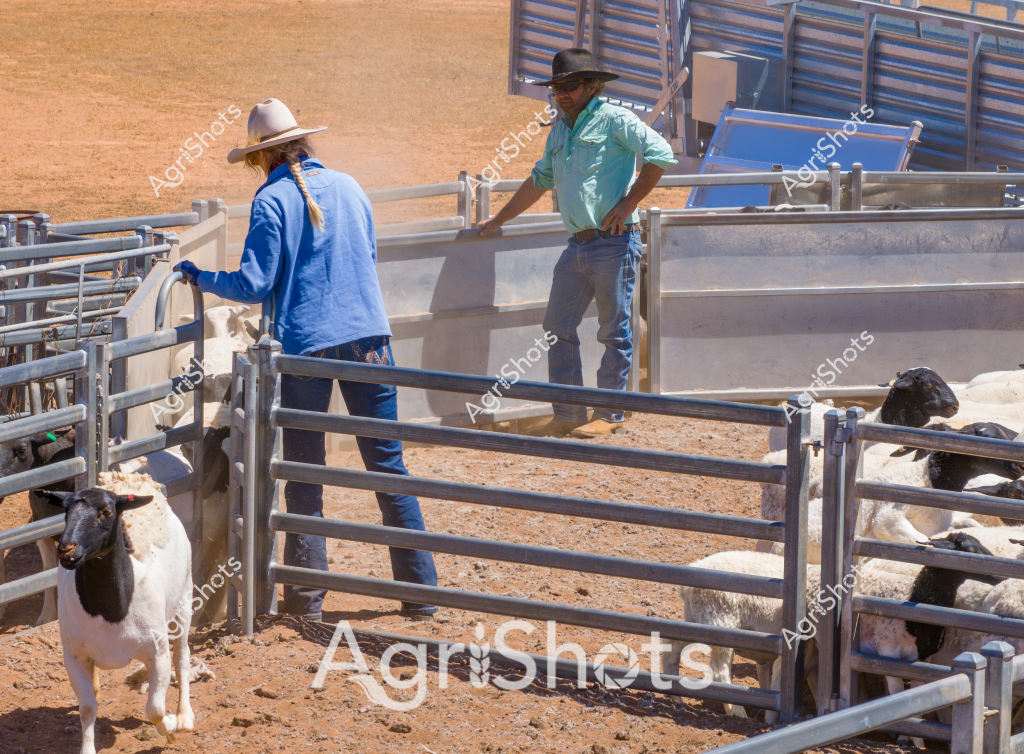
A woman in a bright blue long-sleeved shirt and a light-colored wide-brimmed hat stands alongside a man in a mint green shirt and dark hat within a livestock handling facility. They are working with a small group of sheep in metal livestock yards, with the ground being a sandy, dusty terrain typical of Australian agricultural settings. Several sheep, predominantly white with some dark markings, are contained within the metal gate pens, suggesting this is likely a sheep station or farm in an arid or semi-arid region. The metal yard infrastructure is modern and sturdy, with multiple gate sections and walkways designed for efficient animal movement and management. The scene captures the collaborative nature of livestock handling, with the two workers positioned at different points in the yard, suggesting they are coordinating the sheep's movement or preparation for processing, shearing, or veterinary procedures. The harsh, dry landscape and professional livestock management equipment highlight the resilience and technical expertise required in Australian sheep farming.
 Image
Image
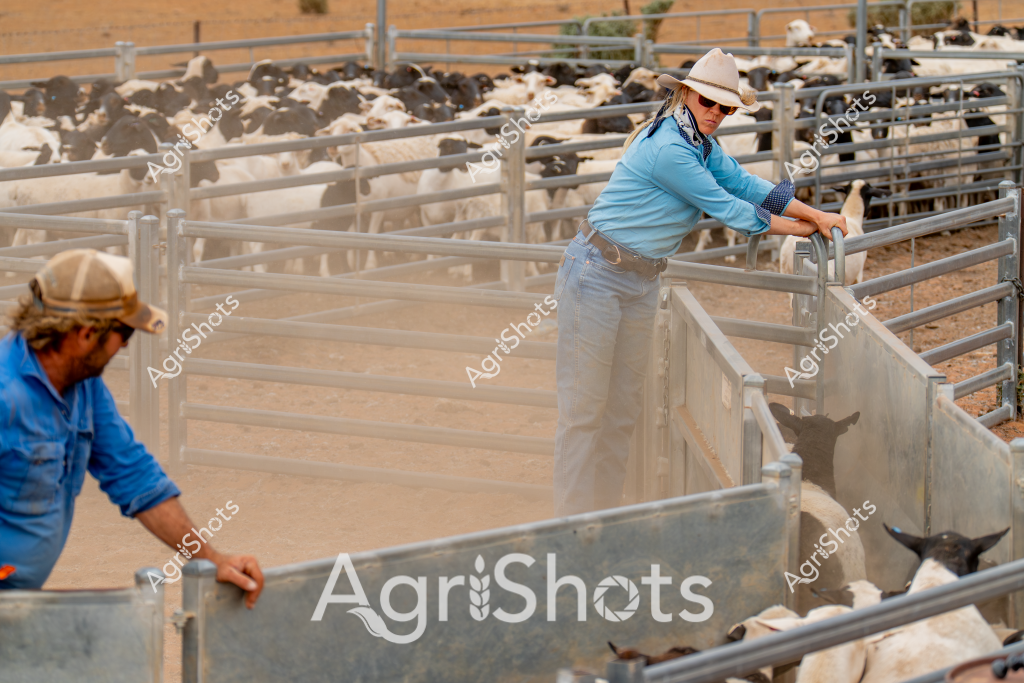
A woman stockman in a blue long-sleeved shirt, white hat, and sunglasses works in a dry, dusty livestock yard managing a herd of goats. She leans against a metal gate in a carefully structured livestock pen, with multiple metal fencing sections visible. Another worker in a blue shirt can be seen partially in the foreground, also engaged in managing the goat herd. The landscape appears arid, with sandy ground and sparse vegetation, typical of an Australian pastoral setting. Multiple white and light-colored goats are contained within the metal yard sections, suggesting this is a professional livestock management operation in a rural, potentially remote region of Australia. The scene captures the practical, focused work of livestock management, with the stockwoman's professional posture and careful attention to the animals demonstrating the skilled nature of agricultural work. The metal infrastructure, protective clothing, and controlled environment highlight the systematic approach to animal handling in challenging agricultural landscapes.
 Image
Image
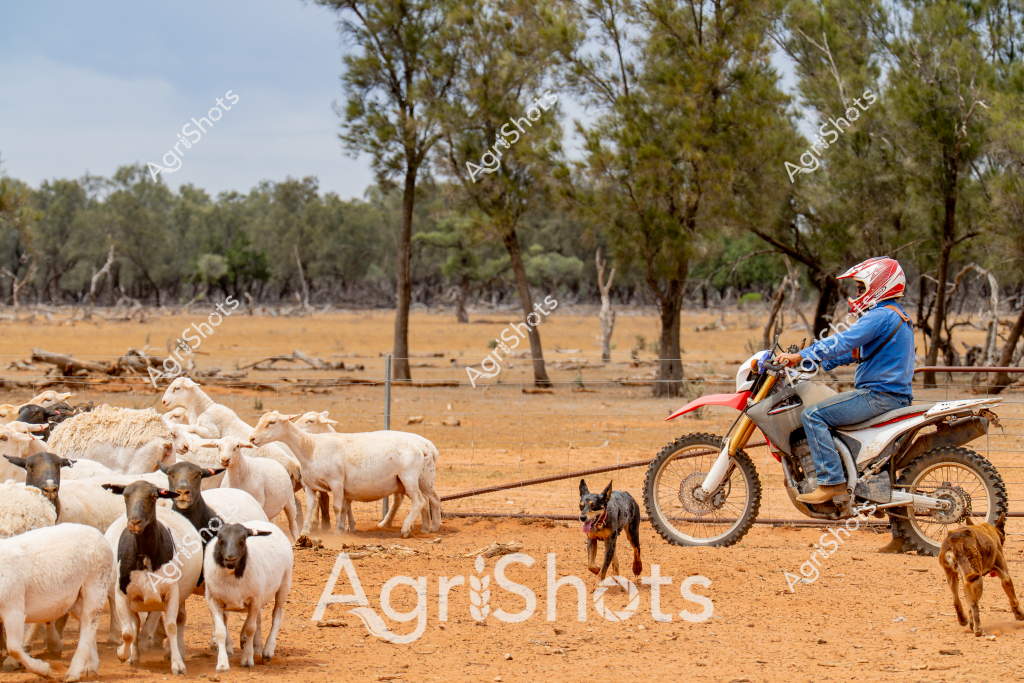
A man on a dirt bike herds a flock of white and black sheep across a dry, sparse paddock in what appears to be an arid Australian pastoral landscape. Accompanied by working dogs, he uses the motorcycle to navigate the dusty terrain, guiding the mixed-breed sheep through a grove of scattered eucalyptus trees. The rider, wearing a blue jacket and red motorcycle helmet, employs a long rope to help control the movement of the livestock, demonstrating a modern approach to mustering sheep in challenging drought-like conditions. Two alert working dogs - likely Australian Cattle Dogs or kelpies - assist in directing the sheep, running alongside the bike and helping to keep the flock together. The landscape is characterized by a golden-brown earth, sparse vegetation, and widely spaced trees, typical of inland Australian agricultural regions during dry seasons. This scene captures the adaptability of contemporary Australian farmers, using motorcycles and working dogs to manage livestock in harsh environmental conditions.
 Image
Image
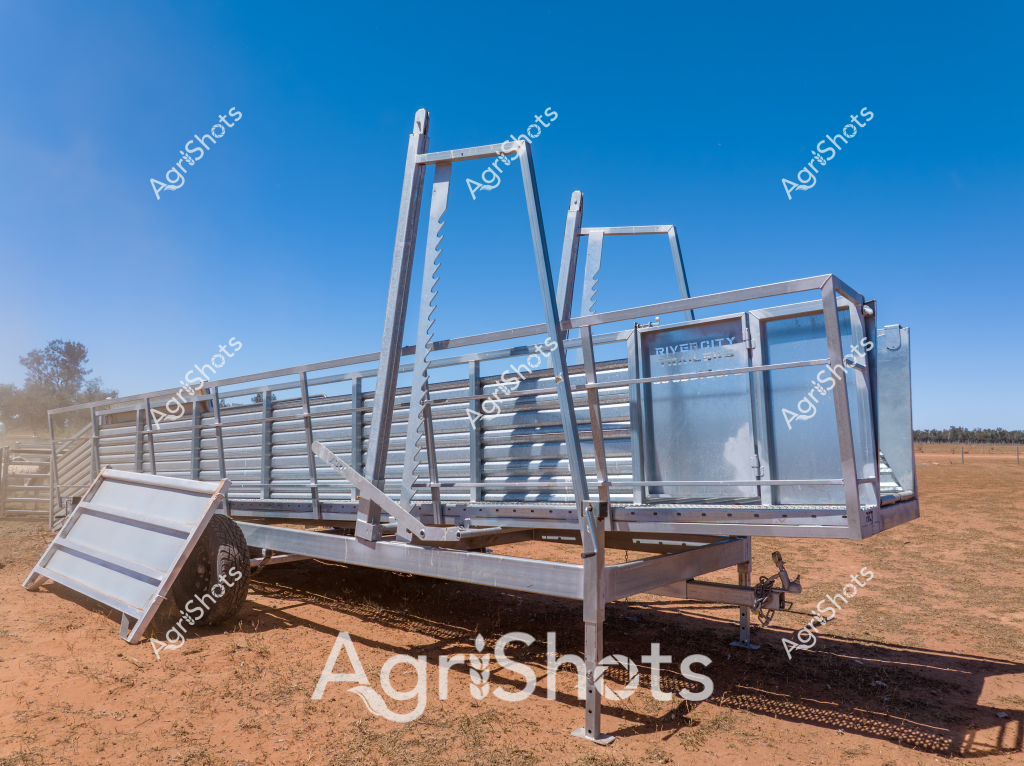
A River City livestock trailer sits ready on a dry, reddish-brown rural paddock under a brilliant blue Australian sky. This robust, all-aluminum stock trailer features multiple vertical support frames, adjustable gates, and a sturdy chassis designed for transporting livestock across challenging agricultural terrain. The trailer's metallic silver-gray construction suggests durability and professional-grade engineering, with carefully engineered loading ramps and side panels that provide ventilation and secure containment for cattle, sheep, or other farm animals. Its substantial build reflects the demanding requirements of Australian rural transportation, built to withstand harsh outback conditions and provide reliable stock movement for farmers and station managers. The clear, cloudless sky and arid ground indicate a typical dry season environment, characteristic of many agricultural regions across Australia's inland areas.
 Image
Image
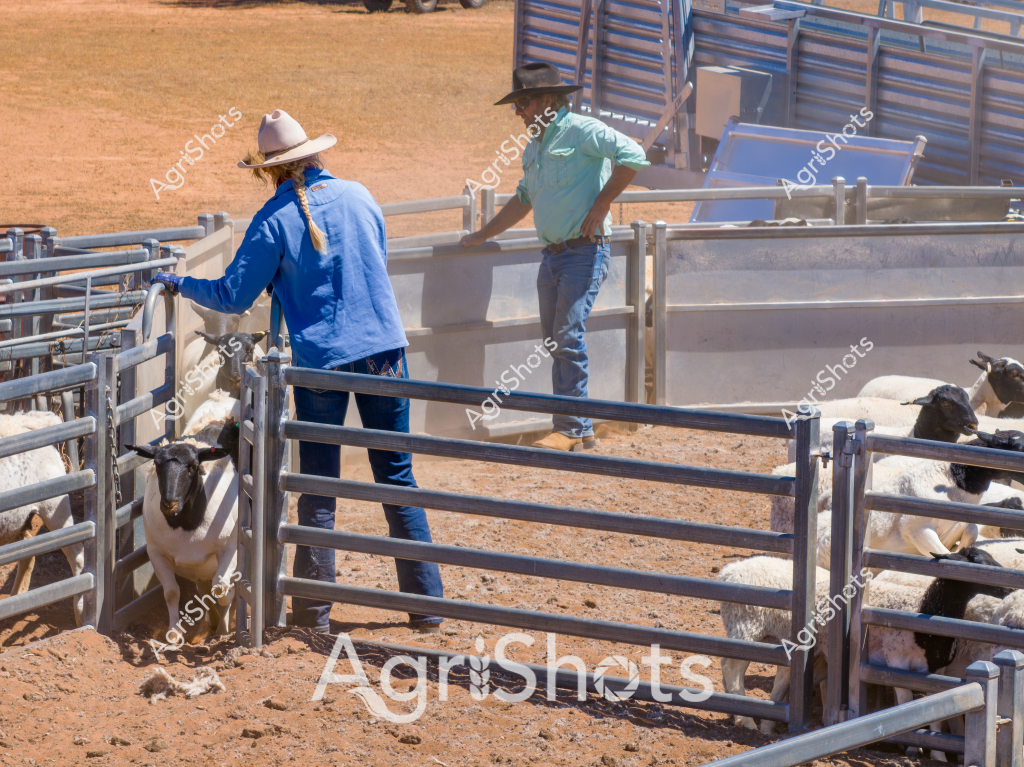
Two men are working in a livestock yard managing sheep, with metal stock handling gates and pens in the background. A man in a blue jacket and white hat stands at one section of the metal fencing, while another man in a light green shirt and wide-brimmed hat is positioned at another section. Several sheep are visible within the enclosed yard, which has a dry, sandy ground surface typical of arid Australian agricultural environments. The metal livestock handling infrastructure appears robust and well-maintained, with multiple interconnected gates and panels designed to efficiently move and manage the sheep. The scene captures the practical, no-nonsense approach of Australian livestock management, with experienced stockmen carefully controlling the movement and positioning of their animals in a structured yard setting.
 Image
Image
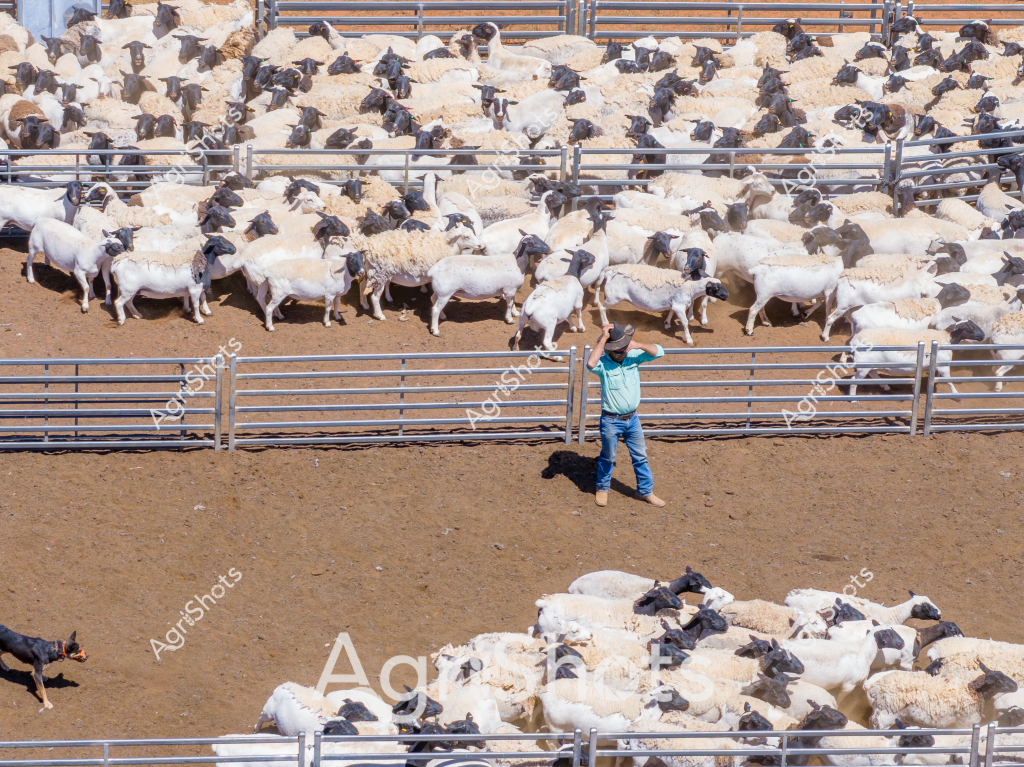
A large flock of white and black-faced sheep are packed tightly within multiple metal livestock yards, with a man in a blue shirt and hat standing among them. The sheep appear to be a mixed breed, likely Dorper or Merino cross, densely clustered across different pen sections on a dry, dusty ground. A working dog can be seen at the bottom left of the image, ready to assist with herding. The metal yard infrastructure creates geometric patterns, with horizontal rails dividing the livestock into controlled groups. The scene captures a typical Australian livestock management scenario, likely in a regional or station setting, where careful animal handling and mustering are essential agricultural practices. The stark contrast between the white sheep, tan ground, and blue-shirted stockman creates a visually striking representation of rural Australian livestock management.
 Image
Image
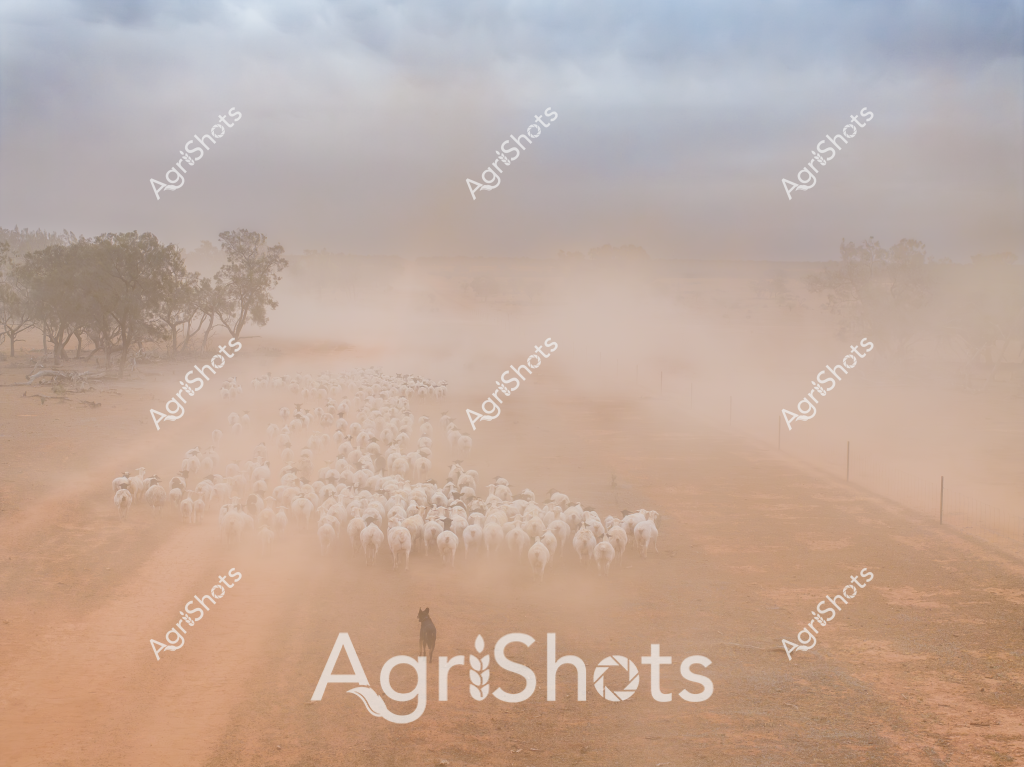
A flock of sheep moves through a dusty, arid landscape under a soft, overcast sky. A lone herding dog stands in the foreground, guiding the white woolly mob along a dirt track lined with scattered eucalyptus trees. The scene captures the harsh conditions of an Australian pastoral setting, with thick ochre-colored dust billowing around the moving sheep, creating a hazy, atmospheric landscape that speaks to the challenges of livestock management in dry regions. The muted tones of brown, tan, and pale gray blend together, emphasizing the rugged and unforgiving nature of the outback environment. The herding dog's disciplined stance and the tightly grouped sheep demonstrate the skilled coordination required to manage livestock across vast, arid paddocks.