Browse the collection
 Image
Image
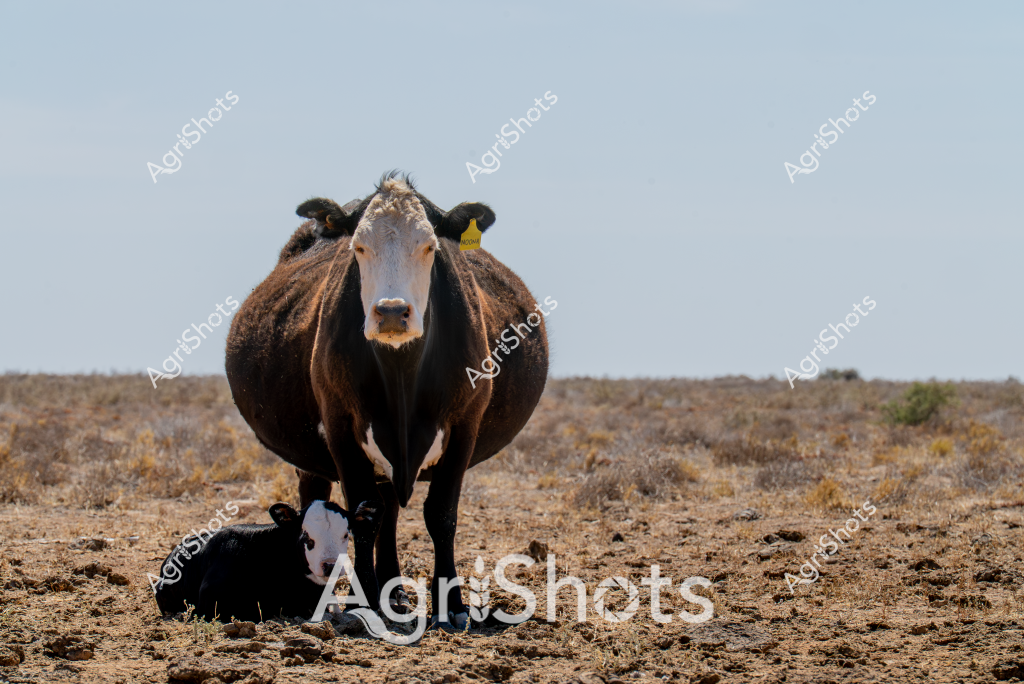
A robust beef cow stands confidently on a dry, sparse pasture, her muscular body showcasing the resilience of Australian cattle breeding. She wears a yellow ear tag, indicating she's part of a managed herd, and is accompanied by a young black and white calf resting at her feet. The landscape appears arid and expansive, with scattered low vegetation and a pale blue horizon typical of Australia's rural rangelands. The cow's rich brown coat has deep variations in color, from almost black along her back to lighter shades across her belly and face. Her stance is protective, with the calf positioned closely beneath her, highlighting the maternal instincts crucial for survival in challenging agricultural environments. The ground is rocky and parched, suggesting this might be during a dry season or in a drought-affected region. The image captures the essence of Australian cattle farming - hardy animals adapted to tough conditions, representing the backbone of the nation's agricultural industry. The wide-open space and minimal vegetation underscore the challenging yet beautiful nature of extensive cattle grazing systems prevalent across Australia's interior.
 Image
Image
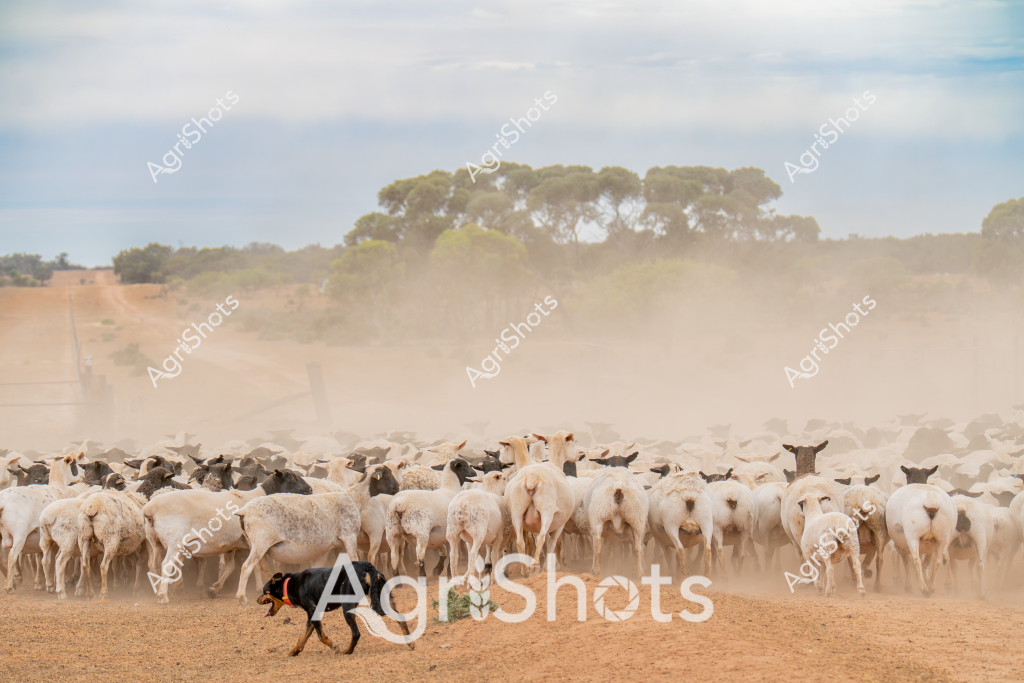
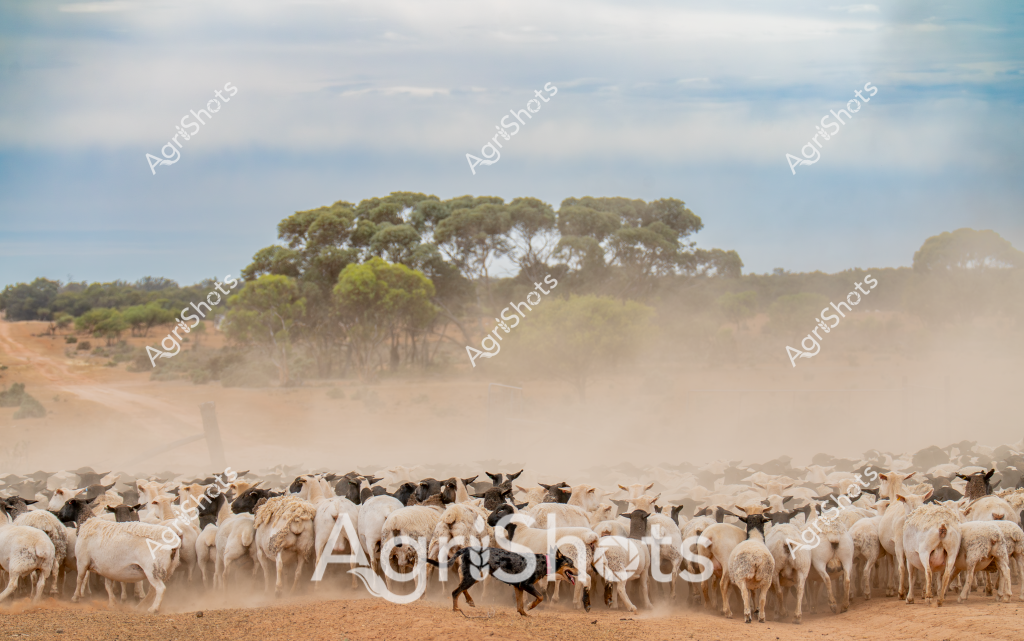
A hardworking sheepdog herds a large flock of white Merino sheep across a dusty rural paddock in the Australian outback. The compact black and tan working dog moves with precision, guiding hundreds of woolly sheep through a cloud of golden ochre dust. Sparse eucalyptus trees and scrubland line the distant horizon under a soft, pale blue sky, creating a classic Australian pastoral landscape. The tight mob of sheep, predominantly white with some darker individuals, stand closely packed together, their woolly backs and rumps facing various directions as they move across the dry, compact earth. The scene captures the essential partnership between skilled working dogs and livestock in Australian agriculture, highlighting the challenging yet beautiful environment of rural sheep farming. The swirling dust and dense flock demonstrate the harsh but productive nature of sheep management in Australia's arid agricultural regions.
 Image
Image
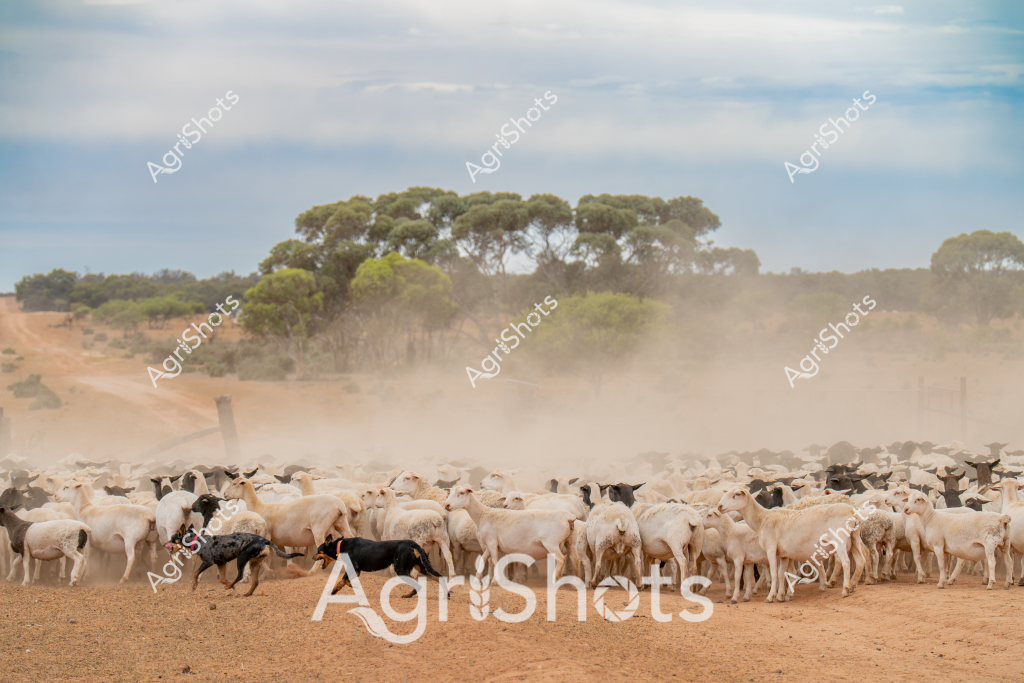
A large flock of white and black sheep gather tightly in a dusty, arid paddock, with several working dogs moving among them. The landscape is characteristic of an Australian rural setting, featuring sparse, golden-brown earth and eucalyptus trees clustered in the distant background. Dry soil kicks up a fine dust cloud around the mob of sheep, suggesting hot, dry conditions typical of an Australian summer or drought period. The working dogs, black and white in color, are actively herding and managing the sheep, weaving between the tightly packed animals with purpose and skill. These are likely Merino sheep, a breed renowned in Australian agriculture for their high-quality wool production. The dense clustering of the animals indicates they are being carefully controlled and directed, possibly during mustering, yard preparation, or movement between paddocks. The scene captures the essence of Australian pastoral farming - a landscape of sparse vegetation, resilient livestock, and the critical role of working dogs in managing large herds across challenging terrain. The muted color palette of beige earth, pale sky, and green-grey trees emphasizes the harsh but beautiful nature of rural agricultural environments.
 Image
Image
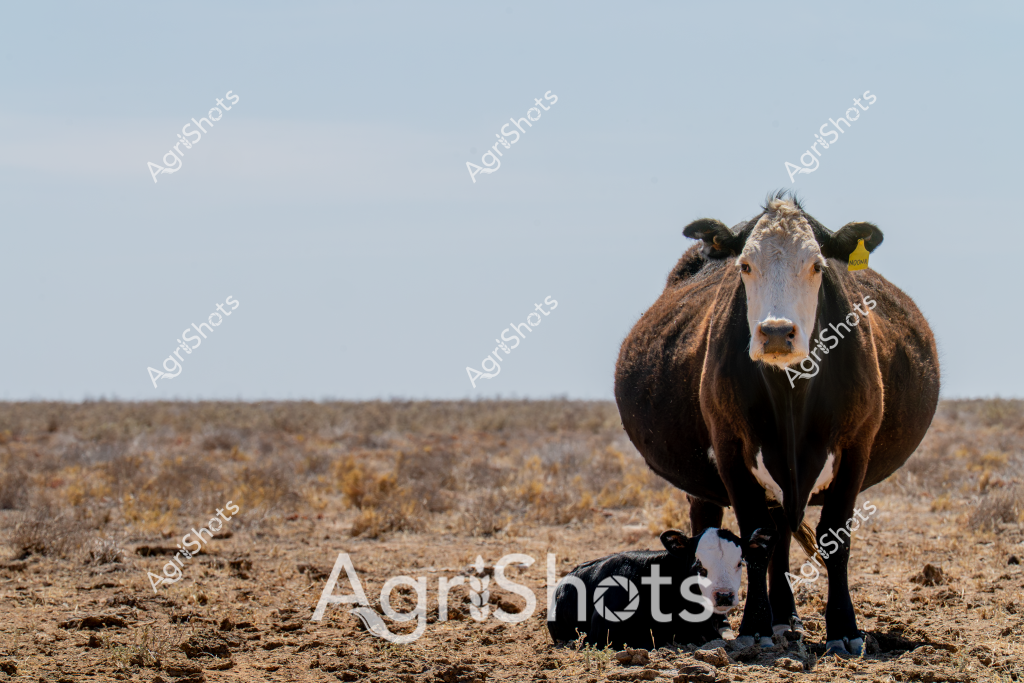
A robust beef cow stands confidently on a dry, sparse paddock, with her newborn black and white calf nestled beside her. The mature cow, likely a Angus or Angus-cross breed, wears a yellow ear tag and displays a sturdy, well-developed physique typical of Australian beef cattle. The landscape is characteristically arid, with brown, sparse vegetation and a flat horizon stretching to a pale blue sky, suggesting a challenging drought-affected environment. The cow's protective stance and close proximity to her calf indicate the strong maternal instincts critical for survival in harsh agricultural conditions. Her rich dark brown coat contrasts against the pale, dusty ground, highlighting the resilience of livestock in Australian agricultural settings. The image captures the essence of pastoral farming - where animals must be hardy and adaptable to survive in challenging terrain. This scene represents the realities of cattle farming in Australia's more marginal grazing lands, where animals must be tough and farmers must be strategic in managing livestock through difficult environmental conditions. The proximity of the mother and calf demonstrates the ongoing cycle of agricultural production and the fundamental relationship between farmers and their herds.
 Image
Image
A large mob of white and black sheep are clustered together, kicking up a dense cloud of dust across a dry, golden paddock. The livestock - likely a mixed flock of Merino and crossbred sheep - stand tightly packed, creating a textural landscape of woolly bodies against the parched earth. Sparse eucalyptus trees line the background, their green canopies contrasting with the dusty brown landscape, suggesting this is during a dry season in rural Australia. The dense dust cloud rising around the sheep indicates movement and the arid conditions typical of many agricultural regions during summer or drought periods. The scene captures the resilience of Australian sheep farming, where livestock must navigate challenging environmental conditions. The soft blue sky and scattered clouds provide a muted backdrop to this quintessential Australian pastoral scene, highlighting the harsh yet beautiful nature of agricultural landscapes.
 Image
Image
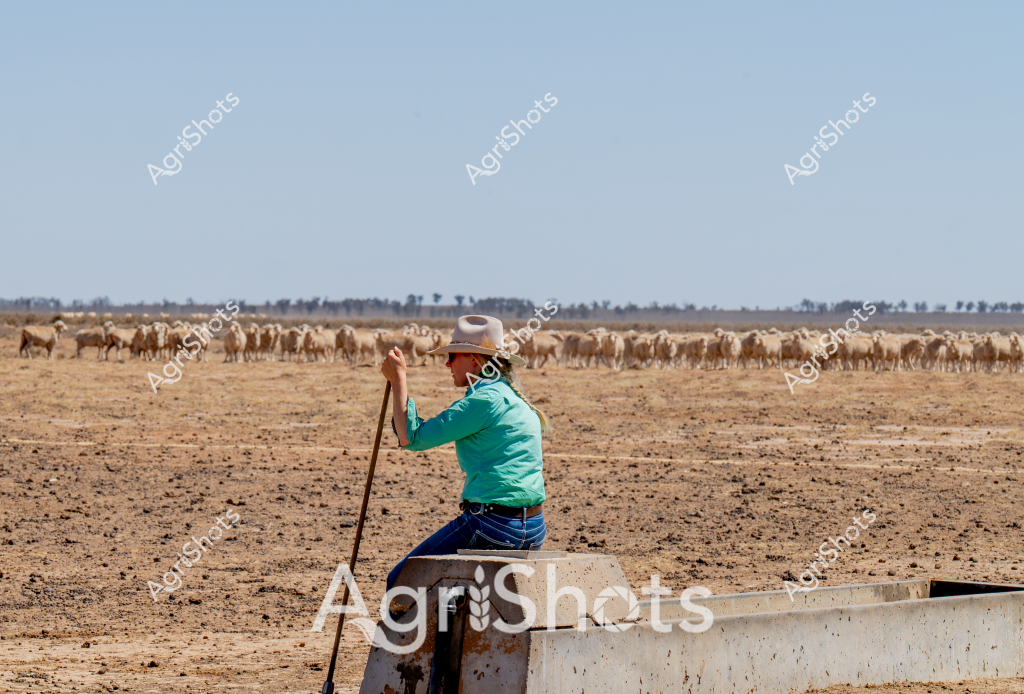
A woman stockman sits atop a concrete water trough, surveying a large herd of light-colored cattle grazing across a dry, dusty paddock under a pale blue sky. Wearing a green shirt, blue jeans, and a wide-brimmed hat, she leans on a long wooden stock stick, embodying the resilient spirit of Australian rural life. The landscape appears parched and sun-baked, with sparse vegetation and a distant line of trees marking the horizon, suggesting challenging drought conditions typical of inland Australia. The herd, likely beef cattle, spreads out across the expansive golden-brown landscape, their pale bodies creating a textured pattern against the arid ground. The scene captures the essence of pastoral management - a lone stockwoman monitoring the livestock in a harsh, unforgiving environment that demands constant vigilance and skill. Her posture and positioning reveal an intimate connection with the land and the animals, representing the enduring tradition of Australian agriculture. This image powerfully illustrates the challenging conditions faced by farmers and livestock managers in rural Australia, where survival depends on careful stewardship and adaptability in an often unforgiving landscape.
 Image
Image
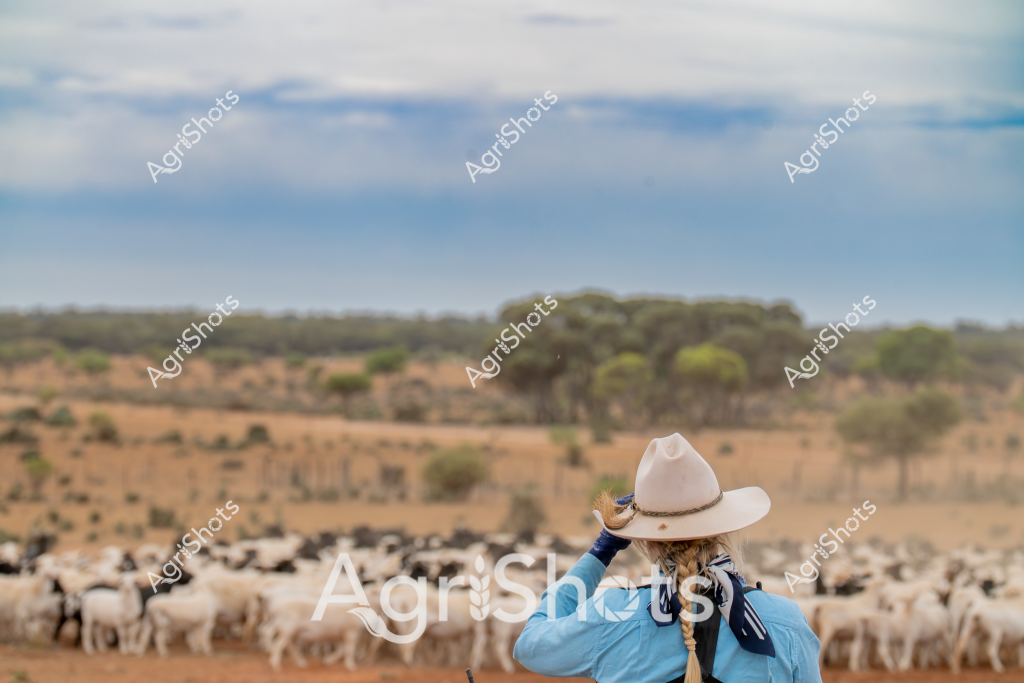
A woman stockman in a wide-brimmed pale cowboy hat and blue long-sleeved shirt stands with her back to the camera, surveying a large herd of white sheep across a dry, golden rural landscape. The expansive paddock stretches toward a distant tree line of eucalyptus and scrub, under a soft blue and cloudy sky typical of the Australian interior. Her posture suggests she is carefully monitoring the flock, which appears to be a large mob of merino sheep grazing across the arid terrain. The scene captures the quintessential Australian pastoral landscape - a wide-open space where livestock farming defines the rhythm of life, with sparse vegetation and an endless horizon suggesting the challenges and resilience of rural agricultural work. The woman's blue shirt and white hat stand in sharp contrast to the earthy browns and greens of the surrounding landscape, highlighting her role as a central figure in managing the livestock.
 Image
Image
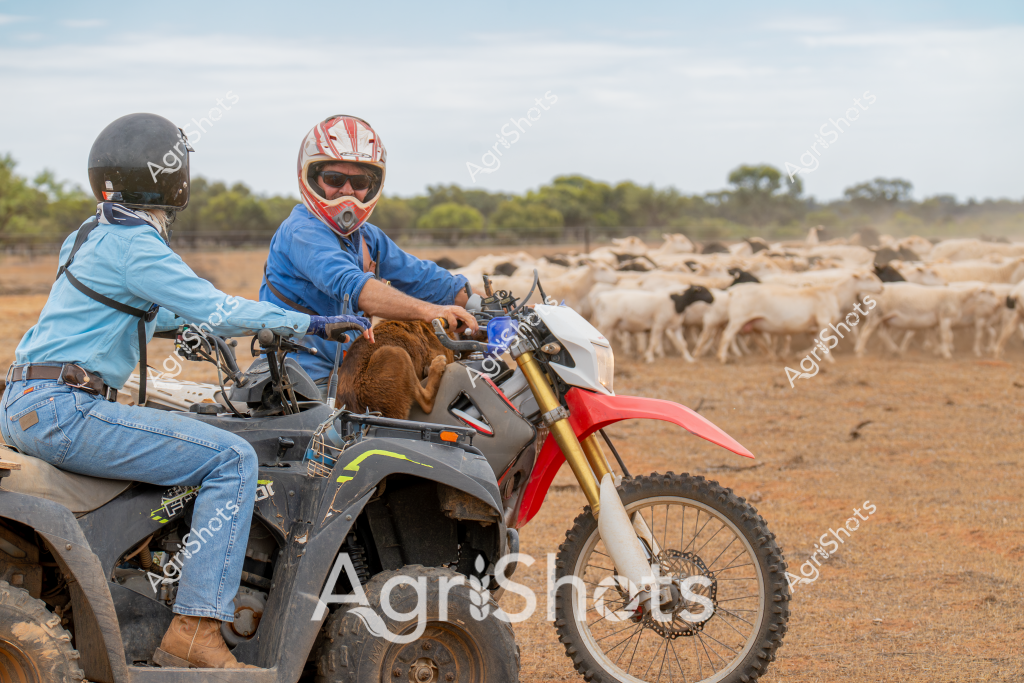
Two riders on off-road motorcycles guide a flock of white sheep across a dry, golden paddock in rural Australia. A woman in a light blue shirt and denim jeans sits on a quad bike, while a man in a blue shirt and red-and-white motocross helmet rides a dirt bike beside her. The landscape is typical of the Australian interior - sparse, dusty ground with scattered trees on the horizon and a herd of woolly sheep clustered in the background. The motorcycles appear well-equipped for farm work, with the dirt bike featuring a striking red and white color scheme and the quad bike looking robust and functional. Both riders are wearing protective gear, including helmets and sturdy clothing, suggesting they are actively mustering or moving the livestock across the property. The scene captures the essence of modern Australian livestock management, where motorized vehicles have replaced traditional horse-based mustering, demonstrating the evolving techniques of farm work in the contemporary agricultural landscape. The dry terrain and sparse vegetation hint at challenging environmental conditions typical of many Australian grazing regions.
 Image
Image
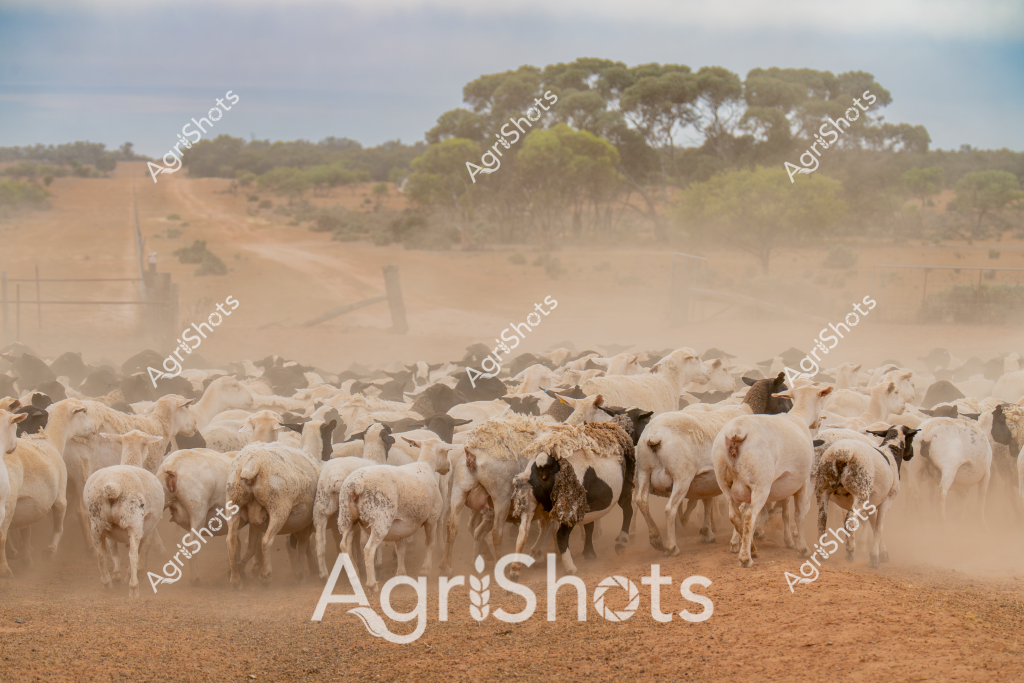
A large mob of white and cream-colored sheep kick up a dramatic dust cloud across a dry, golden rural landscape in South Australia or Western Australia. The densely packed flock moves across a dusty dirt track, with eucalyptus trees and sparse bushland visible in the distant background. The sheep appear to be Merino or crossbred wool sheep, tightly clustered and creating a billowing cloud of ochre-colored dust that softens the surrounding landscape. Sparse scrubland and a gently undulating paddock provide a classic Australian pastoral setting, suggesting this is during a dry season or late summer when the ground is parched and vegetation is minimal. The flock's movement creates a sense of dynamic energy, with their woolly backs and rumps presenting a textural mosaic of cream and white against the dusty earth. This image captures the quintessential Australian agricultural landscape - vast, arid, and resilient, with livestock central to the narrative of survival and productivity in challenging environmental conditions.
 Image
Image
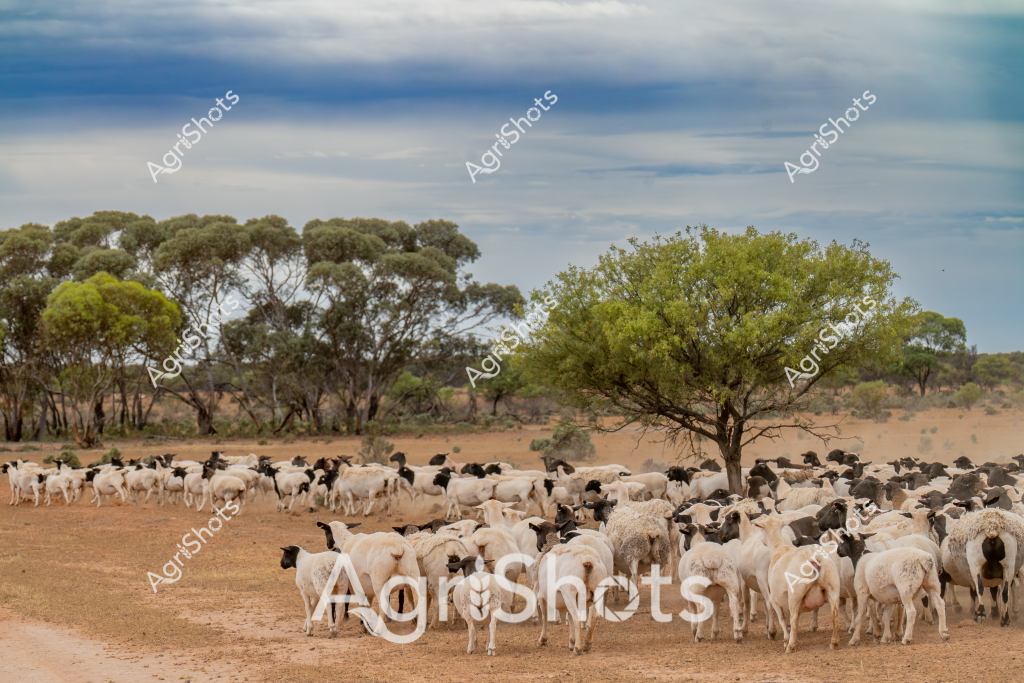
A dense flock of white and black-headed sheep crowd together on a dry, dusty paddock in an Australian rural landscape. The sheep, likely Merino or a similar wool breed, are tightly grouped near some scattered eucalyptus trees with a backdrop of blue-grey cloudy skies. The arid terrain suggests this is a pastoral region, potentially in western New South Wales or South Australia, where sheep farming is a critical agricultural industry. The landscape is characterised by sparse vegetation, reddish-brown earth, and sparse green trees scattered across the horizon, indicating challenging environmental conditions. The mob of sheep appears calm and clustered, possibly awaiting movement to another grazing area or seeking shade from the sparse tree cover. This image captures the essence of Australian sheep farming - resilient livestock adapted to harsh, expansive agricultural landscapes.
 Image
Image
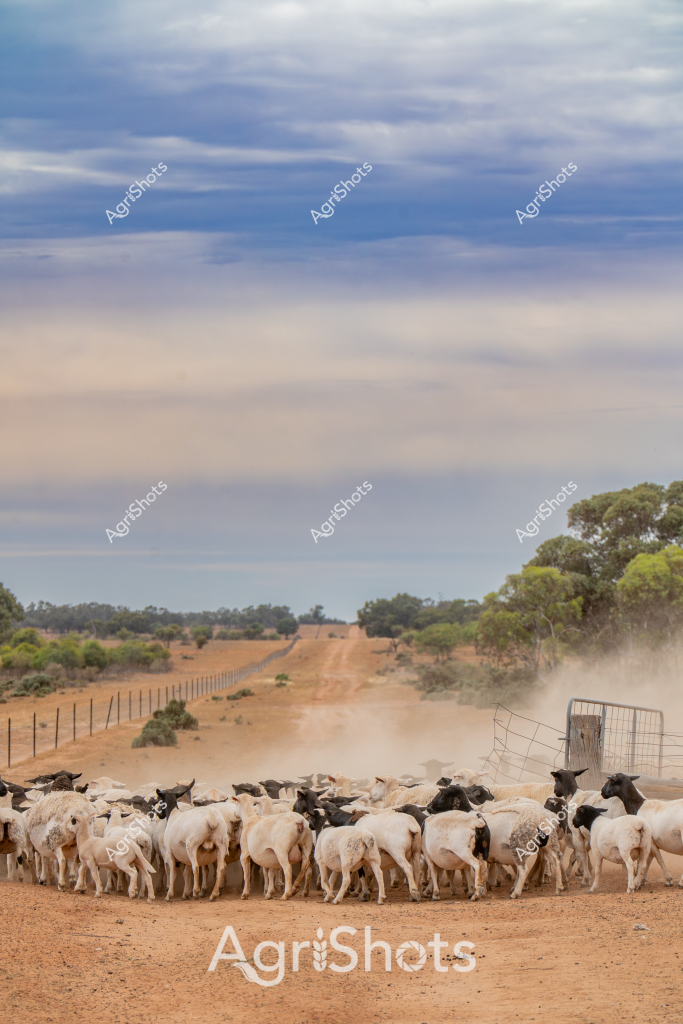
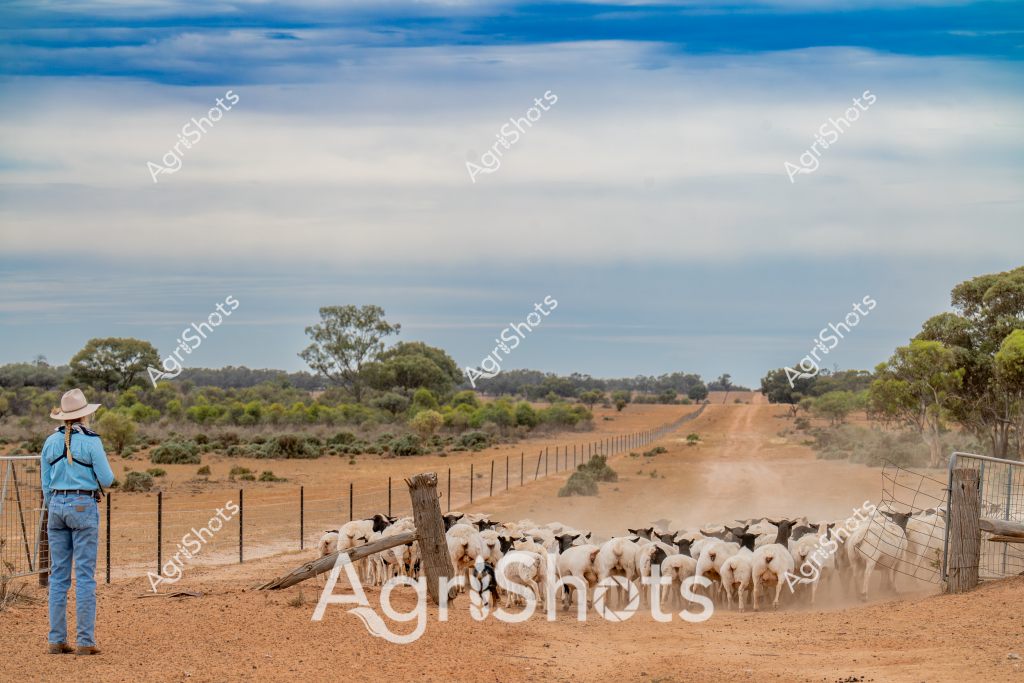
A tight mob of white and black goats clusters around a livestock gate on a dusty dirt road in the Australian outback. The herd stands close together, creating a dense group of woolly bodies against the rust-colored earth, with a wire fence and wooden gate post defining their boundary. A long, unsealed rural track stretches into the distance, lined with sparse eucalyptus trees and scrubland under a cloudy, soft-toned sky. Fine dust rises around the goats' hooves, indicating recent movement or dry ground conditions typical of arid pastoral regions. The landscape suggests a remote station or grazing property, with the goats carefully contained within their fenced paddock area. The muted blue and tan tones of the sky contrast beautifully with the earthy ground, creating a quintessential Australian rural scene that captures the harsh yet beautiful agricultural landscape.
 Image
Image
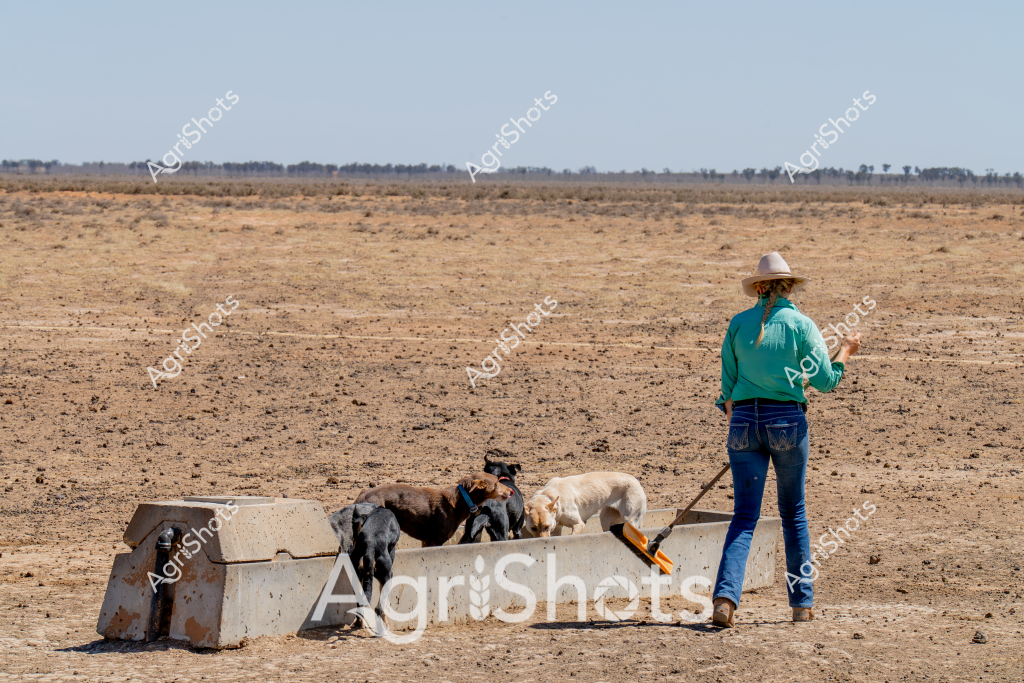
A woman stockman stands in a drought-affected paddock, managing a small group of working dogs near a concrete water trough. The landscape is a stark, dry expanse of reddish-brown earth stretching to a distant tree line, highlighting the harsh agricultural conditions. The woman wears a turquoise long-sleeved shirt, blue jeans, and a light-colored wide-brimmed hat, typical of rural Australian work attire. Several dogs of different colors - including black and tan - are gathered around the concrete water infrastructure, appearing to be working dogs trained to assist in livestock management. The barren background and dry ground illustrate the challenging environmental conditions faced by Australian farmers, with the scene capturing the resilience and daily work of agricultural workers in managing livestock during difficult drought periods. The image speaks to the ongoing challenges of rural Australian agriculture, showcasing the relationship between farmers, their working animals, and the demanding landscape. The concrete trough provides a critical water source in this arid environment, demonstrating the importance of water infrastructure in sustaining agricultural operations during dry seasons.
 Image
Image
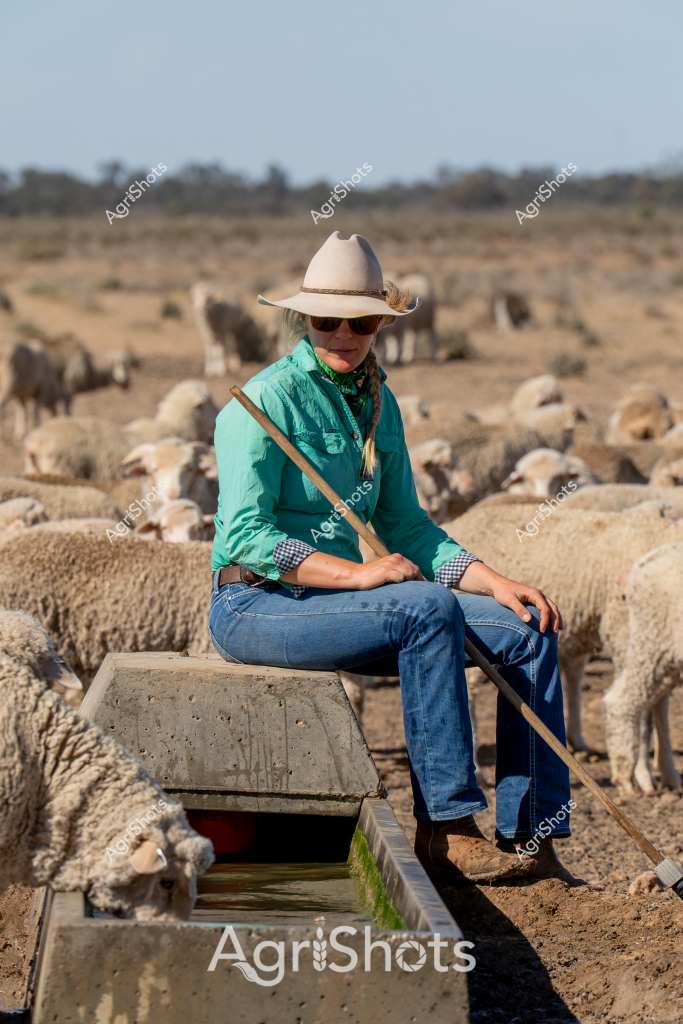
A woman livestock manager sits among a flock of merino sheep in an arid Australian paddock, capturing the essence of rural pastoral life. Wearing a cream cowboy hat, green button-up shirt, and blue jeans, she rests on a concrete water trough surrounded by woolly merino sheep. The landscape is a dry, expansive terrain with sparse vegetation and distant tree lines, typical of Australia's agricultural heartland. Her green bandana and sunglasses suggest practical preparation for harsh outback conditions, while her relaxed posture indicates a deep familiarity with the environment. A wooden shepherd's staff rests beside her, a traditional tool for guiding and managing livestock. The merino sheep, with their dense, wrinkled fleece, are densely clustered around the water source, highlighting the critical importance of water infrastructure in Australia's challenging agricultural landscapes. The scene embodies the resilience and quiet determination of Australian farmers, who must navigate challenging environmental conditions while maintaining productive livestock operations. The soft blue sky and muted earth tones create a sense of timeless connection between the livestock manager and the land she works.
 Image
Image
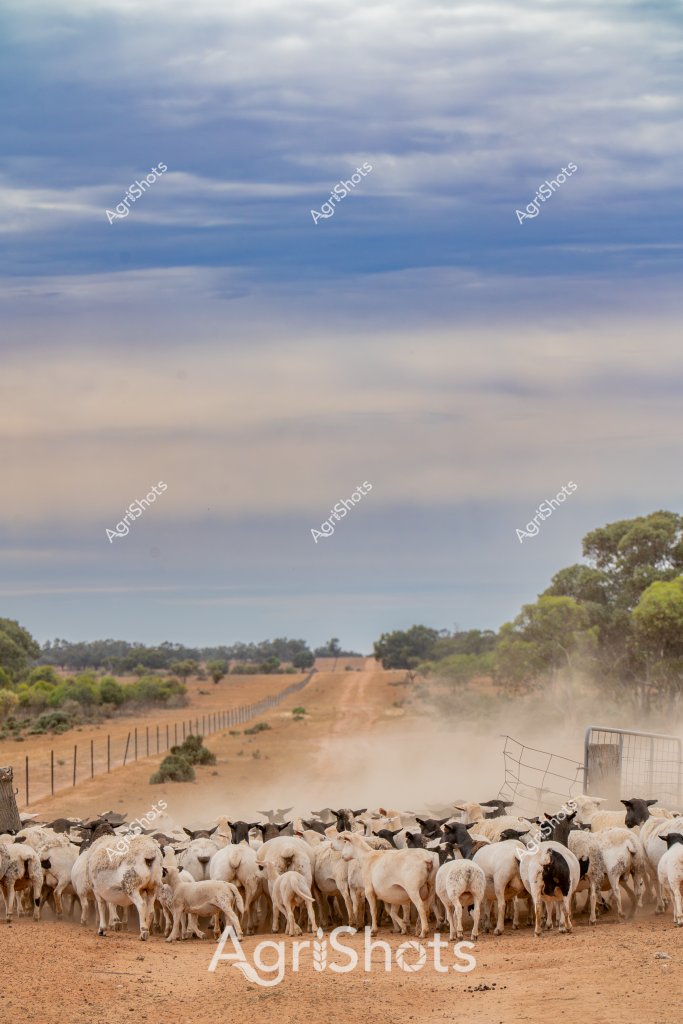
A tight mob of white sheep clusters around a dusty rural gate, creating a compelling scene of Australian livestock management. The herd appears to be Merino sheep, densely packed on a dry, reddish-brown dirt track with a wire fence and gate visible. Surrounding the livestock is a classic Australian pastoral landscape - sparse eucalyptus trees line the horizon, and a long dirt road stretches into the distance under a soft, cloudy sky with muted blue and grey tones. Dust rises from the ground, indicating dry conditions typical of many agricultural regions in Australia. The sheep are tightly grouped, showing their instinctive herding behavior, with their woolly backs presenting a uniform texture against the arid landscape. This image captures the essence of rural Australian livestock farming - resilient animals adapted to challenging environmental conditions, managed with practical infrastructure and traditional farming techniques.
 Image
Image
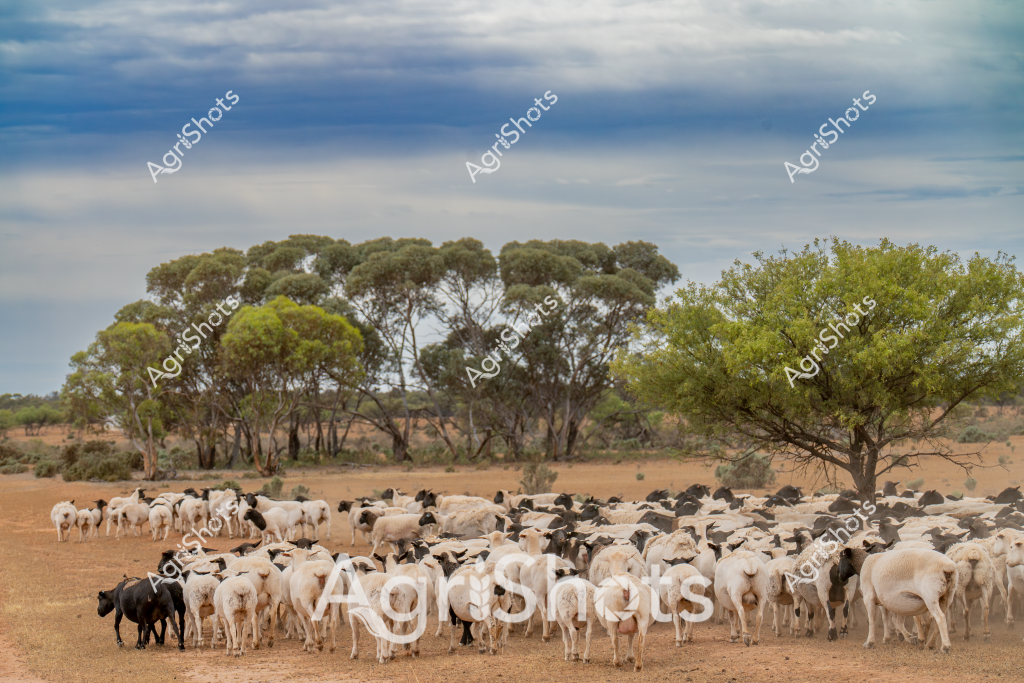
A large flock of white and black sheep clusters together in a dry, dusty paddock surrounded by eucalyptus trees under a soft, cloudy sky. The sheep - a mix of white and dark-colored individuals - stand closely packed, creating a dense woolly landscape against the arid ground. Sparse green trees line the horizon, providing a subtle backdrop to the livestock scene. The landscape appears typical of an Australian pastoral setting, with a wide, open terrain and scattered vegetation characteristic of sheep grazing country. The animals seem calm and grouped together, suggesting they might be resting or being moved between pastures by a nearby livestock manager. The muted color palette of browns, greens, and grays captures the essence of a rural Australian agricultural scene, highlighting the resilience of livestock in challenging environmental conditions.
 Image
Image
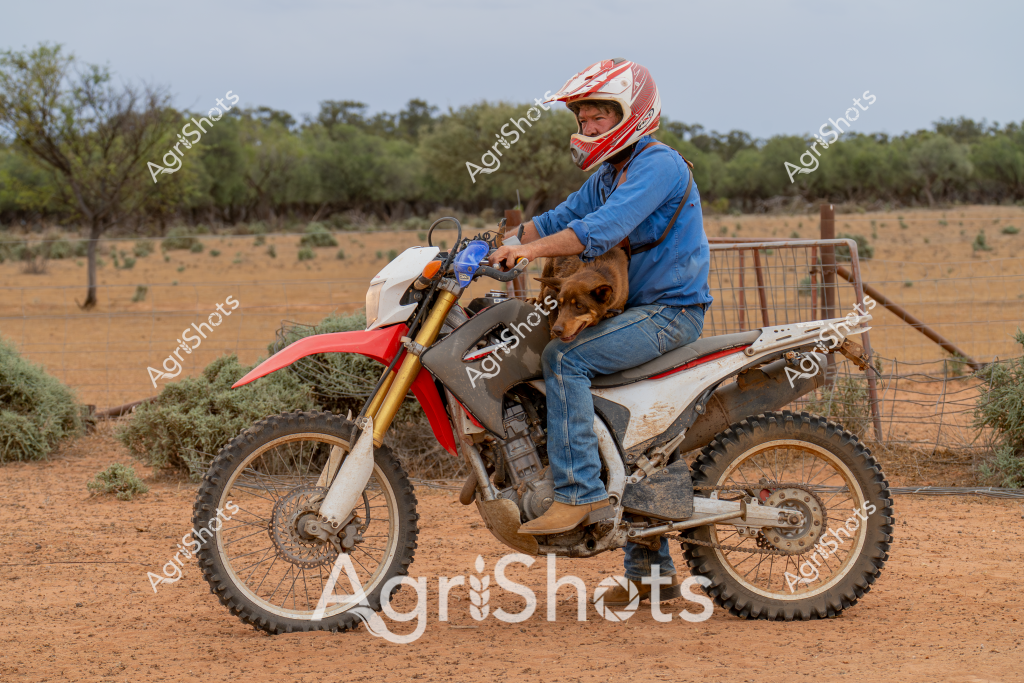
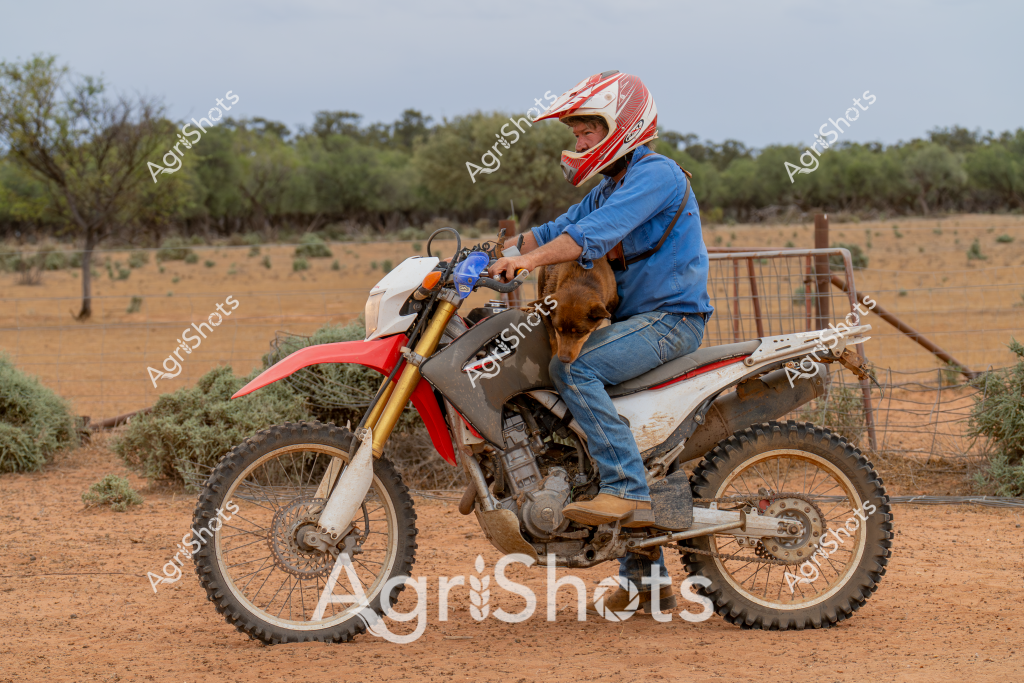
A man riding a dirt bike across an arid rural landscape, accompanied by a dog sitting close to him on the motorcycle. Wearing a red and white protective helmet and blue long-sleeved shirt, the rider navigates the dusty, reddish-brown terrain with sparse vegetation and scattered trees in the background. The trail bike appears to be a red and white off-road model, equipped with robust knobby tires suitable for rough agricultural terrain. A metal gate and wire fence are visible, suggesting this is part of a rural property or station in an inland Australian region. The scene captures the practical mobility of rural workers who often use motorcycles to traverse large properties and check livestock or infrastructure. The rugged environment and the rider's purposeful posture convey the resilience and adaptability required in Australian agricultural settings, where versatile transportation is essential for managing extensive landholdings. The companionship of the dog, sitting calmly beside the rider, further emphasizes the close working relationship between humans and animals in rural Australian contexts.
 Image
Image
A man in blue clothing and a red and white helmet rides a red and white dirt bike across an arid Australian landscape. Sitting in front of him in the bike's cargo compartment is a brown dog, seemingly comfortable and secure during the journey. The terrain is typical of the Australian outback - reddish-brown soil, sparse vegetation, and scattered trees and shrubs in the background. The rider appears to be navigating a dirt track, with wire fencing visible to one side, suggesting this is a rural property or station. The motorcycle's robust design with knobby off-road tires indicates it's well-suited for traversing challenging rural terrain. The scene captures the practical nature of transport in remote Australian agricultural areas, where versatile vehicles and loyal working dogs are essential companions.
 Image
Image
A seasoned stockman in a blue work shirt, wide-brimmed hat, and jeans stands observing a tightly clustered mob of white and black goats near a fence line on a dusty rural property. The goats are pressed against a wooden fence post, creating a dense cluster of woolly bodies in the dry, ochre-colored landscape. A long dirt track stretches into the distant horizon, lined with native eucalyptus trees and sparse bushland under a soft blue and cloudy sky. The scene captures the quintessential Australian pastoral setting - a vast, arid landscape where livestock management requires skill, patience, and intimate knowledge of the terrain. Dust rises subtly around the animals, suggesting recent movement or the inherent dryness of the environment. The composition highlights the connection between the lone stockman and the herd, embodying the resilience and solitary nature of agricultural work in remote Australian regions.
 Image
Image
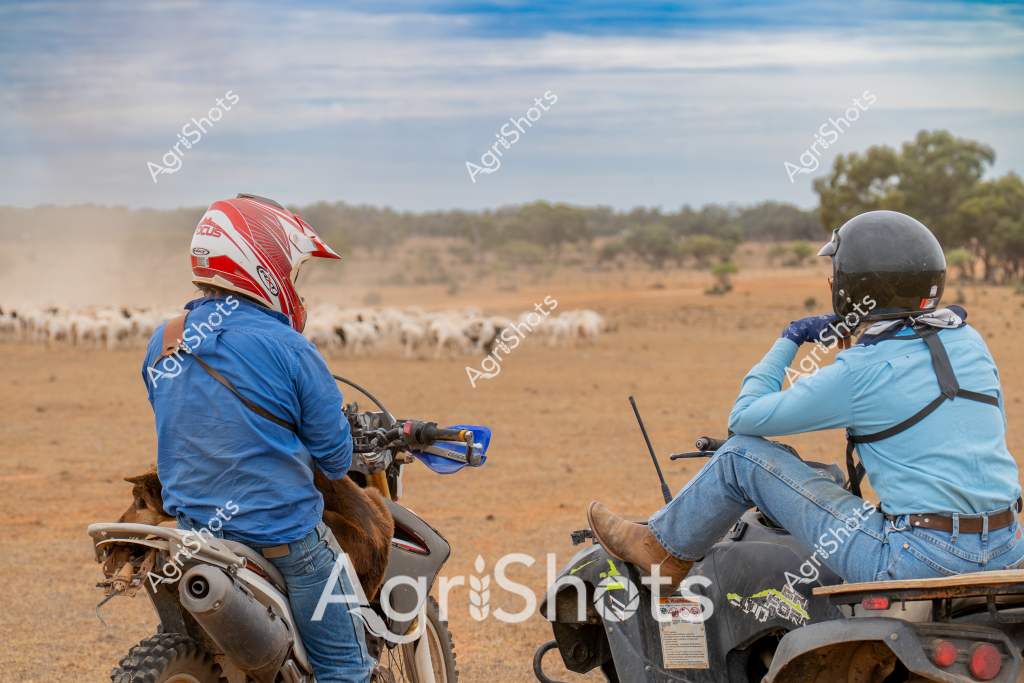
Two men on motorbikes survey a mob of white sheep across a dry, dusty paddock in rural Australia. The men wear blue shirts and protective helmets, with one in a red motocross helmet and the other in a black helmet, seated on an all-terrain vehicle and a motorcycle. The landscape is a typical Australian pastoral scene - golden-brown grass, sparse trees on the horizon, and a vast open sky with soft blue and white clouds. Several dozen sheep are grazing in the background, creating a light dust cloud as they move slowly across the arid terrain. The scene captures the essence of modern Australian livestock management, where motorcycles and quad bikes have replaced traditional horse-based mustering techniques. The dry conditions suggest this could be during a prolonged drought period, typical of many Australian agricultural regions.
 Image
Image
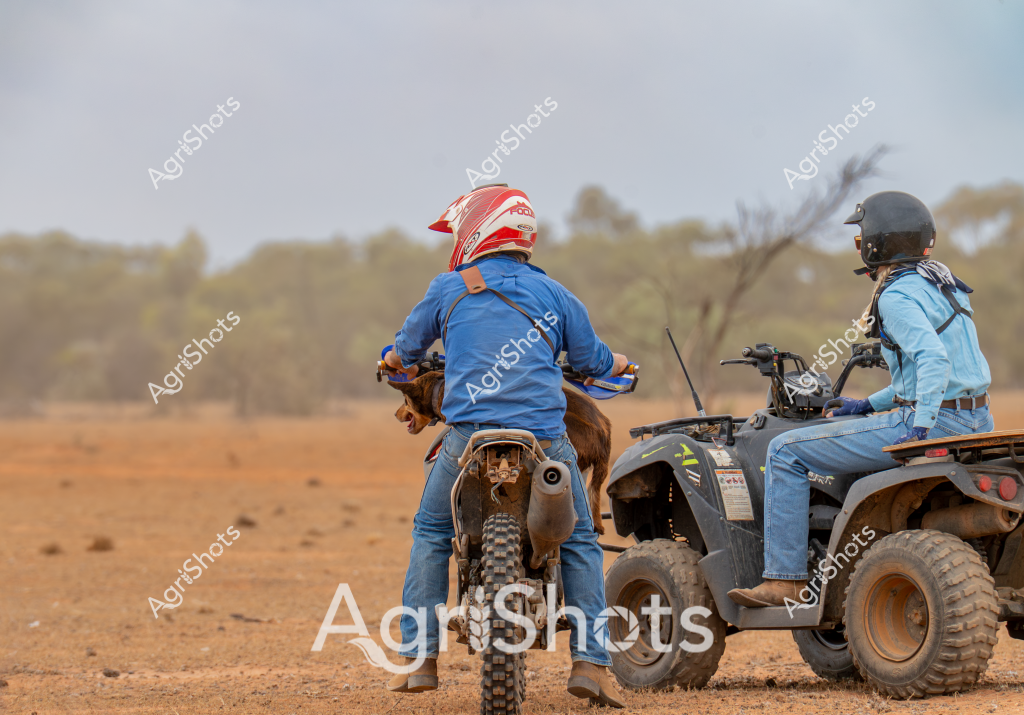
A man on a dirt motorbike and another on an all-terrain vehicle (ATV) traverse a dry, dusty rural landscape. The motorbike rider wears a red and white racing-style helmet and a blue jacket, straddling a dirt bike with knobby off-road tires. His companion sits on a grey ATV, both wearing protective helmets and denim clothing suitable for rugged rural terrain. The background reveals a sparse Australian landscape with scattered trees and shrubs, typical of an arid or semi-arid region. The ground is a reddish-brown earth, indicating dry conditions and potentially drought-affected terrain. Bare trees and minimal ground vegetation suggest a challenging agricultural environment. The scene captures the resilience and adaptability of rural workers navigating challenging landscapes using robust off-road vehicles. Their positioning and equipment suggest they might be performing farm maintenance, checking livestock, or managing property boundaries in a remote agricultural setting. The muted color palette of browns, blues, and greys, combined with the dusty atmosphere, evokes the harsh yet beautiful nature of Australian rural landscapes. Their protective gear and vehicles highlight the practical approach to working in challenging environmental conditions.
 Image
Image
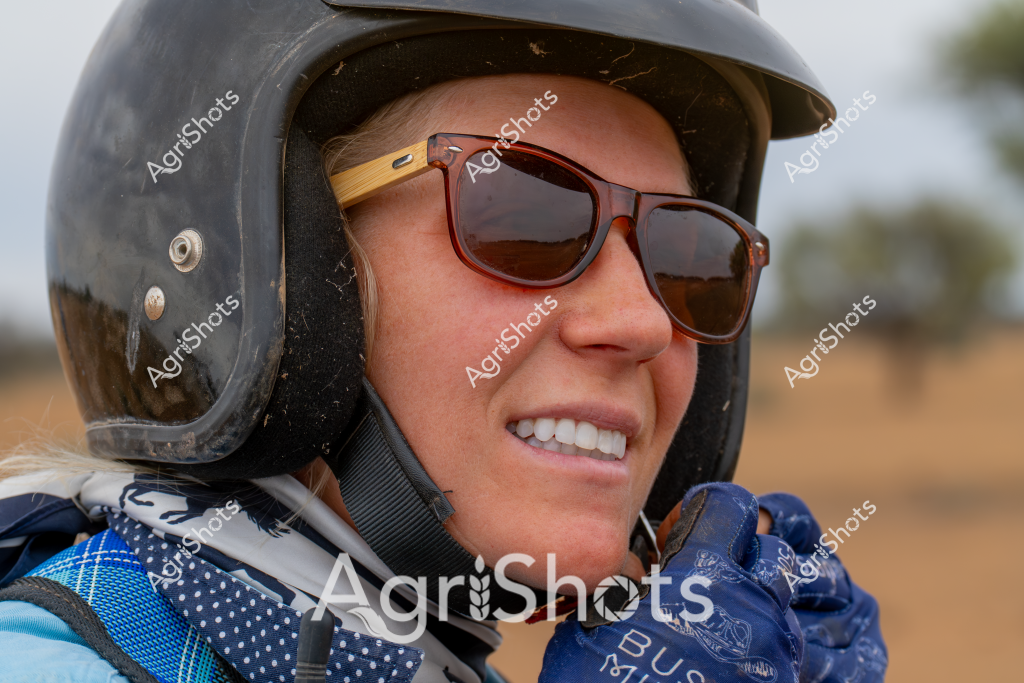
A woman wearing a black helmet and brown sunglasses smiles confidently while dressed in blue protective gear. Her warm expression and professional attire suggest she is engaged in an agricultural or outdoor working environment. The black helmet appears robust and well-fitted, indicating she may be involved in activities requiring safety equipment such as farm machinery operation, livestock management, or rural field work. Her blue gloves and patterned jacket further reinforce her preparedness for an active, hands-on role in agricultural settings. The background hints at an open, rural landscape with soft, muted tones typical of Australian farmland or station country.
 Image
Image
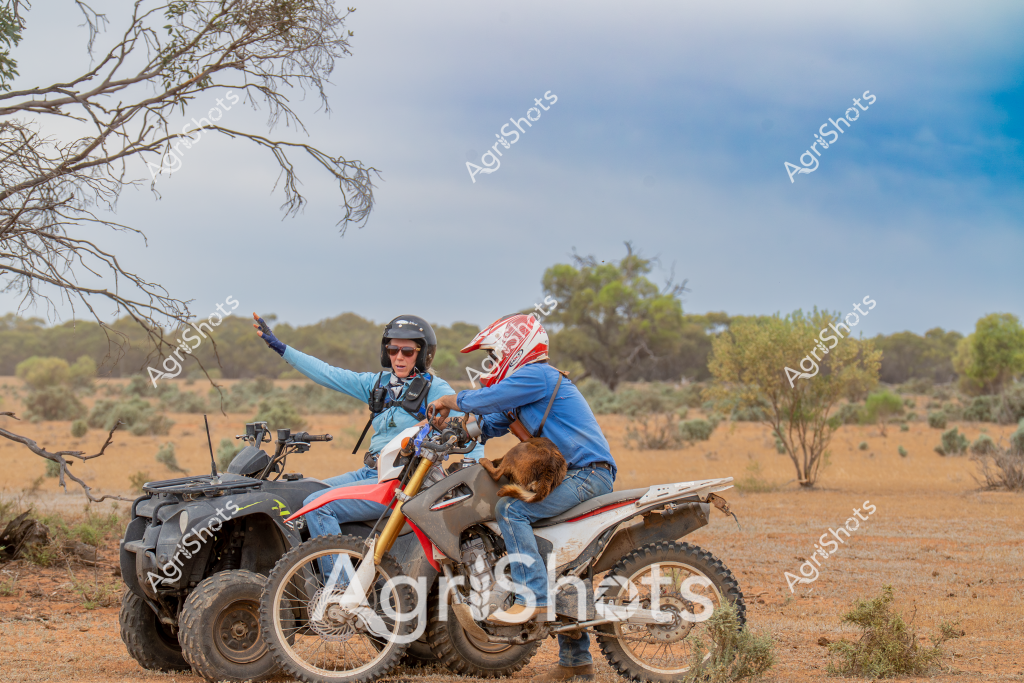
Two people ride off-road vehicles across an arid Australian landscape, exploring a dry, sparse bushland setting. A woman on an all-terrain quad bike sits alongside a person on a dirt bike, both dressed in blue tops and wearing protective helmets. The terrain is classic Australian outback - reddish sandy ground with scattered low scrub, sparse trees, and a pale blue sky with hints of soft cloud cover. One rider has their arm outstretched, suggesting a sense of freedom and adventure in this remote rural environment. The motorcycles appear well-equipped for rugged terrain, with thick off-road tires designed for navigating challenging agricultural or wilderness tracks. The scene captures the spirit of exploration and mobility essential to rural and agricultural life in Australia's expansive interior regions.
 Image
Image
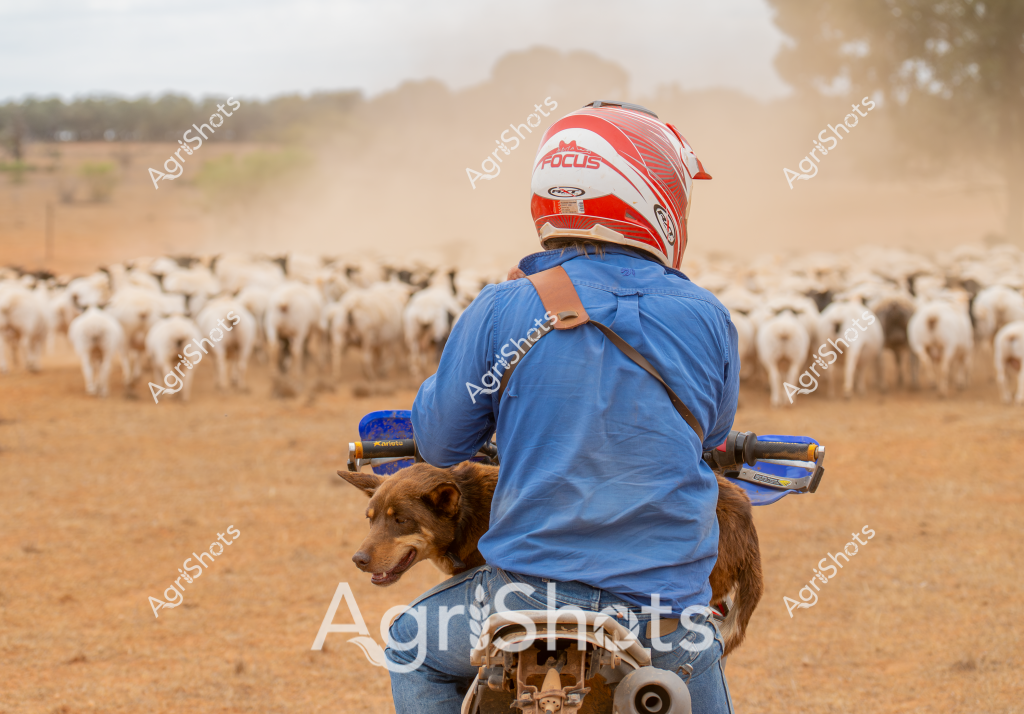
A man wearing a red motorcycle helmet and blue work shirt rides a motorbike through a dusty cattle yard, with a brown working dog seated behind him. A large herd of white cattle stands in the background, creating a cloud of dust across the dry, sun-baked landscape. The scene captures the typical Australian pastoral setting, with the stockman using a motorcycle and cattle dog to muster livestock across an arid paddock. The rider's protective helmet and steady posture suggest experienced handling of cattle in challenging rural conditions. Dust swirls around the scene, highlighting the dry environment and the dynamic movement of cattle and rider. The image exemplifies the modern approach to livestock management in Australia, where motorcycles and working dogs have largely replaced traditional horse-based mustering. The compact herd of light-colored cattle suggests they might be a breed well-adapted to dry conditions, such as Brahman or Drought Master cattle common in northern Australian stations.
 Image
Image
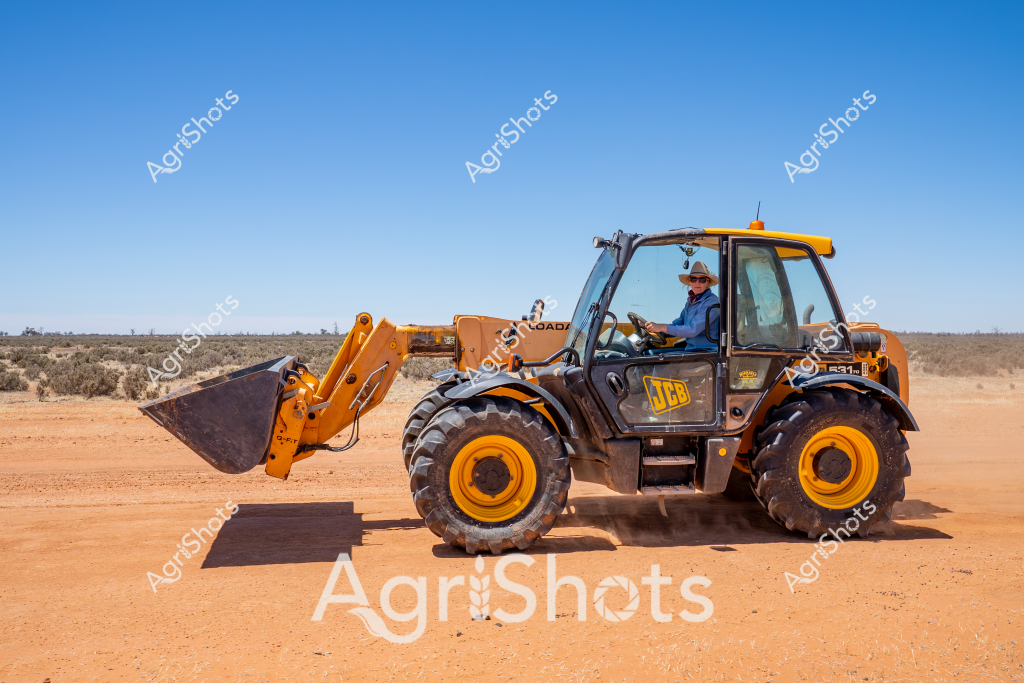
A JCB telehandler stands ready in a sun-drenched, arid landscape, its vibrant yellow and black color scheme contrasting sharply against the rich terracotta-colored dirt and sparse scrubland. A man wearing work attire and a broad-brimmed hat operates the heavy machinery, positioning the large front bucket against a clear blue sky. The robust agricultural vehicle features substantial chunky tyres designed for navigating challenging rural terrain, with the distinctive JCB branding prominently displayed on its side panel. The telehandler appears well-maintained and prepared for agricultural or construction work, typical of machinery used in remote Australian farming and resource extraction regions. Its muscular profile suggests powerful lifting capabilities, essential for tasks like moving materials, loading supplies, or supporting infrastructure development in challenging outback environments. The surrounding landscape hints at a remote location - possibly in Western Australia, South Australia, or the Northern Territory - with low scrub vegetation and a vast, open horizon stretching into the distance. The harsh, bright lighting and cloudless sky indicate midday conditions in a hot, dry agricultural or mining region.