Browse the collection
 Image
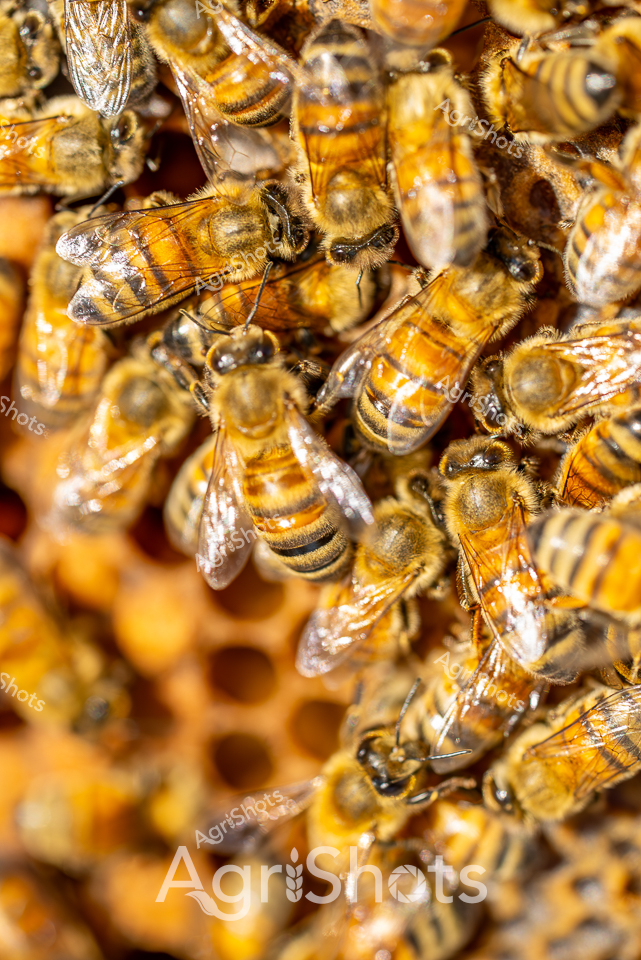
Honeybees cluster densely across a golden honeycomb, their amber and obsidian bodies gleaming with intricate textures of chitin and fine hairs. Each bee moves with purposeful precision, representing the extraordinary collective intelligence of the hive - a quintessential agricultural ecosystem thriving in Queensland's lush Lockyer Valley. Translucent amber-tinted wings overlap and shimmer, revealing the complex social structure of these pollinators critical to agricultural productivity. The honeycomb's hexagonal chambers form a pristine geometric backdrop, suggesting the remarkable engineering instincts of these tiny agricultural workers. Warm golden and amber tones dominate the image, capturing the vibrant energy of a spring day when bee colonies are most active in pollination and honey production. This intimate macro perspective celebrates the interconnected world of agricultural biodiversity, highlighting how these small creatures play a massive role in sustaining food systems across Australian farming landscapes.
 Image
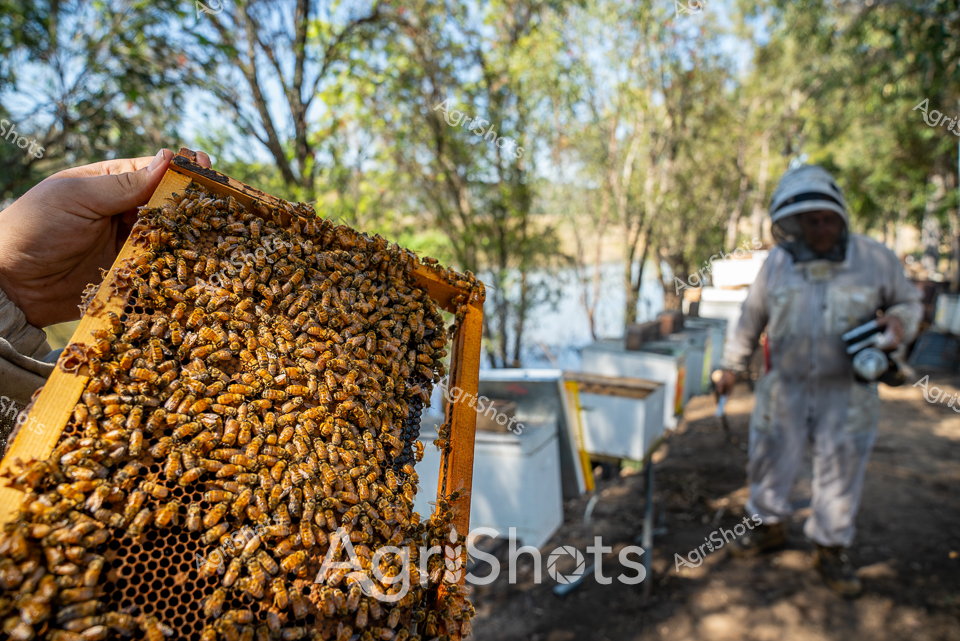
Honeybees swarm across a golden wooden frame, their amber bodies densely packed in intricate layers revealing the remarkable social structure of the hive. A beekeeper in pristine white protective gear stands among white bee boxes in a dappled woodland setting, likely in Queensland's fertile Lockyer Valley during the vibrant spring season. The close-up frame reveals the hexagonal wax honeycomb structure, with thousands of worker bees meticulously tending their complex colony, demonstrating the precision and collaborative nature of these extraordinary insects. Sunlight filters through surrounding eucalyptus trees, casting soft shadows and illuminating the rich textures of the hive and the beekeeper's protective suit. The scene captures the delicate balance of agricultural stewardship - a human carefully managing these critical pollinators whose work is essential to crop production and ecological health. This image exemplifies the intricate relationship between agricultural practice and natural systems, showcasing the meticulous care required in apiary management.
 Image
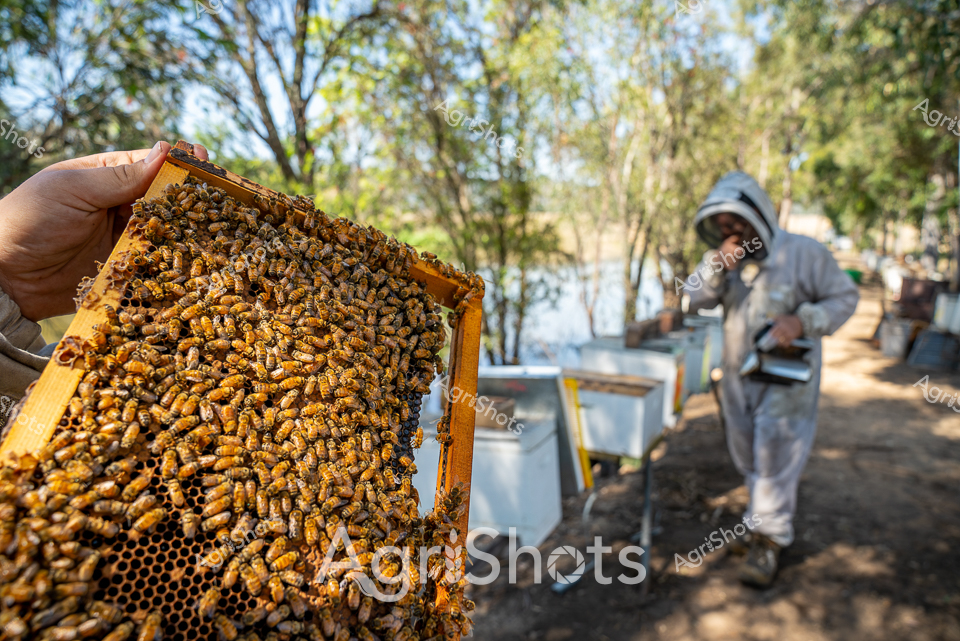
Golden honeycomb dripping with thousands of industrious honey bees fills the foreground, held carefully by a gloved hand against a sunlit backdrop of eucalyptus trees. A beekeeper in a protective white full-body suit stands among a row of white bee boxes, tending to the apiary nestled in the dappled woodland setting of Queensland's Lockyer Valley. The intricate honeycomb reveals a dense carpet of amber and golden-brown bees, their tiny bodies clustered tightly across the hexagonal wax structure, showcasing the remarkable social organization of these crucial pollinators. Soft morning light filters through the surrounding trees, casting gentle shadows and highlighting the soft textures of bee bodies and protective equipment. The scene pulses with the quiet, focused energy of agricultural work, capturing the delicate relationship between human stewardship and the complex world of bee colonies. This image celebrates the precision and care of professional beekeeping, revealing the hidden complexity of honey production in the lush Australian landscape.
 Image
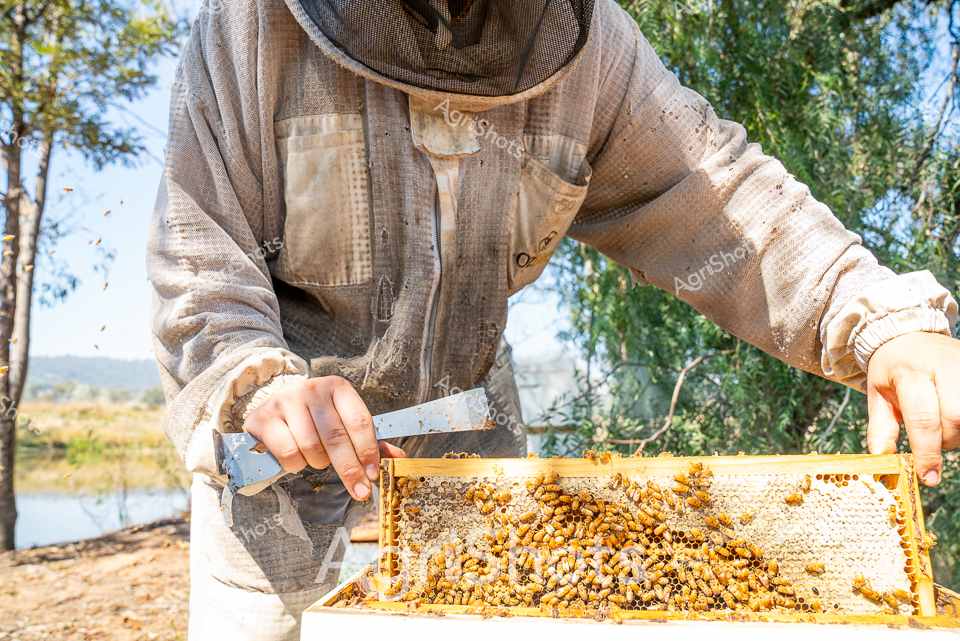
Clad in a light canvas beekeeping suit, a skilled apiarist carefully inspects a honey-laden frame teeming with golden-brown bees in the lush Lockyer Valley. Sunlight filters through surrounding eucalyptus trees, casting a warm glow on the scene of meticulous hive management. Delicate movements reveal years of expertise as the beekeeper gently manipulates the frame, surrounded by a cloud of industrious pollinators. The textured, worn protective gear speaks to countless hours spent tending these crucial agricultural workers, capturing the essence of Queensland's vibrant apiary industry during the abundant spring season. Bees cluster densely across the honeycomb, their intricate work a testament to the symbiotic relationship between human stewardship and natural productivity. This moment encapsulates the art and science of honey production, showcasing the careful craft of sustainable beekeeping in one of Australia's most fertile agricultural regions.
 Image
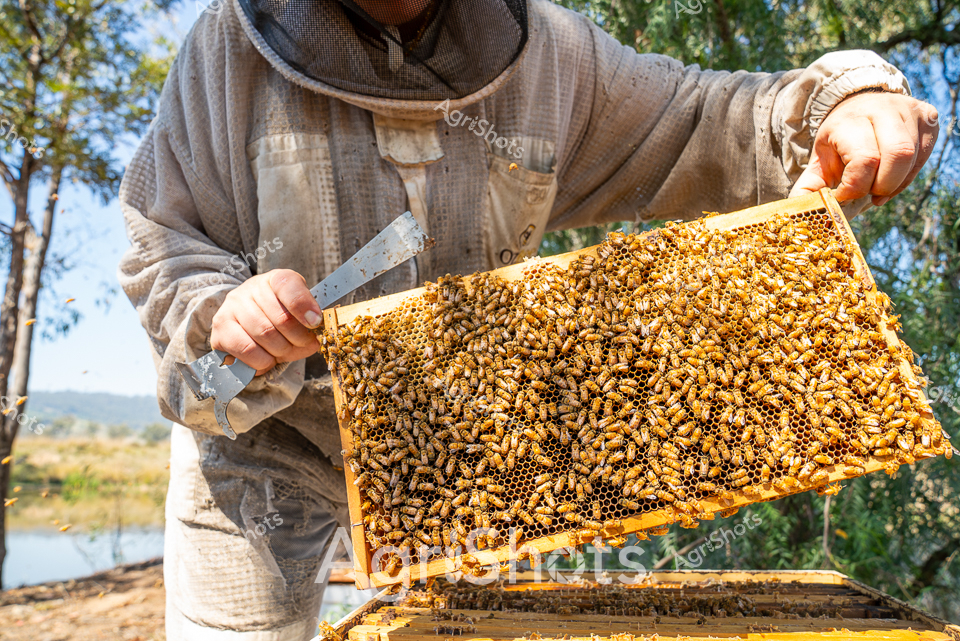
Honey harvest unfolds beneath the dappled light of early spring in Queensland's lush Lockyer Valley. A beekeeper in a protective mesh-hooded beige suit carefully extracts a golden honeycomb frame, densely populated with thousands of industrious worker bees. Sunlight illuminates the intricate hexagonal wax cells, revealing the rich amber and golden tones of stored honey and brood. The beekeeper's gloved hands manipulate the frame with practiced precision, using a metal tool to assess the hive's productivity against a backdrop of green trees and a distant landscape. Swarms of bees cluster across the wooden frame, their collective movement creating a living, buzzing tapestry of agricultural productivity. This intimate moment captures the delicate symbiosis between human stewardship and the remarkable organizational complexity of a honey bee colony, showcasing the essential role of apiculture in Australia's diverse agricultural landscape.
 Image
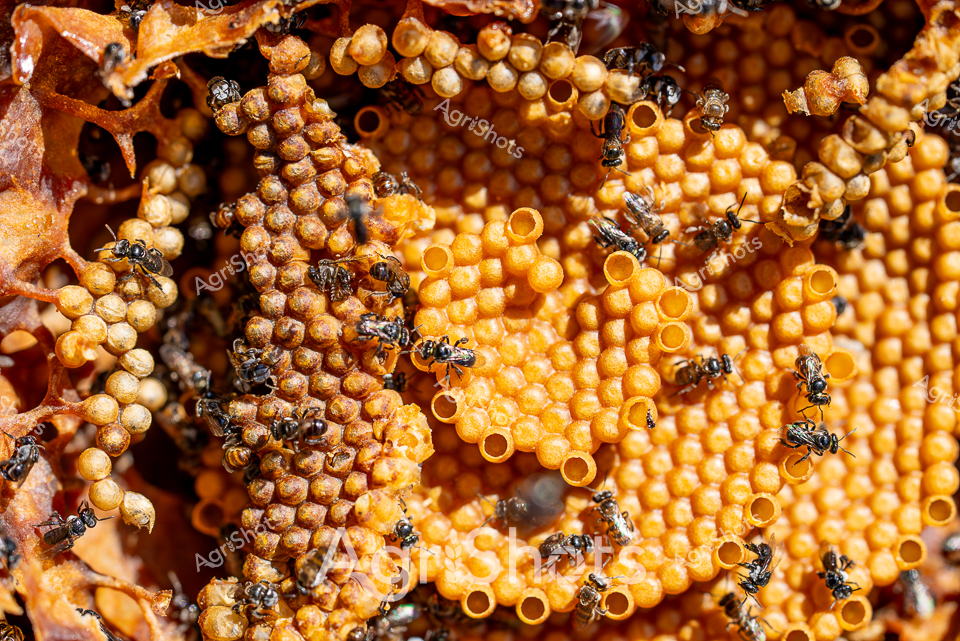
Honeycomb clusters burst with golden intensity, revealing the intricate world of a native Australian bee colony. Tiny black stingless bees—native to Queensland's Lockyer Valley—swarm across the dense, textured surface of hexagonal wax cells, some filled with developing larvae, others glistening with fresh honey. The delicate architecture of the hive demonstrates the remarkable engineering of these small pollinators, with clusters of amber-toned cells packed tightly together, creating an organic, almost sculptural landscape. Winter light reveals the rich ochre and burnt sienna tones of the honeycomb, highlighting the resilience of these insects in the cooler agricultural season. Each cell represents a complex microcosm of survival and collaboration, with worker bees meticulously maintaining the structure and nurturing the next generation. This intimate portrait captures the extraordinary detail of Australia's native bee ecosystem, a critical component of agricultural biodiversity in Queensland's productive farming regions.
 Image
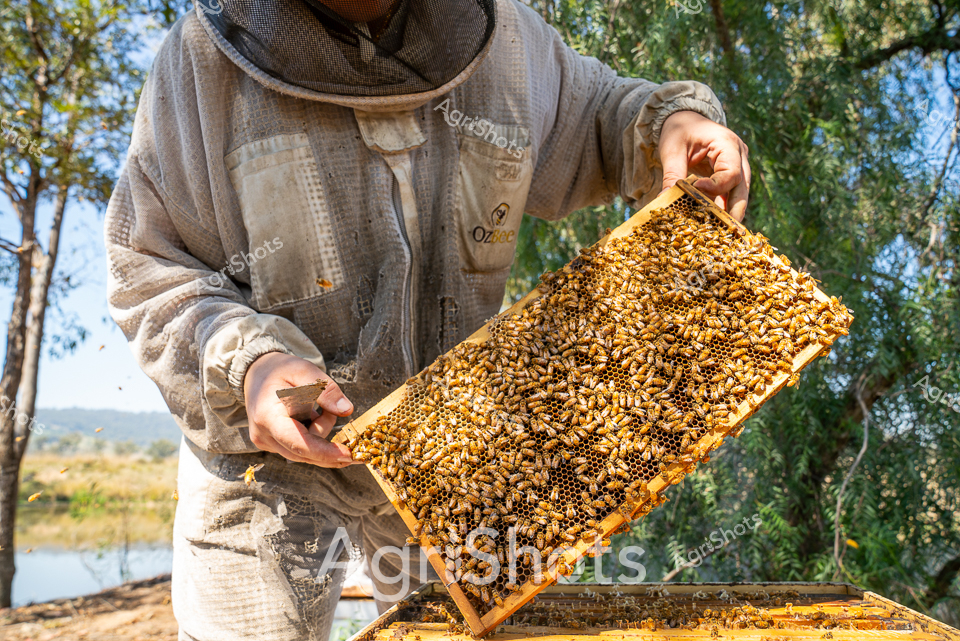
Beekeeping in Queensland's Lush Lockyer Valley A dedicated apiarist tends to a vibrant honeybee colony, carefully extracting a golden-hued honeycomb frame teeming with thousands of industrious bees. Dressed in a protective light grey mesh suit, the beekeeper works amid the verdant spring landscape of the Lockyer Valley, with trees and a distant water source creating a lush backdrop. Sunlight illuminates the intricate honeycomb, revealing a dense carpet of amber-and-black worker bees moving across the hexagonal wax structures. The frame, tilted at a careful angle, showcases the remarkable density of the bee population and the intricate organization of their collective home. Precise, methodical movements demonstrate the beekeeper's expertise in managing this delicate ecosystem, highlighting the crucial role of apiculture in agricultural production and environmental sustainability. The scene captures the harmonious interaction between human stewardship and the complex world of honeybees, a testament to the agricultural innovations thriving in Queensland's rich agricultural regions.
 Image
Tucked among the eucalyptus and remnant bushland of Queensland's Lockyer Valley, two apiarists tend to their honey production with practiced precision. Dressed in protective white mesh suits and wide-brimmed hats, they carefully extract a honeycomb frame from a pristine white hive box, surrounded by the golden-brown earth and verdant green foliage of a spring morning. Soft sunlight filters through the trees, casting dappled light on their methodical work, with additional hive boxes and traditional smoker equipment positioned nearby. The scene captures the quiet concentration of beekeepers harvesting liquid gold, their movements deliberate and gentle as they inspect the dense, amber-hued honeycomb dripping with fresh honey. Rugged fence posts and distant hills frame this quintessential Australian agricultural landscape, representing the delicate symbiosis between careful human stewardship and the complex world of bee colonies. This image embodies the artisan craft of small-scale honey production in regional Queensland, where traditional agricultural practices meet ecological sensitivity.
 Image
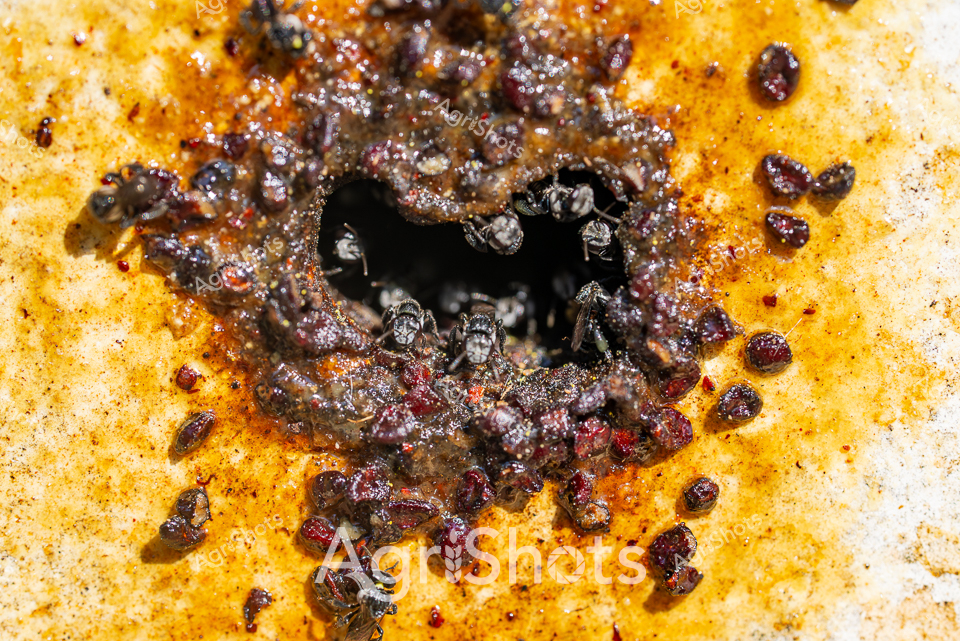
Stingless native Australian sugarbag bees cluster within their intricate hive entrance, creating an organic honeycomb portal against a rich golden-amber background. The tiny dark workers huddle tightly, their metallic bodies glinting with propolis and honey remnants, showcasing the complex social structure of these remarkable Tetragonula carbonaria species. Scattered dark reddish-brown honey droplets surround the hive opening, highlighting the meticulous environmental adaptation of these subtropical Queensland pollinators. Captured in the crisp light of a Lockyer Valley winter morning, the image reveals the microscopic architectural precision of these indigenous bee colonies, demonstrating their resilience in the challenging agricultural landscapes of southeast Queensland. The warm ochre tones contrast dramatically with the deep charcoal and metallic grey of the bee cluster, creating a mesmerizing biological tableau that speaks to the intricate world of Australian native stingless beekeeping. This close-up reveals the extraordinary communal behavior and environmental integration of these crucial agricultural symbiotes, fundamental to the ecological balance of Queensland's agricultural ecosystems.
 Image
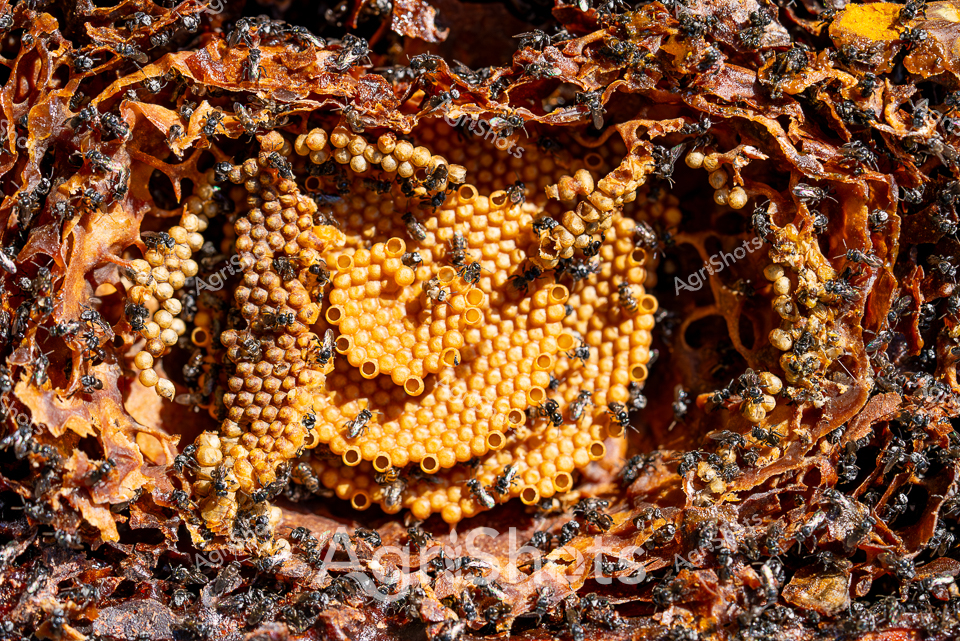
Honeycomb Harvest: Native Stingless Bee Colony Golden amber clusters of native Australian stingless bee (Tetragonula carbonaria) eggs radiate from an intricate honeycomb structure, surrounded by weathered organic hive materials. Hundreds of tiny black bees traverse the delicate cellular landscape, tending to their meticulously arranged brood chambers with remarkable precision. The rich ochre and burnt sienna tones of the hive material create a textural backdrop, highlighting the luminous yellow-orange eggs clustered in dense, geometrically perfect formations. This intimate macro view reveals the extraordinary architectural complexity of Queensland's native bee colonies, showcasing the sophisticated social organization and reproductive strategies of these critical pollinators. The image captures the winter season's subdued light, emphasizing the warm, organic textures and the remarkable micro-world of these essential agricultural companions native to the Lockyer Valley region. Each tiny egg and bee represents a complex ecosystem of agricultural significance, embodying the intricate relationship between insect life and Australian agricultural landscapes.
 Image
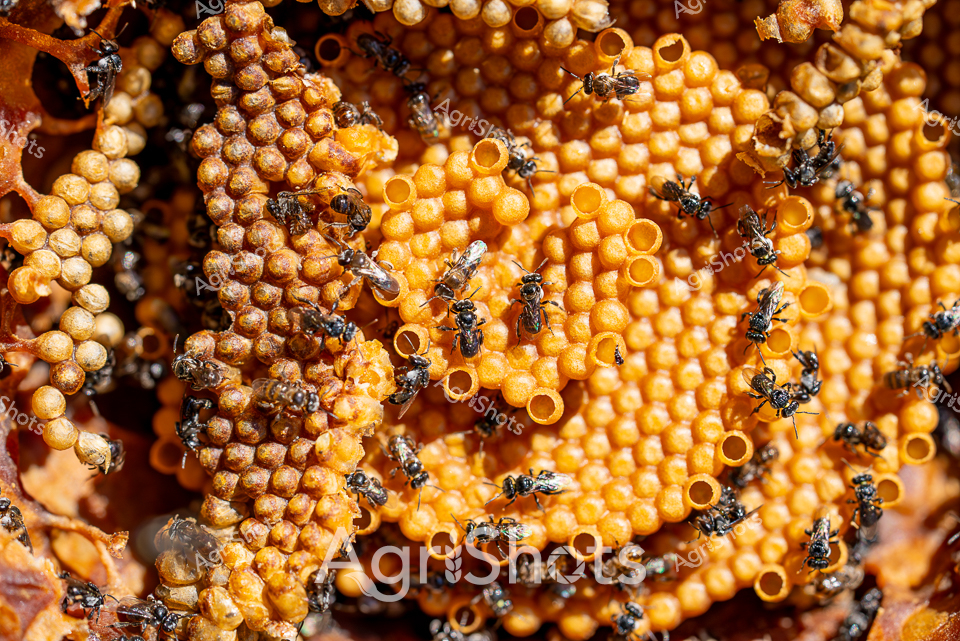
Native stingless bees cluster across the intricate honeycomb of an Australian sugarbag hive, their golden-brown bodies moving across the densely packed hexagonal cells. The remarkable close-up reveals the extraordinary architectural precision of the native bee colony, with vibrant amber and ochre tones of the wax structures creating a mesmerizing textural landscape. These tiny Tetragonula carbonaria - Queensland's native stingless bees - are integral to the delicate ecological systems of the Lockyer Valley, demonstrating the complex social organization of their miniature world. Each tiny bee moves with purposeful coordination across the brood chambers, some cells sealed with golden caps indicating developing larvae, while others remain open, suggesting active colony maintenance. The warm golden and brown palette suggests a cool winter morning, typical of the region's subtle seasonal shifts, where these resilient pollinators continue their critical work supporting local agricultural ecosystems. This intimate portrait celebrates the intricate microcosm of Australian native bee communities, highlighting their essential role in sustainable agricultural landscapes.
 Image
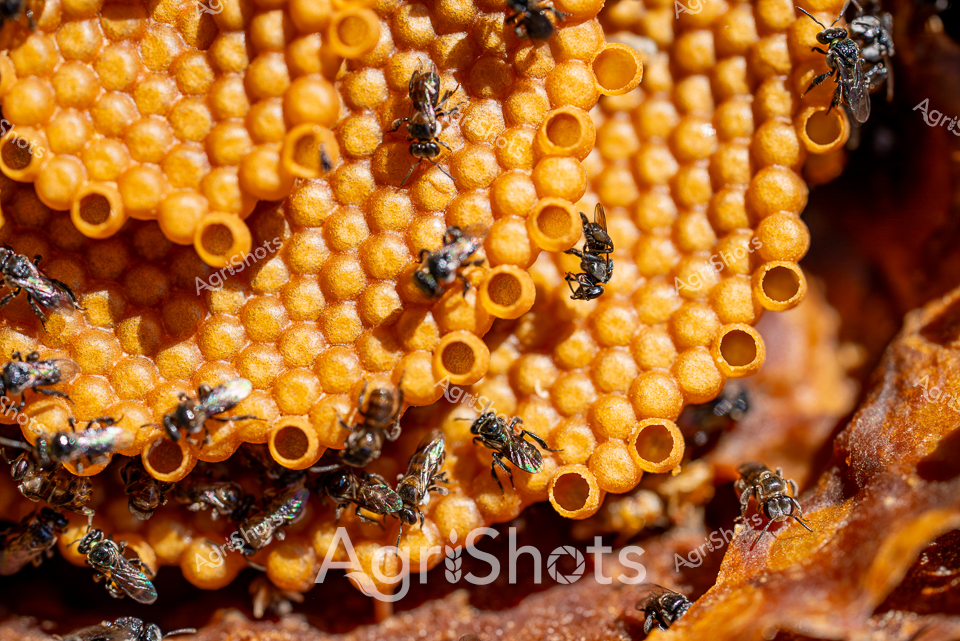
Honeycomb Architecture: Native Australian Stingless Bee Nursery Golden hexagonal chambers pulse with life as native Australian stingless bees tend their intricate brood structure. The luminous amber honeycomb glows with warm winter light, each perfectly symmetrical cell a precise nursery for developing larvae. Tiny black bees move meticulously across the surface, some entering and exiting the circular openings with ritualistic precision, while others cluster around the edges of the waxy architectural marvel. The rich ochre and burnt orange tones of the honeycomb contrast dramatically with the darker bodies of the bees, creating a mesmerizing tapestry of agricultural microcosm. This extraordinary close-up reveals the extraordinary engineering of Queensland's native bee species, capturing the delicate ecosystem of the Lockyer Valley's apiary environment with remarkable clarity and intimacy. Each cell represents a potential future worker, a testament to the complex social structure and remarkable reproductive strategy of these essential pollinators.
 Image
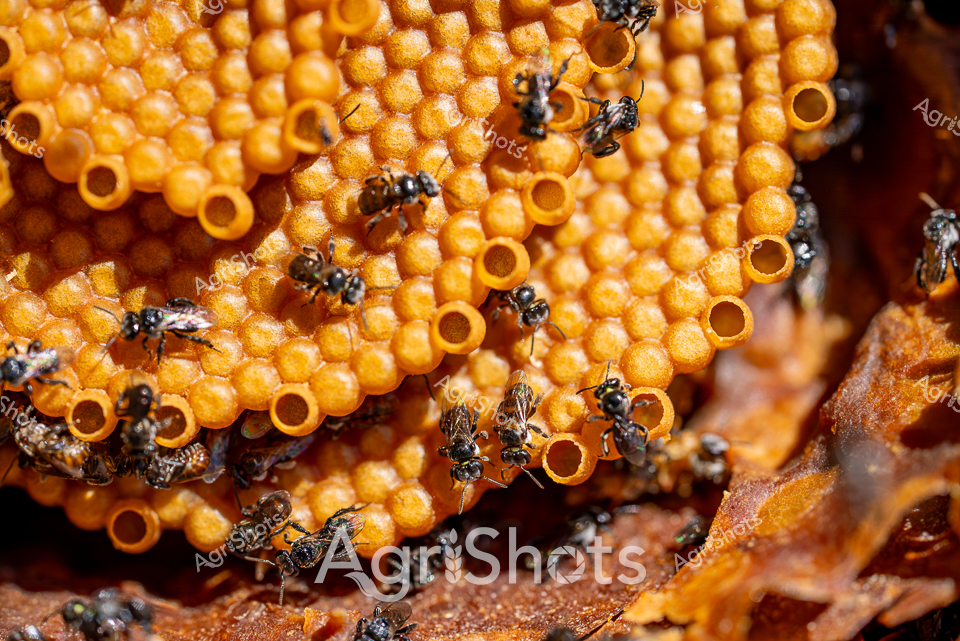
Honeycomb Symphony: Native Australian Stingless Bees at Work Golden hexagonal chambers pulse with life as native Australian stingless bees (Tetragonula carbonaria) meticulously tend their intricate brood nest. The rich amber-orange honeycomb glows with extraordinary texture, each perfectly formed cell revealing the precise architectural mastery of these tiny Queensland pollinators. Clusters of dark metallic-black bees navigate the complex surface, some emerging from cells, others entering with purpose, representing the constant motion of their sophisticated social structure. Winter light bathes the hive, capturing the delicate interconnectedness of this miniature ecosystem in the renowned Lockyer Valley agricultural region. Each rounded cell represents a potential new bee, a testament to the colony's remarkable reproductive strategy and critical role in local agricultural pollination. The image captures the extraordinary micro-world of these native insects, highlighting their importance to Australia's agricultural landscape and ecological balance.
 Image
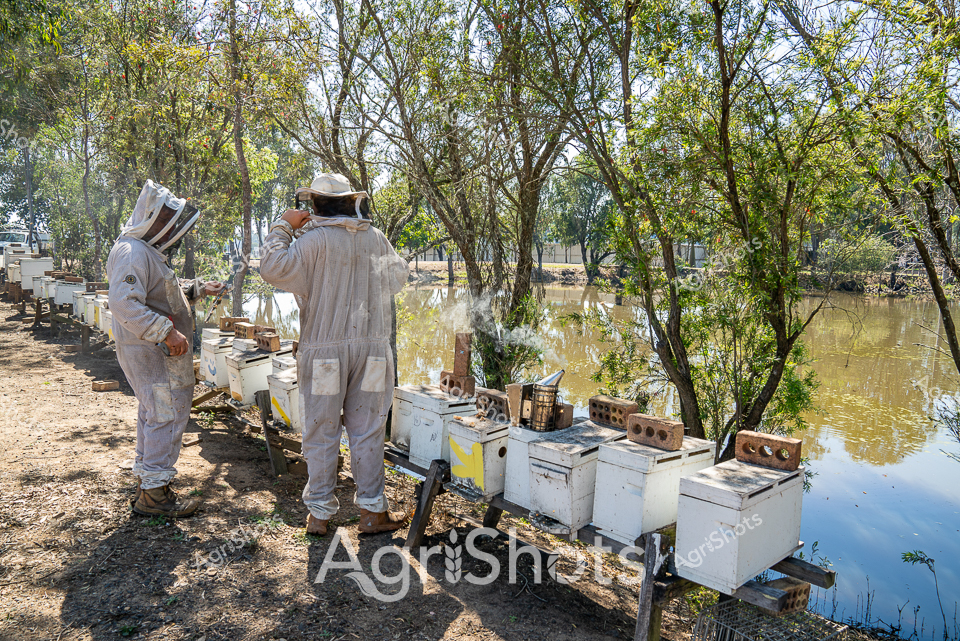
Beekeepers tend to a thriving apiary nestled along the water's edge in Queensland's lush Lockyer Valley. Dressed in protective white suits and veiled hats, the apiarists carefully manage a long row of white wooden hive boxes positioned near a tranquil pond surrounded by native trees. Soft spring sunlight filters through the greenery, casting dappled shadows on the rich earth and reflecting off the water's surface. Smoke drifts from a bee smoker, a traditional tool used to calm the honey bee colonies during inspection and maintenance. The scene captures the delicate balance of agricultural stewardship, where careful human intervention supports the critical ecological role of pollinators. Weathered and functional, the bee boxes stand as quiet sentinels of a sustainable agricultural practice that connects human nurturing with the intricate natural systems of the Australian landscape.
 Image
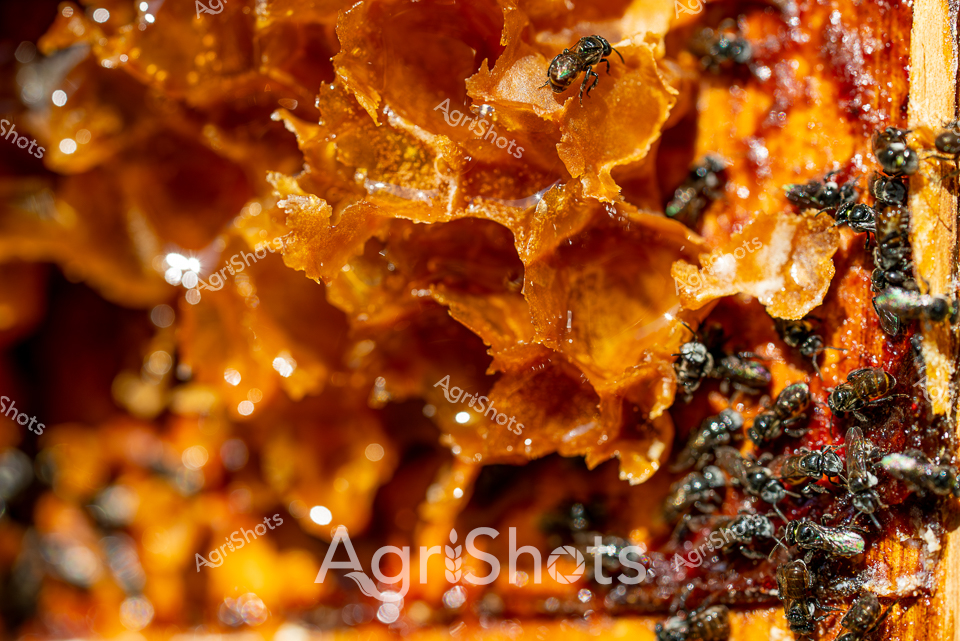
A mesmerizing close-up of native Australian stingless bees navigating the intricate golden-amber honeycomb of a hive, revealing the delicate ecosystem of subtropical Queensland's Lockyer Valley. Tiny dark bees cluster along the waxy hexagonal structures, their bodies contrasting against the translucent, amber-hued honey-laden cells that shimmer with intricate crystalline textures. Winter's soft light illuminates the rich topography of the honeycomb, highlighting the precise architectural marvel created by these indigenous Tetragonula carbonaria bees. Each bee moves with purposeful precision across the luminous surface, embodying the complex social structure and remarkable engineering of Australia's native bee species. The image captures the intimate microworld of these crucial pollinators, showcasing the stunning natural design and golden warmth of their carefully constructed home. The rich ochre and amber tones evoke the warm heart of the Queensland landscape, where these tiny workers play an essential role in maintaining agricultural biodiversity.
 Image
Golden honeycomb glistens under warm light, revealing the intricate world of Australian native stingless bees. Rich amber and caramel tones blend across the fractured wax structure, with tiny black bees navigating the complex geometric landscape of their hive. Droplets of honey catch the light, creating a luminous sheen that highlights the remarkable natural architecture of this Queensland apiary, likely nestled in the fertile Lockyer Valley region. The close-up perspective transforms the honeycomb into a living landscape, where each cell tells a story of pollination, survival, and the delicate ecosystem of native Australian bee species. Captured during the crisp winter months, this image celebrates the remarkable productivity of these small but crucial agricultural workers, whose honey production is as much an art form as it is a vital agricultural process. The textured surface speaks to the raw, unprocessed beauty of natural honey production, showcasing the intricate relationship between insects and the agricultural landscape.
 Image
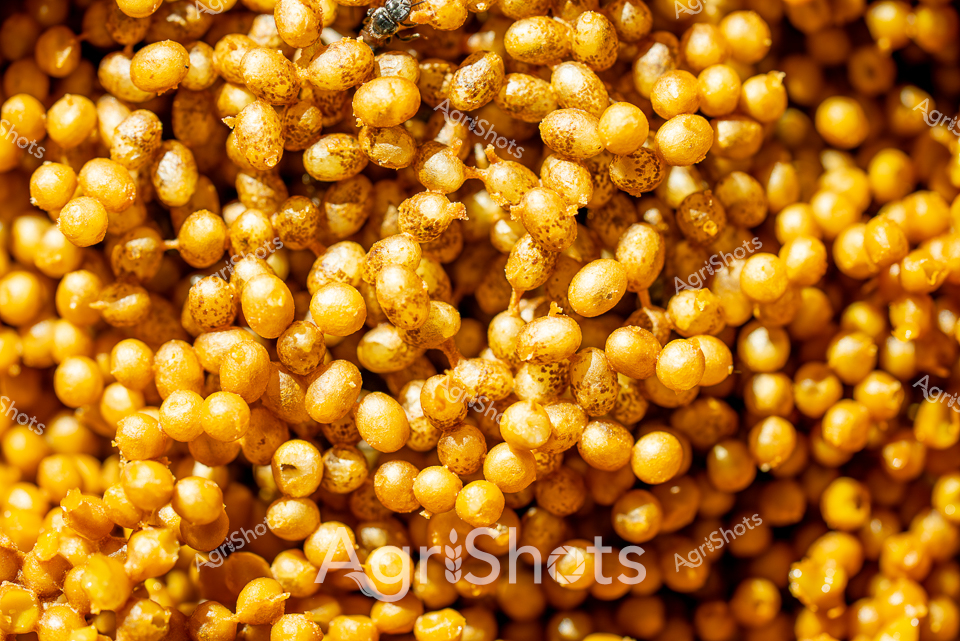
Golden honeycomb globules cluster together in a dense, glistening mass, capturing the intricate world of apiculture in Queensland's fertile Lockyer Valley. Each perfectly formed golden sphere represents a tiny universe of agricultural productivity, their sun-burnished surfaces revealing delicate speckles and variations in texture. Winter's crisp light illuminates these honey-laden pearls, showcasing the meticulous work of native Australian bees whose complex social structures transform nectar into liquid gold. The tight, almost geometric arrangement speaks to the precision of bee colonies, each droplet a testament to their extraordinary collective labor. Soft amber tones dominate the frame, suggesting warmth and richness despite the season's cooler temperatures, with subtle variations in golden hues ranging from pale wheat to deep ochre. A single bee moves almost imperceptibly among the harvest, a living symbol of the symbiotic relationship between agriculture and these remarkable pollinators that are so crucial to Australia's agricultural ecosystem.
 Image
Golden honeycomb glistens with liquid amber, its fractured surface teeming with native Australian stingless bees (Tetragonula carbonaria). Intricate hexagonal wax structures capture the rich, caramelized texture of raw honey, revealing deep golden-orange and burnished mahogany tones characteristic of winter harvest in Queensland's Lockyer Valley. Tiny dark bees navigate the waxy terrain, their bodies moving purposefully across the undulating honeycomb landscape, demonstrating the intricate symbiosis of Australian native bee species and their meticulously constructed hive. The macro perspective illuminates the extraordinary complexity of these small pollinators, highlighting their critical role in agricultural ecosystems and the delicate art of honey production. Warm lighting accentuates the sticky, translucent quality of the honey, creating a sensory experience that speaks to the rich agricultural traditions of rural Queensland. Each bee and droplet of honey represents a moment of precise, natural craftsmanship unique to Australia's distinctive apiary practices.
 Image
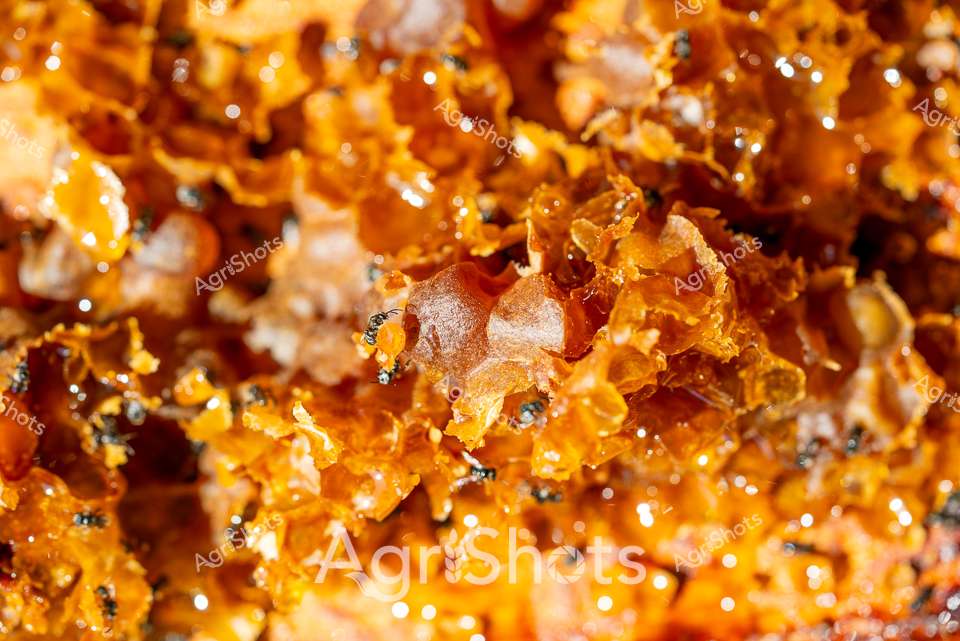
Molten amber and golden hues cascade across this intimate macro view of honeycomb, revealing the intricate architectural marvel of a thriving bee colony. Crystalline droplets of honey glisten like tiny prisms, catching light and showcasing the rich topography of hexagonal wax cells. Minuscule native Australian stingless bees - likely Tetragonula carbonaria - navigate the complex surface, their tiny dark bodies contrasting against the luminous orange-brown landscape of their meticulously constructed home. The texture is simultaneously rugged and delicate, with fractured edges and smooth surfaces telling a story of collective labor and precision engineering. This close perspective from the Lockyer Valley in Queensland captures the winter season's subtle intensity, where bee colonies maintain their remarkable metabolic rhythms despite cooler temperatures. Every glistening surface speaks to the remarkable biomechanical complexity of these extraordinary insects, transforming nectar into liquid gold through an ancient and perfectly calibrated process.
 Image
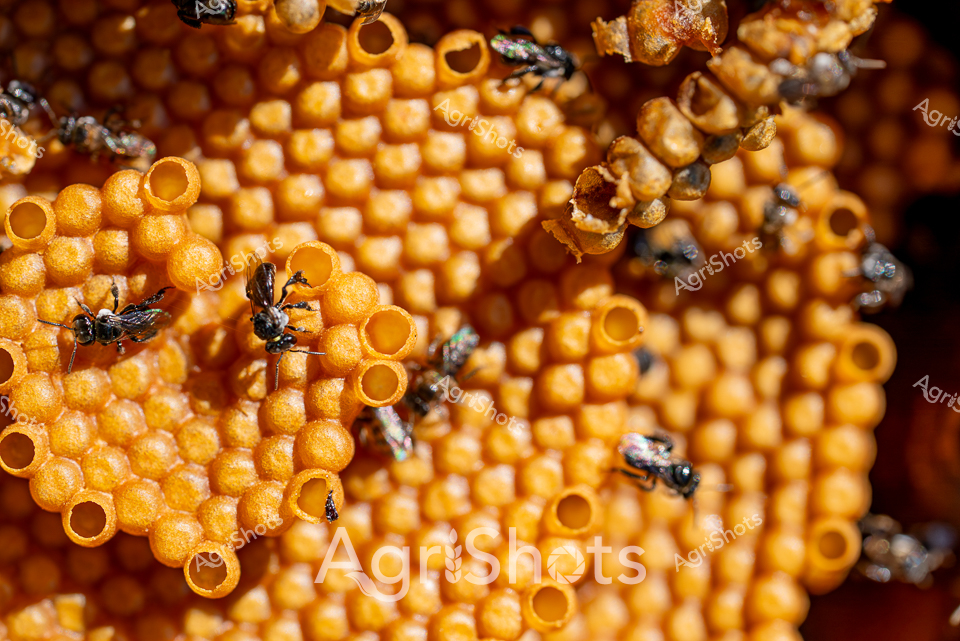
Honeycomb architecture in golden amber reveals the intricate world of native Australian stingless bees, their tiny black bodies navigating the perfectly hexagonal wax chambers of their winter hive. Each precisely formed cell—a luminous yellow-orange—stands ready to nurture developing bee larvae, showcasing the extraordinary precision of these Queensland Trigona carbonaria workers. Clusters of bees move methodically across the waxy surface, tending to their complex social structure within the dense, tightly packed honeycomb. The macro perspective transforms this microcosm into a mesmerizing landscape of biological engineering, highlighting the delicate interconnectedness of these remarkable insects in the Lockyer Valley's winter apiary environment. Rich amber and deep bronze tones create a warm, organic texture that speaks to the sophisticated architectural instincts of these native bee colonies, revealing a hidden world of collective intelligence and survival strategies.
 Image
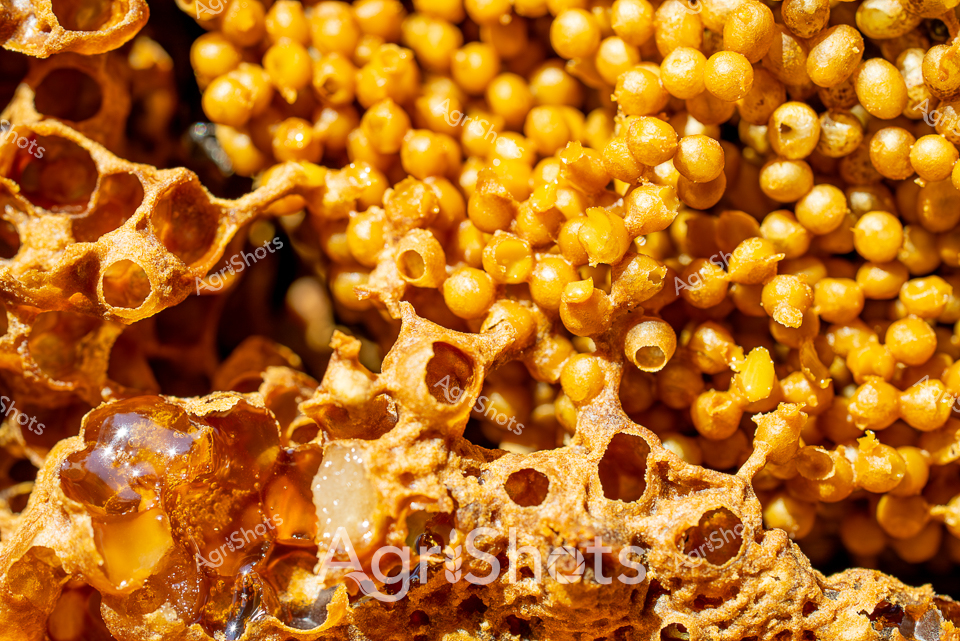
Golden honeycomb architecture blooms with intricate precision, revealing the remarkable micro-universe of a thriving beehive. Hexagonal chambers burst with rich, amber-hued honey droplets, their waxy walls sculpted into delicate, interconnected networks that speak to extraordinary natural engineering. The warm golden tones suggest this is a winter scene from Queensland's fertile Lockyer Valley, where native Australian bee colonies persist with remarkable resilience. Translucent honey glistens within the cellular structures, capturing light and displaying the liquid's luminous amber depths against the textured, sun-burnished honeycomb. Each tiny spherical cell represents a moment of collective labor - hundreds of worker bees collaborating to create this complex, living architecture that stores sustenance and supports their entire colony's survival. The close-up perspective invites viewers into an intimate, usually hidden world, revealing the extraordinary geometric precision and golden luminescence of these remarkable insects' home.
 Image
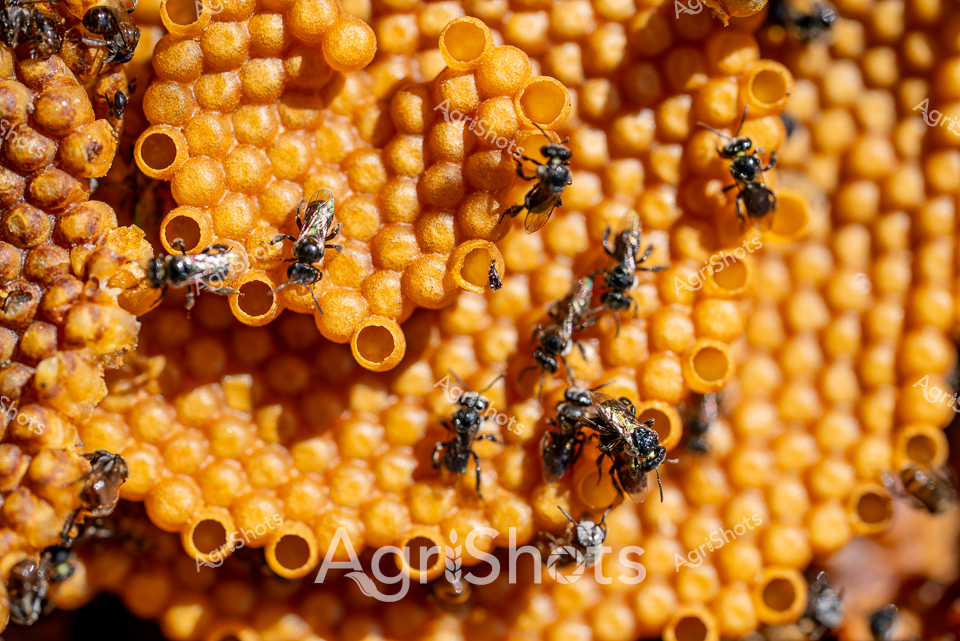
Stingless native Australian bees swarm across the intricate golden honeycomb of a thriving hive, capturing the complex microcosm of subtropical apiary life in Queensland's Lockyer Valley. Each hexagonal cell gleams a rich amber, punctuated by precise circular openings where worker bees emerge and enter, their metallic-toned bodies moving with purposeful synchronicity. The dense, textured surface of the honeycomb reveals the remarkable architectural precision of these tiny agricultural specialists, whose pollination work is critical to the region's diverse crop ecosystems. Winter's gentle light illuminates the hive's detailed structure, highlighting the warm ochre tones and the meticulous organization of this miniature agricultural community. These native stingless bees, unique to Australia's subtropical zones, represent a critical but often unseen workforce in agricultural production, their collective labor supporting the intricate balance of local farming environments. Each bee moves with collective intelligence, a living testament to the sophisticated biological systems that underpin Queensland's rich agricultural landscapes.
 Image
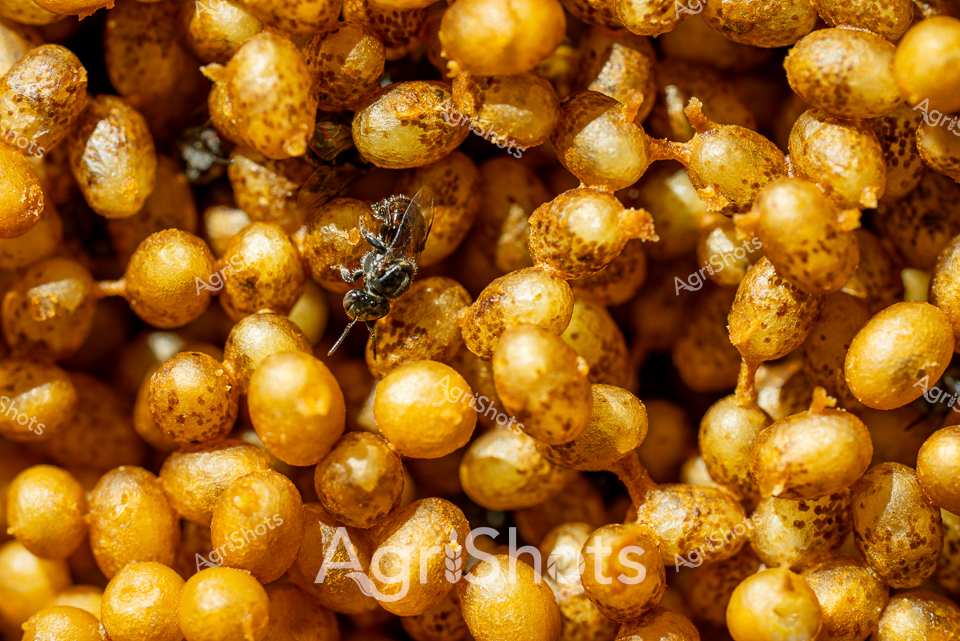
Liquid gold clusters in glowing amber tones - a mesmerizing close-up of honeycomb kernels rich with native Australian bee activity. Glistening golden spheres of harvested honey surround a solitary dark stingless bee, native to Queensland's subtropical landscapes. Each lustrous orb radiates a warm, burnished palette ranging from pale wheat to deep golden brown, showcasing the intricate texture and organic complexity of honey production in the Lockyer Valley region. The macro perspective reveals the extraordinary detail of these miniature nectar repositories, capturing the delicate ecosystem of bee cultivation during the crisp winter months. Stingless native bees, crucial pollinators of Australia's unique flora, navigate this dense landscape of honey droplets with precision and purpose. The image celebrates the meticulous craft of apiary work, highlighting the remarkable symbiosis between these diminutive insects and the rich agricultural bounty of Queensland's agricultural landscapes.
 Image
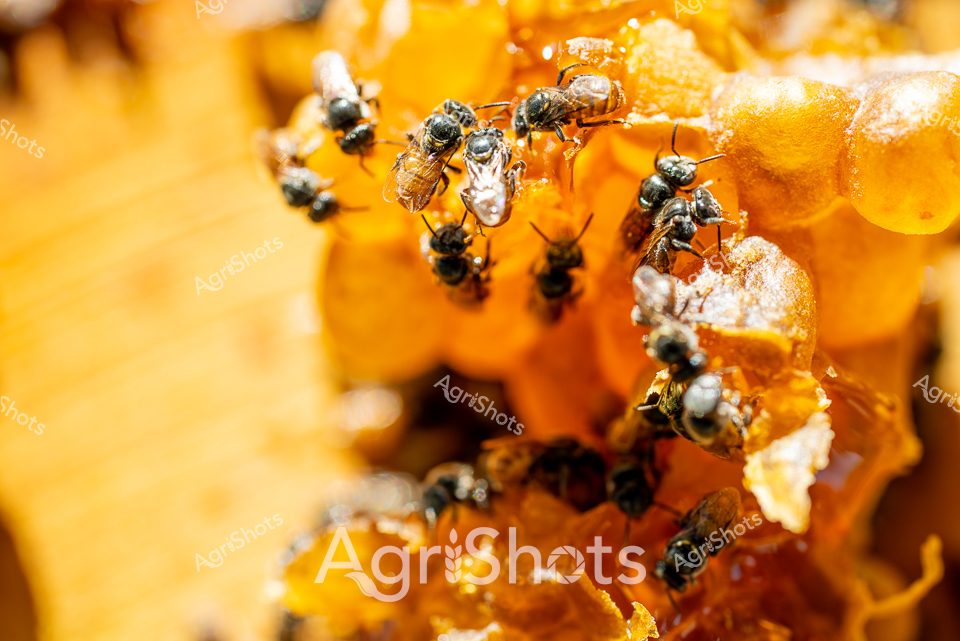
Honey-drenched golden combs teem with industrious native Australian bees, their metallic bodies clustered across the rich amber surfaces of a thriving hive. Each insect moves with purposeful precision, collecting and processing nectar in the warm winter light of Queensland's fertile Lockyer Valley. Glistening hexagonal chambers overflow with fresh honey, showcasing the remarkable collaborative work of this complex bee colony. Macro details reveal the intricate textures of honeycomb - waxy, translucent, and luminous - contrasting against the dark, intricate bodies of the bees as they navigate their architectural marvel. The close-up perspective invites viewers into an intimate microcosm of agricultural production, highlighting the critical role these pollinators play in Australia's agricultural ecosystem. This vivid image captures the essence of apiary science: a delicate, dynamic system of survival, production, and interconnected natural rhythms.