Browse the collection
 Image
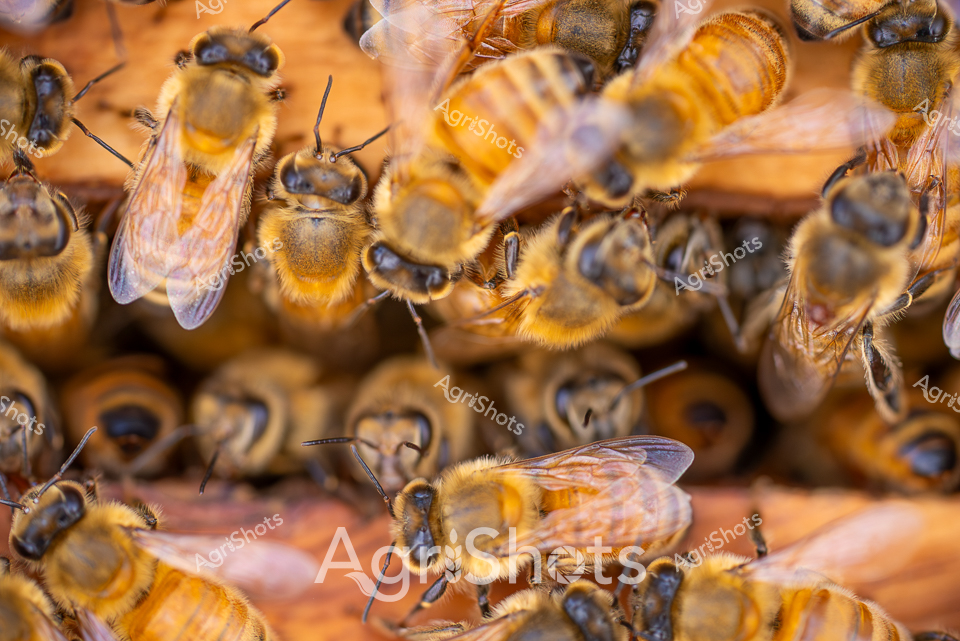
Honeybees cluster densely across a wooden hive frame, their golden-amber bodies shimmering with intricate layers of fur and translucent wings. Each bee displays remarkable detail - fuzzy thoraxes, delicate antennae, and compact segmented forms packed tightly together in a complex social arrangement. The warm amber and burnt orange tones suggest this colony is deep within their winter cluster, generating collective heat to survive Tasmania's cold agricultural landscapes. Precise hexagonal structures of the honeycomb are just visible beneath the living carpet of insects, representing the extraordinary architectural and cooperative capabilities of these critical pollinators. This macro perspective reveals the remarkable intimacy of bee society, where individual organisms function as interconnected cells of a larger superorganism, generating warmth, protecting the queen, and maintaining the intricate metabolism of their shared habitat. The image captures the resilience and collective intelligence of these essential agricultural workers, whose survival is integral to Tasmania's robust agricultural ecosystem.
 Image
Nestled in the verdant Tasmanian countryside, a seasoned apiarist meticulously tends to his bee hives on a cool, misty winter's day. Crouched in olive-green workwear and a protective cap, he carefully inspects the white wooden hive boxes, their weathered surfaces contrasting against the lush green pasture. Distant mountains shrouded in soft cloud formations create a stunning backdrop, with a solitary tree and scattered livestock punctuating the expansive rural landscape. The intricate wooden frames are gently extracted, revealing the complex inner workings of the bee colony - a testament to the delicate art of beekeeping. This serene scene captures the quiet concentration of agricultural work, where generations of knowledge and careful husbandry come together to nurture these essential pollinators. The soft light and muted winter palette emphasize the harmony between the beekeeper, his hives, and the sweeping Tasmanian wilderness, showcasing the critical role of apiculture in the region's agricultural ecosystem.
 Image
Beekeeping amid Tasmania's pastoral highlands, a dedicated apiarist tends to white wooden hive boxes nestled in a verdant pasture. Clad in earth-toned protective gear, the beekeeper leans intently over the hives, carefully managing the delicate colonies against a backdrop of rolling forested hills and distant mountain ranges. A solitary golden-leafed tree stands sentinel in the mid-ground, adding a splash of warmth to the cool winter landscape where black cattle graze peacefully in the background. The scene captures the quiet concentration of agricultural craft, where precision and patience are essential to nurturing these critical pollinators. Soft winter light diffuses across the green-brown grasslands, highlighting the textural contrast between the crisp white hive boxes and the rugged, undulating Tasmanian terrain. This image embodies the harmony between human agricultural stewardship and the natural rhythms of the landscape, showcasing the meticulous work of honey production in one of Australia's most pristine rural environments.
 Image
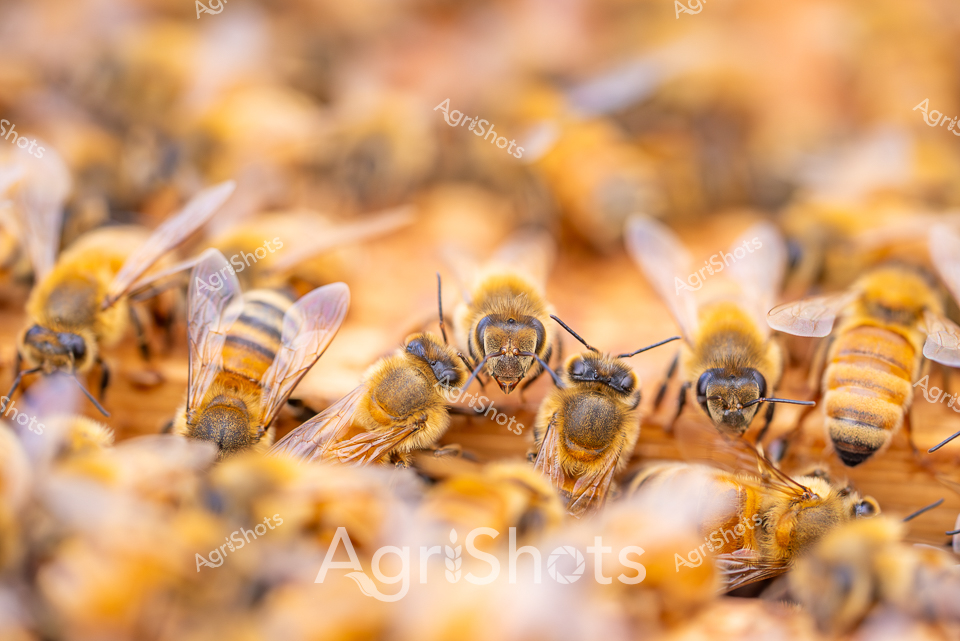
Golden honeybees cluster densely across the frame, their amber and black striped bodies creating a mesmerizing tapestry of collective activity. Soft amber and golden tones dominate the image, with delicate translucent wings catching the soft light and highlighting the intricate textures of these remarkable pollinators. Each bee appears meticulously positioned, suggesting the complex social structure of the hive - a microcosm of collaborative agricultural productivity typical of Tasmanian apiaries during the quieter winter months. Their fuzzy bodies are covered in fine golden hairs, creating a warm, textured surface that speaks to the robust health of this bee colony. The close-up perspective reveals extraordinary detail, from the nuanced segmentation of their bodies to the subtle variations in their golden-brown coloration, capturing the sophisticated organization of these critical agricultural workers. This image powerfully communicates the essential role of honeybees in Australia's agricultural ecosystem, particularly in Tasmania's renowned honey and pollination industries.
 Image
Honeybees cluster densely across a wooden hive frame, their golden-amber bodies creating a living mosaic of intricate activity. Each bee displays remarkable precision, packed tightly together with translucent wings folded and antennae sensing the collective environment. The rich amber and ochre tones suggest this is likely a Tasmanian apiary during the cooler winter months, when colony survival depends on tight thermal regulation and shared warmth. Soft focus highlights the delicate texture of their fuzzy exoskeletons, revealing the complex social structure that defines these extraordinary pollinators. Clusters like these represent the remarkable resilience of bee colonies, where individual insects function as part of a sophisticated superorganism, maintaining critical temperatures and caring for their queen. This intimate portrait captures the extraordinary biomechanical choreography of honeybees - creatures fundamental to agricultural ecosystems across Tasmania and beyond.
 Image
Nestled in the rolling pastoral landscapes of Tasmania, a dedicated apiarist tends to his white wooden bee hives against a backdrop of misty mountain ranges and dense eucalyptus forest. Wearing a protective khaki-colored outfit and wide-brimmed hat, the beekeeper carefully manages a honeycomb frame, examining the intricate work of his industrious honey producers. The crisp winter scene captures the delicate balance of agricultural craft, with multiple white hive boxes positioned on verdant green pastureland, their weathered wooden frames telling stories of countless pollination cycles. Soft grey clouds drift across distant mountain ridges, creating a serene and contemplative atmosphere that speaks to the patient, rhythmic nature of beekeeping. Each hive represents a complex ecosystem of collaboration, with bees working in perfect synchronicity to produce one of Tasmania's most precious agricultural commodities. The image embodies the quiet expertise of rural agricultural workers, highlighting the critical role of pollinators in sustaining our agricultural landscapes.
 Image
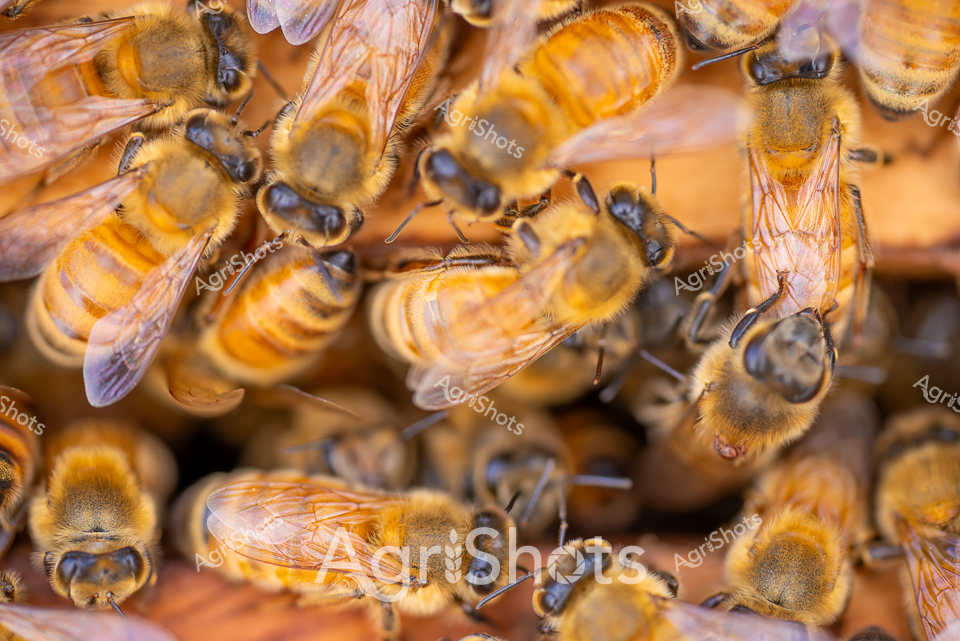
Honeybees cluster in a golden, amber-hued swarm across their densely populated hive frame. Translucent wings shimmer with delicate iridescence while fuzzy amber-brown bodies press tightly together, creating a living tapestry of intricate bee anatomy. Each insect's segmented body gleams with warm orange and brown tones, highlighting their remarkable textural details - from compound eyes to delicate antennae and fine body hair. This close-up reveals the extraordinary social complexity of a bee colony, where individual insects function as a unified collective, their bodies interlocking in a precise, rhythmic formation that suggests profound communication and collaborative survival. The warm color palette evokes the rich, organic environment of a Tasmanian apiary during the quiet winter months, when these industrious pollinators huddle closely to maintain critical colony warmth. The image captures the miraculous micro-universe of bee society, where each individual plays a crucial role in the complex, interconnected life of the hive.
 Image
Honey-gold workers cascade across the pristine white surface, a living tapestry of honeybees densely clustered in intricate formation. Each tiny insect gleams with amber and bronze tones, their segmented bodies creating a mesmerizing organic mosaic that pulses with collective energy. This dense colony represents the extraordinary social structure of apian life, where thousands of individuals move and interact with remarkable precision and synchronicity. The bees appear to be in a controlled environment, likely a Tasmanian apiary during the quiet winter months, when hive management and maintenance become critical for sustaining the colony's health. Delicate wings catch the light, creating a subtle shimmer across the mass of insects, while their close proximity suggests a protective, communal strategy against the season's chill. The image captures the remarkable biomechanical complexity of bee society - a testament to the sophisticated agricultural practices of beekeeping that are vital to Tasmania's rich agricultural ecosystem.
 Image
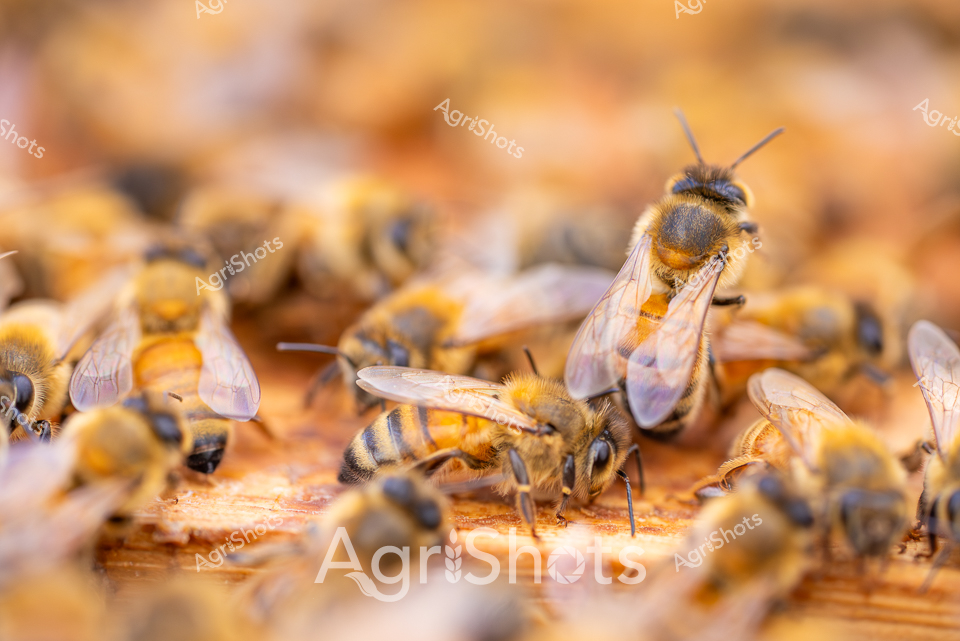
Honeybees cluster densely across a warm golden surface, their translucent amber-tinted wings catching soft light. A remarkable macro perspective reveals the intricate texture of their fuzzy bodies, striped abdomens, and delicate antennae - highlighting the complex social structure of this thriving bee colony. Each worker bee moves with purposeful precision, their collective energy suggesting the vital agricultural ecosystem they represent. The warm ochre and burnt sienna tones evoke the rich amber of fresh honey, creating a sense of organic warmth against what seems to be a Tasmanian winter landscape. These industrious pollinators embody the critical role of apiary work in Australian agricultural production, their close proximity demonstrating the remarkable cooperative behavior that sustains entire ecosystems. The image captures a moment of collective purpose, where each individual bee contributes to the sophisticated functioning of the hive - a microcosm of agricultural productivity and natural harmony.
 Image
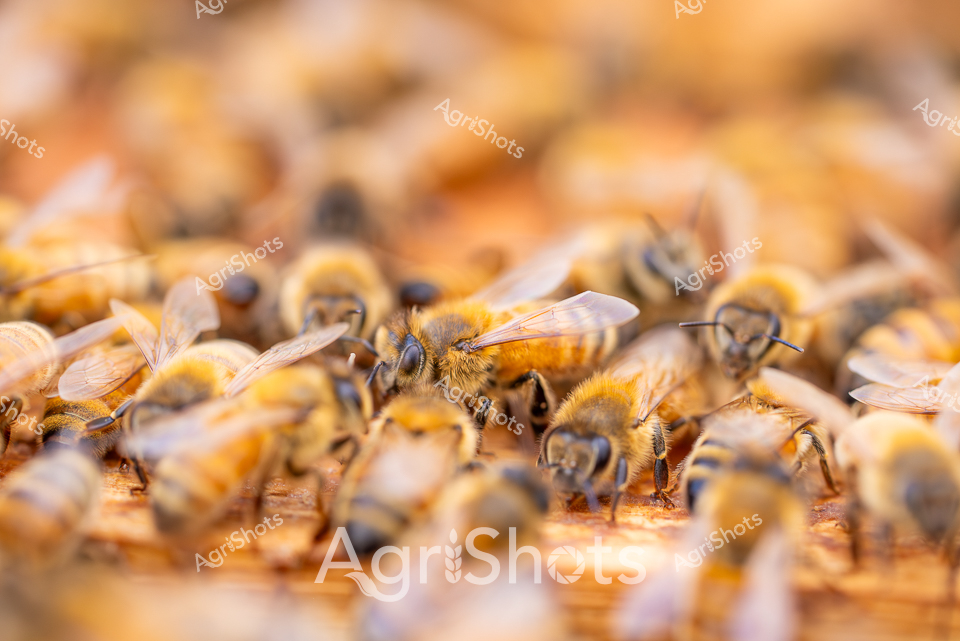
Golden sunlight bathes a dense cluster of honeybees, their amber-hued bodies packed tightly together in a mesmerizing agricultural tableau. Each bee displays intricate details - translucent wings, fuzzy thoraxes, and precise striped markings - revealing the remarkable complexity of these critical pollinators. This close-up captures the collective energy of a thriving apiary, likely situated in Tasmania's rich agricultural landscape during the cooler winter months when colony management becomes particularly crucial. The warm orange and yellow tones suggest the bees are clustered for warmth, a survival strategy that demonstrates their extraordinary social organization and resilience. Precise positioning and intimate proximity of the bees highlight their cooperative nature, with each individual contributing to the collective health and survival of the hive. The image encapsulates the delicate yet robust ecosystem of commercial beekeeping, a vital component of Australian agricultural production that supports crop pollination and honey production across the nation's diverse farming regions.
 Image
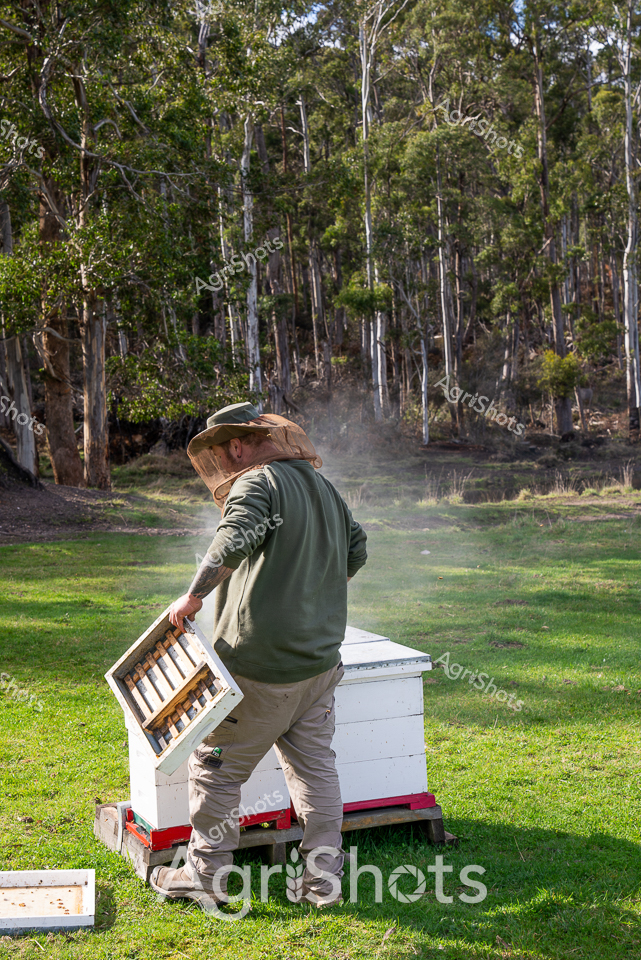
Apiarist tending to a white wooden beehive nestled in a lush Tasmanian forest clearing during the cool winter months. Wearing a sage green jacket and a protective hat, the beekeeper carefully manages the hive, lifting a frame to inspect the colony's health and honey production. Misty tendrils of smoke drift from a smoker, helping to calm the bees during the delicate inspection process. The surrounding landscape features a dense backdrop of silvery-barked trees, creating a serene and natural environment for beekeeping. Soft green grass carpets the ground, providing a clean working space for this essential agricultural practice. The scene captures the quiet concentration of a skilled apiarist working in harmony with nature, highlighting the critical role of bee cultivation in Tasmania's agricultural ecosystem.
 Image
Coopworth ewes graze peacefully across a lush winter pasture in Tasmania's verdant agricultural heartland. The flock, a mix of mature ewes and young lambs, spreads out over undulating green grasslands, their woolly coats varying in shades of cream and soft tan against the emerald landscape. Distant blue-grey mountains rise behind a foreground dotted with scattered trees, creating a classic Tasmanian pastoral scene that epitomizes the island's rich sheep farming heritage. These robust Coopworth sheep, known for their excellent wool quality and meat production, demonstrate the breed's adaptability to the cool, moist conditions of the region. The soft winter light casts a gentle illumination across the scene, highlighting the textured fleece of the animals and the rolling contours of the pasture. This image captures the serene rhythm of agricultural life, where generations of farming expertise meet the natural beauty of Tasmania's rural landscape.
 Image
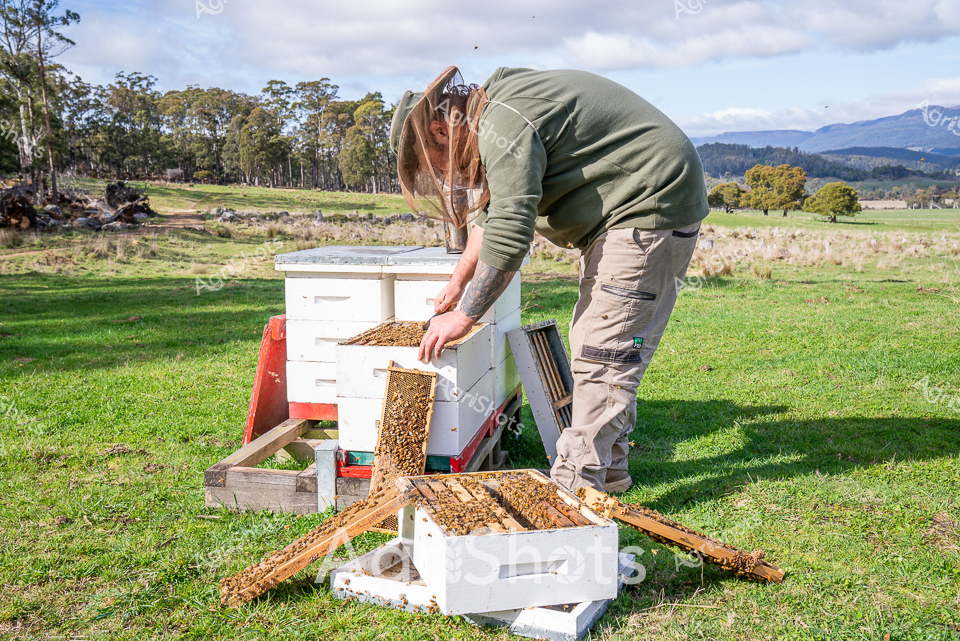
Bee husbandry unfolds across a verdant Tasmanian pasture, where a dedicated apiarist tends to a cluster of white wooden hive boxes against a backdrop of rolling green grasslands and distant misty mountains. Wearing protective mesh headgear and olive-green workwear, the beekeeper carefully manipulates honeycomb frames, harvesting and inspecting the intricate golden-brown wax structures teeming with industrious honeybees. Soft winter light filters through scattered eucalyptus trees, casting gentle shadows across the rural landscape and highlighting the meticulous work of managing these crucial pollinators. The white and red hive boxes stand in sharp contrast to the lush grass, representing the careful balance between agricultural practice and natural ecosystem management that defines Tasmania's sustainable farming traditions. Every deliberate movement speaks to the intimate knowledge and respect required in beekeeping - a craft that transforms landscape, livelihood, and the delicate networks of agricultural production. The scene captures the quiet concentration of rural work, where human skill and natural complexity converge in the production of one of Australia's most precious agricultural commodities.
 Image
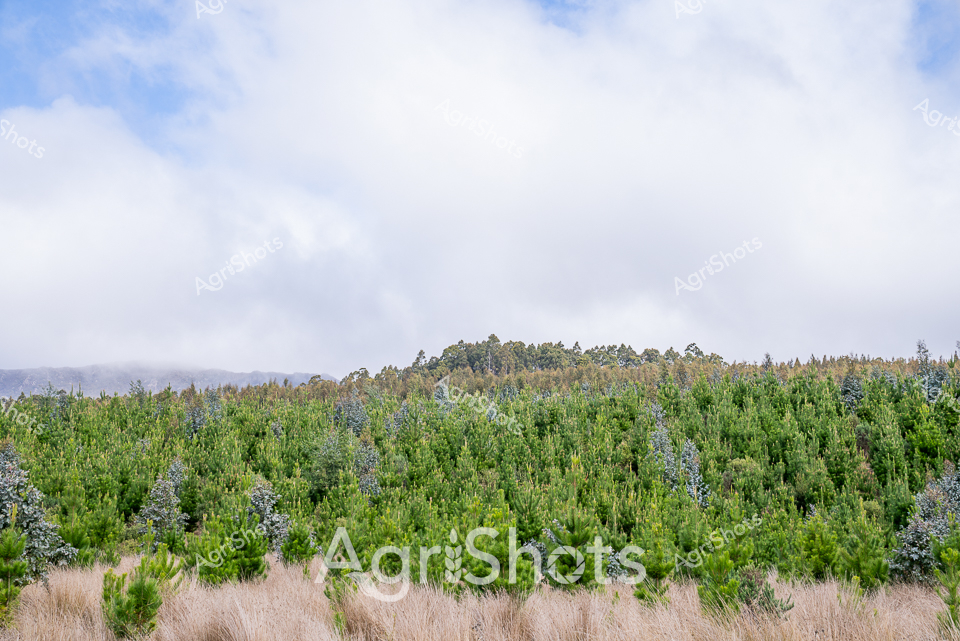
Young pine plantation stretching across a misty Tasmanian winter landscape, dense evergreen saplings rising uniformly from pale golden grasses in the foreground. Silvery-blue cloud layers hover above the verdant woodland, creating a soft, atmospheric backdrop that highlights the rich green of the carefully cultivated forest. The meticulously planted trees demonstrate sustainable forestry management, with uniform rows of young pines representing potential carbon sequestration and future timber resources. Muted winter tones of sage, khaki, and slate blue merge across the undulating terrain, suggesting the cool, humid climate typical of Tasmania's rural highlands. This serene scene captures the quiet industry of managed woodland, where each carefully nurtured tree represents both environmental stewardship and economic potential. The image embodies the intersection of agricultural practice and ecological responsibility, revealing how carefully planned forestry contributes to landscape management and sustainable resource development.
 Image
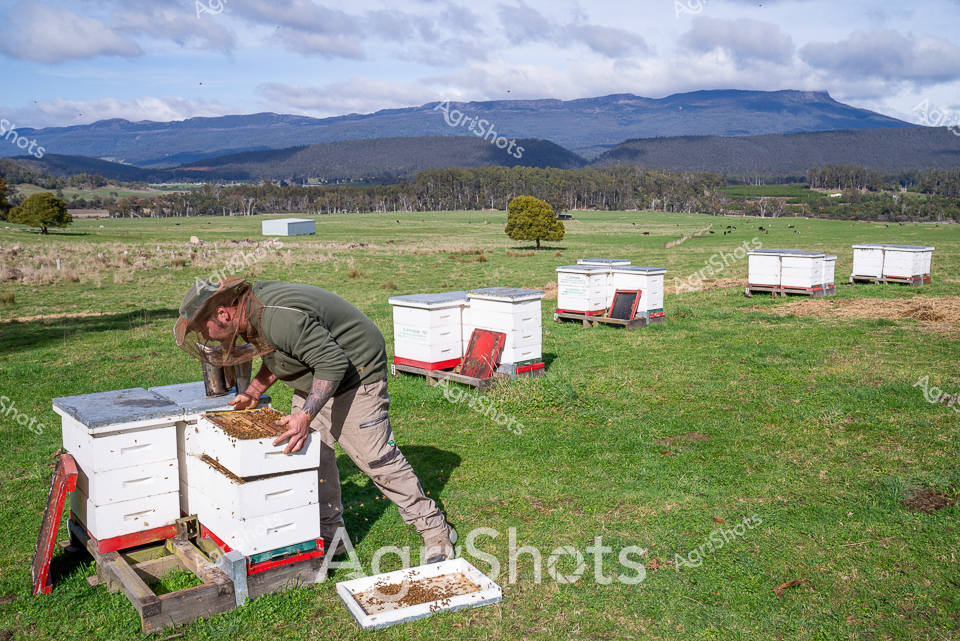
Rugged Tasmanian highlands frame a pristine winter apiary, where a dedicated apiarist carefully tends to a cluster of white and red-trimmed bee hives scattered across a misty green pasture. Leaning intently over the wooden hive boxes, the worker meticulously manages the delicate honey production ecosystem, surrounded by sparse winter grasslands and distant blue-grey mountain ranges. Soft cloud cover diffuses the winter sunlight, casting gentle shadows across the undulating landscape where a solitary yellow-green tree stands sentinel near a distant white farm building. The apiarist, dressed in earthy olive and khaki tones, moves with practiced precision, handling the hive components with a mix of technical skill and ecological care characteristic of Tasmania's sustainable agricultural practices. Neat rows of hives suggest a well-organized small-scale apiary operation, highlighting the intricate relationship between agricultural workers and the critical pollination systems that support regional biodiversity. The scene captures the quiet dedication of agricultural workers who maintain these essential but often unseen agricultural enterprises during the cooler seasonal months.
 Image
In a precisely choreographed dairy farming scene, a circular blue automated calf feeding station becomes the centerpiece of agricultural innovation. Numerous black and white dairy calves are positioned around the turntable, each precisely aligned to access the feeding mechanism, creating a mesmerizing radial pattern against the green pasture background. The high-tech feeding station, a brilliant azure blue, sits atop a circular platform, with the calves rhythmically positioned like spokes on a wheel, their young bodies a mix of jet black and creamy white coats. A red support unit or equipment sits nearby, suggesting additional technological support for this efficient feeding system. The scene speaks to modern agricultural precision - where technology meets animal husbandry, transforming traditional farming practices into a highly organized, systematic process. This innovative feeding carousel represents the cutting edge of dairy farm management, maximizing nutrition delivery and operational efficiency in a single, visually striking design.
 Image
A lush Tasmanian pasture comes alive with a thriving flock of Coopworth sheep, their woolly bodies creating a patchwork of cream and light brown across the verdant winter landscape. Mature ewes stand watchful, their robust frames testament to the hardy breed's adaptation to the cool, moist climate of Tasmania's rolling agricultural regions. Lambs nestle close to their mothers, their darker coats providing a striking contrast against the pale fleeces of the adult sheep, showcasing the natural generational diversity of the flock. The scene unfolds against a backdrop of dense eucalyptus forest and softly undulating green fields, capturing the quintessential Tasmanian agricultural landscape. Sheep are scattered across the frame, some grazing peacefully, others standing alert, creating a dynamic composition that speaks to the natural movement and community of the flock. The soft, diffused winter light highlights the textured wool and muscular forms of these resilient animals, embodying the strength and productivity of Tasmania's sheep farming tradition. This image exemplifies the rich pastoral heritage of the region, where Coopworth sheep represent a cornerstone of agricultural productivity and landscape management.
 Image
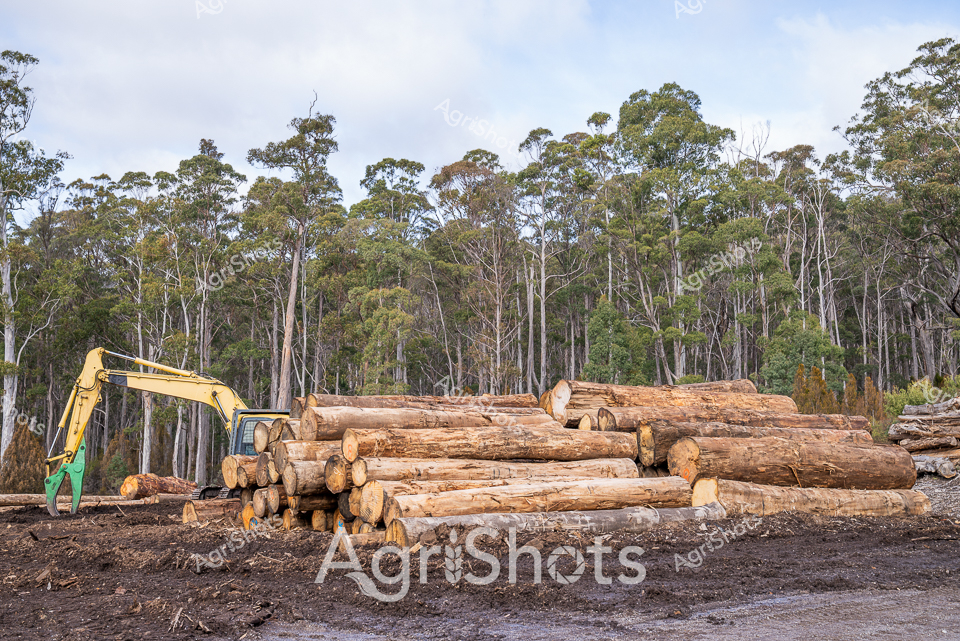
Towering mountain ash timber cascades across a stark logging clearing in southern Tasmania's wilderness. A robust yellow excavator with a green grapple stands ready, methodically organizing massive felled logs harvested from the surrounding eucalyptus forest. The pale winter light filters through silver-barked trees, casting a muted palette across the rugged landscape where industrial forestry meets ancient woodland. Each massive log bears the raw texture of freshly cut timber - golden-brown surfaces revealing decades of growth rings, testament to the mature plantation being systematically processed. The muddy ground surrounding the log stack speaks to the challenging working conditions of Tasmania's forestry sector, where precision machinery transforms living forest into valuable timber resources. This image captures the stark intersection of industrial process and natural landscape, where sustainable forestry practices balance ecological management with economic production.
 Image
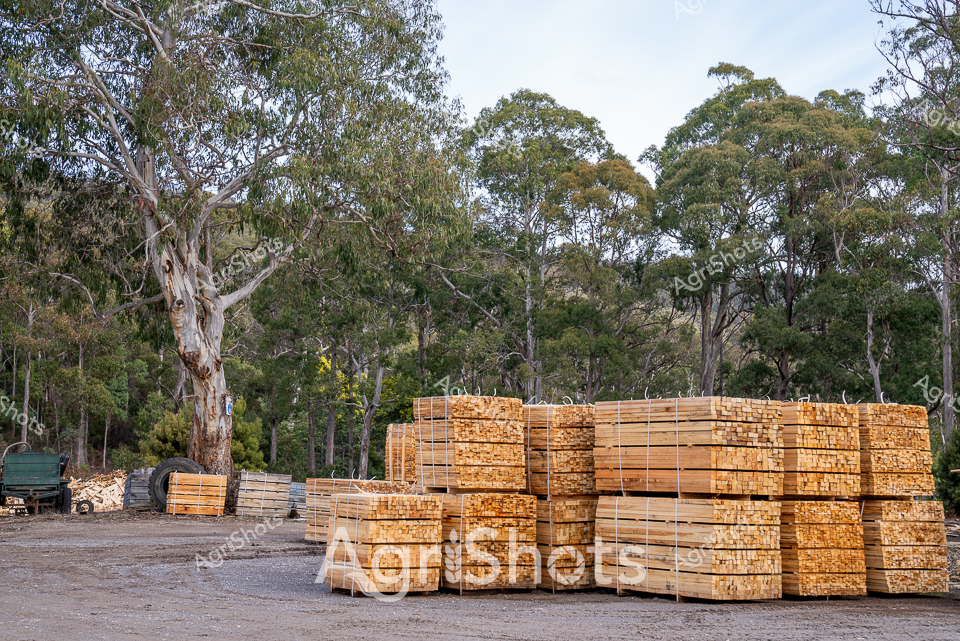
Stacked precision: Raw timber awaits processing at a Tasmanian timber plantation. Golden-hued pine lumber rises in meticulously arranged rows, freshly milled and bound for construction and manufacturing. Silvery eucalyptus trees frame the background, their weathered trunks and dense canopies representing the native forest ecosystem surrounding the timber operation. The stark dirt yard, scattered with wooden pallets and processing equipment, speaks to the industrial efficiency of sustainable forestry practices. Winter's soft light filters through the tree line, casting muted shadows across the neatly stacked timber bundles, highlighting the rich textures of freshly cut wood against the rugged Tasmanian landscape. This scene captures the intersection of industrial production and natural environment, where carefully managed plantation forests provide essential resources with minimal ecological disruption.
 Image
Crystalline water droplets cascade across a verdant blade of grass, capturing the delicate microcosm of agricultural moisture dynamics. Each perfectly formed droplet reflects and refracts light with remarkable precision, creating a miniature landscape of translucent spheres against the deep green surface. The close-up perspective reveals the extraordinary surface tension and hydration properties fundamental to plant biology and crop health. Soft, muted background tones suggest early morning or late winter conditions, when dew and moisture play critical roles in vegetation resilience. This intimate botanical portrait celebrates the fundamental science of water interaction with plant surfaces, highlighting the intricate environmental mechanisms that support agricultural ecosystems. The precision and clarity of the image evoke the meticulous observation required in modern agricultural research and crop management.
 Image
Water droplets cascade and pool across slender green blades, creating a mesmerizing microscopic landscape of liquid geometry. Soft purple-tinged water beads cluster along the grass leaf, reflecting and refracting light with delicate translucency against a deep, muted green and charcoal background. Each droplet appears perfectly spherical, capturing miniature worlds within its curved surface, demonstrating the remarkable surface tension and structural integrity of water in its most intimate form. The precision and clarity of these droplets suggest a crisp winter morning, when moisture condenses and clings to vegetation with crystalline perfection. Subtle textures of the grass blade are revealed through the magnified lens, showing intricate linear striations and a waxy, resilient surface that supports these delicate liquid formations. This intimate agricultural close-up reveals the poetic intersection of botanical structure and elemental fluid dynamics, celebrating the quiet beauty of natural microscopic landscapes.
 Image
Crystalline water droplets cascade across a vibrant green blade of grass, capturing the delicate essence of winter's moisture. Each perfectly formed sphere reflects and refracts light, creating a mesmerizing landscape of liquid pearls against the soft, muted green background. The droplets vary in size, some large and round, others small and clustered, demonstrating nature's precise and intricate design in capturing and holding moisture. Soft, blurred edges of the background suggest a macro perspective, drawing the viewer into the microscopic world of water and vegetation. The image embodies the quiet resilience of plant life during the cooler months, where dew and condensation highlight the subtle beauty of agricultural environments. This close-up reveals the intricate texture and hydration strategies of grass, reminding us of the fundamental moisture dynamics that sustain agricultural ecosystems.
 Image
Crystalline water droplets cascade across a verdant blade of grass, capturing the delicate precision of nature's hydration system. Each perfectly spherical droplet reflects and refracts light, creating a miniature landscape of silvery-purple luminescence against the deep emerald backdrop. The macro perspective transforms an ordinary grass leaf into an intricate terrain, where water beads cluster and balance with remarkable surface tension. Soft, blurred green and brown tones in the background suggest a cool, quiet winter morning, when moisture condenses and lingers on fragile plant surfaces. The image speaks to the subtle resilience of agricultural ecosystems, where even the smallest elements demonstrate remarkable structural integrity and beauty. This close-up reveals the microscopic world that supports broader agricultural landscapes, highlighting the intricate moisture dynamics crucial to plant health and survival.
 Image
Crystalline droplets cascade across a verdant blade of grass, capturing the delicate aftermath of a winter morning's gentle rain. Each water droplet sits perfectly suspended, reflecting and refracting light like miniature liquid lenses against the deep emerald surface of the plant tissue. The macro perspective reveals an intricate landscape of hydration, where surface tension creates perfect spherical beads clinging tenaciously to the plant's fibrous structure. Soft, blurred green backgrounds suggest a broader natural environment, hinting at the lush agricultural landscapes where such detailed botanical moments occur. This close-up exemplifies the microscopic beauty inherent in agricultural ecosystems, demonstrating the fundamental role of water in sustaining plant life and agricultural productivity. The image speaks to the resilience and delicate balance of growing systems, where every droplet represents potential nourishment and renewal.