Browse the collection
 Image
A seasoned farmer wearing a classic wide-brimmed sun hat and a cheerful floral-print shirt stands confidently beside a wire fence, surveying a herd of robust Black Angus cattle grazing in a lush pasture. The overcast sky and soft light suggest a cool autumn morning in New South Wales' New England region, with a sage-green water tank and solar panels visible in the background, highlighting modern agricultural technology. Her navy vest and relaxed posture reflect years of agricultural experience as she uses an iPhone to record data, embodying the intersection of traditional farming and digital innovation. The sleek black Angus bulls, marked with colored ear tags, cluster together in the verdant grassland, their muscular frames and glossy coats testament to careful stud breeding and expert livestock management. This scene captures the essence of contemporary Australian agriculture - a blend of time-honored farming practices, technological advancement, and a deep connection to the land. The farmer's warm smile and confident stance celebrate the resilience and innovation of women in agriculture.
 Image
A lone rancher stands sentinel beside a wire fence, her wide-brimmed straw hat casting a subtle shadow as she observes a herd of sleek black Angus cattle grazing in a lush New England pasture. Her floral-patterned shirt and dark vest contrast against the verdant grasslands, while a water tank and solar panel installation rise in the background, signaling modern agricultural technology. The cattle, marked with distinctive colored ear tags, cluster together in a dense formation, their deep black coats gleaming against the soft, overcast summer sky. Her posture suggests careful monitoring, likely using the smartphone in her hand to record data or track herd information - a testament to the evolving intersection of traditional farming and digital innovation. The landscape speaks to the rich agricultural heritage of New South Wales, where generations of farmers have cultivated both livestock and technological solutions. This scene captures the quiet determination of agricultural professionals who blend time-honored practices with cutting-edge monitoring and management techniques.
 Image
Amid the soft, muted greens of a late summer pasture in New South Wales' New England Region, a farmer in a straw hat and floral-patterned shirt carefully inspects the fence line, her attention focused on a herd of Black Angus cattle. The sleek, dark-coated bulls cluster near a sage-green water tank, their yellow ear tags glinting against their glossy black hides. Solar panels perched atop the tank hint at modern agricultural technology seamlessly integrated into this traditional pastoral landscape. The overcast sky casts a gentle light across the scene, highlighting the textural contrast between the weathered fence posts, wispy grasses, and the robust, muscular forms of the cattle. This image captures the quiet intensity of agricultural work - a moment of careful observation and connection between the farmer and the stud herd, representing the blend of technological innovation and timeless farming practices that define contemporary Australian agriculture.
 Image
Black Angus cattle cluster near a sage-green water tank, their muscular frames and deep charcoal coats creating a powerful agricultural tableau across a lush pasture. Sleek, uniform bovines with yellow identification tags stand clustered against a soft grey sky, representing the pinnacle of modern livestock management. Solar panels mounted atop the water infrastructure signal advanced farming technology seamlessly integrated into the pastoral landscape. Wispy summer grasses frame the foreground, their golden-green tendrils contrasting with the robust black cattle, suggesting the New England region's rich agricultural heritage. Each animal displays the hallmark muscular build and glossy coat of carefully bred Angus stock, embodying generations of selective breeding and agricultural expertise. The scene captures the intersection of traditional farming practices and contemporary agricultural innovation - a testament to Australian rural sophistication and environmental consciousness.
 Image
Rural Technology and Water Management A seasoned farmer stands contemplatively before a large sage-green water storage tank, her straw cowboy hat casting a subtle shadow across her floral-patterned shirt. The expansive New England landscape of New South Wales unfolds behind her, characterized by rolling grasslands and a moody, cloud-laden sky typical of autumn or early summer. She cradles a smartphone, likely engaged in data collection or monitoring water resources - a quintessential moment of modern agricultural technology intersecting with traditional farming practices. The sturdy water tank, complete with solar panels and a monitoring system, represents critical infrastructure for drought resilience and sustainable farm management. Her stance speaks to the evolving role of women in agriculture, combining technological savvy with deep agricultural knowledge. The muted green and grey palette of the scene - from her shirt to the water tank and clouded sky - creates a contemplative atmosphere that captures the strategic, thoughtful nature of contemporary farming.
 Image
Rural technology meets pastoral landscape in this crisp, overcast scene of agricultural data collection. A farmer in a vibrant red and white floral button-up shirt and wide-brimmed sun hat stands intently focused on her smartphone, capturing critical information against the backdrop of a substantial green water storage tank. The weathered grasslands surrounding the corrugated metal tank suggest the New England region of New South Wales, with its undulating terrain and open skies heavy with potential rainfall. Modern farm management converges with traditional rural infrastructure - the solar-enabled water monitoring technology represents a new frontier of precision agriculture, where digital insights complement generations of hands-on farming knowledge. Her stance - confident and purposeful - embodies the contemporary agricultural professional who seamlessly integrates technology with time-honored land stewardship, recording data that will inform critical decisions about water resource management in an increasingly variable climate.
 Image
Rural Resilience: Water Management on the New England Plateau A seasoned agricultural professional stands contemplatively before a large green water storage tank, her silhouette framed against the expansive grey-clouded sky of New South Wales. Dressed in a vibrant floral button-up shirt and denim jeans, she wears a classic wide-brimmed straw hat - essential protection against the harsh Australian rural sunlight. Her posture suggests careful data collection, likely monitoring critical water resources using her smartphone amid the windswept grasslands of the New England region. The massive corrugated water tank dominates the landscape, a crucial infrastructure element for sustainable farming practices. Surrounded by native grasses and a wire fence, the scene captures the intersection of traditional agricultural wisdom and modern technological solutions. The muted green of the tank complements the natural surroundings, while solar panels hint at innovative, environmentally conscious energy approaches typical of contemporary Australian agricultural operations. This image embodies the spirit of contemporary rural women - technologically adept, environmentally aware, and central to agricultural management and innovation in challenging landscape conditions.
 Image
Rural Innovation: Water Management in New England A seasoned agricultural professional stands amid lush pastureland, her wide-brimmed straw hat casting a shadow as she intently studies data on her mobile device. Two substantial green water storage tanks dominate the background, their ribbed cylindrical forms a testament to modern farm infrastructure. Her layered attire - a navy vest over a floral-patterned shirt - speaks to both practicality and personal style typical of contemporary agricultural workers. The overcast sky suggests early morning or potentially approaching weather system, highlighting the critical nature of water resource monitoring in agricultural settings. Solar panels atop one tank indicate sophisticated technological integration, demonstrating how precision agriculture leverages renewable energy and data collection. This scene captures the essence of modern farming: technology-enabled, environmentally conscious, and driven by detailed observation and strategic management of natural resources.
 Image
Rural Connectivity: Agricultural Innovation in the New England Tablelands A farmer stands resolute in a soft green pasture, her wide-brimmed straw hat casting subtle shadows across a floral-print shirt and dark vest. Massive forest-green water tanks rise behind her, silent sentinels of agricultural infrastructure against a muted grey sky. Her posture suggests quiet concentration as she navigates data on her smartphone, embodying the modern technological approach to farming in New South Wales. The landscape speaks of resilience - water storage crucial for drought management, mobile technology bridging traditional agricultural practices with contemporary precision farming techniques. Her attire blends practicality with personal style - a navy vest over a vibrant red and white floral shirt, symbolizing the multifaceted nature of contemporary agricultural workers. The scene captures a moment of technological engagement, where digital tools and traditional agricultural wisdom intersect under an expansive Australian rural sky.
 Image
Crisp autumn light bathes a pristine sheep paddock in the Central West region of New South Wales, where a tight mob of white wooled ewes clusters near a boundary fence. These carefully bred stud sheep - likely Merino or White Suffolk genetics - stand clustered on dusty, compacted earth, their uniform bone-white coats gleaming against the golden pastoral landscape. Distant tree lines blur softly in the background, creating a quintessential Australian agricultural tableau that speaks to generations of pastoral expertise and careful livestock management. The dense flock demonstrates exceptional breeding uniformity, with each animal displaying similar muscular confirmation and clean, well-structured bodies typical of high-performance genetic lines. A fine layer of ground dust rises subtly around their hooves, suggesting recent movement and the dry summer conditions characteristic of inland farming regions. The precision of the fence line and the disciplined grouping of these sheep reflect the meticulous approach of modern Australian agricultural practice - where genetic selection, land management, and animal husbandry combine to produce world-class livestock.
 Image
Golden sunlight bathes a tightly-clustered flock of Aussie White ewes in the Central West region of New South Wales, their pristine cream-colored coats gleaming against the dusty paddock. Late summer heat shimmers across the landscape, with sparse grasslands and distant tree lines creating a classic Australian agricultural backdrop. The sheep huddle close to a wire fence, their muscular bodies and uniform coloration highlighting the quality of this professional stud breeding operation. Dry earth and scattered stubble beneath their hooves suggest the challenging agricultural conditions of the region, where careful livestock management is critical to success. The flock's tight, orderly formation speaks to careful breeding and management practices, with each animal showing the hallmarks of a well-selected genetic line. Soft morning light casts long shadows and a fine dust haze, capturing the quintessential beauty of Australian pastoral farming at the peak of the dry season.
 Image
Angus cattle crowd the foreground, their deep charcoal-black coats gleaming against sun-dappled pasture grasses. Uniformly tagged with bright yellow ear markers, the herd clusters near a sage-green corrugated water tank, its solar panel perched like a sentinel above the rural landscape. The soft, overcast sky of the New England region in New South Wales creates a muted backdrop, highlighting the robust muscular frames of these premium stud breeding animals. Delicate wild grasses intermingle with the fence line, softening the agricultural precision of the scene and suggesting the sustainable, tech-integrated approach of modern cattle management. The solar-powered water monitoring system represents a quiet technological revolution in rural infrastructure, blending traditional livestock farming with contemporary environmental consciousness. This image captures the essence of Australian agricultural innovation - where cutting-edge solutions meet timeless pastoral traditions.
 Image
Angus cattle cluster against a sage-green water tank, their sleek black coats contrasting with the overgrown pasture grasses of a New England Region landscape. Sturdy and uniform, the herd wears matching yellow ear tags, signaling a carefully managed agricultural operation. A solar panel perches atop the water monitoring tank, representing sophisticated farm technology integrated into this rural setting. Soft grey clouds drift overhead, suggesting either a mild autumn or late summer day in New South Wales. The precision of the fenced paddock and the modern infrastructure speak to contemporary stud cattle breeding practices, where agricultural innovation meets traditional livestock management. The dense grouping of these muscular Angus bulls suggests a strategic approach to cattle breeding, with each animal representing potential genetic value to the agricultural enterprise.
 Image
Black Angus cattle stand stoically in lush pasture, their deep ebony coats contrasting against pale dry grasses and a sage-green water monitoring tank. Numbered yellow ear tags identify each animal, suggesting this is a carefully managed stud herd in New South Wales' New England region. Overhead, soft cloud cover creates a muted backdrop, while a solar panel mounted on the water tank hints at modern agricultural technology seamlessly integrated into this traditional pastoral landscape. The cattle cluster closely, their muscular frames and alert expressions reflecting the robust genetics of a well-bred Angus bloodline. Subtle environmental details - the weathered tank, wild grasses, and expansive sky - speak to the resilience of agricultural systems in challenging Australian landscapes. This image captures the intersection of heritage livestock breeding and contemporary sustainable farming practices, where innovation meets time-honored agricultural traditions.
 Image
Black Angus cattle stand sentinel in a soft autumn light, their sleek midnight-black coats contrasting against pale grasses and a pale grey-green sky. A solar-powered green water tank rises behind the herd, suggesting innovative farm technology in the New England region of New South Wales. Numbered ear tags in bright blue and yellow mark each animal, indicating this is likely a carefully managed stud breeding operation. The cattle cluster together, muscular and alert, with an almost regal presence - their uniform dark coloration and robust build representing the pinnacle of Angus breeding excellence. Wispy grasses sway around their legs, softening the foreground and creating a sense of pastoral tranquility. The overcast sky and subtle technological elements - the solar panel atop the water monitoring tank - speak to modern agricultural practices that blend traditional livestock management with contemporary sustainable solutions.
 Image
Stoic Angus cattle cluster in the foreground, their deep charcoal hides marked with bright identification tags, standing amid softly swaying golden grasses before a sage-green water storage tank. The overcast sky speaks of a mild autumn day in New South Wales' New England region, where precision agriculture meets traditional livestock management. Sleek solar panels crown the water tank, signaling a modern approach to rural infrastructure and sustainable farming practices. Each robust beast radiates quiet strength, their muscular frames and alert expressions reflecting generations of careful breeding and expert stud management. The wire fence subtly delineates the pasture, while the soft gray-white sky creates a muted, contemplative backdrop that highlights the cattle's powerful presence. This scene captures the essence of contemporary Australian agricultural excellence - where technology, animal husbandry, and environmental consciousness converge in a single, eloquent landscape.
 Image
Black Angus cattle stand resolute in a verdant pasture, their sleek midnight-black coats creating a powerful visual against the muted grasslands of New England's high country. Precisely tagged with bright identification markers in blue and yellow, these robust stud cattle represent the pinnacle of agricultural breeding excellence typical of New South Wales' sophisticated livestock sector. A sage-green water monitoring tank looms in the background, featuring a solar panel - a subtle testament to modern agricultural technology seamlessly integrated into traditional pastoral landscapes. The overcast sky suggests a mild autumn or summer day, with soft cloud cover providing gentle illumination across the scene. These muscular Angus bulls, standing shoulder-to-shoulder, embody the strength and discipline of Australian cattle breeding - each animal a carefully selected genetic representative of a high-performance agricultural lineage. The grassy foreground, with its wild and slightly unkempt texture, frames these magnificent animals, highlighting the natural harmony between carefully managed livestock and the raw beauty of the rural Australian landscape.
 Image
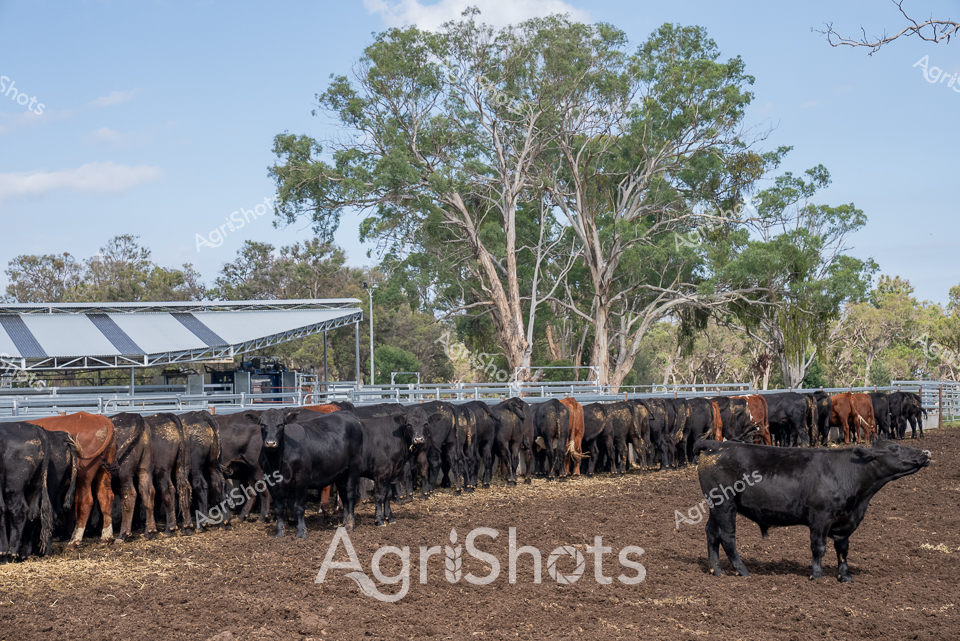
Sleek black and chestnut-red Angus cattle congregate in a sun-drenched feedlot, their muscular frames packed tightly within white-railed holding pens. Towering eucalyptus trees provide a backdrop of muted greens and silvery bark, casting dappled shade across the dusty ground of this New England region cattle station in northern New South Wales. The steel-framed feed shed stands ready, its corrugated roof offering shelter and suggesting the methodical rhythms of modern livestock management. One lone black beast stands apart, a sentinel surveying the herd, while the others cluster close, their coats gleaming with health and indicating premium beef genetics. The compact earthen yard speaks to careful agricultural practice - a carefully balanced ecosystem of nutrition, shelter, and animal husbandry that epitomizes Australian cattle farming. Summer's bright light and the dry, compact ground reveal the resilience of both livestock and farmers in this challenging agricultural landscape.
 Image
Sleek black Angus cattle cluster against weathered pasture grasses, their distinctive yellow ear tags gleaming. A sage-green water tank dominates the background, topped with a solar panel array—a testament to innovative agricultural technology in the New England region of New South Wales. Overcast skies cast a soft, diffused light across the landscape, highlighting the muscular frames and deep charcoal coats of these robust stud cattle. The carefully managed paddock, with its precise wire fencing, speaks to modern farming precision—where livestock management meets sustainable infrastructure. Each animal stands with quiet intensity, their collective presence a powerful representation of Australian beef production's sophisticated approach to animal husbandry and environmental stewardship. The scene captures a moment of pastoral calm, where cutting-edge renewable energy solutions coexist seamlessly with traditional livestock breeding practices.
 Image
Black Angus cattle stand resolute in lush pasture, their midnight-dark coats gleaming against weathered grasses and a sage-green water storage tank. Sleek, muscular animals cluster together, each bearing a distinctive yellow identification tag - silent markers of careful livestock management. A solar panel perches atop the corrugated tank, signaling modern agricultural technologies integrated seamlessly into this pastoral landscape. The cattle represent premium Angus genetics, likely from a high-performance stud breeding program in New England's renowned agricultural region of New South Wales. Their uniform coloration and robust physiques speak to generations of selective breeding, with each animal embodying the pinnacle of beef production potential. Soft overcast skies and verdant grasslands frame these magnificent creatures, suggesting early summer or autumn conditions typical of the region's temperate agricultural zones. The scene captures the intersection of traditional livestock husbandry and contemporary farm management - sophisticated water monitoring solutions and renewable energy technologies coexisting with time-honored animal breeding practices. These Angus represent not just meat production, but a sophisticated agricultural ecosystem where technology, genetics, and landscape converge.
 Image
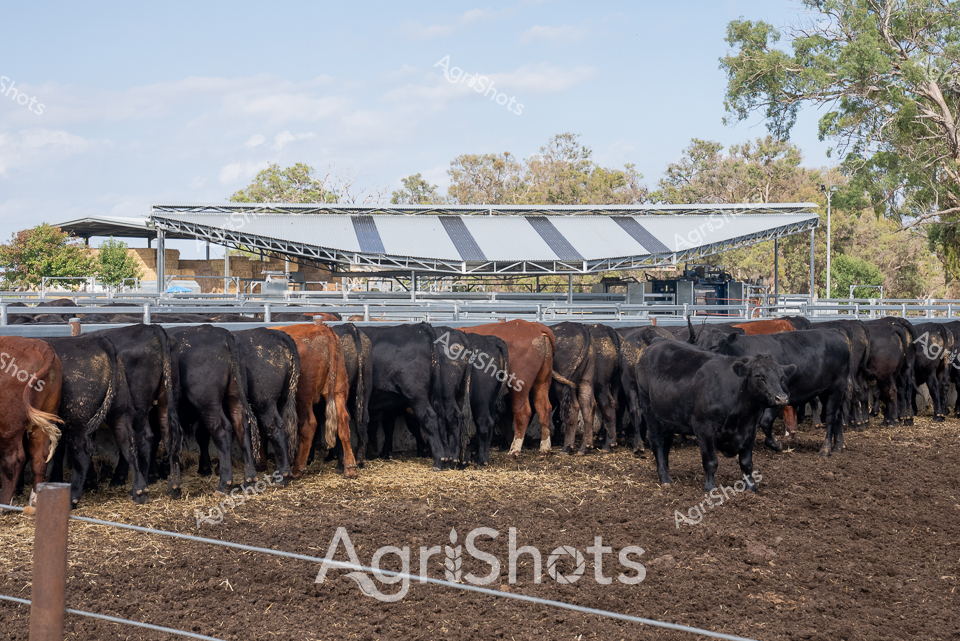
Muscled black and chestnut beef cattle crowd a well-engineered feedlot feed bunker, their broad backs aligned parallel beneath a robust steel-framed shelter. The summer landscape of the New England region reveals sparse eucalyptus trees and pale blue skies, creating a classic Australian pastoral scene of large-scale livestock management. Straw and packed earth provide a textured ground surface, while clean metal railings and infrastructure demonstrate precision agricultural engineering. These robust cattle - likely Angus and Droughtmaster crossbreeds - stand shoulder-to-shoulder, indicating optimal feeding conditions with systematic access to nutritional feed. The meticulously designed cattle yards showcase modern Australian beef production, where animal welfare and efficient feed management intersect. The scene captures the industrialized yet carefully managed approach of contemporary agricultural practices, highlighting the sophisticated systems that support Australia's significant livestock export industry.
 Image
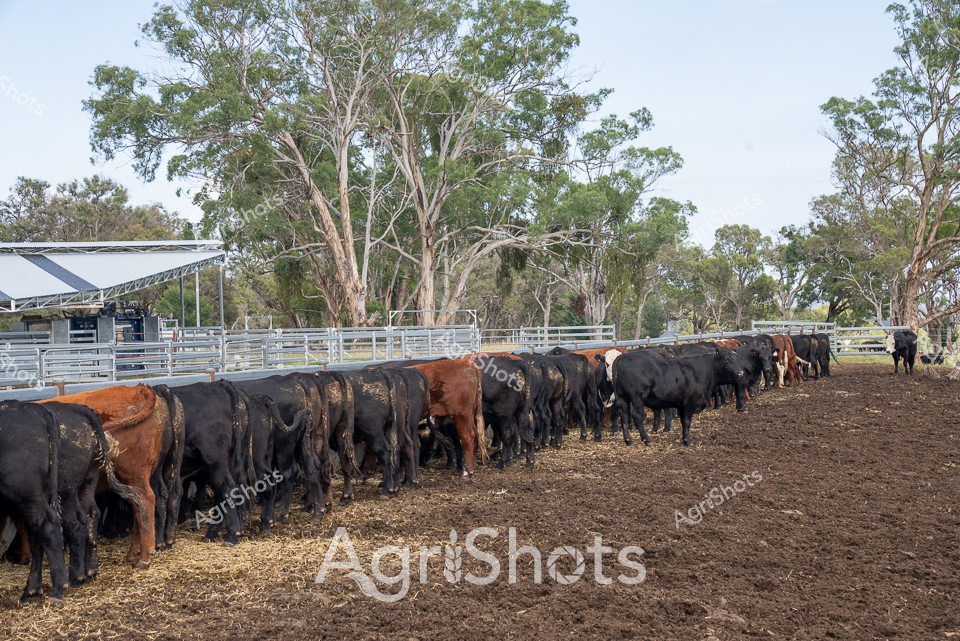
Black and roan-colored beef cattle crowd together in a meticulously designed feedlot, their muscular bodies creating a dense mosaic of agricultural productivity. The expansive metal-roofed shelter provides critical shade and protection, typical of sophisticated livestock management in New South Wales' New England region. Rich golden straw covers the ground, creating a textural contrast with the dark, well-compacted soil of the feeding area, while a sophisticated feed bunker runs along the enclosure, ensuring consistent nutrition for the herd. Mature eucalyptus trees frame the background, casting dappled light across the scene and highlighting the sophisticated infrastructure of modern Australian cattle farming. The cattle stand closely packed, their varied coat colors - deep blacks interspersed with rich mahogany browns - showcasing the genetic diversity of a carefully managed breeding program. This image captures the essence of Australian agricultural excellence: precision, scale, and sophisticated animal husbandry techniques that represent world-leading livestock production standards.
 Image
Sleek black and russet-brown beef cattle crowd together in a well-maintained feedlot nestled among silvery eucalyptus trees of the New England region in New South Wales. The hardpacked earth and straw bedding provide a structured feeding environment, with sturdy galvanized steel fencing and a sheltered feeding structure defining the precise agricultural space. Late summer or early autumn light filters through the sparse tree canopy, casting soft shadows across the carefully managed livestock paddock. Each animal stands shoulder-to-shoulder, representing a robust mix of Angus and perhaps crossbred cattle, their muscular frames and glossy coats indicating excellent nutrition and careful husbandry. The feedlot represents a pinnacle of modern agricultural management - a controlled environment where cattle are systematically prepared for market, balancing animal welfare with efficient production. The scene captures the quiet discipline of Australian cattle farming: strategic, pragmatic, and deeply connected to the landscape.
 Image
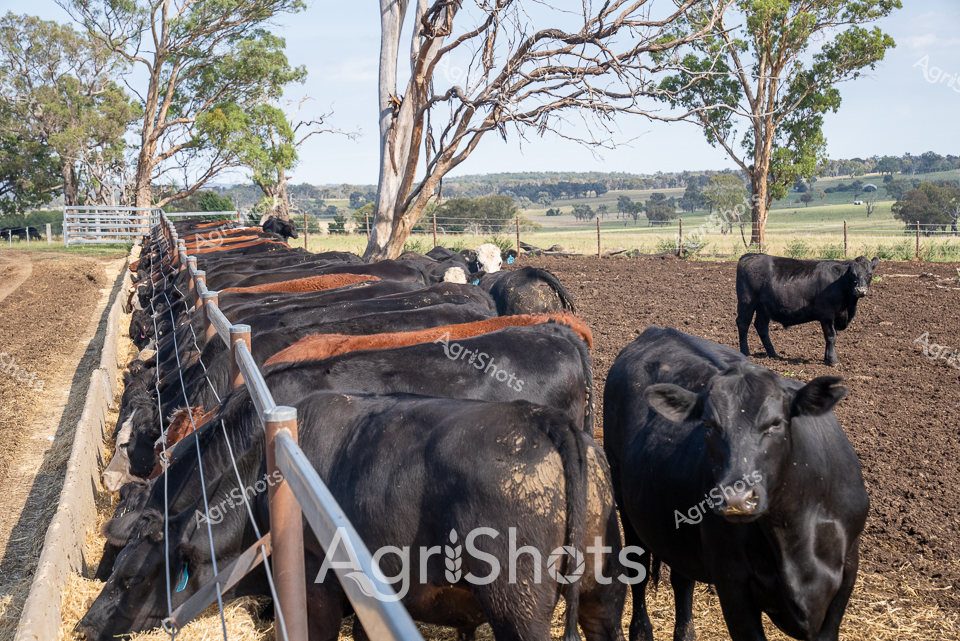
Black Angus cattle crowd a feed bunker in a classic New England tablelands landscape, their glossy dark coats contrasting against the rich brown earth and weathered gum trees. Lined precisely along a metal feed trough, the robust beef cattle stand shoulder-to-shoulder, their muscular frames testament to quality livestock management. Dry golden pastures and scattered eucalyptus trees stretch across the undulating background, capturing the quintessential Australian rural setting during late summer or early autumn. A single beast stands slightly apart, surveying the scene with the calm alertness typical of well-managed stock. The precise arrangement of cattle, the carefully constructed feeding infrastructure, and the carefully maintained paddock demonstrate sophisticated agricultural practices of contemporary beef production. Soft light and open horizons evoke the spaciousness of northern New South Wales grazing country, where generations of farmers have refined cattle breeding and nutrition to produce world-class beef herds.