Browse the collection
 Image
An experienced livestock veterinarian carefully examines the oral health of an Angus steer, her hand gently prying open the animal's robust, dark-colored mouth to assess dental condition and potential health indicators. The close-up perspective reveals the intricate details of the animal's teeth and mucous membranes, highlighting the precision and care inherent in modern agricultural animal management. Textured rubber matting beneath suggests this is a professional handling area, likely in the New England region of New South Wales during a warm season, where cattle husbandry is a critical agricultural practice. The veterinarian's weathered hand, adorned with a subtle patterned sleeve, demonstrates years of expertise in animal health and welfare. This image captures the intimate moment of professional animal care, showcasing the skill and dedication of women in agricultural veterinary science. The muted colors and sharp focus emphasize the technical and compassionate nature of livestock management in contemporary Australian farming.
 Image
A veterinarian in a soft blue paisley shirt and hair neatly gathered in a top knot performs a careful health examination on a dark Angus steer. Kneeling intently across the animal's broad back, she uses her stethoscope to listen closely, her yellow-tinted glasses catching the dappled sunlight filtering through tree branches overhead. The rich black coat of the cattle contrasts against the grassy ground, suggesting this pastoral scene is likely set in the New England region of New South Wales during late summer or early autumn. Insects hover lightly around the animal, and the ground shows signs of dry seasonal conditions typical of rural Australian agricultural landscapes. Her professional and gentle approach reflects the critical role of veterinary care in maintaining livestock health, embodying the expertise and dedication of women working in agricultural sciences. The image captures a moment of precise, compassionate animal husbandry - a testament to the skill and commitment required in modern cattle management.
 Image
Black Angus cattle graze at a Wild River Concrete feed bunker in the lush pastoral landscape of New England, New South Wales. Two sleek, midnight-black bovines stand alongside the robust concrete trough, their muscular frames highlighting the agricultural productivity of the region. A blue ear tag on one animal signals modern livestock management practices, while the surrounding paddock reveals a verdant autumn backdrop of mature eucalyptus trees and softly rolling pastures. The weathered concrete feeding station, branded with the local manufacturer's details, anchors the scene in the practical infrastructure of cattle farming. Soft natural light filters through the tree line, casting gentle shadows and emphasizing the rich textures of soil, hide, and vegetation. This image captures the quiet, methodical rhythm of rural agricultural life - a moment of sustenance and routine in the heart of NSW's renowned cattle country.
 Image
Muscled Angus and rich chestnut-coated cattle stand shoulder-to-shoulder in a meticulously organized feedlot, their sleek frames aligned precisely within the steel-framed feeding infrastructure. The New England region's late summer landscape provides a muted green backdrop of eucalyptus and native woodland, contrasting against the robust metallic structures of modern agricultural enterprise. Overhead, a substantial galvanized steel shelter protects sophisticated feeding equipment, while the ground is carefully managed with compacted earth designed for efficient livestock management. Each animal displays the hallmark muscular definition of prime beef stock - dark blacks and deep browns interspersed with occasional warm russet tones, their powerful haunches and broad backs testament to careful genetic selection and nutrition. The feedlot represents a pinnacle of Australian agricultural precision: where science, animal husbandry, and economic strategy converge in a carefully orchestrated environment engineered to maximize livestock potential. The scene breathes with quiet efficiency, each animal positioned as if part of a living, breathing mechanism of agricultural production.
 Image
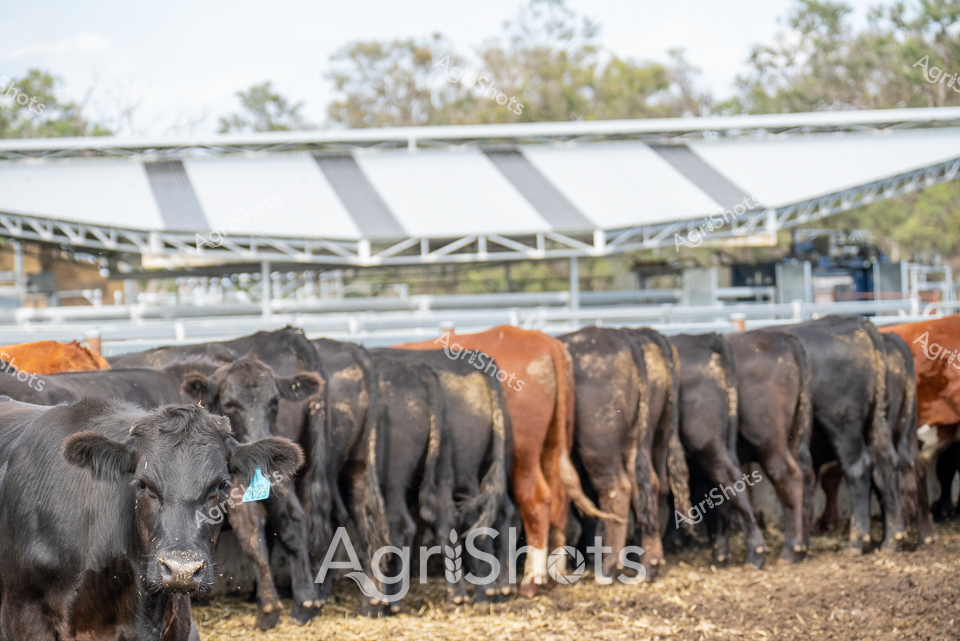
Angus and Santa Gertrudis cattle cluster tightly in a meticulously designed feedlot, their muscular frames packed closely beneath a sprawling industrial shade structure. Rich charcoal and warm russet-colored bovines stand shoulder-to-shoulder on trampled straw, representing premium beef genetics carefully managed for optimal growth and nutrition. The steel-framed shelter provides critical protection from the intense New England region summer heat, its white and grey panels casting strategic shadows across the feeding area. A striking blue ear tag adorns the nearest beast, signaling careful livestock management and individual animal tracking. The cattle's hide variations - from deep obsidian to burnished copper - reflect the genetic diversity within this professional agricultural operation. Sturdy white fencing and the precise linear architecture of the feed bunker underscore the systematic, scientific approach to modern beef production. The scene captures the intersection of agricultural engineering and animal husbandry, where precision infrastructure supports robust livestock development. Distant tree lines soften the industrial backdrop, reminding viewers of the harmonious relationship between controlled agricultural environments and natural landscapes in rural New South Wales.
 Image
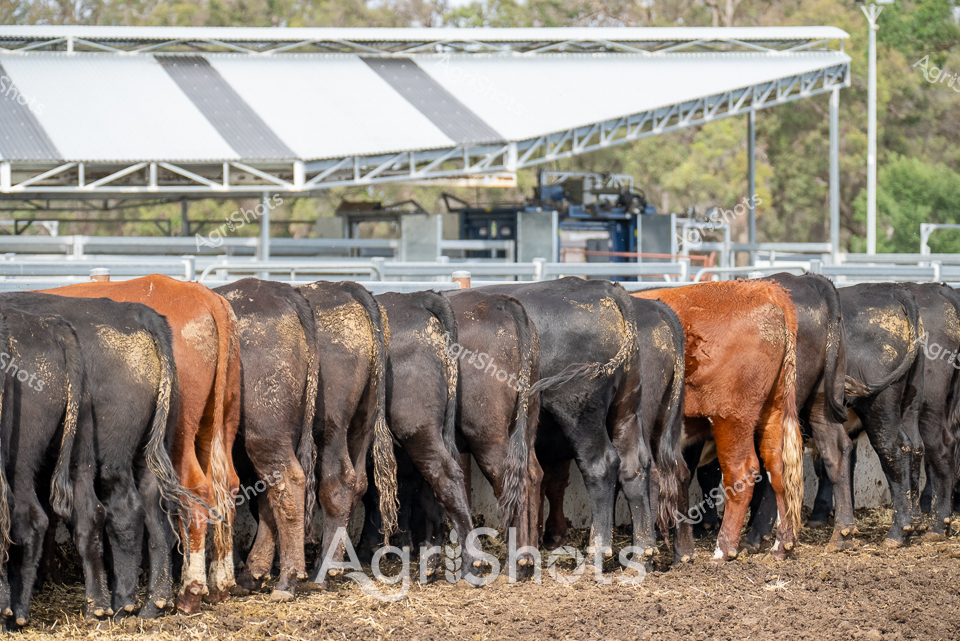
Muscled black and copper-hued cattle stand shoulder-to-shoulder at a modern steel feed bunker, their broad rumps aligned in perfect parallel. The late summer landscape of New South Wales' New England region unfolds behind them, with native trees softening the industrial agricultural backdrop. Precise metal infrastructure - an overhead shade structure with crisp white and grey paneling - provides climate protection for the livestock, reflecting sophisticated cattle management practices. Each animal's coat gleams with a subtle sheen of dust and perspiration, their powerful hindquarters suggesting premium beef genetics bred for Australian pastoral conditions. The feed bunker's clean lines and the uniform positioning of the cattle demonstrate the systematic efficiency of contemporary feedlot operations, where nutrition and animal welfare converge. Warm earth tones of russet and charcoal dominate the scene, capturing the resilient beauty of Australian agricultural production.
 Image
Angus and Santa Gertrudis cattle cluster in a disciplined line along a feed bunker, their muscular frames revealing the robust genetics of New England region beef production. Deep charcoal and rich burnt-orange coats contrast against the pale straw-covered ground, while a sophisticated steel-framed shelter provides shade and protection from the harsh summer heat. Blue ear tags punctuate the dark cattle, signaling meticulous livestock management and individual animal tracking. The feedlot's clean, structured infrastructure - with its gleaming white metal trusses and precise feeding infrastructure - demonstrates contemporary Australian agricultural precision. These carefully selected beef cattle, standing shoulder-to-shoulder, represent the pinnacle of genetic breeding and nutritional management, embodying the sophisticated livestock industries of northern New South Wales. The scene captures a moment of calm efficiency, where agricultural technology and animal husbandry converge in a landscape of calculated productivity.
 Image
Black and charcoal-colored Angus cattle cluster tightly in a covered feedlot, their muscular bodies aligned in neat rows against a white and steel infrastructure. The New England region's summer landscape provides a backdrop of pale, dusty ground and scattered trees, suggesting the arid conditions of northern New South Wales. Rusty-orange and deep black cattle stand shoulder-to-shoulder, their coats glistening with a patina of dust and moisture, indicating recent movement or feeding. The steel-framed shelter overhead offers critical protection from intense Australian summer heat, with its angled white and gray panels creating geometric shadows across the feeding area. This meticulously managed agricultural scene represents the precision of modern cattle production, where nutrition, shelter, and animal welfare converge in a carefully controlled environment. The Feed bunker stands ready, promising systematic nutrition for these valuable beef cattle, embodying the sophisticated agricultural practices of contemporary Australian livestock management.
 Image
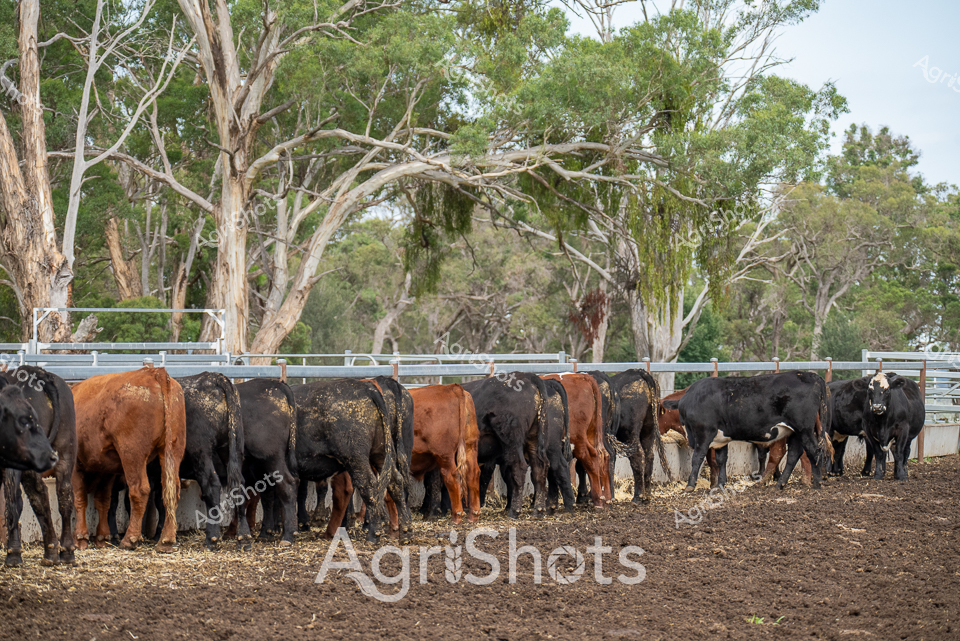
Muscled beef cattle cluster along a feed bunker, their glossy hides gleaming in rich tones of midnight black and burnished copper. The tight corral stands nestled among silvery eucalyptus trees, their twisted branches casting dappled shadows across the dusty paddock floor. Each animal stands shoulder-to-shoulder, focused intently on the scattered hay and feed, representing the robust cattle industry of New England's agricultural heartland in New South Wales. Summer's golden light filters through the sparse woodland, highlighting the powerful frames and varied coat colors of these carefully managed livestock. The steel yard fence and feed infrastructure speak to modern agricultural precision, while the surrounding landscape of weathered gums provides a quintessential Australian pastoral backdrop. These cattle - a mix of Angus and Santa Gertrudis breeds - embody the strength and productivity of regional farming, their muscular bodies a testament to careful breeding and expert nutrition management.
 Image
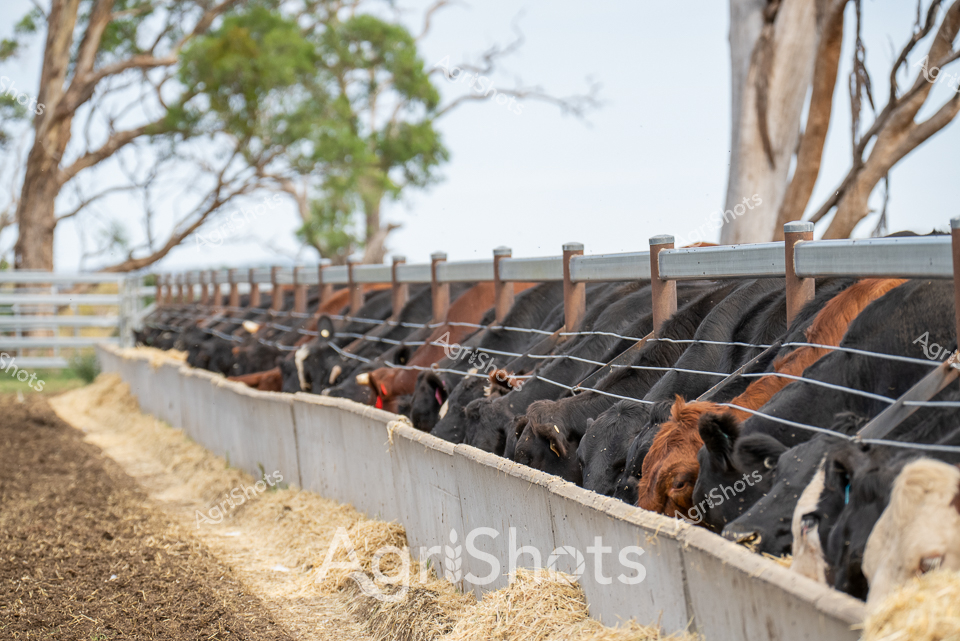
Muscled black and chestnut beef cattle stand shoulder-to-shoulder along a feed bunker, their broad backsides aligned in a disciplined row under the expansive steel-framed shelter. The feedlot infrastructure speaks to modern agricultural precision - corrugated roofing casting uniform shadows across meticulously maintained feeding infrastructure in the New England region of New South Wales. Rich earth tones dominate the scene - deep black and burnished auburn coats dusted with golden straw, contrasting against the grey metal structural framework and pale ground underfoot. Each animal represents carefully managed genetic potential, positioned to optimize nutrition and weight gain through systematic feeding protocols. The late summer landscape behind reveals scattered eucalyptus trees, their muted green foliage providing a soft backdrop to this highly engineered agricultural environment. This portrait of contemporary cattle production captures the intersection of biological potential and agricultural technology, where every element is purposefully designed to support optimal livestock development.
 Image
Sleek black and rich chestnut-coated beef cattle line a concrete feed bunker under towering eucalyptus trees, creating a quintessential New England agricultural landscape in New South Wales. The precisely engineered feeding station features sturdy metal rails supporting a long concrete trough filled with golden hay, allowing each animal controlled access to nutrition. Mature cattle stand shoulder-to-shoulder, their muscular frames representing carefully bred livestock optimized for meat production. Soft summer or autumn light filters through sparse tree branches, casting gentle shadows across the dry, packed earthen ground alongside the feeding area. The metallic infrastructure, organic natural elements, and carefully managed livestock represent the sophisticated intersection of agricultural science and pastoral tradition characteristic of Australian cattle farming. This methodical, efficient feeding system demonstrates the region's commitment to advanced livestock management techniques, balancing animal welfare with productive agricultural practices.
 Image
Sleek black Angus cattle line the concrete feed bunker, their muscular bodies pressed close in a tightly organized row. Warm afternoon sunlight filters through the sparse trees of the New England region, casting long shadows across the dusty feedlot ground. Straw and feed are scattered along the concrete trough, providing a golden contrast to the deep black and rich brown hides of the cattle. The white wooden fence in the background suggests a well-managed agricultural property in New South Wales, typical of the region's extensive cattle farming landscape. Each animal stands shoulder-to-shoulder, demonstrating the efficiency of modern feedlot management, where precise nutrition and controlled environments optimize livestock growth. The scene captures the discipline of contemporary Australian beef production - a carefully orchestrated dance of agriculture, where each animal is positioned with purpose, representing the backbone of the region's agricultural economy.
 Image
Black Angus cattle line a meticulously maintained feed bunker, their glossy dark coats contrasting against golden straw bedding and a white fence line in the background. Tightly packed in orderly rows, the cattle lean forward with focused intent, their muscular frames demonstrating the robust genetics of modern beef production. Yellow ear tags punctuate their dark silhouettes, marking each animal in this carefully managed agricultural system. The scene captures the precision of contemporary Australian livestock management, where strategic feeding and controlled environments optimize animal health and agricultural productivity. Soft, diffused light suggests early morning or late afternoon, casting gentle shadows across the feedlot's carefully maintained ground. The New England region's characteristic landscape bleeds softly into the background, with hints of trees and pastoral terrain framing this quintessential agricultural tableau of cattle nutrition and farming expertise.
 Image
Sleek black and russet-brown cattle line up along a pristine concrete feed bunker, their muscular forms creating a rhythmic sequence beneath sprawling eucalyptus trees. Located in the New England region of New South Wales, this feedlot represents contemporary agricultural precision, with carefully designed infrastructure supporting large-scale livestock management. Hay is strategically distributed along the concrete trough, allowing cattle efficient access and demonstrating meticulous nutritional planning. Soft pastoral light suggests an early morning or late afternoon moment, with muted seasonal tones reflecting late summer or autumn conditions. The neat white fencing and orderly arrangement of livestock communicate a sense of professional agricultural practice, where animal welfare and systematic production intersect. Each animal wears a colored ear tag, a subtle marker of individual tracking and management in this sophisticated farming environment.
 Image
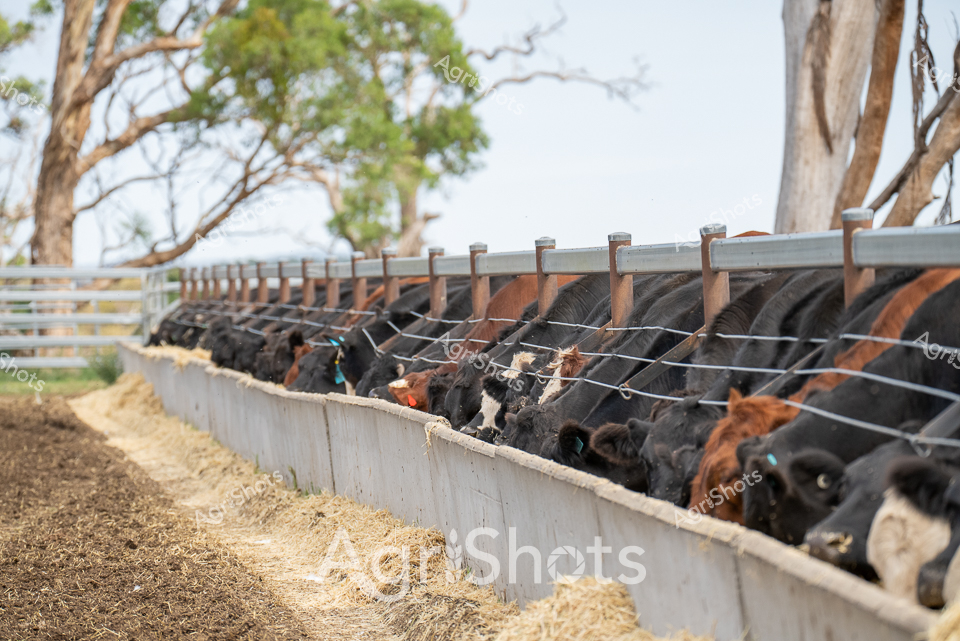
Angus and Hereford cattle line a concrete feed bunker, their sleek black and rich russet coats contrasting against the pale straw bedding and weathered gum trees. Tightly packed along the steel-railed feeding trough, the beef herd stands shoulder to shoulder, heads lowered to consume a carefully mixed total mixed ration (TMR) of silage and grain. The late summer light filters through sparse eucalyptus branches, casting soft shadows across the feedlot, highlighting the muscular frames of these prime livestock. Wire strands and vertical steel supports guide the animals' positioning, creating a regimented yet efficient feeding system typical of modern large-scale cattle management in New England's agricultural landscape. Each animal bears a small ear tag, a subtle marker of careful stock management and traceability in Australian beef production. The scene epitomizes the precision and scale of contemporary pastoral agriculture - a testament to generations of breeding, nutrition science, and strategic livestock husbandry.
 Image
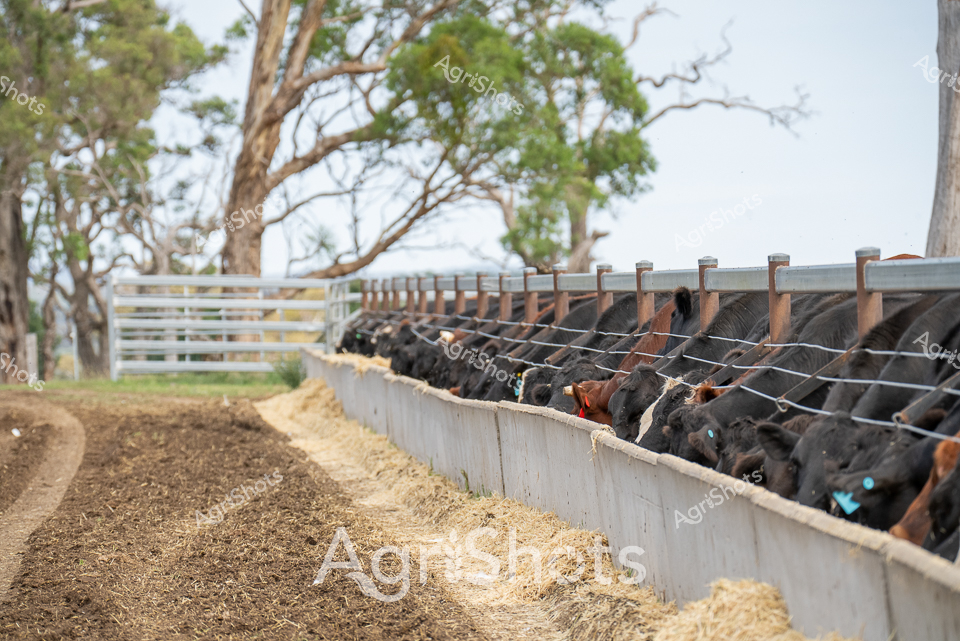
Black Angus and black baldy cattle line a concrete feed bunker in a pastoral New England landscape, their muscular frames pressed against sturdy steel railings. Crisp late summer light filters through mature eucalyptus trees, casting soft shadows across the dusty feedlot ground. Carefully arranged straw and feed create textural lines of golden yellow against the rich brown earth, while the cattle wear distinctive colored ear tags - bright blue and red markers identifying each animal in this meticulously managed agricultural setting. The cattle stand shoulder-to-shoulder, heads lowered to access their feed, representing the precision of modern beef production in rural New South Wales. Weathered gum trees in the background provide natural framing and a quintessential Australian agricultural backdrop, highlighting the intersection of natural landscape and systematic livestock management. This image captures the disciplined efficiency of contemporary cattle farming, where animal nutrition and systematic care are paramount to sustainable production.
 Image
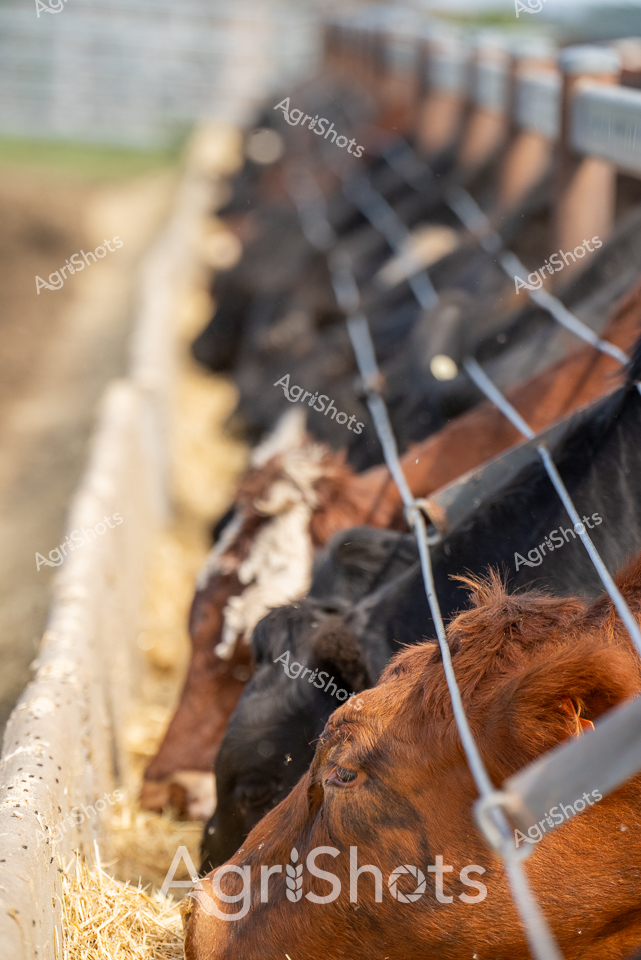
Black and chestnut beef cattle stand shoulder-to-shoulder along a concrete feed bunker, their muscular bodies aligned in a disciplined row. Straw bedding lines the concrete feeding area, providing a golden contrast to the rich browns and deep blacks of the cattle's coats. The tight, orderly composition suggests a professionally managed feedlot, typical of large-scale cattle farming practices in New South Wales' New England region. Wire fencing runs parallel to the animals, creating geometric lines that emphasize the systematic approach to livestock management. The depth of field blurs the background, highlighting the animals' textured coats and the precision of their positioning. This scene captures the industrial yet purposeful nature of modern Australian beef production, where animal nutrition and efficient feeding strategies are critical to agricultural success.
 Image
Angus and Hereford cattle line a concrete feed bunker, their muscular frames pressed against steel railings under the dappled shade of weathered gum trees. The late summer landscape of the New England region unfolds in muted earth tones, with straw-laden ground and a pale sky creating a quintessential Australian agricultural backdrop. Sleek black cattle intermingle with rich mahogany-red Herefords, their coats gleaming with health, positioned methodically along the pristine white-capped concrete feeding station. Carefully maintained feed stretches along the bunker, promising nutrition and optimal growth for this carefully curated herd. The scene captures the precision of modern cattle management - where agricultural expertise meets natural landscape, demonstrating the sophisticated approach of contemporary Australian beef production. Gnarled eucalyptus trees frame the scene, their twisted branches a testament to the resilient environment where these premium livestock are raised.
 Image
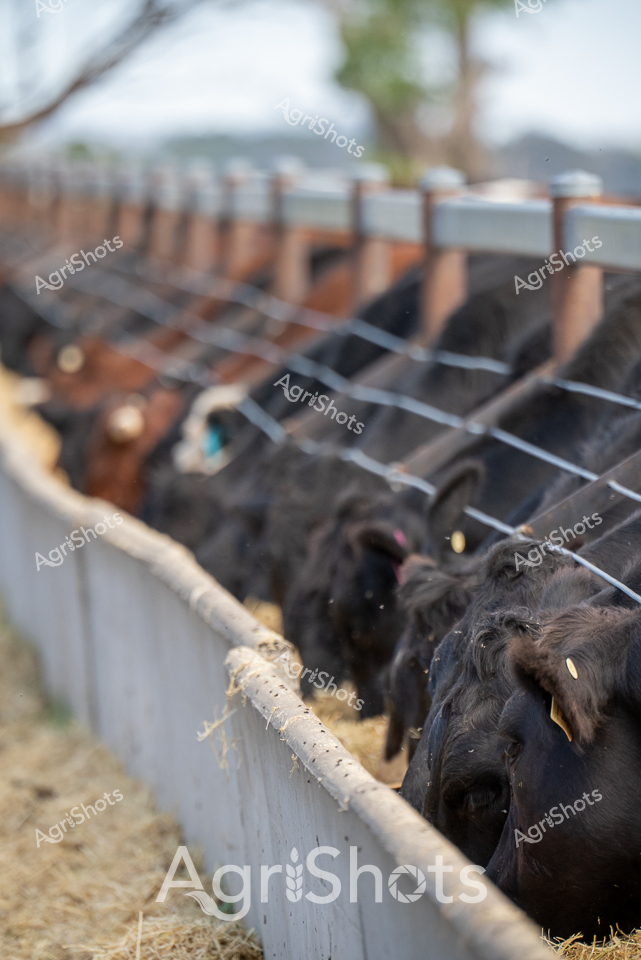
Black Angus cattle stand shoulder-to-shoulder along a pristine concrete feed bunker, their deep ebony coats gleaming in soft afternoon light. The tight row of muscular animals represents the precision of modern cattle management, with each beast fitted with a distinctive yellow ear tag for identification. Straw bedding lines the yard, providing texture and comfort beneath their hooves, while a wire fence and structural supports create geometric lines in the background. The New England region's characteristic landscape hints at the scene - rolling hills and scattered trees visible beyond the feedlot, suggesting the late summer or early autumn season when pastures transition and livestock are carefully managed for optimal nutrition. These carefully bred Angus represent the pinnacle of Australian beef production, their uniform stance and robust physiques a testament to meticulous agricultural husbandry. The crisp, ordered environment speaks to the sophisticated approach of contemporary livestock management, where animal welfare and production efficiency converge in a carefully orchestrated agricultural ballet.
 Image
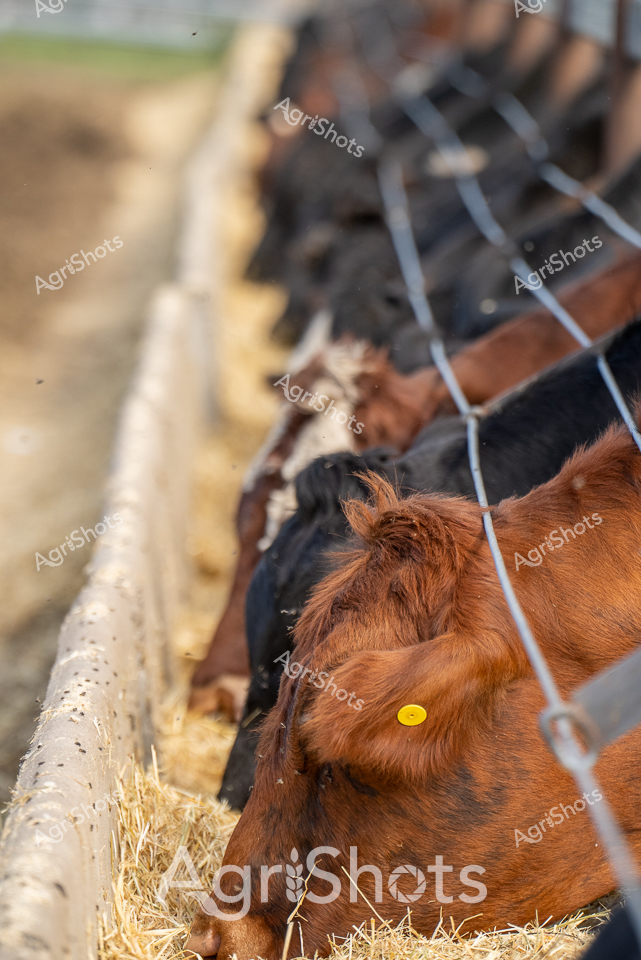
Russet-coated beef cattle cluster along a concrete feed bunker, their muscular frames lined up methodically behind a wire fence. Golden straw provides a soft bedding beneath their hooves, creating a textural contrast with the weathered concrete and steel infrastructure. A bright yellow ear tag punctuates the rich auburn coat of the nearest animal, signaling careful livestock management in this meticulously organized feedlot. The scene captures the systematic precision of modern cattle production, where each animal is tracked and nurtured with scientific efficiency. Soft afternoon sunlight casts gentle shadows across the enclosure, highlighting the varied tones of black, brown, and rust-colored cattle breeds typical of New South Wales' New England agricultural region. This snapshot encapsulates the quiet industry of Australian beef production - a delicate balance of animal husbandry, nutritional science, and rural expertise.
 Image
Sleek black and russet-coated cattle line the pristine concrete feed bunker, their muscular bodies aligned with precision along gleaming steel rails. The expansive feedlot stretches beneath towering gum trees, casting dappled shadows across the dusty golden ground, suggesting a warm New England Region summer or early autumn day in New South Wales. Each beast stands shoulder-to-shoulder, heads lowered to consume fresh feed, creating a rhythmic visual pattern of dark hides punctuated by rich burnt-orange tones. Carefully engineered infrastructure defines the scene - the clean white fence posts, meticulously maintained feeding infrastructure, and carefully graded dirt pathways revealing sophisticated agricultural management. The cattle appear healthy and well-conditioned, their coats glossy and bodies robust, reflecting the high-quality nutrition and expert husbandry typical of modern Australian beef production. In the background, native eucalyptus trees provide a quintessential Australian pastoral backdrop, completing this snapshot of contemporary agricultural excellence.
 Image
Sleek black and russet-hued cattle stand shoulder to shoulder along a concrete feed bunker, their muscular frames aligned with precision inside sturdy wire fencing. Straw-colored feed stretches before them, promising nutrition in the golden light of an Australian agricultural landscape. The close-up perspective captures the rich textures of their varied coat colors - deep ebony, warm chestnut, and mottled brown - highlighting the genetic diversity of a well-managed herd. Soft shadows and distant trees suggest this is likely a late afternoon scene in the New England region of New South Wales, where pastoral excellence meets careful livestock management. Each animal appears calm and focused, their heads positioned deliberately to access feed, embodying the disciplined efficiency of modern feedlot operations. The crisp wire fencing and clean concrete infrastructure speak to contemporary agricultural practices that prioritize animal health, nutrition, and systematic production.
 Image
Black and rust-red Angus cattle stand shoulder-to-shoulder in a precisely aligned feed bunker, their muscular bodies creating a uniform line against the golden earthen ground. The late summer sunlight filters through nearby eucalyptus trees, casting soft shadows across the feedlot in New South Wales' New England Region. Sleek bovine frames - some deep charcoal, others rich russet - lean into the concrete feed trough, their heads positioned methodically in a testament to professional livestock management. Sturdy metal fencing runs the length of the bunker, providing structural definition to this agricultural landscape where precision meets pastoral productivity. The scene captures the disciplined efficiency of modern Australian cattle farming, where careful nutrition and systematic animal husbandry converge. Weathered tree branches in the background provide a natural counterpoint to the geometric lines of the feeding infrastructure, highlighting the carefully balanced intersection of natural environment and agricultural enterprise.
 Image
Burnished orange and deep charcoal cattle line the gleaming feed bunker, their muscular bodies pressed closely together in systematic rows. In the bright, open landscape of New England's pastoral heartland, this meticulously managed feedlot represents modern Australian agricultural precision. Rich straw bedding lines the concrete feed trough, providing texture and comfort for these prime beef cattle, likely Angus and Hereford crossbreeds with their distinctive reddish-brown and black coats. Crisp fencing and carefully maintained infrastructure frame the scene, with distant gum trees and soft rolling hills creating a quintessential New South Wales rural backdrop. The animals stand shoulder-to-shoulder, systematically accessing feed with an almost military-like orderliness that speaks to efficient livestock management. The soft autumn light casts gentle shadows across the yard, highlighting the robust health and careful nutrition of these valuable agricultural assets, capturing the sophisticated intersection of animal husbandry and contemporary farming practice.