Browse the collection
 Image
A seasoned cattle stud manager documents critical livestock data in the New England region of New South Wales during late summer. Wearing a rugged green jacket and dark protective vest, the experienced agricultural professional carefully records details on a clipboard while standing in a robust cattle yard. Weathered hands grip a pencil with practiced precision, capturing essential information about the farm's Angus breeding stock. Overhead, soft autumn light filters through sparse tree branches, casting a contemplative mood over the rural landscape. The structured metal yard railings provide a geometric backdrop to this moment of quiet concentration, highlighting the meticulous record-keeping that underpins successful modern agricultural management. His slightly tousled hair and intent focus reflect decades of expertise in livestock breeding and farm administration, embodying the careful, systematic approach of Australian stud cattle professionals.
 Image
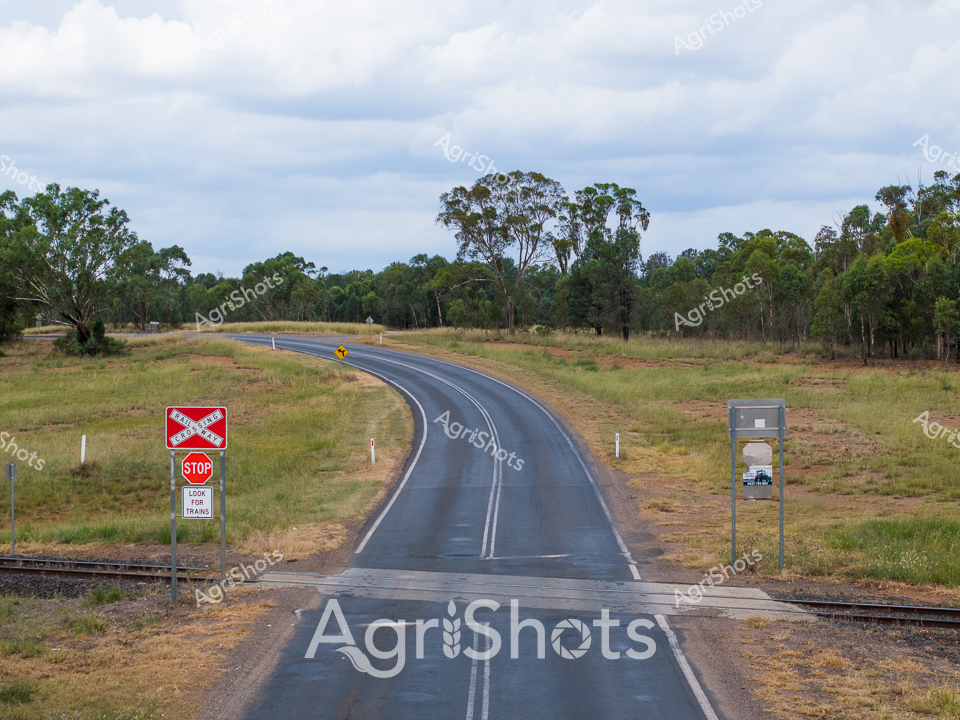
A lonely rural railway crossing winds through the Liverpool Plains region of New South Wales, capturing the essence of Australian agricultural infrastructure. The asphalt road curves gently between sparse grasslands and eucalyptus woodland, with weathered paddocks stretching toward distant tree lines. Critical safety signage commands attention - a bold red STOP sign and railway crossing marker warn travelers to be vigilant, highlighting the potential dangers of rural transportation routes. Pale grey skies suggest an overcast autumn or summer day, casting soft light across the undulating landscape. White road markers and sturdy railway tracks slice through the golden-brown grasses, creating a geometric contrast with the organic contours of the surrounding bushland. This scene embodies the quiet resilience of rural transportation networks, where human engineering meets the expansive, rugged Australian countryside, silent sentinels standing guard over the agricultural heartland.
 Image
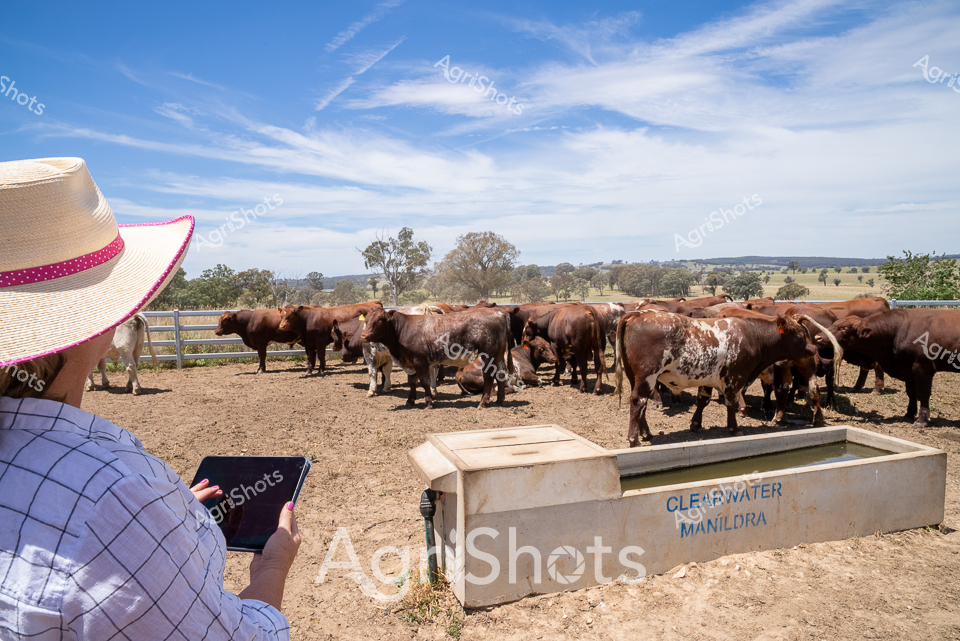
Rural Technology Meets Traditional Livestock Management A sun-drenched Central West New South Wales paddock frames a herd of robust Shorthorn cattle, their rich mahogany and roan coats gleaming under a pristine blue summer sky. A farmer in a wide-brimmed straw hat with a vibrant pink trim stands partially visible, wielding an iPad to document or monitor the livestock herd. The cattle cluster around a concrete water trough labeled "Clearwater Manildra", suggesting a carefully managed stud operation in an expansive pastoral landscape. Scattered gum trees punctuate the distant horizon, casting subtle shadows across the dry golden ground where the cattle stand. This image captures the intersection of traditional agricultural practices and modern digital technology, highlighting how contemporary farmers leverage data and mobile devices to enhance livestock management. The scene epitomizes the evolving nature of Australian agricultural production - blending generations of pastoral expertise with cutting-edge digital tools.
 Image
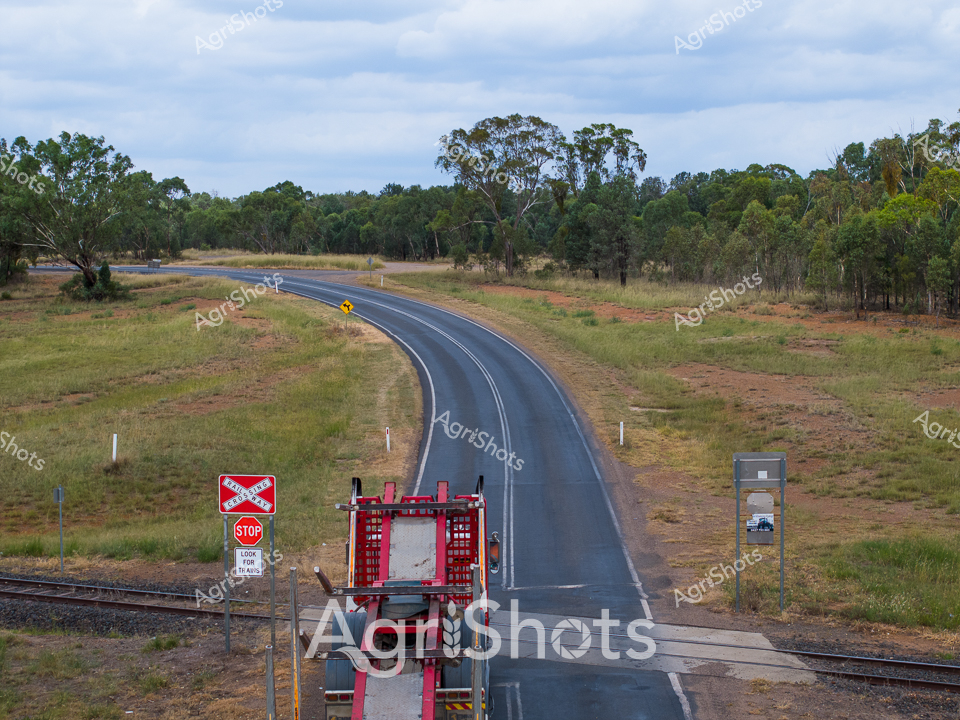
A crimson road train approaches a railway crossing nestled in the rugged Liverpool Plains landscape, where golden grasslands meet eucalyptus woodlands under a soft, overcast sky. The serpentine bitumen road curves gracefully through the dry agricultural terrain, intersecting with railway tracks marked by critical safety signage - a bold red STOP sign and railway crossing warning signals standing sentinel. Weathered paddocks flank the roadway, revealing the resilient character of this New South Wales rural environment during the transitional season between summer and autumn. The steel-framed truck, painted a vivid fire-engine red, represents the lifeblood of agricultural logistics, navigating the interconnected transport networks that sustain remote communities. Pale blue-grey skies and muted earth tones create a subtle, contemplative atmosphere that speaks to the endurance of Australian rural infrastructure and the quiet determination of those who traverse these expansive landscapes. The scene captures a moment of calculated caution, where transportation safety protocols intersect with the raw, unforgiving beauty of the Australian agricultural heartland.
 Image
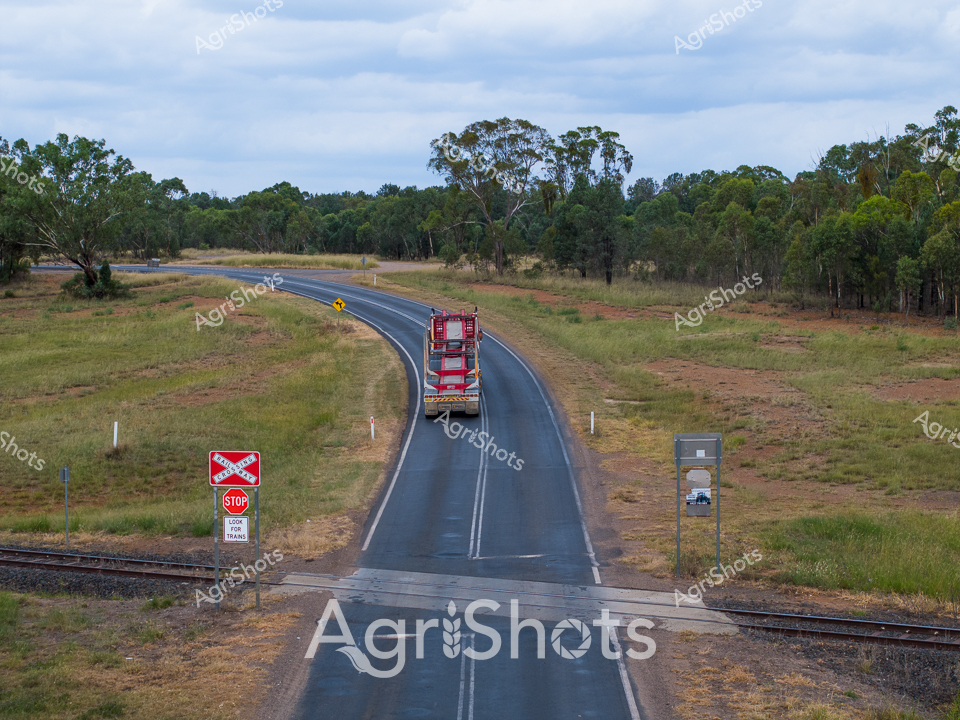
A red flatbed truck navigates a winding rural highway, approaching a railway crossing under an overcast sky in the Liverpool Plains region of New South Wales. Dry grasslands and scattered eucalyptus trees frame the asphalt roadway, creating a quintessential Australian agricultural landscape with muted earth tones of brown, green, and pale blue. A prominent red and white stop sign and railway crossing marker stand sentinel at the intersection, highlighting the critical safety infrastructure that protects transportation routes through remote farming territories. The curving road stretches ahead, leading through a classic bushland setting with sparse vegetation and open paddocks, representing the vast interconnected networks that sustain rural agricultural communities. Soft cloud cover suggests a mild seasonal transition, potentially late summer or early autumn, when the landscape begins to shift from intense growth to a more subdued palette. The scene captures the essence of rural transportation infrastructure - a delicate balance of movement, safety, and the enduring connection between agricultural landscapes and critical transport corridors.
 Image
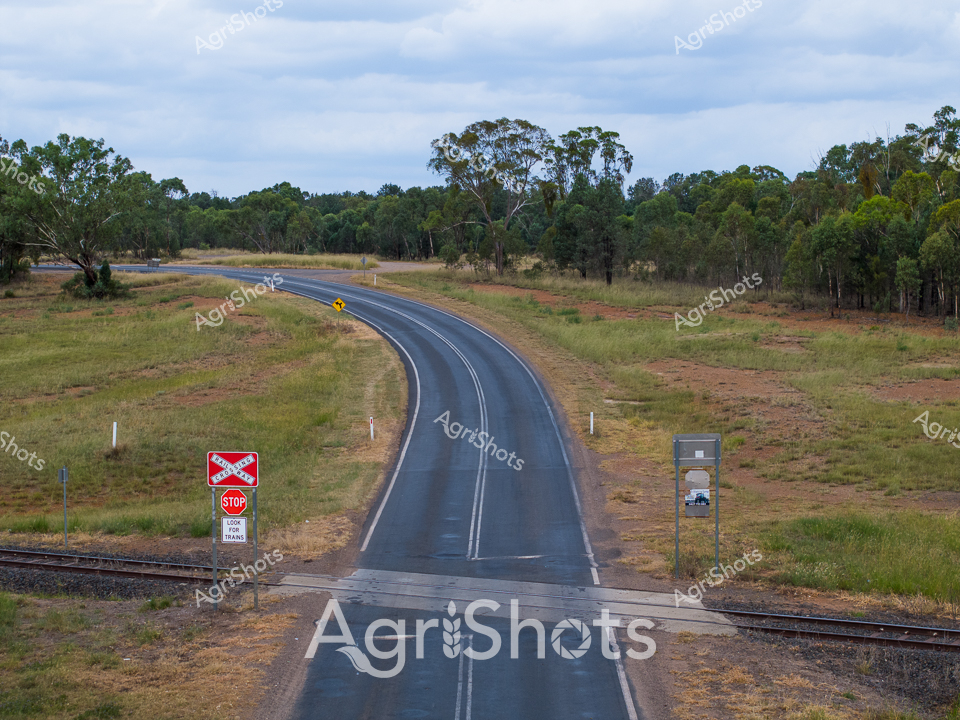
A winding rural road cuts through the tranquil Liverpool Plains landscape, revealing a critical intersection where transportation networks converge. A stark red and white railway crossing sign commands immediate attention, signaling the potential approach of trains across the asphalt roadway. The surrounding terrain displays classic Australian agricultural grasslands - muted browns and greens stretching toward a backdrop of eucalyptus and hardwood trees under a soft, overcast sky. Weathered grass paddocks frame the curving bitumen, suggesting the resilient nature of rural infrastructure in this New South Wales region. Boundary markers and warning signs stand sentinel, highlighting the careful negotiation between agricultural movement and transportation safety. The scene captures the understated drama of rural connectivity, where every intersection represents a moment of potential risk and necessary caution, embodying the pragmatic spirit of Australian rural life.
 Image
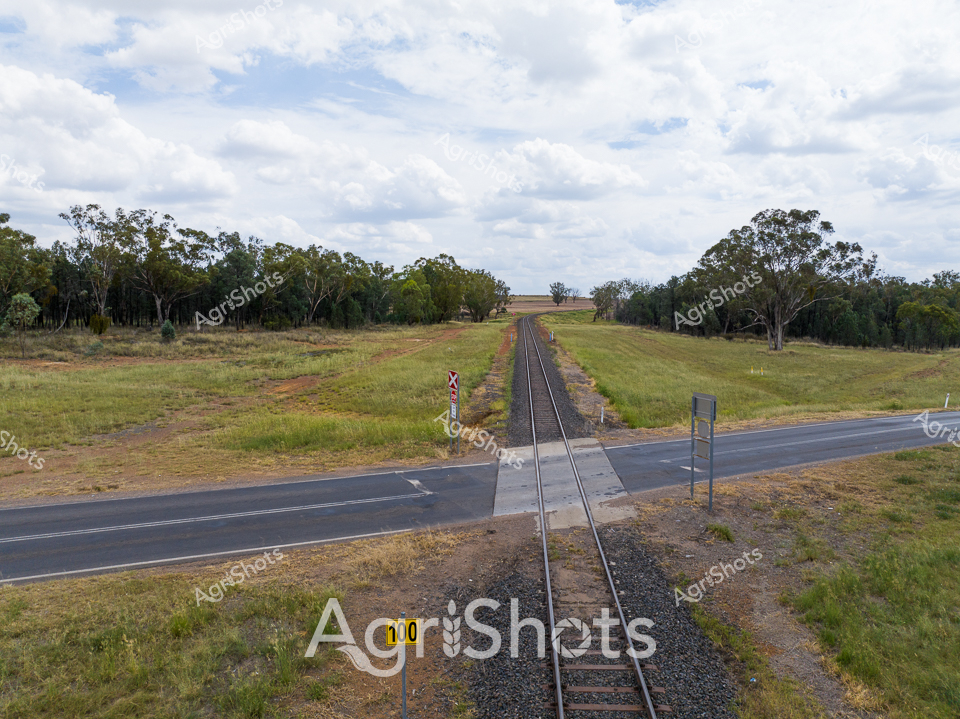
Rural railway intersection captures the expansive agricultural landscape of the Liverpool Plains in New South Wales, where a single set of railway tracks bisects a sealed country road amid undulating grasslands and scattered eucalyptus woodland. The weathered grey railway tracks stretch towards the horizon, cutting a precise linear path through the sun-bleached summer pastures, with rocky ballast defining its precise route. A prominent railway crossing sign stands sentinel, warning of the intersection between transportation infrastructure and agricultural terrain. Soft clouds drift across a pale blue sky, casting gentle shadows over the dry grasslands that speak to the resilient character of Australian rural landscapes. The scene embodies the quiet connectivity of regional transport networks, where railways serve as critical arteries linking farming communities across vast distances. Muted earth tones of browns, greys, and soft greens dominate the composition, reflecting the understated beauty of this agricultural heartland.
 Image
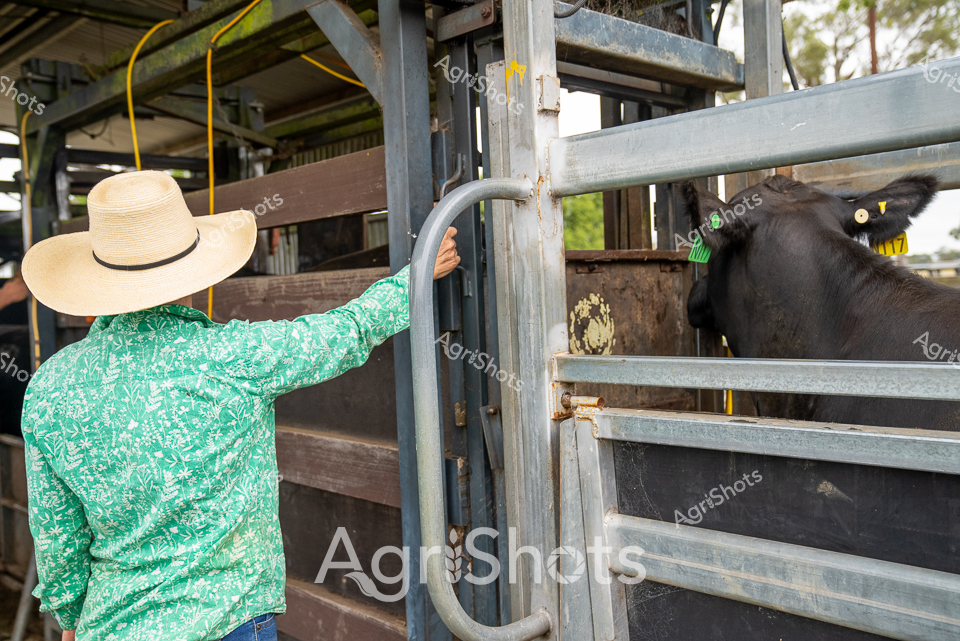
Bathed in warm autumn light, a stockwoman tends to a sleek black Angus cow in the sturdy steel cattle yards of New England, New South Wales. Her vibrant green floral shirt and classic straw hat stand in sharp contrast to the metallic gates and dark bovine form, capturing the lived experience of rural Australian agriculture. With practiced care, she manages the gate, her posture suggesting years of experience handling livestock in this rugged landscape. The yellow ear tags and gleaming metal infrastructure speak to modern agricultural practices, where precision and animal welfare intersect. The cattle yard—a testament to generations of farming knowledge—provides a structured yet organic backdrop to this moment of quiet interaction between human and animal. The scene pulses with the subtle energy of a summer day in rural NSW, where every gesture is purposeful and every movement is part of the rhythmic dance of agricultural life.
 Image
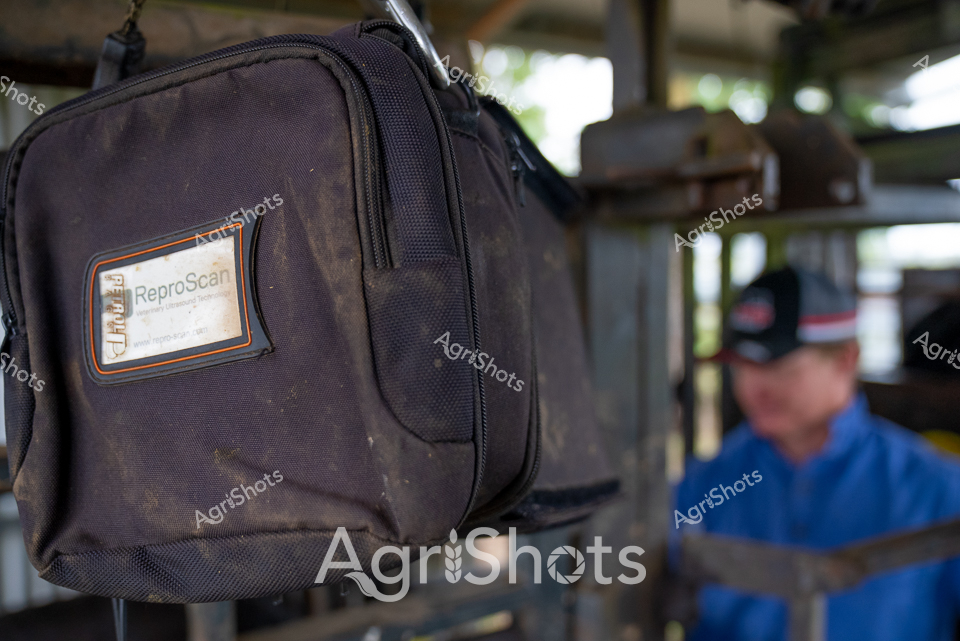
In the heart of New England's cattle country, a seasoned professional stands ready with precision agricultural technology. A well-worn black Reproscan bag hangs prominently, its label indicating the cutting-edge reproductive assessment equipment used in modern stud cattle management. The weathered bag speaks to countless hours in the rugged cattle yards, a testament to the meticulous work of livestock breeding specialists. A figure in a blue shirt and cap moves in the background, capturing the collaborative nature of agricultural science and animal husbandry. The scene is suffused with the warm tones of a late summer or early autumn day, soft natural light filtering through the timber yards and highlighting the essential work of genetic selection and herd management. This moment encapsulates the blend of traditional farming expertise and advanced reproductive technologies that drive Australia's world-class cattle breeding industry, where precision and care intersect to improve livestock quality and productivity.
 Image
Weathered hands hover over a digital device in the rustic cattle yards of New England, New South Wales. A seasoned agricultural professional in a forest green jacket and black leather vest meticulously records livestock data, his concentration evident in the furrowed brow and careful touch. Surrounding him, a team of ranchers dressed in practical farm attire - blue shirts, denim jeans, and wide-brimmed sun hats - observe the process against a backdrop of white wooden fencing and verdant paddocks. The late summer light casts soft shadows across the scene, highlighting the collaborative spirit of modern stud cattle management. Angus cattle can be glimpsed in the distant pen, their dark forms a testament to the region's renowned beef breeding excellence. This moment captures the precision and care inherent in contemporary agricultural practice, where technology and traditional farming expertise converge to maintain the highest standards of livestock management.
 Image
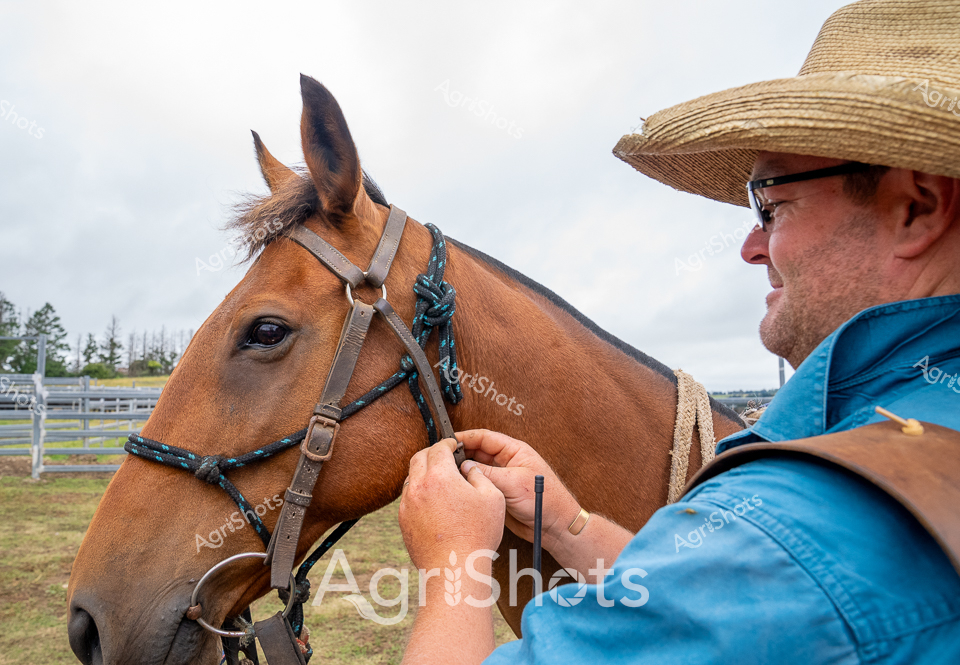
Weathered hands steady a chestnut horse in a rustic New England paddock, the soft light of a late summer morning casting a gentle glow across the rural landscape. A seasoned stockman in a well-worn straw hat and blue work shirt carefully adjusts the horse's bridle, his practiced movements revealing decades of experience with livestock. The horse stands alert yet calm, its rich bay coat gleaming against the backdrop of weathered wooden fence rails and distant pine trees. Intricate blue-and-leather tack speaks to the precision of equine management in this agricultural setting, where every piece of equipment tells a story of connection between human and animal. The scene captures the quiet intensity of stud horse handling - a moment of communication and mutual respect between a skilled handler and his magnificent equine partner. Soft overcast skies and the muted palette of the paddock create an atmosphere of tranquil concentration, embodying the understated artistry of rural Australian horse breeding.
 Image
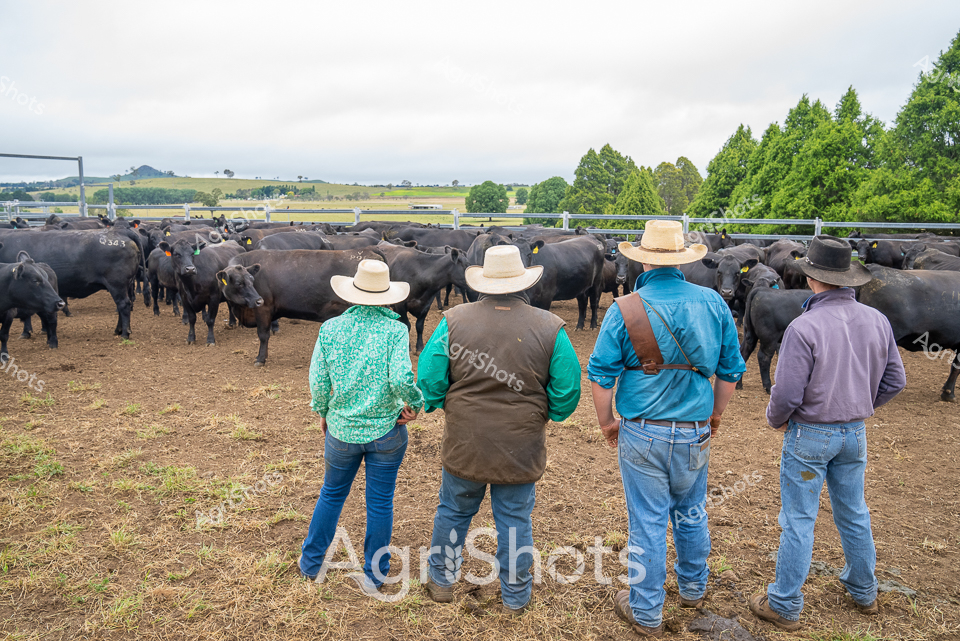
A quartet of seasoned cattlemen survey a densely packed Angus herd in a rustic New England paddock, their broad-brimmed sun hats a uniform shield against the soft summer light. Rich chocolate-black cattle fill the meticulously maintained yard, their muscular frames marked with subtle variations of coat texture and the occasional yellow ear tag identifying their lineage. The men stand shoulder-to-shoulder, backs turned to the camera, dressed in a palette of rural workwear - emerald green, turquoise blue, earthy brown, and soft lavender shirts complementing well-worn denim jeans. In the background, verdant tree lines and distant rolling hills frame the scene, suggesting the fertile agricultural landscape of New South Wales' northern tablelands. Their collective stance speaks of quiet concentration, a shared understanding of livestock quality and breeding potential, embodying generations of agricultural expertise in a single contemplative moment. The carefully managed stud environment reflects the precision and passion of Australian cattle breeding, where every animal represents a carefully curated genetic legacy.
 Image
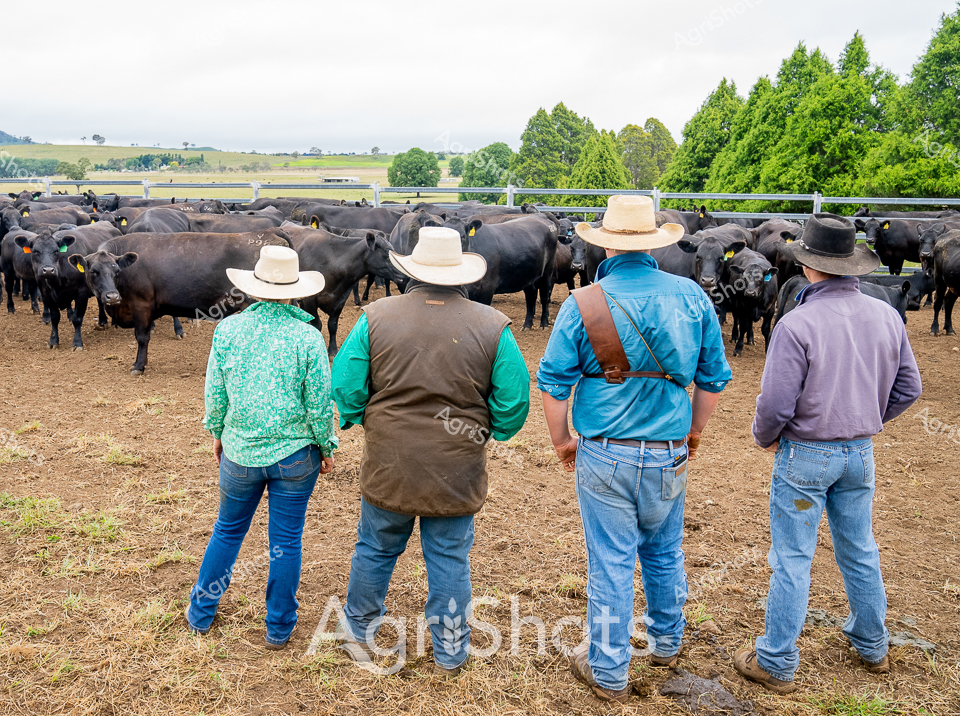
Oversized straw hats shield weathered faces as four seasoned stockmen survey a dense herd of black Angus cattle in the fertile New England region of New South Wales. Rich emerald-green trees frame the expansive paddock, where the carefully bred cattle stand clustered on sun-baked earth, their midnight-black coats gleaming with health and genetic precision. Dressed in a palette of rural workwear - green, blue, brown, and lavender shirts complemented by well-worn denim - these agricultural professionals stand shoulder-to-shoulder, united in their assessment of the valuable stud livestock. The late summer landscape radiates a sense of quiet industry, with distant fencelines and pastoral horizons suggesting generations of agricultural expertise embedded in this landscape. Yellow ear tags punctuate the cattle's dark forms, silent indicators of meticulous breeding records and genetic management. The scene captures the quintessential Australian rural experience: a moment of collective expertise, where years of knowledge converge in silent communication about the health, potential, and value of a premium cattle herd.
 Image
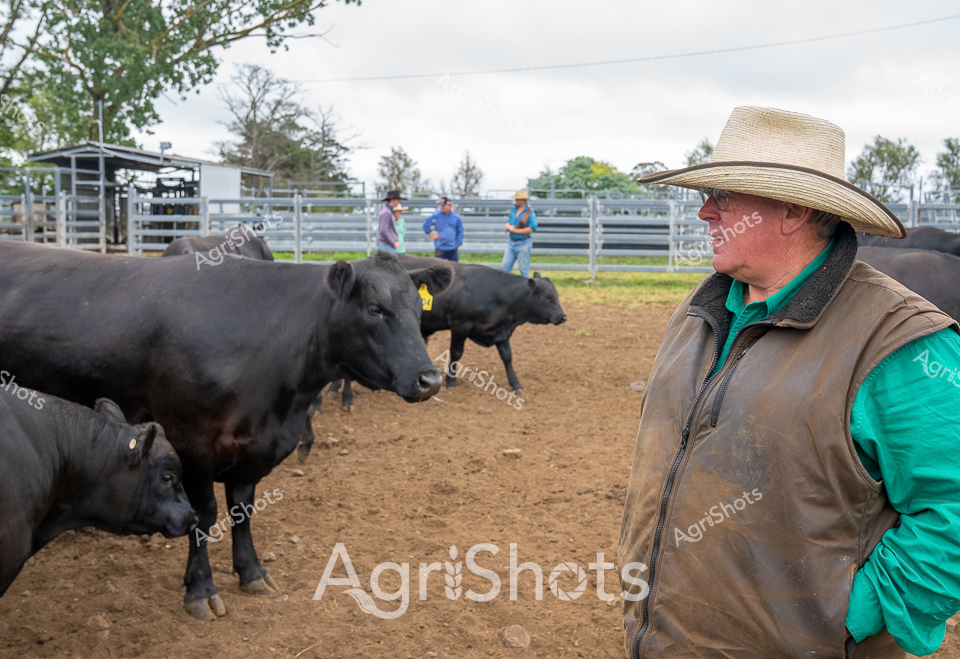
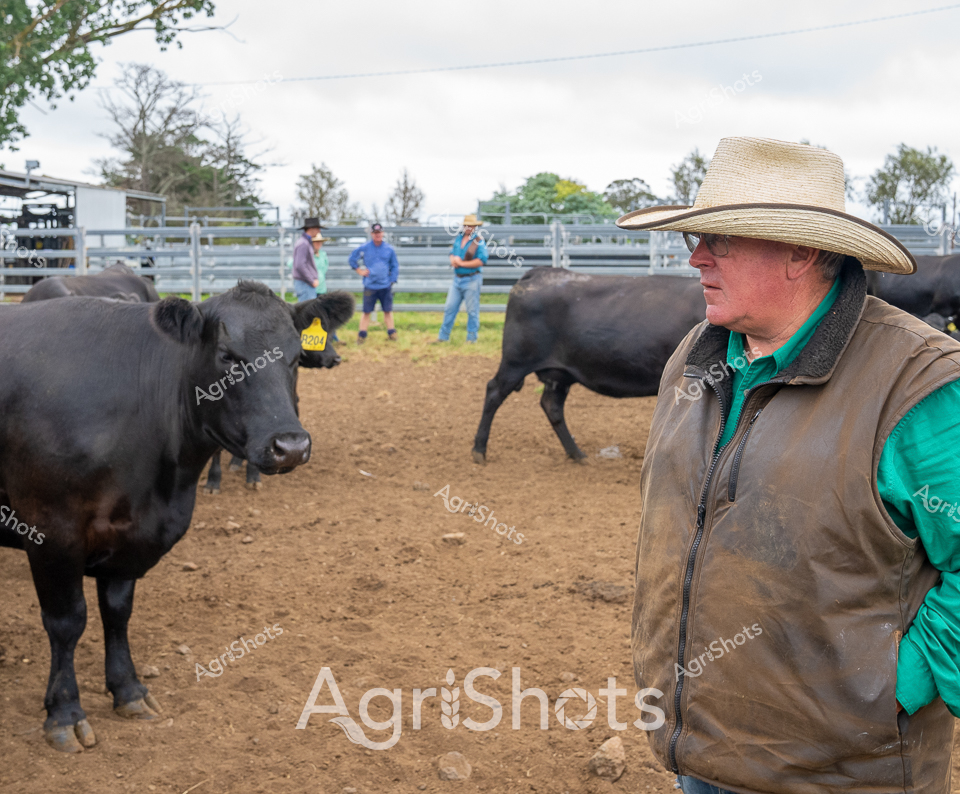
Black Angus cattle stand attentively in a sandy yard, their glossy midnight-black coats contrasting against the weathered rural landscape of New England, New South Wales. A seasoned cattleman in a wide-brimmed straw hat and warm vest surveys the herd, his green jacket a vibrant accent against the earthy tones of the cattle yards. Multiple agricultural workers cluster in the background, their casual stance suggesting an informal stud cattle assessment or selection process. The mature Angus cows display the breed's characteristic muscular build and calm demeanor, with yellow ear tags marking their individual identification. Soft autumn light filters through surrounding paddock trees, casting gentle shadows across the compact dirt yard enclosed by sturdy steel livestock fencing. This quintessential Australian agricultural scene captures the quiet expertise of rural cattle breeding, where generations of knowledge meet careful animal husbandry in the heart of pastoral New South Wales.
 Image
Weathered stockman surveys the Angus herd in a classic New England region cattle yard, the late summer landscape etched with earthy tones and quiet purpose. A robust black Angus cow stands alert, her yellow ear tag marking her as part of a carefully managed stud breeding program, while other dark cattle move quietly in the background. The stockman, dressed in a green shirt, brown vest, and signature straw hat, exudes a calm expertise born of generations of agricultural knowledge. Overhead, a pale sky hints at the changing season, with distant trees and metal yard fencing creating a structured backdrop to this quintessential Australian cattle management scene. In the background, other farmers discuss livestock, their casual stance reflecting the collaborative spirit of rural communities. The compact dirt yard, trampled by bovine hooves, speaks to the daily rhythms of cattle farming in New South Wales - a delicate dance of animal husbandry, economic strategy, and deep connection to the land.
 Image
Rural data collection unfolds at a classic New England cattle yard on a crisp autumn morning. A seasoned agricultural professional in a green jacket and black vest carefully records livestock information on a clipboard, his concentration evident as he documents details about the surrounding Angus cattle herd. Behind him, three other farmers in rural workwear - including straw hats, denim jeans, and practical jackets - stand observing the process against a backdrop of sturdy white livestock yards and verdant paddock landscape. The soft light suggests early morning, with mature trees visible in the distant background creating a quintessential Australian pastoral scene. Weathered hands, practical clothing, and an intense focus on livestock management capture the essence of professional cattle breeding and agricultural record-keeping. The scene radiates a sense of quiet expertise, showcasing the meticulous data-driven approach of modern stud cattle management in rural New South Wales.
 Image
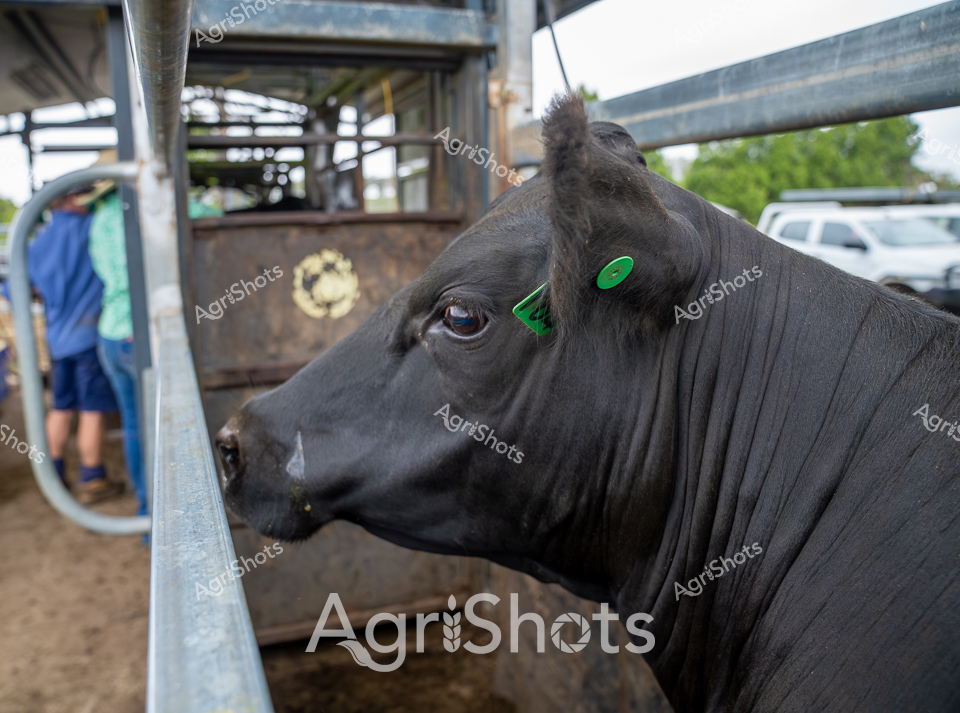
A sleek, midnight-black Angus heifer stands poised in the rustic livestock yards, her glossy coat catching the soft light of a late summer afternoon in New South Wales' New England region. Distinctive green ear tags mark her as part of a carefully managed stud breeding program, highlighting the precision and care of modern cattle husbandry. The weathered metal yards frame her powerful form, with a farm worker partially visible in the background, suggesting the quiet, purposeful rhythm of rural agricultural life. Her deep, liquid eye reflects intelligence and calm, a testament to the refined breeding of these remarkable beef cattle. The surrounding infrastructure - worn metal gates, a glimpse of a stock trailer, and the soft green landscape beyond - speaks to the enduring traditions of Australian cattle farming. This image captures the essence of agricultural excellence: a moment of connection between human management and the noble lineage of premium livestock.
 Image
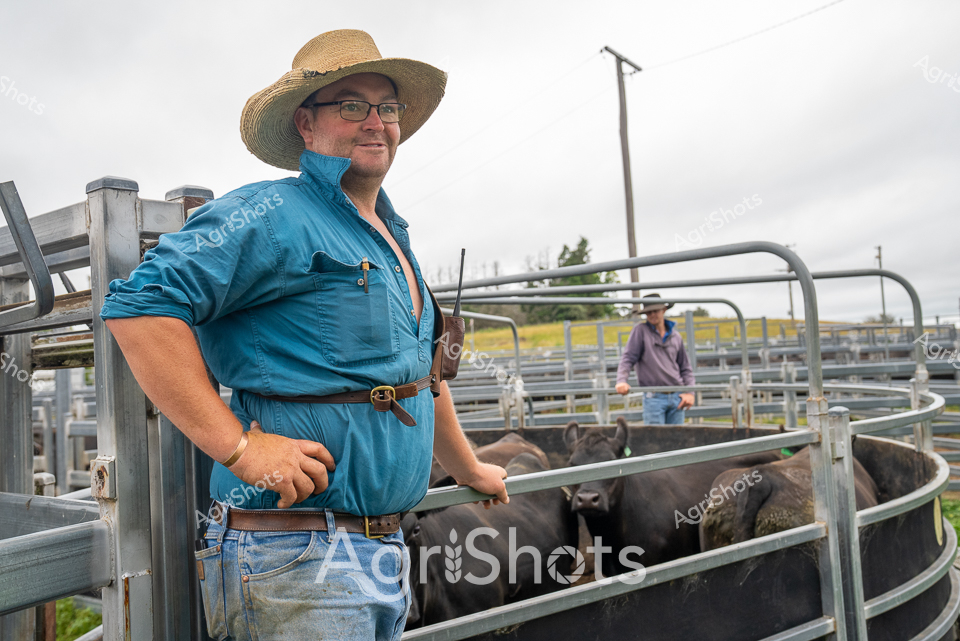
A seasoned livestock producer stands confidently in a sleek metal cattle yard, surveying a pen of robust Angus cattle under an overcast summer sky. Dressed in a vibrant teal work shirt, straw sun hat, and well-worn jeans, the farmer exudes a calm expertise, leaning casually against the steel yard railings. In the background, another worker moves quietly among the dark, muscular cattle, their deep black coats gleaming against the galvanized metal infrastructure. The New England region's soft pastoral landscape stretches beyond the yards, hinting at the rich agricultural heritage of New South Wales. The scene captures the quiet pride and practical professionalism of Australian cattle breeding - a moment of connection between skilled farmers and their high-quality livestock. Soft grey light and the clean lines of the yards create a sense of order and methodical care, reflecting the precision of modern stud cattle management.
 Image
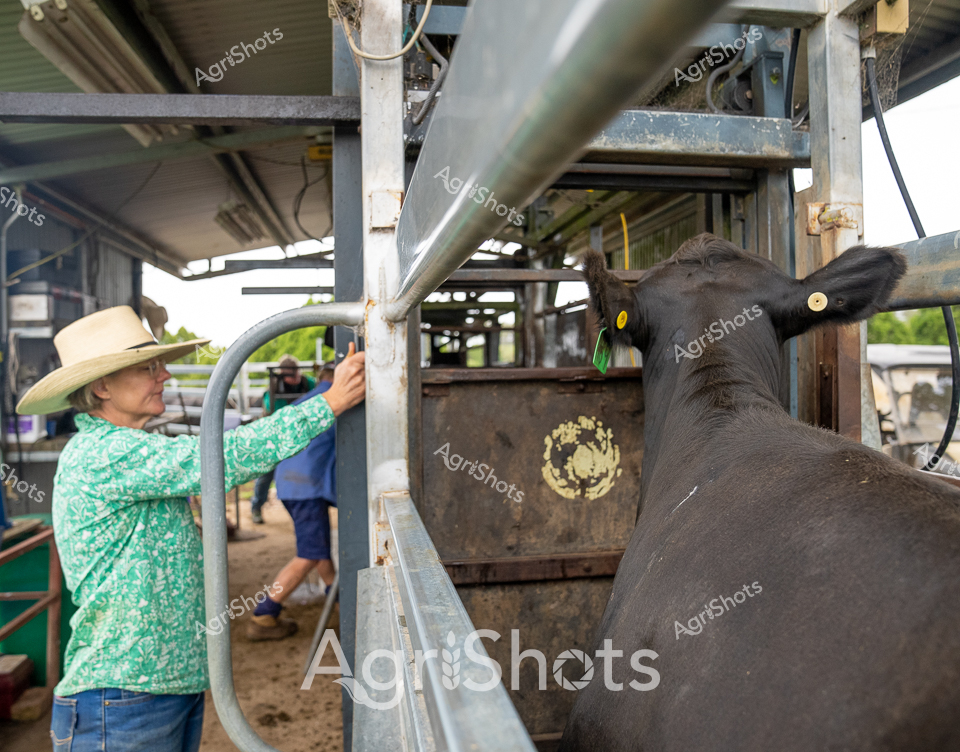
In the heart of New South Wales' New England region, an experienced cattle handler in a vibrant green floral top and straw hat carefully manages an Angus heifer within a sturdy steel cattle yard. The late summer light filters through the shed's metal framework, casting subtle shadows across the weathered holding pens and highlighting the deep, glossy black coat of the sleek bovine. With practiced movements, the handler adjusts the metal gates, her body language revealing years of intuitive understanding and respect for the animal. The Angus cow, bearing a distinctive yellow ear tag, stands calmly within the precise metallic infrastructure, embodying the quiet strength of Australian stud livestock breeding. The scene captures the quiet expertise of agricultural workers, the robust infrastructure of modern cattle management, and the understated beauty of rural working environments. This moment represents the intersection of traditional farming knowledge and contemporary agricultural practices, where each movement and interaction is a testament to generations of skill and connection to the land.
 Image
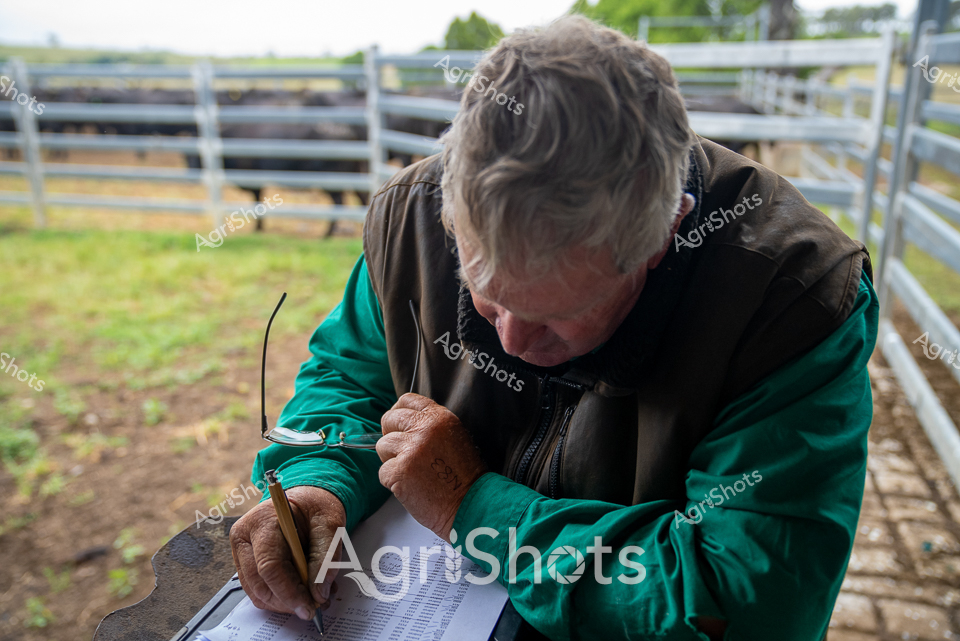
A weathered farmer in a vibrant green jacket and black vest leans intently over a clipboard, meticulously recording data in the stockyards. The soft autumn light illuminates the metal cattle yards behind him, where a herd of Angus cattle quietly waits. His sun-worn hands grip a pen with practiced precision, capturing crucial information about the stud cattle - likely breed characteristics, weights, or breeding records. The scene captures the quiet concentration of agricultural work, where every notation can impact the future of a valuable livestock operation. The New England region of New South Wales provides a classic backdrop of rural infrastructure, with neat metal fencing and a grassy paddock suggesting the careful management of a professional cattle breeding enterprise. This moment represents the careful science behind modern agricultural practices - where detailed record-keeping is as crucial as hands-on animal husbandry.
 Image
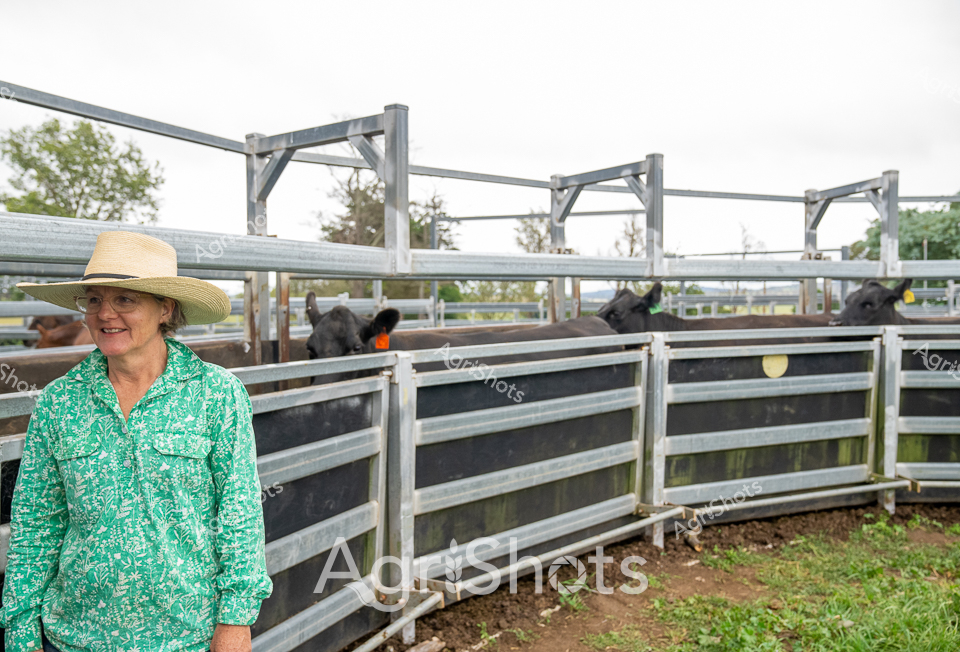
A seasoned farmer stands beside gleaming steel cattle yards, her green floral shirt and wide-brimmed straw hat contrasting with the sturdy infrastructure of modern agricultural management. Sleek black Angus cattle cluster in the adjacent pens, their dark coats a rich contrast against the galvanized metal fencing and soft green pasture backdrop. The scene captures the New England region's pastoral essence, with mature trees softening the horizon and suggesting late summer or early autumn light. Her relaxed posture and warm smile reflect decades of agricultural experience, embodying the quiet confidence of multi-generational farming families who understand livestock and landscape intimately. The meticulously constructed cattle yards demonstrate sophisticated stock management techniques, with multiple pens allowing precise movement and sorting of valuable stud cattle. This image encapsulates the professional pride and technical expertise of contemporary Australian agricultural practice, where tradition and innovation coexist seamlessly.
 Image
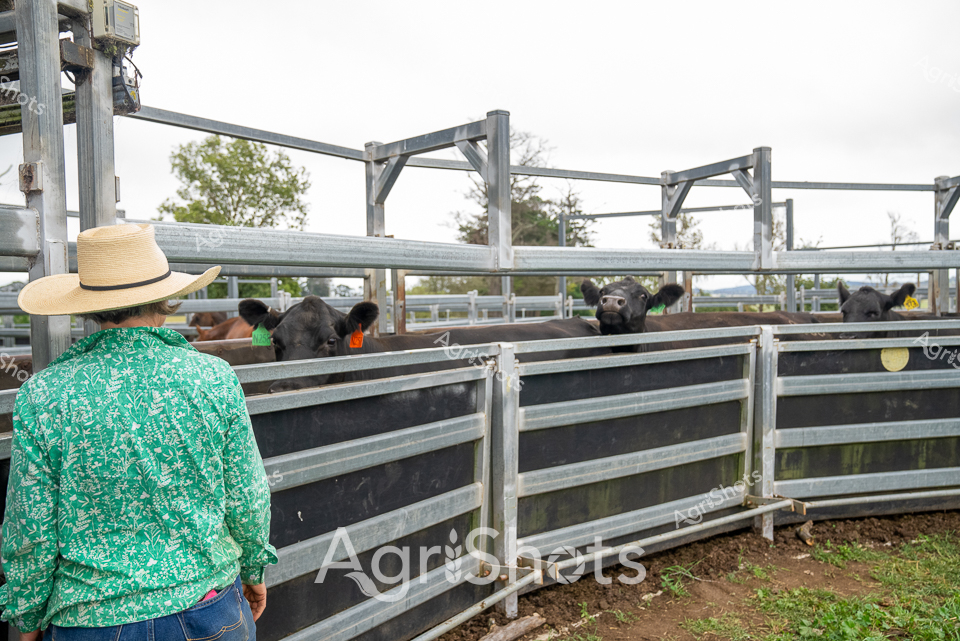
Stud cattle await processing in gleaming steel yards, their midnight-black coats contrasting against the metallic infrastructure. A farmer in a vibrant emerald and white botanical-print shirt and straw hat surveys the Angus herd, her back turned to the camera, representing the quiet concentration of agricultural professionals. The New England region's soft summer light filters across the landscape, illuminating the precision-engineered cattle handling system with its galvanized steel rails and panels. Distinctive orange identification tags punctuate the cattle's ears, signaling this is a carefully managed stud breeding operation. The meticulously constructed yards reflect modern agricultural practices - functional, efficient, and designed to minimize stress on valuable livestock. Multiple Angus cattle stand calmly, their muscular frames and alert expressions demonstrating the robust genetics of this renowned beef breed, a testament to generations of careful selection and agricultural expertise.
 Image
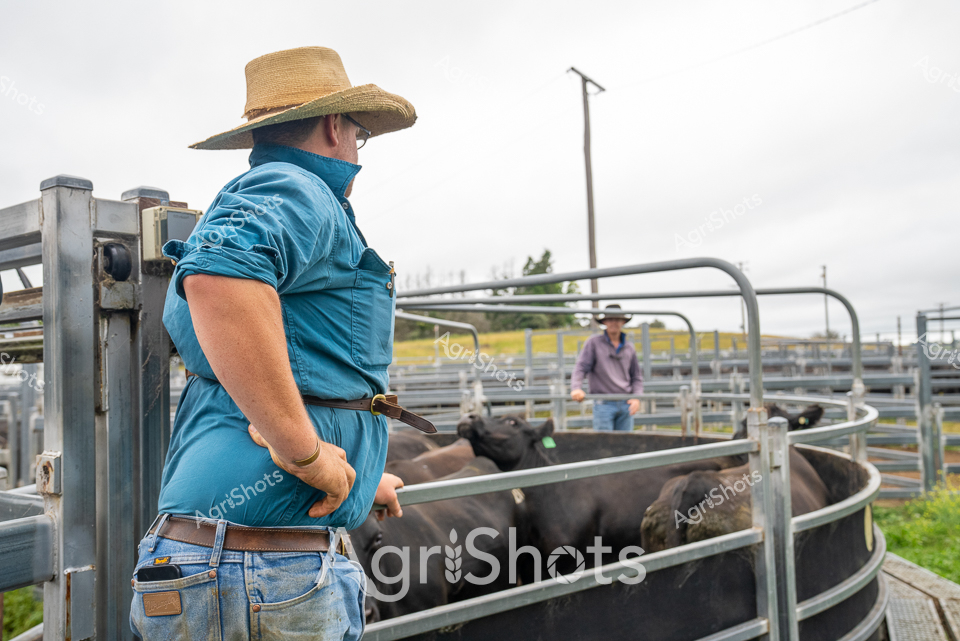
Verdant pastures of the New England region stretch out under an overcast summer sky as an experienced cattle handler surveys a yard of sleek Angus stud cattle. Clad in a crisp blue work shirt and a weathered straw hat, the stockman stands with quiet authority, his back to the camera, carefully observing the movement and condition of the black-coated cattle within the gleaming galvanized steel yards. Another worker in the background moves with measured purpose, their presence a subtle counterpoint to the primary handler's focused stance. The metal cattle yards create geometric patterns of silvery lines and curves, contrasting beautifully with the deep black of the Angus cattle and the rich blue of the handler's shirt. This scene captures the essence of Australian agricultural precision - a moment of quiet expertise where years of breeding knowledge and careful stock management come together in a seemingly simple yet deeply complex interaction between human and livestock. The image speaks to the skill, dedication, and deep connection to the land that defines rural Australian farming culture.
 Image
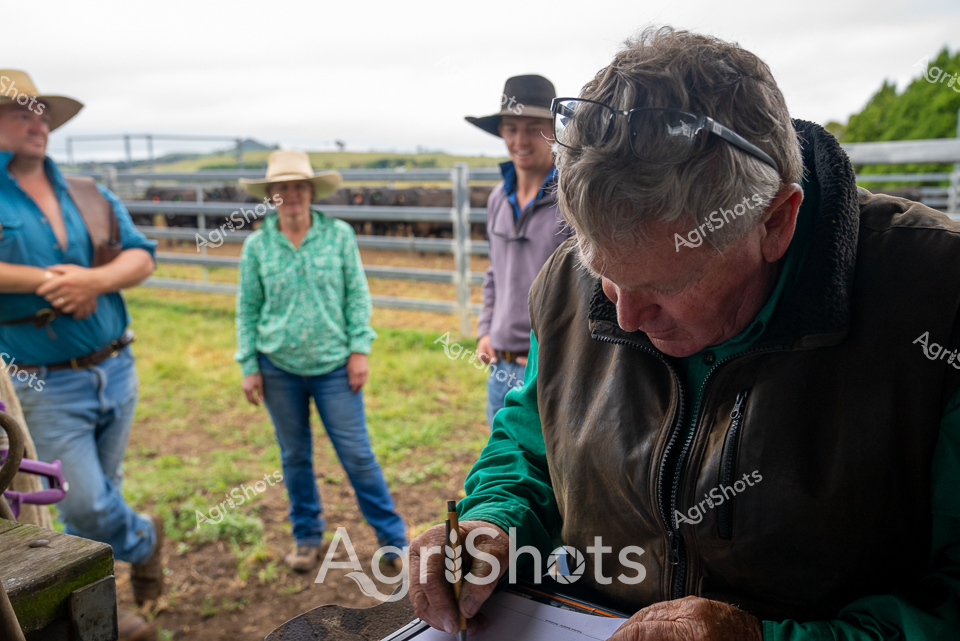
Rural data collection unfolds on a summer's day in the New England Region of New South Wales. A seasoned stud cattle manager in a black fleece jacket and glasses carefully records information, leaning over documents at a weathered wooden bench in the cattle yards. Behind him, three other agricultural workers stand attentively - wearing sun hats, denim jeans, and casual rural work attire in shades of blue, green, and purple. Sturdy metal cattle yards frame the background, with Angus cattle visible in the paddock and verdant green hills stretching into the distance. The scene captures the methodical precision of modern agricultural record-keeping, where data management is as crucial to successful livestock breeding as hands-on animal husbandry. Soft natural light and the relaxed body language of the workers suggest an experienced team collaborating during routine stud cattle management activities.