About this image
Three beekeepers work methodically in a green paddock in Tasmania's Upper Mersey Valley Region during spring, carefully inspecting white bee hives for honey production and pollination activity. The men beekeepers, wearing protective clothing and hats, examine wooden frames filled with honey combs while maintaining proper safety protocols around the apiary. Several hive boxes are positioned on the ground, with the beekeepers systematically checking each hive's health and productivity in the rural Tasmanian landscape surrounded by eucalyptus trees and rolling hills.
Similar media
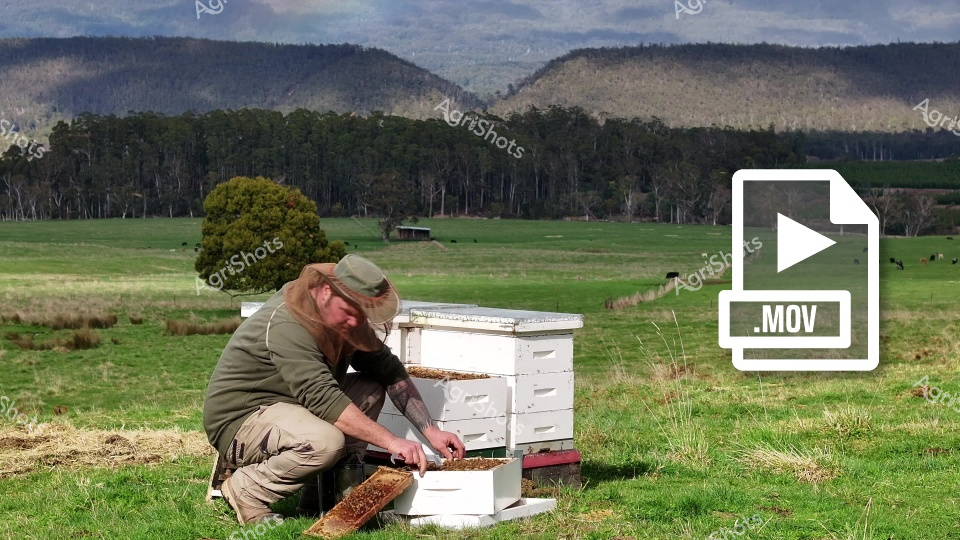 ▶ Video
A beekeeper tends to white wooden beehives in a lush green pasture, with forested mountains and a cloudy sky in the background. Wearing protective clothing, the man carefully manages a honeycomb frame, likely inspecting the health of his bee colony in this picturesque Tasmanian landscape during winter.
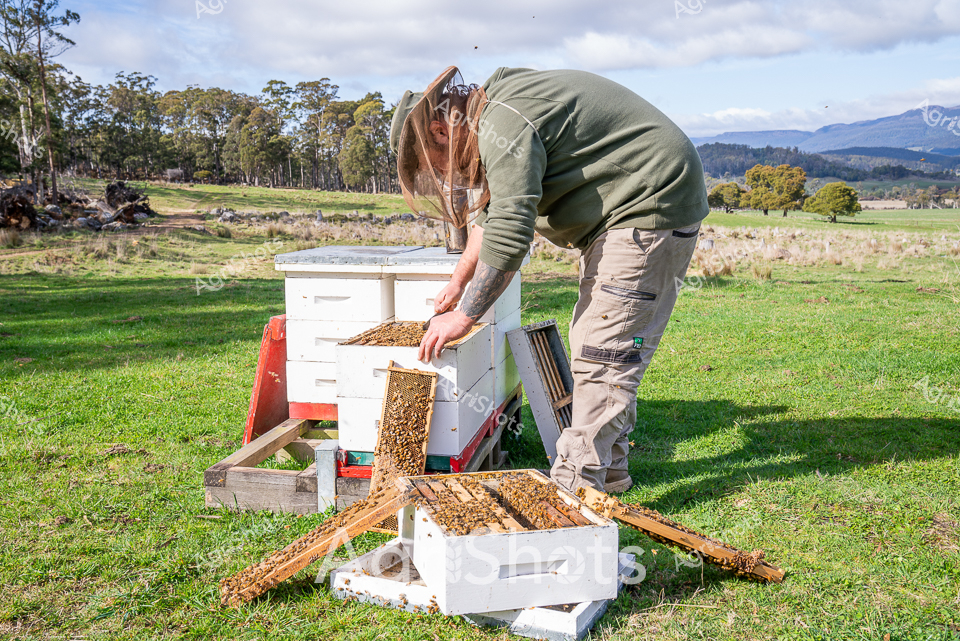 Image
Image
Bee husbandry unfolds across a verdant Tasmanian pasture, where a dedicated apiarist tends to a cluster of white wooden hive boxes against a backdrop of rolling green grasslands and distant misty mountains. Wearing protective mesh headgear and olive-green workwear, the beekeeper carefully manipulates honeycomb frames, harvesting and inspecting the intricate golden-brown wax structures teeming with industrious honeybees. Soft winter light filters through scattered eucalyptus trees, casting gentle shadows across the rural landscape and highlighting the meticulous work of managing these crucial pollinators. The white and red hive boxes stand in sharp contrast to the lush grass, representing the careful balance between agricultural practice and natural ecosystem management that defines Tasmania's sustainable farming traditions. Every deliberate movement speaks to the intimate knowledge and respect required in beekeeping - a craft that transforms landscape, livelihood, and the delicate networks of agricultural production. The scene captures the quiet concentration of rural work, where human skill and natural complexity converge in the production of one of Australia's most precious agricultural commodities.
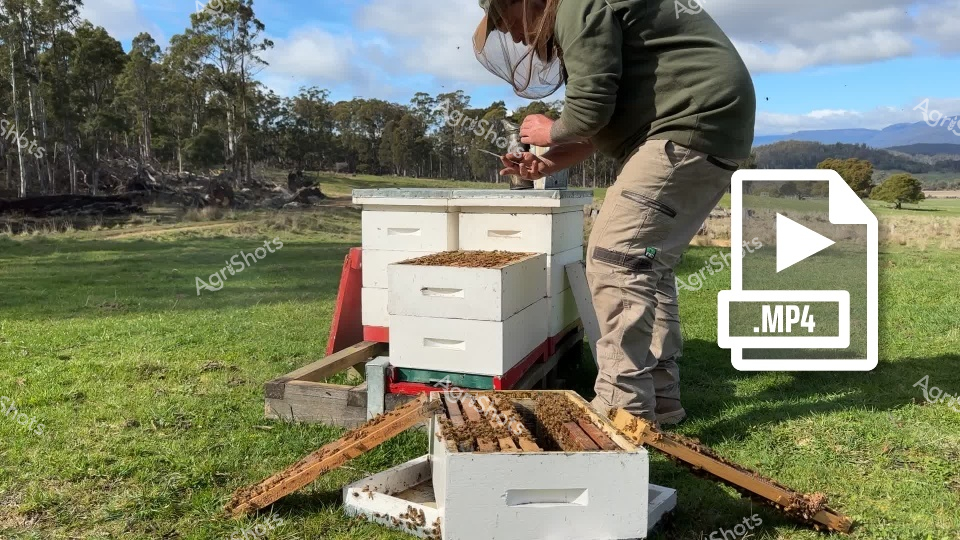 ▶ Video
Expert apiarist tends to buzzing bee colonies on a crisp Tasmanian winter morning, surrounded by misty mountain ranges and silvery eucalyptus forests. Wearing olive green workwear and practical khaki cargo pants, the beekeeper carefully manages white wooden hive boxes mounted on a rustic red trailer, positioned on a verdant pasture. Intricate wooden hive frames are carefully extracted, revealing dense clusters of honeybees moving across their carefully constructed honeycomb structures. Mountain ranges softly blur in the background, creating a serene pastoral landscape that speaks to Tasmania's pristine agricultural environments. Delicate worker bees navigate entrance ramps to their multi-tiered white hive homes, representing the sophisticated and collaborative nature of these extraordinary pollinators. The scene captures the meticulous craft of apiculture, where human expertise and natural biological systems intersect with precision and respect.
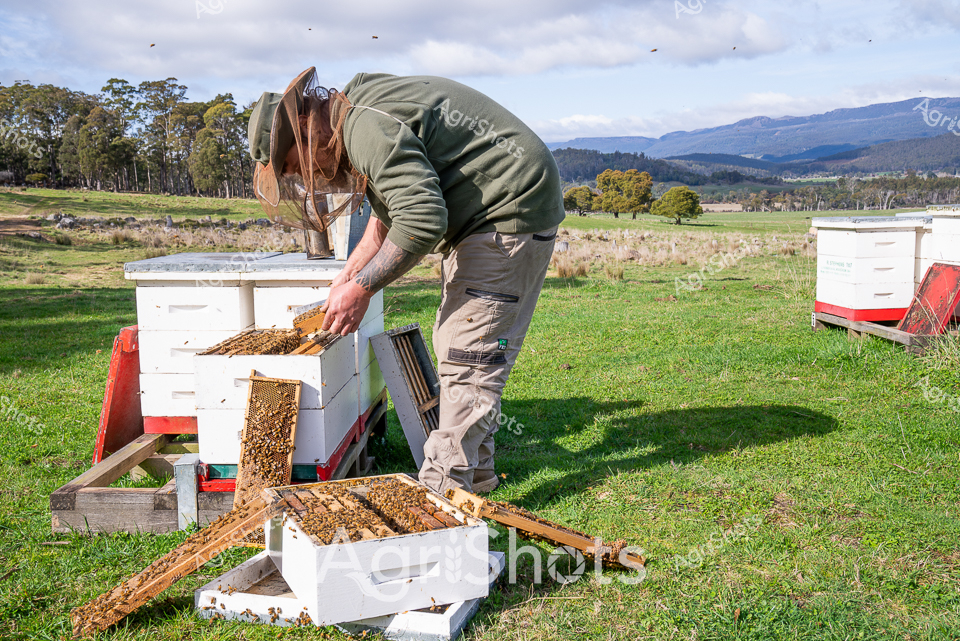 Image
Image
A lone beekeeper tends to rows of white and red-trimmed hive boxes nestled in a lush green pasture near the forested mountains of Tasmania. Dressed in protective olive-green workwear and a wide-brimmed hat, the apiarist carefully manages the intricate wooden frames laden with golden honeycomb and bustling bee colonies. Soft winter light bathes the rolling landscape, casting long shadows across the grassy field where neat rows of hives stand as a testament to careful agricultural craft. Swarms of industrious bees drift around the open hive boxes, their complex social structure and honey production integral to the region's agricultural ecosystem. Mountains rise softly in the blue-gray distance, framing a classic Tasmanian rural scene of quiet productivity and natural harmony. The methodical work of beekeeping unfolds against a backdrop of native eucalyptus trees and windswept grasslands, capturing the essence of sustainable farming in one of Australia's most pristine agricultural environments.
 Image
Image
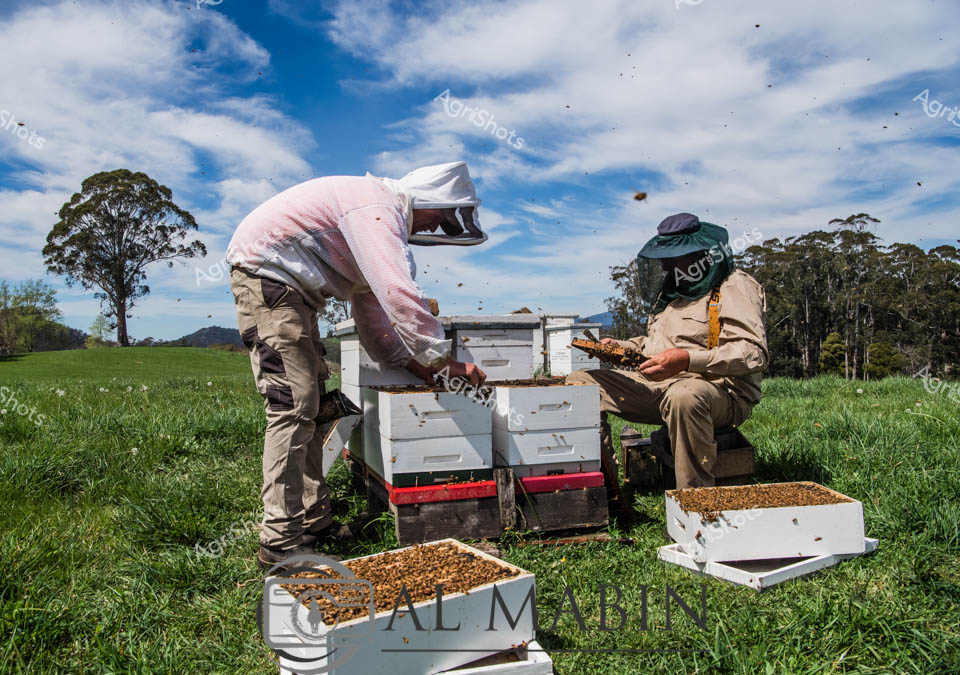
Two beekeepers work together managing bee hives in a spring apiary scene in Tasmania's Upper Mersey Valley Region. One beekeeper wearing protective gear and a veil inspects the hive boxes while bees swarm around the white wooden hive structures scattered across the green paddock. The second beekeeper sits nearby examining honeycomb frames, with both working to maintain the colony during the active pollination season. The rural landscape features eucalyptus trees under a partly cloudy sky, creating an ideal environment for honey production.
 Image
Image
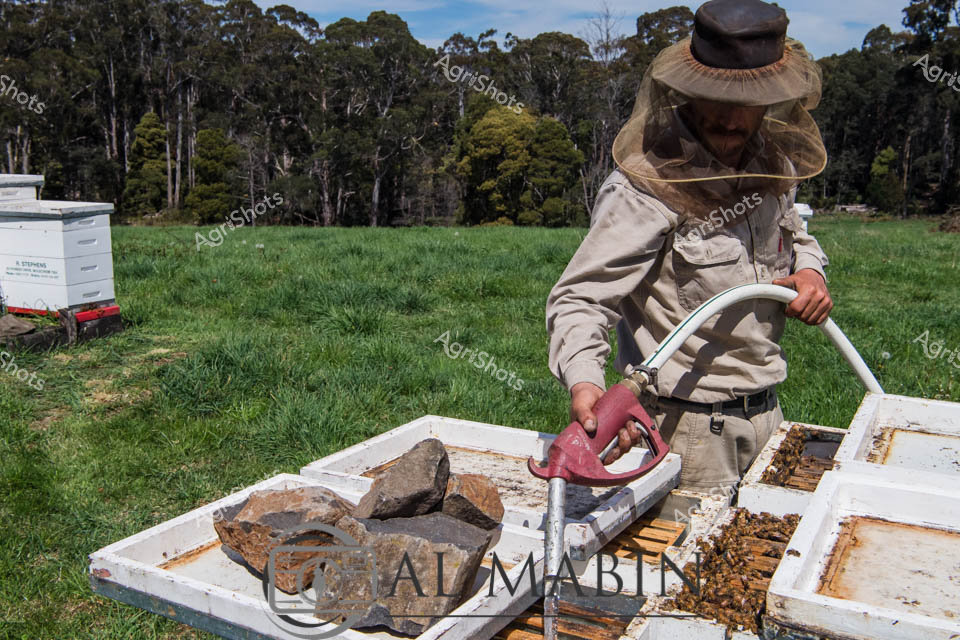
Draped in protective mesh and khaki workwear, a dedicated apiarist carefully tends to honey bee hives nestled in the lush grasslands of Tasmania's Upper Mersey Valley. The verdant pasture stretches between stands of eucalyptus and native forest, creating an idyllic backdrop for this essential agricultural practice. Rocks are strategically placed on the white hive boxes, likely to secure them against potential wind or disturbance, while the beekeeper manages the delicate ecosystem of these critical pollinators. Soft morning light illuminates the scene, suggesting early spring - a crucial time for bee colony management and honey production. The intricate work requires precision and calm, with the beekeeper's protective gear highlighting the careful balance between human intervention and natural bee behavior. This image captures the heart of sustainable agricultural practice, showcasing Tasmania's rich agricultural heritage and the vital role of bees in ecosystem health and food production.
 Image
Image
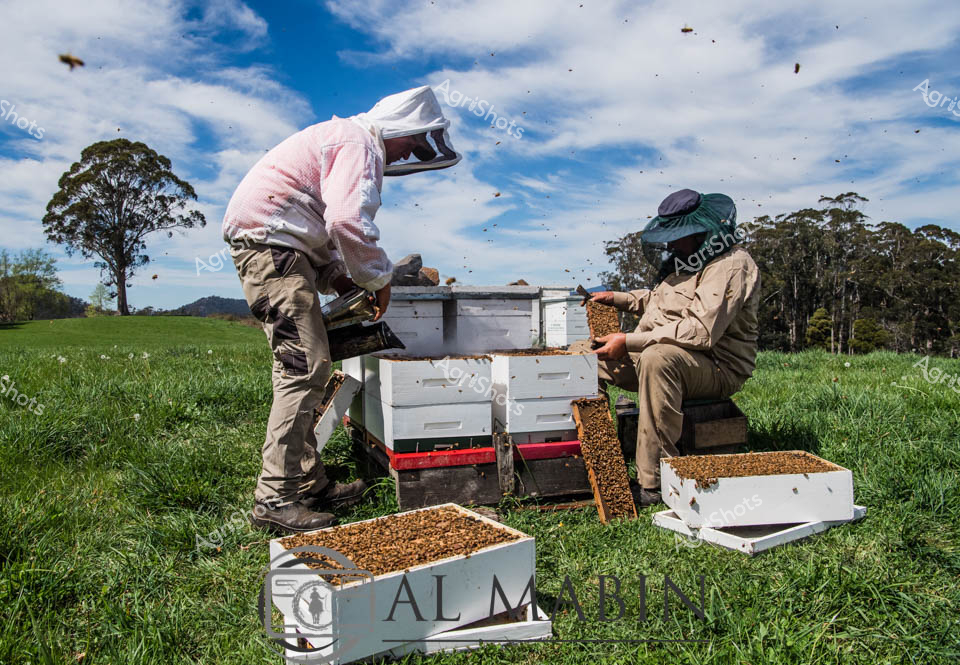
Two beekeepers work methodically with their bee hives in a lush green paddock during spring in Tasmania's Upper Mersey Valley Region. The beekeepers wear protective gear including hats with veils as they inspect frames thick with bees from their white wooden hive boxes. Multiple hive supers are stacked and spread across the grass, with thousands of bees actively flying around the apiary site. This pollination operation showcases the vital role of beekeeping in Tasmania's agricultural landscape, with the scenic rural setting providing an ideal environment for honey production.
 Image
Image
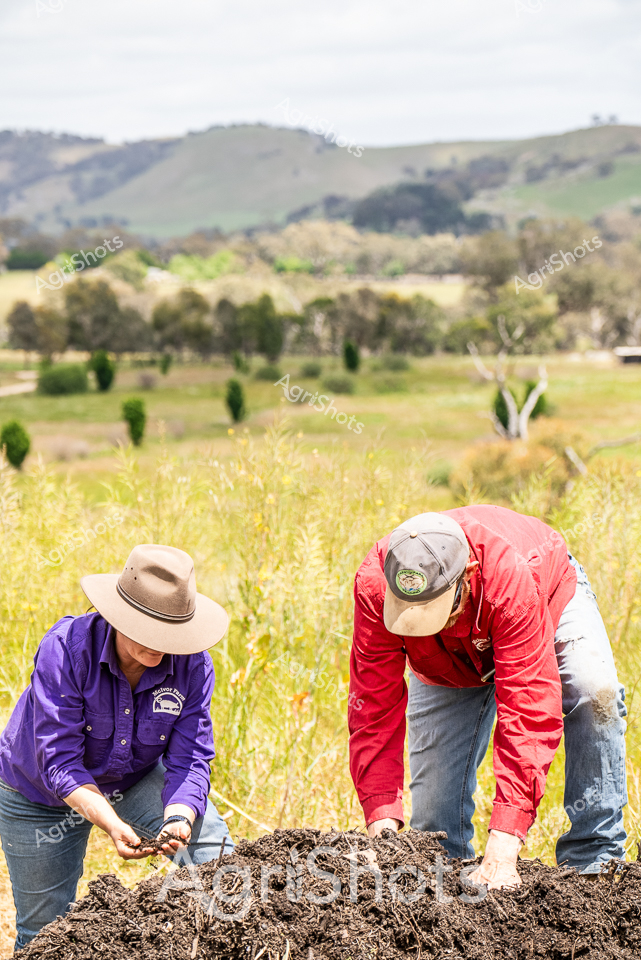
Amid the undulating golden grasslands of rural Victoria, two agricultural workers bend intently over a rich, dark compost heap. Wearing a vibrant purple jacket and a classic wide-brimmed sun hat, one worker carefully examines the organic material, while her colleague in a striking red jacket and cap leans forward, hands deep in the nutrient-dense soil. The surrounding landscape unfolds in soft, muted greens and browns, with rolling hills and scattered eucalyptus trees creating a quintessential Australian agricultural backdrop. This scene captures the essence of regenerative farming practices, showcasing a hands-on approach to soil health and sustainable agriculture. The workers appear deeply engaged in their task, likely assessing the composition and quality of the compost - a critical element in organic farming and land management. Their protective clothing and focused postures speak to the careful, scientific nature of modern agricultural work. The image embodies the spirit of environmental stewardship, highlighting the important role of soil conservation and organic waste recycling in contemporary Australian farming. The textural contrast between the workers' bright clothing and the earthy browns of the compost creates a visually striking composition that celebrates the intersection of human effort and natural processes.