About this image
Three horse riders work as stockmen mustering cattle across a drought-affected paddock in New South Wales, with the expansive rural landscape showcasing the challenging conditions facing beef cattle operations. The men on horseback move methodically across the sparse grassland, herding what appears to be Angus cattle toward a central gathering point. A small dam or water source is visible in the middle distance, emphasizing the importance of water management during dry conditions. The scene captures the traditional mustering methods still essential to Australian cattle stations, where stockmen on horseback remain the most effective way to move livestock across vast pastoral properties.
Similar media
 ▶ Video
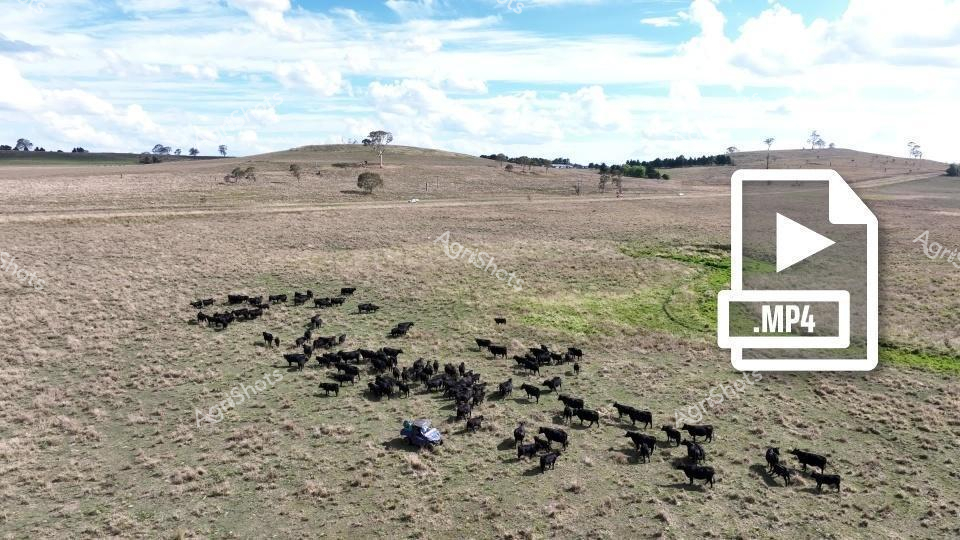
Expansive New England tablelands unfurl beneath a vast blue sky, revealing a classic pastoral scene of Angus cattle grazing across undulating golden-brown pastures. A dense herd of sleek black cattle clusters together, their muscular bodies creating a dark, organic pattern against the weathered drought-stressed landscape. Scattered eucalyptus trees punctuate the distant ridgelines, offering sparse shelter in this rugged high country terrain typical of New South Wales' northern tablelands. The aerial perspective captures the scale of contemporary cattle farming, where careful stock management and keen observation are critical to maintaining herd health in challenging environmental conditions. Subtle variations of green peek through the predominantly tan grasslands, hinting at recent rainfall or strategic pasture management.
 ▶ Video
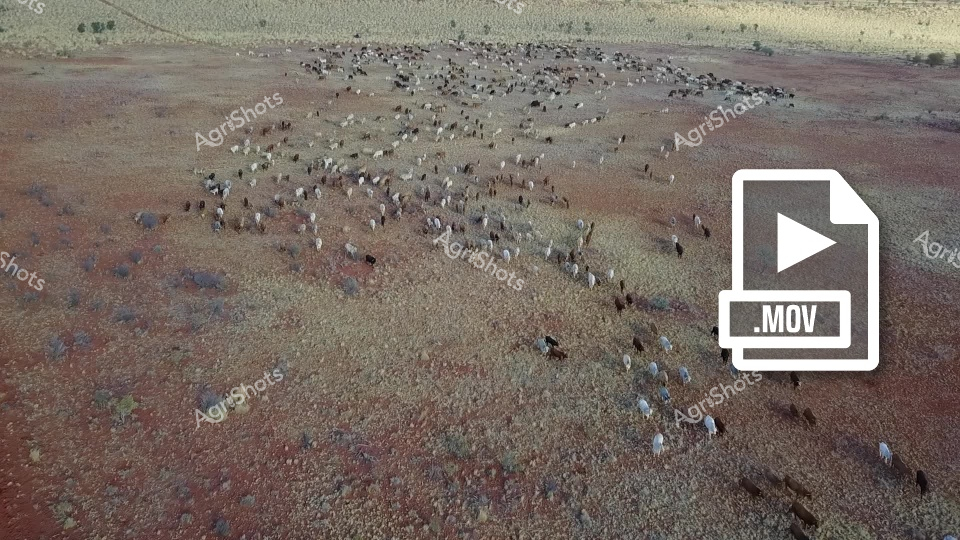
A dense mob of sheep grazes across a dry, reddish-brown pastoral landscape, their woolly bodies scattered across the arid terrain like a living carpet. The aerial view reveals a sparse, drought-affected paddock with minimal vegetation, highlighting the challenging environmental conditions facing Australian livestock producers. The scattered herd moves slowly across the cracked, sun-baked ground, demonstrating the resilience of sheep farming in harsh rural environments.
 ▶ Video
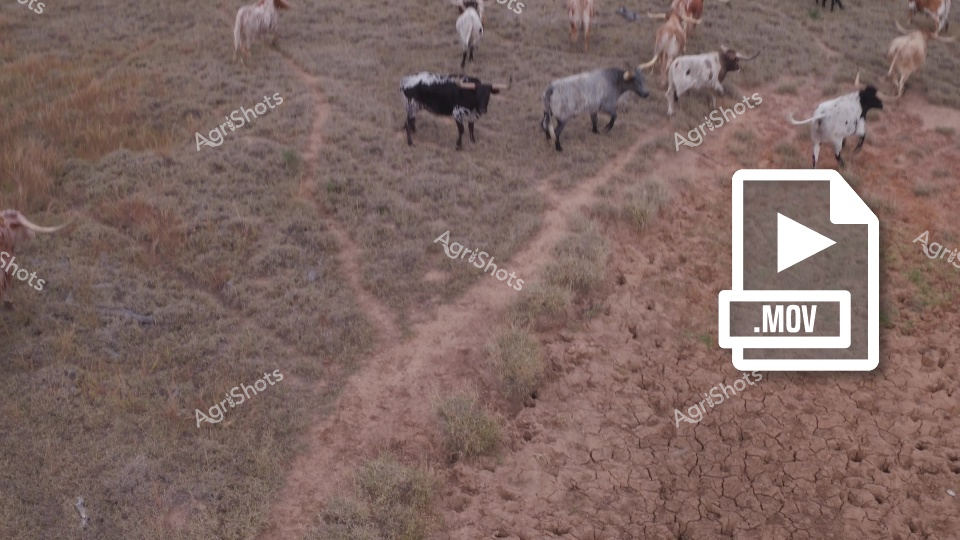
A herd of mixed-breed goats grazes on dry, cracked terrain with sparse vegetation. The goats vary in color, including black, white, and gray, and are scattered across a dusty paddock with worn dirt paths. The landscape appears arid and rocky, suggesting a challenging grazing environment for livestock.
 ▶ Video
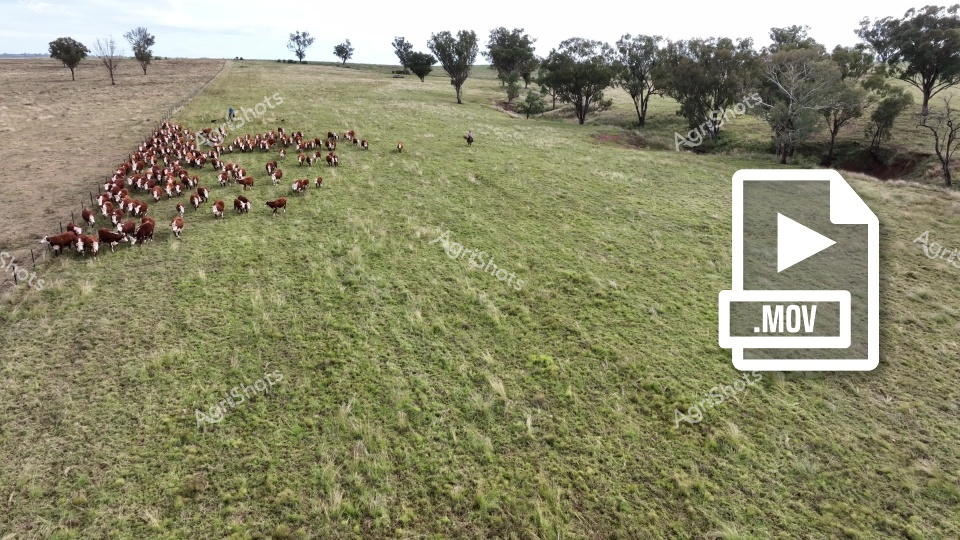
Aerial view of a large herd of red and white Hereford cattle being mustered across a grassy pasture in the New England region of New South Wales. Several trees dot the landscape as horses and working dogs help guide the cattle across the green and brown grasslands, showcasing a typical cattle farming scene in rural Australia.
 ▶ Video
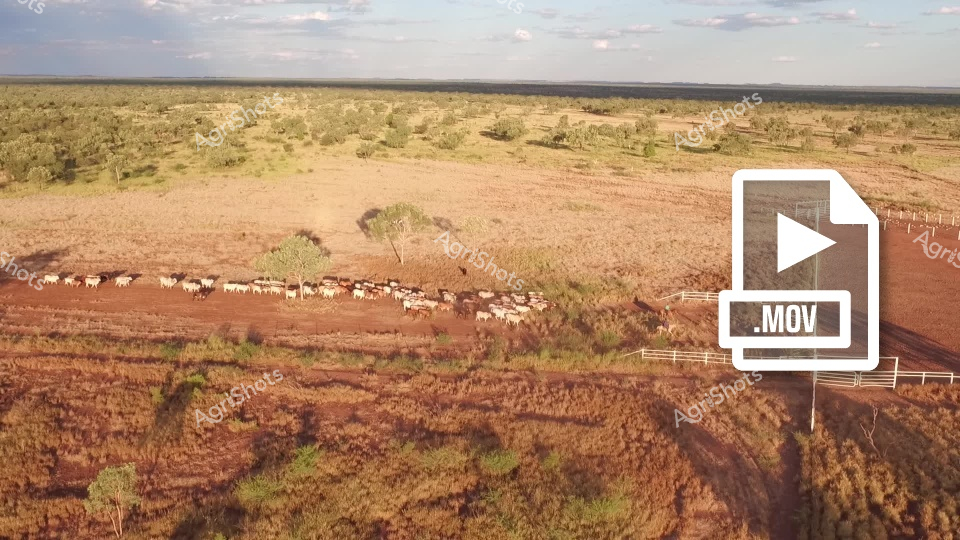
A sweeping aerial view of an arid Australian cattle property, showing a large herd of light-colored cattle traveling along a dirt track between sparse eucalyptus trees and reddish-brown grasslands. The landscape features a classic outback terrain with scattered vegetation, a wide horizon, and a soft cloudy sky, capturing the essence of extensive cattle farming in a dry, rugged environment.
 ▶ Video
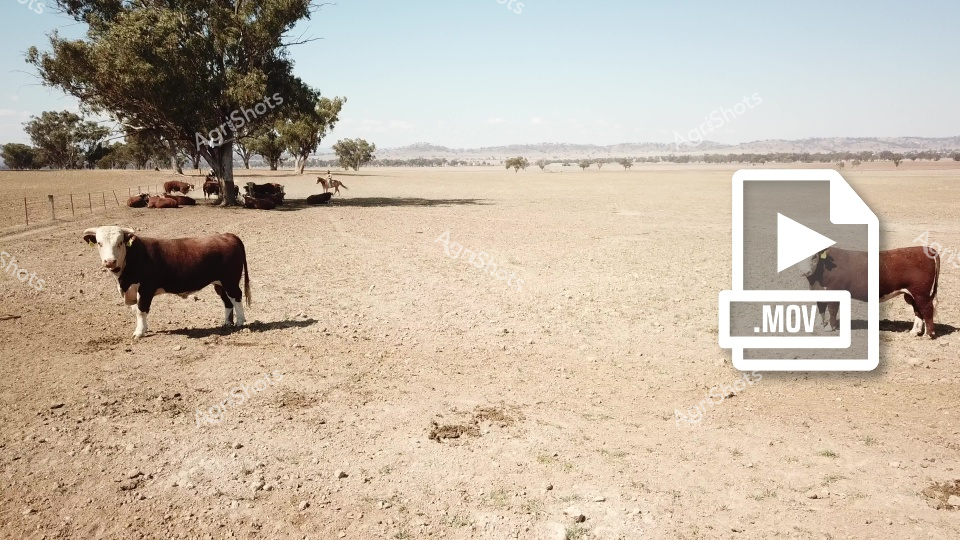
Hereford cattle graze across a drought-affected paddock in New South Wales' New England Region, with their distinctive red bodies and white faces clearly visible against the dry, dusty landscape. Several bulls and cows shelter beneath scattered trees in the sparse grassland, while others stand in the open field during what appears to be a mustering operation. The arid conditions are evident in the bare, compacted soil and minimal vegetation, typical of drought conditions affecting beef cattle stations across rural NSW.
 ▶ Video
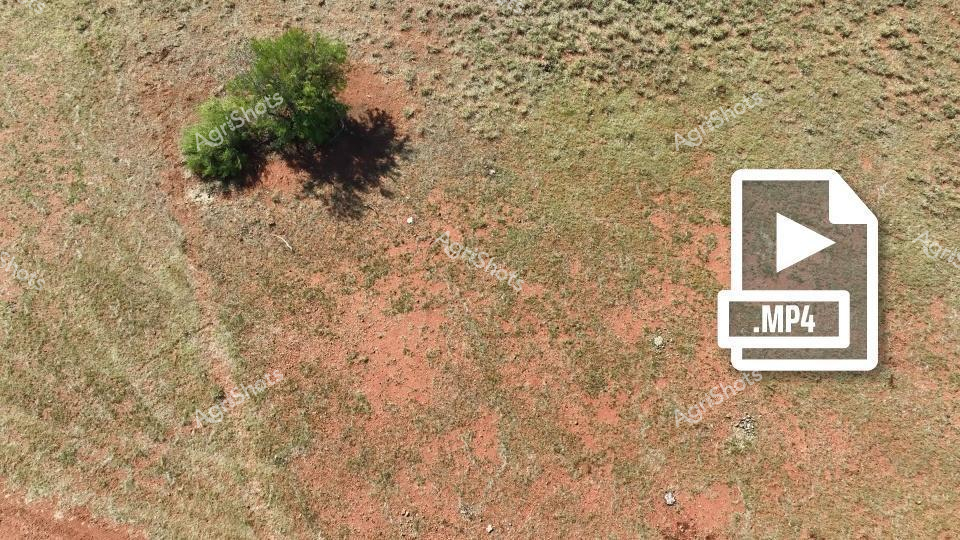
An aerial view of a dusty cattle yard in rural Queensland, showcasing a small cluster of green trees amid the reddish-brown earth. The landscape appears typical of Australian cattle stations, with sparse vegetation and open terrain used for mustering and managing Brahman cattle, a breed well-adapted to the harsh, dry conditions of northern Australia.
 ▶ Video
A mob of beef cattle moves through the dry Queensland landscape as stockmen on horseback conduct mustering operations at a rural station. The aerial perspective captures the cattle streaming along a dirt track through sparse woodland, with scattered trees dotting the brown terrain typical of the region's grazing country. Dust rises from the herd as they navigate between the native vegetation, while the stockmen guide them across the expansive paddock under clear skies.