About this image
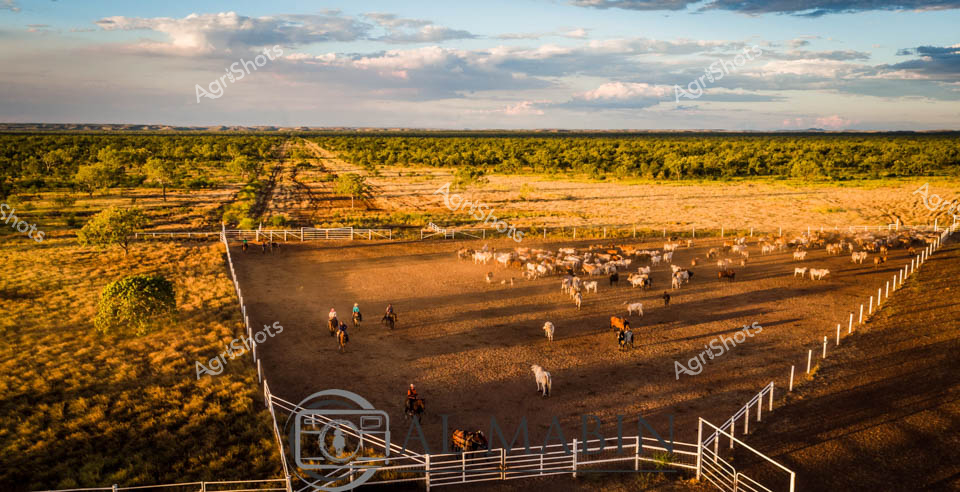
Golden afternoon light bathes a sprawling cattle station in Western Australia's remote Kimberley region, capturing the quintessential rhythm of pastoral life. A large fenced yard filled with pale Brahman cattle spreads across the dusty landscape, their distinctive humped shoulders and light-colored coats reflecting the region's harsh environmental conditions. Several stockmen on horseback weave through the herd, directing cattle with practiced movements that speak to generations of mustering expertise. The surrounding terrain reveals a classic Australian pastoral panorama - sparse golden grasslands transitioning to dense green scrubland, with distant rocky ranges softened by wispy afternoon clouds. Sturdy white post-and-rail fencing defines the cattle yard, creating geometric lines that contrast beautifully with the organic movement of cattle and horses. The scene embodies the resilience and precision of Australian cattle farming, where skilled stockmen and hardy Brahman cattle work in harmony across vast, unforgiving landscapes.
Similar media
 Image
Image
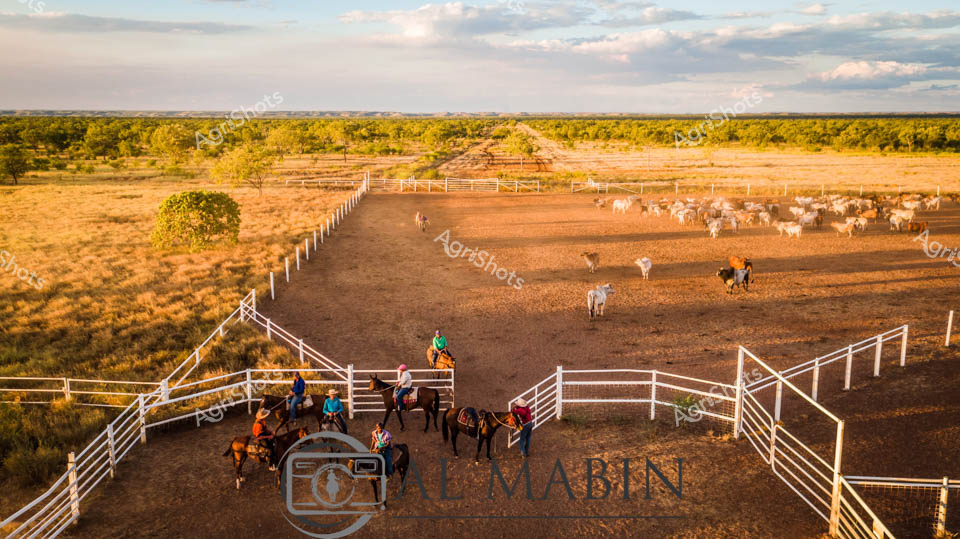
Burnished golden light bathes a quintessential Kimberley cattle station, capturing the rhythmic choreography of mustering at day's end. Pristine white rail fences carve geometric boundaries across the rich terracotta-hued earth, containing a herd of pale Brahman cattle whose distinctive humped silhouettes reflect generations of adaptation to Australia's harsh northern landscapes. Stockmen and stockwomen mounted on well-trained horses navigate the yards with practiced precision, their vibrant shirts of blue, green, and orange providing dynamic contrast against the muted pastoral palette. The expansive paddock stretches toward a horizon studded with resilient woodland, revealing the vast scale of Western Australian agricultural enterprise. Brahman cattle - renowned for their heat tolerance and tick resistance - drift across the dusty corral, their muscular forms telling a story of genetic refinement suited to challenging tropical conditions. Late afternoon sunlight casts long shadows, highlighting the intricate dance between human skill and animal movement that defines mustering culture. This aerial perspective celebrates the technical choreography of stock management, where generations of knowledge converge in a single, seamless moment of rural productivity and connection to country.
 Image
Image
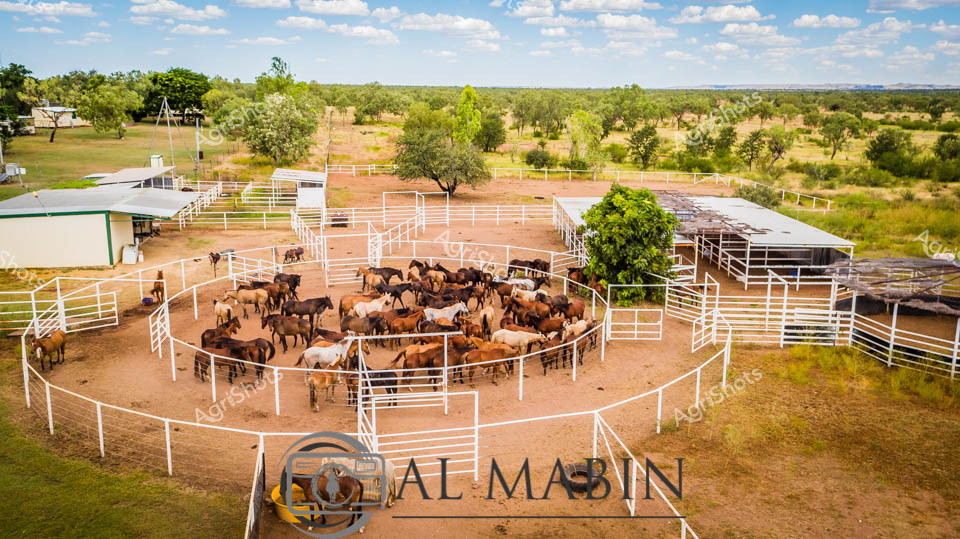
Dusty hooves churn the russet earth of a sprawling station yard in remote Western Australia, where a tightly clustered mob of horses stands within intricate white-railed paddocks. The mid-morning sunlight bathes the landscape in warm ochre tones, highlighting the rich browns and chestnuts of the horses against the sparse, golden grasslands stretching toward a horizon punctuated by scattered eucalyptus trees. Precision-engineered steel yards create a geometric contrast with the organic wilderness, revealing the calculated infrastructure essential to pastoral management in this unforgiving landscape. Sophisticated livestock infrastructure surrounds the herd - white metal fencing segmenting the space, robust shelters offering shade, and carefully designed movement pathways enabling efficient stock handling. The horses, a mix of working station breeds, cluster together with the instinctive proximity of animals accustomed to close quarters, their muscular bodies reflecting generations of adaptation to the harsh Australian interior. Wispy clouds drift across a cerulean sky, suggesting the early stages of a typically clear continental day, while the surrounding vegetation speaks to the resilient ecosystem of Western Australia's agricultural heartland.
 Image
Image
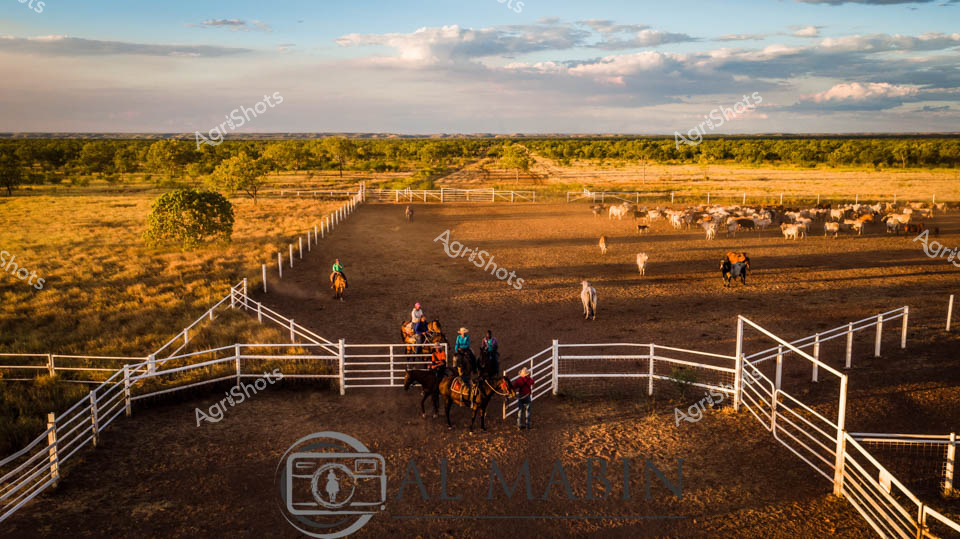
Aerial view of a cattle station in the Kimberley Region of Western Australia showcasing extensive cattle yards filled with Brahman cattle during mustering operations. The white-painted steel yard infrastructure creates organized pens where the distinctive humped Brahman beef cattle are being worked by stockmen on horseback. Golden late afternoon light illuminates the red dirt yards and surrounding bush landscape, capturing the essence of remote station life in Western Australia's vast pastoral country. The scene demonstrates the scale and organization required for managing large herds of cattle in Australia's northern beef industry.
 Image
Image
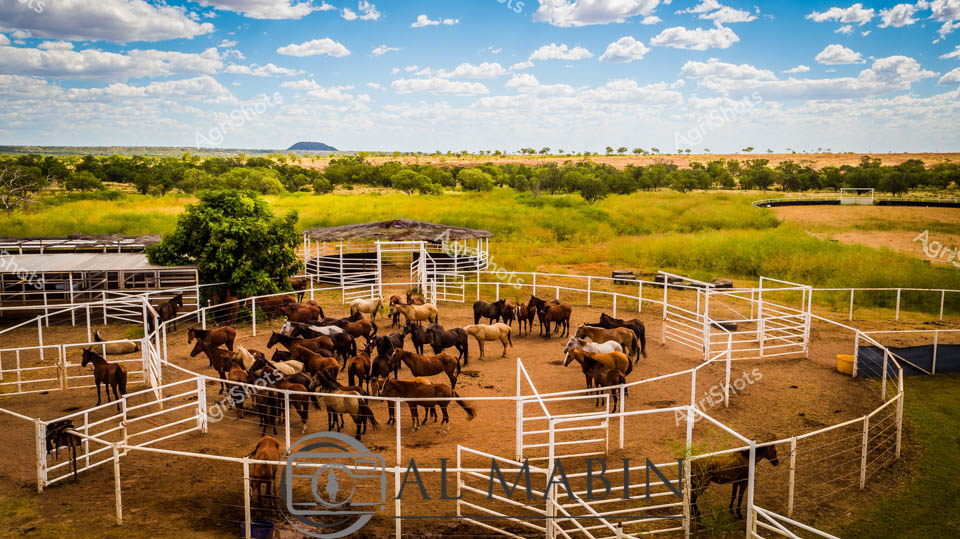
Golden afternoon light bathes the expansive horse paddock, revealing a meticulously organized white-fenced yard housing a diverse herd of sturdy station horses. Located in the rugged Western Australian interior, the scene captures the quintessential rural landscape - red earth transitioning to golden grasslands, scattered eucalyptus trees, and an endless horizon punctuated by soft cumulus clouds. Multiple horses of varying coat colors - rich chestnuts, deep browns, and lighter palominos - cluster together in the compact yard, displaying the robust bloodlines typical of Australian stock horses bred for endurance and station work. The carefully engineered steel yard infrastructure speaks to modern agricultural management, with interconnected white railings creating a systematic approach to horse handling and movement. Beyond the yards, the landscape reveals the harsh yet beautiful terrain of the Western Australian pastoral region - sparse vegetation, wide open spaces, and a sense of profound isolation that defines remote station life. The horses appear calm and well-conditioned, a testament to professional animal husbandry practices in one of Australia's most challenging agricultural environments.
 Image
Image
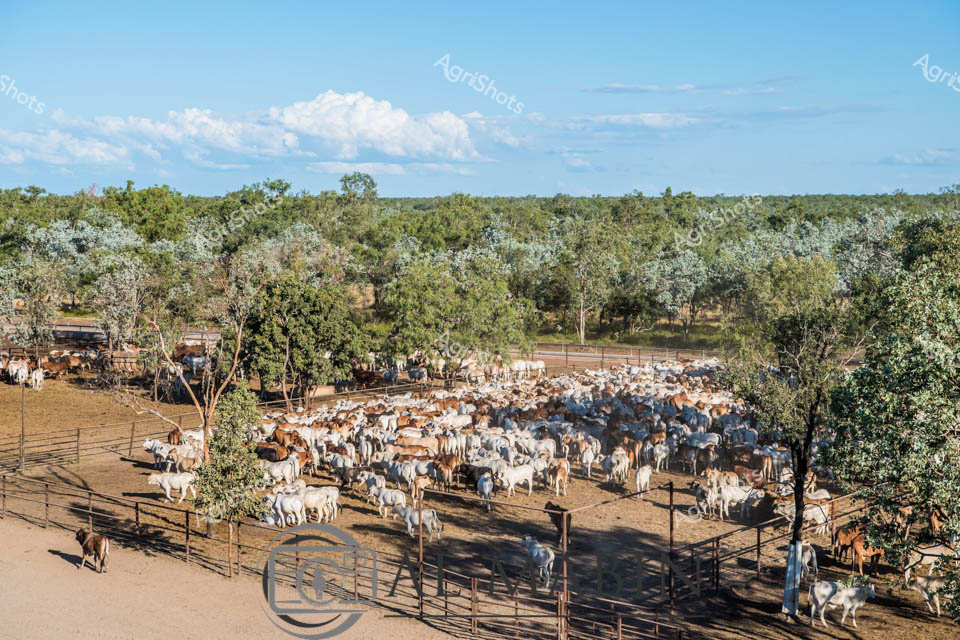
Blazing midday sunlight floods a bustling Northern Territory cattle station, where a dense herd of Brahman cattle congregates within sturdy wooden yards. The distinctive pale grey and light brown cattle, renowned for their heat tolerance and resilience, cluster together under scattered eucalyptus trees, creating a patchwork of muscular bodies against the rust-colored earth. Wooden fencing stretches across the scene, defining paddocks and guiding the movement of livestock, while the rugged landscape of sparse woodland and open ground stretches to a horizon punctuated by billowing white clouds. The robust Brahmans, with their characteristic humps and loose skin, stand as a testament to generations of pastoral breeding adapted to Australia's challenging tropical environments. Dust hangs lightly in the air, a subtle reminder of the dry season's grip on this working station, where every element speaks to the enduring spirit of northern Australian cattle production. The image captures the essence of pastoral life - a carefully managed ecosystem where human intervention and natural landscape converge in the ongoing rhythm of agricultural enterprise.
 Image
Image
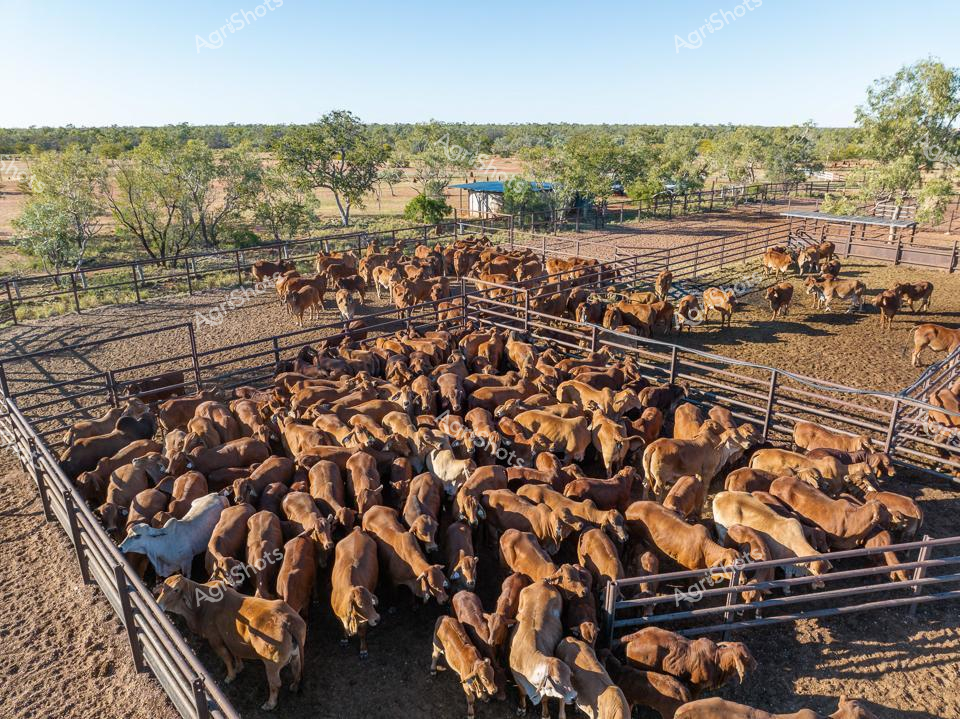
Burnished bronze Brahman cattle pack tightly into expansive steel cattle yards under the golden morning light of an Australian pastoral landscape. Muscular beasts with distinctive humps and loose skin crowd together, their rich chestnut and cream coats gleaming against the dusty earth of a Queensland cattle station. Sparse gum trees punctuate the background, casting long shadows across the meticulously organized paddocks and yards, revealing the precise infrastructure of large-scale cattle management. The aerial perspective captures the scale of modern agricultural operations, highlighting the dense clustering of these hardy tropical cattle breed adapted to challenging Australian environments. Fencing infrastructure creates geometric patterns across the ground, demonstrating the careful spatial organization required in commercial cattle breeding and weaning processes. The scene pulses with quiet intensity - a choreographed moment of livestock management that speaks to generations of agricultural expertise in northern Australia's extensive cattle stations.
 Image
Image
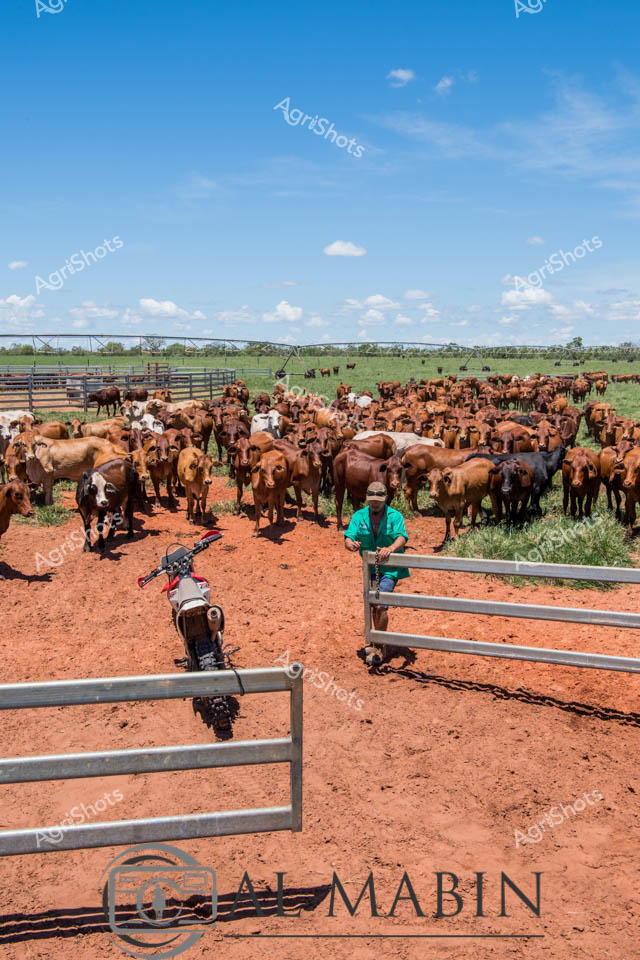
A farm worker sits on a motorbike surrounded by a large herd of Brahman cattle in the dusty yards of a Western Australian cattle station in the Kimberley region. The distinctive humped Brahman cattle, displaying various shades of red, brown, and cream coloring, are gathered for mustering operations on the red dirt characteristic of the outback. Metal rail fencing contains the mob while the stockman coordinates the cattle handling from his position among the herd. This scene captures the essence of beef cattle operations in Australia's remote pastoral regions, where motorbikes are essential tools for moving and managing livestock across vast station properties.
 Image
Image
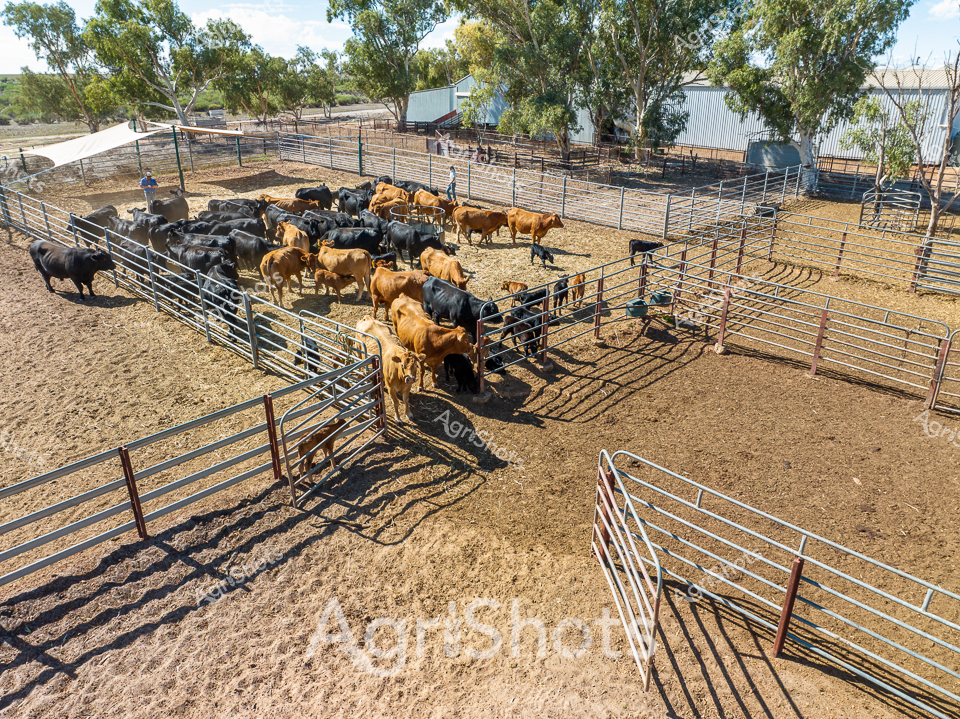
Sunlight cascades across the dusty cattle yards, casting long shadows from the steel gates where a herd of Limousin beef cattle cluster. Rich amber and deep ebony coats gleam against the dry, packed earth of this quintessential Western Australian cattle station. Sophisticated metal livestock handling infrastructure creates a geometric maze of gates and pens, demonstrating modern agricultural precision in managing valuable stock. The surrounding landscape reveals mature eucalyptus trees and corrugated iron farm buildings, providing essential shelter and infrastructure for rural livestock management. Black and golden-brown cattle move methodically through the yards, their muscular frames highlighting the robust genetics of this premier beef breed. The scene captures the disciplined choreography of agricultural practice - where careful animal management, strategic yard design, and understanding of livestock behavior converge in a moment of pastoral productivity.