About this image
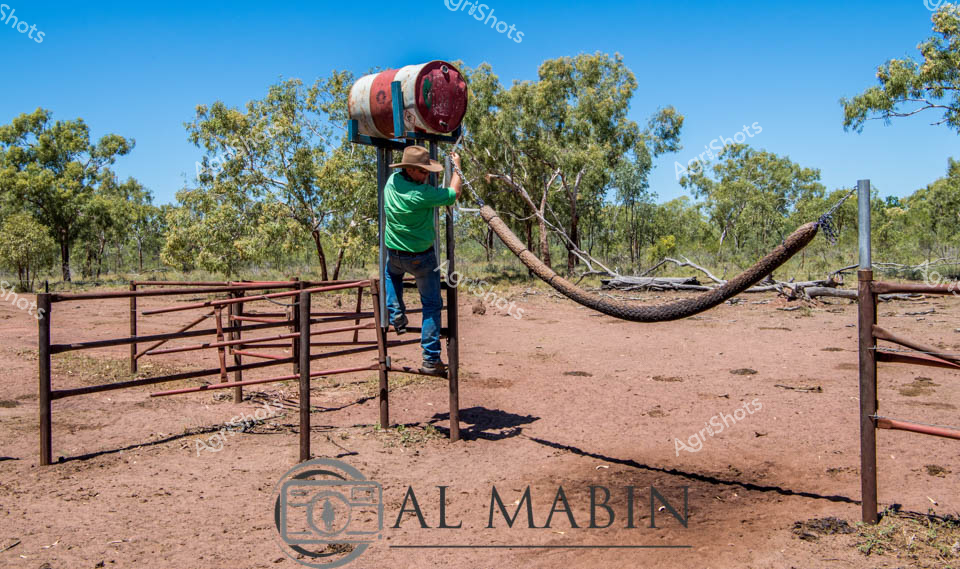
A farm worker operates a back rub treatment system for Brahman cattle in a dusty station yard in the Northern Territory. The worker uses specialized equipment to apply fly control treatment to the distinctive humped cattle, which are essential for beef production in Australia's tropical north. Metal yard rails contain the cattle during this important animal husbandry practice, designed to combat buffalo fly infestations common in northern Australian cattle operations. The red earth and sparse vegetation typical of NT cattle stations provides the backdrop for this routine but vital livestock management activity.
Similar media
 Image
Image
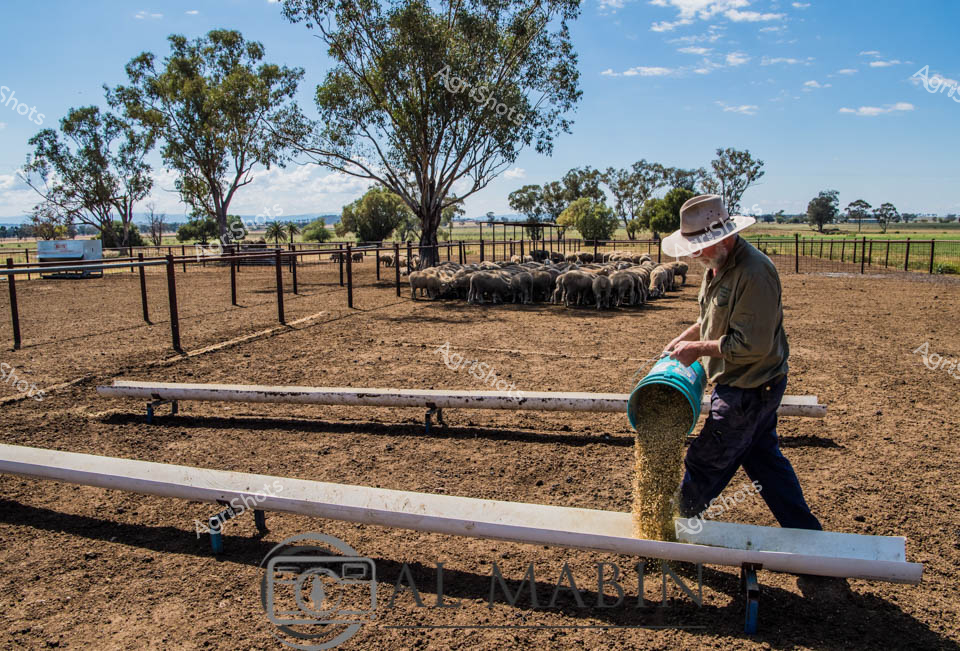
Merino lambs huddle together in a dusty feedlot paddock under the expansive blue skies of rural New South Wales. A weathered farmer in a classic wide-brimmed Australian bush hat and olive work shirt carefully distributes feed from a turquoise bucket along a series of white feeding troughs. Eucalyptus trees frame the background, casting dappled shadows across the dry, ochre-colored ground, highlighting the intense agricultural landscape of inland Australia. The precise layout of metal livestock fencing and feeding infrastructure demonstrates modern large-scale farming techniques, balancing animal husbandry with efficient production. Soft winter sunlight illuminates the scene, casting long shadows and emphasizing the textural contrasts between the smooth metal troughs, gnarled tree bark, and the woolly fleeces of the tightly clustered sheep. This image captures the quiet dedication of Australian farmers, working methodically to sustain the livestock in a challenging agricultural environment.
 Image
Image
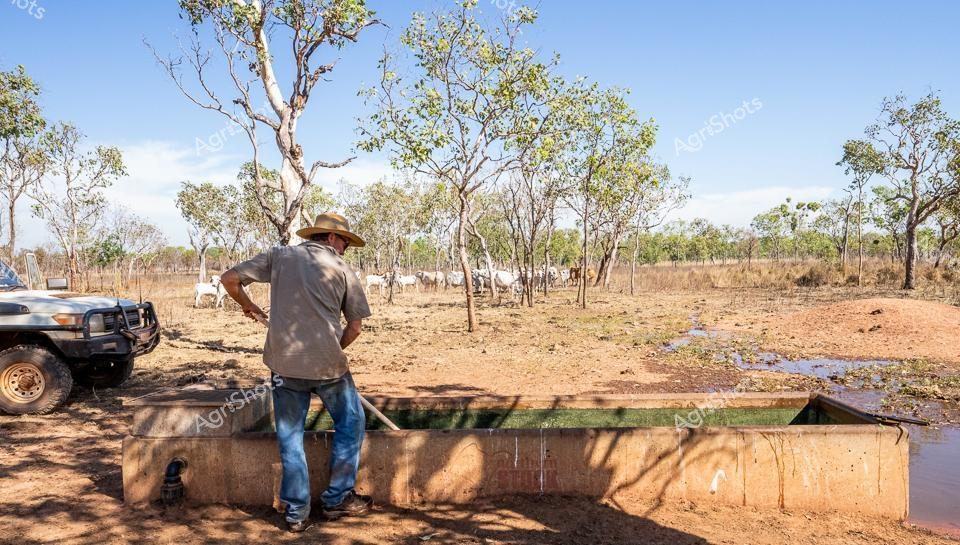
Dusty ochre earth and weathered gum trees frame a classic Northern Territory cattle station scene. A stockman in a wide-brimmed hat and faded work shirt surveys a small herd of pale Brahman cattle grazing among the sparse woodland. An aging four-wheel drive sits nearby, testament to the rugged pastoral landscape. A concrete water trough, essential infrastructure for survival in this arid environment, captures the foreground - its robust construction a lifeline during the dry season. Sparse ground vegetation and scattered puddles suggest the landscape is transitioning between wet and dry seasons, with a bleached blue sky indicating midday heat. The scene captures the resilience of Australian pastoral agriculture - where careful water management and hardy cattle breeds transform seemingly inhospitable terrain into productive agricultural land.
 Image
Image
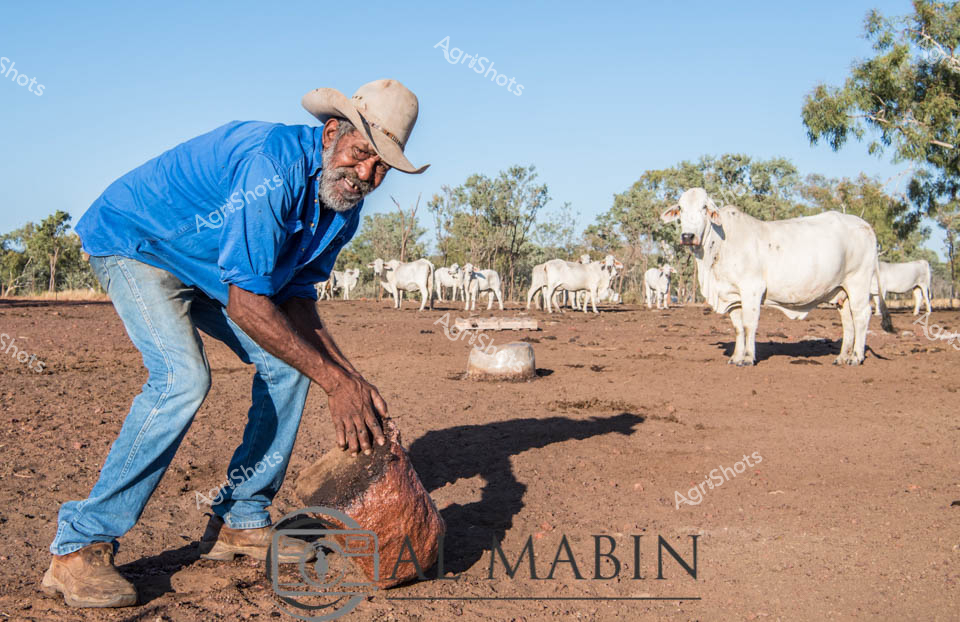
Beneath the vast azure sky of Australia's Northern Territory, a weathered station hand tends to the herd of pristine white Brahman cattle. Dressed in a vivid blue work shirt and well-worn denim, he leans intently over a feed block, ensuring the livestock receive critical nutrients in the arid, red-earthed paddock. Gnarled and sun-tanned, his hands work methodically while a cluster of muscular Brahman cattle graze in the background, their pale coats standing out against the sparse landscape of scattered eucalyptus trees. The midday sunlight casts sharp shadows across the dusty ground, highlighting the rugged resilience of both the cattleman and the robust cattle breed - perfectly adapted to the harsh, unforgiving environment of the Australian outback. This image captures the essence of pastoral life - a testament to generations of agricultural skill, where survival depends on intimate knowledge of the land and careful livestock management.
 Image
Image
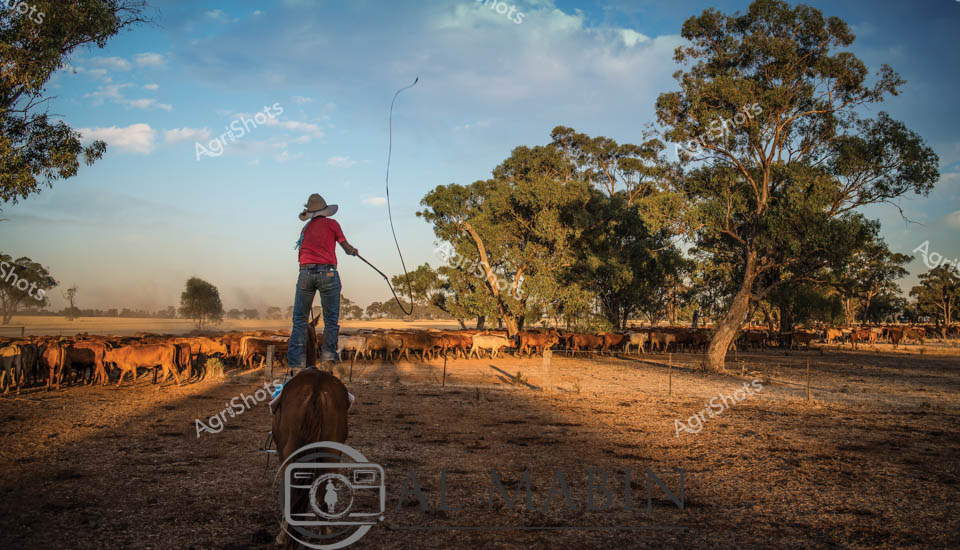
Burnished by the golden light of late afternoon, a seasoned stockman guides a herd of Brahman cattle along a dusty stock route in outback Queensland. Perched atop a sturdy horse, the rider wears a wide-brimmed akubra and vibrant red shirt, cutting a striking silhouette against the expansive eucalyptus-lined landscape. The distinctive tawny-colored Brahman cattle, with their characteristic humps and loose skin, move as a tight, disciplined mob across the parched earth, raising a soft veil of ochre dust that softens the harsh edges of the rural terrain. Ancient gum trees cast long shadows across the paddock, their silvery-green foliage providing the only hint of moisture in this arid scene. The stockman's long stock whip is poised but rarely used, a testament to the quiet expertise of generations of Australian drovers who can guide livestock with subtle movements and deep understanding. This image captures the timeless rhythm of cattle work - a dance between human, horse, and herd that has defined Australia's agricultural landscape for centuries. The luminous sky, painted in soft blues and pale clouds, speaks to the approaching evening and the eternal cycle of life on the land.
 Image
Image
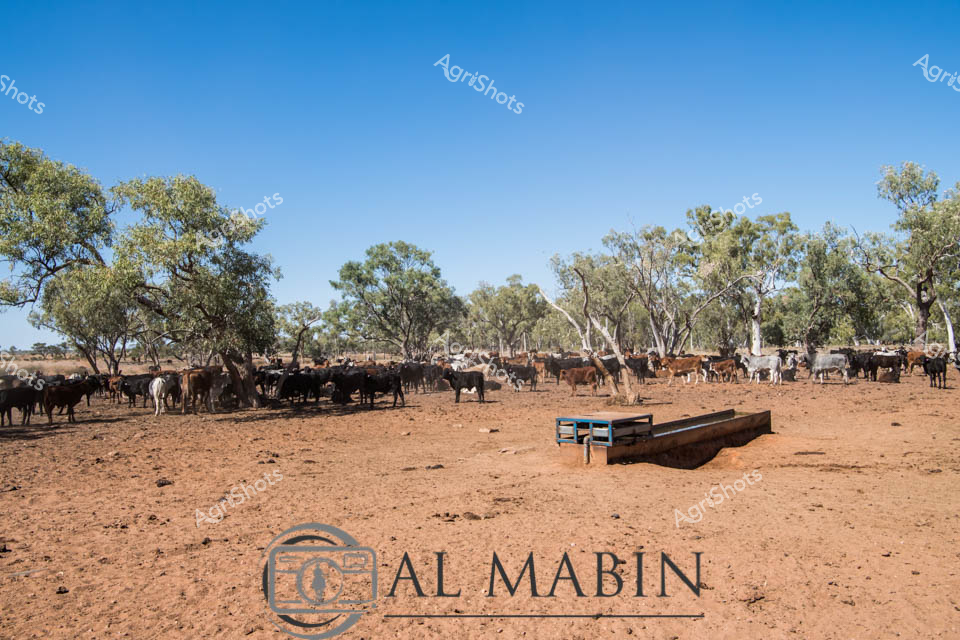
Dusty earth and silvery eucalyptus trees frame a classic Queensland cattle station scene during the dry season. A large herd of mixed beef cattle - predominantly dark browns and blacks with some white and grey animals - cluster around a blue and grey water trough, seeking shade and hydration under the intense blue midday sky. Robust gum trees provide sparse relief from the unrelenting sunlight, their pale bark and soft green-grey foliage contrasting with the parched, rust-colored ground. The metal water trough stands as a critical lifeline in this arid landscape, essential infrastructure for livestock management in remote Australian pastoral country. The scene epitomizes the harsh beauty of inland Queensland - a testament to agricultural adaptability and the critical role of strategic water resources in sustaining livestock production.
 Image
Image
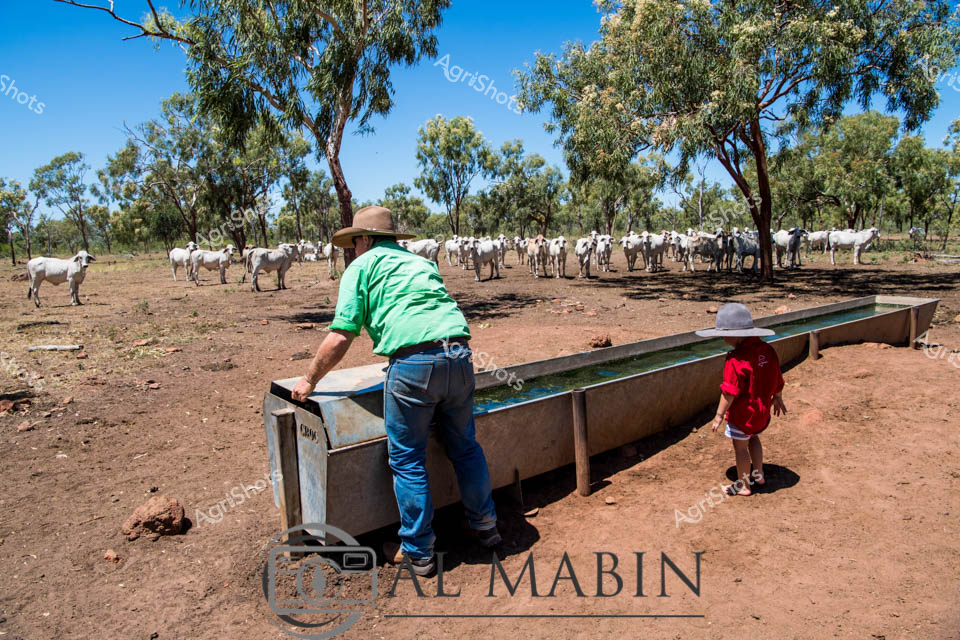
A man working as a station hand fills water troughs for Brahman cattle in the Northern Territory outback. The beef cattle, identifiable by their characteristic humped backs, gather in the shade of eucalyptus trees across the red dirt paddock. A child in a red shirt stands nearby watching the watering process, while the expansive station landscape stretches under clear blue skies. This essential daily task ensures the cattle herd maintains access to fresh water in the arid Australian conditions.
 Image
Image
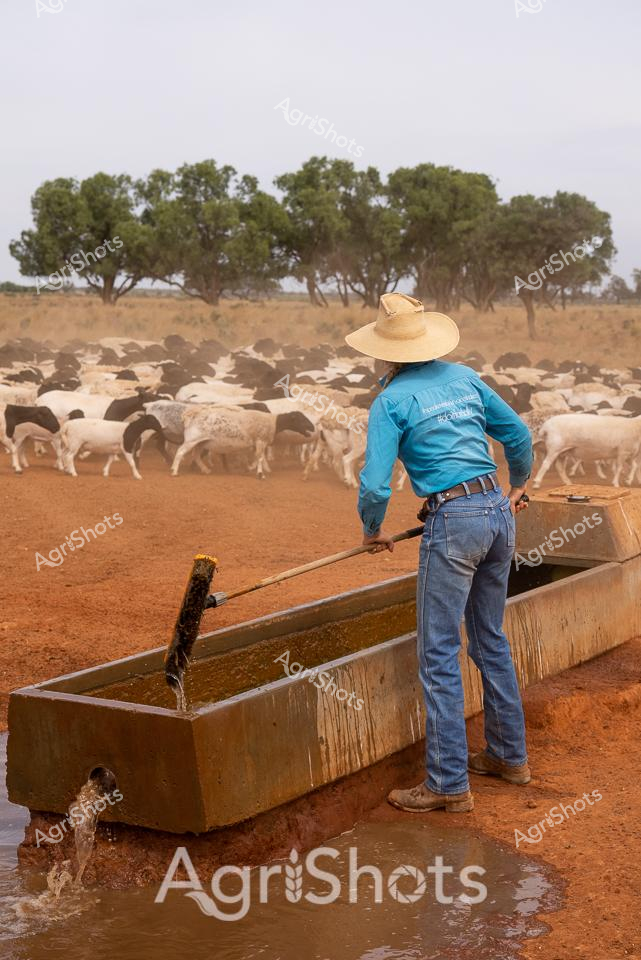
Beneath a pale, dust-laden sky, a station hand tends to a sprawling flock of Dorper sheep across the sun-baked landscape of New South Wales's Murray Region. Clad in a vibrant blue work shirt and a wide-brimmed hat, the worker stands vigilant beside a weathered water trough, ensuring the livestock have access to critical hydration in the arid environment. The rusty-red earth contrasts sharply with the mixed flock of white and black Dorper sheep, their woolly bodies creating a living carpet across the paddock, punctuated by scattered gum trees on the distant horizon. Water cascades into the metal trough, a lifeline for the animals in this unforgiving terrain. The scene captures the essence of Australian pastoral life - resilience, hard work, and the delicate balance between human intervention and nature's harsh conditions. Every element speaks to the challenging yet vital work of station hands who maintain livestock in some of the country's most demanding agricultural landscapes.
 Image
Image
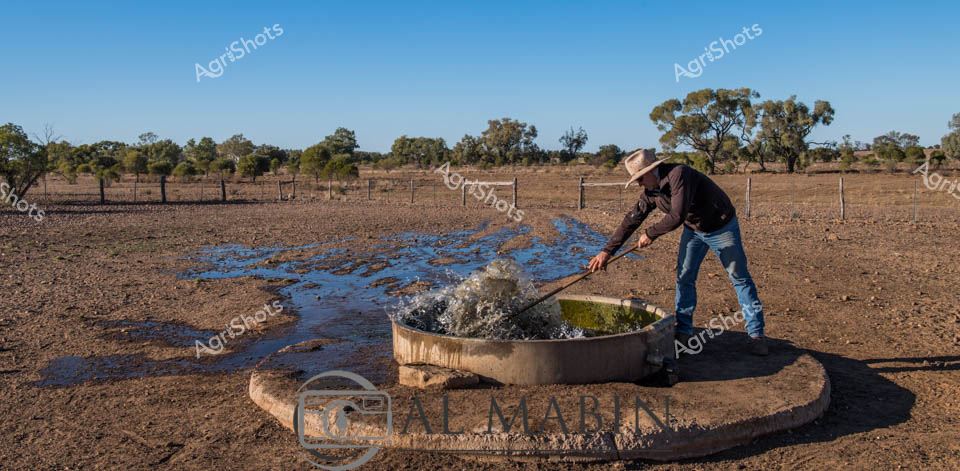
Outback Water Management: Rural Resilience A weathered station worker tends to a vital water trough under the vast, cloudless Queensland sky, embodying the persistent spirit of rural agricultural life. The dusty, parched paddock stretches toward a distant treeline of scattered eucalyptus, highlighting the challenging environment of inland Australia. Dressed in classic rural workwear - sturdy jeans, a wide-brimmed hat, and a dark jacket - the worker carefully manages the water flow, ensuring livestock have access to this critical resource in an arid landscape. The metal water trough overflows, creating a dark, wet pattern across the sun-baked earth, a small but significant moment of abundance in an otherwise dry terrain. Sparse fence lines and native trees frame the scene, demonstrating the careful balance of pastoral land management in a harsh climate. This image captures the daily labor and environmental adaptation that defines Australian agricultural work - a testament to human resilience and careful stewardship of marginal lands.