About this image
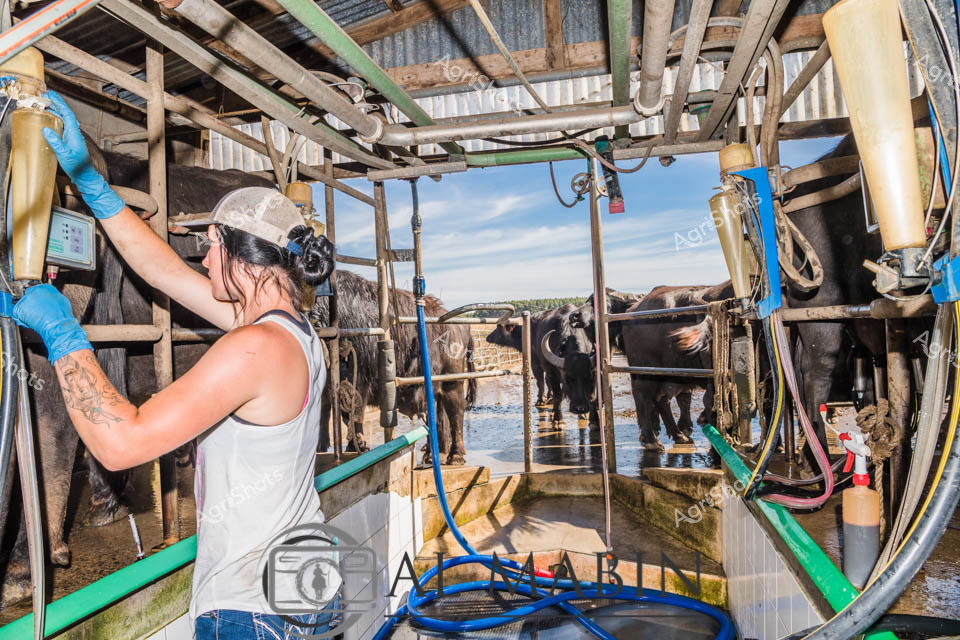
Milking time unfolds in a classic Australian dairy shed, where a focused worker in a white tank top and cap tends to buffalo cattle in a herringbone-style milking station. Blue-gloved hands move with practiced efficiency, connecting milking equipment to the dark, muscular animals standing in concrete bays. Corrugated iron sheets form the shed's roof, creating a lattice of wooden support beams overhead, while sunlight streams through the open framework, casting sharp shadows across the wet concrete floor. The worker's tattoo-adorned arm reaches up to adjust machinery, highlighting the technical precision of modern dairy farming. Blue and green pipes and milking clusters contrast with the earthy tones of the buffalo and the rustic wooden infrastructure. Outside, a glimpse of rural landscape suggests a typical southwestern Victoria setting, with flat terrain and expansive skies typical of the Barwon South region. This image captures the intersection of traditional agricultural practice and contemporary farming technology, showcasing the skilled labor and sophisticated equipment that define Australia's dairy industry. The scene pulses with quiet concentration, revealing the daily rhythm of rural work and the essential role of women in agricultural production.
Similar media
 Image
Image
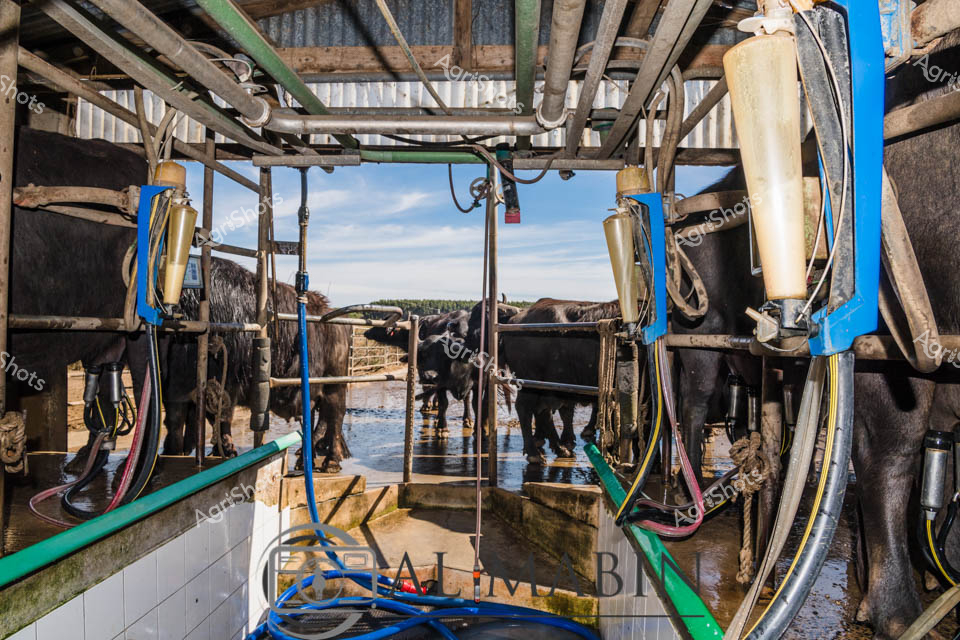
Milking time in a state-of-the-art herringbone dairy parlour reveals the precision of modern agricultural technology. Black and white dairy cows stand patiently in the raised concrete stalls, positioned within a robust steel framework lined with corrugated metal sheeting. Gleaming milk collection cylinders in blue and cream hang from robust pipework, ready to extract fresh milk with clinical efficiency. Polished green and blue hoses snake around the infrastructure, connecting various components of this sophisticated milking system. Soft morning light filters through the shed, casting gentle shadows on the wet concrete floor and highlighting the rhythmic, industrial nature of contemporary dairy farming. The panoramic view through the open structure reveals a lush pastoral landscape beyond, emphasising the connection between cutting-edge agricultural engineering and the timeless rhythms of rural production in Victoria's Barwon South Region.
 Image
Image
Brahman cattle undergo routine processing in a robust steel cattle yard, capturing the precision of Northern Territory livestock management. Two workers in bright safety gear - one in a green shirt and yellow cap, the other in blue - operate a sophisticated hydraulic cattle crush, a critical piece of agricultural infrastructure designed to safely restrain cattle during health checks, vaccinations, and induction procedures. Propane cylinders sit nearby, suggesting additional equipment or heating requirements in this rugged station environment. The metallic silver and blue industrial equipment contrasts with the pale white-grey hide of the Brahman cattle, whose distinctive muscular frame and calm demeanor reflect their adaptation to harsh Australian pastoral conditions. Overhead structural beams and side railings create a structured, purposeful atmosphere of controlled agricultural practice, highlighting the technological sophistication of modern cattle station operations. The concrete floor, weathered and marked from continuous use, tells its own story of countless similar processing moments in the challenging Northern Territory landscape.
 Image
Image
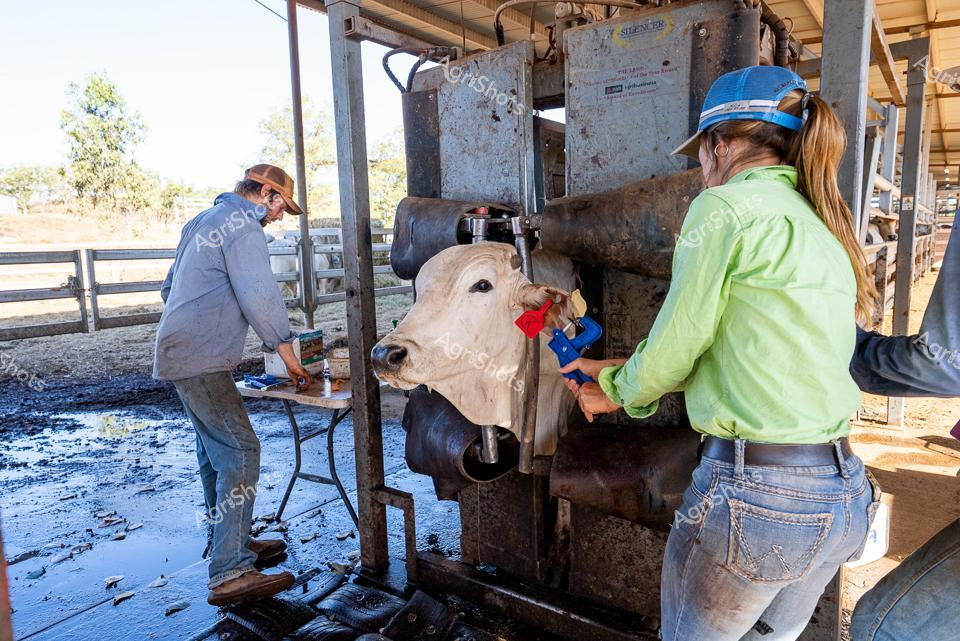
Cattle mustering and processing unfold at a Northern Territory cattle station, capturing the disciplined choreography of livestock management. A sturdy Brahman cow stands patient and restrained within a metal cattle crush, her pale cream hide contrasting against weathered steel infrastructure. Two agricultural workers - one in a blue cap and bright green work shirt, the other in a gray long-sleeved shirt and wide-brimmed hat - collaborate efficiently around the animal, performing routine health checks or induction procedures. The ground is muddied and worn, telling of countless similar interactions, while sunlight filters across timber yards and distant scrub vegetation, suggesting a typical dry season morning. Industrial equipment like the Silencer cattle handling system provides critical support, enabling safe and controlled interactions between humans and livestock. This scene epitomizes the precision, skill, and quiet teamwork fundamental to Australia's extensive cattle production landscape, where modern agricultural technology meets traditional stockmanship.
 Image
Image
Bathed in the soft light of an early morning, a skilled agricultural worker in a vibrant blue work shirt and cap tends to cattle in a modern livestock handling facility. The sophisticated metal cattle crush restrains a rich brown bovine, its muscular frame held securely between steel gates designed for safe and efficient animal management. Hydraulic arms and blue medical equipment suggest this is a routine health intervention - likely a vaccination or drenching procedure critical to maintaining herd wellness. The concrete floor and corrugated metal shelter indicate a professional, purpose-built agricultural infrastructure typical of progressive farming operations in rural Australia. Overhead safety signage and precision engineering of the machinery highlight the technical sophistication of contemporary agricultural practices, where animal welfare and operational efficiency converge. This scene captures the intersection of modern technology, skilled labor, and livestock management, representing the precision and care fundamental to Australian agricultural production.
 Image
Image
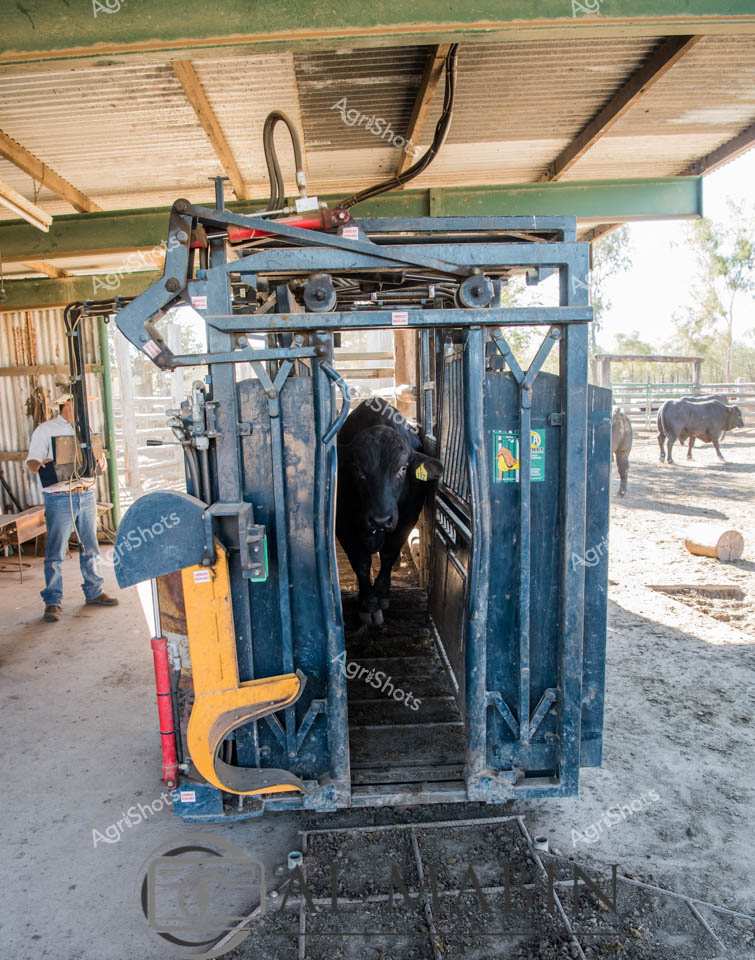
Nestled in a rustic Queensland cattle yard, a state-of-the-art hydraulic cattle crush stands ready to process a sleek black Brangus heifer. The robust blue metal frame of the restraining chute gleams in the harsh midday sunlight, its mechanical components designed for precise animal handling and minimal stress. A weathered farm worker in dusty work attire stands nearby, monitoring the controlled movement of the livestock with practiced expertise. The corrugated iron shelter provides welcome shade, filtering the intense Australian sun across the dry, packed earthen ground. A yellow safety lever on the crush hints at the sophisticated engineering that allows careful, humane cattle management, while another Brangus beast waits patiently in the background paddock. This scene captures the intersection of modern agricultural technology and traditional cattle breeding practices, representing the sophisticated approach of contemporary Australian beef production.
 Image
Image
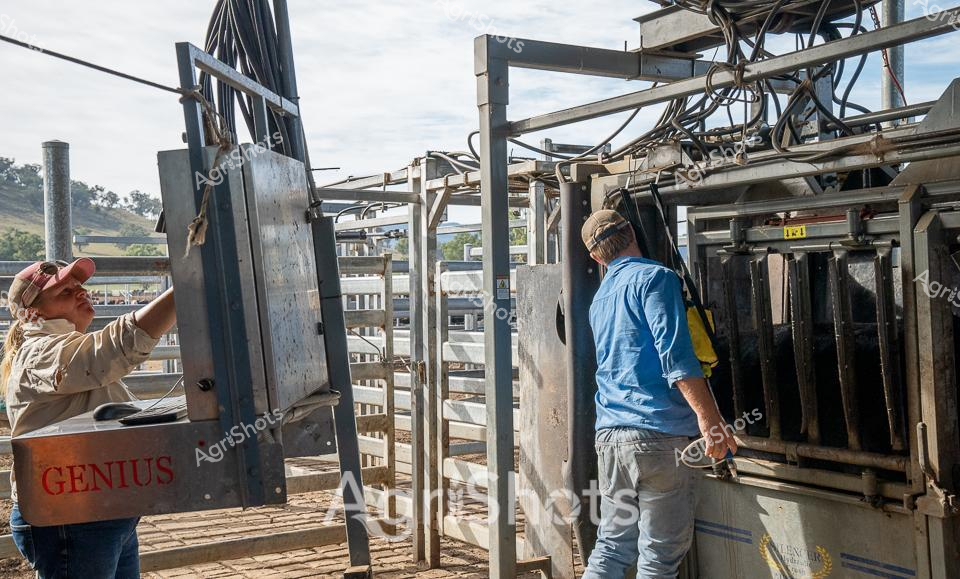
Rural precision meets modern livestock management in this compelling snapshot of cattle handling technology. Two workers operate a sophisticated Genius cattle crush, a critical piece of equipment designed for safe and efficient animal processing. The blue-shirted worker stands positioned near the metal gates, carefully managing the livestock movement, while his colleague in a light-colored shirt assists with the technical mechanisms of the crush. Set in a classic Australian pastoral landscape with rolling hills visible in the background, this scene captures the meticulous care and technological innovation of contemporary cattle farming. The sturdy metal infrastructure of the cattle yards demonstrates the agricultural sector's commitment to animal welfare and operational efficiency. Overhead cables and robust metal framing showcase the sophisticated engineering behind modern livestock management systems. The weathered metal surfaces, industrial gray tones, and functional design of the cattle handling equipment reflect the pragmatic spirit of Australian agricultural practice. Soft natural light and an open-air setting underscore the connection between technological intervention and the natural environment, highlighting the delicate balance between human management and animal husbandry in rural agricultural settings.
 Image
Image
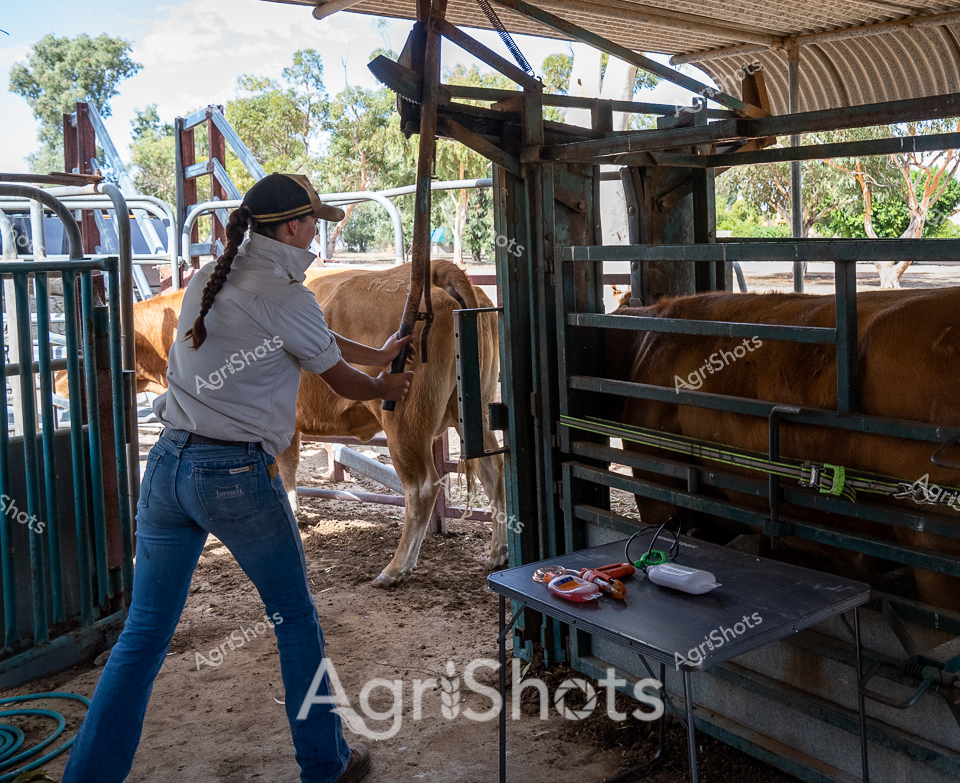
In a sunlit cattle yard nestled among eucalyptus trees, an agricultural worker carefully manages a russet-colored beef cow within a sturdy metal cattle crush. Wearing a crisp white long-sleeved shirt, blue jeans, and a cap, the worker demonstrates precise livestock handling techniques typical of professional Western Australian cattle management. Medical equipment and vaccination supplies rest on a side table, indicating a routine animal health procedure is underway. The metallic green and blue cattle yard infrastructure provides a structured, secure environment for managing livestock, with dappled sunlight filtering through the overhead shelter. The scene captures the methodical, professional approach of modern agricultural practice, highlighting the skill and care required in cattle husbandry. This image embodies the intersection of animal welfare, technical expertise, and the essential work of maintaining healthy livestock in the Australian agricultural sector.
 Image
Image
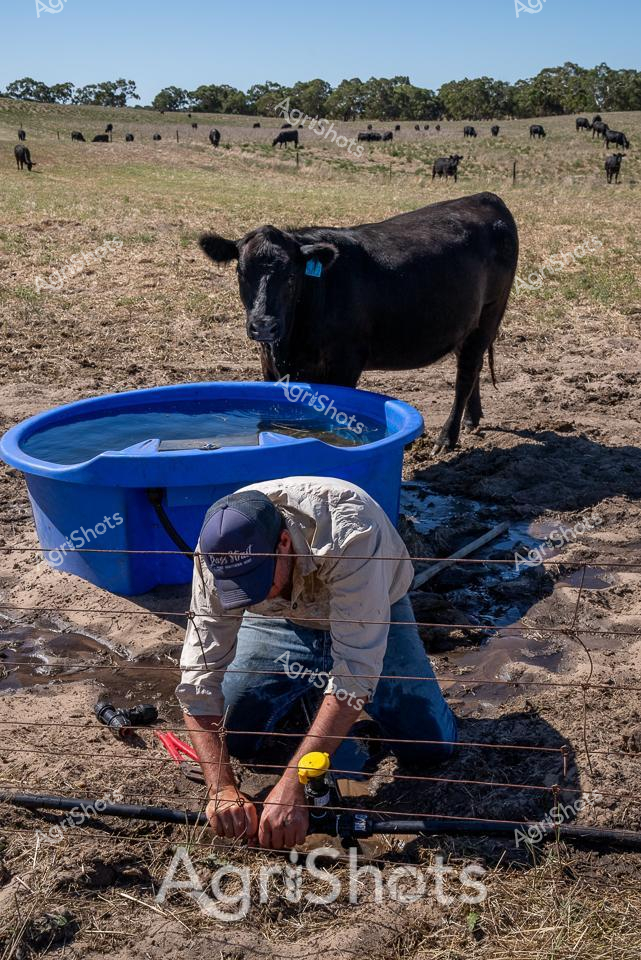
A sun-drenched South Australian pastoral landscape unfolds, where a stoic black Angus cattle stud grazes on dry pastureland. In the foreground, a dedicated farm worker crouches beside a vibrant blue water trough, carefully manipulating pipe fittings and a yellow-capped Plasson connection, ensuring reliable water infrastructure for the herd. The worker's weathered light-colored shirt and cap speak to long hours of meticulous agricultural labor under the unrelenting rural sun. In the background, a scattered herd of black Angus cattle graze across the undulating paddock, their dark forms creating a rhythmic contrast against the muted golden-brown grasslands. Scattered eucalyptus trees provide sparse shade on the horizon, highlighting the rugged Murray and Mallee region's characteristic landscape. The scene captures the essential work of agricultural maintenance - the constant, precise effort required to sustain livestock in challenging Australian environments. The blue water trough stands as a critical lifeline, its vivid color a sharp interruption in the earthy palette of soil and dry grass, symbolizing the careful management and resilience necessary in dryland farming. Every element - from the worker's focused posture to the patient cattle - communicates a narrative of sustained agricultural practice.