About this image
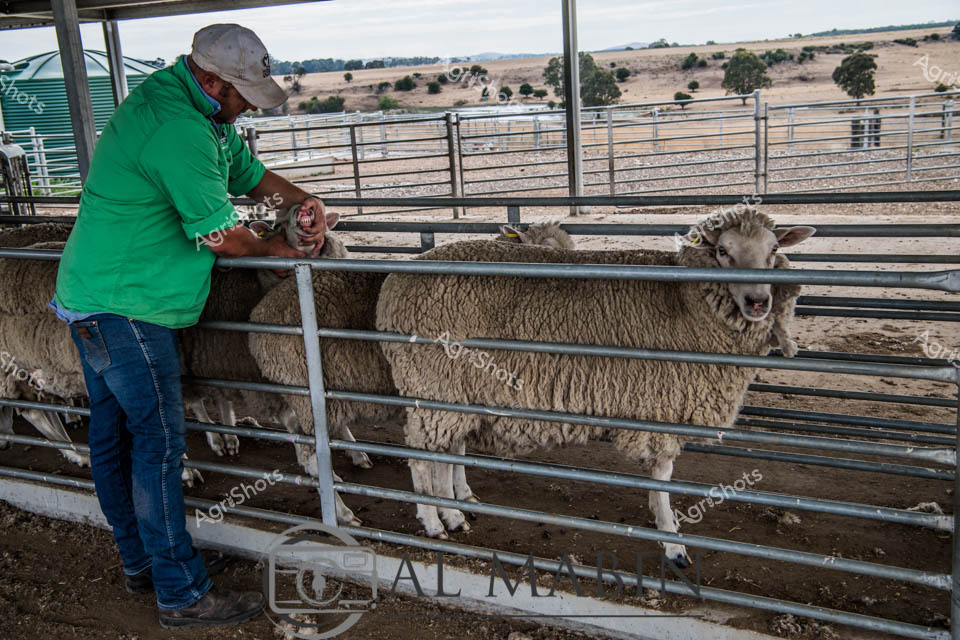
A man working as a sheep handler reaches over metal yard railings to handle sheep in a rural Victorian woolshed facility. The sheep, likely Merino breed based on their fine wool coats, stand calmly in the steel yard system while dust particles catch the light in the background. Rolling hills and scattered trees stretch across the landscape beyond the shearing shed infrastructure, creating a quintessential Australian agricultural scene during what appears to be shearing season.
Similar media
 Image
Image
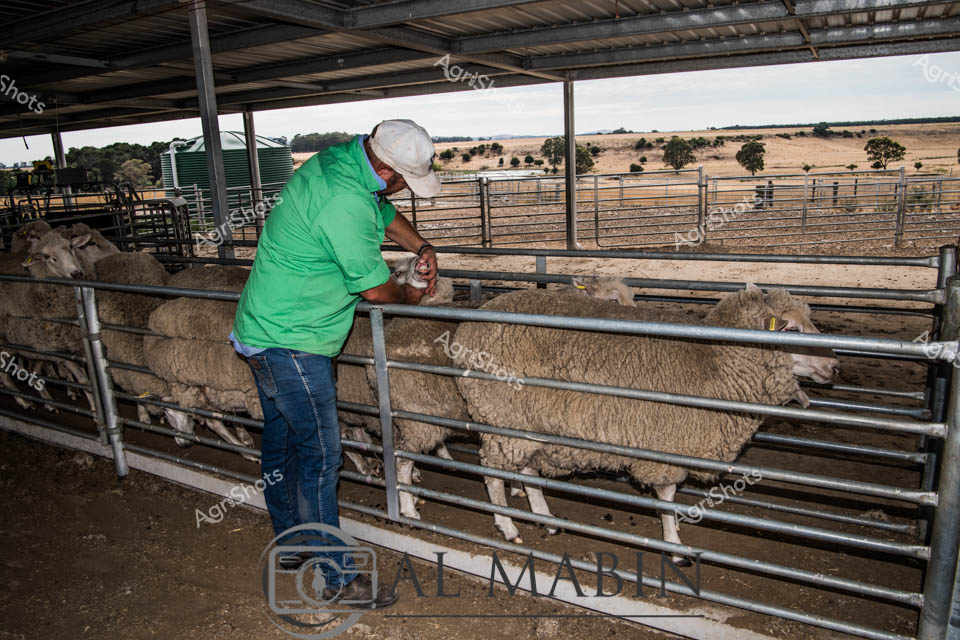
A man working as a stockman leans over metal yard railings to examine sheep in a covered livestock facility in Victoria. The woolly sheep are penned in metal yards under a corrugated iron roof structure, with rolling paddocks visible in the background. The scene captures typical sheep handling operations at an Australian station, with the worker wearing a bright green shirt and hat while assessing the flock. Dust particles are visible in the air around the sheep yards, creating an authentic rural agricultural atmosphere.
 Image
Image
A man working as a sheep farmer leans over metal yard railings to examine wool sheep in covered livestock yards in Victoria. The sheep appear to be Merino breed based on their fine wool fleece, gathered in the dusty yards under the corrugated iron roofing structure. The farmer wears a bright green shirt and hat while conducting what appears to be a mouthing or health inspection process in the shearing shed facility. Rolling agricultural landscape stretches across the background beyond the modern sheep handling infrastructure.
 Image
Image
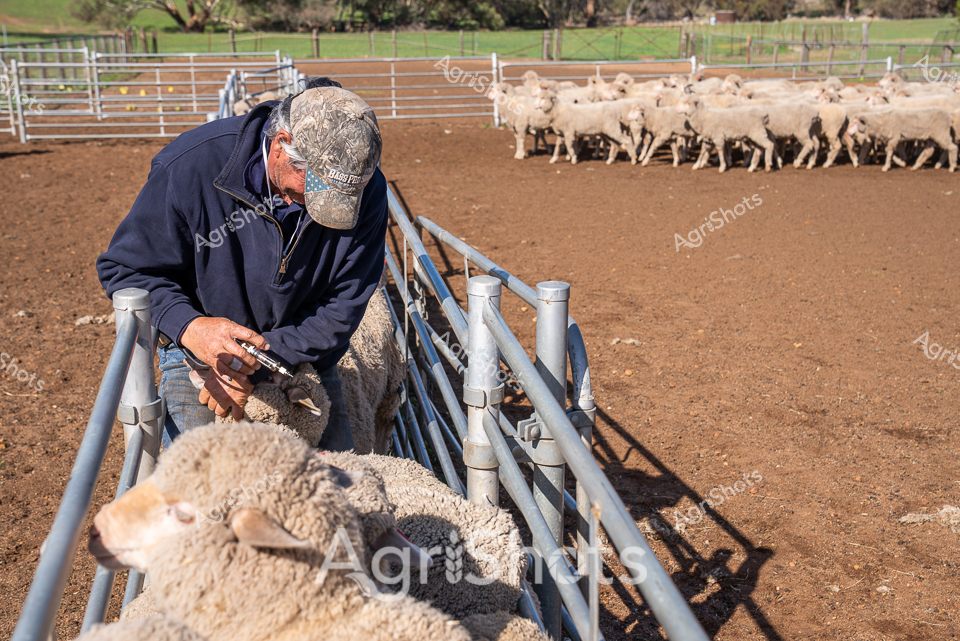
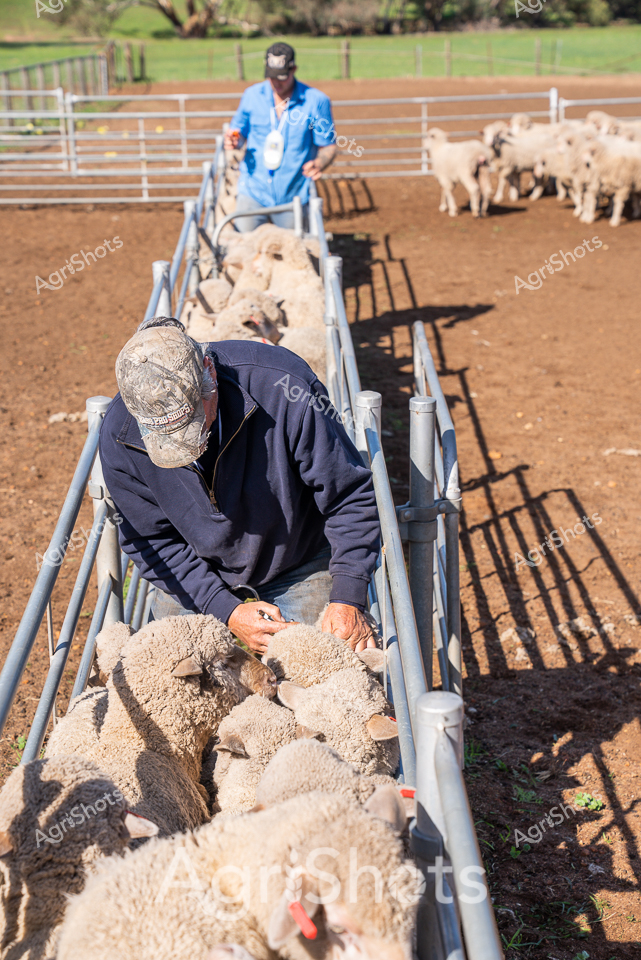
Merino sheep cluster in a compact yard of rusty earth and metal gates under soft midday light, while a seasoned farmer in a navy jacket and camouflage cap carefully administers vaccination. The weathered agricultural worker leans into the steel livestock handling system, methodically treating each animal with practiced precision. Woolly Merino bodies press against the galvanized steel rails, their cream and tan fleeces contrasting with the rich brown paddock ground. In the background, green pasture and distant tree lines suggest a classic Western Australian sheep farming landscape - open, sunlit, and purposeful. The scene captures the quiet concentration of rural veterinary work, where animal welfare and agricultural productivity intersect with generations of farming expertise. Every detailed movement speaks to the careful, unsentimental care that defines Australian sheep husbandry.
 Image
Image
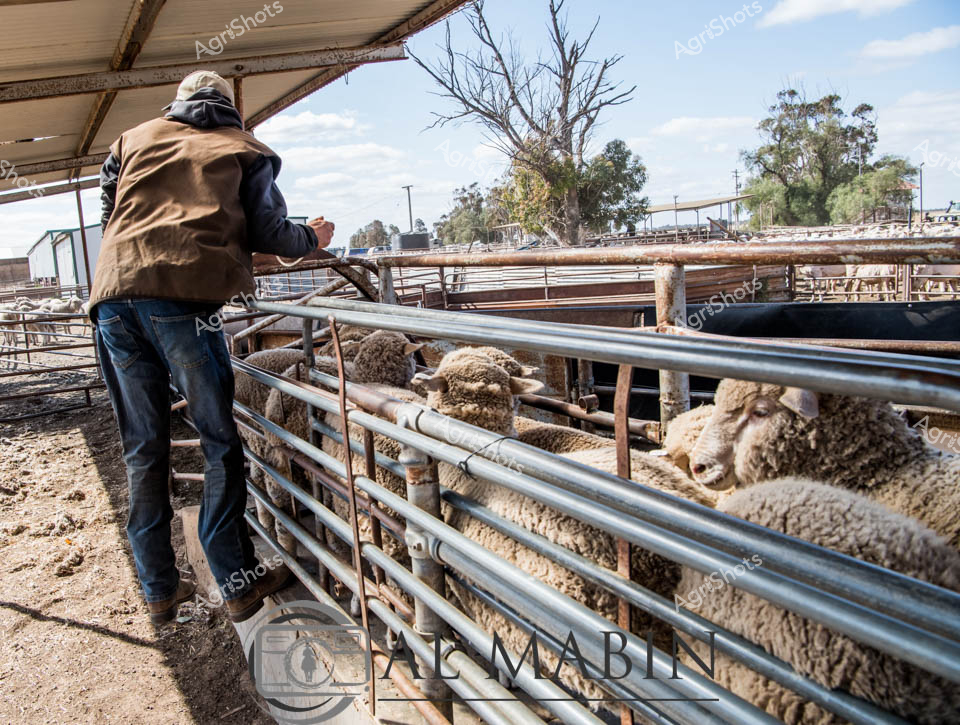
Under the corrugated iron shelter of a woolshed, a farmer stands at the sheep yards, surveying a pen of dense-fleeced merino sheep. The dusty yard speaks to the harsh Australian rural landscape, with bare trees and open skies typical of inland New South Wales. Wearing a robust brown work jacket and dark jeans, the farmer is positioned with quiet authority, overlooking the tightly packed flock of woolly sheep pressed against the galvanized steel fencing. The scene captures the essence of Australian agricultural practice - a moment of careful livestock management where each animal represents both economic value and generations of careful breeding. Metal gates and multiple holding pens suggest this is a sophisticated modern agricultural facility, designed for efficient stock handling. The muted earth tones of the landscape - browns, greys, and soft whites of the sheep fleeces - create a quintessential pastoral tableau that speaks to the resilience and methodical nature of Australian farming.
 Image
Image
Merino sheep crowd the narrow metal handling race as two farm workers carefully process the flock. In the foreground, a worker in a navy jacket and camouflage cap leans over the livestock, methodically checking and treating each animal. Behind him, another worker in a blue shirt oversees the operation from the raised section of the yards. The rich red-brown earth of a Western Australian farm paddock stretches beneath the galvanized steel sheep yards, with green pasture and trees visible in the background. Stark shadows cast by the yard infrastructure create geometric patterns across the ground, highlighting the precision of modern livestock management. These Merino sheep - prized for their fine wool - stand clustered tightly, their dense, creamy fleeces a testament to the careful breeding and animal husbandry typical of Australian agricultural excellence. The scene captures the intense, focused work of sheep farmers during a critical health management process, showcasing the close interaction between skilled workers and the valuable livestock.
 Image
Image
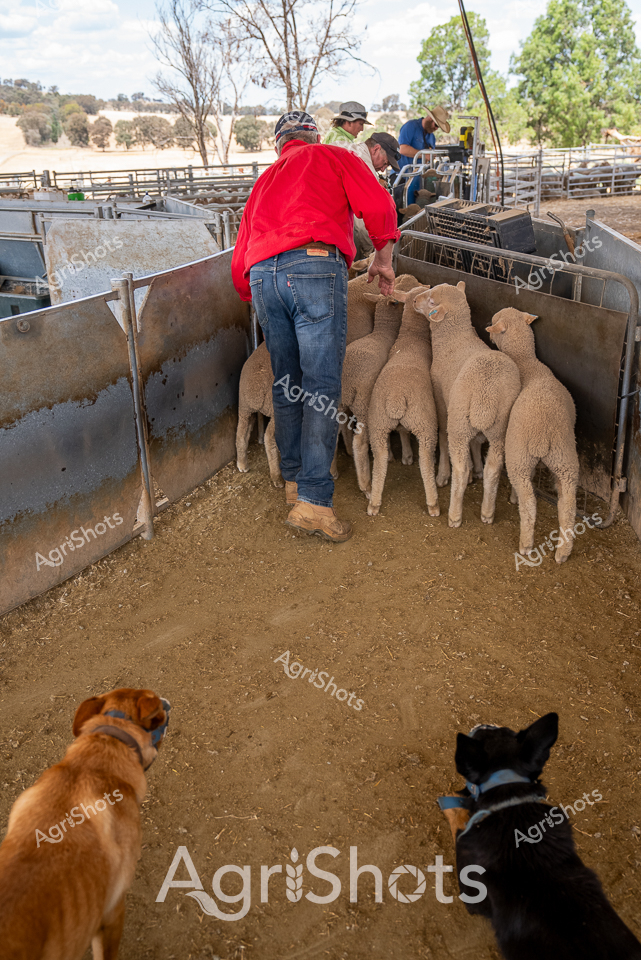
Merino lambs huddle in a steel yard, their soft wool a uniform beige against the dusty earth of a Victorian pastoral landscape. A worker in a vibrant red jacket carefully maneuvers the young sheep, supported by colleagues in the background who manage the livestock processing area. Two working dogs - a golden-brown and a black canine - watch intently from the foreground, their disciplined stance reflecting generations of Australian farm herding tradition. Bare trees and distant paddocks suggest late winter or early spring, a critical time for lamb health and farm management. Metal yard panels create precise pathways, demonstrating the structured approach to livestock handling that defines modern Australian agriculture. The scene captures the methodical, collaborative nature of sheep farming - a testament to the skill, patience, and quiet expertise required to sustain one of Australia's most important agricultural industries.
 Image
Image
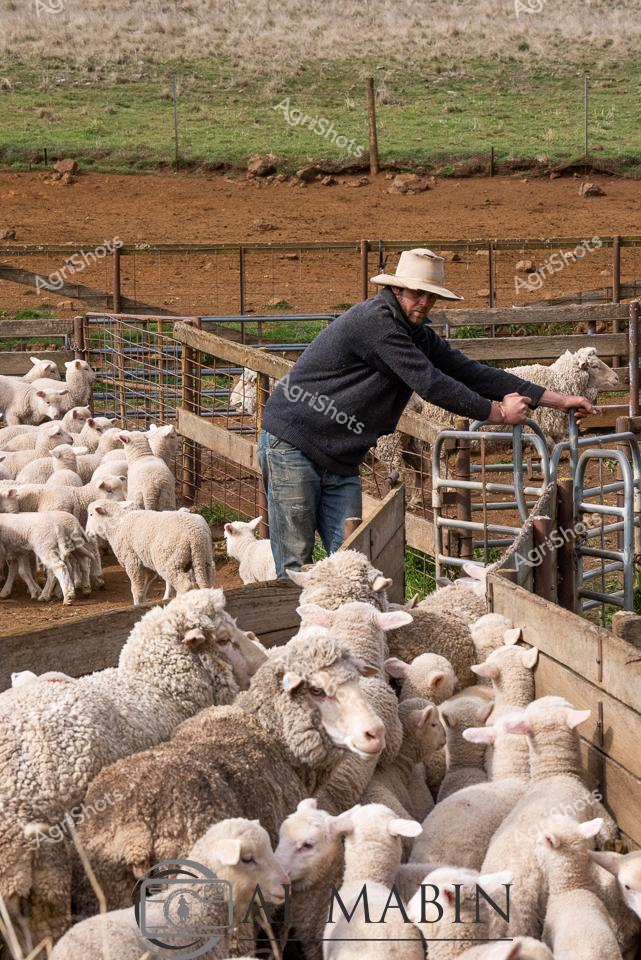
Merino ewes and their lambs cluster tightly in wooden livestock yards, a quintessential Australian farming scene capturing the rhythms of rural agricultural life. A weathered farmer in a broad-brimmed sun hat and dark jacket moves deliberately among the woolly flock, managing the drafting gate with practiced expertise. The landscape speaks of dry pastoral country - reddish earth, sparse grassland, and weathered fence lines stretching across undulating terrain typical of New South Wales sheep country. Varied shades of cream, tan, and soft grey define the Merino wool coats, with younger lambs displaying softer, lighter fleeces nestled close to their mothers. The scene pulses with quiet industry, representing generations of agricultural skill and the intricate relationship between farmer and livestock. Rugged metal gates, wooden panels, and the careful choreography of animal movement reflect the strategic management required in sheep farming, where each season brings its own challenges and rhythms of care.
 Image
Image
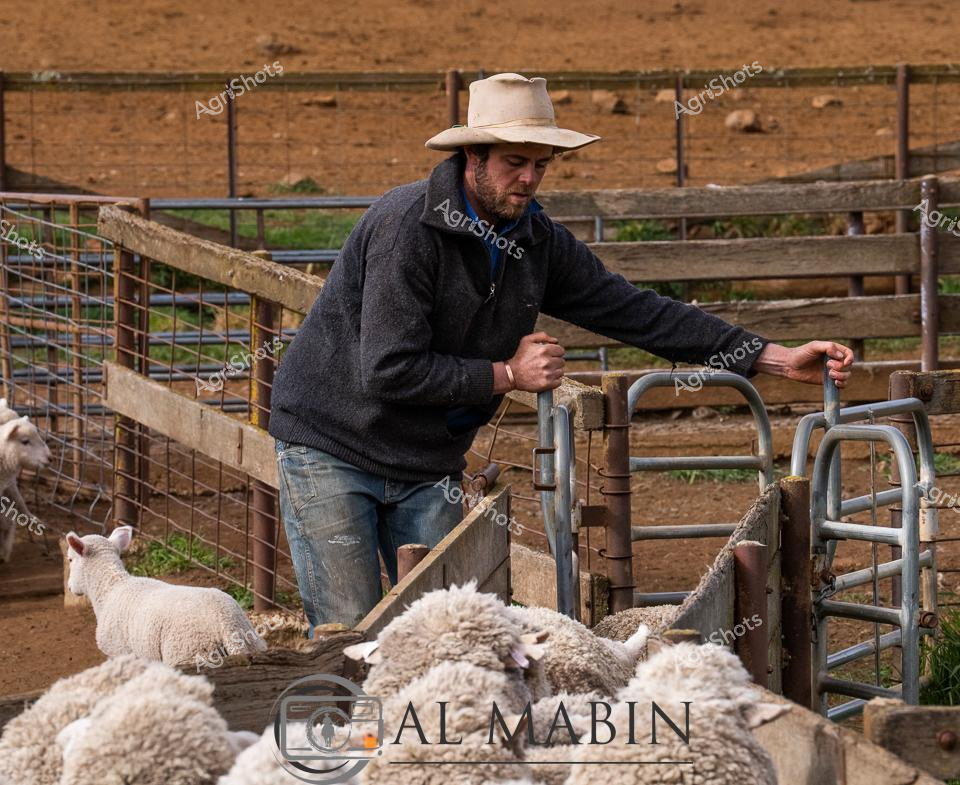
Nestled in the rugged pastoral landscape of rural New South Wales, a seasoned stock manager guides the flock through the drafting yards on a crisp morning. Wearing a classic wide-brimmed wool felt hat and a heavy charcoal fleece, the farm worker leans intently over metal gates and wooden panels, carefully managing a group of woolly Merino ewes and their lambs. The earthy tones of the paddock - rich browns of compacted dirt and weathered timber - contrast with the soft cream and gray fleeces of the sheep clustered in the yards. Metal drafting gates stand ready, a testament to generations of agricultural practice, while the careful positioning of the stock manager reflects the quiet skill and patience required in livestock management. Young lambs peek between the legs of their mothers, their delicate forms a promise of the next season's flock, while the mature ewes stand resolute, their dense Merino wool a valuable commodity in Australia's agricultural economy. This scene captures the timeless rhythm of sheep farming - a blend of human expertise and animal husbandry that has defined the rural Australian landscape for generations.