About this image
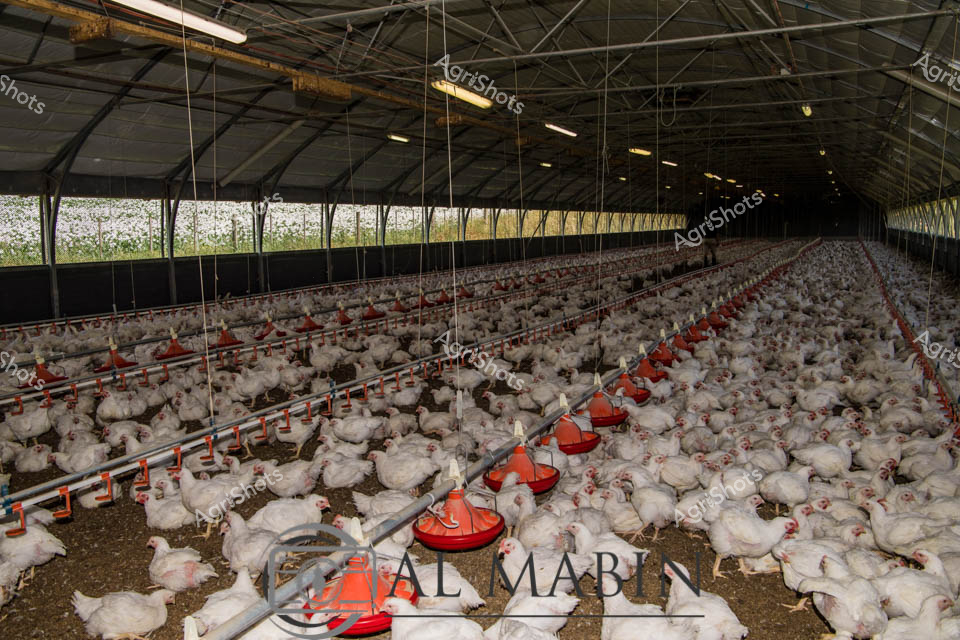
Broiler chickens blanket the expansive interior of a climate-controlled agricultural shed, densely packed across a carefully engineered floor space. Gleaming red feeders and watering systems thread through the uniform white flock, creating precise geometric lines against the birds' soft feathering. Overhead, industrial lighting illuminates the controlled environment, with translucent side panels allowing filtered natural light to complement the artificial illumination. The birds represent a meticulously managed protein production system, each animal positioned with mathematical precision within the streamlined infrastructure of modern poultry farming. Robust ventilation infrastructure and structured feeding mechanisms demonstrate Tasmania's advanced agricultural engineering, where technology and animal husbandry intersect to optimize livestock production. The monochromatic palette of white feathers, red feeding equipment, and grey structural elements communicates an atmosphere of systematic efficiency characteristic of contemporary agricultural practices.
Similar media
 Image
Image
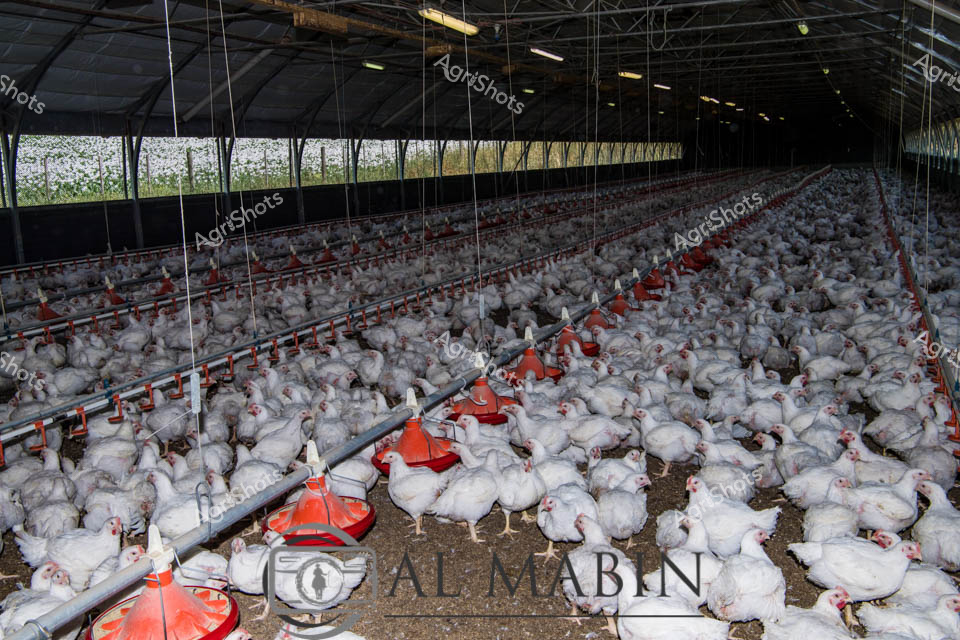
Broiler chickens densely populate a mechanized indoor poultry shed, their white feathered bodies blanketing the floor in neat rows. Bright red automated feeding and watering systems trace lines through the packed shed, contrasting sharply with the pale plumage of the birds. Industrial fluorescent lighting illuminates the controlled environment, revealing a precision-engineered agricultural space designed for maximum protein production. The chickens sit closely together on a textured ground of scattered feed and bedding material, representing contemporary large-scale farming techniques prevalent in Tasmania's agricultural sector. Overhead structural beams and metallic ventilation systems frame the scene, highlighting the engineered infrastructure supporting large-scale livestock production. The image captures the industrial efficiency of modern poultry farming, where every square meter is optimized for rapid protein generation.
 Image
Image
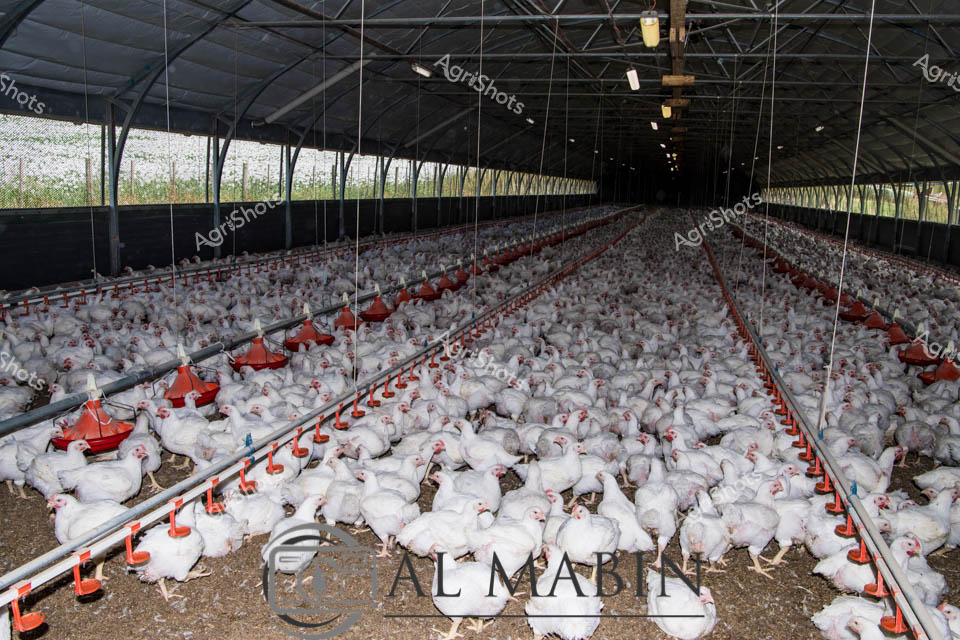
Battery cage white broiler chickens densely packed inside a long, climate-controlled agricultural shed, illuminated by overhead lighting. Hundreds of plump, uniform white feathered birds cluster across red-painted metal feeding and watering infrastructure, creating a tight grid-like arrangement typical of industrial poultry production. Stark metal framing and black sidewalls define the controlled environment, with soft natural light filtering through side panels suggesting a temperate agricultural landscape beyond. Red feeding mechanisms and water dispensers contrast sharply against the pure white plumage of the chickens, highlighting the precision engineering of modern agricultural systems. The scene represents contemporary industrial chicken farming - a tightly managed ecosystem designed for maximum protein production efficiency, where environmental conditions and nutrition are meticulously controlled to optimize growth rates. The uniform appearance of the birds and systematic layout underscore the industrialized approach to livestock management prevalent in Australian agricultural production.
 Image
Image
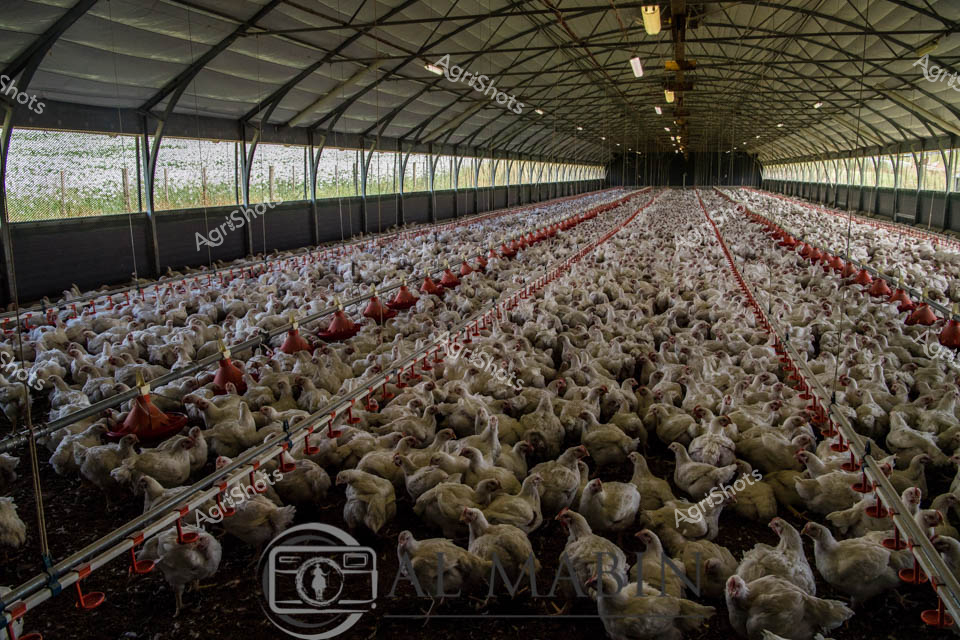
Battery Farm Interior: Dense Broiler House Pristine white broiler chickens blanket the expansive interior of a modern agricultural poultry shed, their plump bodies packed densely across multiple feeding lanes marked by vibrant red feeders and drinkers. Overhead, a steel truss architectural framework supports a translucent roof allowing soft diffused daylight to illuminate the controlled environment. Rows of identical birds crowd the sterile concrete floor, representing industrial-scale protein production typical of contemporary Tasmanian agricultural practices. The uniform white feathered mass creates a striking visual texture, interrupted only by the rhythmic red infrastructure and glimpses of exterior tree lines visible through side ventilation panels. Precision engineering defines this large-scale farming space - every element optimized for maximum efficiency and consistent livestock management. The environment reflects a clinical, systematic approach to large-scale poultry production, where environmental controls and standardized breeding produce consistent commercial meat outputs.
 Image
Image
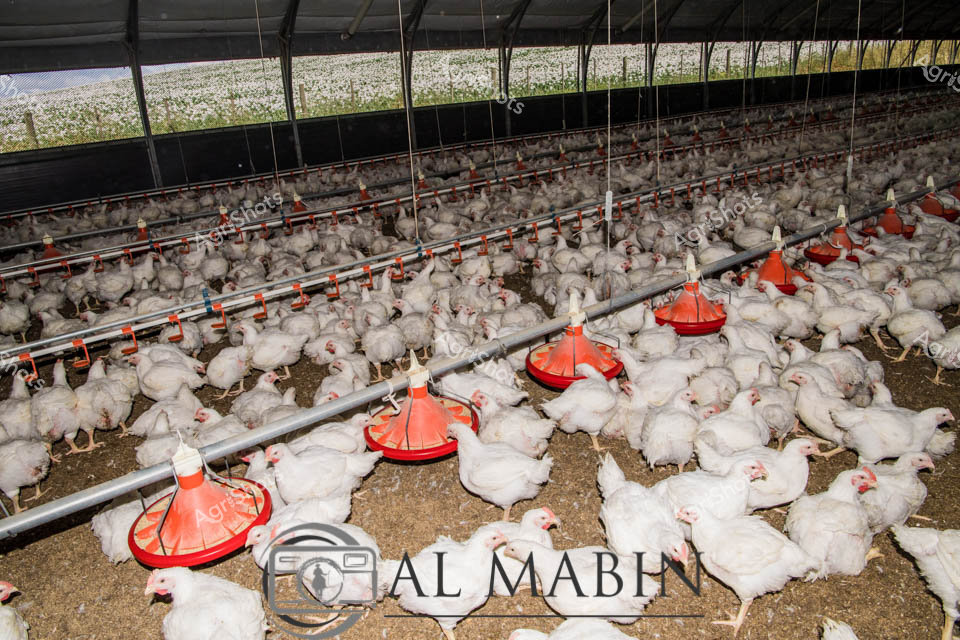
White broiler chickens densely populate a long, industrial-style poultry shed, showcasing large-scale agricultural production. Bright orange feeding lines run the length of the sterile metal and mesh structure, providing systematic feed access for the uniformly white birds. The chickens, bred for rapid growth, crowd the floor covered in dark bedding material, their plump bodies demonstrating modern genetic breeding for meat production. Mesh side walls allow filtered natural light and ventilation, creating a controlled environment that maximizes bird density and agricultural efficiency. The shed's architectural design - with its arched metal framework and carefully engineered climate control - represents contemporary Tasmanian agricultural technology and large-scale protein production methods. The scene captures the industrial precision of modern poultry farming, where every element is optimized for maximum yield and consistent output.
 Image
Image
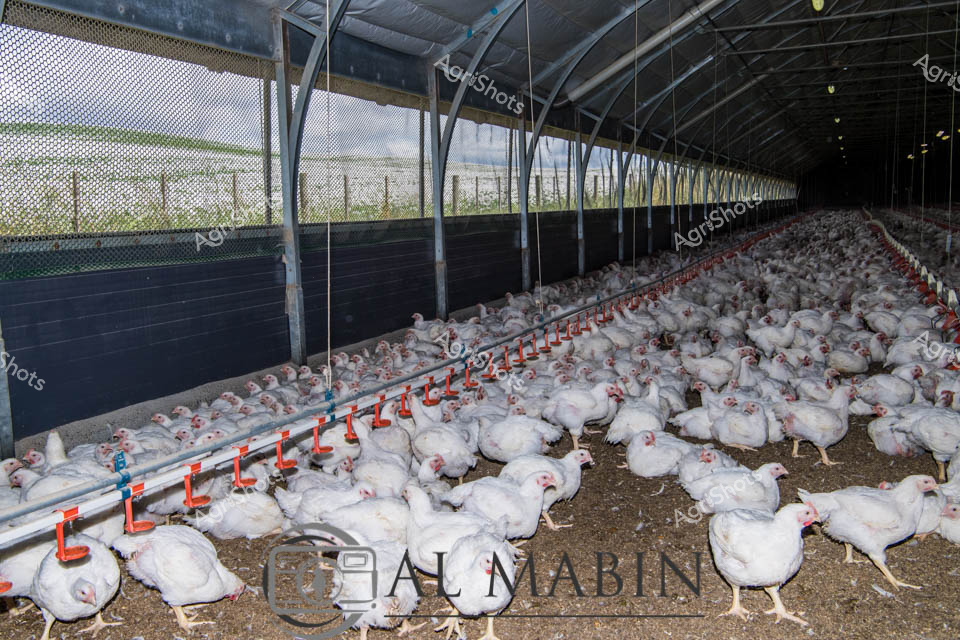
Rows of white broiler chickens densely populate a climate-controlled industrial poultry shed, highlighting modern large-scale agricultural production techniques. Bright red automated feeding stations punctuate the uniform sea of feathered bodies, strategically placed along metal distribution pipes to ensure consistent nutrition. The controlled environment features a structured layout with precise horizontal feeding lines and consistent bedding, creating a systematic approach to livestock management. Large windows along the shed's perimeter reveal a soft white landscape outside, suggesting a cool-season agricultural setting typical of Tasmania's rural regions. The chickens appear uniform in size and coloration, demonstrating careful breeding and standardized genetic selection for commercial meat production. The image captures the industrial precision of contemporary agricultural systems, where efficiency, uniformity, and controlled conditions define modern poultry farming practices.
 Image
Image
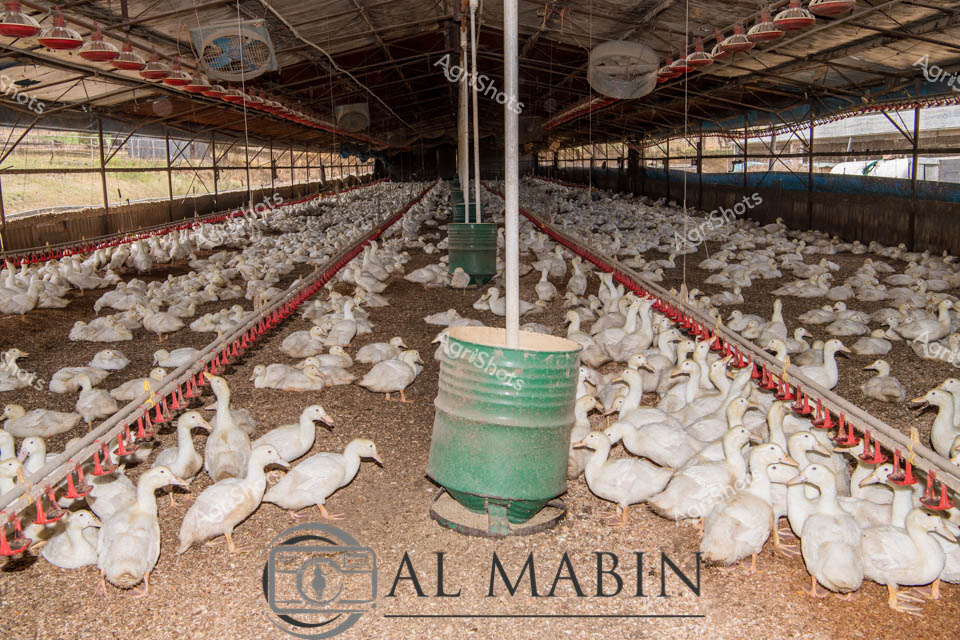
Packed tightly across a sprawling industrial shed, hundreds of white Peking ducks blanket the floor in a dense, feathered carpet. Overhead, industrial red heat lamps cast a warm glow across the controlled environment, while large industrial fans circulate air between the metal-framed structure's translucent roof panels. A central green industrial barrel stands as a focal point, surrounded by rows of pristine white waterfowl clustered along red feeding troughs. The precise geometric lines of the shed, combined with the uniform coloration of the ducks, create a striking visual rhythm of agricultural efficiency. These ducks represent a meticulously managed protein production system, typical of modern large-scale farming practices in rural New South Wales. The image captures the industrial scale of contemporary poultry production, where carefully controlled conditions optimize growth and output in a carefully engineered agricultural environment.
 Image
Image
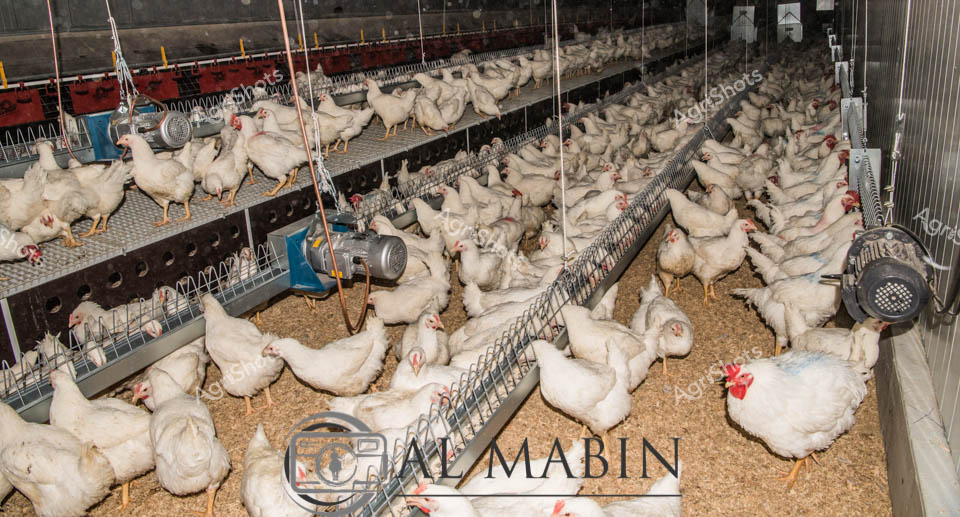
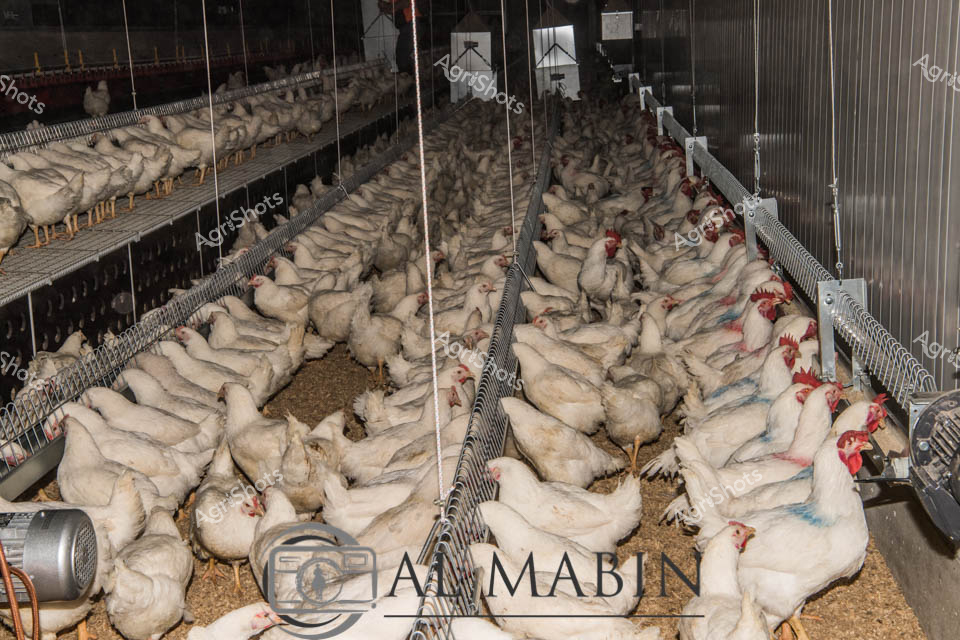
Industrial poultry production in full view, this image captures a dense flock of white chickens populating a multi-tiered metal battery cage system. Rows of pristine white birds crowd the galvanized wire shelving, their red combs standing out against uniform feathered bodies. Sawdust or wood shavings cover the floor, providing bedding material in this tightly controlled agricultural environment. Mechanical feeders and ventilation equipment suggest a high-efficiency modern chicken farm, likely located in Tasmania's agricultural regions. The uniform spacing, metallic infrastructure, and densely packed livestock represent contemporary industrial egg production techniques, where systematic design maximizes output and controlled conditions.
 Image
Image
Battery-caged white chickens crowd the multi-tiered steel wire enclosures of an industrial poultry facility. Pristine white feathered hens with bright red combs are densely packed across multiple levels, with minimal space for movement. The sterile metal infrastructure features grey wire mesh compartments and silver ventilation equipment, creating a uniform, mechanized environment typical of large-scale egg production. Sawdust and feed are scattered across the floor, providing minimal ground coverage for the confined birds. The lighting suggests an interior setting, with harsh artificial illumination casting uniform shadows across the tightly regulated space. This image captures the industrial efficiency of modern agricultural livestock management, where animal welfare is secondary to production metrics, representing a standardized approach to protein and egg production prevalent in contemporary farming systems.