About this image
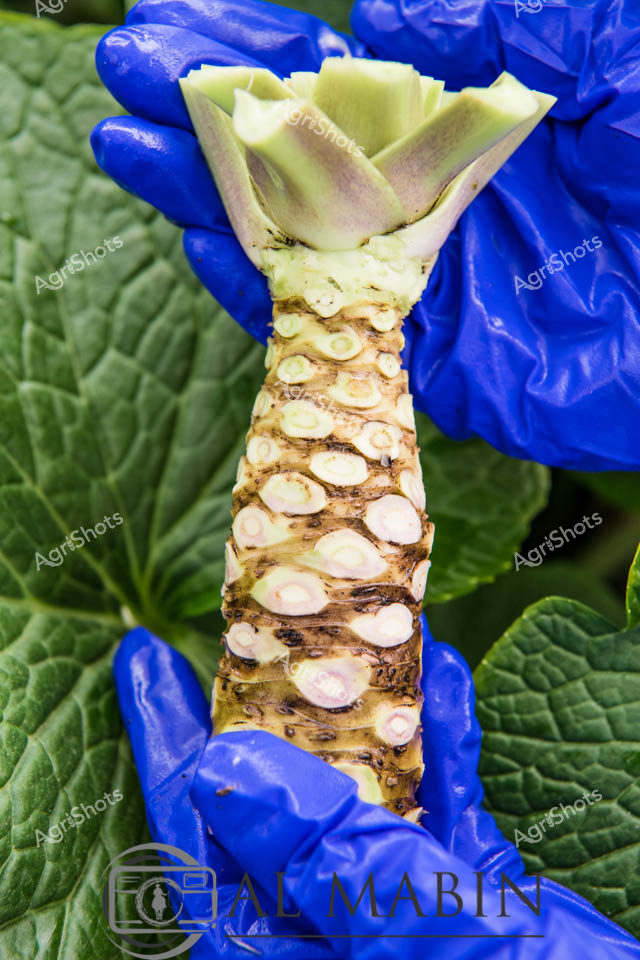
Delicate wasabi rhizome, harvested with precision, reveals the intricate beauty of this prized Japanese horticultural treasure. Blue-gloved hands cradle the pale, knobbly root against a backdrop of lush green leaves, highlighting the meticulous care of Tasmanian wasabi cultivation. The rhizome's surface displays a complex topography of rounded protrusions and subtle variations in color, ranging from cream to light green with hints of brown, showcasing the unique texture of this rare and demanding crop. Each bump and curve tells a story of careful cultivation, requiring specific shade, water, and temperature conditions that make wasabi one of the most challenging plants to grow commercially. The close-up perspective emphasizes the delicate nature of the harvest, with the protective blue nitrile gloves symbolizing the scientific precision and food safety standards of modern agricultural practices. This image captures the intersection of traditional Japanese culinary culture and cutting-edge Tasmanian agricultural innovation, revealing the extraordinary complexity hidden within a seemingly simple root.
Similar media
 Image
Image
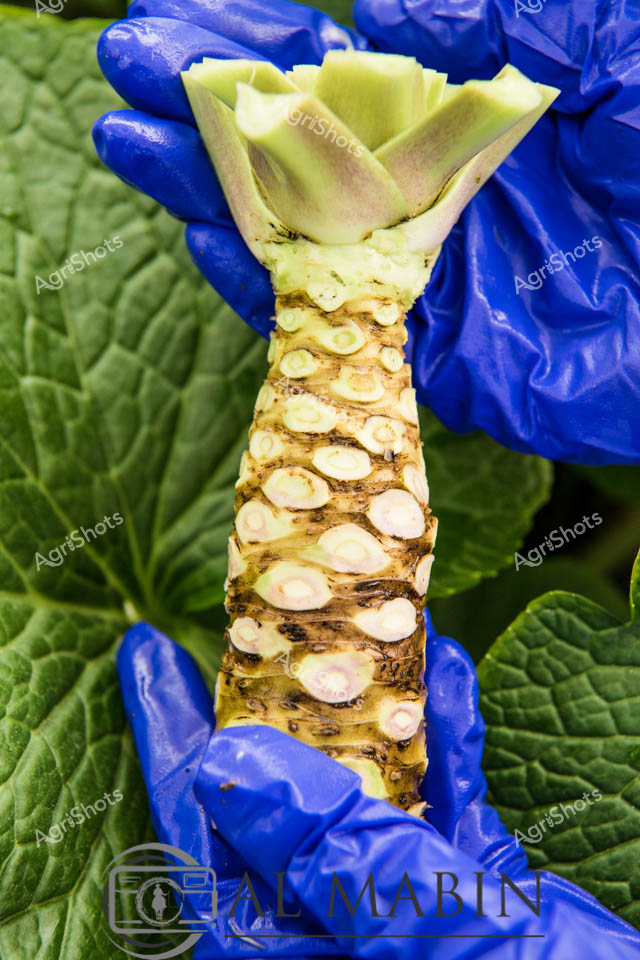
Nestled within a lush, verdant glasshouse setting, a freshly harvested wasabi root emerges as a botanical treasure. Delicate blue-gloved hands carefully cradle the prized rhizome, revealing its intricate, bumpy texture and pale golden-green coloration. The wasabi's distinctive form - with its bulbous, nodular body and fan-like top - speaks to the meticulous cultivation techniques used in Tasmania's specialized horticultural enterprises. Each raised bump on the root tells a story of patient growth, protected from harsh environmental conditions within the controlled microclimate of a precision glasshouse. The surrounding deep green leaves provide a rich, organic backdrop that emphasizes the wasabi's unique botanical structure, highlighting Tasmania's sophisticated approach to high-value crop production. This image captures the intersection of agricultural expertise and botanical beauty, showcasing why Tasmanian wasabi is renowned for its exceptional quality and careful handling.
 Image
Image
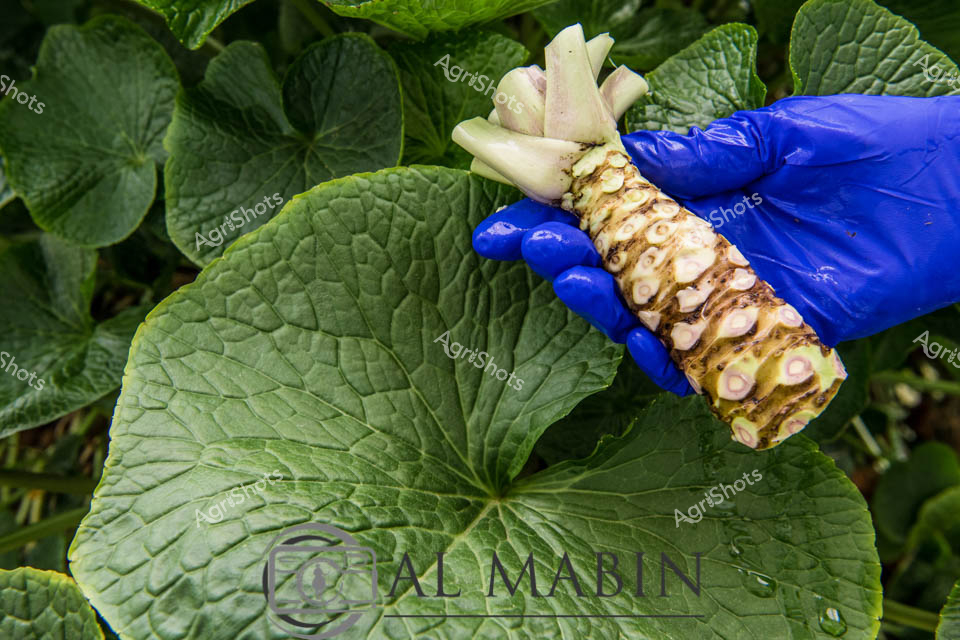
A blue-gloved hand delicately cradles a freshly harvested wasabi root against a backdrop of lush, textured green leaves in a Tasmanian glasshouse. The wasabi rhizome reveals an intricate, knobbly surface with a pale cream and golden-brown coloration, showcasing the meticulous care of high-value horticultural production. Precision and protection are paramount, with the protective blue nitrile glove highlighting the careful handling required for this delicate and valuable crop. The surrounding broad, veined leaves create a vibrant green canvas that emphasizes the agricultural expertise involved in wasabi cultivation. Tasmania's controlled glasshouse environment provides the perfect conditions for growing this notoriously challenging crop, which requires specific humidity, temperature, and shade to thrive. This image captures the intersection of agricultural innovation, specialized crop production, and the careful stewardship required to bring rare and sought-after produce from carefully managed growing environments to market.
 Image
Image
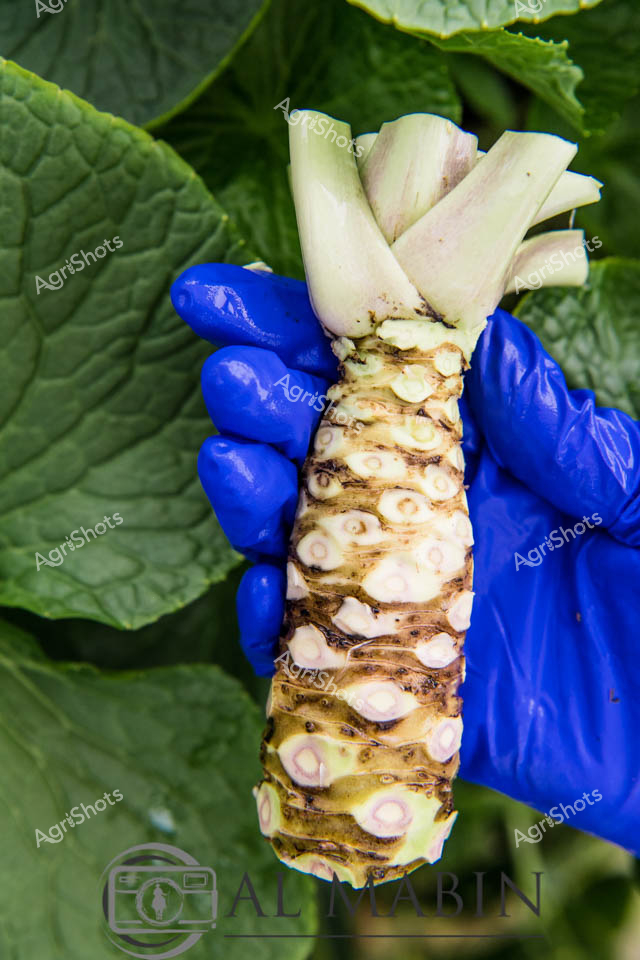
Blue-gloved hands delicately cradle a freshly harvested wasabi root, revealing the prized rhizome's intricate topology against a backdrop of lush green leaves. The wasabi displays a complex surface of ivory and golden-tan segments, each node and ridge telling a story of meticulous cultivation. Grown in the cool, controlled environment of a Tasmanian glasshouse, this rare crop represents the pinnacle of precision horticulture, where every detail of temperature, water, and soil composition is carefully managed to produce one of the world's most demanding culinary ingredients. The root's textured exterior showcases the unique challenges of wasabi production - a testament to the specialized agricultural expertise required to successfully grow this notoriously finicky plant. Wasabi thrives in narrow ecological conditions, demanding constant humidity, filtered light, and pristine water, making Tasmania's controlled glasshouse environments ideal for its cultivation. The blue nitrile glove suggests a clinical approach to harvesting, highlighting the intersection of agricultural craft and scientific precision that defines modern high-value crop production.
 Image
Image
Gnarled and pale green, a freshly harvested wasabi root rests on a vibrant blue-gloved hand against a backdrop of lush, textured green leaves. The artisan's careful handling reveals the prized rhizome's delicate nature, its surface marked with intricate rings and subtle color variations from creamy white to soft brown. Cultivated with precision in the cool, controlled environment of a Tasmanian glasshouse, this wasabi represents the pinnacle of specialized horticultural expertise. The root's unique morphology tells a story of meticulous growing conditions - protected from direct sunlight, nestled in rocky, water-rich soils that mimic its native mountain stream habitats. Each subtle blemish and organic contour speaks to the challenging cultivation of one of the world's most demanding and expensive culinary crops. The image captures the intersection of agricultural skill and botanical rarity, showcasing Tasmania's emerging reputation for premium, high-value horticultural production.
 Image
Image
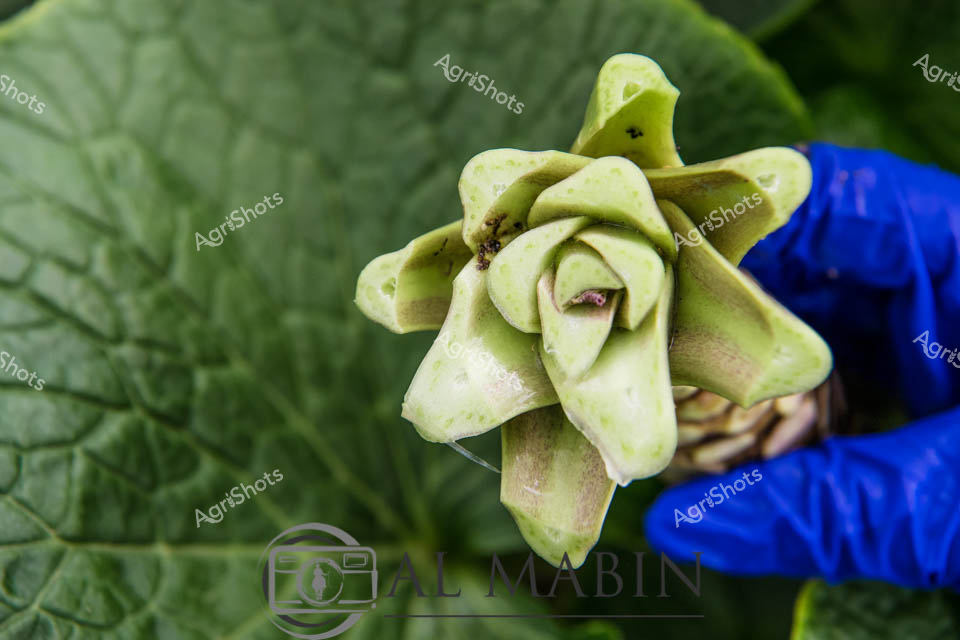
Nestled in the lush greenery of a Tasmanian greenhouse, a pristine wasabi flower blooms with intricate, pale green petals unfurling like a sculptural masterpiece. Delicate layers of waxy, overlapping leaves create a mesmerizing geometric form, highlighting the precision and care of horticultural cultivation. A gloved hand in deep blue—a mark of professional agricultural practice—gently supports the rare and valuable wasabi plant, underscoring the meticulous attention required in growing this prized Japanese condiment. The verdant background of large, textured leaves provides a rich, organic context, emphasizing the controlled environment of specialized crop production. This close-up reveals the exquisite complexity of wasabi cultivation, a testament to Tasmania's emerging role in high-value agricultural specialty crops. The image captures the intersection of scientific precision and natural beauty, showcasing the sophisticated techniques used in modern horticultural production.
 Image
Image
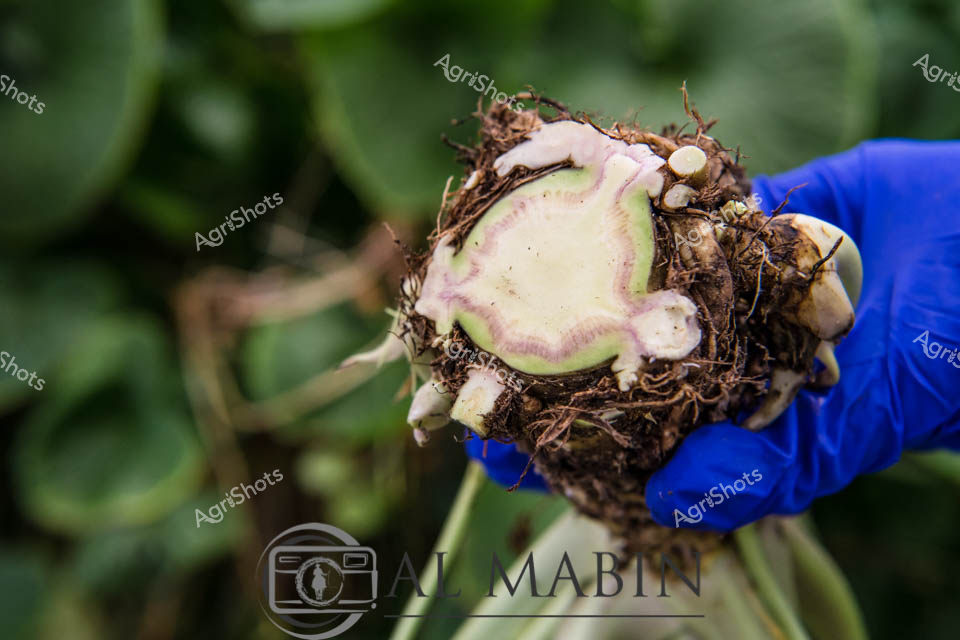
Nestled within a verdant greenhouse, a gloved hand gently cradles a freshly harvested wasabi rhizome, revealing the delicate intricacies of this prized Japanese horticultural treasure. The blue nitrile glove speaks to modern agricultural safety protocols, while the root's pale green and pink-tinged flesh contrasts dramatically with its rough, fibrous exterior. Wisps of root tendrils and soil cling to the rhizome, testament to its recent extraction from carefully cultivated growing beds. Tasmania's cool, humid climate provides the perfect environment for this notoriously challenging crop, which demands precise growing conditions and meticulous care. The close-up reveals the wasabi's subtle coloration and organic texture, highlighting the precision and expertise required in specialized vegetable production. This image captures the intersection of traditional agricultural knowledge and contemporary horticultural techniques, showcasing the delicate process of nurturing one of the world's most demanding and valuable culinary ingredients.
 Image
Image
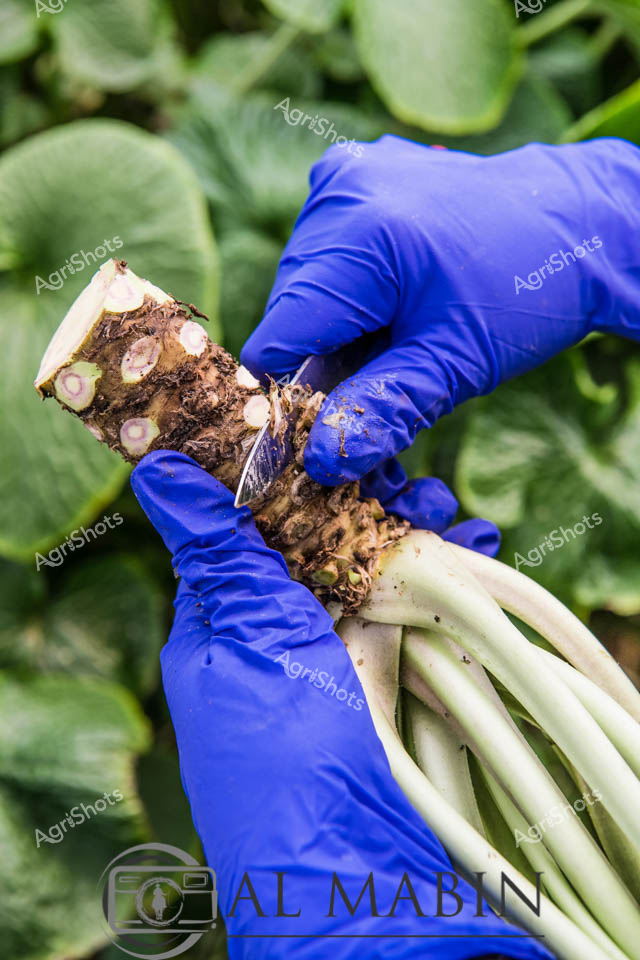
Brilliant wasabi cultivation scene unfolding under precision agricultural management. Powerful blue nitrile gloves grip a freshly harvested wasabi rhizome, revealing the intricate root structure against a lush green background of protective glasshouse foliage. The robust, knobbly root demonstrates the careful handling required in this specialty crop's delicate production process, with the white and brown root contrasting sharply against the vibrant royal blue of the protective equipment. Meticulous hand-harvesting techniques showcase the artisanal nature of wasabi cultivation, where each plant is individually assessed and carefully extracted to maintain its pristine quality. The close-up perspective highlights the textural complexity of the wasabi root, with its multiple nodes and rugged exterior, underscoring the specialized horticultural expertise required in this high-value crop production. Tasmania's advanced agricultural sector is eloquently represented through this image of precision, protection, and professional crop management.
 Image
Image
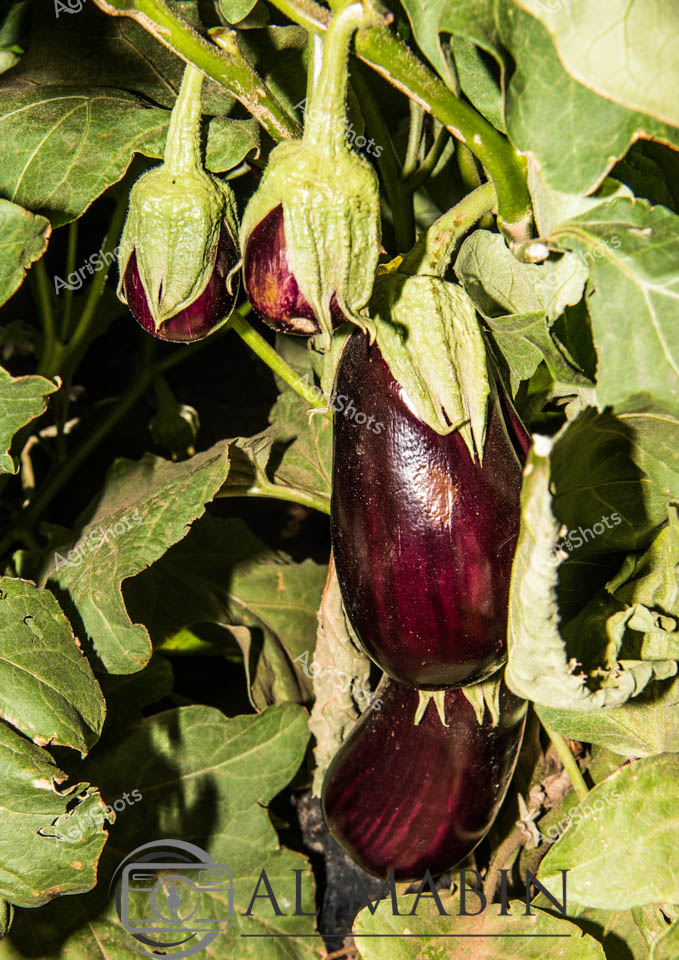
In the verdant depths of a Victorian market garden, glossy aubergines hang heavy with ripening promise. Deep burgundy fruits contrast against the vibrant green foliage, their smooth, taut skins gleaming with a rich, almost luminescent purple-black hue. Clusters of developing eggplants in various stages of maturity demonstrate the plant's dynamic growth cycle - some still pale and unripe, others reaching peak lusciousness. The dense, textured leaves create a lush backdrop, revealing the intricate ecosystem of careful horticultural cultivation. Each eggplant displays the hallmark smooth, elongated shape prized by chefs and home cooks alike, their curved forms nestled among protective green calyxes. This intimate portrait captures the essence of small-scale vegetable production, where meticulous care and optimal growing conditions transform delicate seedlings into robust, marketable produce that will soon grace tables across Victoria.