About this image
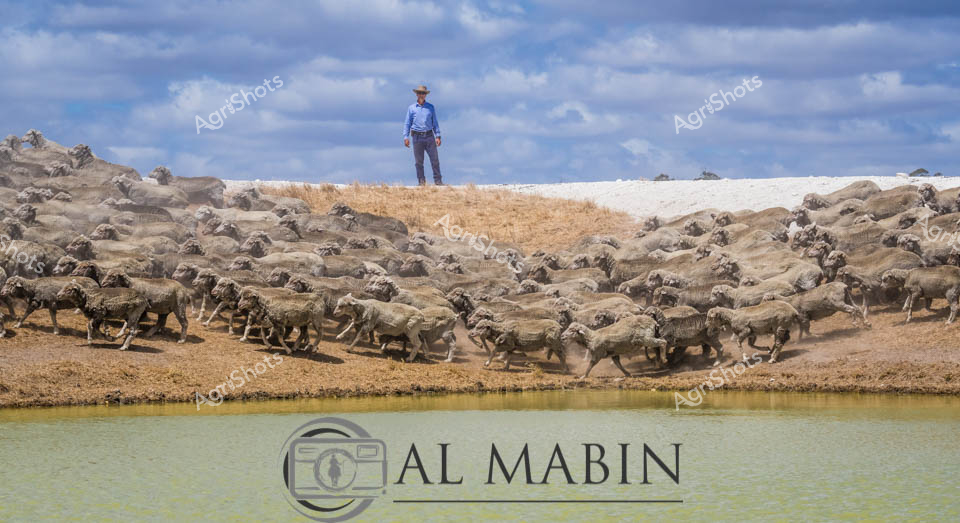
A flock of Merino sheep gather at a farm dam to drink water while a man working as a stockman stands watch from the elevated bank above. The woolly sheep crowd along the water's edge in the arid Western Australian landscape, creating dust clouds as they move across the dry paddock. The scene captures a typical mustering moment during dry conditions, with the stockman overseeing the flock's access to this vital water source under partly cloudy skies.
Similar media
 Image
Image
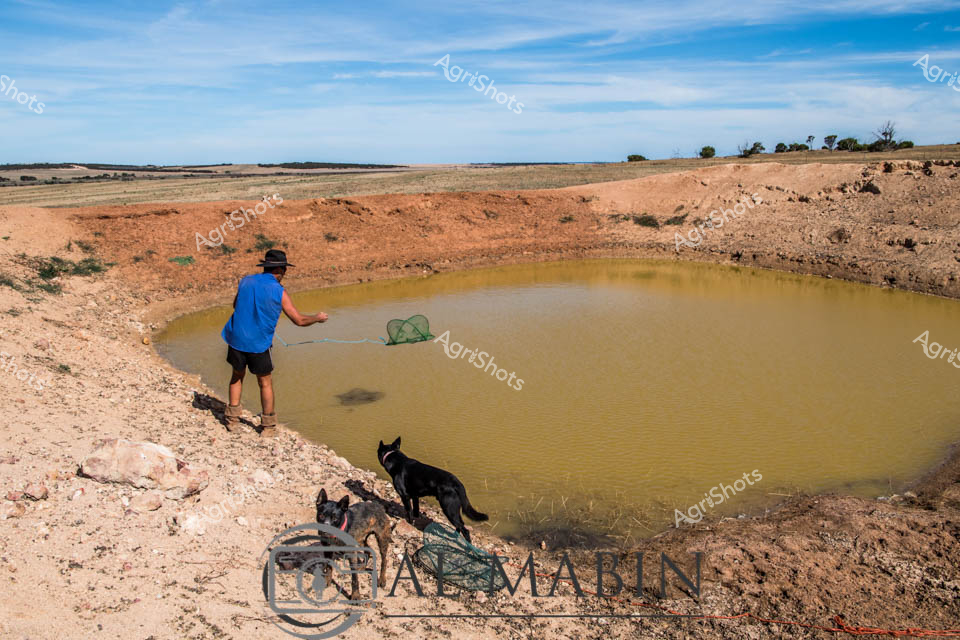
A man uses a fishing net to catch yabbies from a muddy dam during drought conditions on the Yorke Peninsula, South Australia. Two dogs accompany him at the water's edge, standing on the exposed red earth banks that reveal the severely depleted water levels. The arid landscape stretches to the horizon under a partly cloudy sky, highlighting the challenging drought conditions affecting this rural water source used for livestock and local aquaculture.
 Image
Image
A vast merino flock surges across the arid landscape of a New South Wales station, kicking up a billowing dust cloud that stretches toward the horizon. A lone stockworker on a motorbike guides the dense white mass of woolly bodies along a defined paddock boundary, skillfully herding thousands of sheep with precision and expertise. The golden-brown earth contrasts sharply with the verdant green strip of pasture, revealing the harsh yet spectacular terrain of Australian sheep country. Windswept and sun-bleached, the scene captures the raw intensity of rural mustering - a timeless dance between human, animal, and landscape that defines Australian agricultural heritage. Dust swirls and sheep move as a living, breathing entity, embodying the resilience and scale of sheep farming in the Australian outback.
 Image
Image
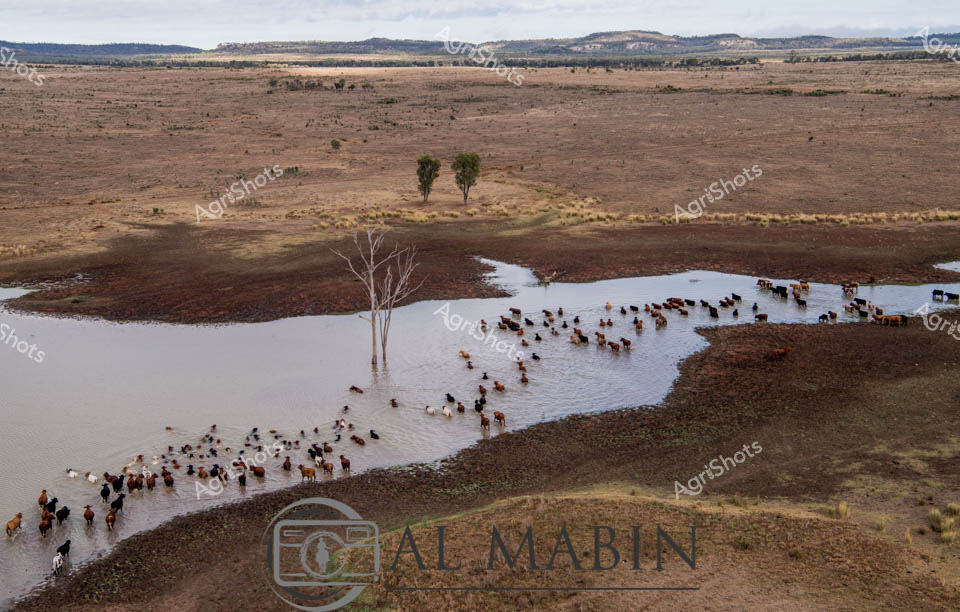
Cattle cascade through a winding watercourse on a vast Queensland pastoral landscape, their varied brown and tan hides creating a living river mirroring the meandering waterway. Late afternoon light bathes the arid grasslands, revealing a sparse terrain punctuated by two resilient trees standing sentinel on a distant rise and a bare, weathered tree partially submerged in the waterhole. The mob of cattle, likely Brahman-cross beef stock typical of northern Australian stations, move with purposeful determination, their bodies creating ripples and disturbances in the reflective water surface. This aerial perspective captures the harsh beauty of outback cattle management - a delicate choreography of survival where livestock navigate limited water resources in an unforgiving landscape. The muted palette of browns, tans, and grays speaks to the drought-resilient ecosystem, with the water providing a critical lifeline for the herd. The scene epitomizes the rugged spirit of Queensland's pastoral industry - resourceful, adaptive, and intimately connected to the challenging environments where livestock and landscape intersect.
 Image
Image
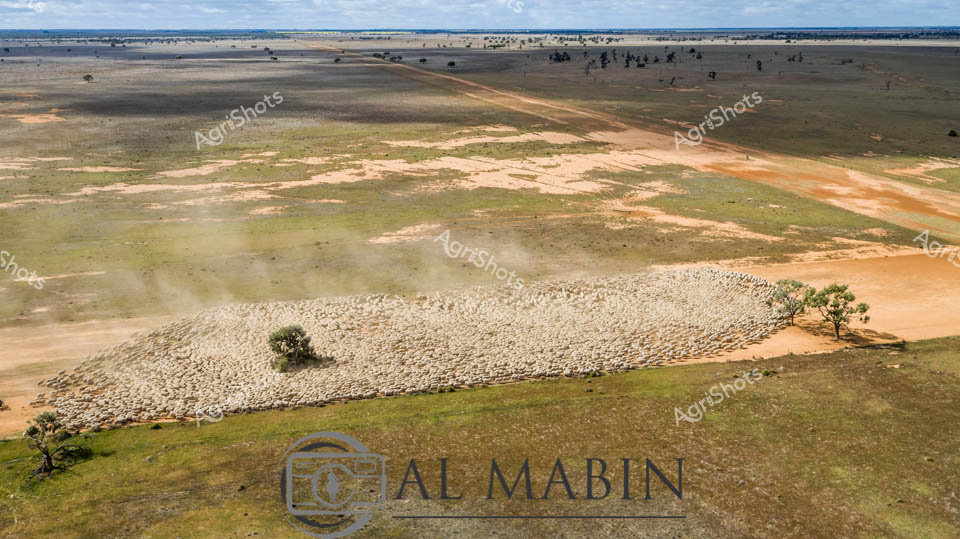
A vast merino sheep flock creates a living carpet of white across the arid pastoral landscape of western New South Wales. Tightly packed together, thousands of woolly bodies kick up a soft dust cloud beneath an expansive sky, surrounded by sun-baked earth in muted tones of ochre, grey-green, and dusty orange. Sparse eucalyptus trees punctuate the horizon, providing minimal shade in this harsh agricultural terrain typical of inland Australian stations. The mob moves as a single organism, directed by unseen stockmen and possibly working dogs, navigating the unforgiving dryland environment with remarkable collective purpose. Burnt oranges and pale greens of the paddock contrast dramatically with the brilliant white of the densely clustered sheep, highlighting the resilience of Australian agricultural practices in challenging climatic conditions.
 Image
Image
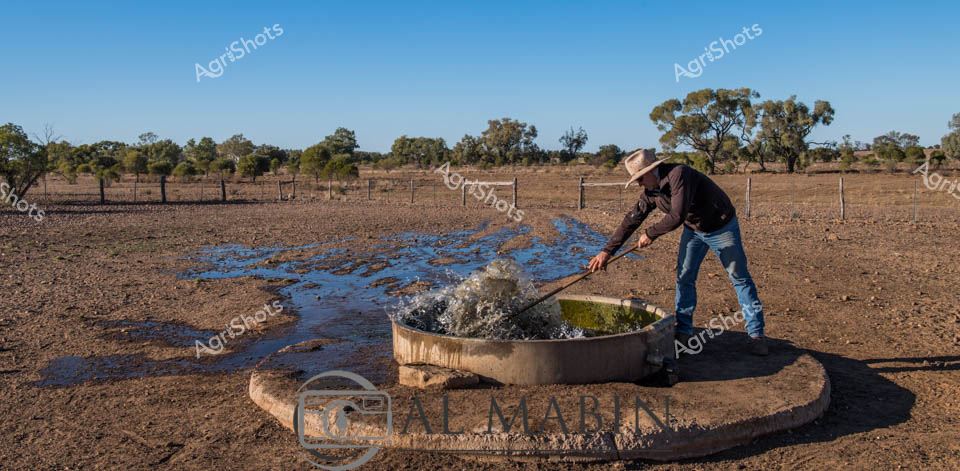
Outback Water Management: Rural Resilience A weathered station worker tends to a vital water trough under the vast, cloudless Queensland sky, embodying the persistent spirit of rural agricultural life. The dusty, parched paddock stretches toward a distant treeline of scattered eucalyptus, highlighting the challenging environment of inland Australia. Dressed in classic rural workwear - sturdy jeans, a wide-brimmed hat, and a dark jacket - the worker carefully manages the water flow, ensuring livestock have access to this critical resource in an arid landscape. The metal water trough overflows, creating a dark, wet pattern across the sun-baked earth, a small but significant moment of abundance in an otherwise dry terrain. Sparse fence lines and native trees frame the scene, demonstrating the careful balance of pastoral land management in a harsh climate. This image captures the daily labor and environmental adaptation that defines Australian agricultural work - a testament to human resilience and careful stewardship of marginal lands.
 Image
Image
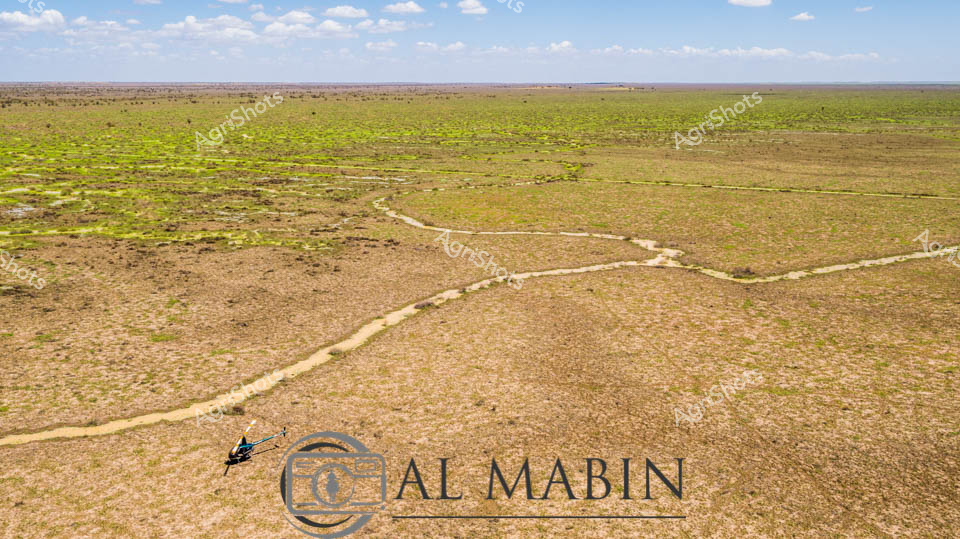
Expansive Channel Country floodplain stretches toward the distant horizon, revealing the raw beauty of Queensland's interior landscape. A sinuous dry creek bed meanders across the sun-drenched terrain, its pale sandy path cutting through muted earth tones of brown and subtle green. Intermittent patches of bright green vegetation suggest recent rainfall has brought fleeting life to this arid pastoral region, highlighting the delicate ecological balance of Australia's inland stations. The wide blue sky, populated with soft white clouds, creates a sense of immense openness and potential, characteristic of the vast beef production areas of western Queensland. The composition captures the resilience of the landscape - a network of natural watercourses waiting to be activated by seasonal floods, ready to transform this seemingly dormant terrain into a momentary oasis of pastoral productivity.
 Image
Image
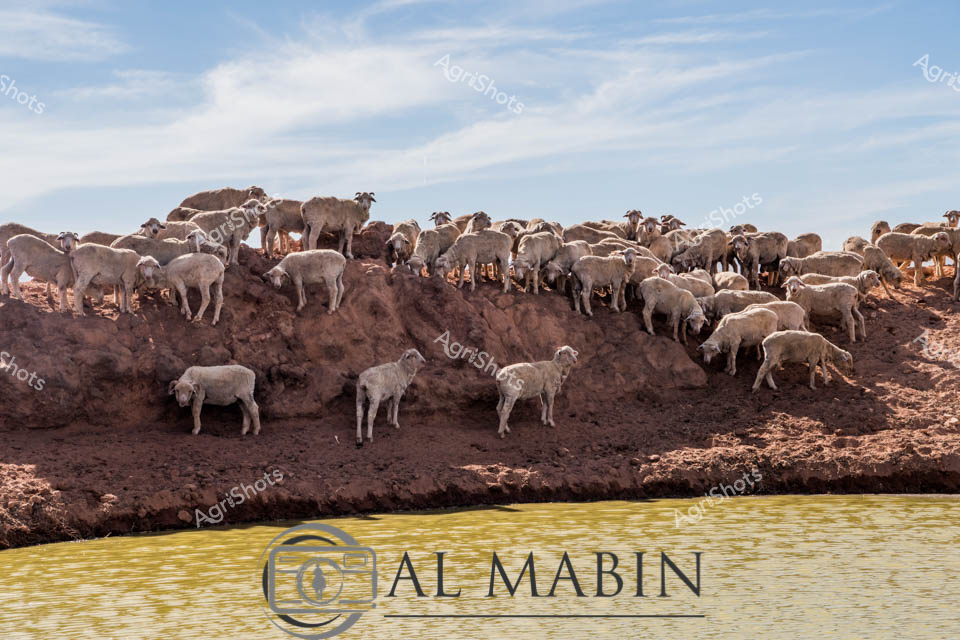
Merino sheep cluster along the dusty, eroded banks of a diminishing water source on the arid Yorke Peninsula in South Australia. The flock, with their characteristic fine, dense wool, huddles precariously on the cracked earth, their pale bodies creating a stark contrast against the rich reddish-brown soil. A shallow yellow-green dam reflects the harsh realities of drought, with water levels dramatically reduced and the surrounding landscape parched and unforgiving. The sheep stand in tight groups, some perched on the upper ledge of the eroded bank, others scattered across the lower levels, revealing the challenging terrain they navigate. Their resilience is evident in their positioning - clustered together for safety and survival in this uncompromising environment. The pale blue sky with wispy clouds offers little promise of immediate relief, emphasizing the stark agricultural challenge of water scarcity in rural South Australia. This image powerfully communicates the ongoing struggle of livestock management in drought-affected regions, where every drop of water and patch of ground becomes critically important for survival.
 Image
Image
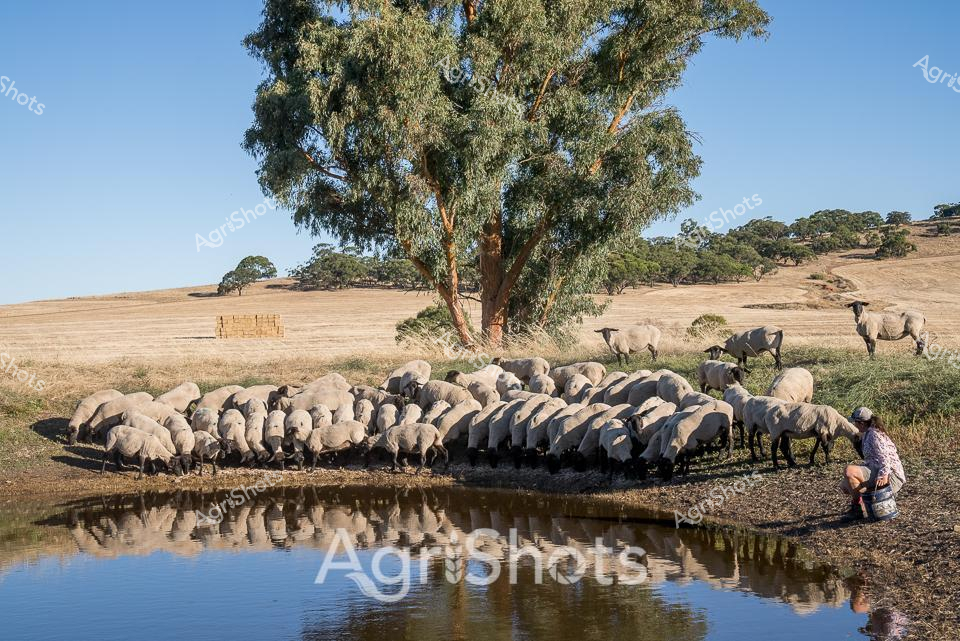
Merino sheep crowd the water's edge of a tranquil dam in the Mid North region of South Australia, their woolly bodies casting precise reflections on the still surface. A large eucalyptus tree dominates the background, providing shade across the golden summer pastures of a rural farming landscape. A stock manager crouches nearby, carefully monitoring the flock as they drink in unison, their dusty fleeces contrasting against the deep blue sky and parched paddock. Suffolk-cross ewes bunch tightly, creating a living mosaic of soft greys and whites, their bodies lean and muscular from grazing the dry seasonal pastures. The sparse landscape speaks to the resilience of Australian agricultural practice - a delicate balance of careful stock management and adaptation to harsh environmental conditions. This scene captures the quintessential rhythm of rural life, where water becomes a critical lifeline during the intense heat of an Australian summer, and stock managers maintain a watchful eye over the valuable livestock.