About this image
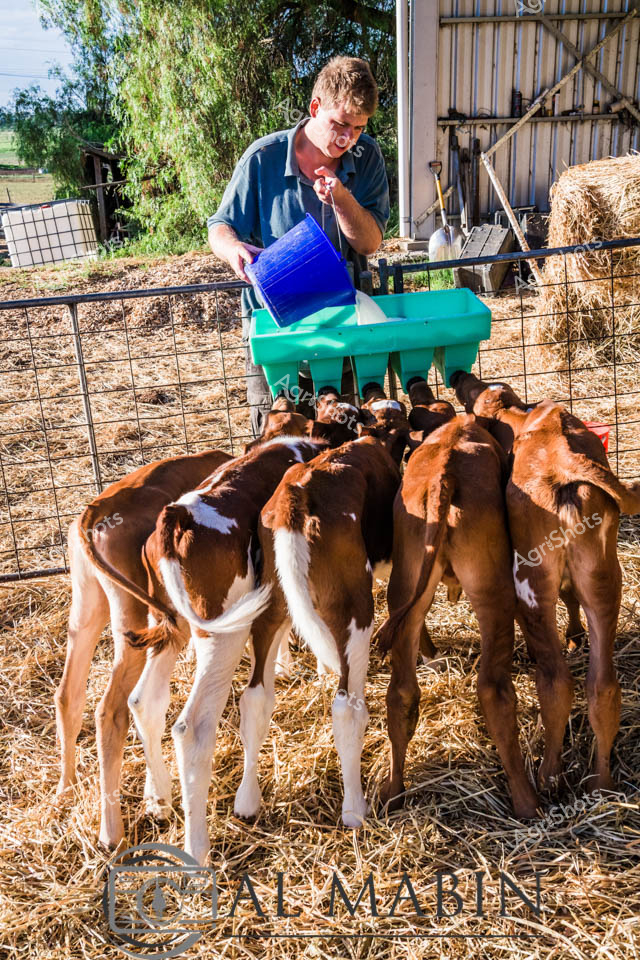
A young man working as a farm hand feeds a group of brown and white Ayrshire calves at a dairy operation in South Australia's Murraylands Region. He pours milk from a blue container into a green feeding trough while the hungry calves gather around eagerly. The scene captures the daily routine of calf feeding on straw bedding within wire panel yards, with farm buildings and hay bales visible in the rural backdrop.
Similar media
 Image
Image
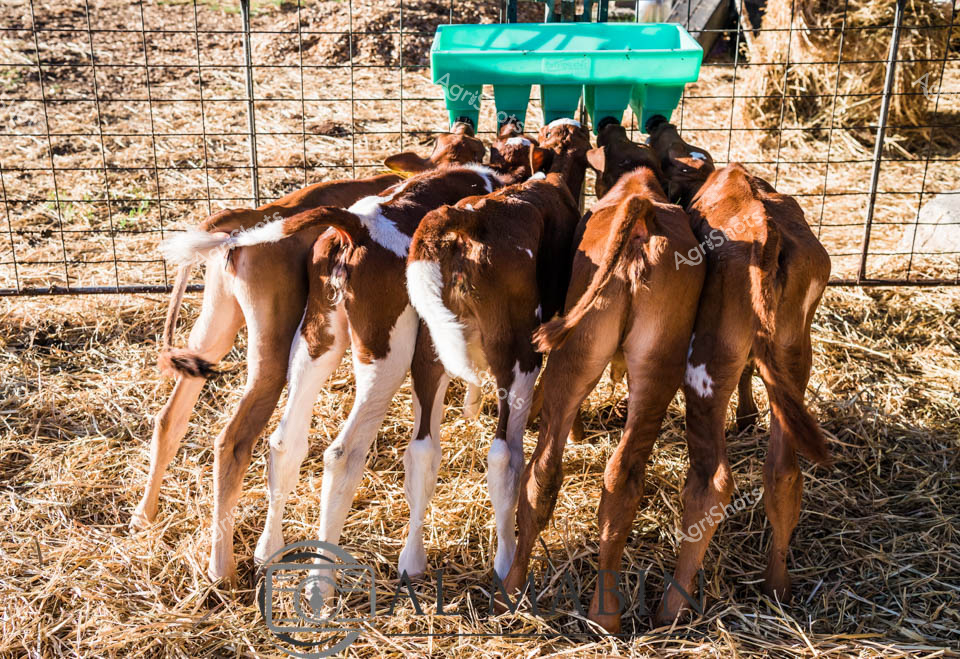
Young Ayrshire dairy calves cluster around a bright turquoise feed station, their russet and white coats gleaming in the golden morning sunlight. Nestled in a straw-covered enclosure with wire mesh fencing, the calves are positioned intently, heads down, feeding from the automated milk dispenser. Their varied coat patterns - some solid reddish-brown, others with distinctive white patches - showcase the classic Ayrshire breed characteristics typical of South Australian dairy herds in the Murraylands region. The rich texture of golden wheat straw beneath their slender legs provides insulation and comfort, while the green feeding station represents modern agricultural technology supporting traditional livestock management. Early morning light casts soft shadows across the paddock, suggesting a crisp autumn day perfect for young stock development. These carefully bred calves represent the future of a productive dairy enterprise, their synchronized posture demonstrating both individual vitality and collective purpose. The scene captures the precise intersection of animal husbandry and agricultural innovation - a testament to the meticulous care and strategic breeding that underpins successful modern dairy farming in rural South Australia.
 Image
Image
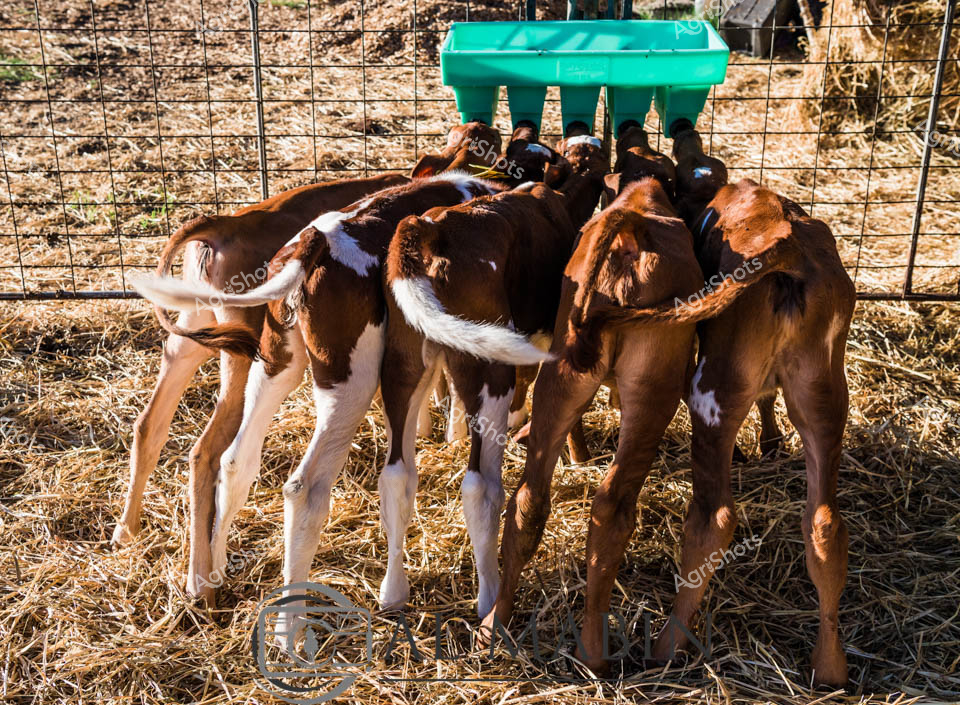
Young Ayrshire dairy calves cluster around a bright green feeder, their russet and white coats creating a patchwork of color against the golden straw bedding. The lean, leggy animals press forward eagerly, their distinctive reddish-brown and white markings gleaming in the soft light of what appears to be an early morning feeding. Sturdy wire fencing surrounds the pen, typical of modern South Australian dairy infrastructure in the rich Murraylands region. Each calf displays the classic Ayrshire breed characteristics - athletic builds, alert postures, and distinctive coat patterns that blend warm browns with clean white patches. The metallic green feeder stands out against the earthy tones of the straw and fence, suggesting a carefully managed agricultural environment where nutrition and animal welfare are paramount. This scene captures the essence of contemporary dairy farming - efficient, clean, and focused on raising the next generation of productive livestock.
 Image
Image
Young Ayrshire dairy calves cluster around a vibrant teal agricultural feed station, their sleek reddish-brown and white coats creating a striking pattern against the golden straw bedding. Positioned in the sun-drenched Murraylands region of South Australia, the calves stand closely together, their heads aligned and angled downward to access the feeding system. The uniform coloration of these Ayrshire breed calves - predominantly chestnut with distinctive white patches - highlights the genetic consistency of this dairy livestock. Straw bedding provides a textured, natural ground cover, while the sturdy wire fence in the background defines the controlled agricultural environment. The bright turquoise feed station contrasts beautifully with the warm earth tones, signaling modern farming practices integrated with traditional livestock care. This image captures the essence of contemporary dairy farming: precision nutrition, careful animal husbandry, and the structured yet nurturing approach to raising the next generation of milk-producing cattle.
 Image
Image
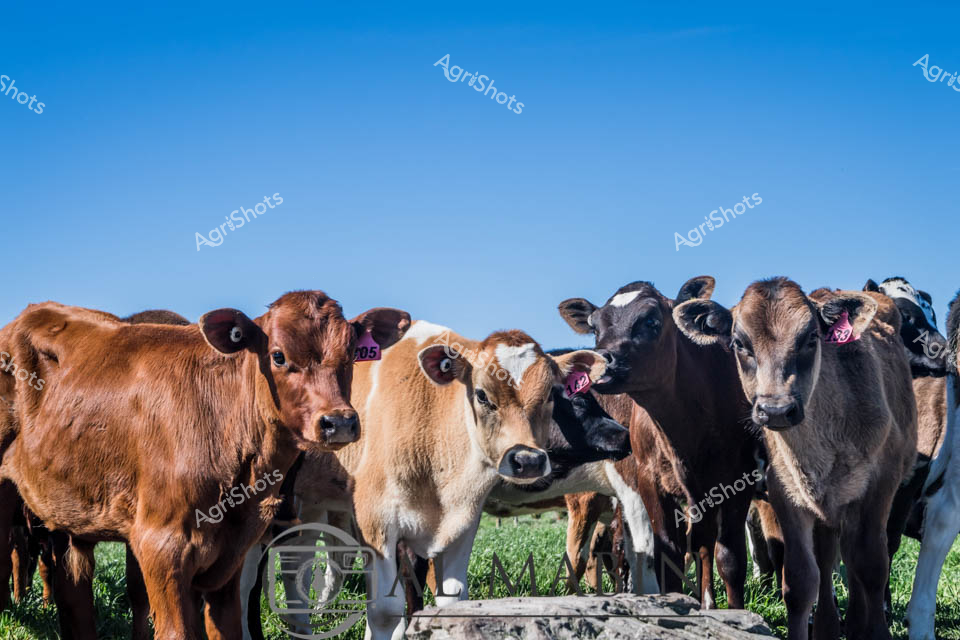
Jersey and Holstein dairy heifers cluster together on a pristine summer pasture, their varied coat colors ranging from rich mahogany to black and white patches gleaming under a cloudless azure sky. The young cattle, tagged for identification, stand companionably near a water trough, representing the diversity of a carefully managed dairy breeding program. Lush green grass provides a vibrant foreground, suggesting fertile Tasmanian agricultural land at the peak of growing season, likely mid-morning with bright, crisp sunlight illuminating the animals' sleek coats. These replacement heifers - some Jersey crossbreeds with warm caramel coloration, others classic black and white Holsteins - represent the future genetic potential of a progressive dairy enterprise. Their alert expressions and robust physiques demonstrate careful nutrition and breeding selection, highlighting the sophisticated agricultural practices of modern Tasmanian dairy farming. The panoramic composition captures the essence of rural prosperity: healthy young stock, verdant pastureland, and the promise of future milk production.
 Image
Image
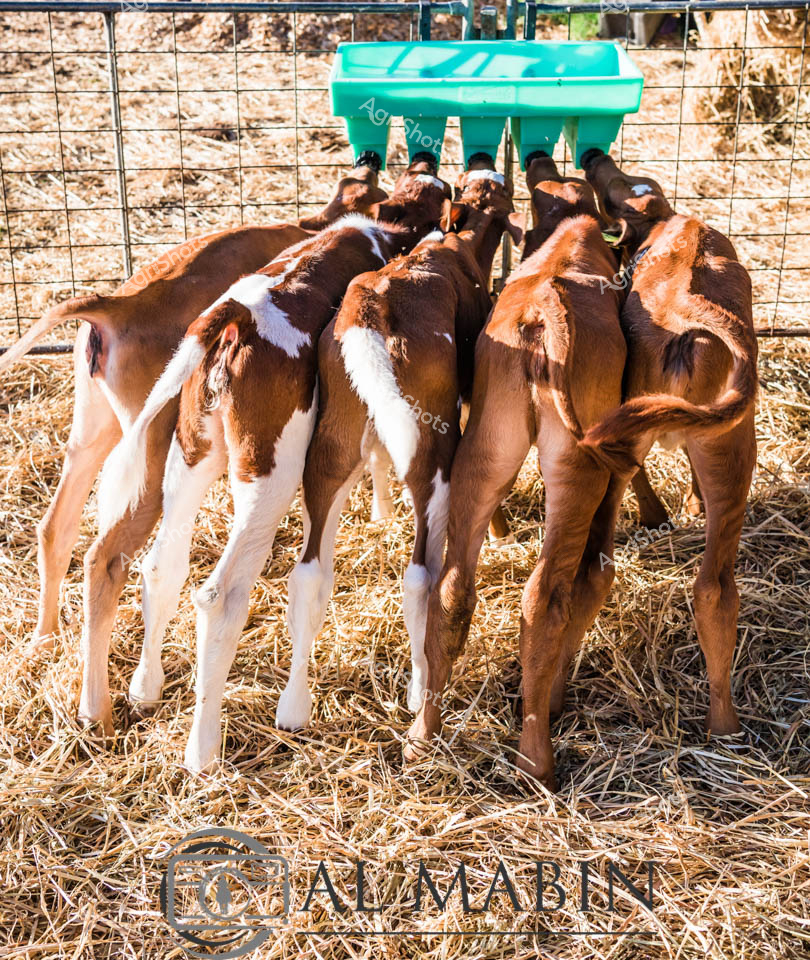
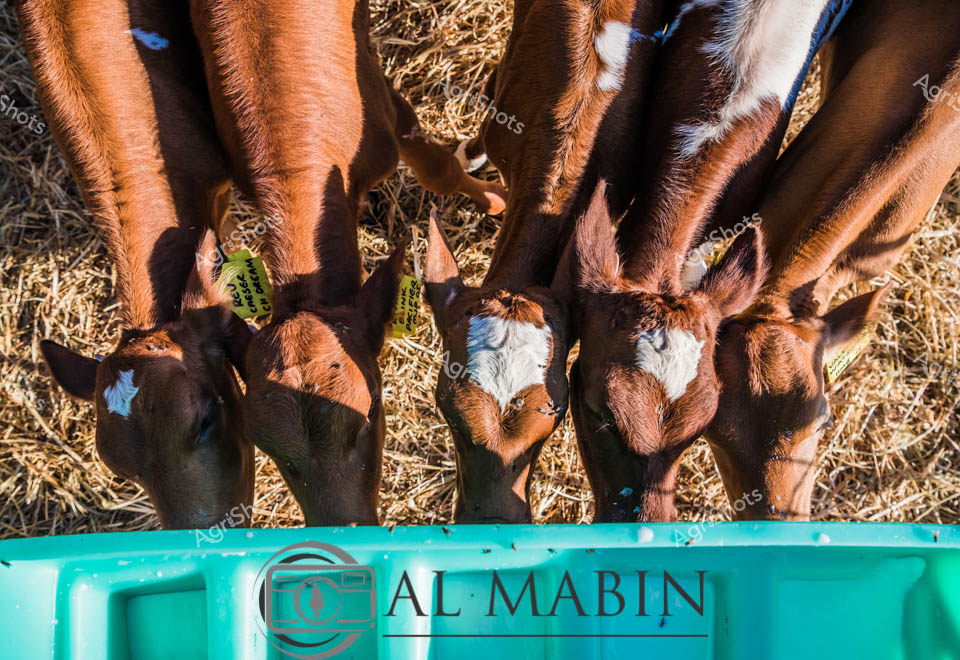
Ayrshire calves huddle together at the feeding trough, their russet and white coats gleaming in the soft light of early morning. The distinctive markings of this heritage dairy breed stand out against the golden straw bedding, each calf wearing a bright green identification tag. Lined up precisely along the turquoise agricultural feed station, the young cattle display the characteristic white blazes and rich copper-brown coloration that makes Ayrshires prized in South Australian dairy operations. The overhead view captures the rhythmic precision of farm life, with the calves' heads bowed in synchronized feeding. Strands of straw create a textured backdrop, highlighting the smooth, healthy coats of these young animals. This intimate portrait reveals the care and attention invested in raising the next generation of dairy cattle, showcasing the beauty of agricultural practice and the careful nurturing that goes into sustainable livestock production.
 Image
Image
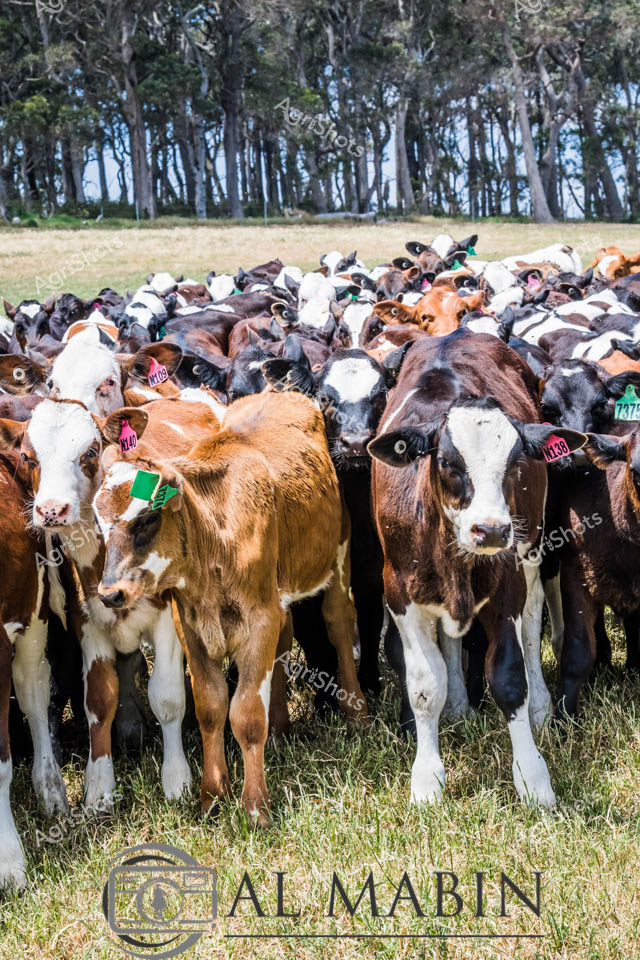
Clustered in a lush pasture bordered by a silvery woodland, a vibrant herd of dairy calves stands united under the open Western Australian sky. Holstein, Friesian, and brown-coated calves huddle tightly together, their distinctive white and dark patches creating a living mosaic of genetic diversity. Numbered ear tags in vivid green and pink mark each young animal, signaling careful livestock management and individual tracking. The verdant grass beneath their hooves contrasts beautifully with the soft earth tones of their coats, while the backdrop of eucalyptus trees frames the scene with quintessential Australian rural charm. These young dairy cattle represent the future of a thriving agricultural enterprise, their sturdy frames and alert expressions suggesting robust health and potential.
 Image
Image
Brahman cattle stand resolute in a sunlit Queensland pastoral landscape, their distinctive loose, silvery-white and rich russet coats gleaming against verdant pastureland. These hardy subtropical beef breed representatives—with their pronounced dewlaps, large ears, and muscular frames—demonstrate the resilience that makes them perfectly adapted to Australia's challenging agricultural environments. The herd clusters together, creating a dynamic composition of varying coat colors and sizes, from mature cows to younger calves, highlighting the genetic diversity within this robust breed. Rolling grasslands stretch behind them, dotted with isolated trees and fencelines, suggesting a vast station property typical of Queensland's extensive cattle country. Soft cumulus clouds drift across an expansive blue sky, casting a sense of tranquility and emphasizing the open, uninterrupted horizons that characterize these working landscapes. The cattle's alert, steady gazes convey a sense of quiet strength and collective purpose, embodying the enduring spirit of Australian pastoral agriculture.
 Image
Image
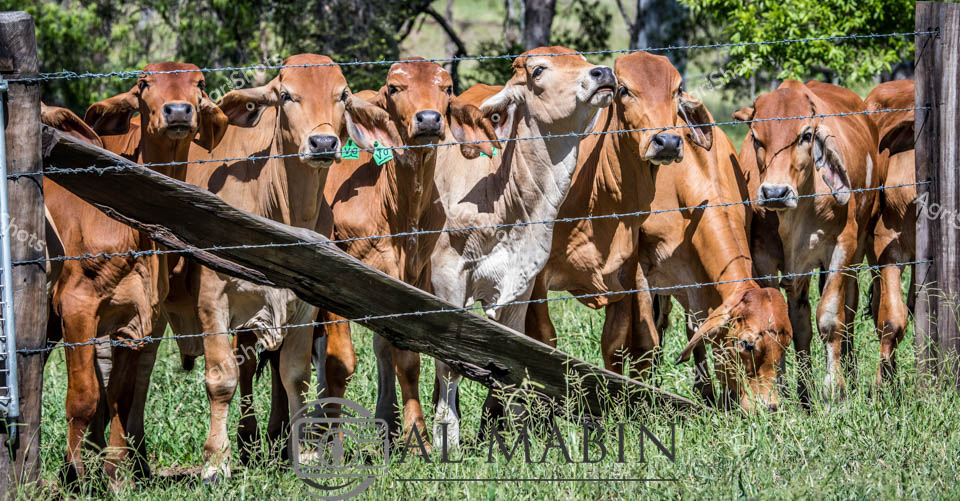
A tight cluster of burnished copper and cream Brahman cattle stand clustered behind a weathered wire fence, their distinctive humped shoulders and pendulous ears capturing the resilience of Queensland's pastoral landscapes. The herd, predominantly rich russet-brown with a few lighter individuals, press close together on lush green pasture, their muscular frames a testament to the breed's adaptation to Australia's challenging agricultural environments. Barbed wire stretches between robust timber fence posts, creating a sharp geometric contrast against the soft organic forms of the cattle, while dappled sunlight and native trees in the background suggest a typical pastoral setting in coastal or inland Queensland. Each animal bears a small ear tag, marking them as part of a carefully managed herd, their collective gaze suggesting an alert awareness of their surroundings. The tight composition emphasizes the uniformity and strength of these Brahman cattle, bred for heat tolerance and tick resistance, embodying the genetic success of cattle farming in northern Australia's demanding climatic conditions.