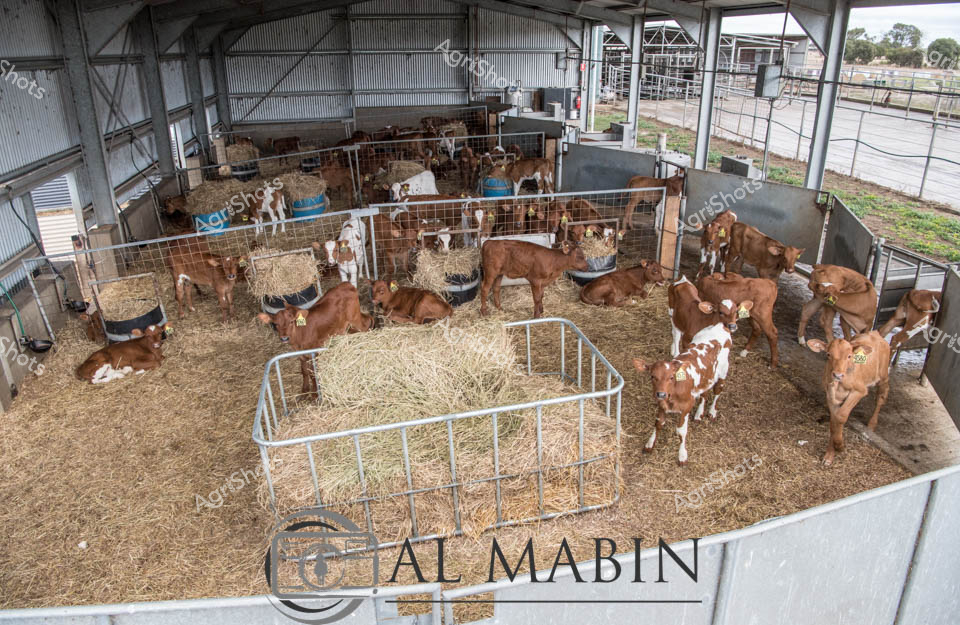
About this image
Young dairy calves huddle in a sheltered metal livestock shed, nestled on straw bedding with hay feeders. The herd of reddish-brown and white cattle vary in size, with some standing and others resting, representing a typical South Australian dairy farm environment in the Limestone Coast region. Metal yard fencing and blue feed containers provide structure to the calves' protected indoor space.
Similar media
 Image
Image
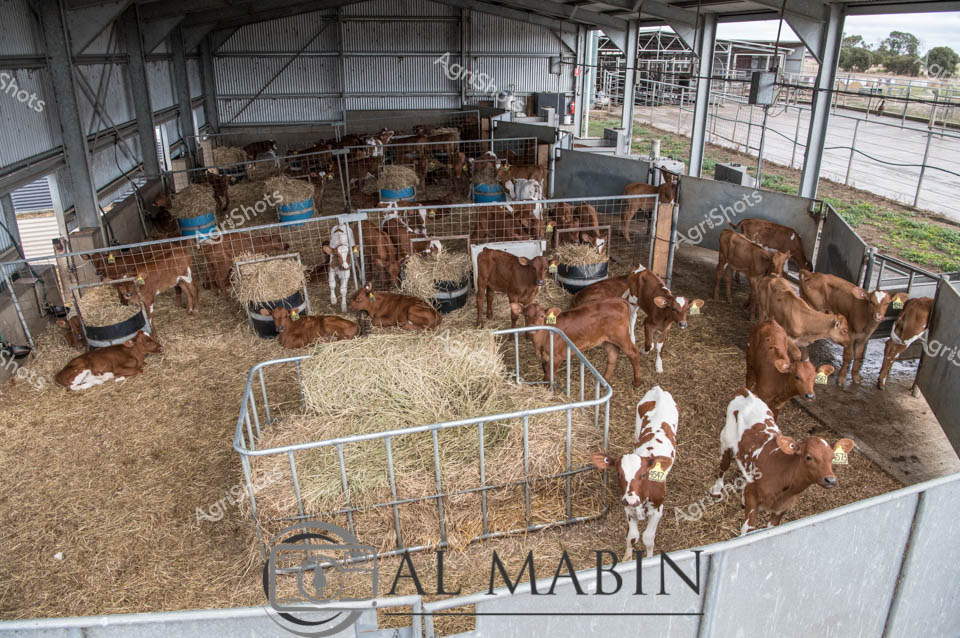
Under the steel-framed shelter of a modern dairy facility in South Australia's Limestone Coast region, a herd of rich russet and white dairy calves nestles on a golden bed of fresh straw. Blue feeding troughs and metal livestock barriers divide the spacious pen, creating a structured environment for these young cattle to rest and feed. The calves display varying ages and markings - some sprawled contentedly, others standing alert, each wearing a distinctive yellow ear tag identifying their individual status within the herd. The corrugated iron walls and open-sided design provide excellent ventilation and natural light, typical of contemporary Australian agricultural infrastructure. Soft hay creates a textured, insulating ground cover, offering comfort and warmth to the young animals. Metal fencing and strategic compartments allow careful management of the calves, ensuring optimal feeding and monitoring conditions. This scene captures the meticulous care and sophisticated approach of modern dairy farming, where animal welfare and systematic agricultural practices converge. The warm browns and whites of the cattle contrast beautifully with the industrial greys of the structure, representing the harmonious blend of nature and agricultural technology in the Australian farming landscape.
 Image
Image
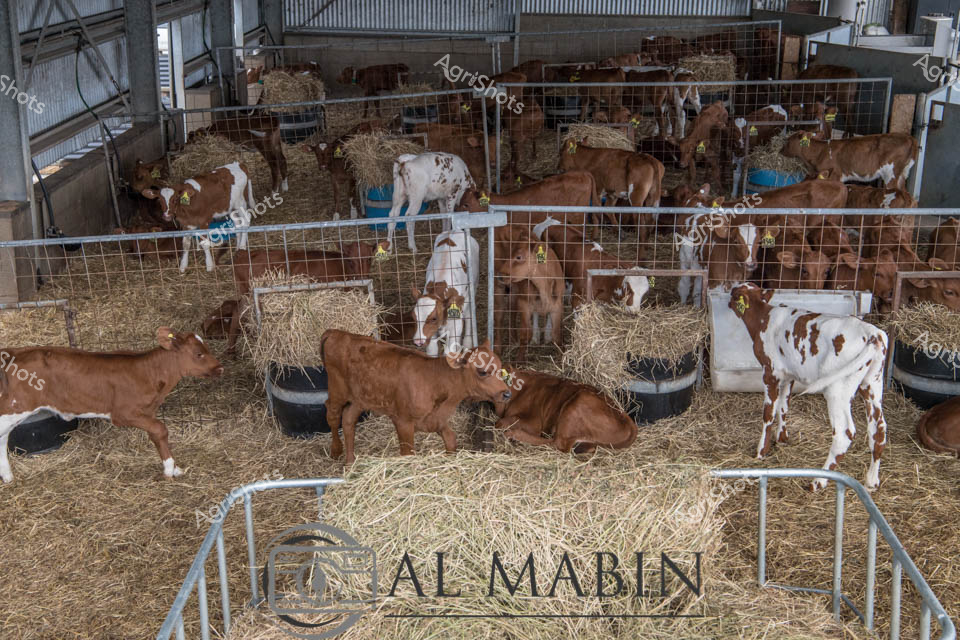
Calves rest and feed in a spacious steel-framed dairy barn, nestled on golden straw bedding across segmented pen areas. Rich auburn and white-patched Jersey and Friesian calves, each tagged with yellow identification markers, occupy the meticulously organized indoor space. Hay bales and black feeding troughs provide sustenance, while the wire mesh partitions create structured zones for these young dairy animals. The cool, controlled environment of the shed suggests careful livestock management typical of professional agricultural operations in South Australia's renowned Limestone Coast region. Soft natural light filters through the corrugated metal structure, highlighting the varied coat colors and markings of the calves - some lounging quietly, others standing alert. The Almanex branding visible in the foreground signals this as a professional, well-managed dairy breeding facility, representing the sophisticated animal husbandry practices of contemporary Australian agricultural enterprises.
 ▶ Video
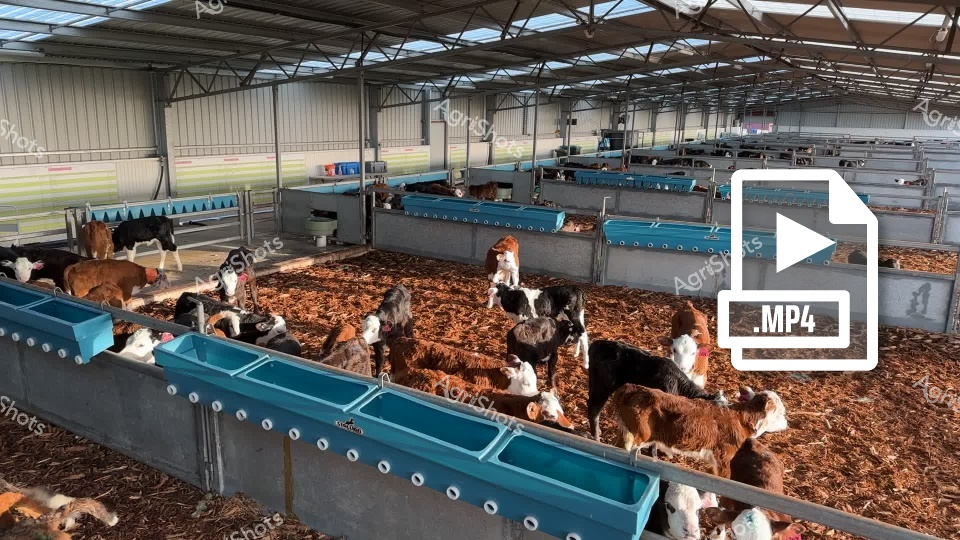
In this dairy farm scene from Tasmania during winter, young bobby calves are gathered in a large, structured indoor feeding area with blue feeding troughs. The calves, varying in brown and white colors, stand on a bed of wood shavings or straw, awaiting their milk feeding in a carefully managed agricultural environment designed for efficient dairy calf rearing.
 Image
Image
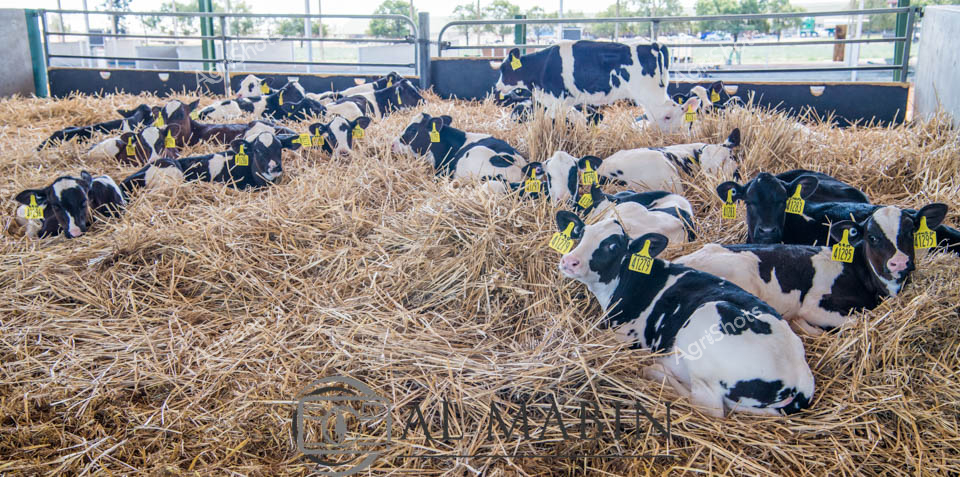
Nestled in a spacious covered dairy shed, a group of Holstein Friesian calves rests contentedly on a thick bed of golden straw. Each young bovine wears a distinctive yellow ear tag, marking them as part of a carefully managed herd in a modern New South Wales dairy operation. The black and white spotted calves are clustered together, some lying down and others sitting upright, creating a picturesque scene of early livestock care. Soft natural light filters through the shed's perimeter, highlighting the textural contrast between the calves' smooth coats and the rough, wheat-colored straw bedding. This image captures the meticulous approach to calf rearing in Australian dairy farming - providing clean, comfortable environments that support animal welfare and future herd productivity. The structured metal fencing and organized pen layout reveal a professional, scientific approach to agricultural animal husbandry, where each young animal represents an investment in the farm's future milk production.
 Image
Image
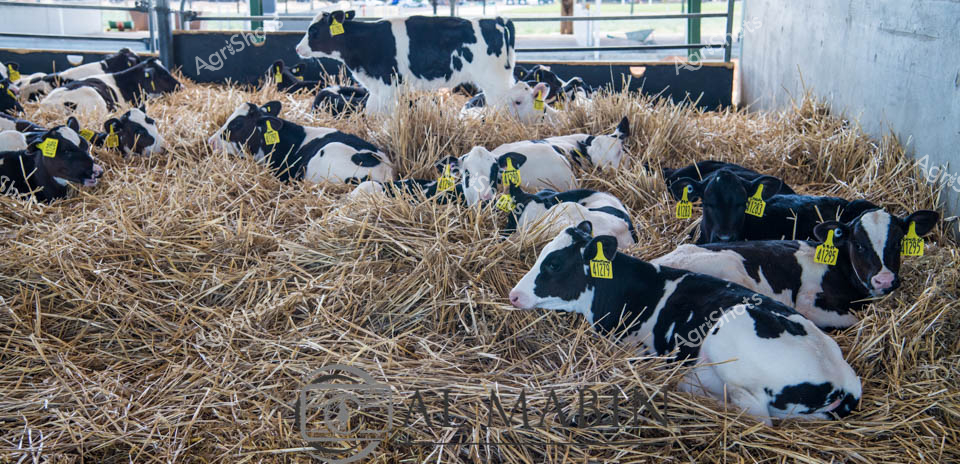
Holstein-Friesian dairy calves rest comfortably on golden straw bedding within a modern livestock shelter, their distinctive black and white patched coats creating a striking visual pattern. Precise yellow ear tags indicate individual identification, reflecting meticulous farm management practices typical of progressive Australian dairy operations. The calves appear young and healthy, nestled closely together on thick, clean wheat straw that provides insulation and comfort, demonstrating best practice animal husbandry techniques. Soft natural light filters through the shelter's structural framework, highlighting the crisp white and deep black fur markings of these future milk production animals. Each calf wears a numbered tag, suggesting systematic tracking and care in this carefully managed dairy environment. The scene captures the careful balance of agricultural science and animal welfare in contemporary Australian dairy farming, where young livestock are nurtured with precision and compassion.
 Image
Image
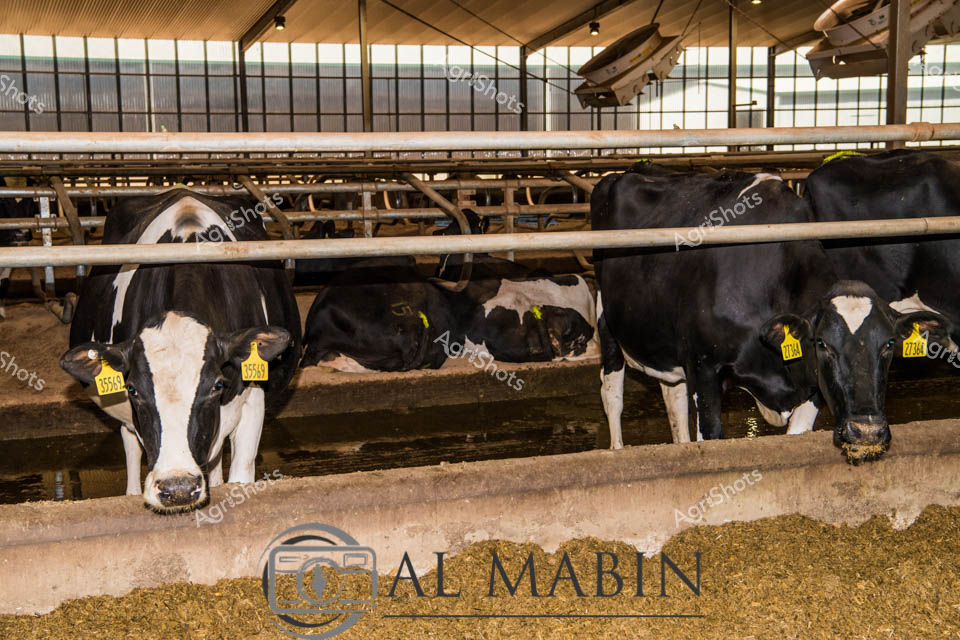
Holstein dairy cows stand attentively in a precisely engineered feed pad, their black and white coats creating a striking contrast against the golden silage bedding and industrial shed structure. Numbered yellow ear tags identify each animal, reflecting modern agricultural management practices that track individual cow performance. The controlled environment - with its robust metal framing, structured feeding trough, and carefully distributed feed - represents the pinnacle of contemporary dairy farming efficiency in regional New South Wales. Soft indirect light filters through the translucent shed walls, creating a calm, methodical atmosphere where these high-productivity cattle can access nutrient-rich silage with minimal stress. The precise alignment of the cows, their muscular frames and distinct Holstein markings, speaks to generations of selective breeding focused on maximizing milk production. This image captures the sophisticated intersection of animal husbandry, agricultural engineering, and scientific nutrition that defines modern Australian dairy operations.
 Image
Image
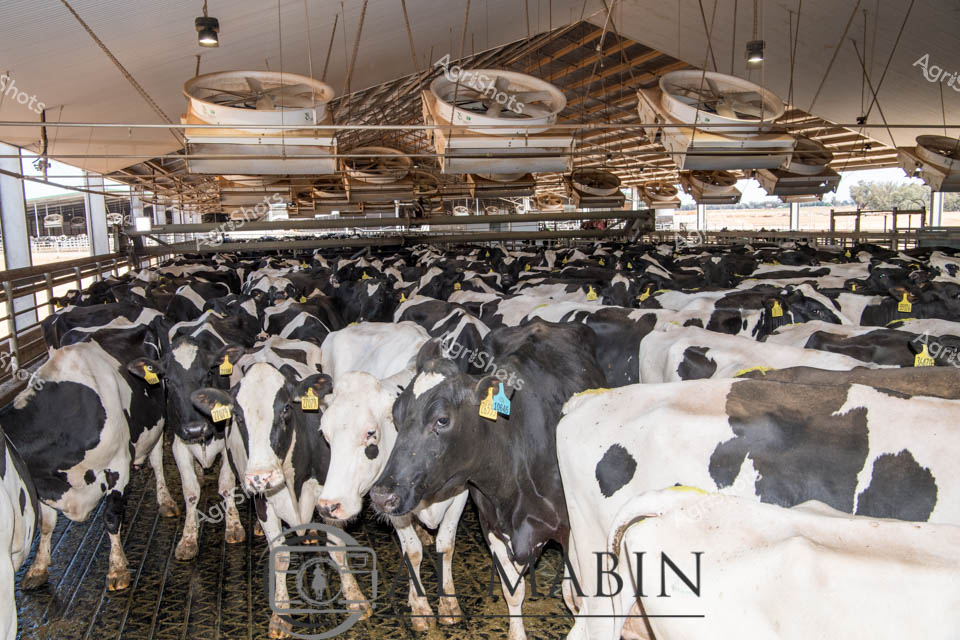
Holstein dairy cattle crowd a state-of-the-art rotary milking shed, their distinctive black and white coats creating a dense, living tapestry across the shed's floor. Overhead, large industrial fans circle lazily, providing ventilation in what appears to be a warm Australian agricultural setting. Yellow identification tags punctuate each cow's ear, marking them as part of a carefully managed herd, their muscular bodies reflecting generations of selective breeding for optimal milk production. The robust infrastructure - with its steel framework, raised roof, and precision engineering - showcases the sophisticated technology of modern dairy farming in New South Wales. Rhythmic and purposeful, the scene captures the intersection of animal husbandry and agricultural innovation, where tradition meets cutting-edge agricultural practice. The metallic greys and whites of the shed contrast beautifully with the organic black and white patterns of the Holstein cattle, creating a compelling visual narrative of Australian rural productivity.
 Image
Image
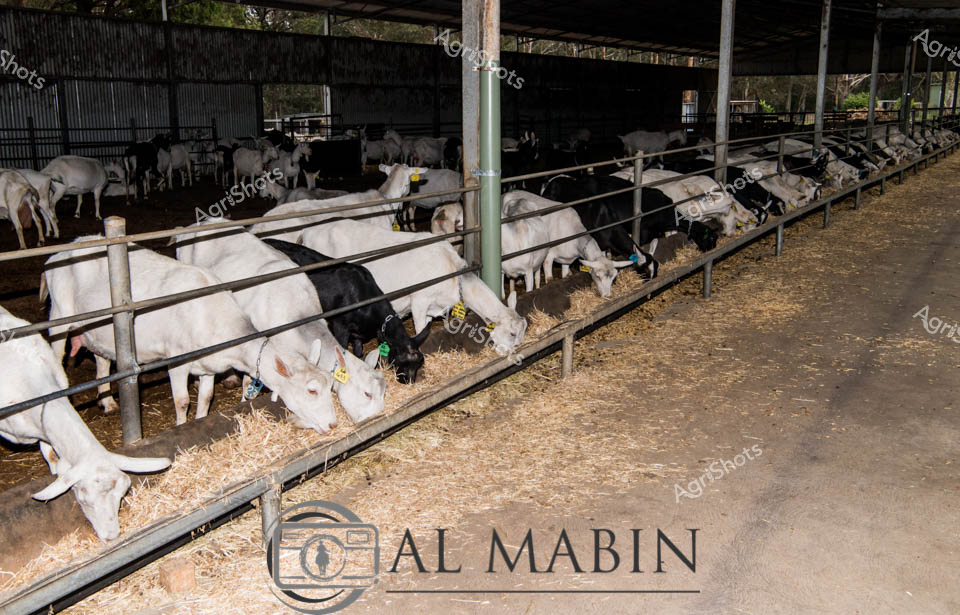
Pristine white and black dairy goats line the straw-bedded feeding lanes of a modern covered livestock shed, each wearing distinctive yellow ear tags. The carefully managed herd demonstrates the precision of contemporary Australian goat farming, with animals standing comfortably in orderly rows accessing feed. Soft natural light filters through the open-sided shelter, highlighting the clean white and charcoal coats of these productive animals. Stainless steel infrastructure and carefully maintained bedding underscore the professional agricultural standards of this dairy goat operation. The meticulous arrangement reveals a sophisticated approach to small ruminant husbandry, with each animal positioned to maximize feeding efficiency and comfort.