About this image
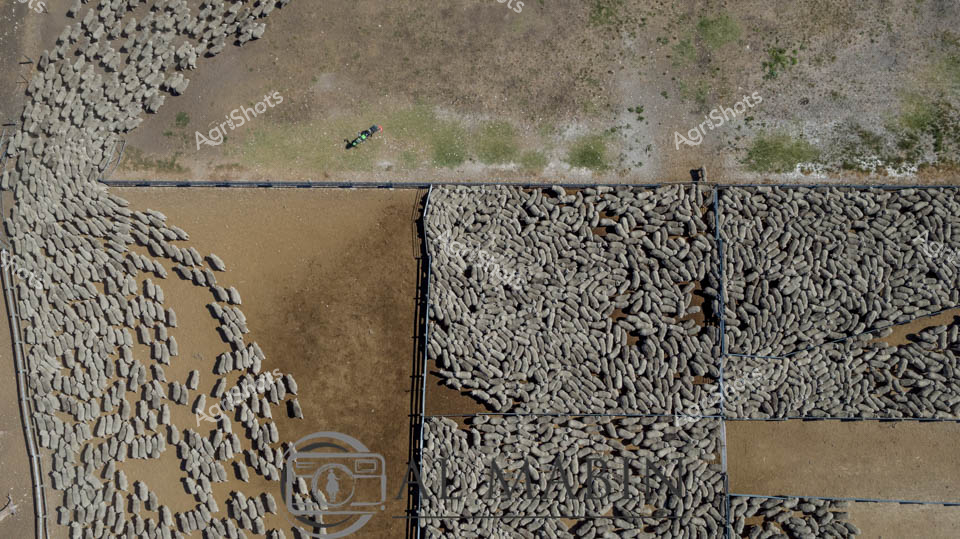
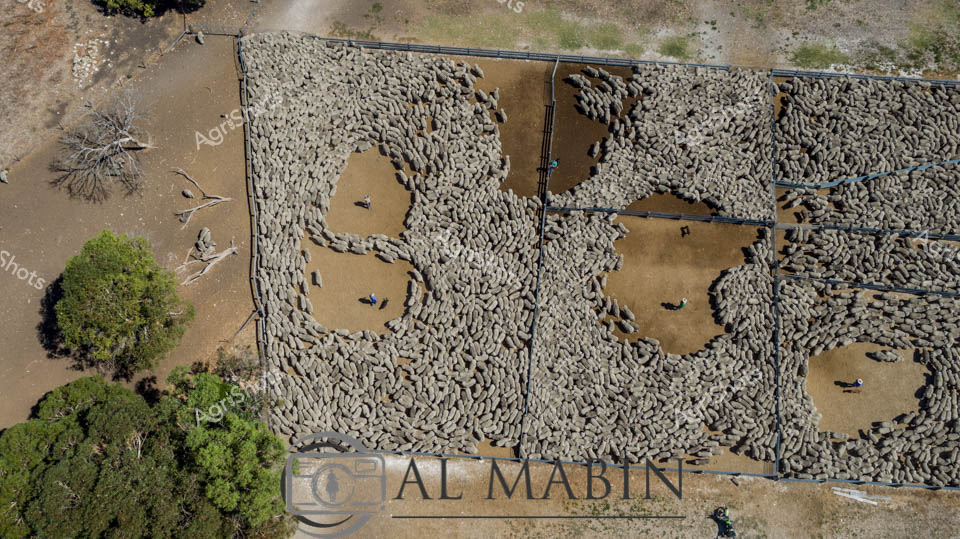
Aerial view of a vast sheep yard during mustering season in South Australia, revealing a meticulously organized agricultural landscape. Dense flocks of Merino sheep cluster tightly within fenced compartments, their woolly bodies creating a textured, living carpet of soft grey and beige tones. A lone vehicle traverses the dusty paddock, orchestrating the complex movement and sorting of the livestock with precision. The expansive aerial perspective captures the geometric division of yards, metal fencing creating sharp linear boundaries against the earthy, sun-baked ground. Scattered patches of sparse vegetation break the monotone palette, hinting at the challenging agricultural environment of the region. This image epitomizes the scale and systematic approach of modern Australian sheep farming, where technology and traditional mustering techniques combine to manage large livestock herds across the challenging rural landscape.
Similar media
 Image
Image
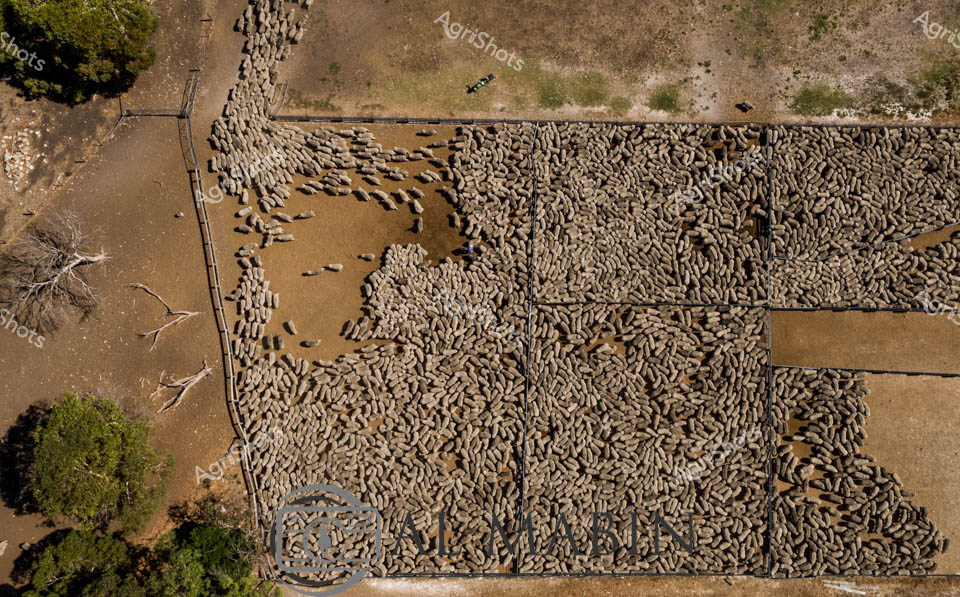
Aerial view of a densely packed Merino sheep yard in rural South Australia, capturing the intricate movement and clustering of hundreds of woolly bodies across segmented paddock sections. The sun-baked earth provides a rich ochre backdrop, contrasting with the uniform beige-grey fleece of the tightly grouped livestock. Fenced compartments create a geometric pattern, guiding the sheep's flow and movement between different yard sections, a testament to skilled agricultural management and mustering techniques. Scattered dry trees and sparse vegetation frame the edges of the yard, highlighting the arid landscape typical of South Australian sheep country. The overhead perspective reveals the remarkable density and organic, almost fluid-like formation of the flock, showcasing the remarkable precision of modern sheep farming practices. This image encapsulates the resilience of Australian agricultural systems, where livestock management is both an art and a science, adapting to challenging environmental conditions.
 Image
Image
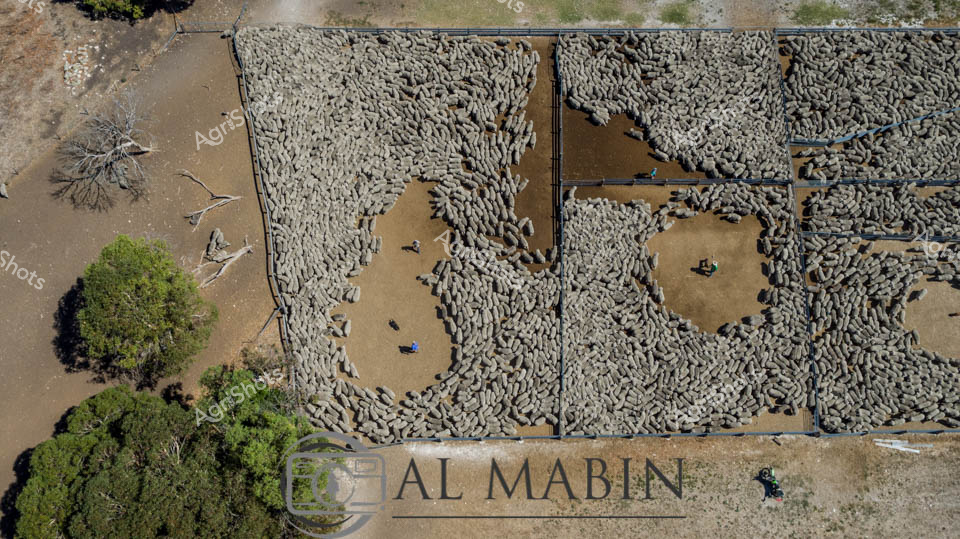
Aerial view of thousands of Merino sheep densely packed in large rectangular sheep yards during mustering operations in South Australia. The well-organized yards feature multiple holding pens with earthen floors, designed to efficiently manage the substantial flock during processing. A few stockmen can be seen working among the sheep, demonstrating the scale of pastoral operations in this rural farming landscape.
 Image
Image
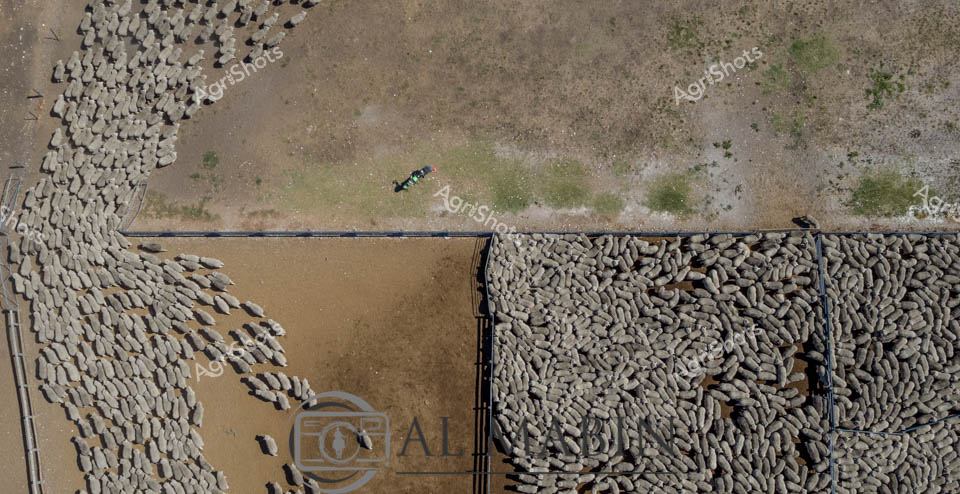
Aerial drone perspective of a precision livestock management scene in rural South Australia, capturing a vast Merino sheep flock densely clustered within geometrically defined steel-fenced yards. Golden-brown earth tones blend with the weathered landscape, revealing intricate patterns of sheep movement and strategic agricultural infrastructure. The flock's uniform silvery-grey fleece creates a mesmerizing textural mosaic, highlighting the disciplined herding techniques fundamental to Australian sheep farming. Subtle patches of sparse green vegetation punctuate the arid terrain, suggesting recent minimal rainfall in this challenging agricultural environment. The meticulously organized paddock layout demonstrates advanced farming practices, with carefully constructed yard sections allowing efficient stock management and movement. This image powerfully communicates the scale, precision, and environmental resilience inherent in modern Australian sheep production, where technological innovation meets traditional pastoral expertise.
 Image
Image
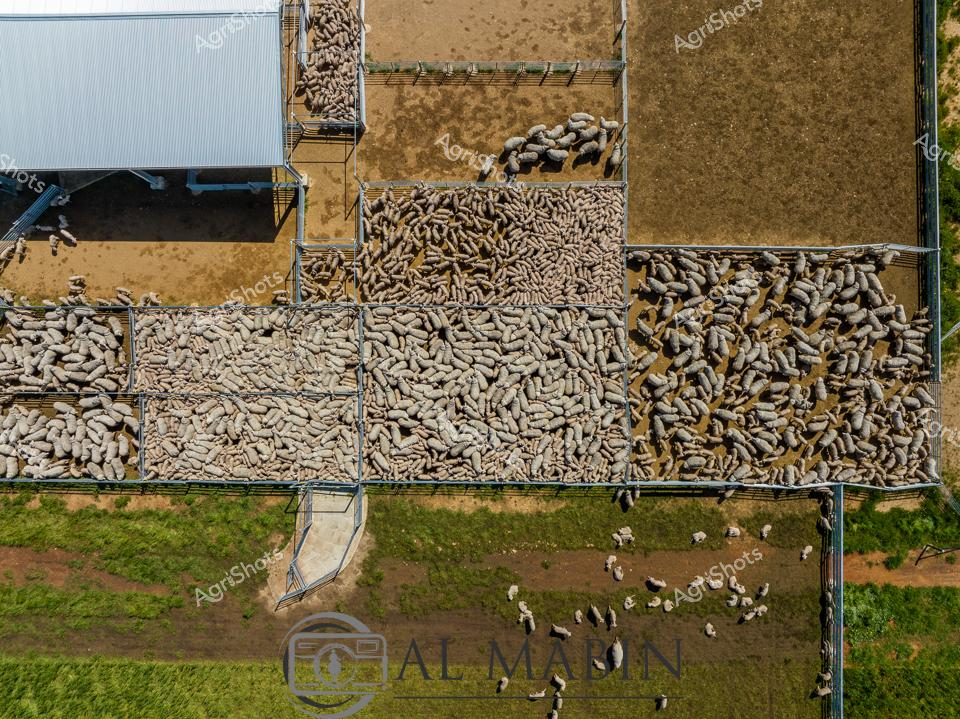
Aerial drone perspective of a meticulously organized Merino sheep weaning operation in rural New South Wales, capturing the precision of modern Australian livestock management. Multiple steel-framed holding pens are densely packed with young lambs, their cream and light beige wool creating a textured mosaic against the golden earth and verdant green pasture edges. Agricultural infrastructure dominates the frame - a steel-clad shed anchors the left side, while carefully constructed yard sections segment the lambs, allowing systematic sorting and processing. A small group of ewes graze peacefully in the bottom right, separated from their offspring as part of the critical weaning process. The geometric landscape reveals the methodical approach of contemporary farming, where infrastructure, animal welfare, and efficient land use converge.
 Image
Image
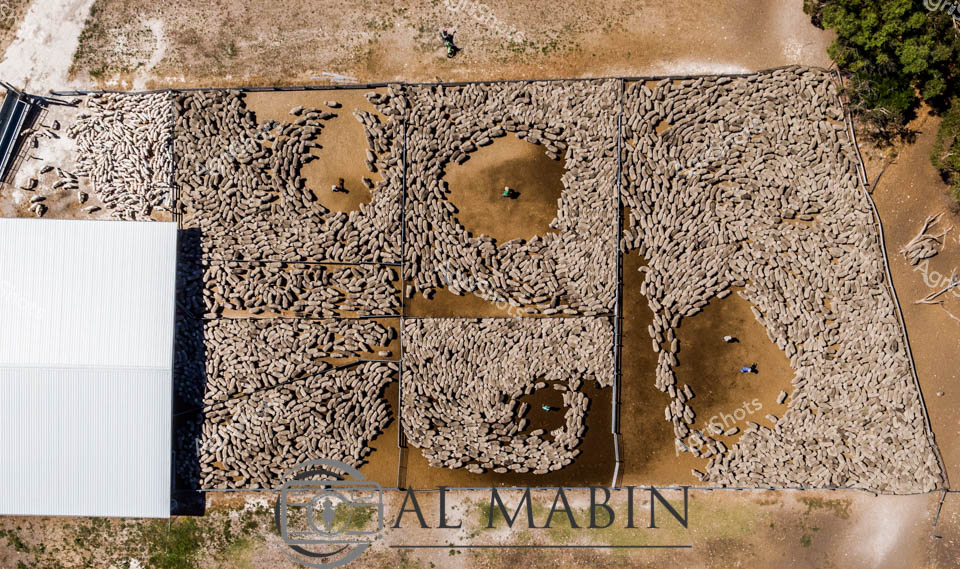
Aerial view of a high-density merino sheep holding yard at a large pastoral station in South Australia. Hundreds of densely packed woolly bodies create a living carpet across segmented yard sections, their pale cream fleeces contrasting against the dusty ochre earth. Circular feeding areas punctuate the yard, with a few individual sheep moving between compact groups, creating subtle patterns of movement. The pristine white agricultural shed on the left provides stark geometric contrast to the organic, shifting mass of livestock. Golden afternoon light bathes the scene, highlighting the textural complexity of the flock and the carefully designed infrastructure that enables efficient livestock management in challenging rural environments.
 Image
Image
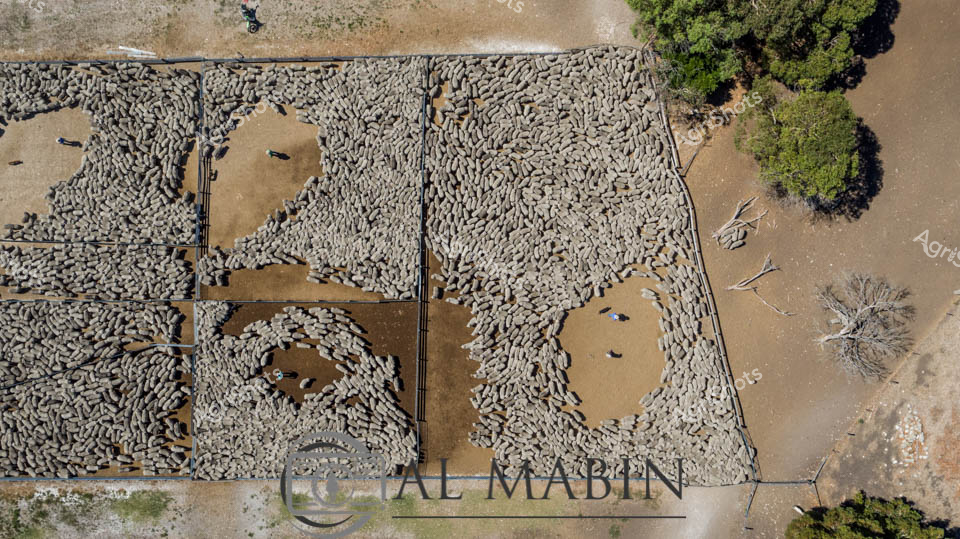
Aerial survey of a meticulously organized sheep holding yard, showcasing the precision of modern Australian agricultural livestock management. Dense flocks of merino sheep cluster across interconnected paddock sections, their pale woolly bodies creating a living carpet against the russet-brown earth. Carefully designed yard infrastructure divides the space into strategic segments, allowing controlled movement and sorting of the livestock. Surrounding the yards, sparse native vegetation and weathered trees punctuate the arid landscape, revealing the challenging environmental conditions of rural South Australia. The geometric pattern of the yards, viewed from above, demonstrates the sophisticated infrastructure required to manage large-scale sheep operations in challenging agricultural terrains.
 Image
Image
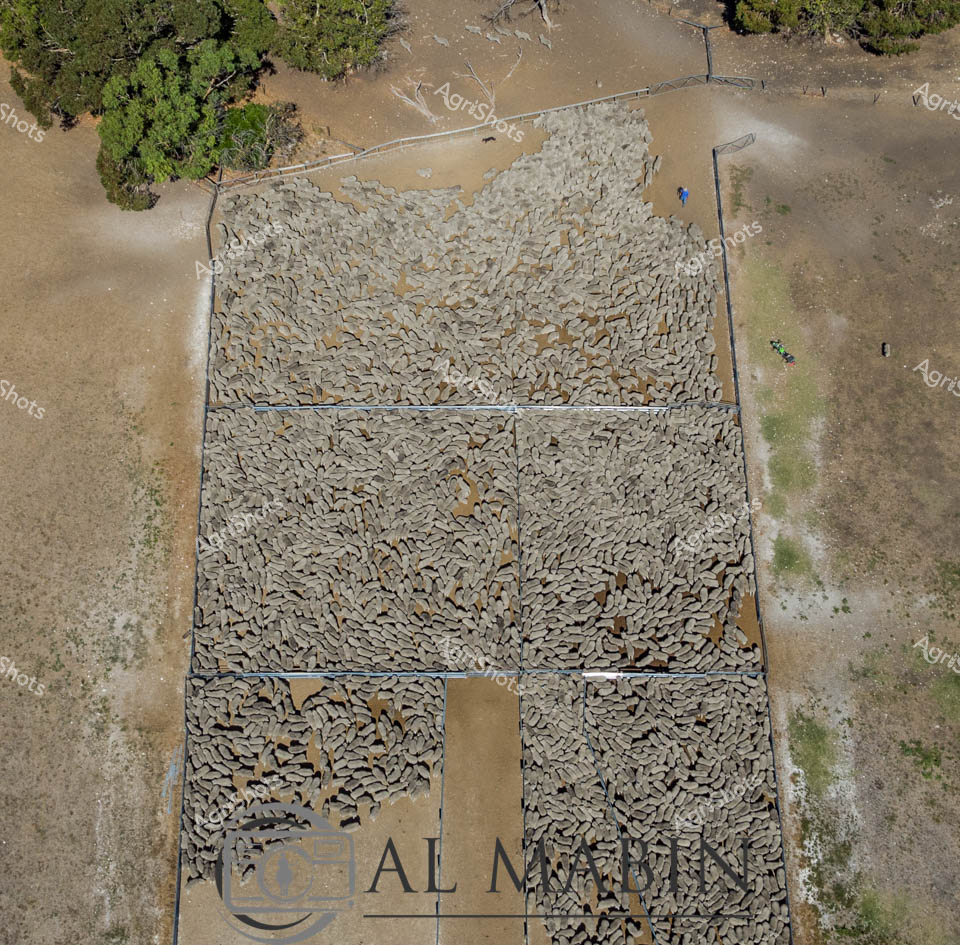
Aerial view of a meticulously organized Merino sheep yard in rural South Australia, revealing a dense flock clustered within geometrically precise metal-fenced paddocks. Soft grey-beige fleeces blend together, creating a textural landscape of woolly bodies pressed closely against one another, their subtle variations in tone suggesting individual sheep within the collective mass. Surrounding the yards, the landscape speaks of arid pastoral terrain - dusty earth tones of brown and tan, punctuated by sparse green vegetation and weathered trees, indicating a typical dry season in the agricultural heartland. The precise division of the yards suggests careful stock management, with each section strategically designed to control and direct the movement of these prized Merino sheep. The overhead perspective transforms the sheep from individual animals into a living, breathing textile - a moving carpet of wool that represents the backbone of Australian agricultural productivity.
 Image
Image
Aerial survey of a meticulously organized Merino sheep paddock near The agricultural property in South Australia. Dense clusters of woolly grey-white sheep fill interconnected yard sections, creating a living carpet that undulates across geometric fenced compartments. Dusty golden earth tones contrast sharply with the pale fleece and verdant green trees framing the landscape. Small figures moving between sheep groups suggest careful livestock management, likely during mustering or routine husbandry activities. The precise layout reveals sophisticated agricultural engineering, with strategically designed holding pens that facilitate efficient stock movement and sorting. Captured from a drone's perspective, this image epitomizes the precision and scale of modern Australian sheep farming, where technological observation meets generations of pastoral expertise.