
About this image
A young person wearing a checkered shirt and wide-brimmed hat stands in an arid Australian landscape, holding a well-worn leather saddle used for droving cattle along historic stock routes. The child demonstrates the traditional skills and equipment essential to station life, with the dusty outback terrain and sparse vegetation typical of droving country stretching endlessly behind them. This scene captures the enduring connection between young farm workers and the demanding work of moving livestock across Australia's vast pastoral regions.
Similar media
 Image
Image
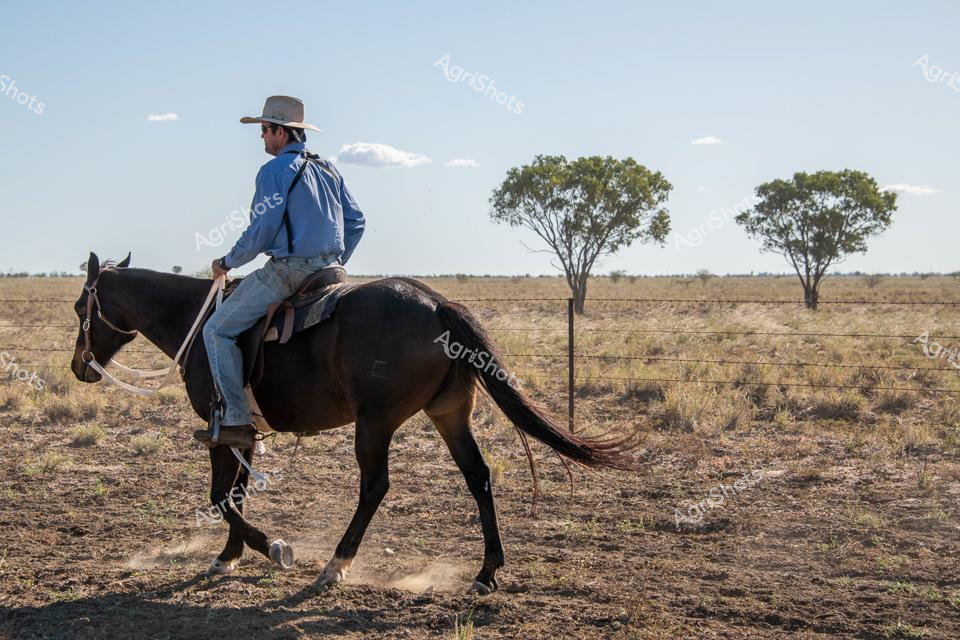
Dusty Pastoral Mustering in Central Queensland A stockman rides a dark bay horse across a sun-drenched, arid paddock in central Queensland, embodying the timeless spirit of Australian rural life. Wearing a classic wide-brimmed akubra and a crisp blue work shirt, the rider sits comfortably atop his mount, surveying the sparse landscape dotted with resilient gum trees. The dry, golden grasslands stretch toward a pale blue horizon, punctuated by weathered fence lines and sparse vegetation typical of the region's challenging agricultural terrain. His black horse moves with quiet purpose, kicking up small clouds of ochre dust with each measured step, a testament to the enduring partnership between rider and horse in managing vast pastoral stations. The sparse, rugged landscape speaks to the resilience of Queensland's agricultural communities, where stockmen continue traditional livestock management practices across immense, unforgiving territories. This scene captures the essence of outback mustering - a delicate dance of human skill, animal partnership, and unrelenting landscape.
 Image
Image
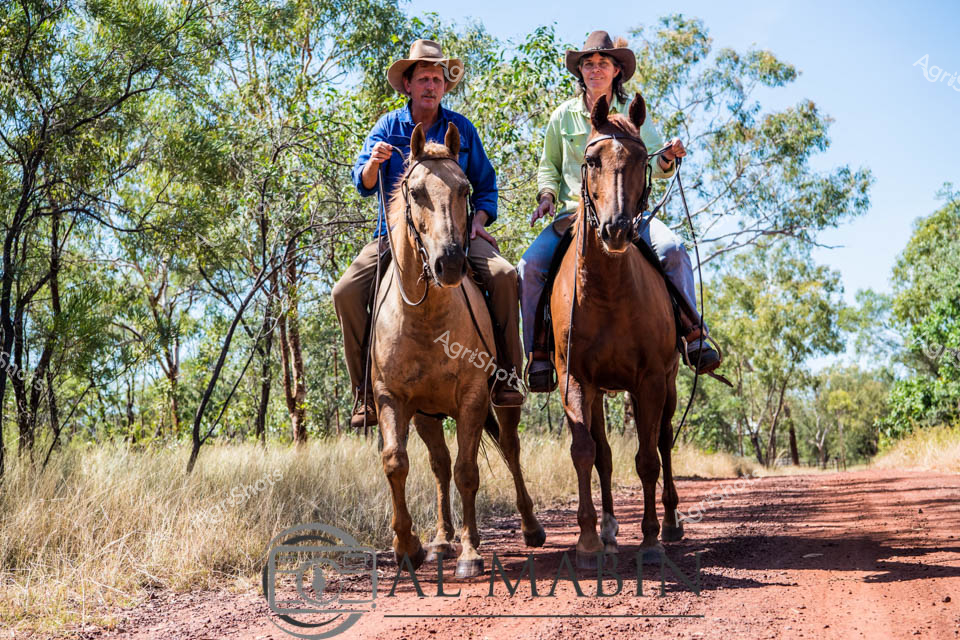
Two horse riders traverse a red dirt road through the Australian bush in the Northern Territory, with the horses moving at a steady pace along the station track. A man and woman, both wearing wide-brimmed hats and riding gear, guide their brown horses through the rural landscape dotted with native trees and golden grassland. The dusty earth beneath the horses' hooves and the sparse vegetation surrounding the dirt road capture the quintessential outback setting of a Northern Territory cattle station. This pastoral scene showcases the enduring tradition of horseback travel across Australia's vast rural properties, where horses remain essential for station work and transportation across remote terrain.
 Image
Image
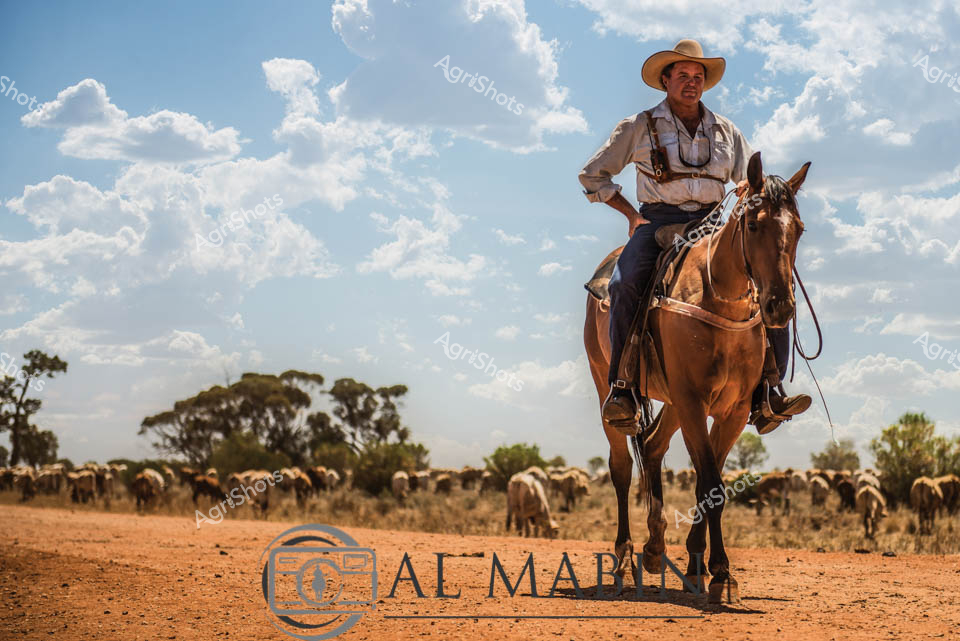
An experienced stockman sits atop a chestnut horse, surveying a dusty stock route lined with a herd of Brahman cattle. Wearing a wide-brimmed akubra hat and light-colored work shirt, the rider cuts a classic Australian pastoral scene against a brilliant blue sky dotted with fluffy white clouds. The rich ochre earth stretches out beneath them, with scattered gum trees providing subtle background texture to the expansive landscape. His horse stands alert, muscles taut and ready, embodying the partnership between rider and mount that is crucial to moving livestock across vast Australian pastoral lands. The herd of distinctive Brahman cattle - recognizable by their large humps and light coloration - grazes and moves slowly across the arid terrain, a testament to the challenging yet timeless practice of cattle droving. This image captures the essence of Australian rural life - resilience, connection to the land, and the ongoing tradition of moving livestock across challenging environments.
 Image
Image
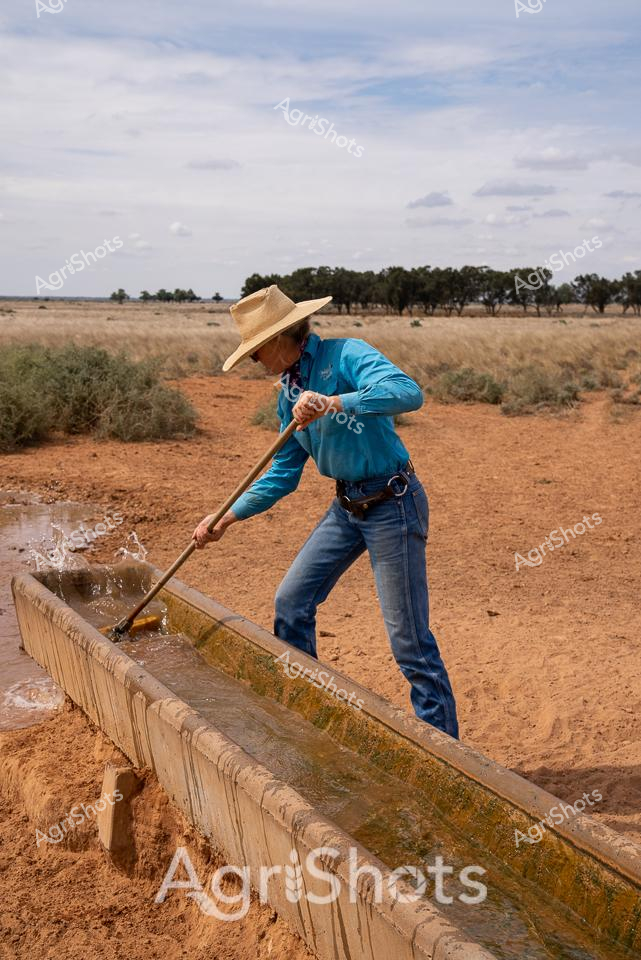
Beneath an expansive pale blue sky, a stockman tends to the water trough on a sun-baked central western NSW station. Wearing a classic wide-brimmed akubra and a vivid blue work shirt, the station hand carefully clears debris from the concrete water channel, ensuring a clean water supply for livestock. The arid landscape stretches out around him - reddish earth punctuated by sparse saltbush and a distant line of eucalyptus trees, capturing the harsh beauty of Australian pastoral country. His weathered denim and steady movements speak to generations of agricultural workers who maintain critical infrastructure in challenging environments. The trough, stained with algal green and weathered by constant use, reflects the ongoing challenge of water management in this dry landscape. This image epitomizes the quiet, determined work of Australian rural workers - maintaining essential resources under big skies and across seemingly endless terrain.
 Image
Image
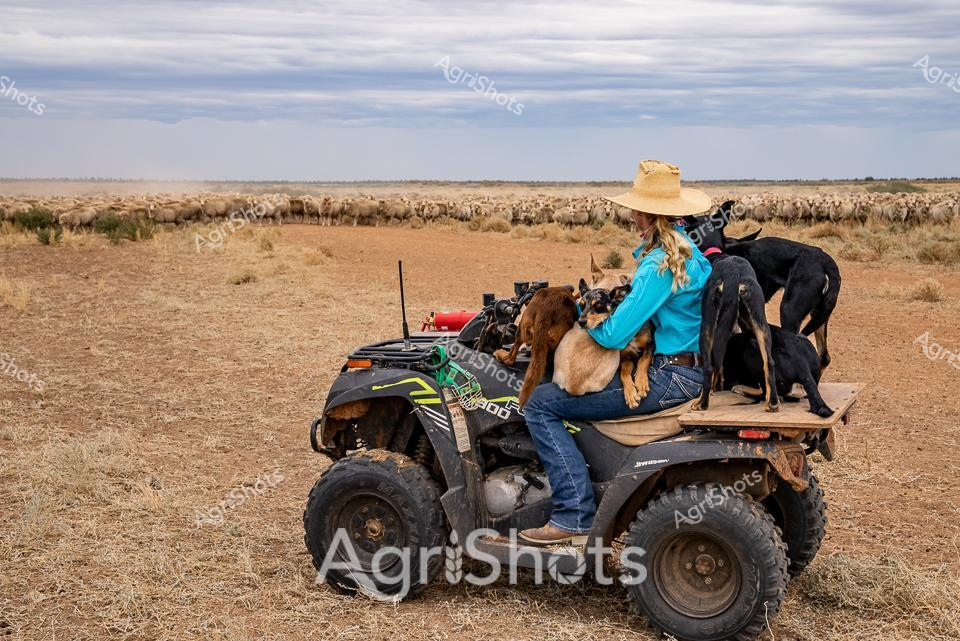
Merino mustering on a vast, arid station in western New South Wales reveals the quintessential Australian pastoral landscape. A lone worker in a bright turquoise shirt and wide-brimmed sun hat navigates a rugged all-terrain vehicle across the parched earth, accompanied by a team of working dogs. The expansive paddock stretches to the horizon, populated by a dense flock of woolly Merino sheep, their cream-colored forms creating a living carpet against the ochre and dusty brown ground. The ATV, loaded with essential equipment and supplies, serves as a mobile command center for livestock management, highlighting the sophisticated yet resilient nature of modern agricultural practices. Black and tan working dogs perch confidently on the vehicle, alert and ready to respond to subtle commands, embodying the symbiotic relationship between human, canine, and livestock in the harsh Australian rangelands. Overcast skies suggest the challenges of unpredictable rural weather, casting a muted, silvery light that emphasizes the tough, no-nonsense environment of large-scale sheep farming.
 Image
Image
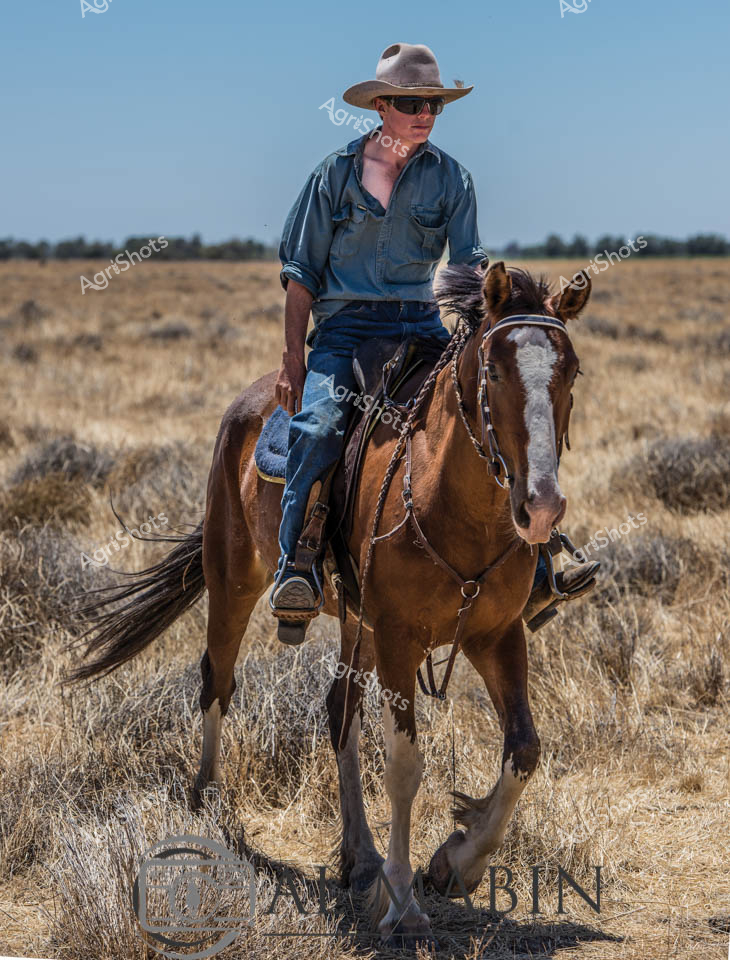
A stockman on horseback navigates through golden grassland during droving operations, showcasing traditional Australian cattle management techniques. The rider, mounted on a chestnut horse with distinctive white facial markings, demonstrates the enduring partnership between stockman and horse that remains essential for livestock work across remote stations. The dry, sun-bleached pasture and open landscape capture the harsh beauty of the Australian outback, where droving along historic stock routes continues to be a vital part of pastoral operations. This scene epitomizes the skilled horsemanship and resilience required for effective livestock management in Australia's expansive rural properties.
 Image
Image
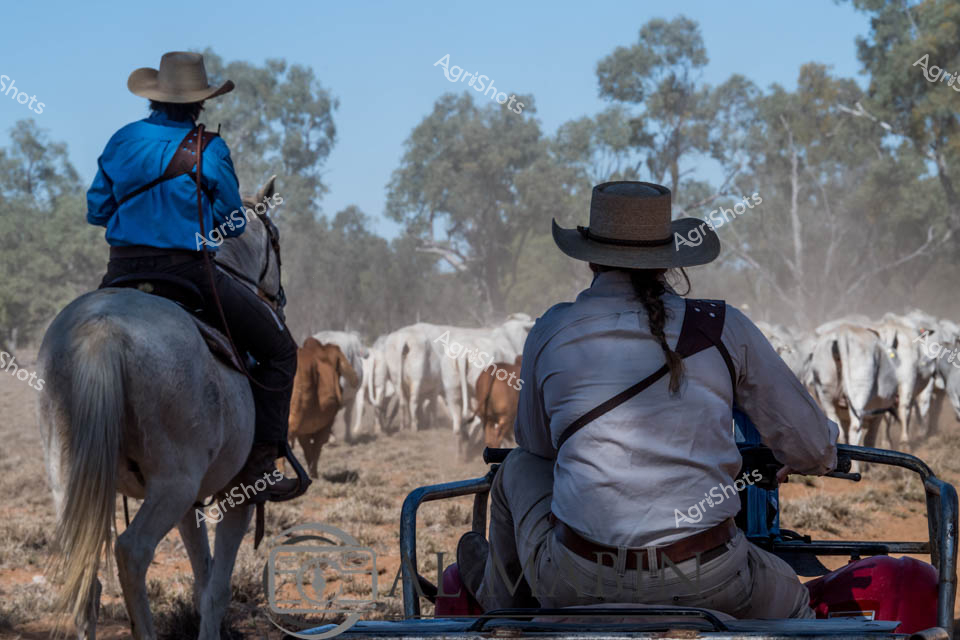
Dusty golden light bathes a classic Queensland cattle muster, with two stockmen guiding a herd of pristine Brahman cattle across a dry pastoral landscape. One rider sits atop a grey horse wearing a vibrant blue shirt, while another stockman perches on a motorbike, both wearing wide-brimmed akubra hats that shield them from the harsh outback sun. The pale, muscular Brahman cattle - distinguished by their distinctive humped shoulders and loose neck skin - drift through a sparse woodland of eucalyptus trees, their white and light brown coats stirring up ochre-colored dust against the muted green and brown terrain. The scene captures the quintessential rhythm of Australian cattle station life: patient, skilled stock management where human and animal move in careful coordination. Distant tree lines and open ground speak to the immense scale of pastoral properties, where mustering represents a delicate dance of livestock control across vast, challenging landscapes. The stockmen's robust work attire - practical shirts, sturdy pants, and essential protective headwear - reflects generations of agricultural knowledge and adaptation to the unforgiving Australian interior.
 Image
Image
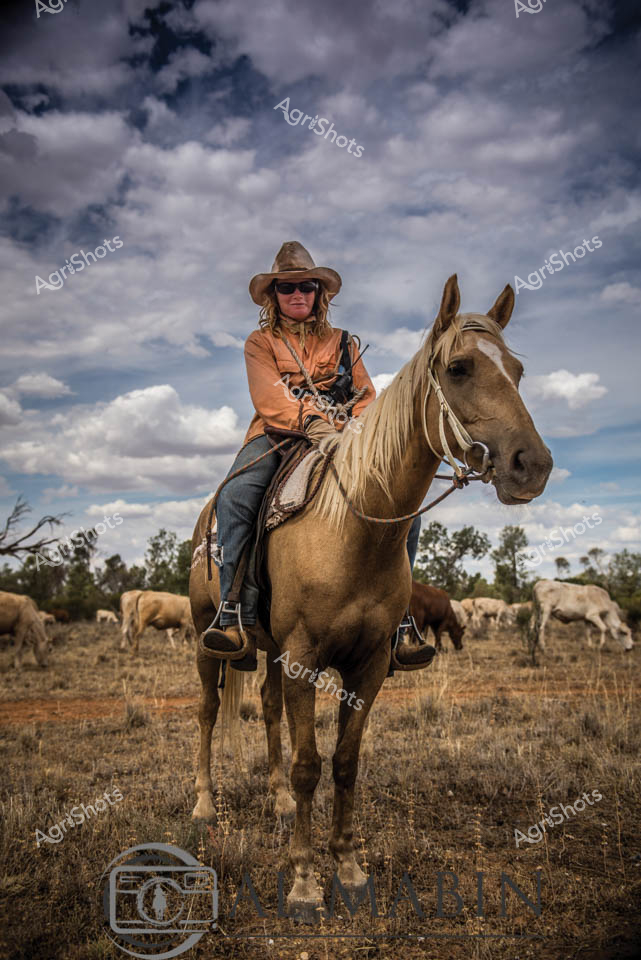
A woman stockman sits confidently atop her palomino horse while mustering cattle across the open paddock. The golden-coated horse with flowing blonde mane stands alert beneath dramatic cloudy skies, embodying the timeless partnership between rider and mount in Australian droving operations. Scattered cattle graze peacefully in the background grassland, highlighting the extensive pastoral landscape typical of stock route work. This classic scene captures the essence of women in agriculture, showcasing the skill and dedication required for traditional cattle mustering across Australia's vast rural stations.