About this image
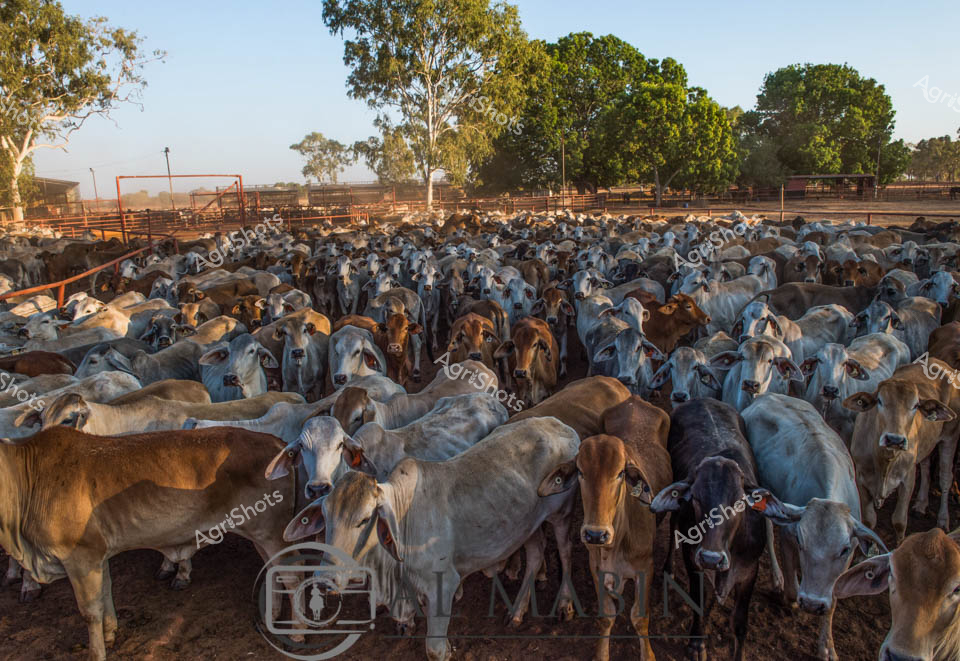
Dusty golden light bathes a dense mob of Brahman cattle packed tightly within rusty steel cattle yards, a quintessential Northern Territory pastoral scene. Muscular gray and tan bovines, distinguished by their distinctive large humps and loose dewlaps, stand shoulder-to-shoulder in the morning's warm amber illumination. Eucalyptus trees frame the background, casting long shadows across the compacted earth of the stockyard, suggesting this is an early dry season muster. The cattle - a mix of silvery-white, rich caramel, and deep chocolate brown - represent the hardy Brahman breed perfectly adapted to Australia's challenging tropical landscapes. Weathered wooden fence posts and burnt-orange metal gates define the yard's perimeter, while the tightly clustered herd demonstrates the disciplined management of a professional cattle station operation. This image captures the raw energy and economic heartbeat of northern Australian beef production, where resilient cattle and skilled stockmen transform challenging landscapes into world-class agricultural productivity.
Similar media
 Image
Image
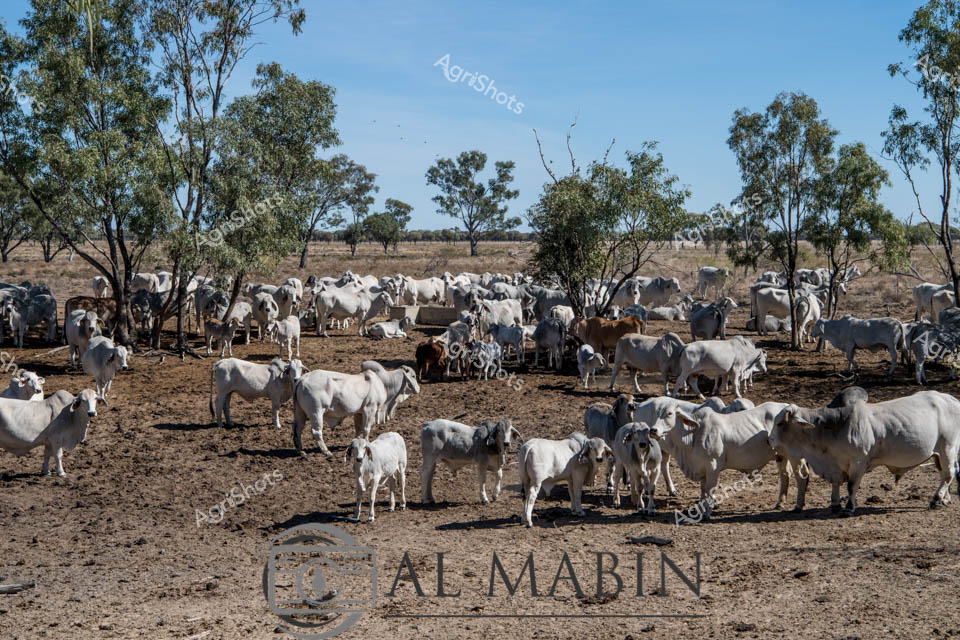
Dusty red earth and silver-grey gum trees frame a robust herd of Brahman cattle clustered across a sun-drenched northern Queensland pastoral landscape. Predominantly white with some brown-tinged individuals, these hardy cattle stand resilient in a densely populated paddock, showcasing the distinctive muscular build and loose skin characteristic of the Brahman breed - perfectly adapted to Australia's challenging tropical climate. Mature cows and younger calves intermingle beneath scattered eucalyptus, creating a living tableau of pastoral productivity that speaks to generations of agricultural expertise. The ground is parched and compact, indicating a dry season typical of the region, with the cattle clustered near sparse tree shade during the intense midday heat. This scene captures the essence of Australian extensive cattle farming - where robust livestock breeds thrive in seemingly sparse environments through generations of strategic breeding and management.
 Image
Image
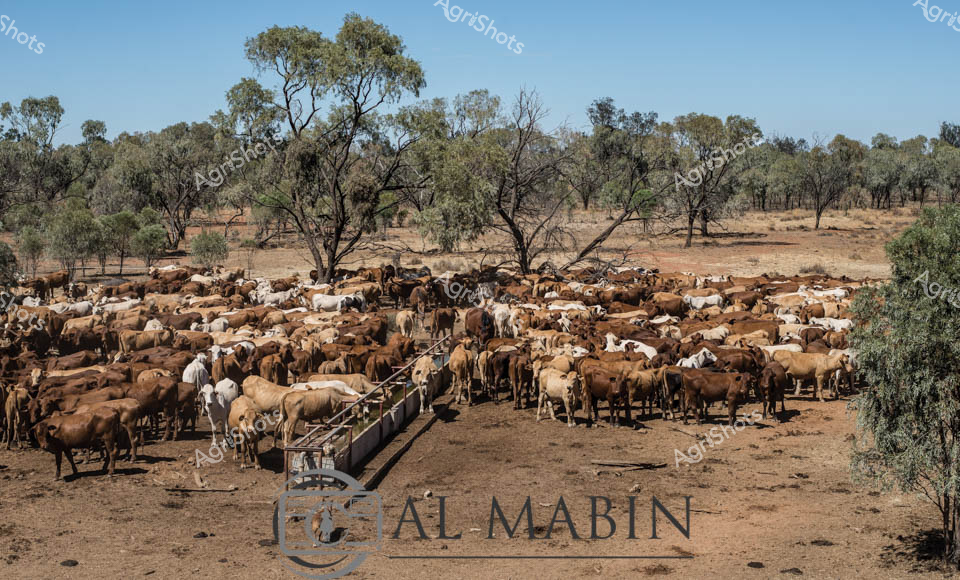
Dusty red earth and sparse eucalyptus woodland frame a dense mob of cattle clustered around a long steel water trough in the heart of central Australia. Muscular Brahman and crossbred beef cattle, their coats ranging from pale cream to rich mahogany brown, crowd together in a tight herd characteristic of droving practices along traditional stock routes. The harsh, sun-bleached landscape reveals the resilience of both livestock and landscape - sparse grey-green trees punctuate the arid terrain, casting minimal shade on the thirsty animals. A typical scene of pastoral management, this image captures the rhythms of cattle movement and watering during the dry season, where access to water determines survival and stock route travel. The metallic water trough, a critical lifeline in this unforgiving environment, serves as a focal point where the herd congregates, their bodies creating a living, breathing landscape of agricultural enterprise.
 Image
Image
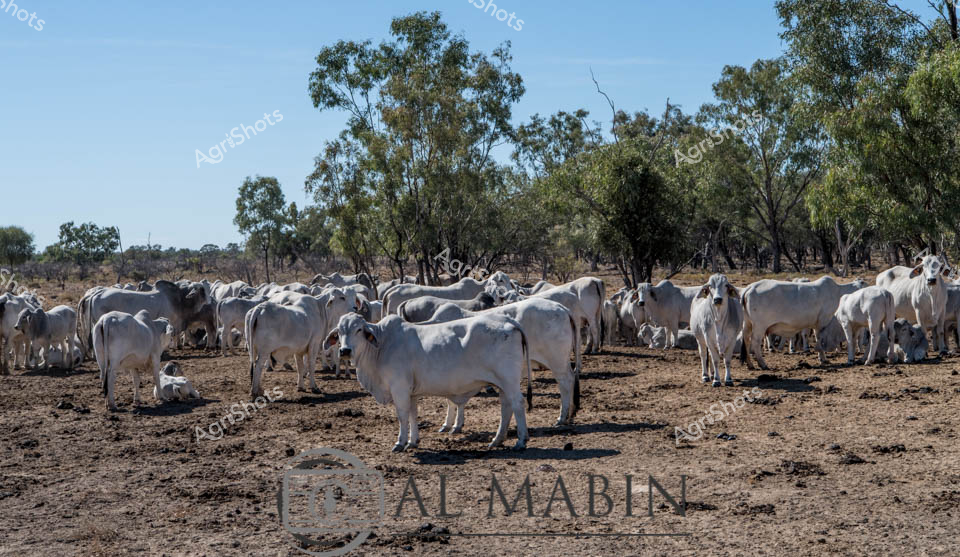
Brahman cattle cluster across the dusty paddock of a Queensland cattle station, their distinctive pale grey-white coats standing out against the dry earth and scattered eucalyptus woodland. These robust cattle, renowned for their heat tolerance and resilience, represent a quintessential scene of northern Australian beef production. The herd stands in tight formation, their muscular bodies casting long shadows in the harsh midday sunlight, surrounded by a landscape of sparse grassland and weathered gum trees. Each animal displays the breed's characteristic fatty hump and loose skin - adaptations that enable survival in challenging tropical environments. The ground is parched and compact, telling a story of challenging dry season conditions that test the endurance of both livestock and land. This image captures the essence of pastoral Australia - a testament to agricultural persistence, breed specialization, and the intricate relationship between cattle, landscape, and agricultural management in one of the world's most demanding farming environments.
 Image
Image
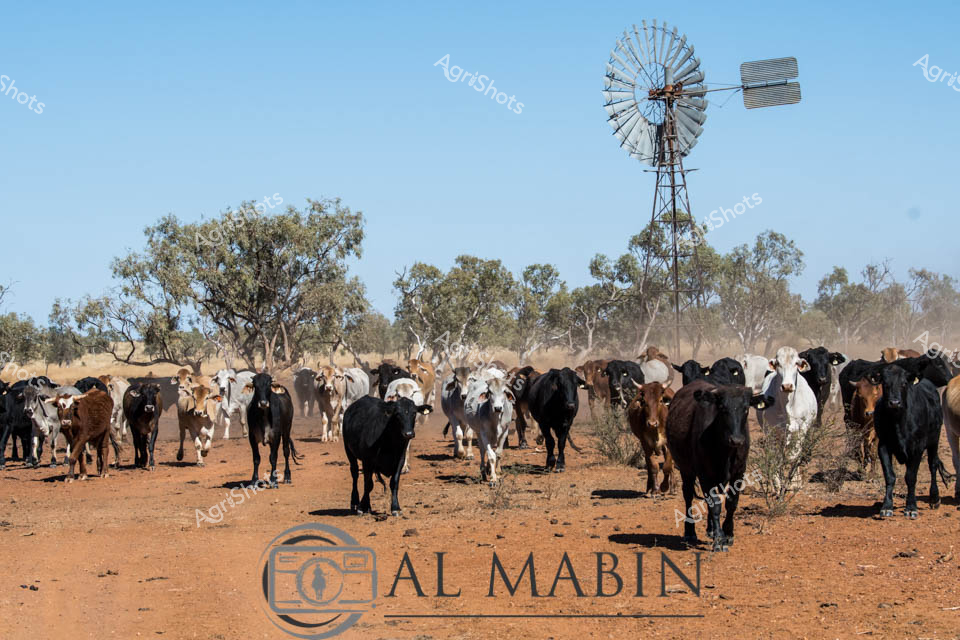
Brahman and Murray Grey cattle cluster around a classic Australian windmill on a scorching outback station in central Queensland. The deep red earth kicks up fine dust as the herd moves across the dry landscape, their varied coat colors ranging from stark white to rich chocolate brown. Sturdy steel windmill blades stand tall against a cloudless cerulean sky, a timeless symbol of rural resilience in this unforgiving terrain. Scattered gum trees provide sparse shade, their pale leaves a muted contrast to the arid ground, highlighting the harsh conditions these robust cattle endure. The herd appears calm and purposeful, likely moving between grazing areas or approaching a water source powered by the windmill's ancient pumping mechanism. This scene epitomizes the rugged beauty of Australian cattle country - a testament to generations of pastoral farming and the adaptive strength of both livestock and landscape.
 Image
Image
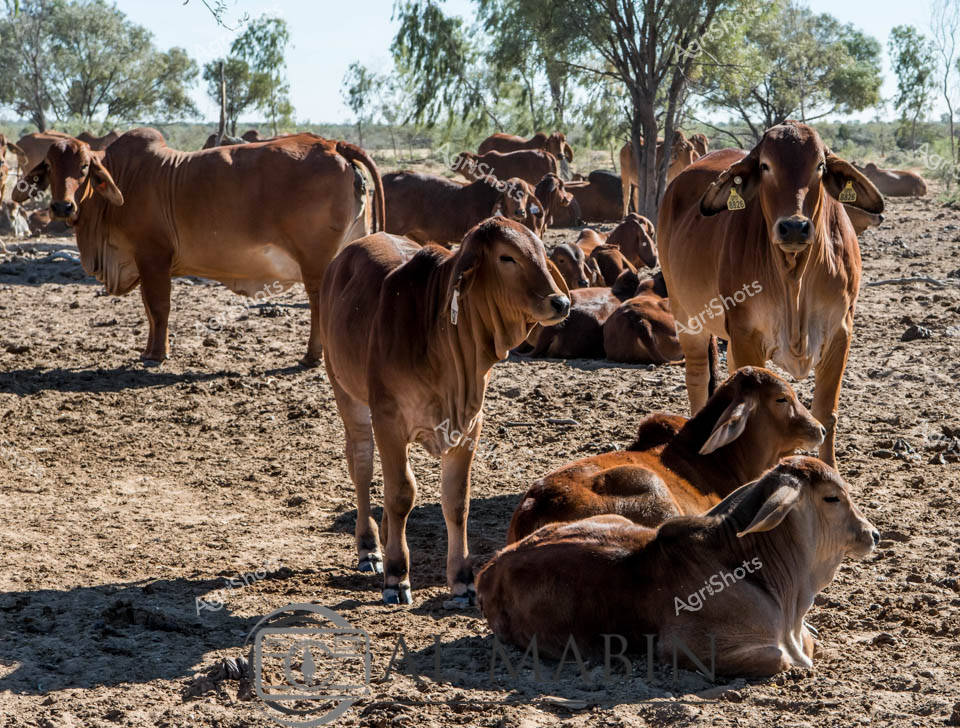
Brahman cattle cluster in the harsh, sun-baked landscape of a Queensland cattle station, their rich reddish-brown coats contrasting against the dusty, pale earth. Muscular cows and calves stand and rest across the barren paddock, with sparse gum trees providing minimal shade in the unforgiving outback environment. The distinctive large ears and loose skin of the Brahman breed - renowned for their heat and pest resistance - are clearly visible, showcasing why these cattle are perfectly adapted to Australia's challenging northern pastoral regions. Several cattle wear ear tags, indicating this is likely a managed breeding herd, with young calves suggesting an active reproductive program. The dry, compacted ground and sparse vegetation reveal the challenging conditions these resilient animals endure, highlighting the skill of Australian cattle producers in maintaining livestock in extreme environments. The scene captures the essence of extensive cattle farming - a testament to agricultural innovation and survival in one of the world's most demanding agricultural landscapes.
 Image
Image
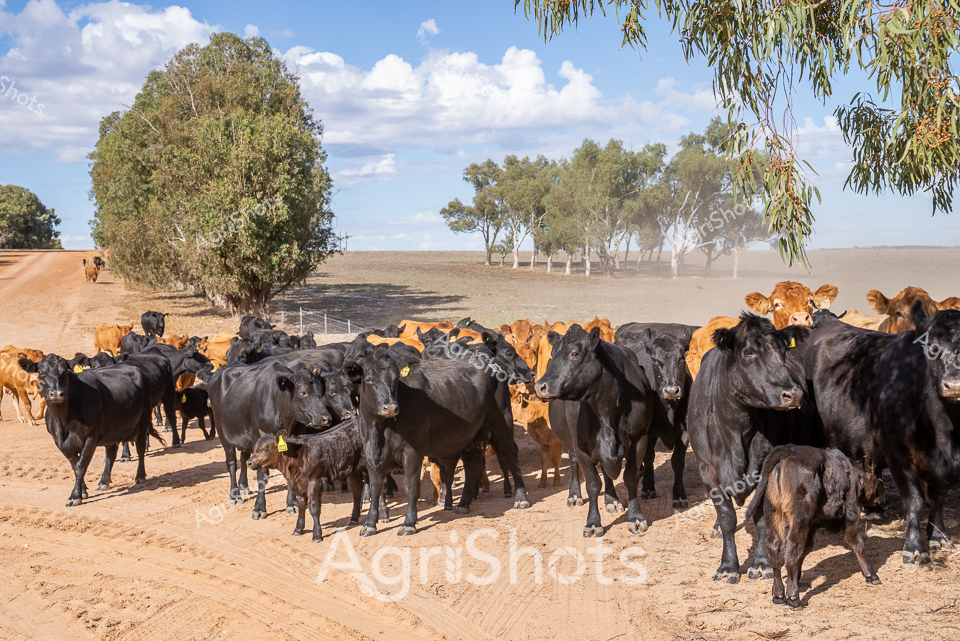
Angus and Droughtmaster cattle cluster on a sun-drenched dirt track, casting long shadows across the arid Western Australian landscape. Sleek black Angus cows stand alongside tawny-colored Droughtmaster cattle, their yellow ear tags glinting in the bright midday light. The herd is tightly packed between eucalyptus trees and dusty paddock edges, with a slight heat haze shimmering in the background. Robust black calves huddle close to their mothers, demonstrating the resilience of these breeds in challenging pastoral conditions. Sparse white gum trees punctuate the horizon, providing minimal shade in the expansive, bleached landscape. This scene captures the essence of extensive cattle farming in Western Australia's harsh agricultural regions - a testament to the adaptability of livestock and the skilled management of cattle producers in maintaining herds across demanding environmental terrain.
 Image
Image
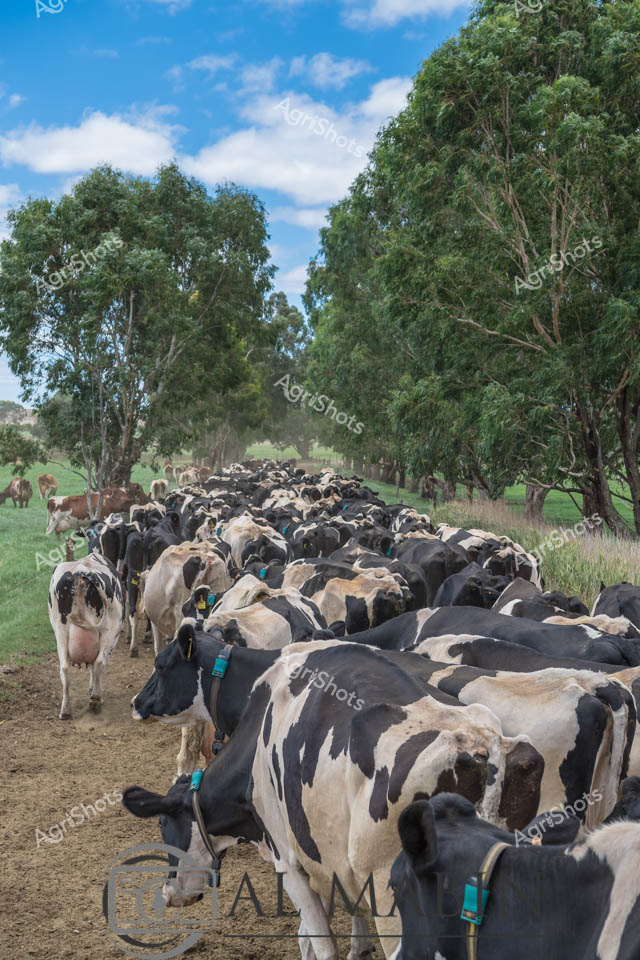
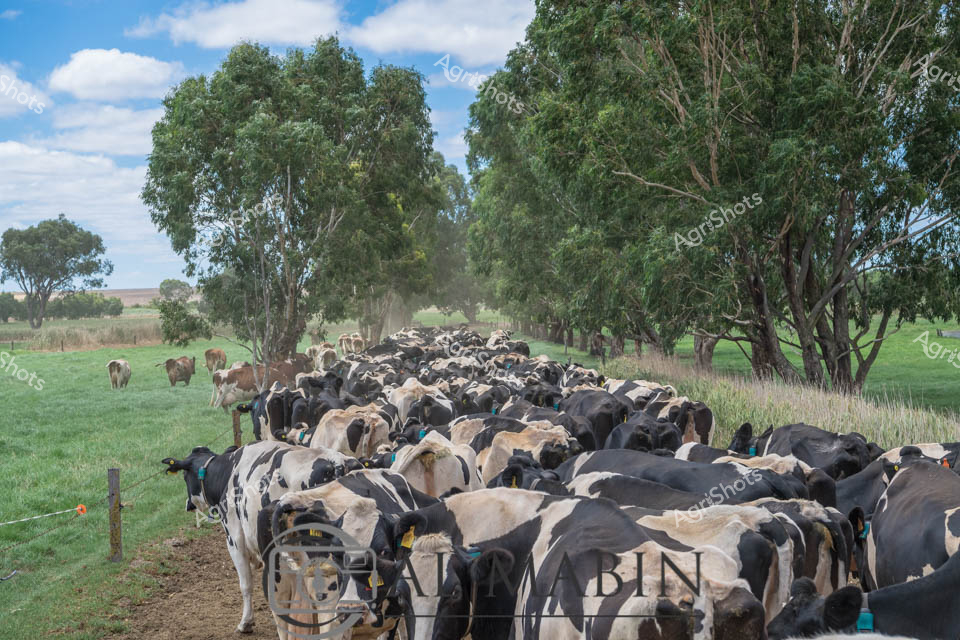
Black and white Holstein dairy cows travel a tree-lined country lane during mid-morning, their blue electronic identification transponders visible around their necks. The herd moves purposefully along a well-worn dirt track, flanked by mature eucalyptus trees casting dappled shade across the verdant pasture. Lush green grass and a brilliant blue sky with soft cloud formations create a quintessential Australian rural landscape, characteristic of the Murraylands region in South Australia. Each cow bears the distinctive black and white patched coat of the Holstein breed, tightly packed together in a disciplined column suggesting an organized muster towards milking sheds or fresh grazing paddocks. The image captures the technological integration of modern dairy farming, with individual animal tracking devices highlighting the sophisticated management techniques of contemporary agricultural practices. This scene embodies the harmonious intersection of traditional pastoral landscapes and cutting-edge agricultural innovation, showcasing the efficiency and systematic approach of Australian dairy farming.
 Image
Image
Dust rises from the well-worn track as a dense herd of Holstein and Ayrshire dairy cows moves between pastures in the lush Murraylands region. Tightly clustered black and white spotted cattle flow between mature eucalyptus trees, their individual electronic ear transponders glinting in the late morning sunlight. The verdant green grasslands stretch out on either side of the narrow path, with a wire fence marking the boundary and guiding the animals' precise movement. Each cow bears the distinctive markings of classic dairy breeds - deep black contrasting with creamy white patches, their muscular bodies moving with a deliberate, steady rhythm under the expansive blue sky dotted with wispy clouds. The scene captures the sophisticated technology and pastoral beauty of modern Australian dairy farming, where precision livestock management meets the timeless landscape of rural Australia. The carefully orchestrated mustering demonstrates the intersection of agricultural innovation and traditional farming practices, with the herd moving as a living, breathing organism across the carefully maintained agricultural landscape.