About this image
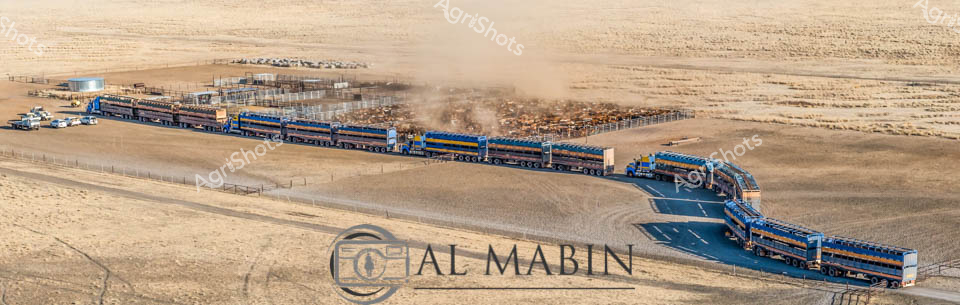
Vast ochre plains stretch endlessly beneath a pale, dust-laden sky as a massive blue road train navigates the curved loading yards of a remote cattle station in Australia's Northern Territory. Raised walkways and multiple loading bays showcase sophisticated agricultural infrastructure adapted to the harsh desert landscape, with fenced paddocks and processing areas meticulously arranged to facilitate livestock movement. Billowing dust clouds rise around the truck's wheels, capturing the unforgiving yet strategic nature of cattle transportation in Australia's arid interior. The serpentine design of the loading facility demonstrates remarkable engineering, allowing efficient movement of livestock in challenging environmental conditions. This panoramic scene epitomizes the resilience and technological innovation of Australia's cattle industry, where massive road trains are the crucial link between remote cattle stations and national agricultural supply chains.
Similar media
 Image
Image
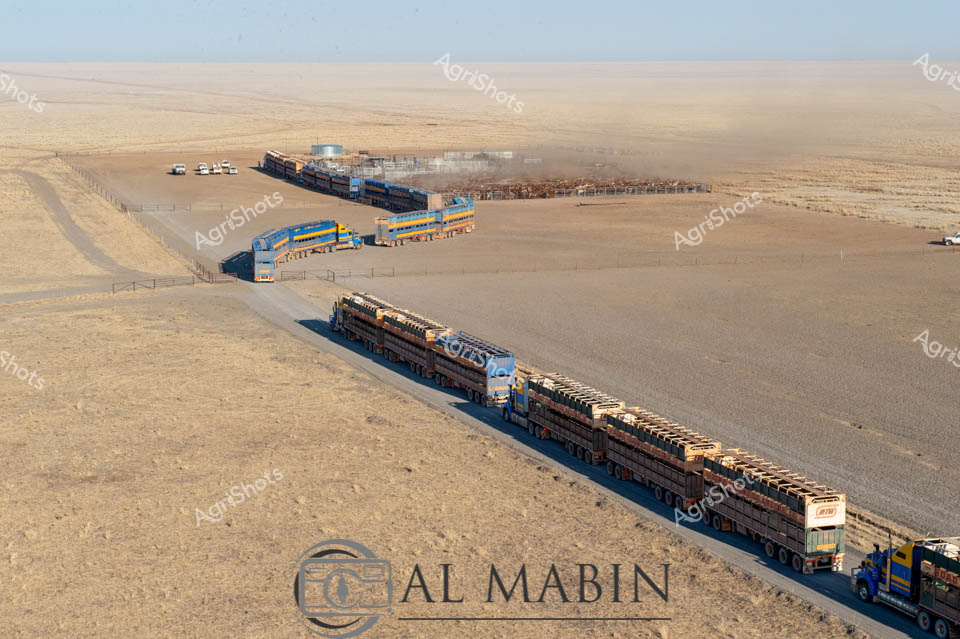
Dust billows across the vast Northern Territory plains as a massive road train hauling Brahman cattle winds its way through an expansive cattle station. The long, multi-trailer truck stretches across the ochre landscape, loaded with distinctive white-grey cattle characteristic of the breed's adaptation to harsh Australian conditions. In the distance, blue and yellow cattle yards stand out against the monochromatic desert backdrop, with additional support vehicles positioned nearby. The scene captures the immense scale of Australian pastoral operations, where livestock transport becomes an art of logistics and endurance. Brahman cattle, renowned for their heat and insect resistance, represent the backbone of beef production in Australia's most challenging agricultural environments.
 ▶ Video
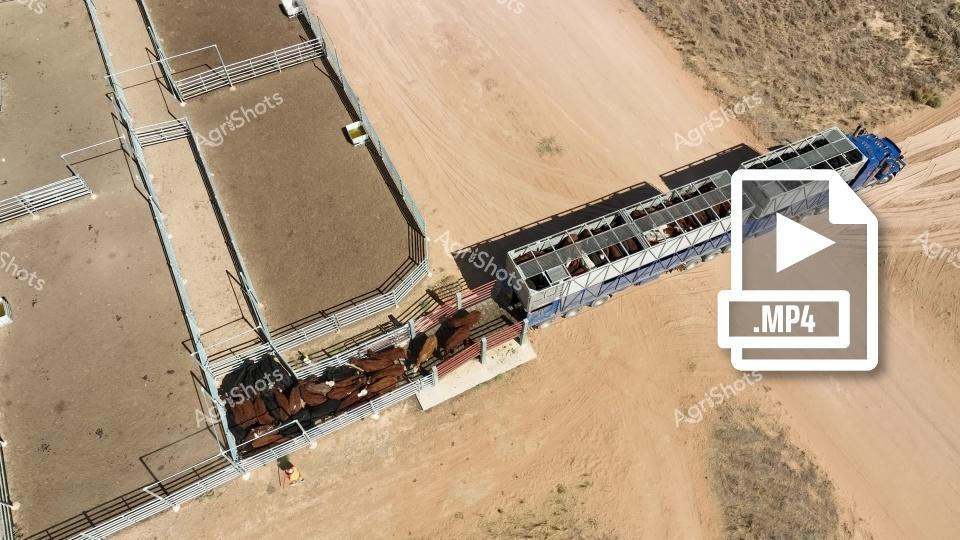
An aerial view of a cattle feedlot in New South Wales, showing multiple metal-fenced pens with brown cattle and a blue semi-trailer truck for livestock transportation. The dry, sandy landscape reveals an extensive cattle operation with strategic loading and sorting infrastructure typical of modern beef production facilities.
 Image
Image
A mammoth road train thunders across the arid western Queensland landscape, its blue and yellow Kenworth prime mover hauling multiple livestock trailers through a billowing dust cloud. The articulated cattle transporter stretches across the parched earth, its multi-tiered aluminum stock crates designed to safely move large herds of Brahman cattle between pastoral stations. Sunlight catches the metallic surfaces, creating a striking contrast against the golden-brown paddock backdrop, while the truck's powerful bullbar and high-clearance suspension speak to the rugged demands of outback agricultural logistics. Dust swirls around the vehicle's wheels, capturing the harsh beauty of rural freight transportation and the essential role these massive vehicles play in connecting remote cattle stations to regional markets. The scene epitomizes the resilience and scale of Australian agricultural infrastructure, where massive road trains are the lifeblood of cattle production across thousands of kilometers of challenging terrain. Each trailer represents not just a transportation mechanism, but a critical link in Australia's beef supply chain, moving livestock with precision and endurance.
 Image
Image
Aerial drone perspective of an expansive sheep and cattle station in drought-affected Queensland, revealing intricate metallic livestock yards stretching across a monochromatic golden-brown landscape. Precision-engineered steel fencing creates an elaborate maze of holding pens, forcing lanes, and loading ramps, demonstrating sophisticated livestock management infrastructure designed to efficiently handle large herds in challenging agricultural conditions. The geometric complexity of the yards contrasts sharply with the austere, parched terrain - a testament to human engineering adapting to harsh environmental constraints. Shadows cast by the metallic infrastructure emphasize the structural design, with curved and linear elements creating a sophisticated industrial pattern against the cracked, sunburnt earth. The aerial view captures the scale of Australian pastoral operations, where infrastructure must be robust and intelligently designed to manage livestock across vast, unforgiving landscapes.
 Image
Image
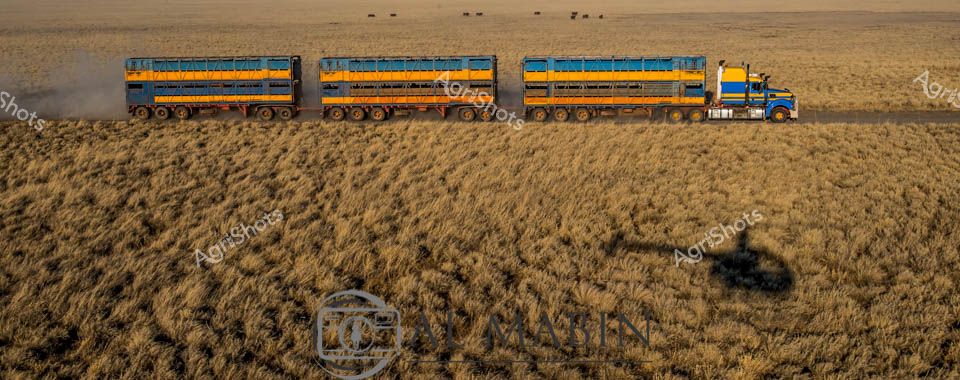
Sweeping across the golden wheat fields of Australia's vast interior, a massive road train rumbles through the harvest landscape, its blue and yellow triple-trailer configuration a testament to the nation's agricultural logistics. The heavy-duty truck navigates through rippling waves of mature grain, its powerful presence casting a stark shadow against the textured, sun-bleached paddock. In the distant background, a small herd of cattle grazes on the horizon, silhouetted against the warm, dusty atmosphere that defines the Northern Territory's agricultural heartland. The road train's robust design speaks to the demanding requirements of transporting livestock and produce across immense distances, with each trailer's sturdy construction built to withstand the challenging outback terrain. A helicopter's shadow hovers near the truck, suggesting aerial support or cattle mustering operations typical of large-scale Australian pastoral enterprises. The scene captures the raw essence of Australian agricultural infrastructure - rugged, efficient, and intrinsically connected to the expansive landscape that defines the continent's rural character.
 Image
Image
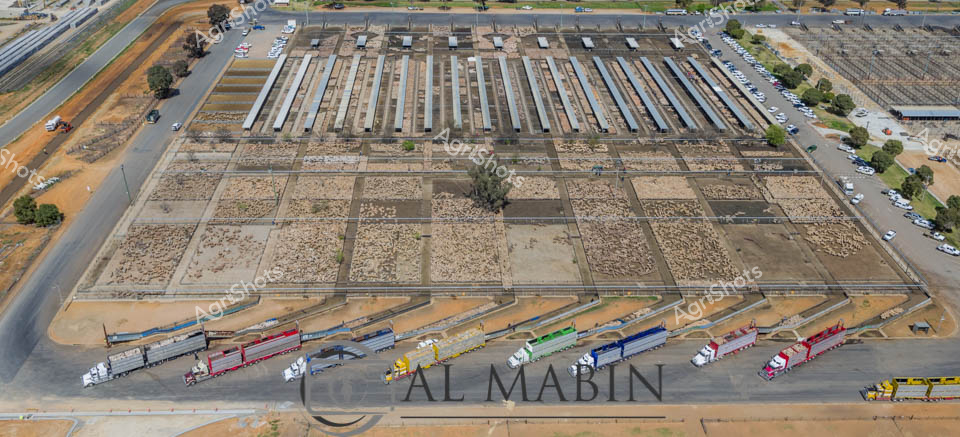
Aerial perspective of a sprawling livestock sale yard in the heart of New South Wales' Riverina region, where multicolored road trains converge to transport merino and dorper sheep. Meticulously organized concrete pens stretch across the dusty ochre landscape, creating a geometric grid of agricultural infrastructure under the harsh midday sunlight. Trucks in vivid hues of white, red, blue, green, and yellow are strategically positioned along the yard's perimeter, ready to load carefully sorted livestock for distribution across rural Australia. The precise layout reveals the sophisticated logistics of sheep trading, with each sectioned area representing carefully managed breeding stock or market-ready animals. Surrounding the sale yards, sparse trees and arid ground highlight the challenging environmental conditions of this critical agricultural hub. The expansive aerial view captures the industrial scale and mechanical precision of modern Australian livestock commerce, where every element - from truck positioning to pen organization - reflects a complex, carefully orchestrated agricultural supply chain.
 Image
Image
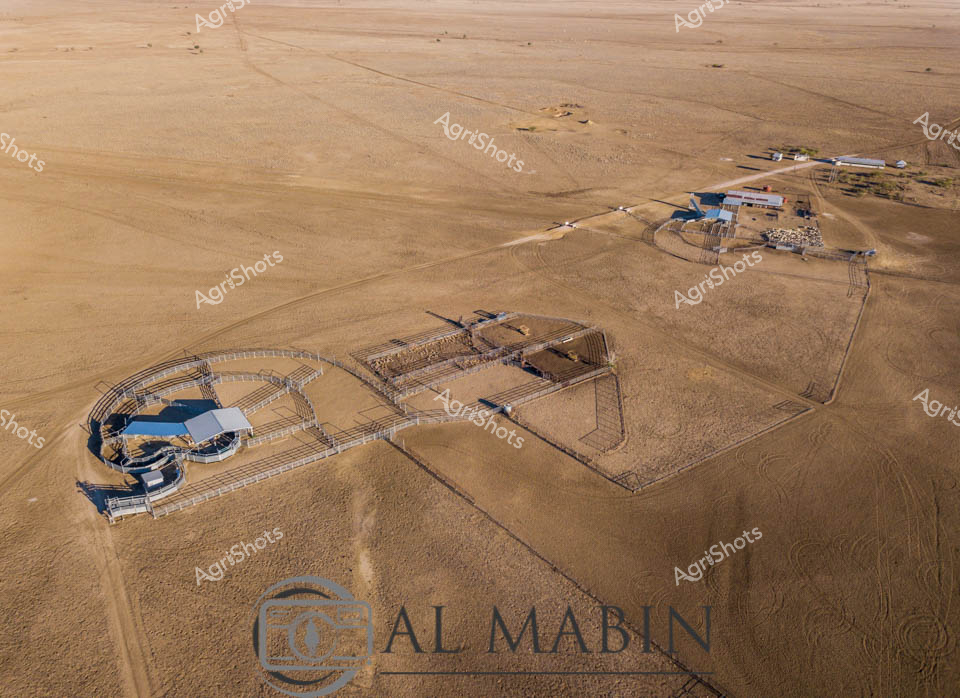
Aerial view of The expansive pastoral landscape, revealing the intricate infrastructure of a remote livestock station during an intense dry season. Geometric fencelines and circular livestock yards create a striking architectural pattern against the golden, drought-affected terrain, with steel-blue roofed sheds providing critical infrastructure for cattle and sheep management. The carefully designed circular handling system demonstrates sophisticated agricultural engineering, allowing efficient stock movement and processing in harsh outback conditions. Weathered paddocks stretch to the horizon, their monochromatic palette of tans and browns highlighting the challenging environmental context of Queensland's agricultural heartland. Strategically positioned buildings and precise yard layouts showcase the meticulous planning required to operate a successful station in an unforgiving landscape, where every structural element serves a critical operational purpose. The image captures the resilience and strategic innovation of Australian pastoral farming, where human intervention and natural environment intersect with remarkable precision.
 Image
Image
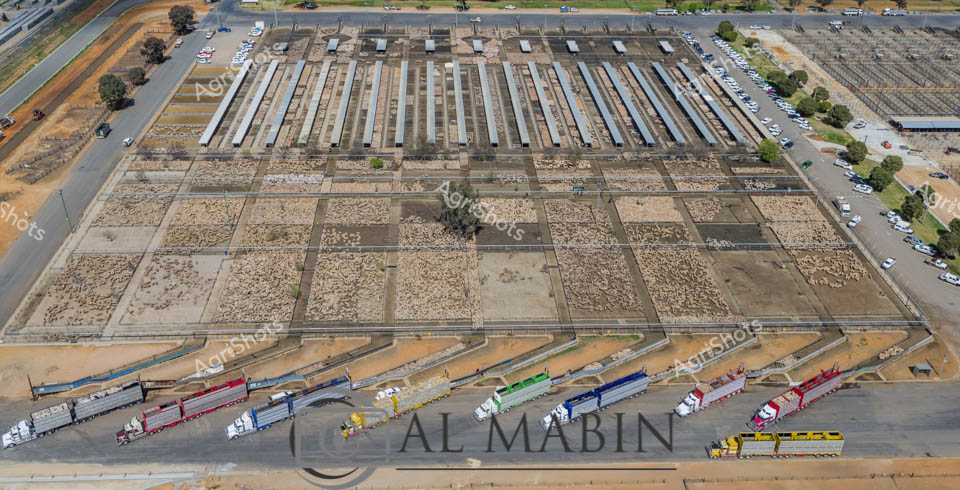
Aerial view of a bustling livestock sale yard in the Riverina region of New South Wales, where a complex network of pens and concrete pathways hosts hundreds of sheep awaiting auction. Gleaming road trains in vibrant colors—white, red, blue, and green—line up alongside the holding pens, their long trailers creating a rhythmic pattern against the arid landscape. The sale yard's geometric layout reveals multiple rectangular paddocks filled with densely clustered sheep, their pale fleeces creating a textured mosaic against the sandy ground. Surrounding the yard, sparse trees and the open road punctuate the stark agricultural landscape, capturing the essence of rural Australian livestock commerce. Sophisticated infrastructure demonstrates the region's advanced agricultural practices, with carefully designed loading zones and sorting areas that facilitate efficient livestock trading.