About this image
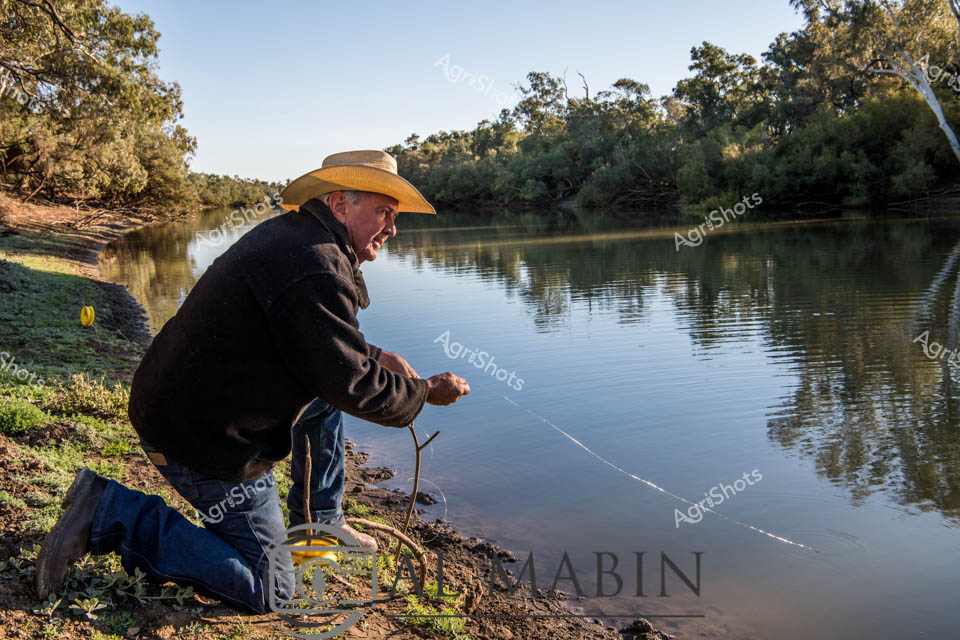
Golden morning light bathes a tranquil riverside scene as an experienced stockman pauses during his early fishing expedition. Wearing a classic wide-brimmed Australian bush hat and a dark wool jacket, the figure kneels intently on the muddy riverbank, carefully managing his fishing line against the reflective waters. Eucalyptus trees frame the background, their muted green foliage casting soft shadows across the languid river surface, suggesting this is likely a quiet moment in rural Queensland. The rocky shoreline and weathered terrain hint at the rugged pastoral landscape, embodying the resilient spirit of Australian country life. His concentrated posture and careful technique reveal a deep connection to the land and its waterways - a timeless scene of a rural worker finding a moment of peaceful contemplation amidst the demands of station life. The soft, diffused light and serene landscape capture the subtle beauty of Australia's inland waterways, where fishing represents not just recreation, but a fundamental relationship with the natural environment.
Similar media
 Image
Image
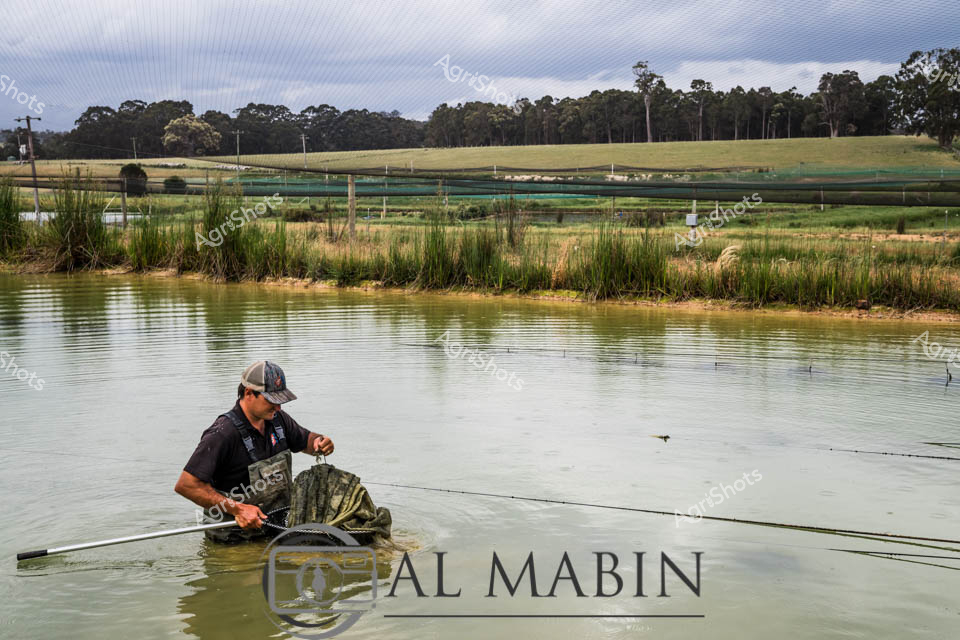
An aquaculture farm worker tends to fish ponds in Maron, Western Australia, carefully monitoring water quality and fish health. The worker sits partially in the shallow water of a rectangular dam, managing equipment essential for successful fish farming operations. Rolling hills and dense eucalyptus forest create a scenic backdrop to this rural aquaculture facility, while reedy vegetation lines the pond edges providing natural filtration. The scene captures the hands-on nature of modern Australian aquaculture, where dedicated farm workers maintain optimal conditions for sustainable fish production in purpose-built water systems.
 Image
Image
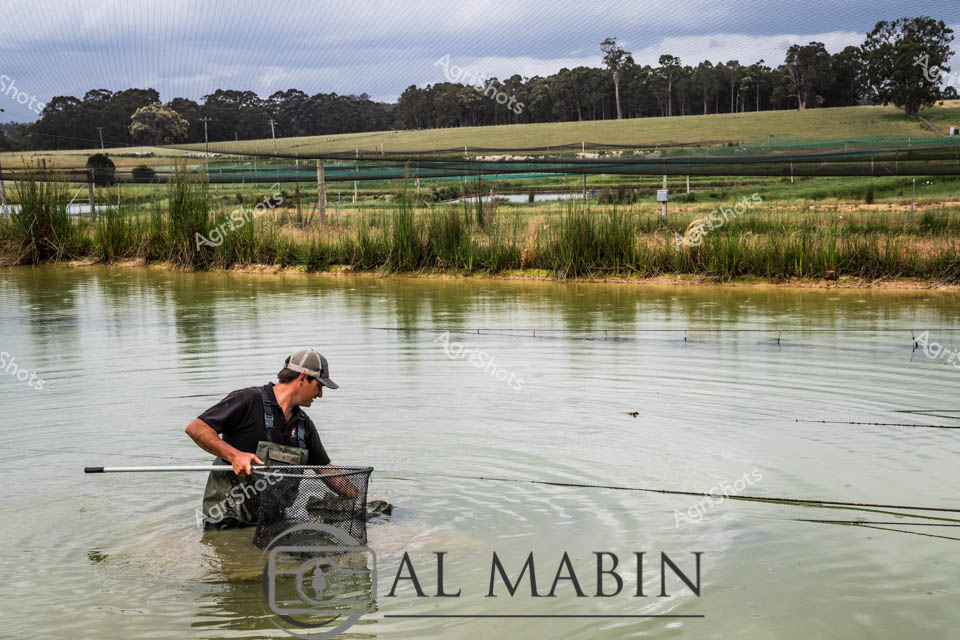
A man working in aquaculture wades through the shallow waters of a dam in Western Australia's Maron region, operating a specialized net or basket system for fish or crustacean harvesting. The worker is positioned in the calm water body surrounded by natural vegetation and rolling hills, demonstrating the integration of water-based farming within the rural Australian landscape. Green netting and infrastructure visible in the background indicate this is an established aquaculture operation utilizing dam water resources for sustainable food production.
 Image
Image
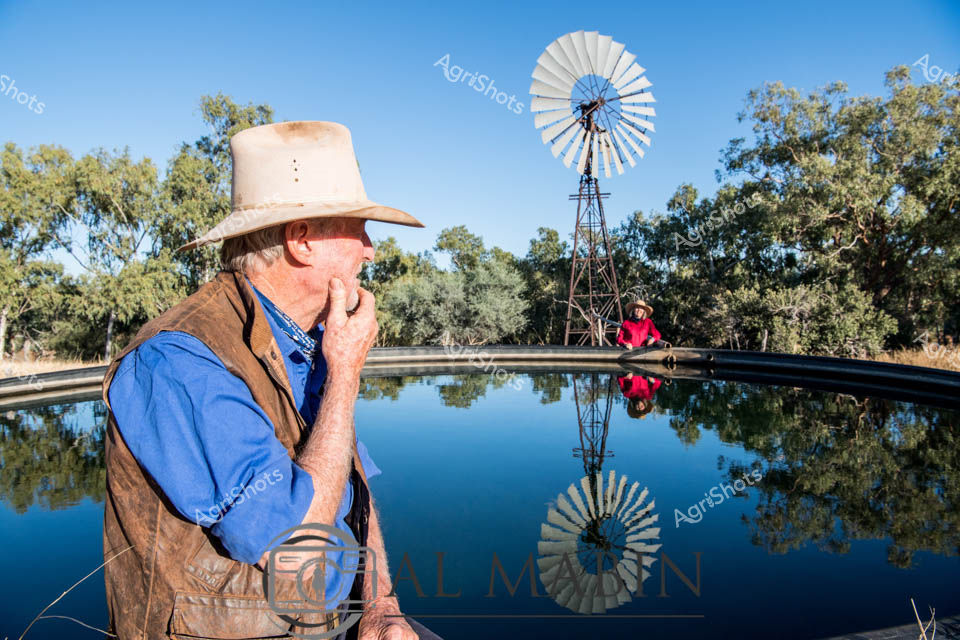
Weathered and contemplative, a seasoned grazier stands beside a mirror-like dam, his blue shirt and leather vest telling stories of decades on the land. A classic steel windmill rises behind him, its white blades perfectly reflected in the still water, creating a symmetrical tableau of rural Queensland persistence. The landscape around him is a study in muted greens and blues - eucalyptus trees softening the horizon, a clear sky promising another dry season ahead. His wide-brimmed hat and thoughtful pose suggest a moment of quiet assessment, perhaps weighing the challenges of water management in an unforgiving landscape. In the background, a hint of movement suggests another worker, dressed in red, attending to tasks near the water's edge. This image captures the essence of Australian agricultural resilience - a lone figure connected deeply to the land, surrounded by the pragmatic infrastructure that makes rural life possible in challenging environments.
 Image
Image
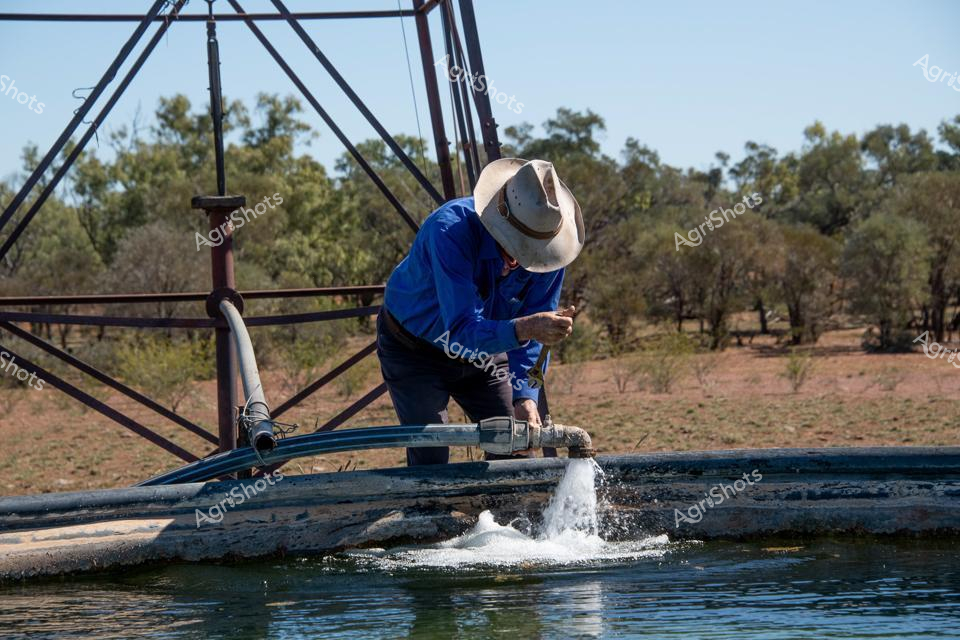
Outback Water Management: Rural Resilience A seasoned rural worker in a vivid cobalt blue work shirt and classic wide-brimmed Australian stockman's hat leans intently over a water infrastructure installation. The sturdy metal windmill tower frames the scene, anchoring the landscape of sparse eucalyptus trees and rust-toned earth typical of inland Queensland. Water surges forcefully through industrial piping, creating a dynamic splash into a concrete reservoir - a critical lifeline for agricultural operations in this arid environment. The precise positioning of the worker suggests careful monitoring of water flow, highlighting the meticulous attention required to maintain essential rural infrastructure. Sunlight casts sharp shadows, emphasizing the rugged textures of the mechanical equipment and the surrounding semi-arid terrain. This image captures the quiet determination of agricultural workers managing precious water resources in challenging Australian landscapes, where every drop is carefully managed and valued.
 Image
Image
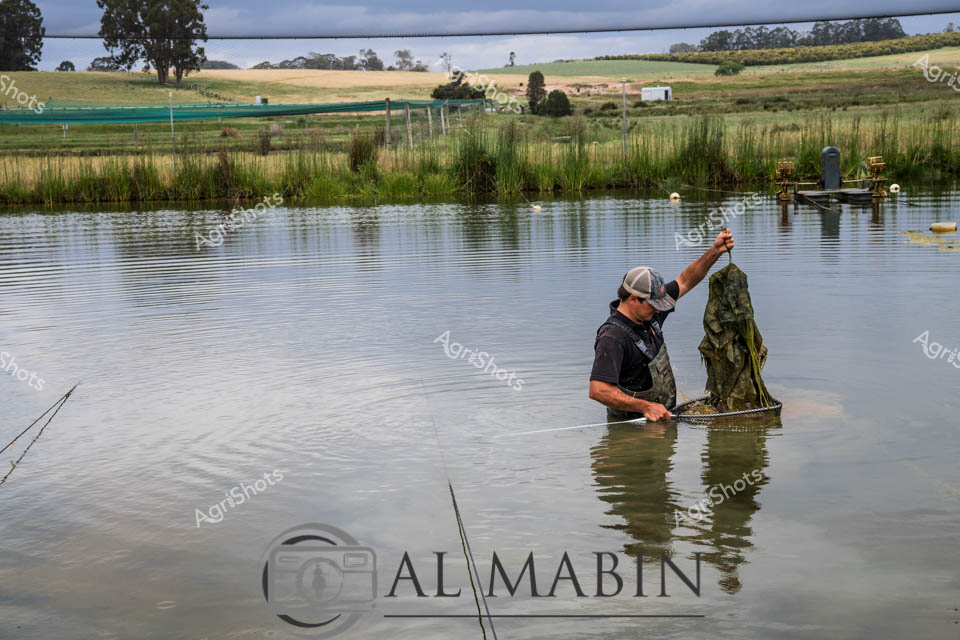
A farm worker wades chest-deep in a farm dam in Western Australia, carefully handling aquaculture netting during water management operations. The person, wearing protective clothing and a cap, demonstrates the hands-on nature of farm water infrastructure maintenance in the rural Maron region. Surrounding the dam, lush green reeds and grasses create a natural wetland environment, while rolling agricultural paddocks stretch toward distant farm buildings under an overcast sky. This scene captures the essential water management practices that support both aquaculture operations and broader farming activities across Western Australian agricultural properties.
 Image
Image
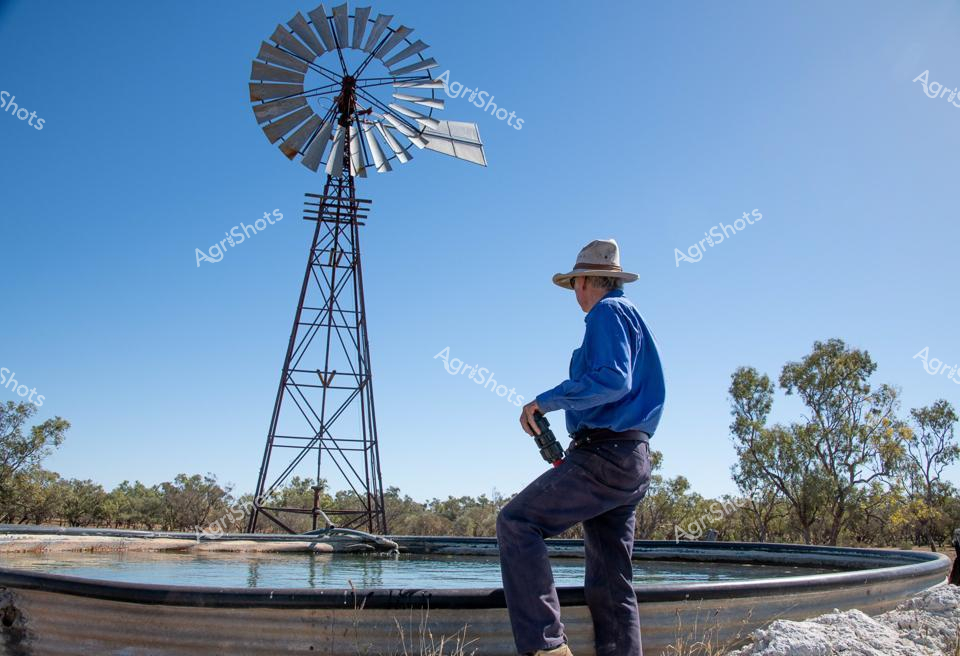
Lone sentinel of the outback, a towering steel windmill stands against an azure Queensland sky, its weathered blades poised to catch the slightest breeze. A seasoned farm worker in a crisp blue long-sleeved shirt and wide-brimmed sun hat surveys a circular water tank, his stance reflecting decades of rural experience. The metallic windmill, a quintessential icon of Australian agricultural infrastructure, rises from a landscape of scattered eucalyptus trees, representing generations of water management innovation in harsh rural environments. Corrugated metal water storage gleams in the sunlight, surrounded by dusty ground and sparse vegetation, capturing the resilient spirit of remote agricultural communities. The scene embodies the quiet determination of farmers who transform challenging landscapes through ingenious water harvesting and distribution technologies. Every element—from the triangulated windmill tower to the carefully positioned water tank—speaks to the strategic adaptation required to sustain agricultural life in Australia's unforgiving interior.
 Image
Image
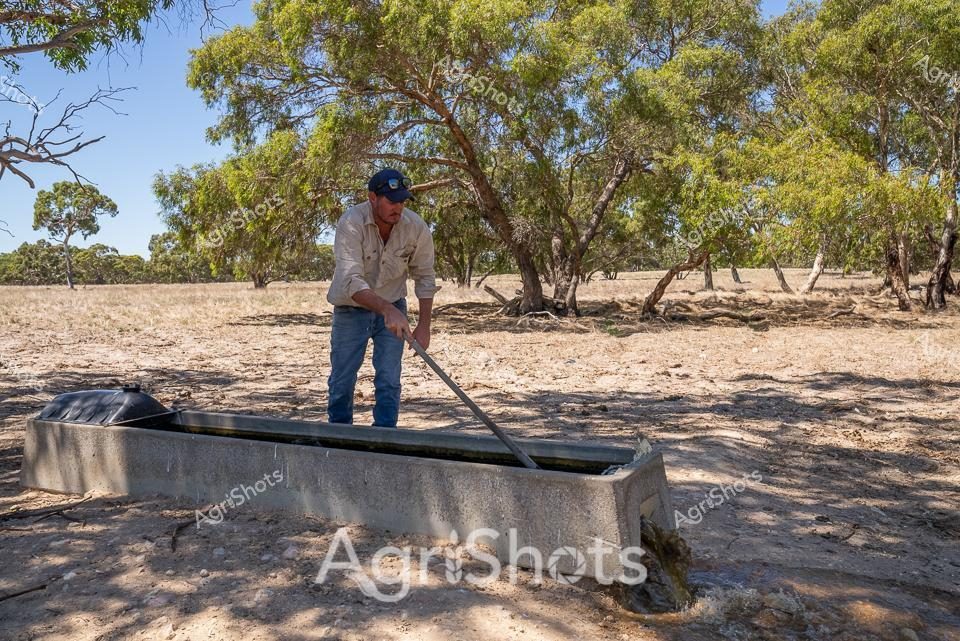
Parched earth embraces a concrete water trough under the harsh midday sun of rural South Australia. A seasoned farm worker in weathered blue cap and light khaki work shirt carefully maintains the critical water infrastructure, leaning on a long-handled tool amid a sparse eucalyptus woodland. The landscape speaks of prolonged drought - cracked ground surrounding the substantial concrete trough, with gnarled river red gums casting sparse shadows across the bleached and hardened terrain. This essential water point represents survival for livestock in an unforgiving agricultural ecosystem, where every drop is precious and infrastructure maintenance is a constant battle against environmental extremes. Bleached greys and browns dominate the scene, punctuated by the worker's blue cap and the subtle green of distant tree canopies, capturing the resilient spirit of Australian agricultural workers managing precious water resources. The image embodies the challenging conditions of dryland farming, where human skill and infrastructure provide lifelines in a landscape of persistent water scarcity.
 Image
Image
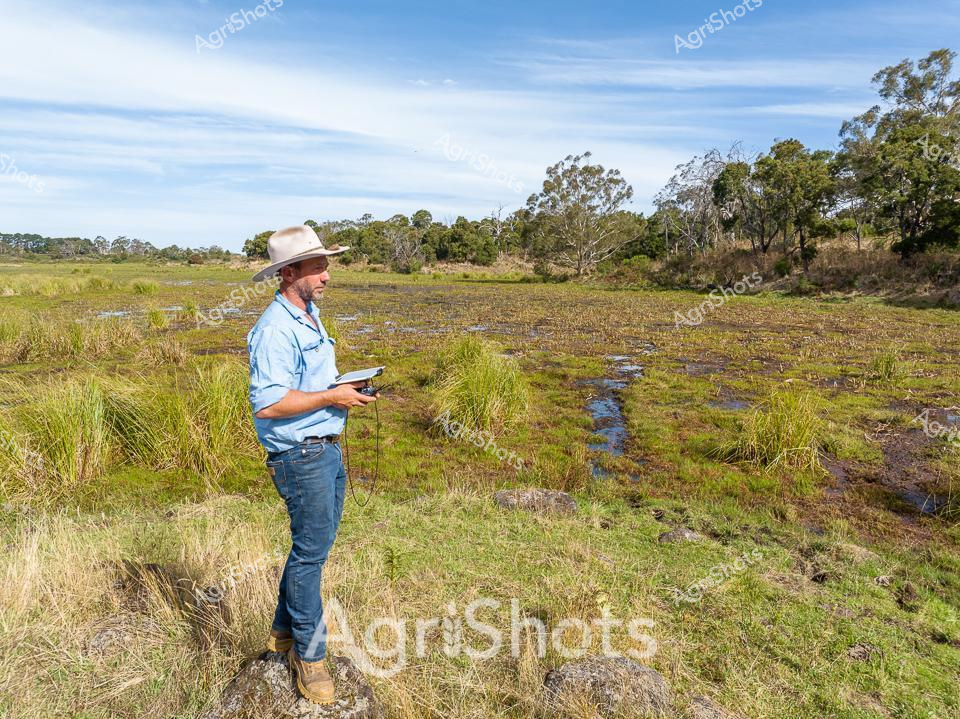
A rangeland management specialist surveys a waterlogged pasture in rural Victoria, using advanced drone technology to assess environmental conditions and cattle grazing potential. Wearing a classic Australian rural work outfit - light blue chambray shirt, denim jeans, and a broad-brimmed sun hat - the professional stands amid tussock grasses and shallow water channels that wind through the marshy landscape. The expansive wetland environment stretches toward a distant treeline of eucalyptus, creating a quintessential Australian agricultural scene under a soft, wispy blue sky. Handheld drone control equipment indicates precision agricultural monitoring, likely assessing soil moisture, vegetation health, and potential Angus cattle grazing zones. The muted green and brown palette of the wetlands suggests seasonal water retention, critical for understanding landscape hydrology and sustainable livestock management. This image captures the intersection of modern agricultural technology, environmental stewardship, and the challenging terrains of Victoria's rural landscapes.