About this image
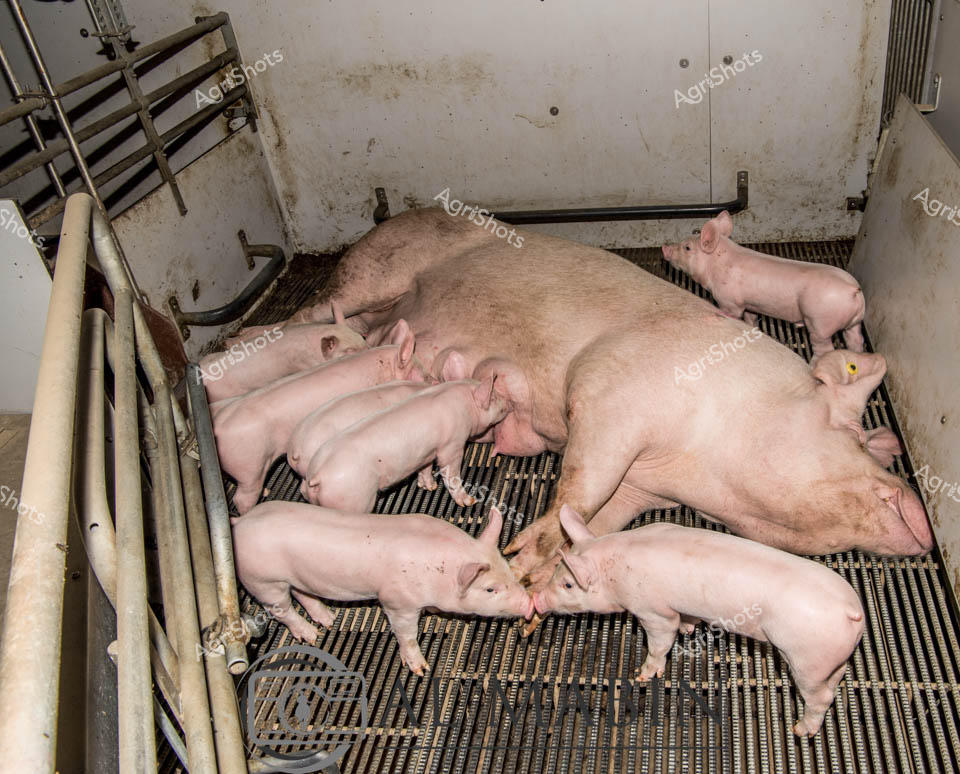
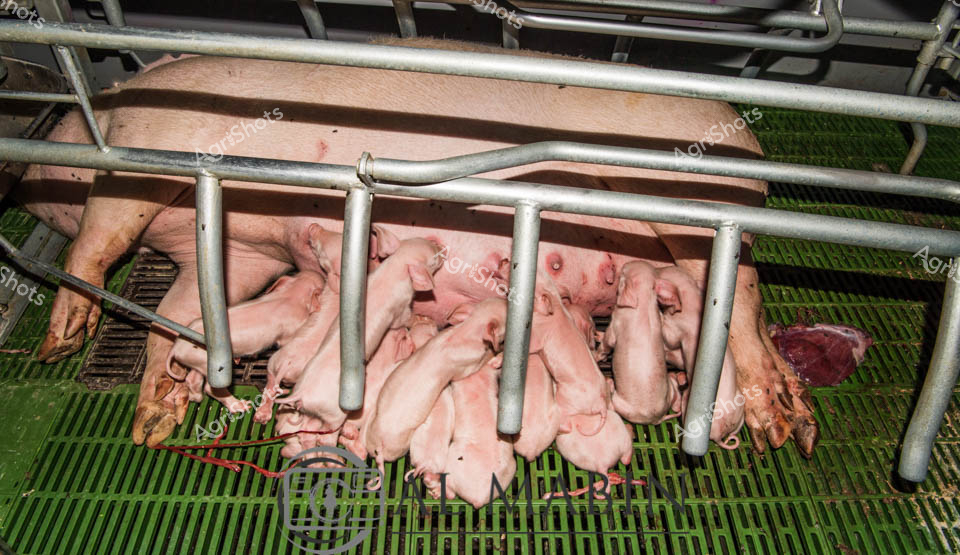
Large white sow nursing her litter of pale pink piglets in a confined farrowing crate, a standard fixture of large-scale pig production. The steel-framed enclosure features a slatted metal floor allowing waste management, typical of modern commercial piggery facilities. Multiple young piglets cluster around the mother, some actively feeding while others rest close to her body, demonstrating the tight familial clustering of pigs during early nursing stages. The enclosure's stark white walls and metallic infrastructure highlight the clinical, controlled environment of contemporary agricultural breeding operations. Soft pink and pale beige tones of the pigs contrast against the industrial grey and silver mechanical surroundings, creating a clinical yet organic visual composition. This image captures the precise, engineered approach to livestock management prevalent in Queensland's agricultural sectors, specifically within regions like Banana Shire where large-scale farming practices are fundamental to agricultural productivity.
Similar media
 Image
Image
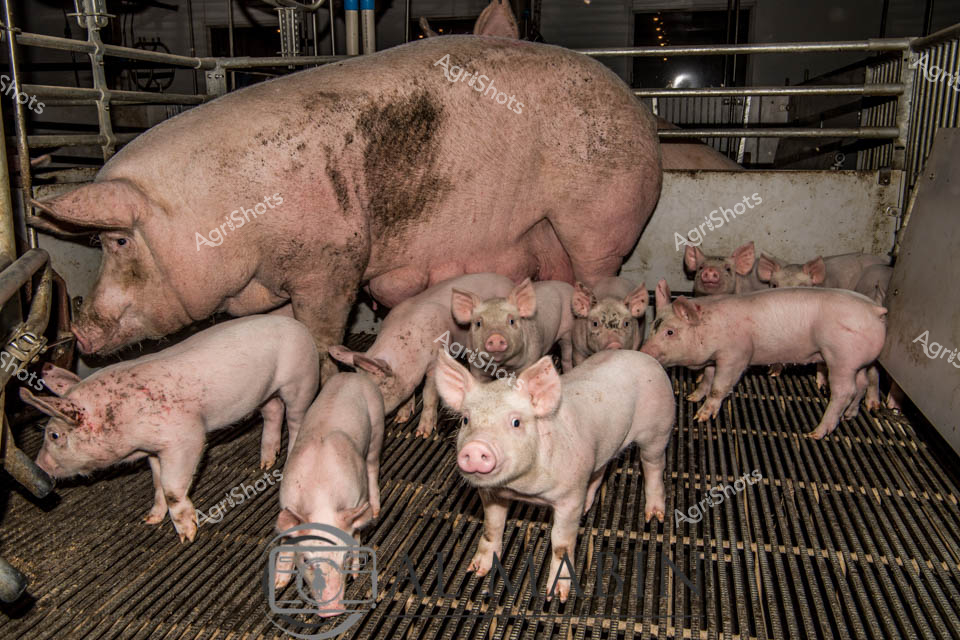
Sow and piglets cluster in a sterile, industrial farrowing pen, showcasing large-scale agricultural production. A large, mature female dominates the metallic slatted floor, surrounded by eight young piglets of varying sizes. The animals display pale pink skin with subtle dirt and grime marks, reflecting the controlled but demanding environment of modern livestock breeding. Metallic barriers and precision-engineered flooring emphasize the systematic approach to pig husbandry, typical of Queensland's agricultural enterprises in regions like Banana Shire. The piglets move with a mixture of curiosity and caution, some nestling close to their mother, others exploring the confined space. The cool, artificial lighting highlights the clinical nature of contemporary animal production, where efficiency and controlled breeding are paramount to agricultural economic success.
 Image
Image
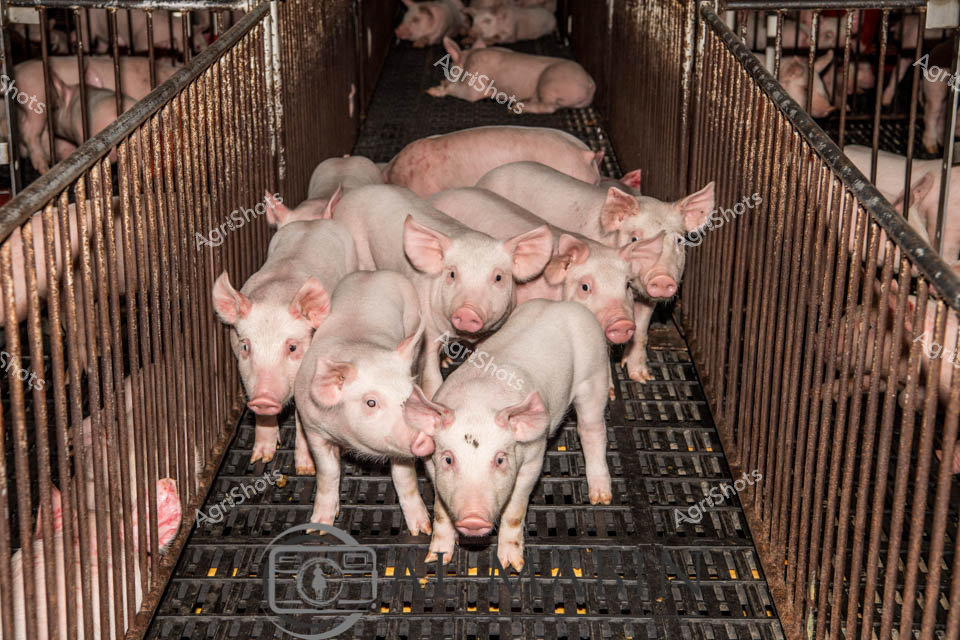
Young Yorkshire-cross piglets cluster together on slatted metal flooring within a precisely engineered indoor large-scale pig breeding facility. Pristine white bodies with delicate pink ears fill the narrow metal-barred pen, their smooth skin and alert expressions highlighting the controlled breeding environment typical of modern agricultural production. Carefully designed ventilation bars frame the enclosure, allowing systematic management of temperature, hygiene, and animal density. The piglets appear healthy and uniform, representing a carefully bred genetic line optimized for efficient meat production. Soft ambient lighting reveals the clean, industrial infrastructure of contemporary livestock management, where every element is precisely calibrated for animal growth and agricultural productivity. The tight grouping of the young animals suggests both their natural herding instinct and the structured environment of commercial pig farming.
 Image
Image
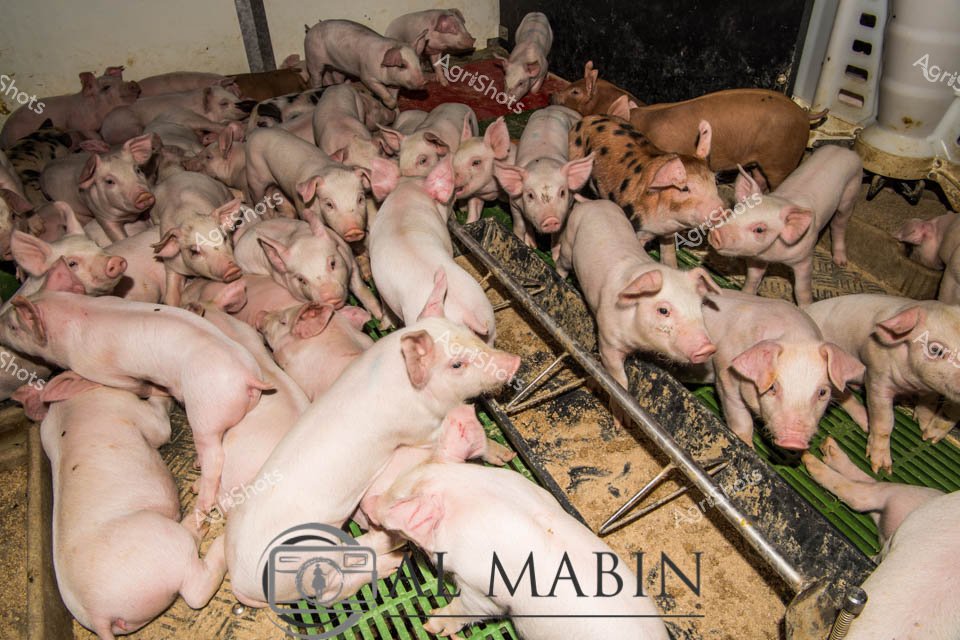
Young piglets cluster across green and yellow slatted flooring in a modern large-scale farming environment, representing contemporary commercial swine production. Predominantly pale pink piglets occupy the densely populated pen, with a few spotted brown animals visible among the group. The metal feeding trough runs centrally through the enclosure, suggesting an efficient, standardized feeding system typical of large-scale agricultural operations. The piglets appear recently weaned, displaying varying sizes but uniformly alert postures, highlighting the controlled breeding and rearing conditions of contemporary piggery management. This image captures the systematic, industrialized approach to livestock production in Western Australia's agricultural sector, specifically within the South West Region's large-scale farming landscape.
 Image
Image
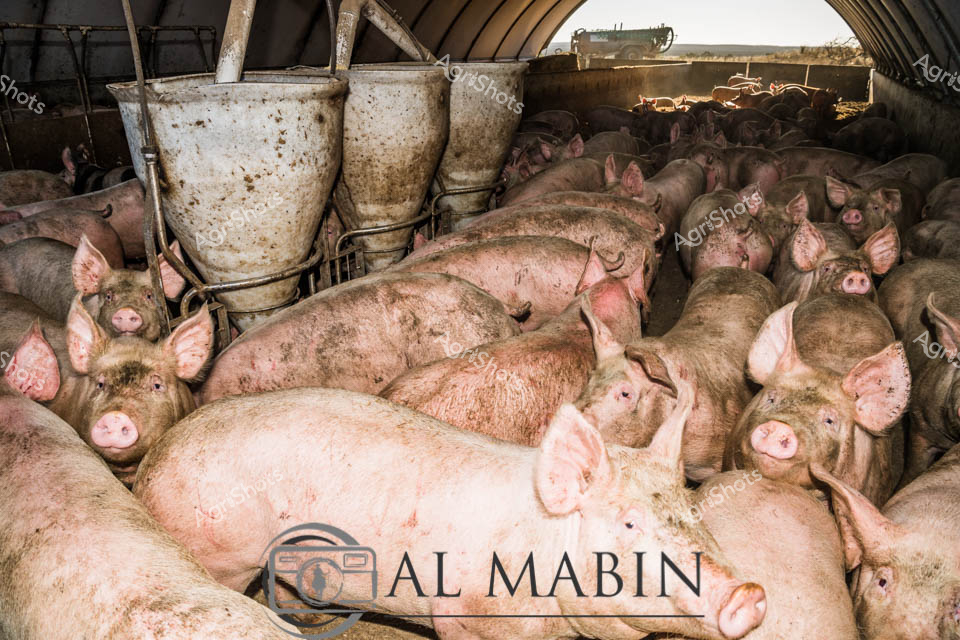
Industrial pig farming inside a metal-clad shed reveals dense clusters of mature pink and tan Yorkshire breeding stock. Weathered white feeding buckets hang against a corrugated wall, contrasting with the tightly packed pink bodies of market-weight pigs. The confined space suggests an large-scale agricultural production environment typical of modern commercial livestock operations in Western Australia's South West Region. Muted earth tones and metallic greys dominate the interior, with soft pink pig skin and pink snouts providing organic texture against the hard industrial surfaces. The agricultural photography captures the systematic efficiency of contemporary meat production, where animals are densely grouped in controlled climate-controlled infrastructure. Early morning or late afternoon light filters through the shed opening, casting warm highlights across the muscular pig bodies and highlighting the industrial agricultural landscape.
 Image
Image
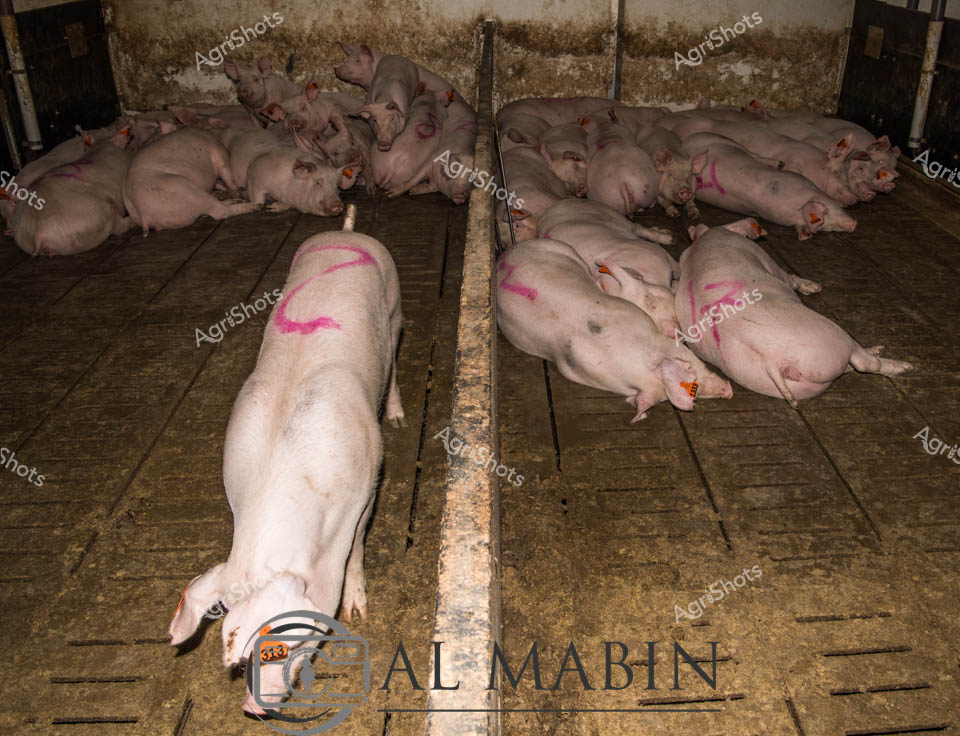
Inside a compact, well-organized piggery facility, multiple groups of pale pink pigs are clustered across slatted concrete flooring, divided by a central drainage channel. The pigs, uniformly marked with bright pink identification numbers, rest closely together in a controlled indoor environment typical of modern large-scale livestock management. Ambient lighting reveals a weathered concrete wall background, suggesting this is a purpose-built agricultural infrastructure designed for efficient animal husbandry. Each pig appears to be a carefully selected breed, likely bred for optimal meat production, with uniform body composition and coloration. The floor's precise grid design allows for waste management and hygiene control, a critical aspect of contemporary agricultural practices. The scene captures the systematic and structured approach of contemporary pig farming, where animal welfare and production efficiency are balanced through carefully engineered environments.
 Image
Image
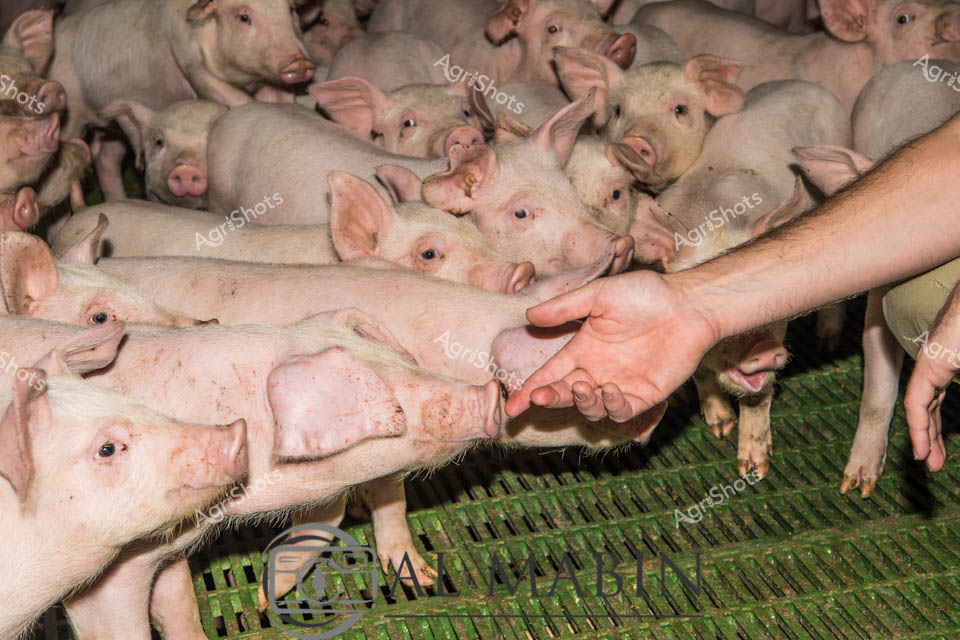
A farm worker reaches out to interact with young piglets in an large-scale pig farming facility in Western Australia's South West Region. The pink piglets are housed on green plastic flooring typical of modern piggery operations, clustered together in the confined space of the large-scale farming system. The scene captures the hands-on care required in commercial pig production, where farm workers monitor the health and welfare of livestock in these controlled agricultural environments. This image demonstrates the scale and methods of contemporary Australian pork production in the region's established agricultural sector.
 Image
Image
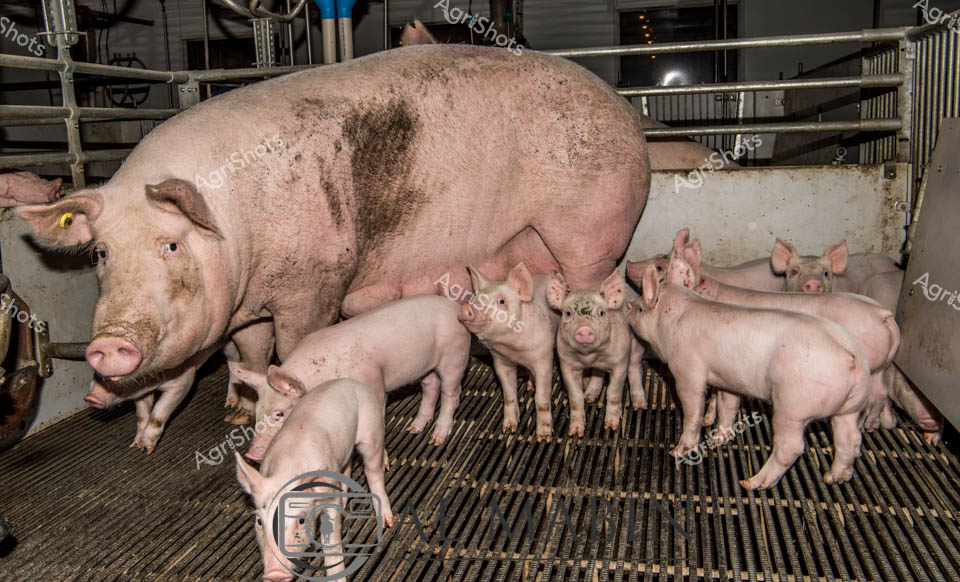
Breeding Sow with Newborn Piglets in Modern large-scale Pig Farming Facility A mature breeding sow stands protectively amid her litter of young piglets on a precision-engineered steel slatted floor. The expansive farrowing pen reveals the sophisticated infrastructure of contemporary agricultural production, with metallic barriers and overhead lighting creating a clinical, controlled environment. The sow's substantial pink-toned body, marked with subtle dirt patches, contrasts with the pale, uniformly colored piglets clustered nearby. A yellow ear tag identifies the breeding animal, highlighting the systematic approach to livestock management. The piglets, ranging from several days to weeks old, demonstrate robust health and uniform development - a testament to modern breeding techniques and intensive care protocols. Industrial metallic surfaces, precise environmental controls, and the orderly arrangement of animals underscore the scientific precision of large-scale pig production in Queensland's agricultural landscape.
 Image
Image
The image depicts an large-scale pig breeding operation, showing multiple newborn piglets closely confined within a farrowing crate. The young pink piglets are tightly clustered together on a green slatted floor, surrounded by metal restraining bars that restrict the mother pig's movement. Metallic infrastructure frames the scene, with vertical support bars creating a grid-like enclosure typical of industrial livestock production facilities. The piglets appear very young, likely just days old, with their delicate pink skin and compact bodies pressed close together for warmth and security. A partial view of the mother pig can be seen at the edges of the frame, her larger body constrained by the narrow farrowing crate design. The green plastic flooring allows waste to fall through, representing a standard approach to hygiene and waste management in commercial pig farming environments. The lighting and close-up perspective provide a stark, clinical view of early-stage pig production, revealing the systematic and controlled nature of modern agricultural breeding practices. The metal infrastructure, tight spacing, and uniform appearance of the piglets highlight the industrial scale of contemporary livestock management.