About this image
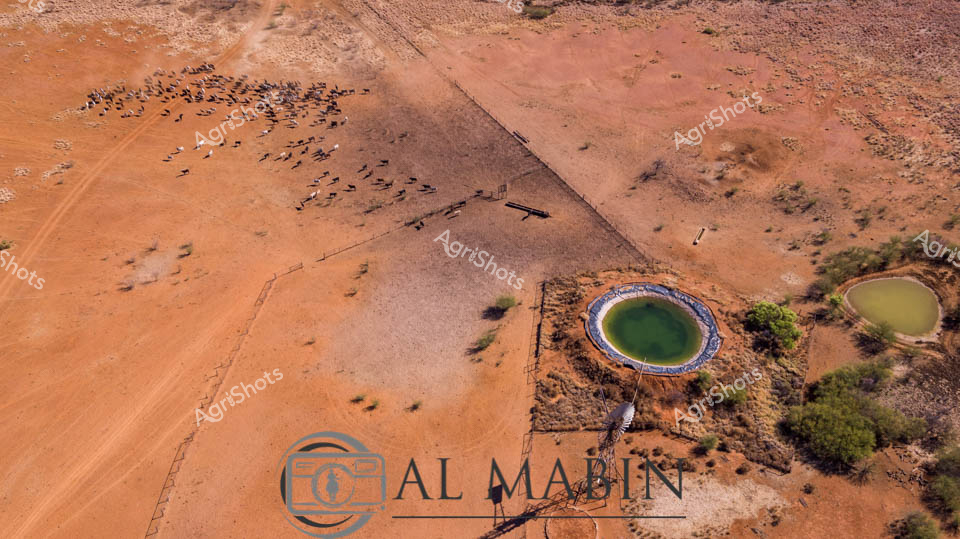
Aerial survey of a remote Queensland cattle station reveals the harsh beauty of Australia's pastoral landscape. A circular water tank, its vivid green waters contrasting sharply with the rust-red earth, provides critical hydration for a scattered herd of cattle grazing across the arid terrain. Windmill infrastructure and faint track lines trace delicate human interventions into this expansive, sun-baked environment, highlighting the strategic water management essential for livestock survival in challenging outback conditions. Burnt orange and terracotta ground textures dominate the landscape, punctuated by sparse vegetation and the meandering paths created by livestock movement. The overhead perspective captures the profound isolation and resilient agricultural practice that defines cattle farming in Queensland's most unforgiving regions. This image encapsulates the complex relationship between agricultural enterprise and the uncompromising Australian wilderness, where survival depends on precise water resource allocation and robust livestock management.
Similar media
 Image
Image
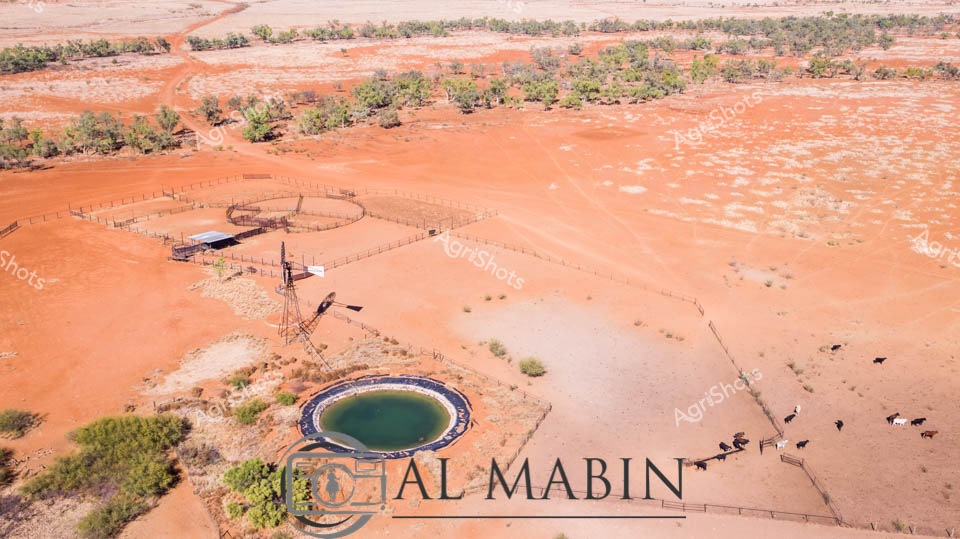
Aerial view of an arid Queensland cattle station, where the rusty-red earth stretches beneath a harsh Australian outback landscape. A circular water reservoir, rimmed in blue, sits like a jewel amid the parched terrain, surrounded by carefully constructed livestock paddocks and fenced areas. A classic windmill stands sentinel, providing critical water infrastructure for the cattle clustered along a narrow track leading to the water source. Sparse eucalyptus trees line the boundaries, offering minimal shade against the unforgiving desert environment. Weathered fence lines and strategic water management reveal the sophisticated engineering required to sustain cattle farming in these extreme conditions, where every drop of water and blade of vegetation is precious.
 Image
Image
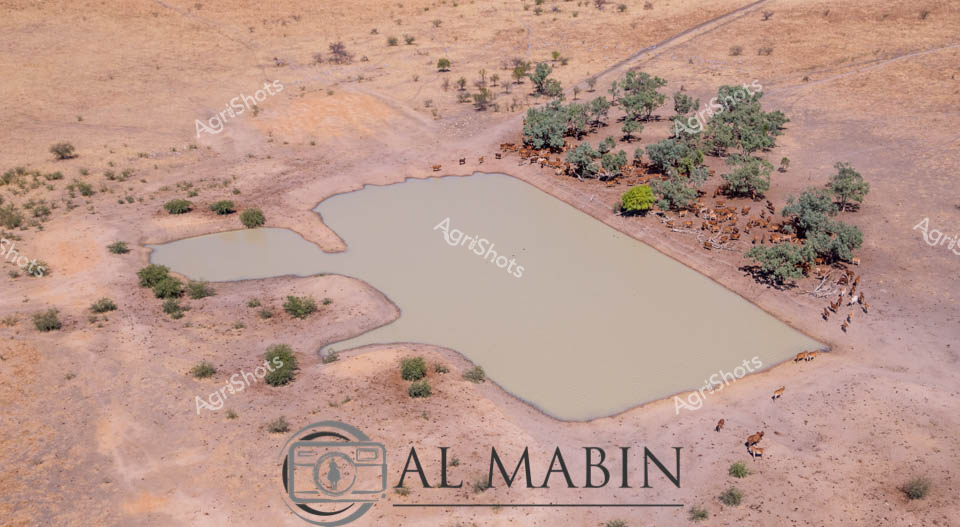
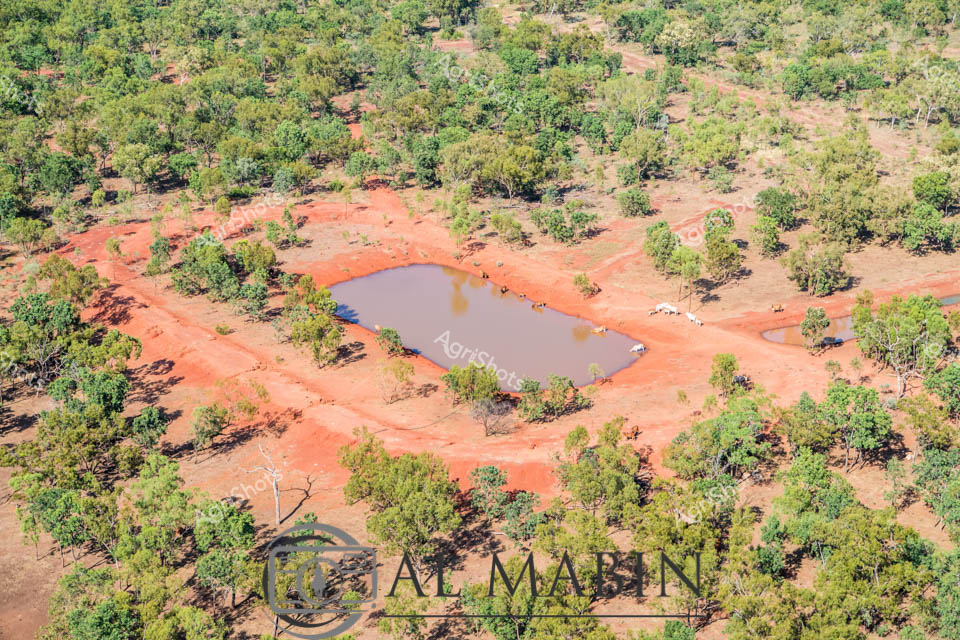
Dusty ochre plains stretch beneath an expansive Australian sky, where a carefully engineered water dam provides life-giving sustenance to a herd of Brahman cattle. The irregular-shaped earthen dam, milky-gray and reflective, sits embedded in the arid landscape, surrounded by scattered eucalyptus trees and sparse native ground vegetation. Hardy Brahman cattle, distinguished by their distinctive humps and loose skin adapted to tropical climates, cluster around the water's edge and under the sparse tree cover, seeking respite from the intense heat. The aerial perspective reveals the strategic placement of this water infrastructure, critical to pastoral operations in remote Queensland cattle stations where water management determines survival. Rugged, resilient landscape meets calculated agricultural engineering - a quintessential scene of Australia's northern pastoral regions where generations of graziers have transformed challenging terrain into productive cattle country. The muted earth tones of rust, tan, and sage green speak to the enduring relationship between land, livestock, and those who work to sustainably manage these harsh but beautiful environments.
 Image
Image
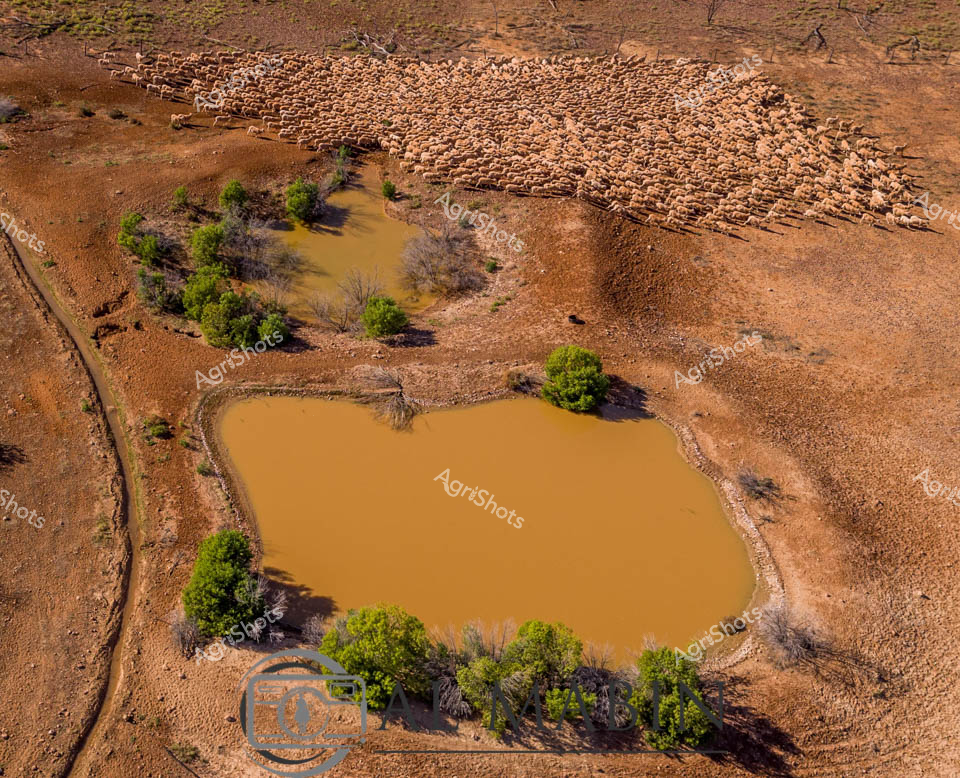
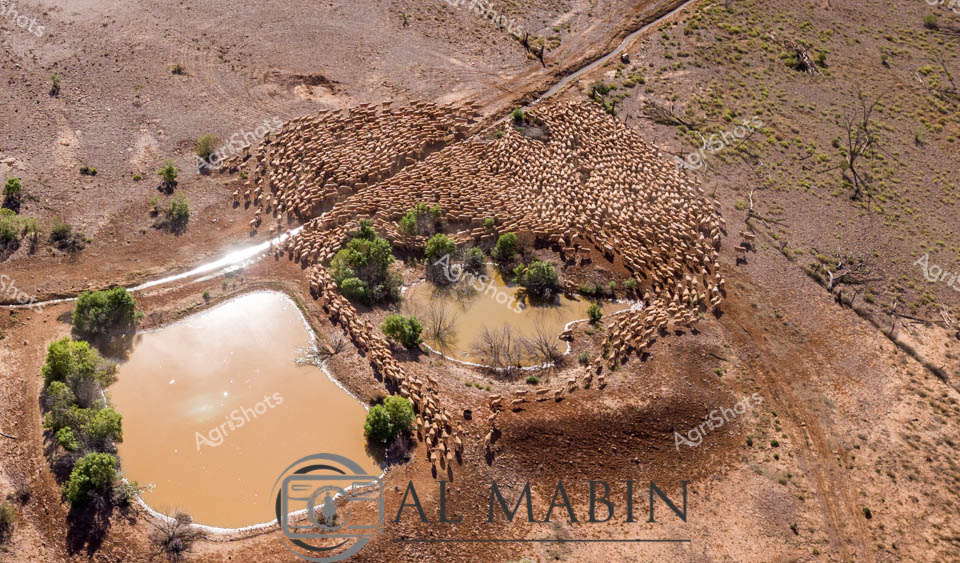
Aerial view of an arid Queensland pastoral landscape, revealing the lifeline of a remote sheep station. A large herd of Merino sheep clusters near a muddy brown water hole, surrounded by sparse green trees and rust-red earth typical of Australia's interior. The artesian bore and drain create a vital oasis in the harsh winter landscape, with the rectangular water reservoir providing critical hydration for livestock in this unforgiving environment. Scattered vegetation offers minimal shade, highlighting the challenging conditions of southwest Queensland's agricultural regions. The geometric contrast between the natural curves of the waterhole and the dense, organic mass of sheep creates a striking visual narrative of survival and agricultural resilience. This image captures the essence of outback farming - a delicate balance between water, land, and livestock in one of the world's most demanding agricultural terrains.
 Image
Image
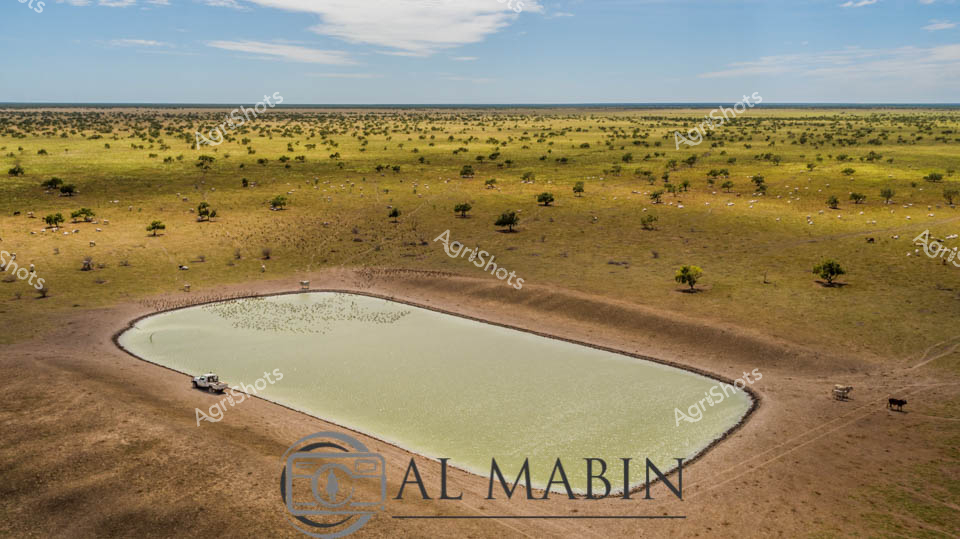
Aerial perspective of a pastoral landscape in Australia's Northern Territory, revealing a massive earthen dam surrounded by sparse savanna woodland. Pale, sun-bleached grasses stretch to the horizon, punctuated by scattered acacia and eucalyptus trees casting subtle shadows across the golden terrain. A white Toyota utility vehicle provides scale near the dam's edge, highlighting the expansive infrastructure critical to livestock management in this arid environment. Brahman cattle, renowned for their heat tolerance and distinctive humped physique, graze sparsely around the water source, their pale forms blending with the dusty ochre landscape. The dam's milky-green water reflects the high, wispy cirrus clouds of the dry season, capturing the resilience of agricultural operations in one of Australia's most challenging agricultural regions. This image encapsulates the harsh beauty of station life - a testament to human and animal adaptation in the unforgiving Northern Territory outback.
 Image
Image
An aerial perspective reveals a remarkable scene of pastoral agriculture in Queensland's arid interior - a massive flock of Merino sheep clustering around a life-sustaining water source. The dusty ochre landscape is punctuated by a muddy brown water hole, surrounded by scattered green trees, with the sheep forming an intricate living network around its perimeter. Their tightly packed bodies create an organic, flowing shape that follows the contours of the terrain, demonstrating the strategic movement and careful management of livestock in challenging outback conditions. The winter season is evident in the sparse vegetation and dry earth, highlighting the critical importance of reliable water infrastructure like this artesian bore. Soft green trees provide rare points of verdant contrast against the rugged terracotta ground, while the sheep - their dense woolly coats a uniform tan - move with a collective intelligence born of generations of adaptation to this unforgiving environment. The image captures the essence of Australian pastoral farming: resilience, careful resource management, and the delicate balance between livestock and landscape. The waterhole becomes a focal point of survival, drawing the sheep into a mesmerizing living pattern that speaks to the rhythms of agricultural life in remote Queensland.
 Image
Image
Aerial vista of a remote Northern Territory cattle station, where rust-red earth contrasts with scattered eucalyptus woodland and a central watering point. A meticulously constructed earth dam captures precious water resources, surrounded by cleared tracks that enable cattle movement and property management. Bright midday sunlight casts sharp shadows across the landscape, highlighting the strategic design of pastoral infrastructure against the arid savanna backdrop. Several white Brahman cattle congregate near the dam's edge, their heat-adapted bodies seeking respite and hydration in the harsh tropical environment. The expansive scene captures the resilience of Australian pastoral agriculture, where careful land engineering transforms challenging terrain into productive grazing grounds. The rich ochre soil and strategic water management epitomize the sophisticated approach of modern cattle stations in supporting livestock production across Northern Australia's demanding ecosystems.
 Image
Image
Aerial Merino Muster at Artesian Waterhole Dusty ochre earth stretches beneath a dense flock of Merino sheep converging around twin muddy waterholes, creating a living landscape of woolly brown and white. Sparse grey-green trees punctuate the arid terrain, offering minimal shade in the harsh South West Queensland winter landscape. The aerial perspective reveals intricate pathways carved by livestock, showing the strategic movement of the herd towards critical water sources in this unforgiving pastoral environment. Tracks of mustering vehicles wind through the scene, testament to the careful management required to sustain livestock in such challenging conditions. The artesian bore and connected water drain provide lifeline hydration, drawing the tightly clustered sheep into organic, undulating patterns that speak to generations of agricultural expertise. This image captures the resilience of Australian pastoral farming - a delicate dance of survival, where water, land, and livestock exist in a carefully balanced ecosystem.
 Image
Image
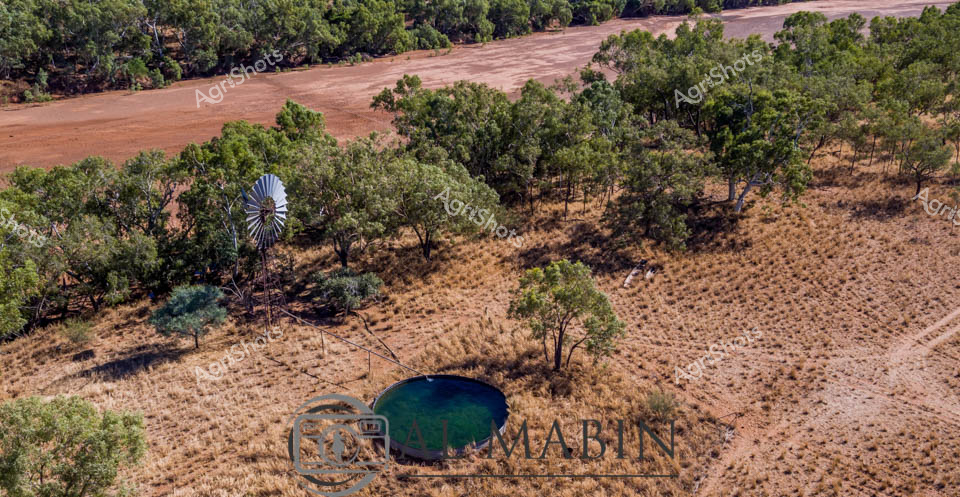
Outback Resilience: Water and Windmill on an Arid Station A classic Queensland station landscape reveals the stark beauty of pastoral survival. A weathered windmill stands sentinel beside a small dam, its blue metal blades contrasting against the dusty brown grasslands and scattered eucalyptus trees. The circular water reservoir gleams an unexpected deep green, a critical lifeline in this parched landscape where every drop of water means survival for livestock and land. Red-brown earth stretches across paddocks, testament to the challenging drought conditions that define much of Australia's interior agricultural regions. Sparse trees provide minimal shade, their twisted branches a visual metaphor for endurance in an unforgiving environment. This aerial perspective captures the essence of remote agricultural management - strategic water infrastructure maintaining agricultural potential in a landscape that demands resilience and careful resource stewardship.