About this image
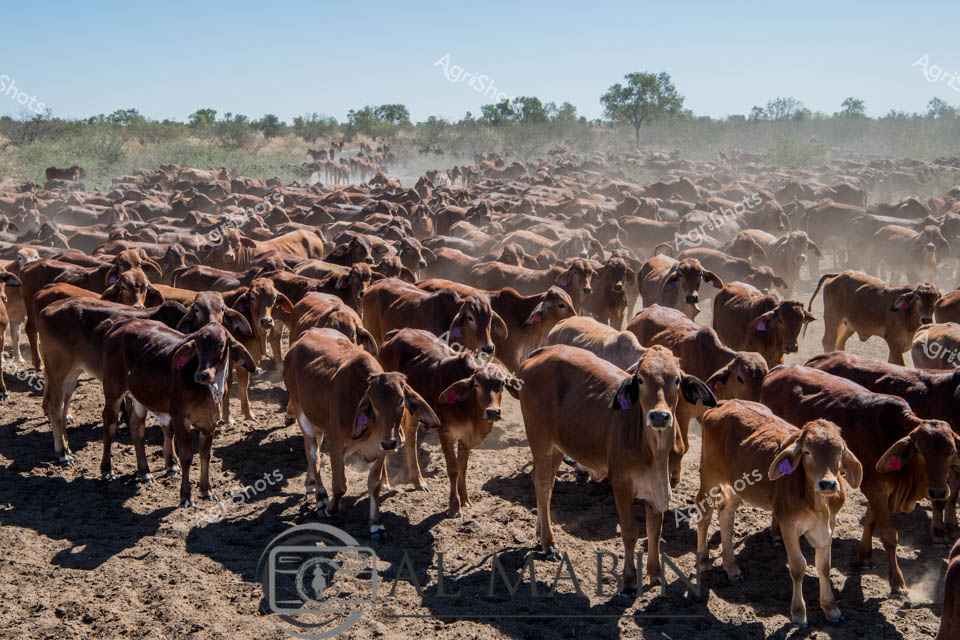
A vast herd of Brahman cattle stands clustered on the dusty, sun-baked earth of a Queensland cattle station. The distinctively robust cattle, with their characteristic humps and loose skin, display rich reddish-brown to light tan coats that gleam under the harsh midday sunlight. Purple identification tags punctuate their ears, a sign of careful station management and livestock tracking. Sparse trees and scrubland stretch across the background, creating a quintessential Australian pastoral landscape with a shimmer of heat and disturbed earth dust rising around the densely packed herd. These hardy cattle, bred to withstand the challenging tropical and subtropical conditions of northern Australia, represent the resilience of the beef industry in Queensland's extensive grazing regions. The scene captures the raw essence of Australian cattle farming - a testament to generations of agricultural expertise and the strategic breeding of cattle perfectly adapted to harsh environmental conditions.
Similar media
 Image
Image
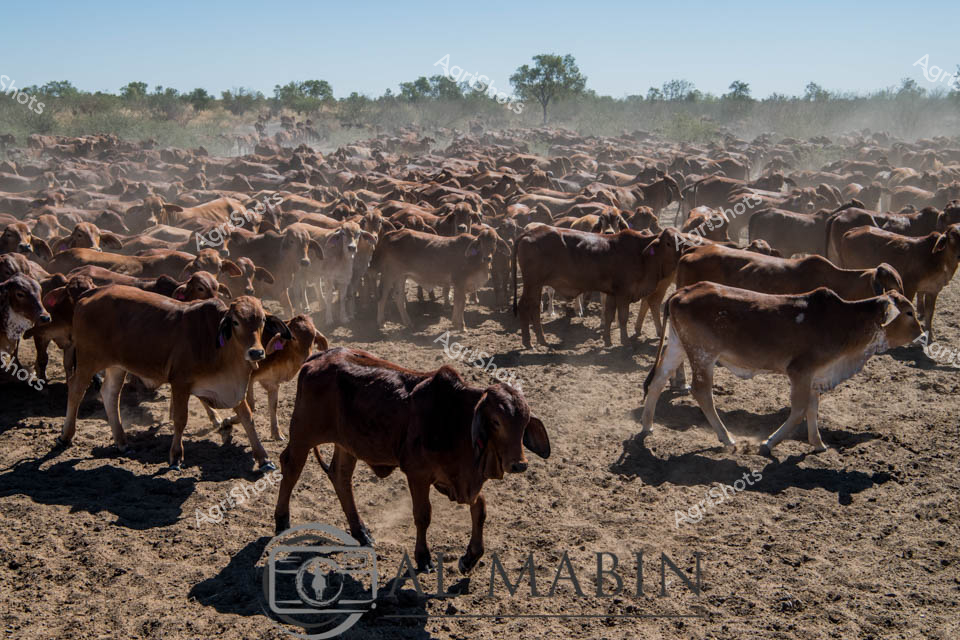
Dust billows across the parched earth as a massive herd of Brahman cattle congregates on a remote Queensland cattle station. The distinctive reddish-brown cattle, renowned for their heat and drought resistance, stand clustered together in the harsh midday sunlight, their muscular bodies and prominent humps testament to their adaptability in challenging Australian outback conditions. Lean and resilient, these Brahman cattle represent the backbone of northern Australian beef production, their robust genetics developed to thrive in extreme environments where lesser breeds would struggle. The dry, compacted ground reflects the intensity of the season, with sparse trees and shimmering heat creating a backdrop of uncompromising austerity. Each animal stands with a quiet strength, their close proximity suggesting both herd instinct and the limited resources of the landscape. Shadows are sharp and defined, highlighting the muscular contours of these impressive animals against the sunbaked terrain. This compelling scene captures the essence of Australian cattle farming - a testament to agricultural resilience, genetic adaptation, and the unrelenting spirit of pastoral enterprise in one of the world's most challenging agricultural environments.
 Image
Image
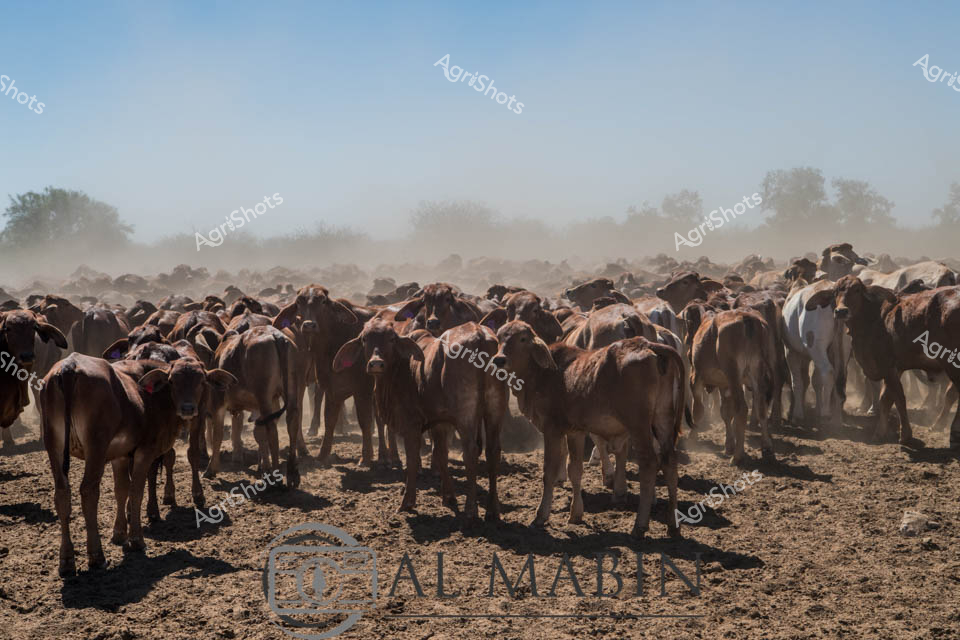
Brahman cattle crowd together in a dusty stockyard under the harsh Queensland sun, their muscular bodies a testament to the resilience of Australia's northern beef industry. The herd's distinctive humped shoulders and loose skin - hallmarks of the heat-tolerant Brahman breed - create a sea of rich brown and white coats against the parched earth. Fine red dust rises around their hooves, softening the background of sparse trees and creating a hazy, atmospheric landscape that speaks to the challenging conditions of outback cattle stations. These robust animals, bred to thrive in tropical and subtropical climates, stand closely packed, their collective presence a powerful image of agricultural endurance. The light reveals every ripple of muscle and curve of flank, highlighting the strength and adaptability of these cattle that are crucial to Queensland's agricultural economy.
 Image
Image
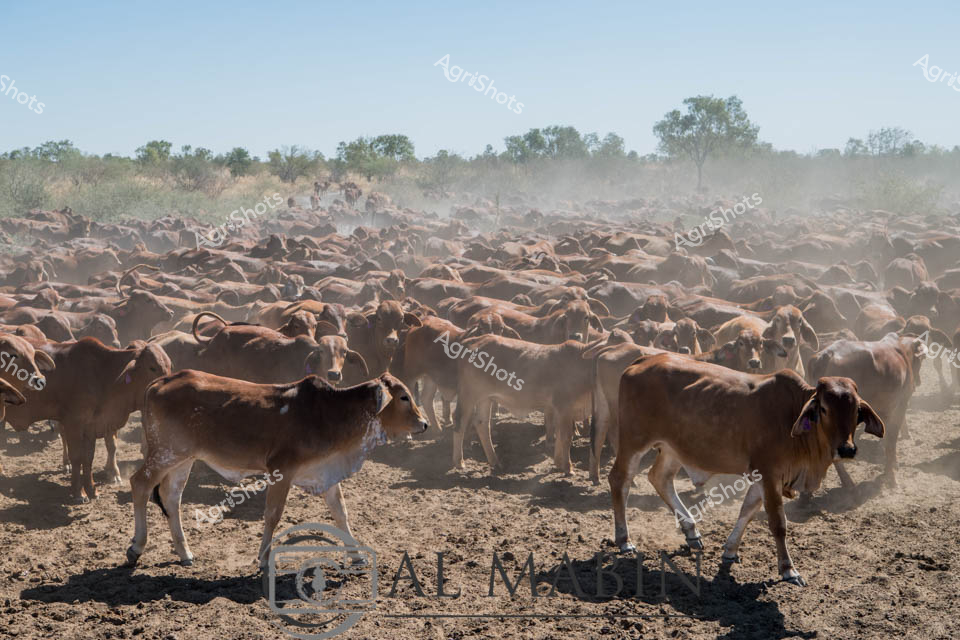
Brahman cattle cluster across a sun-baked paddock, their distinctive humped shoulders and loose skin adapted to the harsh Queensland pastoral landscape. Dust rises in a fine mist around the densely packed herd, creating a shimmering veil that softens the dry earth and scattered gum trees on the horizon. These resilient cattle, predominantly rich rust-brown and light tan, stand closely together, their muscular bodies testament to the breed's hardiness in extreme Australian conditions. The sparse vegetation and parched ground speak to the challenging environment of a remote cattle station, where these Brahman cattle represent a critical part of Australia's beef production ecosystem. Shadows and light create a textural landscape of animal forms, with each beast positioned almost geometrically yet organically across the frame. The scene captures the essence of northern Australian cattle farming - a delicate balance of animal husbandry, environmental adaptation, and agricultural resilience under the unforgiving outback sun.
 Image
Image
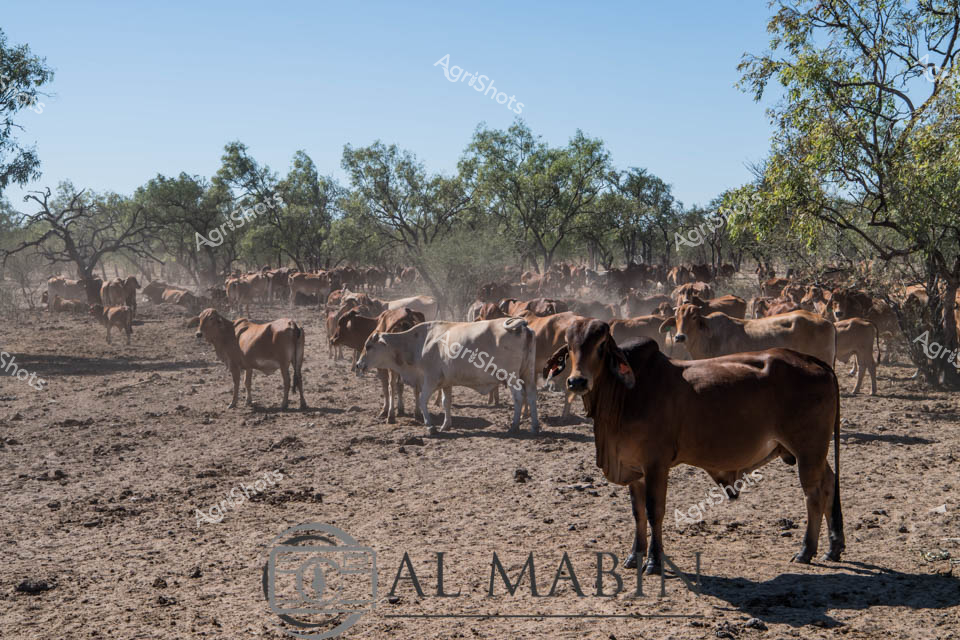
Dusty and resolute, a herd of Brahman cattle stands scattered across a parched station landscape in remote Queensland. The distinctive reddish-brown and white cattle, renowned for their heat tolerance and resilience, cluster among sparse eucalyptus trees under a cloudless blue sky. Their muscular bodies and characteristic humps reflect generations of adaptation to harsh Australian pastoral conditions, with some animals standing alert while others create small dust clouds with their movement. The dry, cracked earth surrounding the herd speaks to the challenging environment of northern Queensland's agricultural regions, where these robust cattle are critical to the beef production economy. Sparse grey-green trees provide minimal shade, highlighting the animals' incredible capacity to survive in extreme conditions.
 Image
Image
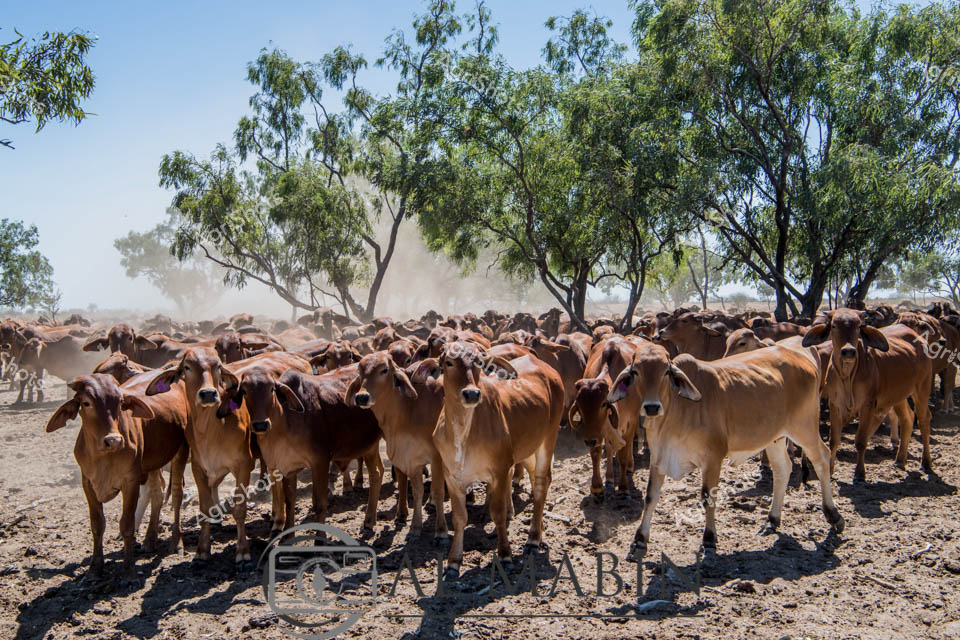
Brahman cattle cluster together beneath sparse eucalyptus trees, their rich russet and tan hides gleaming in the harsh midday sunlight of a Queensland cattle station. Fine dust rises around their muscular bodies, creating a soft atmospheric haze that softens the rugged landscape of packed earth and scattered gum trees. These heat-resistant cattle, renowned for their distinctive humped shoulders and loose skin, stand packed tightly in a disciplined herd, their alert ears and sturdy frames reflecting generations of breeding for Australia's challenging northern pastoral environments. The dry season landscape speaks of resilience - windswept trees casting dappled shadows, the ground parched and cracked, yet the cattle stand resolute, a testament to the adaptability of both animal and agricultural ecosystem. Their uniform coloration ranges from deep copper to pale fawn, with some animals displaying the characteristic light dewlap and prominent hump that defines the Brahman breed. This scene captures the essence of northern Australian cattle production: tough livestock thriving in an uncompromising landscape, representing generations of agricultural expertise and environmental adaptation.
 Image
Image
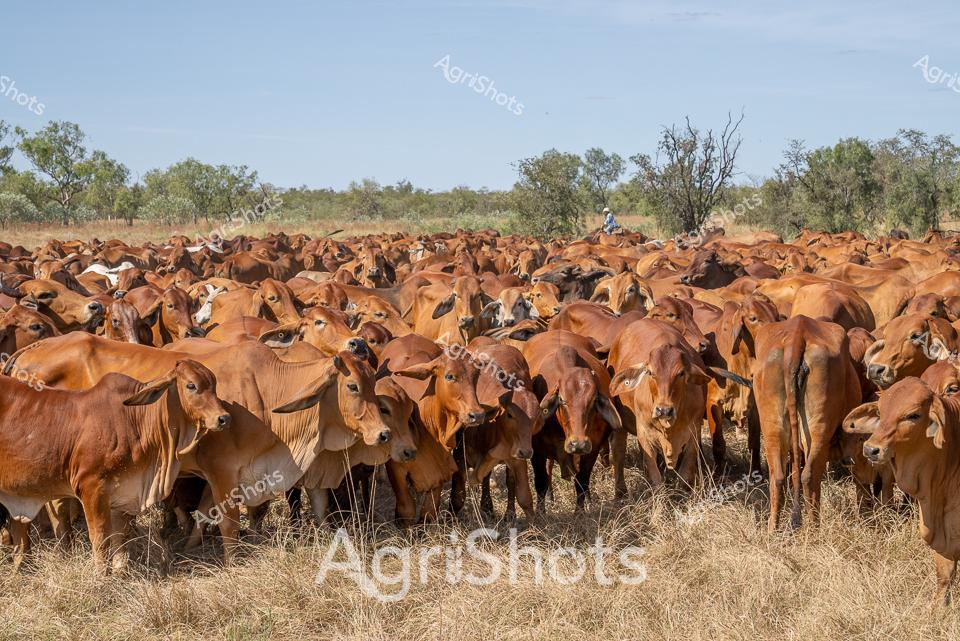
A vast herd of golden-hued Brahman cattle stretches across the dry grasslands of Western Australia's Kimberley region, their distinctive loose skin and prominent humps marking them as prime beef stock perfectly adapted to the harsh tropical landscape. A stockman perched atop a horse oversees the massive mob, his silhouette barely visible against the sparse woodland backdrop of scattered eucalyptus trees and sun-bleached scrub. The cattle's uniform rich bronze coloration creates a living carpet of muscle and hide, their compact bodies pressed closely together in a testament to generations of selective breeding for heat tolerance and resilience. Dry golden grasses crackle beneath their hooves, while the pale blue sky suggests a classic dry season morning - temperatures already climbing, but the muster continuing with practiced efficiency. These Brahman-cross cattle represent the pinnacle of northern Australian beef production, their genetic heritage perfectly suited to converting sparse nutritional resources into high-quality meat under challenging environmental conditions. The scene captures the essence of pastoral Australia - a dynamic intersection of animal husbandry, landscape, and human skill operating in one of the world's most demanding agricultural environments.
 Image
Image
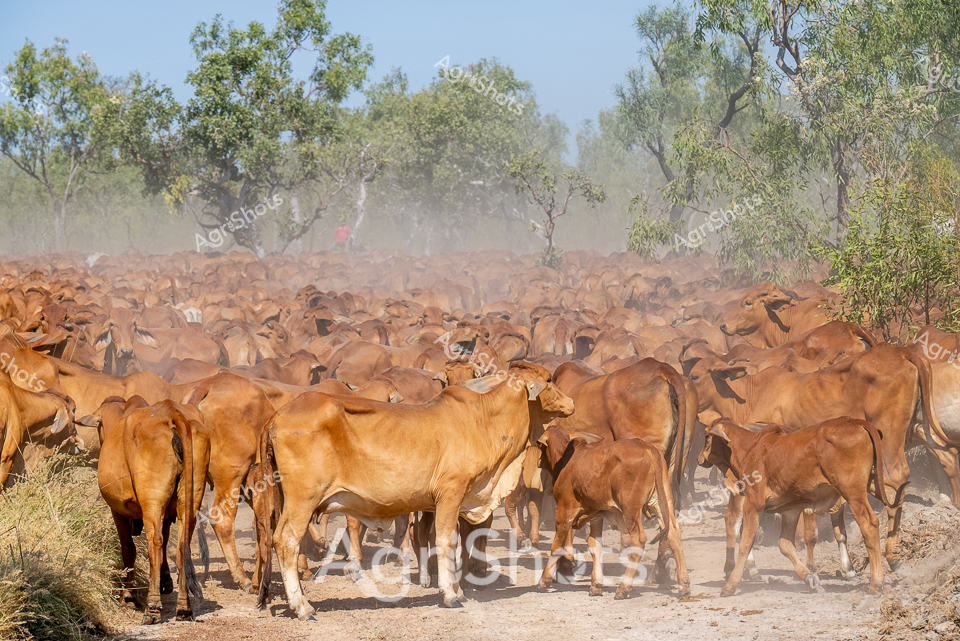
Burnished copper bodies gleam under the midday Kimberley sun, a thundering herd of Brahman cattle kicks up ochre dust along a weathered station track. Lean, muscular beasts with distinctive humps and pendulous ears move with collected purpose, their rich tan hides uniform against the sparse eucalyptus woodland. Calves huddle close to their mothers, navigating the crowded path with practiced agility, while fine particles of red earth swirl around their legs, creating a misty veil of movement. This is the rhythm of mustering - an ancient dance of livestock and landscape, where skilled stockmen guide these hardy cattle across the unforgiving Western Australian terrain. The scene pulses with raw agricultural energy, capturing the essence of northern Australia's vast pastoral kingdoms - where resilience is measured in the steady march of hooves and the unyielding spirit of both animal and handler. Sparse grasses and scattered gum trees provide a muted green counterpoint to the warm bronze tones of the cattle, illustrating the delicate balance of life in one of Australia's most challenging agricultural frontiers.
 Image
Image
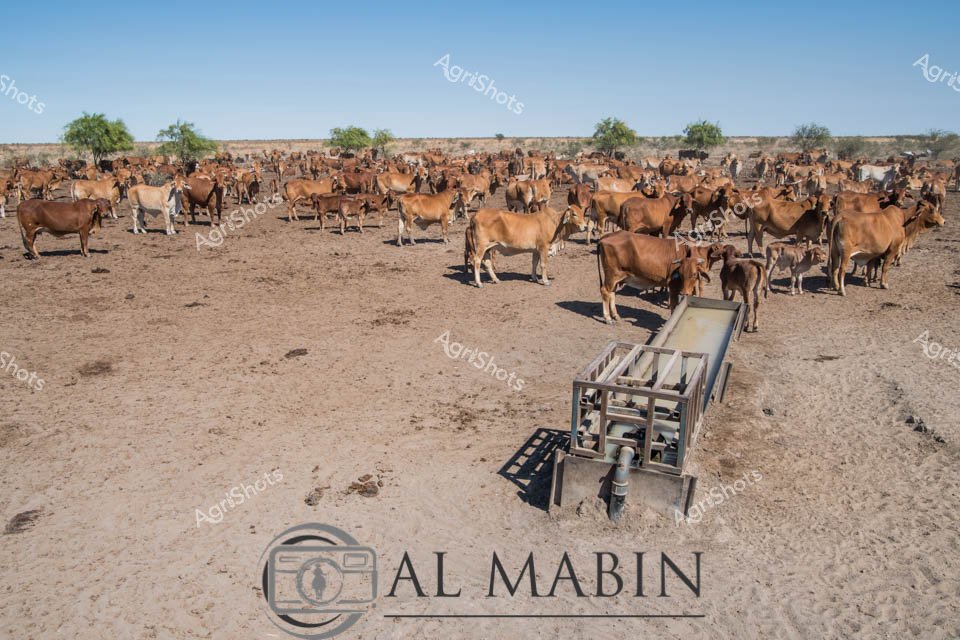
Brahman cattle cluster around a metal water trough in a parched central Queensland pastoral landscape. The golden-brown herd, characteristic of heat-tolerant Brahman breed, stands clustered on dusty, sun-baked earth, with sparse acacia trees dotting the distant horizon. Sturdy metal infrastructure breaks the arid landscape, providing critical hydration for these resilient livestock in a challenging environment. The metallic water trough gleams against the earthy tones, a testament to pastoral engineering designed to support cattle production in harsh Australian rangelands. Overhead, a cloudless cerulean sky suggests mid-day heat, highlighting the importance of strategic water access for cattle management. This scene encapsulates the resilience of Australian beef production - where advanced agricultural infrastructure meets the demanding conditions of extensive grazing systems in remote Queensland stations.