About this image
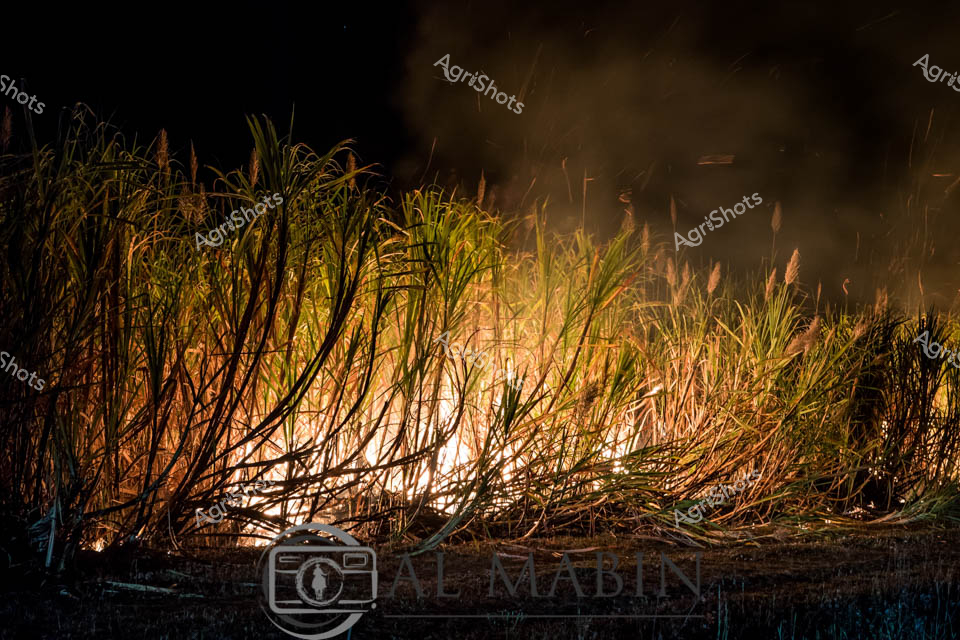
Flames lick through dense sugarcane fields under the cover of darkness, illuminating the golden-green stalks with an intense amber glow. The controlled burn transforms the landscape, casting dramatic shadows and creating a fiery tableau that is integral to the sugarcane harvesting process in rural New South Wales. Charred and blackening cane stems bend and twist in the intense heat, while unburned grass and leaves retain their verdant color at the edges of the burning zone. This nocturnal agricultural ritual prepares the fields for harvest, burning away excess foliage and facilitating easier cutting of the sugar-rich cane. The fire creates a mesmerizing interplay of light and shadow, with burning embers floating upward and the intense heat creating a shimmering atmosphere around the vegetation. Such controlled burns are a critical technique in Australian sugarcane farming, helping to clear fields, reduce pest populations, and enhance crop productivity in a landscape where fire has long been a natural and managed ecological process.
Similar media
 Image
Image
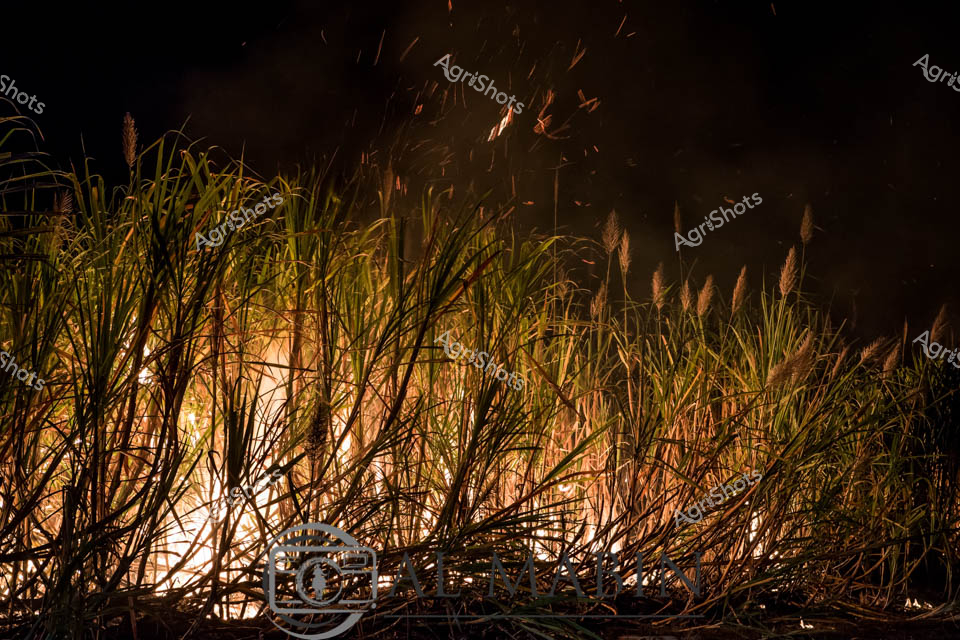
Ember-laden winds dance above burning sugarcane fields, illuminating the night with a primal agricultural ritual. Flames lick through dense grass stalks, casting an amber glow against the dark landscape, creating a dramatic scene of controlled agricultural burning typical of pre-harvest practices in regional New South Wales. Delicate grass plumes sway against the intense firelight, their silhouettes revealing the textural complexity of mature sugarcane ready for harvest. Sparks spiral upward, creating a mesmerizing display of agricultural transformation, where fire serves as a critical tool for clearing fields, reducing pest populations, and preparing cane for mechanical harvesting. The interplay of light and darkness captures the raw, elemental nature of sugarcane farming, showcasing the intense methodologies that underpin Australia's agricultural production. This nighttime burn represents a generations-old technique, converting dormant fields into preparation for the upcoming harvest season with a spectacular display of controlled destruction and renewal.
 Image
Image
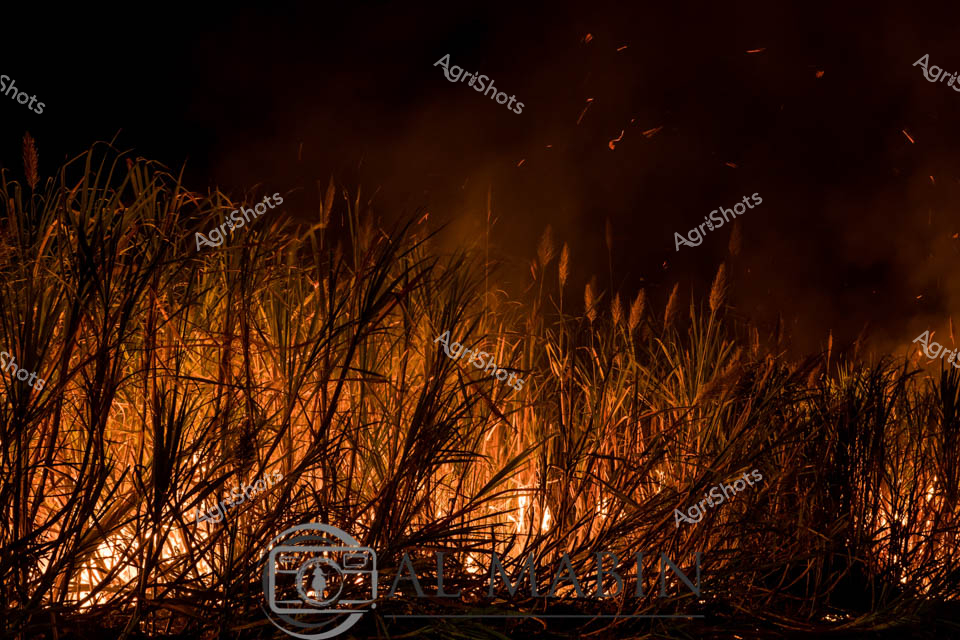
Flames surge through dense sugarcane fields, illuminating the dark night with intense amber and orange hues. A controlled burn sweeps across the agricultural landscape, a critical technique in preparing sugarcane fields for harvest in rural New South Wales. Sparks and embers dance upward, creating a mesmerizing pyrogenic display against the pitch-black sky, while the tall grass stalks bend and twist in the consuming inferno. This strategic burning reduces leaf matter, makes cutting easier, and helps manage pest populations - a generations-old agricultural practice that transforms the landscape into a dramatic canvas of natural destruction and renewal. The intricate silhouettes of burnt and burning cane create a textural mosaic of agricultural management, revealing the raw, elemental process behind sugar production. Each flickering flame represents a moment of calculated agricultural intervention, where fire becomes a precise tool in the hands of experienced farmers.
 Image
Image
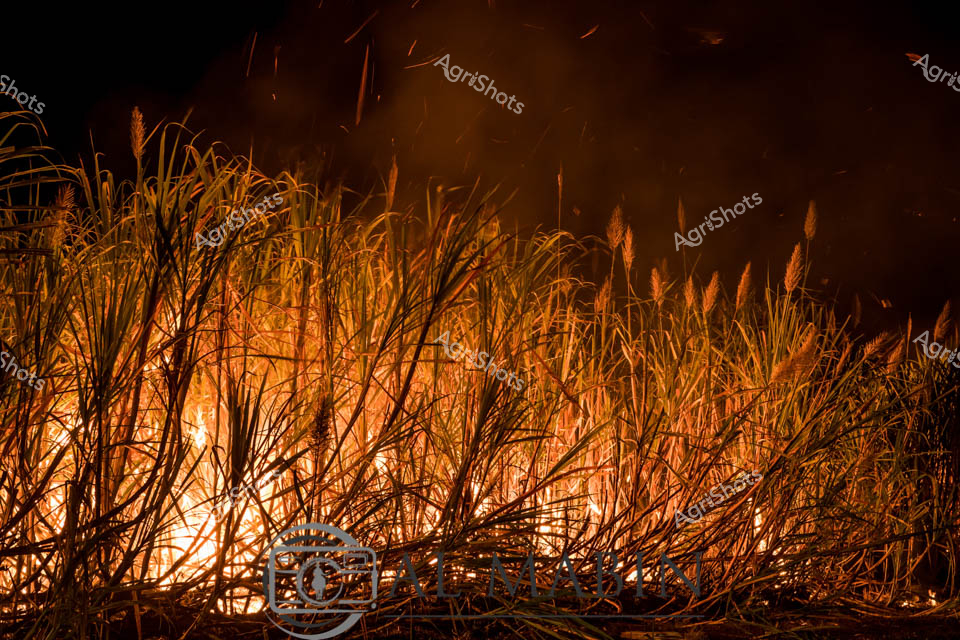
Flames engulf a dense sugarcane field under the cover of darkness, creating a dramatic nocturnal agricultural spectacle. The controlled burn illuminates the tall, golden-brown cane stalks with an intense orange glow, their feathery tops silhouetted against the blazing background. This traditional harvesting technique, common in regions like New South Wales, prepares the crop for cutting by burning off excess leaves and undergrowth, simultaneously clearing the field and reducing potential pest populations. Embers dance upward, creating a mesmerizing display of light and movement against the inky black night sky. The fire's intense heat transforms the landscape into a living canvas of warm amber and deep crimson tones, highlighting the intricate textures of the cane grass. This powerful image captures the raw, primal energy of agricultural practice - a moment where human intervention and natural forces collaborate in the rhythmic cycle of crop production.
 Image
Image
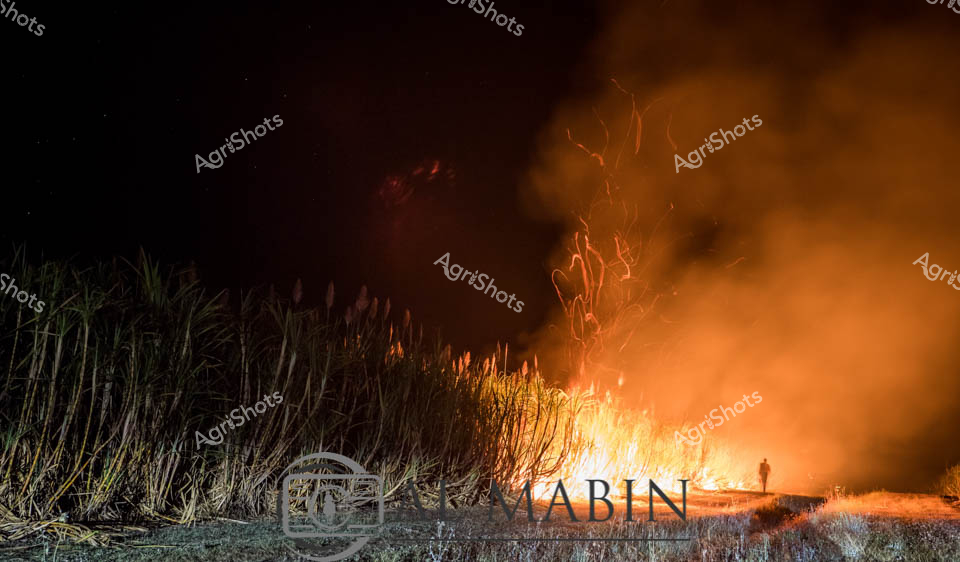
Flames consume the edge of a sugarcane field under the dark night sky, transforming the agricultural landscape into a blazing canvas of orange and gold. Intense fire licks upward, consuming dry cane stalks and creating dramatic spiraling embers that dance against the inky blackness. The controlled burn illuminates the field's edge, a critical technique in Australian sugarcane harvesting that prepares the crop for cutting and helps manage pest populations and field renewal. Sparks and heat radiate across the foreground, casting an intense glow that highlights the textured vegetation and creates a stark contrast between the burning section and the unburned cane stalks. A solitary figure stands in the distance, silhouetted against the inferno, symbolizing the human management of this powerful agricultural process. The night burn represents a generations-old practice in Queensland and New South Wales, where fire plays a strategic role in preparing sugarcane fields for harvest and maintaining crop health.
 Image
Image
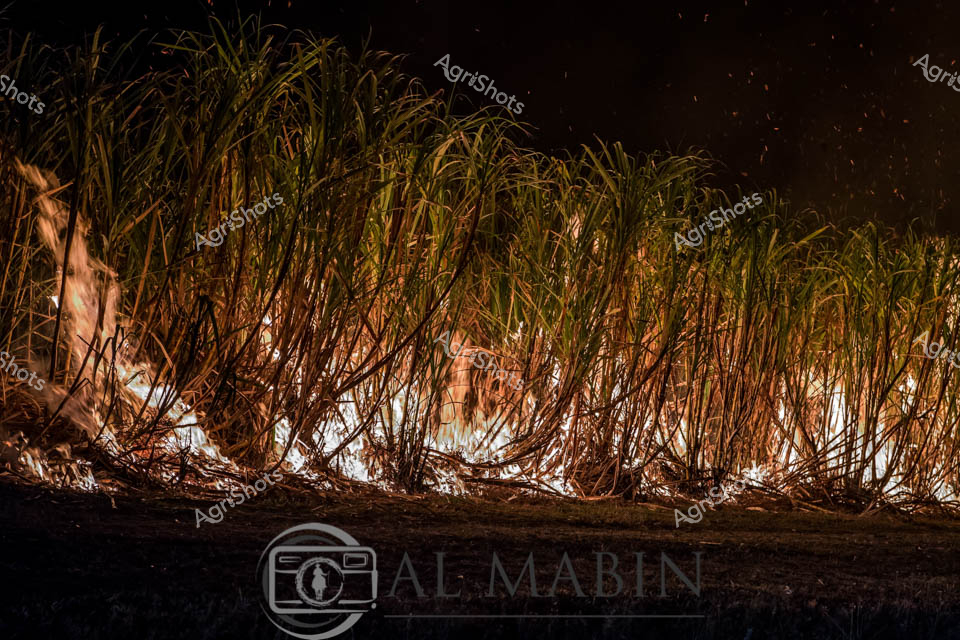
Sugarcane fields ignite in a dramatic nocturnal burn across the dark landscape of rural New South Wales. Flames lick through the dry, golden-green stalks, creating an intense agricultural spectacle of controlled burning during harvest season. The fire traces along the base of the cane rows, burning away excess foliage and preparing the field for cutting, a traditional method of crop management that reduces leaf matter and prepares sugarcane for efficient harvesting. Intense orange and amber flames contrast against the deep black night, highlighting the textured stems and creating a mesmerizing visual of agricultural transformation. This nighttime burn illuminates the agricultural practice with a primal, elemental energy, revealing the intricate relationship between farmers and the land. The controlled fire represents a critical stage in the sugarcane production process, burning away external material to maximize crop value and prepare for the upcoming harvest.
 Image
Image
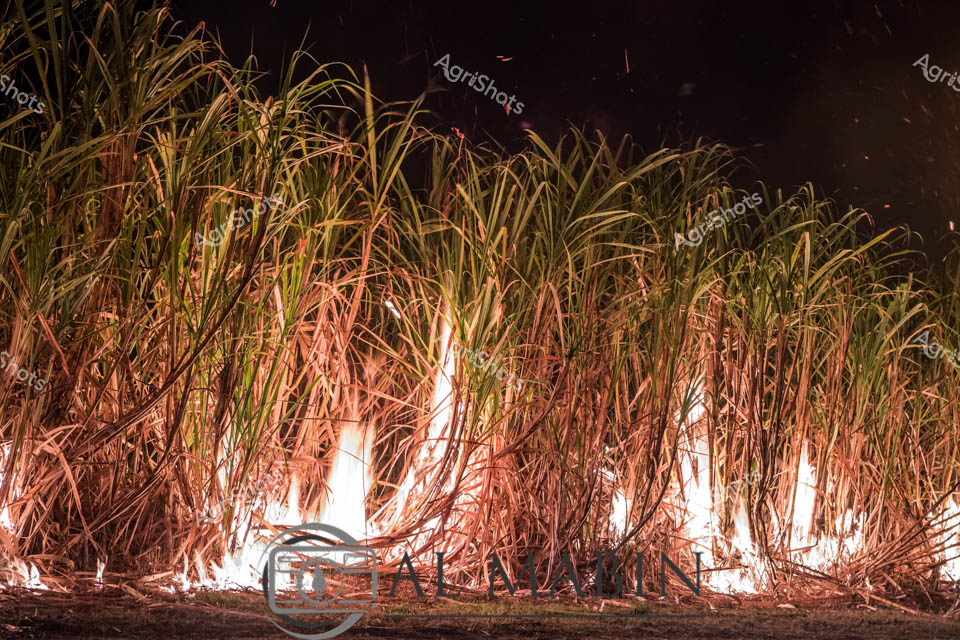
Sugarcane burns under the dark night sky, flames licking through dense green and reddish-brown stalks in a dramatic agricultural ritual. Harvesting preparations transform the agricultural landscape as controlled fire sweeps through the tall cane fields, clearing dried leaves and preparing the crop for cutting. Intense orange and white flames illuminate the thick grass-like vegetation from below, creating a mesmerizing interplay of light and shadow across the field. The burn method is a traditional technique used by Australian sugarcane farmers to reduce leaf matter, improve harvest efficiency, and reset the field for the next growing cycle. Sparks and embers dance upward, punctuating the darkness and highlighting the textural complexity of the sugarcane plantation. This nocturnal scene captures the raw, elemental process of agricultural land management in regional New South Wales, where fire becomes a critical tool in sustainable crop preparation.
 Image
Image
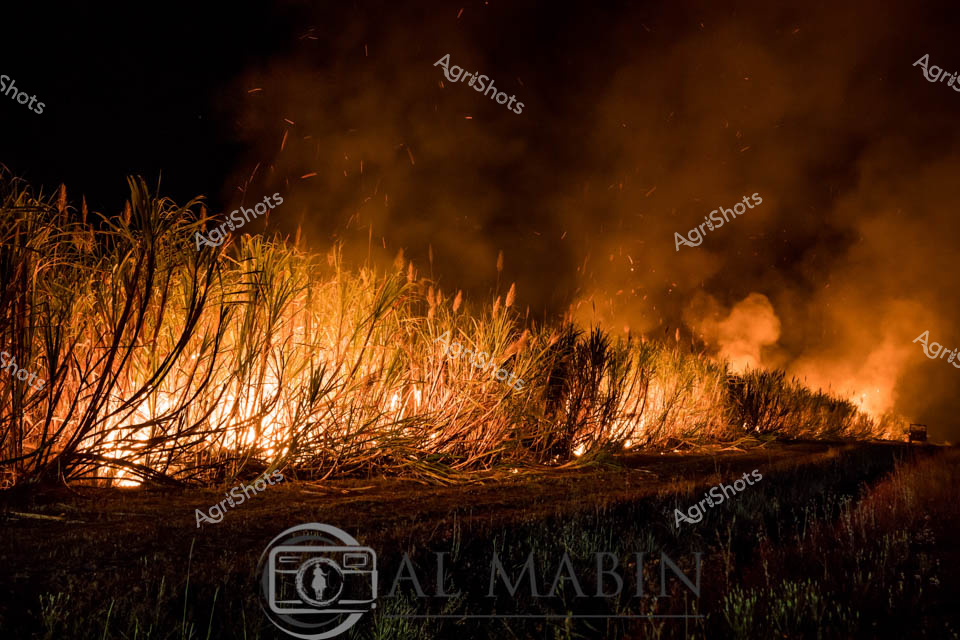
Flames lick through a dense field of sugarcane, illuminating the night with an intense orange-gold radiance. The controlled burn transforms the landscape, casting dramatic shadows and sending embers spiraling into the dark sky, a critical phase of the sugarcane harvesting process in regional New South Wales. Dry cane stalks crackle and bend under the intense heat, their silhouettes stark against the blazing foreground, demonstrating the traditional agricultural practice of pre-harvest burning that clears leaf matter and prepares the crop for cutting. The fire moves with a primal energy across the flat agricultural terrain, creating a mesmerizing display of destruction and renewal that has been part of Australian sugarcane farming for generations. Smoke billows and swirls, creating complex atmospheric layers that hint at the transformative power of fire in agricultural land management. This powerful image captures the raw, elemental nature of sugarcane production, revealing the precision and skill required in preparing crops for harvest in one of Australia's key agricultural regions.
 Image
Image
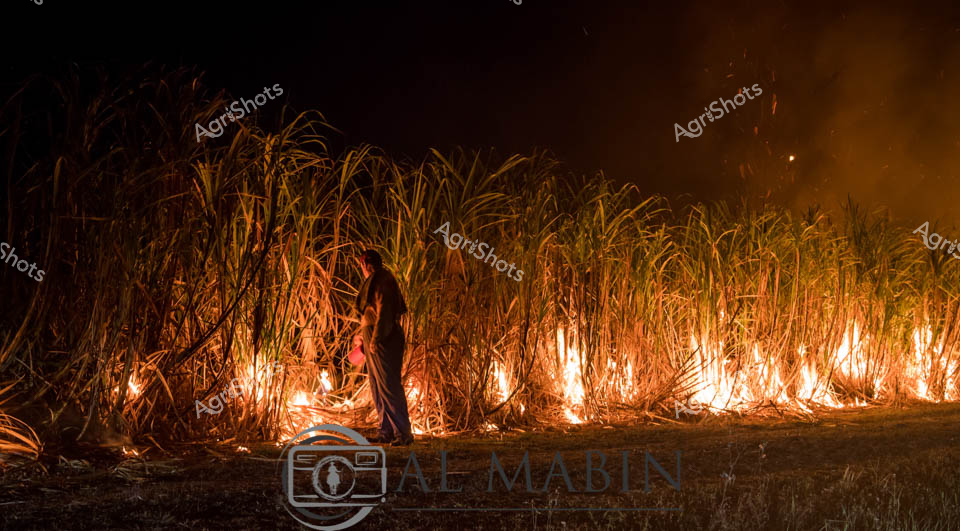
Flames surge through a dense sugarcane field under the cover of darkness, illuminating the night with an intense orange and golden glow. A solitary agricultural worker stands amid the controlled burn, preparing for the traditional pre-harvest burning method used in sugarcane production across regions of New South Wales. The tall, dry cane stalks crackle and dance with fire, creating a dramatic landscape of destruction and renewal that marks the beginning of the harvest cycle. Burning helps clear leaf litter, eliminate pests, and reduce transportation weight, making it an efficient agricultural practice despite increasing environmental scrutiny. The silhouetted figure represents generations of farming knowledge, carefully managing the fire's progression to ensure optimal conditions for harvesting. This powerful scene captures the raw intensity of agricultural processes, where fire becomes a tool of transformation, preparing the fields for the next stage of sugar production.