About this image
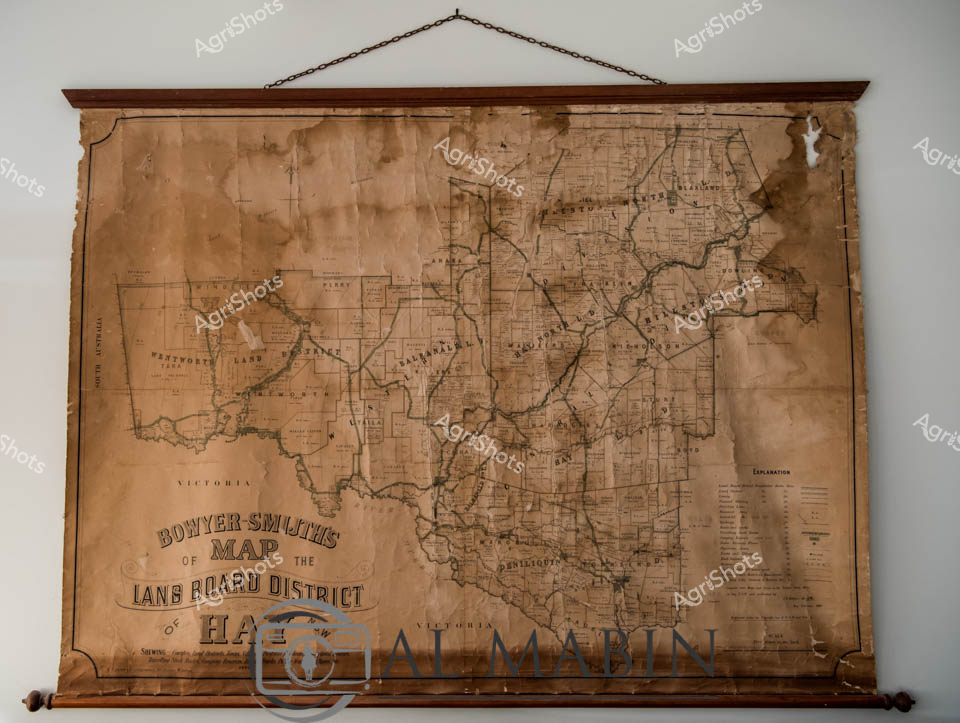
Bovyer Smythe's meticulously preserved historical land board district map of Victoria captures a fascinating cartographic snapshot of rural administrative boundaries in the late 19th century. The weathered sepia-toned document, mounted in an elegant wooden frame and suspended by a delicate chain, reveals intricate township subdivisions, pastoral regions, and geographical demarcations across what appears to be a significant agricultural landscape. Delicate lines and precise handwritten annotations chronicle the complex land management systems of the era, with each county and district carefully delineated in exquisite detail. The map's aged patina - featuring subtle brown water stains, subtle paper creases, and soft edges - speaks to its historical significance and careful preservation. Positioned against a neutral background, this archival treasure provides a compelling visual narrative of Victoria's rural development, offering contemporary viewers a window into the systematic land allocation and agricultural planning of a pivotal period in Australian territorial expansion. An extraordinary research document that transforms geographical data into a compelling artistic artifact of colonial administrative heritage.
Similar media
 Image
Image
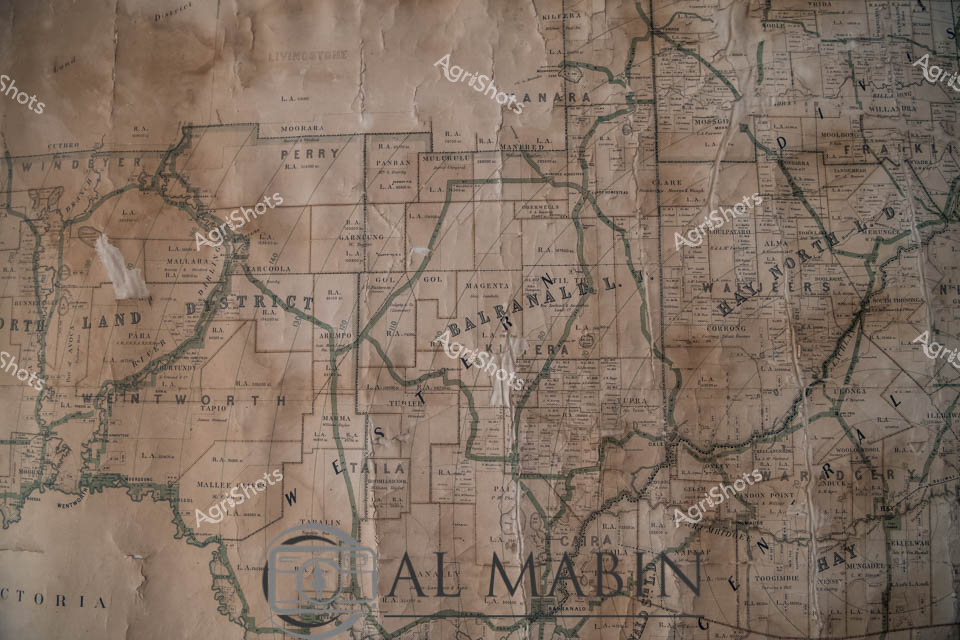
Vintage cartographic treasure unfolds across this weathered administrative map of New South Wales, revealing intricate district boundaries, parish divisions, and regional infrastructure. Soft sepia tones and delicate line work trace the complex geographical tapestry of rural landholdings, with elegant typography marking counties like Tintworth, Perry, and Argyle. Thin green lines delineate cadastral boundaries, waterways, and potential transportation routes, providing a fascinating glimpse into the systematic mapping of agricultural territories during colonial expansion. The map's fragile surface tells a silent story of land division, rural development, and the bureaucratic processes that shaped rural New South Wales in the late 19th or early 20th century. Each carefully inscribed district represents potential farmland, pastoral lease, or agricultural potential waiting to be developed.
 Image
Image
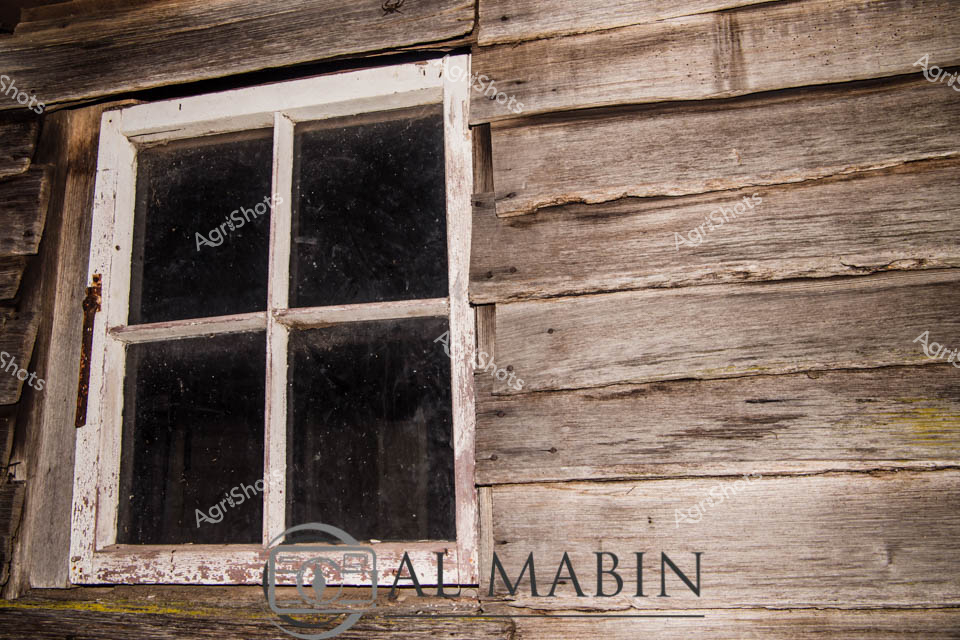
Weathered timber and aged window frame reveal the quiet resilience of rural Tasmanian architecture. Silvered wooden boards, softened by decades of wind and weathering, create a textural canvas of muted greys and subtle earth tones. The four-paned window, painted white but now chipped and faded, stands as a testament to the enduring craftsmanship of early settler buildings. Moss-tinged edges and subtle yellowed lichen accent the wooden surface, hinting at the moisture-rich Tasmanian climate that nurtures such organic detailing. This intimate architectural fragment captures the essence of rural heritage, where every weathered plank and peeling paint layer tells a story of survival, adaptation, and the unspoken history of agricultural communities.
 Image
Image
Weathered timber boards of an historic woolshed echo generations of pastoral craft as a skilled shearer's hand guides precision steel against a Merino's dense fleece. The worn metallic handpiece, its textured grip telling stories of countless sheep shorn, sits poised above the intricate mechanical connection of shearing equipment. Soft filtered light catches the industrial grey and black tones of the specialized tools, highlighting the raw functionality of Australian wool production infrastructure. Rugged, utilitarian textures dominate the frame - rough-hewn wooden floor, well-used metal implements, and the suggestion of lanolin-rich wool waiting to be shorn. This intimate capture represents the backbone of Australian agricultural heritage: the meticulous, physically demanding art of transforming a sheep's protective coat into a global textile commodity. Every scratch, dent, and patina on these tools speaks to the resilience and skill embedded in rural working traditions.
 Image
Image
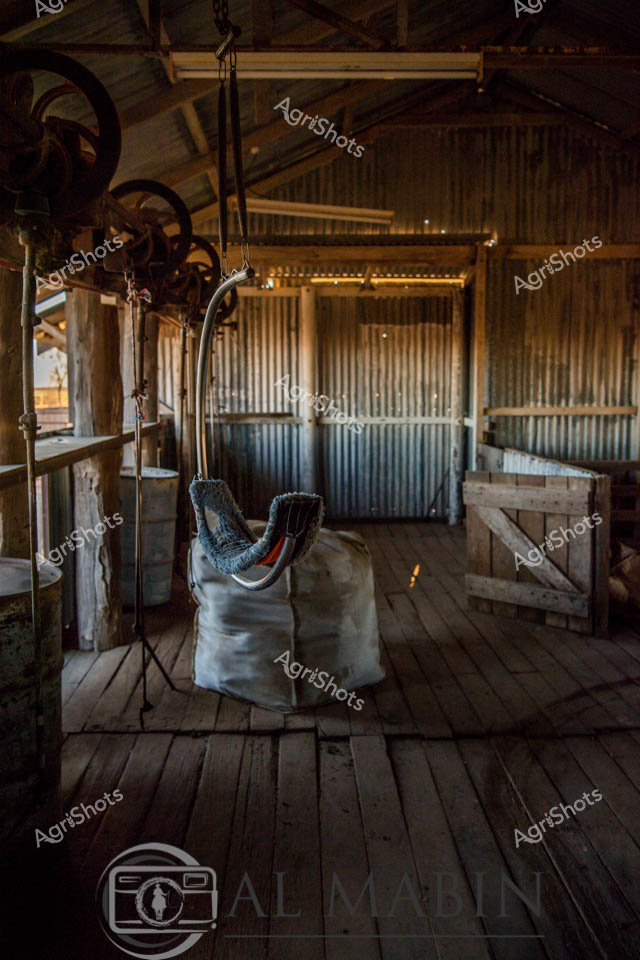
Luminous golden light filters through the weathered corrugated iron walls of an authentic Queensland shearing shed, casting long shadows across the worn timber floor. A pristine wool bale stands sentinel, draped with a well-used wool-stained sack, capturing the raw essence of Australia's pastoral heritage. Vintage mechanical shearing equipment hangs suspended from rusted pulleys, their intricate gears and wheels suggesting decades of agricultural labor and traditional craft. The wooden interior breathes with a sense of quiet industry - the worn floorboards, aged wooden gates, and hanging tools telling silent stories of generations of rural workers who have inhabited this space. Soft ambient light reveals the textural details of the corrugated walls, their metallic surfaces aged to a muted silvery-brown that speaks of endurance against harsh Australian elements. This intimate portrait of a woolshed captures the soul of rural Queensland - a testament to the resilience, craftsmanship, and timeless rhythm of sheep farming in the Australian landscape.
 Image
Image
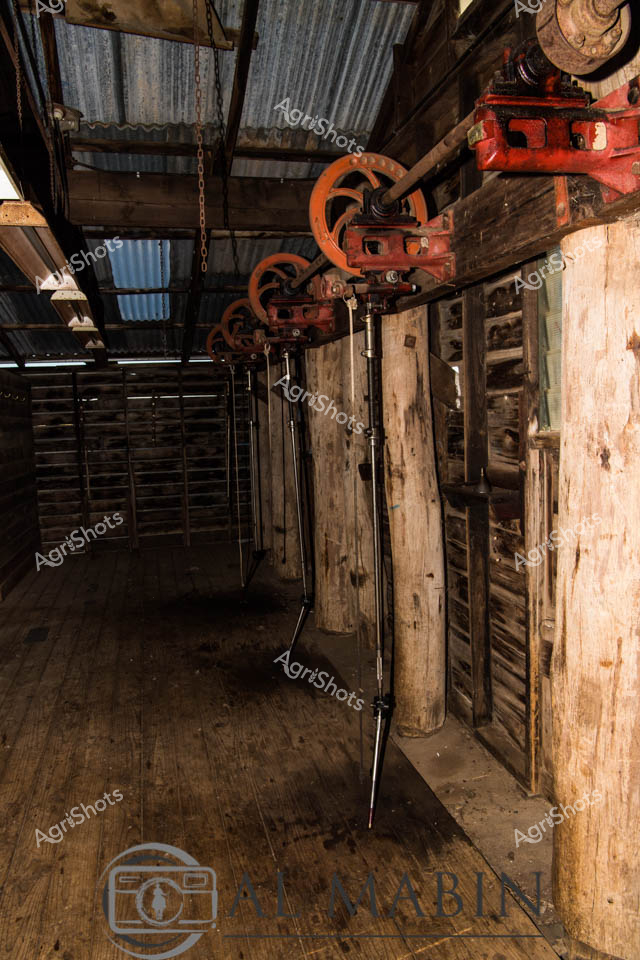
Historic wool shearing shed interior showcasing traditional blade shearing equipment with wooden drive wheels and pulley systems suspended from weathered timber beams. The rustic woolshed features corrugated iron roofing and wooden floor boards, with multiple shearing stands equipped with hand-operated blade mechanisms used for shearing Merino sheep. This vintage shearing infrastructure represents the heritage of Australia's wool industry in Victoria, displaying the manual shearing tools and wooden machinery that powered early sheep stations before modern electric shears.
 Image
Image
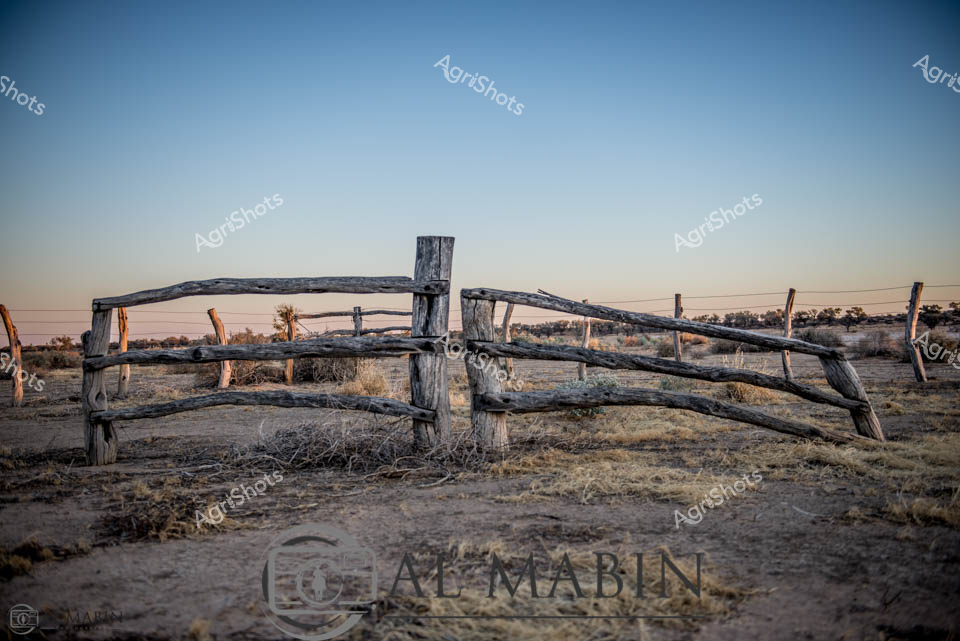
Weathered timber yards stand sentinel across a parched western Queensland pastoral landscape, capturing the raw essence of Australian cattle station infrastructure. The ancient post-and-rail fence, constructed from silvered and sun-bleached hardwood, marks boundaries across an arid terrain of dusty ground and sparse native grasses. Rugged split-timber posts, carefully interlocked and wire-strung, speak to generations of pastoral engineering - each weathered timber telling stories of stockmen, cattle drives, and endless horizons. The early morning light casts a soft amber glow across the desolate scene, highlighting the textural qualities of the worn wooden fence against a pristine, gradient blue sky. This iconic rural vista embodies the resilience of Australian agricultural landscapes - where fundamental infrastructure endures against harsh environmental conditions. The fence represents more than a boundary marker; it is a testament to agricultural persistence, marking human endeavour in an uncompromising environment where survival demands innovation and strength.
 Image
Image
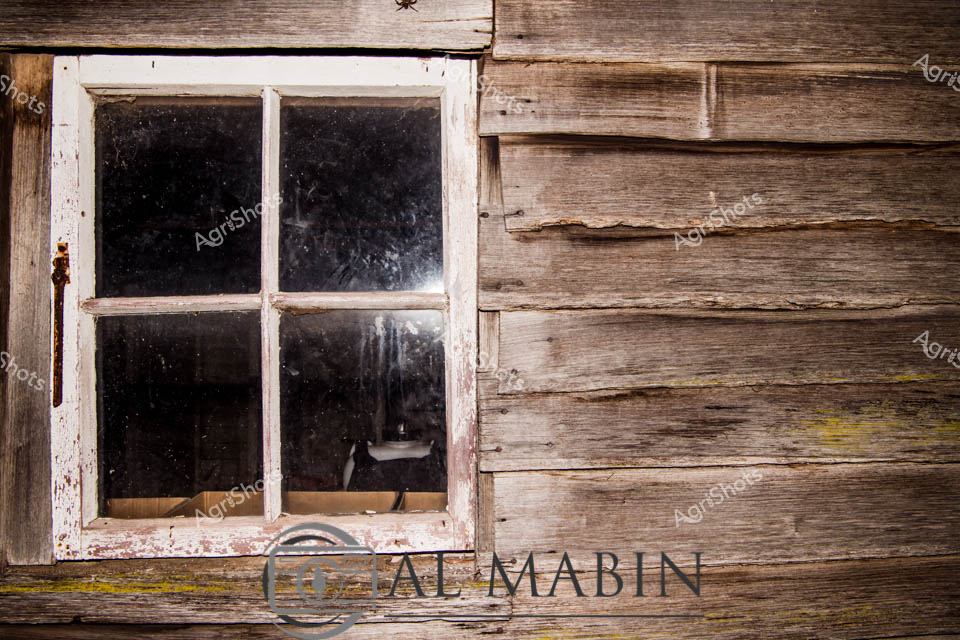
Weathered timber and aged glass frame a poignant window into rural Tasmanian heritage, capturing the raw, textural essence of a historic wooden cabin. The window's white-painted frame, now chipped and rusted, stands against silvered wooden weatherboards that speak of decades of harsh coastal or highland conditions. Delicate spider webs and subtle lichen patches accent the aged timber, suggesting this structure has quietly endured Tasmania's challenging landscapes. Condensation and grime on the windowpanes create an evocative, slightly obscured view into the interior, hinting at stories and memories held within these humble walls. The muted palette of greys, whites, and soft mossy greens reflects the understated beauty of rural Tasmanian architecture, where functionality and resilience are celebrated over ornate design. This intimate close-up transforms an ordinary architectural detail into a powerful narrative of agricultural persistence and generational connection to the land.
 Image
Image
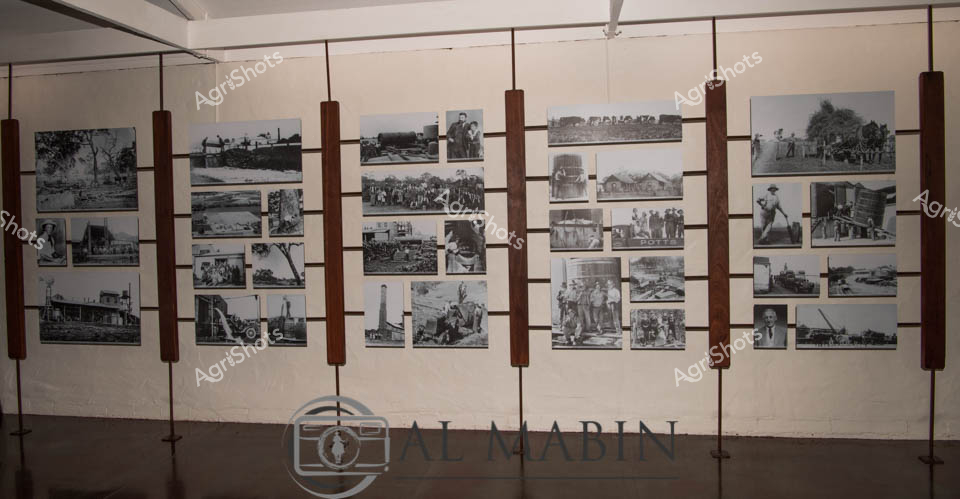
This black and white photographic exhibition chronicles agricultural heritage through a carefully curated wall of historical images. Mounted on vertical wooden supports, the collection presents a compelling narrative of rural life, showcasing landscapes, farm infrastructure, machinery, and community moments from a bygone era. Each panel displays multiple vintage photographs depicting various scenes - from agricultural equipment and farming activities to group portraits and rural landscapes. The monochromatic images capture the essence of agricultural development, revealing the technological progression, human labor, and social dynamics of early farming communities. Wooden vertical supports create a rhythmic visual structure, guiding viewers through the historical documentation with a sense of chronological progression and thematic connection.