About this image
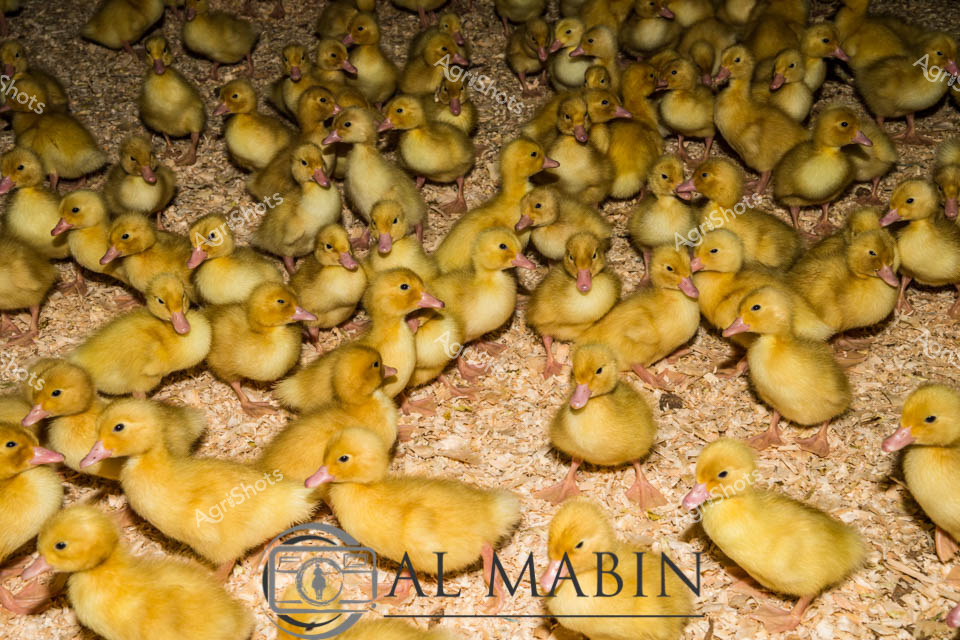
Fluffy buttercup-yellow ducklings huddle tightly across a wood shavings-covered brooding floor, their soft downy feathers creating a uniform sea of golden warmth. Dozens of newly hatched Pekin ducks cluster together, their delicate pink beaks and bright curious eyes revealing their young age. This large-scale poultry farming scene captures the early stages of commercial duck production, likely in a controlled agricultural facility in New South Wales. The uniform coloration and dense grouping demonstrate careful breeding and management practices typical of modern Australian agricultural systems. Each duckling appears healthy and robust, representing the precise environmental control and systematic approach of contemporary duck rearing.
Similar media
 Image
Image
Fluffy buttercup-yellow Pekin ducklings huddle tightly together on a bed of wood shavings, their soft downy feathers creating a vibrant mosaic of golden hues. Each tiny duckling displays bright, alert eyes and delicate pink bills, showcasing the early stages of large-scale poultry farming in rural New South Wales. The densely packed group represents the precision and efficiency of modern agricultural breeding techniques, with uniform coloration and size indicating careful genetic selection and controlled environment management. Soft ambient lighting highlights the remarkable uniformity of these young birds, their collective body heat and proximity reflecting natural instincts adapted to commercial production settings. Wood shavings provide insulation and absorption, creating a clean, temperature-controlled microenvironment crucial for duckling survival and growth. These Pekin ducklings embody the intersection of biological potential and agricultural science, representing a critical stage in livestock production that transforms genetic promise into commercial protein resources. Their synchronized presence speaks to the meticulous care and technological innovation driving modern Australian agricultural practices.
 Image
Image
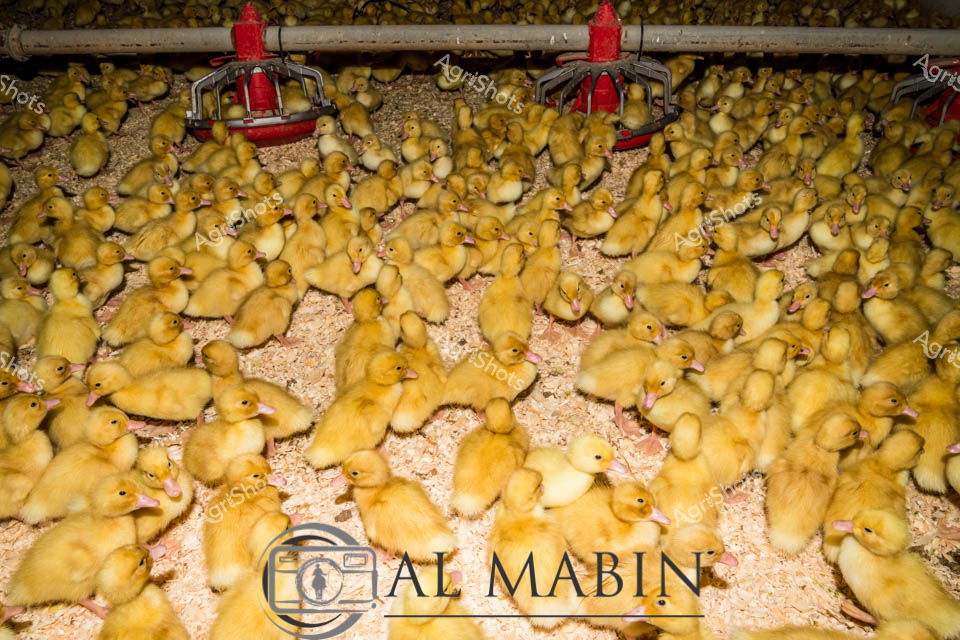
A golden sea of downy ducklings floods the brooding floor, their soft yellow plumage creating a living carpet across wood shavings beneath industrial red feeding mechanisms. Hundreds of day-old ducklings huddle closely, their tiny beaks and bright eyes representing the early stages of large-scale poultry production in rural New South Wales. Precision agricultural equipment - suspended feeders with distinctive red caps - frame the scene, ensuring uniform access to nutrition for this tightly managed flock. The uniform coloration and dense clustering reveal the carefully controlled environment of modern commercial duck farming, where every square centimetre is optimized for efficient growth and development. Warm lighting bathes the young birds, highlighting their delicate feathering and suggesting the carefully regulated temperature essential for their survival and rapid maturation.
 Image
Image
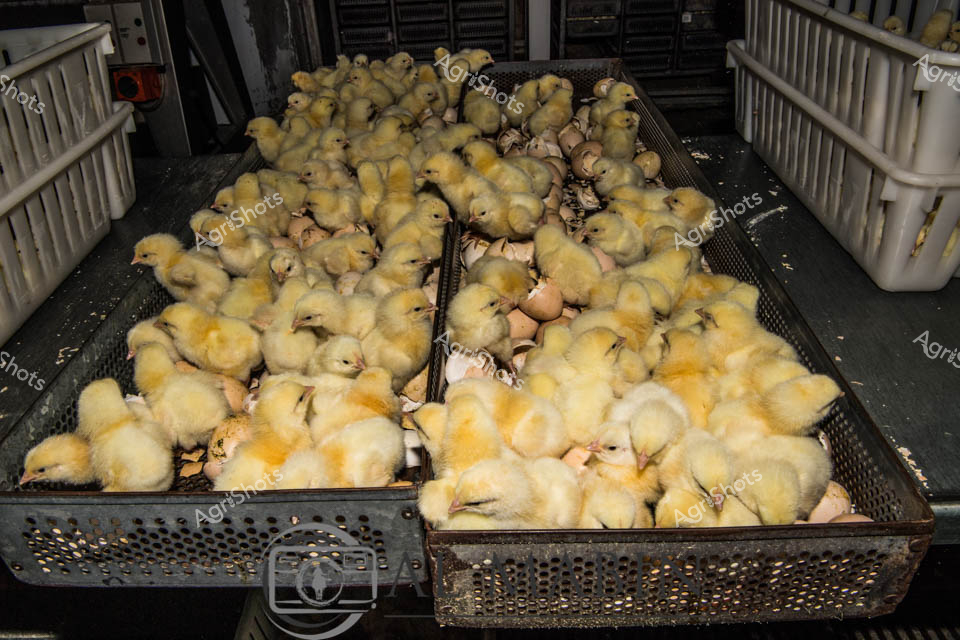
Newly hatched baby chicks huddle together in perforated metal trays, their soft, buttery-yellow down creating a dense carpet of life within an industrial incubation facility. Dozens of fluffy chicks cluster tightly, some still nestled against fragments of cracked eggshells, marking the moments just after hatching. The metallic grey trays, riddled with ventilation holes, contrast sharply with the vibrant warmth of the newly emerged poultry, capturing the precision and efficiency of modern agricultural breeding techniques. Surrounding white vertical barriers suggest a controlled, sterile environment designed for optimal chick development and early care. These day-old chicks represent the beginning of Tasmania's large-scale poultry production cycle, packed closely together with remarkable uniformity, their collective body heat and proximity ensuring survival in these carefully regulated conditions. The image speaks to the systematic approach of contemporary agricultural practices, where every element - from incubation to spacing - is meticulously engineered to maximize productivity and animal health.
 Image
Image
Newly hatched ducklings huddle closely together on a textured bed of sawdust or wood shavings, their downy feathers ranging in color from pale yellow to soft green-tinged cream. Densely packed within an indoor farming environment, these young waterfowl represent the early stages of commercial duck production. Their uniformly small bodies and alert postures suggest they are just days old, carefully monitored in a controlled agricultural setting. The image captures the industrialized nature of modern poultry farming, with hundreds of identical ducklings clustered tightly, each seemingly identical yet part of a complex agricultural ecosystem. The scene speaks to the precision and scale of contemporary livestock management, where young birds are nurtured in meticulously controlled conditions to ensure optimal growth and production.
 Image
Image
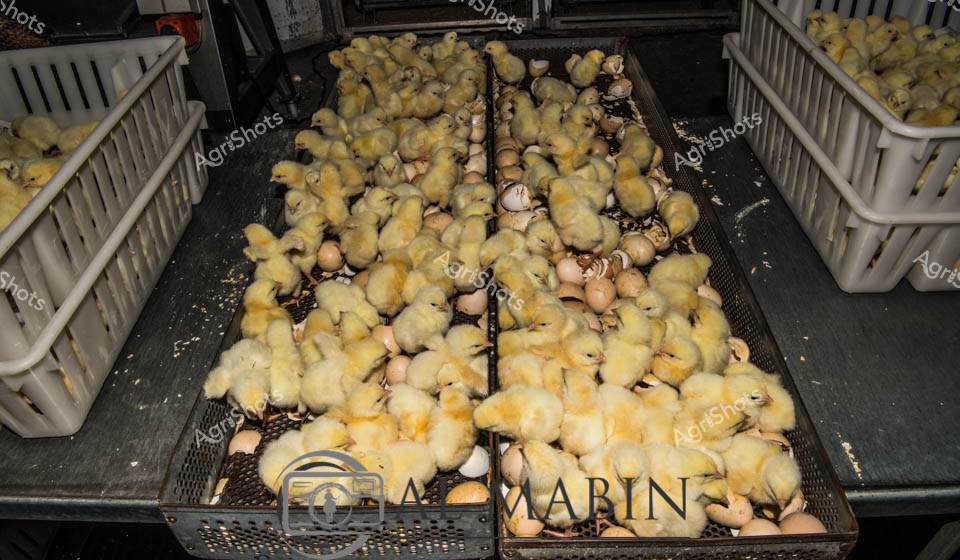
Newly hatched yellow chicks cluster tightly across perforated metal trays, their soft downy feathers creating a living carpet of pale golden warmth. Dozens of baby chickens huddle together, some still bearing fragments of eggshell, freshly emerged in a carefully controlled industrial hatchery environment. White plastic crates surround the central sorting tray, ready to transport the young birds to their next stage of development. Each tiny chick represents a carefully managed step in modern agricultural breeding, where efficiency and animal management converge in a systematic, controlled setting. The metallic gray trays and crisp white containers contrast sharply with the warm yellow of the newly hatched chicks, capturing the clinical yet life-generating nature of contemporary livestock production.
 Image
Image
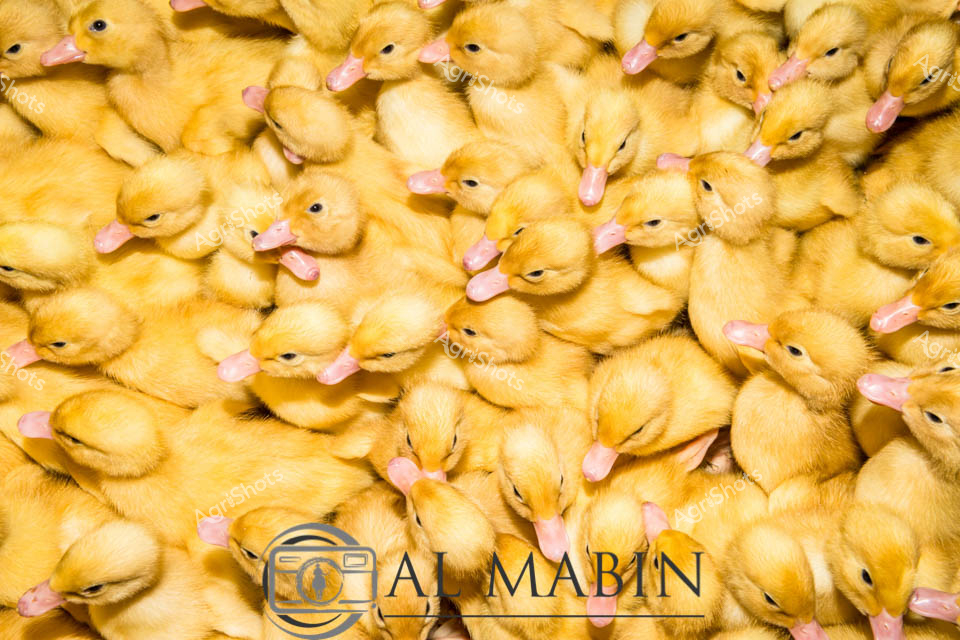
Fluffy buttercup-yellow ducklings crowd together in a dense, writhing mass of downy feathers and pink bills. Newly hatched and tightly packed, these young Pekin ducks represent the early stages of large-scale poultry farming in regional New South Wales. The uniform golden coloration and compact clustering reveal the precision of modern agricultural breeding techniques, where uniformity and rapid growth are key economic drivers. Each delicate duckling sits pressed against its siblings, their soft bodies creating a living carpet of potential protein production. This image captures the industrial efficiency of contemporary duck farming, where hundreds of identical chicks represent a carefully managed agricultural commodity.
 Image
Image
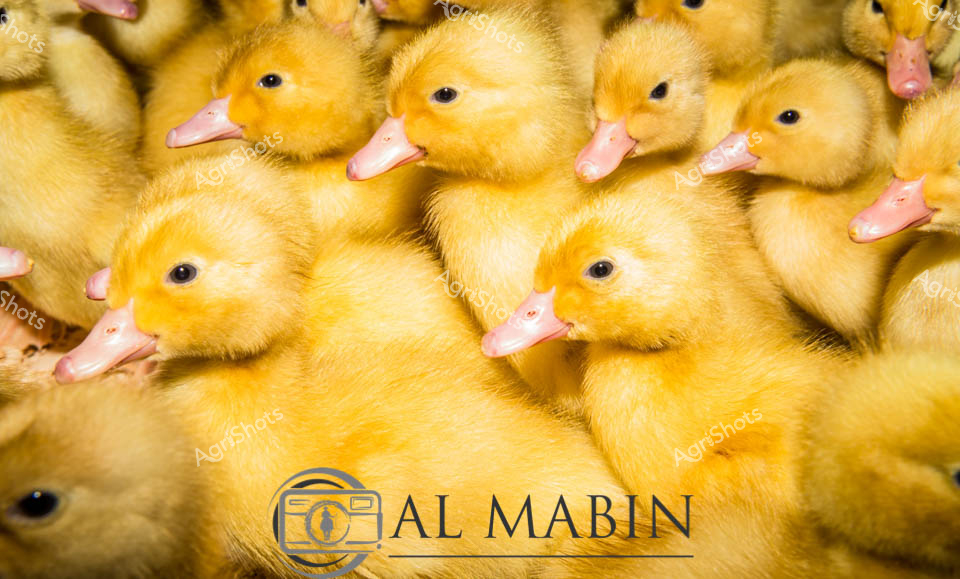
Fluffy golden ducklings huddle tightly together, their soft downy feathers creating a vibrant yellow carpet of new life. Each tiny duckling bears a distinctive pink beak, their bright black eyes alert and focused, representing the early stages of large-scale poultry production in rural New South Wales. The uniform coloration and dense clustering suggest a carefully managed breeding environment, typical of modern agricultural practices in Australian duck farming. These day-old ducklings embody the potential of agricultural innovation, their collective presence a testament to the systematic and efficient approach of NSW's livestock industries. The image radiates warmth and potential, showcasing the delicate beginnings of what will become a critical component of Australia's agricultural supply chain.
 Image
Image
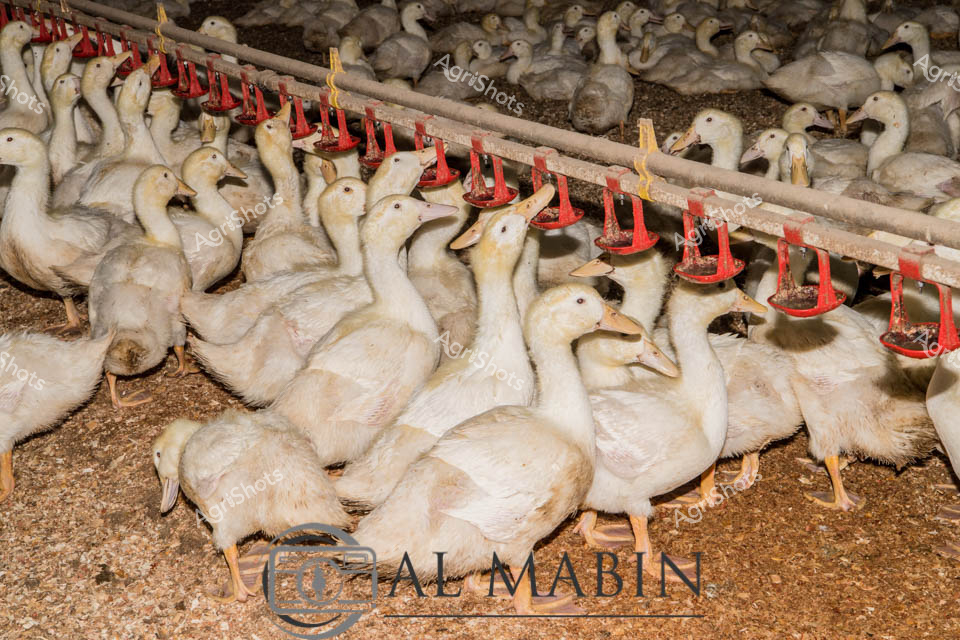
A dense flock of pristine white Peking ducks cluster tightly within a climate-controlled industrial farming shed, their downy feathers creating a sea of pale cream and ivory. Uniform red feeding mechanisms line a steel overhead rail, allowing precise distribution of feed across the crowded environment. The birds stand closely packed on a textured ground of sawdust or wood shavings, their plump bodies reflecting the large-scale agricultural approach typical of modern poultry production in New South Wales. Each duck appears uniform in size and coloration, demonstrating the careful genetic selection and standardized breeding techniques of commercial duck farming. The image captures the industrialized efficiency of contemporary agricultural systems, where large numbers of birds are raised in controlled conditions to maximize protein production.