About this image
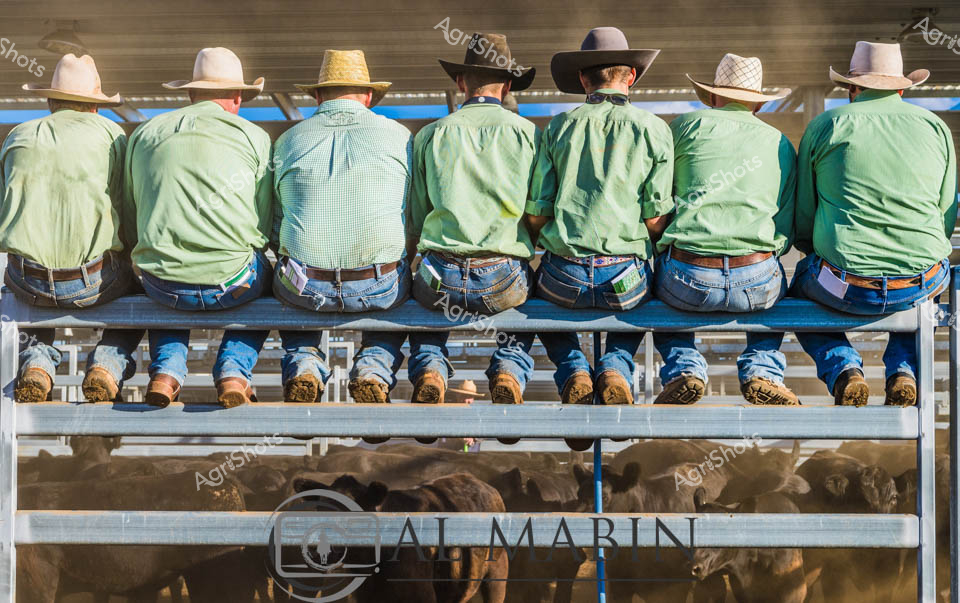
Ranged across a blue metal auction platform, seven agricultural workers survey a pen of cattle, their identical sage-green shirts and wide-brimmed hats creating a uniform tableau of rural professionalism. Their backs turned to the camera, each individual sits precisely aligned, denim-clad legs dangling, cowboy boots planted solidly on the lower rung. Below them, a herd of beef cattle clusters tightly, their dark bodies a textural contrast to the metallic infrastructure of the sale yards. The scene captures the quintessential rhythm of livestock trading in New South Wales' New England Region - a methodical, understated ballet of commerce and agricultural expertise. Soft neutrals dominate the palette: pale straw hats, sage shirts, blue denim, creating a harmonious visual composition that speaks to the disciplined culture of pastoral business. The auction platform becomes a stage, with these agricultural agents performing their specialized roles - evaluating livestock, making subtle gestures, communicating through an unspoken professional language. Their unanimity of posture and dress transforms them into a collective entity, united in their assessment of the valuable herd below.
Similar media
 Image
Image
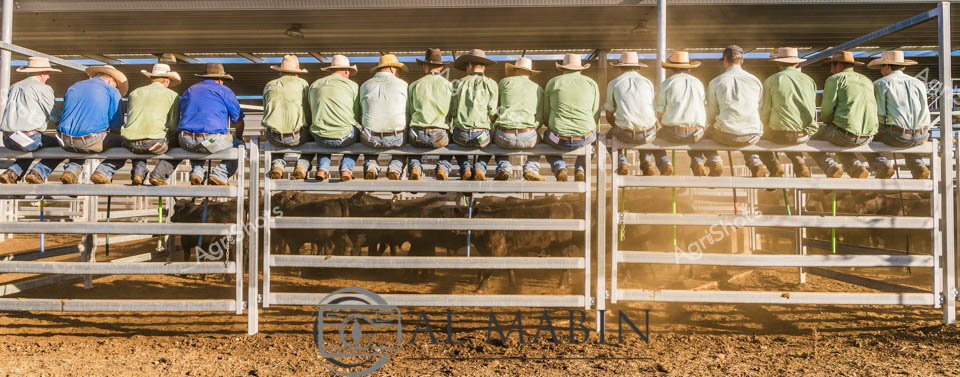
Sun-drenched sale yards in New England, New South Wales, where seasoned livestock agents perch in silent concentration along the metal railings. A uniform sea of pastoral professionalism unfolds - wide-brimmed agricultural hats in soft sage, blue, and cream tones create a rhythmic visual pattern against the industrial steel pens. Cattle wait below, their muscular forms representing the lifeblood of this rural economy, while the agents survey potential purchases with practiced scrutiny. The harsh afternoon light casts long shadows across the dusty ground, highlighting the stoic postures of men deeply connected to the agricultural trading rhythms that have shaped rural Australian communities for generations. Each agent sits shoulder-to-shoulder, a testament to the collective understanding and unspoken communication that defines livestock trading culture. The Ti Marin branding subtly visible in the foreground hints at the professional infrastructure supporting this quintessential rural transaction.
 Image
Image
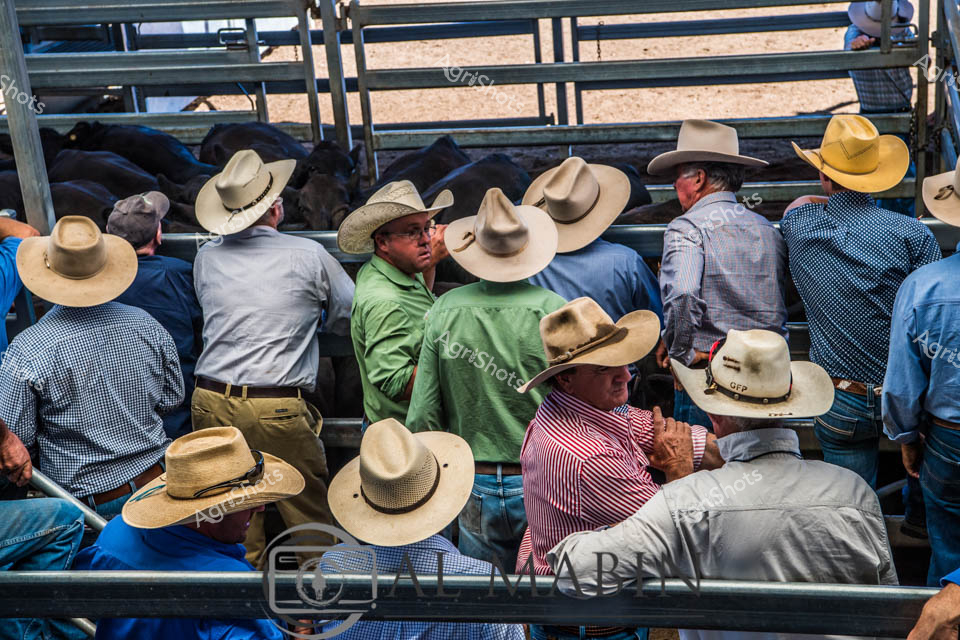
Cattle auction intensity fills the sale yards, a quintessential New England Region scene where rural professionals converge. Stockmen and agents cluster tightly within metal livestock yards, their signature wide-brimmed akubra hats creating a textural landscape of cream, tan, and golden tones. Dressed in checked shirts, pressed trousers, and working attire, these agricultural specialists lean against steel railings, engaged in concentrated discussion about incoming livestock. The overhead light casts sharp shadows, highlighting the crisp collars and professional demeanor of these beef cattle trading experts. Predominantly wearing neutral earth tones - sage greens, soft blues, and muted grays - the group represents the backbone of Australia's agricultural commerce. Their body language suggests focused negotiation, with subtle gestures and close positioning indicating the nuanced communication of livestock trading. These sale yards epitomize the strategic heart of rural economic exchange, where generations of agricultural knowledge converge to determine cattle values, breeding potential, and market trajectories. Each hat, each shirt, each subtle movement tells a story of rural professionalism and deep-rooted agricultural expertise.
 Image
Image
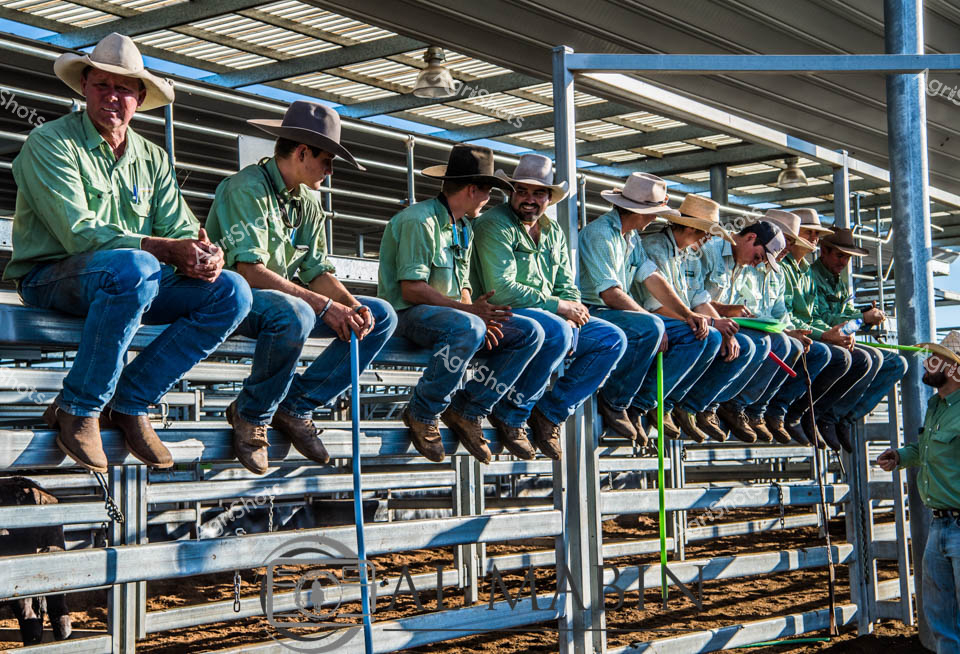
Stockmen gather at the regional cattle sale yards, perched methodically along the steel-blue railings of the covered auction platform. Dressed in uniform mint green shirts and crisp blue denim, they wear classic wide-brimmed Australian bush hats - some pale, some darker - signaling their rural professional status. The men sit in disciplined alignment, boots hooked into the metal railings, scanning the yards with practiced, intent gazes typical of livestock agents assessing cattle lots before bidding. Soft shadows cast by the corrugated metal roof create subtle texture across their weathered faces and pressed shirts, highlighting the New England region's agricultural heritage. Their collective posture speaks of decades of unspoken communication, each agent subtly positioned to signal interest or restraint during the cattle sale. The metallic infrastructure, worn ground, and carefully arranged observers reveal a quintessential moment in Australia's beef industry - a methodical, understated ritual of agricultural commerce.
 Image
Image
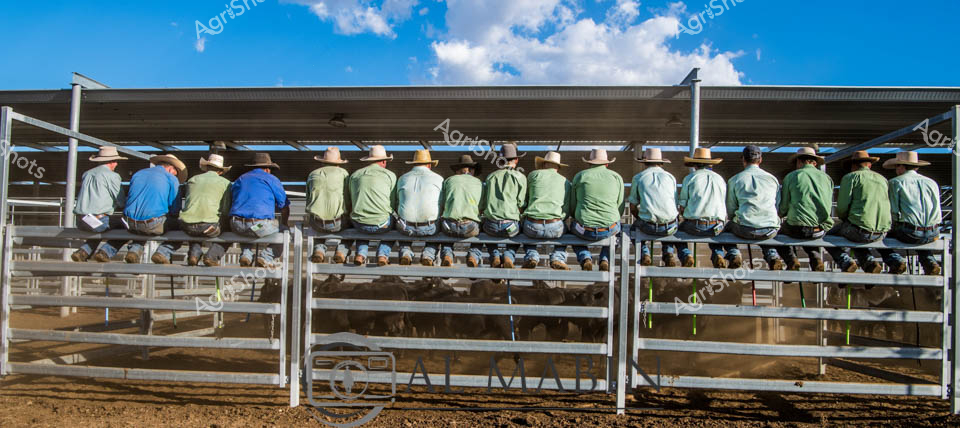
Rural New England livestock sale yards burst with anticipation as a line of seasoned stock agents perch uniformly along the metal railings, their backs turned to the photographer. Dressed in a coordinated palette of sage greens, light blues, and khaki work shirts, each agent wears a characteristic wide-brimmed hat - essential protection against the brilliant blue sky and scattered white clouds overhead. The meticulously organized sale yard represents a crucial node in Australia's beef cattle trading ecosystem, with gleaming metal gates and structured infrastructure framing the professional scene. These agents, seated shoulder-to-shoulder, are intently focused on evaluating the livestock below, their body language suggesting decades of collective agricultural expertise and unspoken communication. The sun-drenched environment speaks to the New South Wales agricultural heartland, where generations of farmers and traders have conducted business in these precise, functional spaces. Every element of the composition - from the uniform postures to the clean lines of the infrastructure - communicates the disciplined professionalism of Australian livestock commerce.
 Image
Image
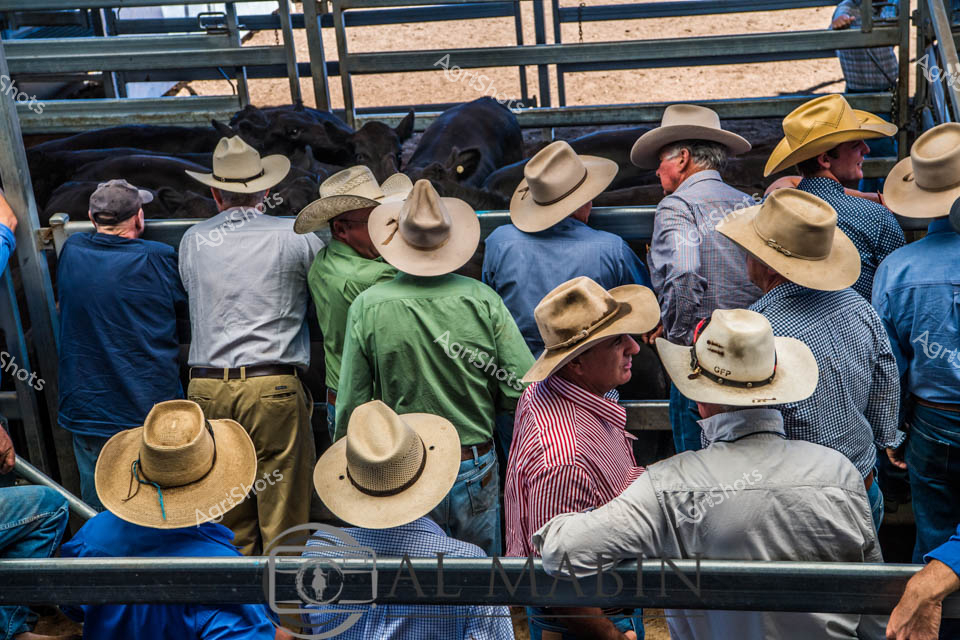
Weathered cowboy hats and crisp cotton shirts converge in the tight metal pens of a classic Australian cattle sale yard. Seasoned livestock agents and local farmers cluster shoulder-to-shoulder, their collective attention focused intently on the cattle behind the steel railings. Shades of khaki, navy, green, and soft beige blend together in a uniform of rural professional attire, each individual oriented towards the livestock with a practiced, unsentimental concentration. The overhead lighting casts sharp shadows across the working space, highlighting the textural differences between sun-bleached hats, checked shirts, and the sleek black coats of the cattle. This is a moment of serious commercial assessment - each agent scanning the herd, mentally calculating value, condition, and potential. The uniformity of their postures speaks to generations of agricultural knowledge and an unspoken professional language of livestock trading. The scene captures the quintessential Australian agricultural environment - a pragmatic, understated theatre of rural commerce where fortunes are negotiated and the nation's beef industry moves forward, one carefully evaluated beast at a time.
 Image
Image
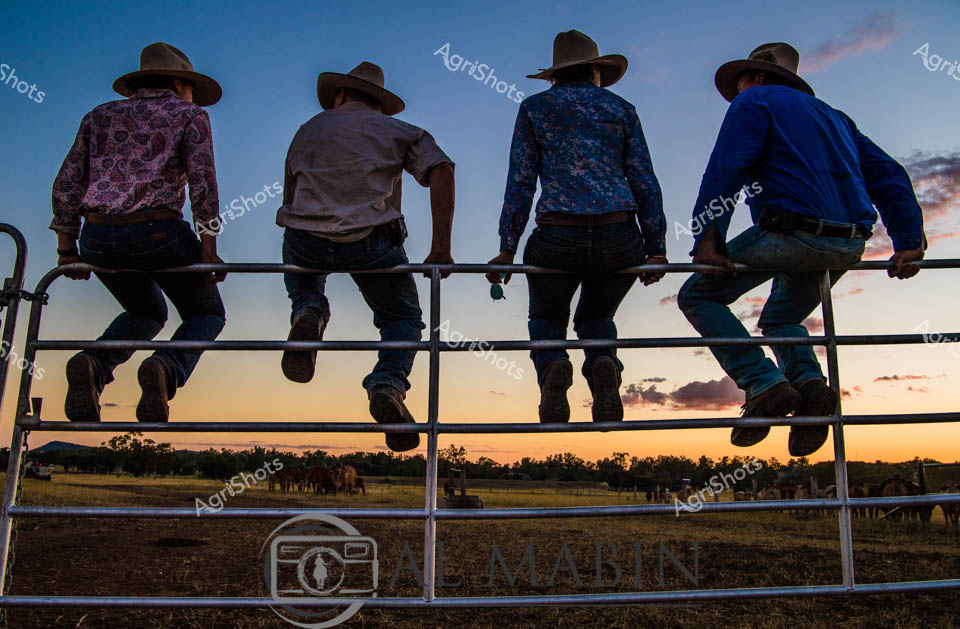
Silhouetted against a burnished golden sunset, four seasoned station workers balance atop a steel cattle yard gate, their wide-brimmed hats casting sharp shadows across the rural Queensland landscape. Dressed in varied work shirts - from vibrant pink paisley to deep indigo blue - they present a united stance of quiet concentration, scanning the expansive paddock where Brahman cattle graze in the fading light. The metallic gate serves as both a practical vantage point and a symbolic boundary between human and pastoral domain, their boots resting on cold steel rails while the warm evening sky bleeds orange and soft pink behind distant treelines. Each worker's posture speaks to generations of agricultural experience - relaxed yet alert, comfortable in their environment but always watchful. The scene captures the quintessential rhythm of station life: moments of stillness bracketed by intense periods of physical labor, a testament to the enduring spirit of Queensland's cattle country. As twilight descends, these guardians of the land maintain their silent vigil, embodying the unspoken connection between rural workers and the vast, challenging landscapes they steward.
 Image
Image
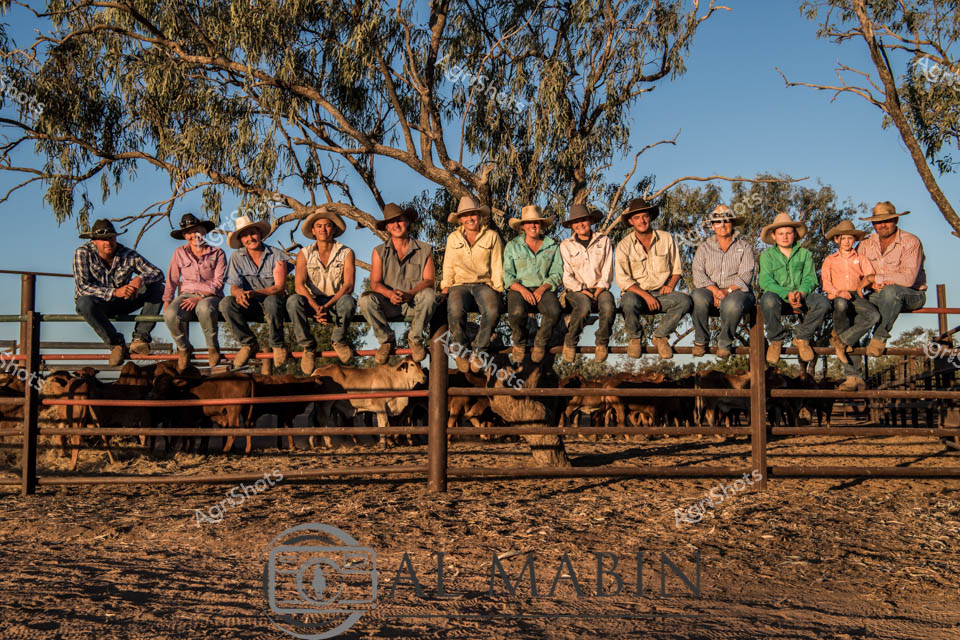
Golden hour light bathes a quintessential Australian cattle station scene, where a line of station hands perch along a timber stockyard fence with rustic elegance. Dressed in classic rural workwear - an array of checked shirts in soft earth tones of pink, yellow, green, and blue - the group represents multiple generations of agricultural workers. Gnarled eucalyptus trees frame the background, their silvery leaves casting dappled shadows across the dusty red earth of the yards. Brahman-cross cattle mill below the fence, their muscular frames and distinctive humps reflecting the robust cattle breeding traditions of northern Queensland. The image captures the spirit of rural Australian life - a collaborative, multi-generational workforce connected intimately to the land and livestock. Each individual, from young station kids to seasoned workers, sits with a quiet confidence that speaks to generations of agricultural knowledge and resilience in one of the world's most challenging farming environments.
 Image
Image
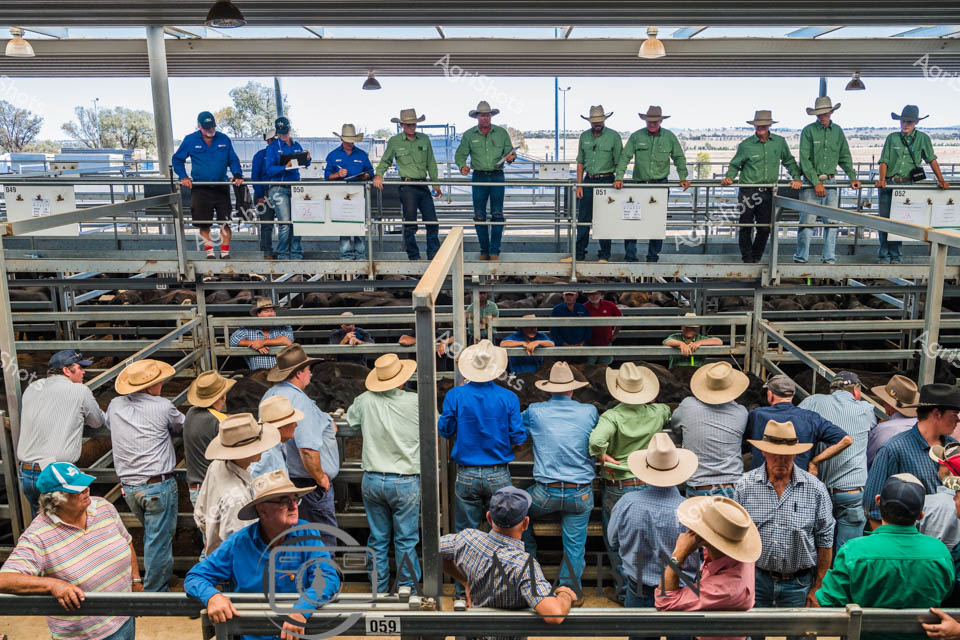
Cattle buyers and agents converge at the New England Region livestock sale yards, a bustling hub of agricultural commerce. Rows of stockmen in wide-brimmed akubra hats - a palette of blues, greens, and neutrals - crowd the multi-tiered metal pens, intently focused on assessing the quality of cattle below. The overhead industrial shed provides shelter, with natural light filtering through, illuminating the rhythmic process of rural livestock trading. Professionally dressed agents in blue uniforms stand on the upper level, clipboard and stock lists in hand, while farmers and buyers in classic rural attire examine potential purchases from multiple angles. This scene captures the precise, methodical nature of Australian cattle trading - a critical moment in the agricultural supply chain where livestock value is determined through expert evaluation and negotiation. The dense arrangement of hat-wearing professionals, the structured metal infrastructure, and the controlled environment reflect the sophisticated, business-like approach to primary industry in regional New South Wales.