About this image
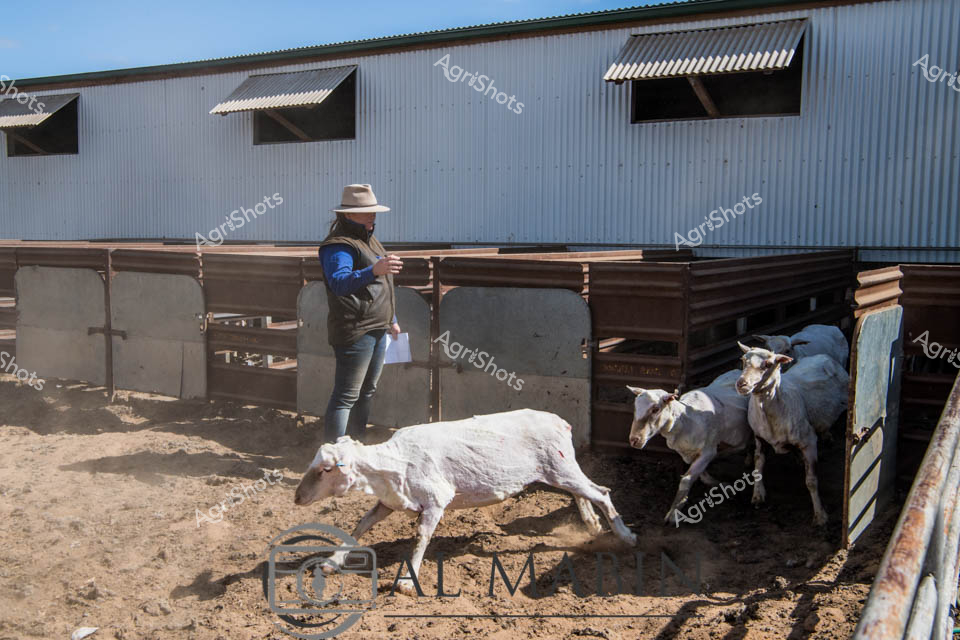
In the stark light of a crisp winter morning, a seasoned farm worker stands amid the weathered corrugated iron walls of a classic Australian woolshed. Wearing a wide-brimmed hat, warm vest, and sturdy work gear, the worker carefully counts and inspects a small group of white merino sheep. The animals move cautiously within the wooden and metal yard, their clean white fleeces contrasting against the dusty earth and metallic shed walls. Harsh shadows and clear blue sky suggest early day conditions typical of rural New South Wales, where sheep farming remains a critical agricultural backbone. The scene captures the quiet concentration of agricultural work - a moment of careful livestock management that speaks to generations of pastoral expertise. Rusty gates, worn timber, and the utilitarian design of the shed reflect the robust and practical nature of Australian farming infrastructure.
Similar media
 Image
Image
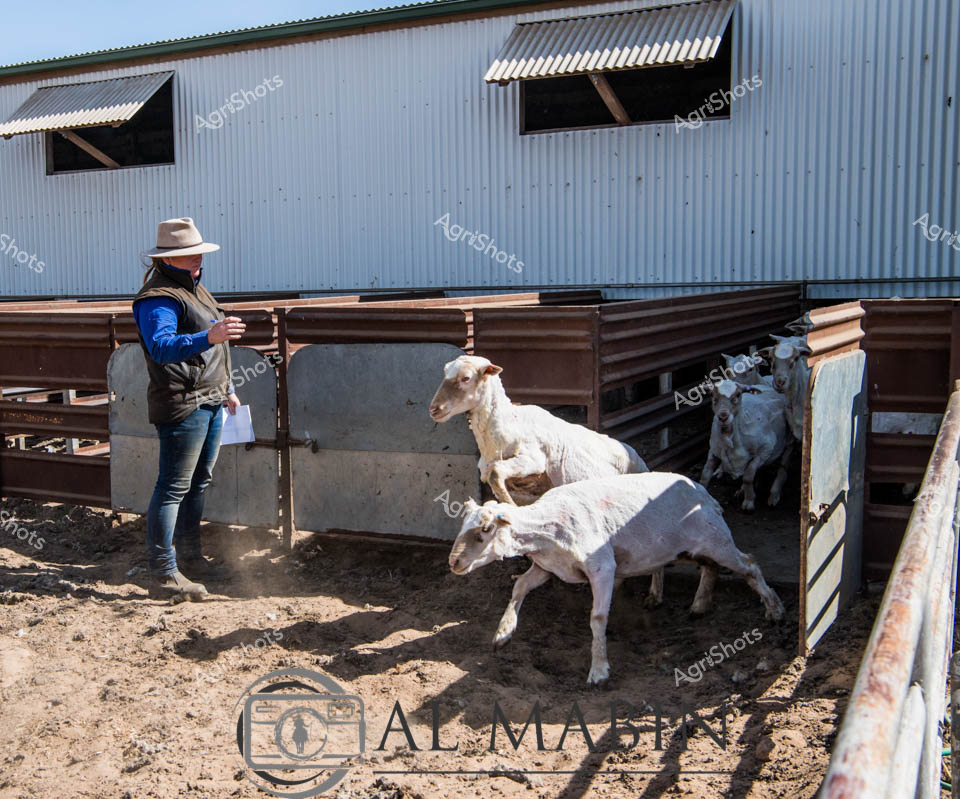
A seasoned sheep farmer in a blue jacket and wide-brimmed hat stands amid the rustic corrugated iron shearing shed, carefully monitoring a pair of white merino sheep preparing to move through the yard. Dust rises from the packed earth floor as the animals navigate the narrow concrete-and-metal holding pens, their woolly bodies gleaming in the harsh midday sunlight streaming through the shed's open windows. The weathered metal awnings and sturdy wooden infrastructure speak to generations of agricultural practice in rural Australia, where livestock management is both an art and a precise science. Shadows cast by the farmer and the sheep create a textured landscape of movement and stillness, capturing the disciplined choreography of farm work. The merino sheep, with their robust frames and dense fleece, represent the backbone of Australia's wool industry - a critical agricultural export that has shaped the economic and cultural landscape of rural communities for over a century. This scene embodies the quiet intensity of stock management, where every movement is calculated, every animal carefully assessed in the functional beauty of a working woolshed.
 Image
Image
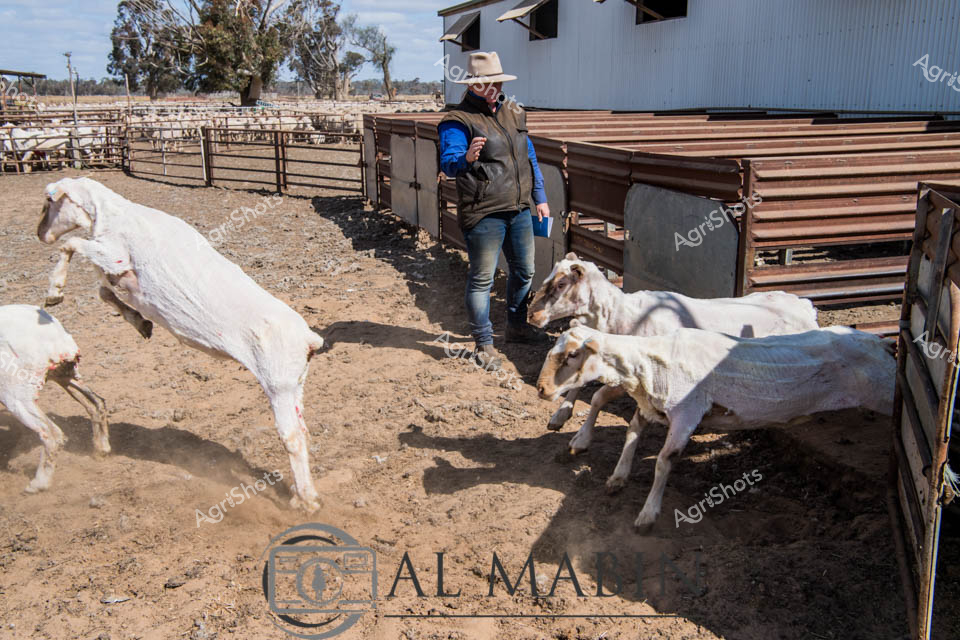
Merino lambs cluster nervously in a compact sheep yard, their pristine white fleeces stark against the dusty ochre paddock. A farm worker in a classic Australian rural ensemble - blue jacket, olive vest, denim jeans, and an iconic wide-brimmed akubra hat - stands watchfully among the livestock. The corrugated iron woolshed gleams silver-white in the background, casting sharp shadows across the dry ground, suggesting a crisp winter morning in rural New South Wales. These young Merino sheep, carefully bred for premium wool production, represent the lifeblood of Australian agricultural enterprise - lean, muscular animals displaying the genetic refinement of generations of selective breeding. Rustic wooden yard panels and metal gates define the working space, a testament to generations of pastoral infrastructure. The scene captures a quintessential moment of livestock management - a skilled worker monitoring the flock, ensuring each animal's health and readiness for potential shearing or market preparation.
 Image
Image
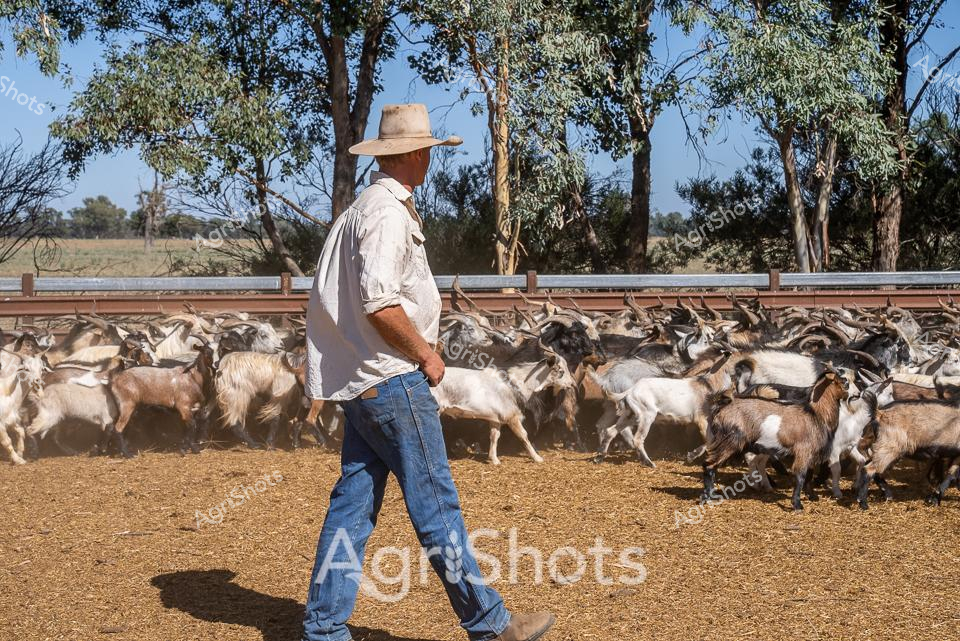
Australian goat farming captures the essence of rural resilience in this evocative agricultural scene. A stockman in a classic wide-brimmed sun hat, crisp white shirt, and well-worn blue jeans walks alongside a dense mob of mixed-breed goats in a rustic livestock yard. Eucalyptus trees frame the background, casting dappled shadows across the dusty paddock, suggesting a typical warm day in rural New South Wales. The goats - a varied mixture of white, brown, and mottled coats - surge and mill within a sturdy metal-railed holding yard, their horns and muscular bodies testament to the hardiness required in Australian livestock management. The scene speaks to the quiet expertise of the farmer, whose relaxed stance and measured movement reveal years of experience in managing livestock. Soft earth underfoot, the subtle rustle of gum leaves, and the collective movement of the goat herd create a powerful snapshot of Australian agricultural life, where generations of farming knowledge meet the challenging landscape of the inland.
 Image
Image
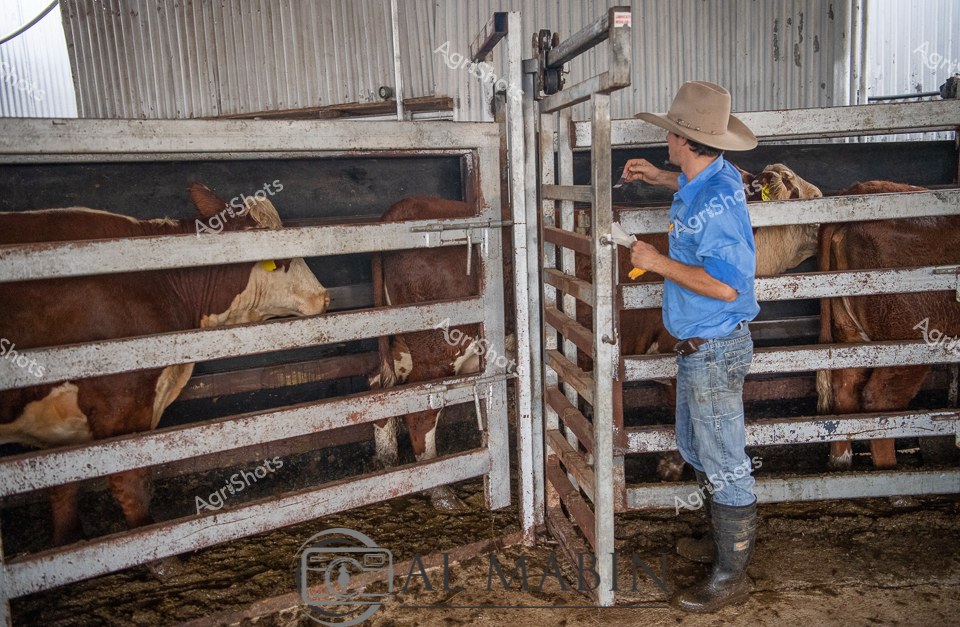
In a weathered steel cattle yard nestled in the New England region of New South Wales, a seasoned stockman tends to a pen of robust Hereford cattle. Wearing a crisp blue shirt, faded denim jeans, and a classic wide-brimmed stockman's hat, the farmer carefully manages the herd within tight metal livestock gates. The rich mahogany-red and white-faced Herefords stand quietly, their muscular frames pressed against weathered steel barriers, highlighting the rugged infrastructure of Australian cattle farming. The corrugated iron shed provides a stark, industrial backdrop to this quintessential agricultural scene, with soft natural light filtering across the earthy tones of dirt and straw. The stockman's precise movements suggest years of experience, handling the cattle with calm expertise typical of generational farming knowledge. His rubber boots and working attire blend seamlessly with the functional environment, emphasizing the practical nature of livestock management. Yellowed ear tags mark each animal, indicating careful breeding and tracking in this professional stud cattle operation. The image captures the intimate relationship between farmer and livestock, a fundamental narrative of Australian agricultural excellence.
 Image
Image
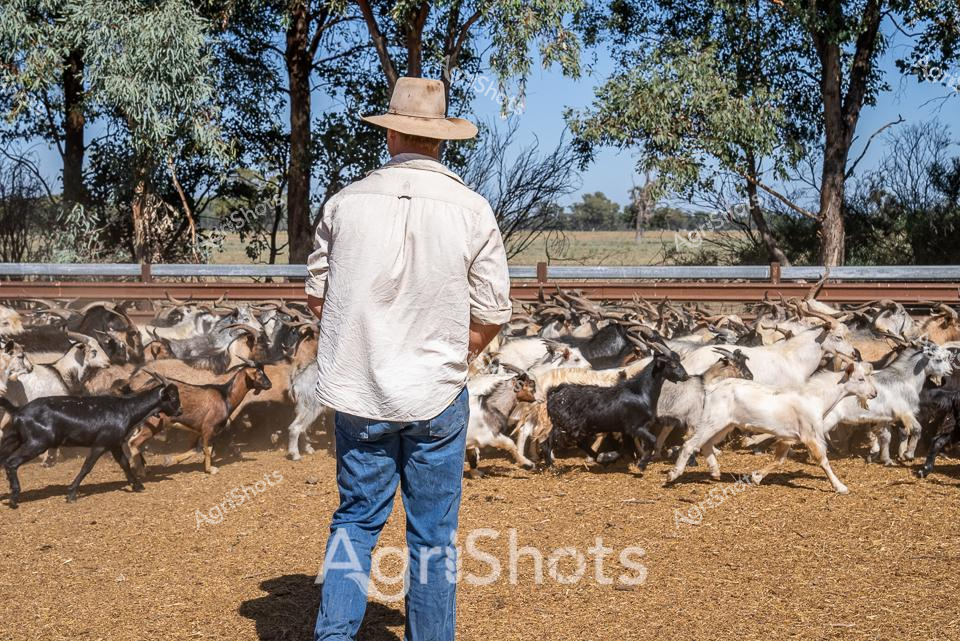
Sunlight bathes a rugged goat paddock in rural New South Wales, where a seasoned farmer stands sentinel over a vibrant herd of mixed-breed goats. Dressed in a classic wide-brimmed agricultural hat, crisp white long-sleeved shirt, and well-worn blue denim jeans, the farmer surveys the livestock from behind, watching intently as the goats - a dynamic mix of black, white, and brown animals - mill about the dusty, hard-packed yard. Eucalyptus trees frame the scene, their silvery-green leaves providing dappled shade and a quintessential Australian pastoral backdrop. The sturdy timber rail fence and packed earth ground speak to generations of agricultural practice, while the goats' varied colors and active movements suggest a healthy, well-managed small livestock operation. This image captures the quiet concentration of Australian agricultural work, the subtle connection between farmer and herd, and the raw beauty of a working rural landscape where each animal and worker plays a critical role in the broader agricultural ecosystem.
 Image
Image
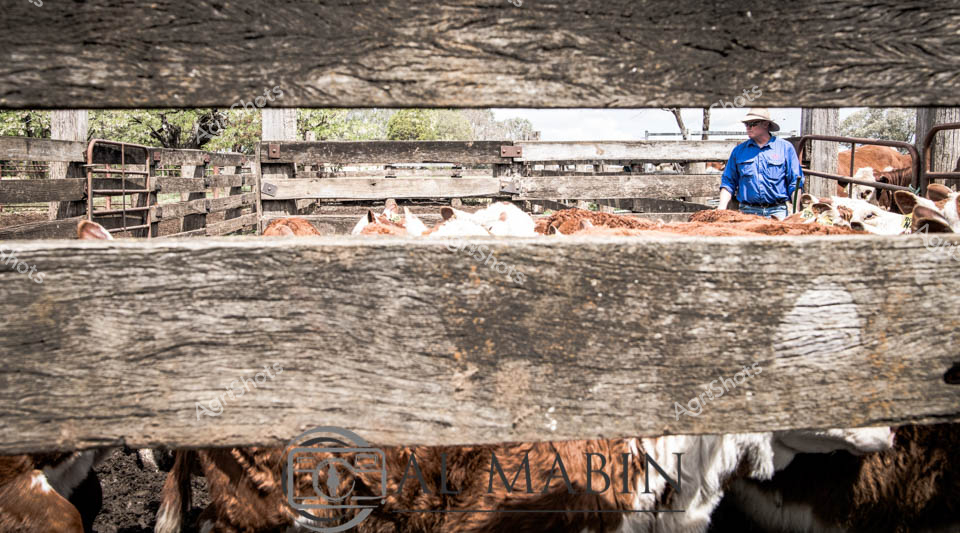
Weathered timber yards frame a quintessential rural cattle management scene in New England, New South Wales. A stockman in a crisp blue work shirt and light-colored wide-brimmed hat surveys a pen of robust Hereford cattle, their distinctive red and white coats gleaming against the rough wooden fencing. The tight composition reveals the precision of pregnancy testing, a critical process in stud cattle breeding - each animal carefully positioned for health assessment and herd management. Soft filtered light suggests an early morning session, with the textured wooden rails creating a rustic foreground that highlights the agricultural expertise unfolding in the background. The scene breathes with the quiet concentration of professional cattle handlers, capturing the nuanced skill of regional livestock management. Rich earthy tones of timber, soil, and cattle hide create a compelling visual narrative of Australian agricultural practice, showcasing the intimate connection between farmer and livestock in a carefully maintained rural environment.
 Image
Image
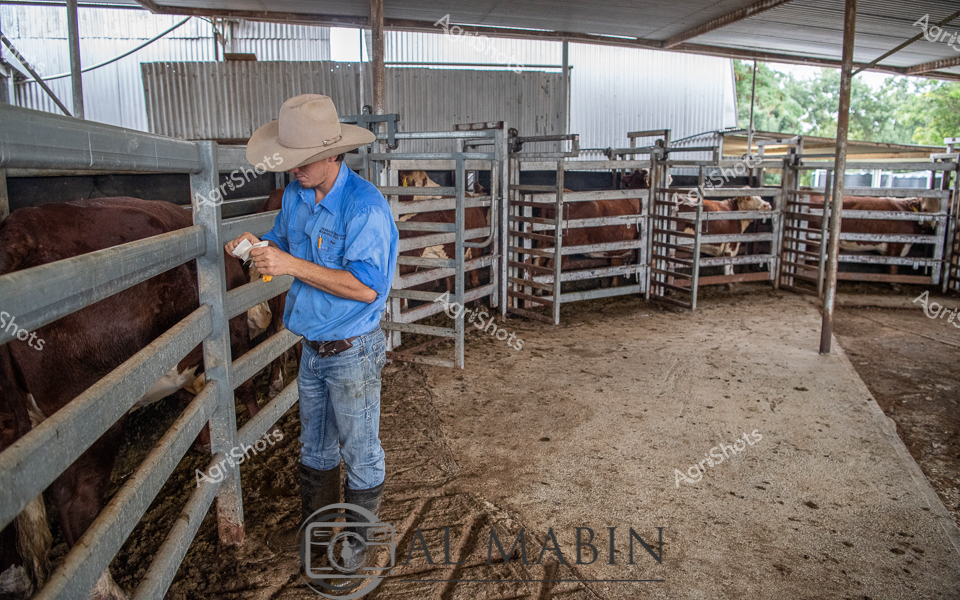
Under the expansive metal-roofed cattle yards, a seasoned stockman pauses mid-task, his weathered cowboy hat casting a shadow across his concentrated gaze. Dressed in a crisp blue work shirt and well-worn denim jeans, he carefully handles a syringe, preparing for artificial insemination of the Hereford cattle penned in the steel-railed enclosures. Rich, ruddy-coated beef cattle stand quietly in the adjacent pens, their muscular frames a testament to the careful breeding practices of New England's renowned stud operations. The yard's earthen floor tells a story of countless hooves and generations of agricultural expertise, with soft light filtering through the corrugated iron shed, casting subtle shadows across the meticulously organized livestock infrastructure. This scene captures the precision and quiet expertise of Australian cattle breeding - a delicate balance of science, skill, and generations of agricultural knowledge. The cool, controlled environment of the cattle yards represents the sophisticated approach to livestock management in New South Wales, where every movement is deliberate and every action is guided by decades of farming wisdom.
 Image
Image
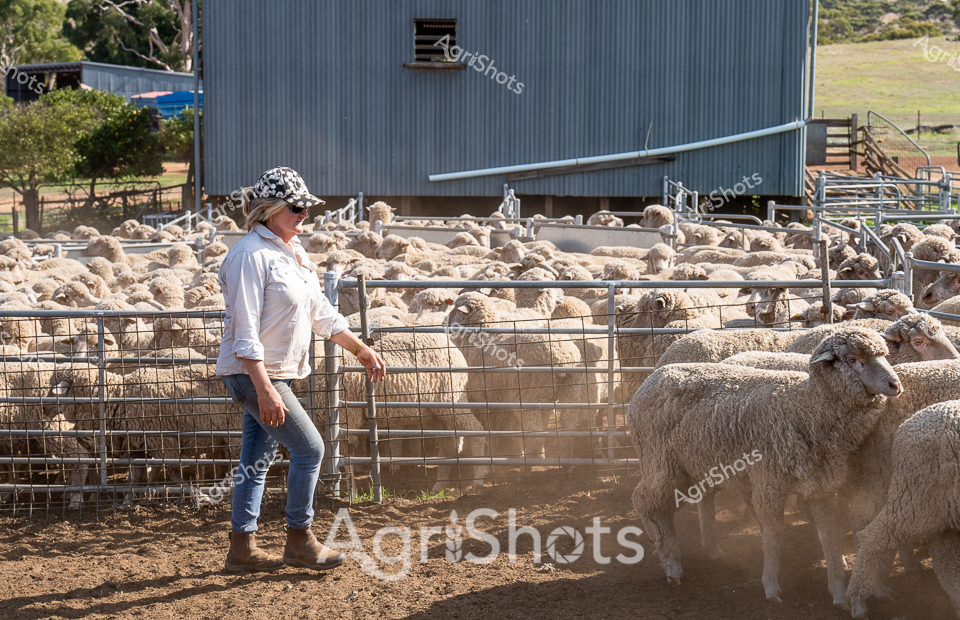
Merino woolgrower stands vigilant in sun-drenched sheep yards, her white shirt and denim jeans contrasting against the dusty paddock and gleaming corrugated shed. A dense mob of robust Merino ewes crowd the metal gate and yards, their thick, dense fleece radiating a soft ivory and cream, showing the prime genetic lines of West Australian livestock breeding. Late morning light casts long shadows across the compacted earth, revealing the precise management of this agricultural enterprise. The woolgrower's stance is relaxed yet authoritative, one hand casually resting near the yard gate, demonstrating years of experienced stock handling and deep connection to the land. Meticulously maintained metal yard infrastructure frames the scene, highlighting the sophisticated systems behind modern sheep production. This image captures the quiet dignity of Australian agricultural work - a moment of calm control amidst the complex rhythms of pastoral life, where generations of breeding and careful husbandry come together in these magnificent Merino sheep.