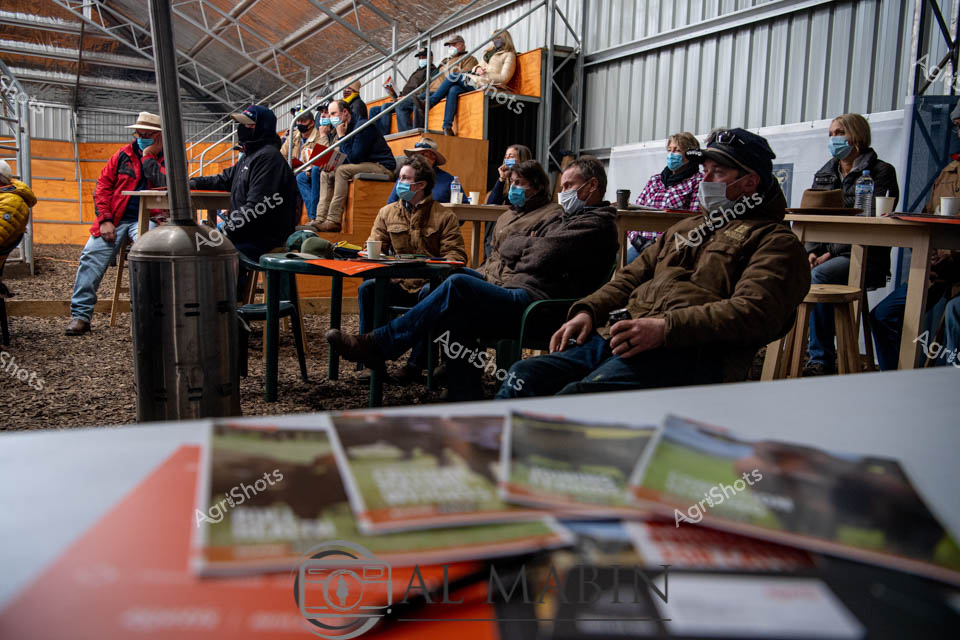
About this image
Rural agricultural workshop in a corrugated iron shed, capturing the essence of a livestock industry field day in New South Wales. Farmers and agricultural professionals gather in warm winter jackets and protective face masks, seated on wooden benches and chairs amid a gravel floor. The space feels purposeful and practical, with informational brochures and agricultural materials spread across tables in the foreground. Soft natural light filters through the metal structure, creating a muted, focused atmosphere of professional learning and livestock management. The audience appears attentive and engaged, suggesting a technical presentation or demonstration related to cattle breeding, stud management, or veterinary practices like vaccination. Brown and earthy tones dominate the scene - from the participants' clothing to the structural elements - reflecting the pragmatic and grounded nature of agricultural community knowledge sharing.
Similar media
 ▶ Video
A group of people attend an agricultural field day or vaccination seminar in a large rural shed in New South Wales. The attendees, wearing masks and casual farming attire, are seated on tiered seating made from hay bales and metal bleachers, listening to a presentation about cattle management. Educational materials and brochures are visible on tables in the foreground, while the industrial shed setting with exposed steel beams creates an authentic agricultural learning environment. This gathering represents the importance of ongoing education in modern beef cattle production and livestock health management.
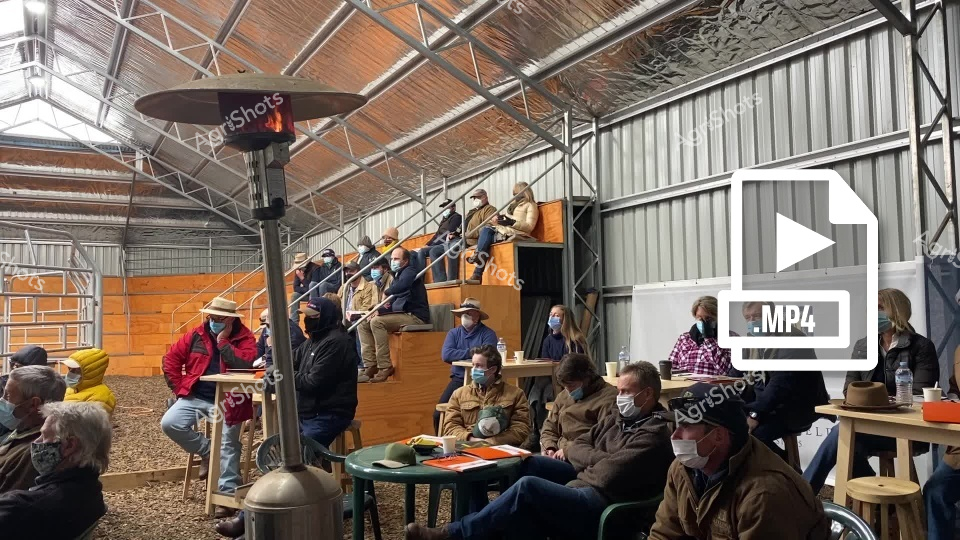 ▶ Video
A bustling beef cattle field day unfolds in a large industrial shed in New South Wales, where farmers and agricultural professionals gather to learn about livestock vaccination techniques and cattle management practices. The scene shows dozens of attendees, including men and women working as cattle producers and veterinarians, seated on tiered wooden bleachers and around tables while listening to educational presentations. A prominent Zoetis-branded patio heater provides warmth in the spacious corrugated iron building, creating a comfortable environment for the agricultural learning session. This professional development gathering demonstrates the collaborative nature of the Australian beef industry, where knowledge sharing about cattle health and vaccination protocols helps improve livestock management across rural properties.
 Image
Image
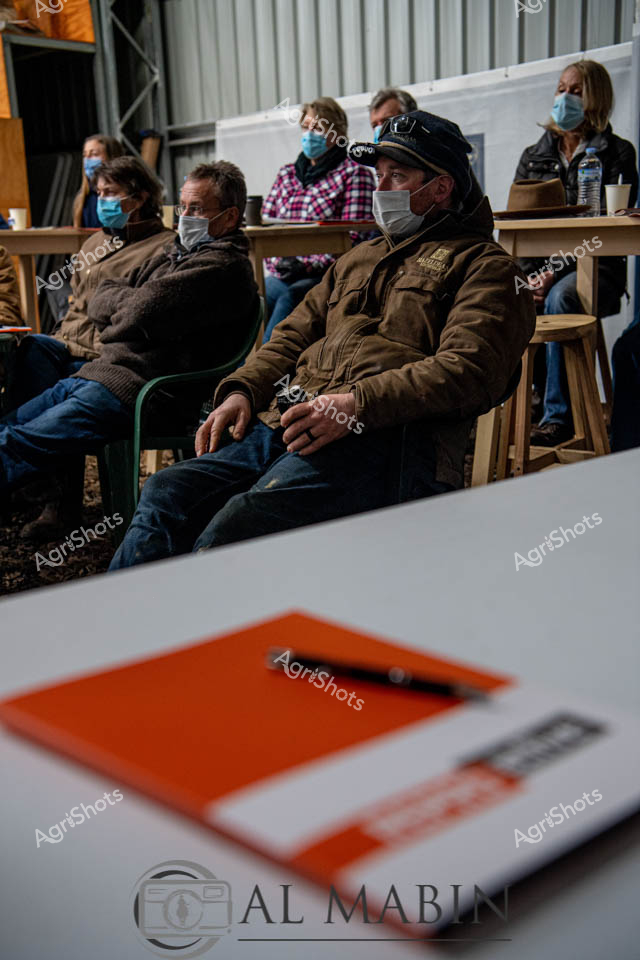
Agricultural seminar participants gather in a weathered indoor workshop, masked and attentive during what appears to be a COVID-era livestock management training session. Seated on rustic wooden stools and chairs, the attendees wear practical rural workwear - heavy brown jackets, denim trousers, and protective face coverings, reflecting the careful biosecurity protocols of contemporary agricultural practice. The scene captures the resilience and adaptability of farming communities during challenging times, with participants focusing intently on what seems to be a technical presentation or training module. In the foreground, an orange and white document or folder suggests technical agricultural literature, perhaps related to cattle management, vaccination protocols, or livestock health strategies. The muted color palette of browns, blues, and greys creates a serious, professional atmosphere, highlighting the pragmatic and focused nature of agricultural professional development. Soft lighting and the close, structured seating arrangement suggest an intimate learning environment, typical of regional agricultural extension workshops across rural New South Wales.
 Image
Image
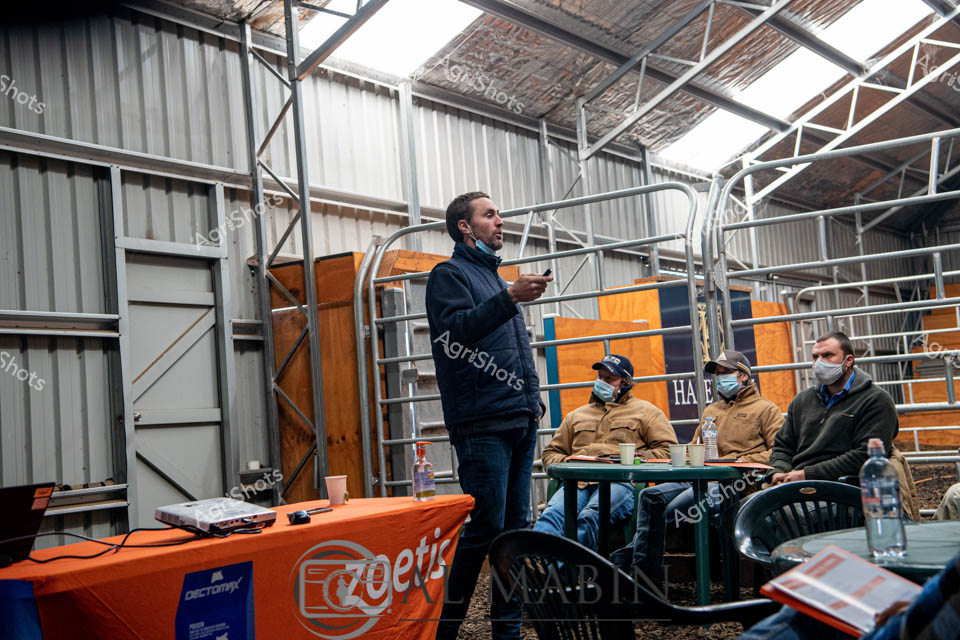
Rural agricultural meeting inside a steel-clad shed, capturing an intense moment of professional consultation. A presenter in a dark blue jacket stands confidently addressing three seated colleagues, all wearing protective face masks, suggesting a COVID-era farm management discussion. The interior features industrial metal framing, corrugated walls, and translucent roof panels allowing soft natural light to illuminate the space. An orange Zoetis-branded tablecloth signals a veterinary or agricultural product presentation, with water bottles and documents scattered across the meeting table. The participants appear focused and engaged, dressed in practical workwear ranging from tan work jackets to dark outdoor clothing, indicative of a serious livestock management or cattle health briefing. The metallic gray and orange color palette, combined with the industrial shed environment, creates a sense of pragmatic, purpose-driven agricultural innovation typical of modern farming operations in New South Wales.
 Image
Image
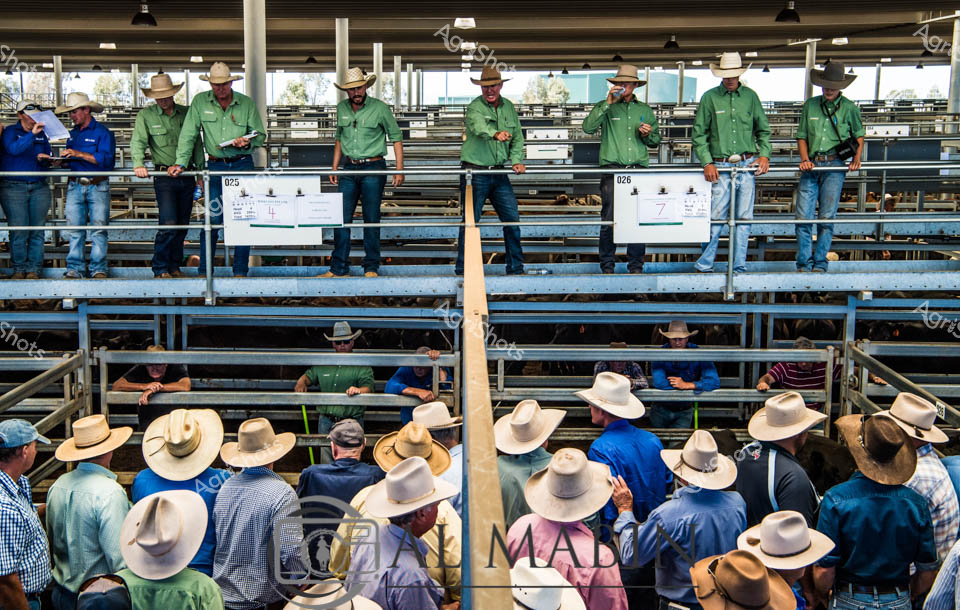
Live cattle auction at a classic New England region sale yard, capturing the quintessential rhythm of rural agricultural commerce. Seasoned livestock agents in coordinated green shirts and cream cowboy hats stand strategically on raised blue metal platforms, carefully evaluating and managing the auction process. Below them, a crowd of local farmers and buyers in traditional wide-brimmed hats cluster together, their backs turned as they intently focus on the potential livestock purchases. The structured metal pens and numbered information boards create a systematic, professional environment that speaks to the precision of modern agricultural trading. Soft natural light filters through the covered selling area, highlighting the sea of neutral-toned hats and denim, creating a tableau that epitomizes the cultural and economic heartbeat of rural New South Wales cattle trading. This image encapsulates the collective concentration, unspoken communication, and deep-rooted traditions of Australian livestock markets, where relationships, experience, and subtle gestures determine significant agricultural transactions.
 Image
Image
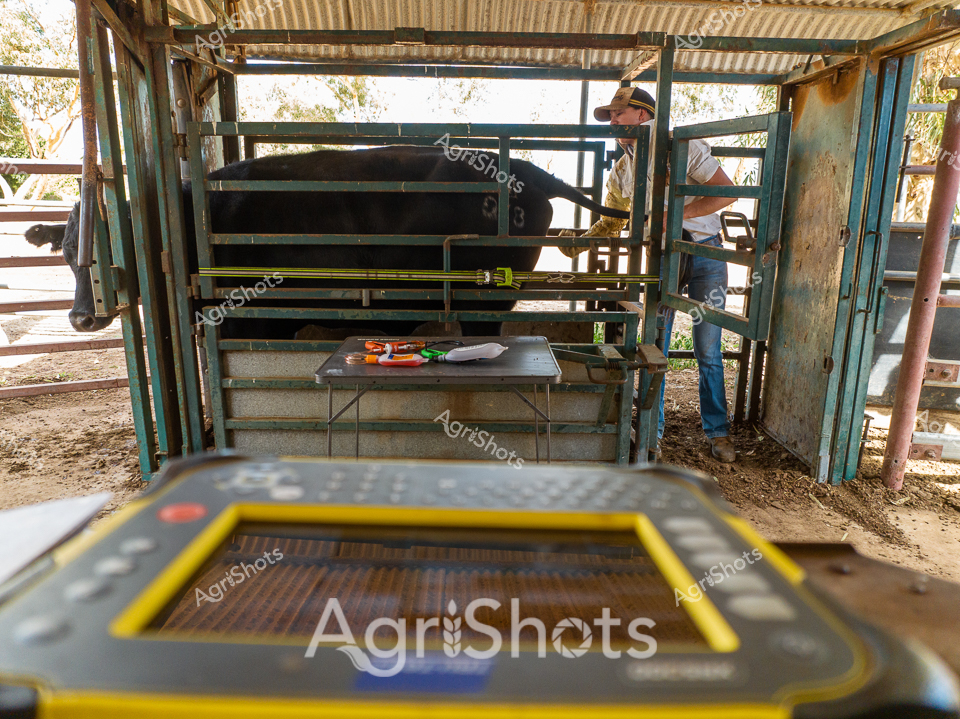
In the dusty confines of a rustic cattle yard, a focused agricultural worker stands beside a robust Tru-Test cattle crush, preparing to conduct essential livestock health procedures. The metallic green and blue framework of the restraining chute provides a sturdy backdrop for this moment of precision animal management, with corrugated iron sheeting filtering soft natural light from above. Specialized electronic equipment sits ready on a nearby table, suggesting advanced pregnancy testing or vaccination protocols are about to be performed. The individual, dressed in practical farm attire, carefully positions themselves to safely interact with the dark-coated beef cattle, embodying the skilled expertise of modern agricultural practice in Western Australia. Weathered equipment and the close-quarters setting tell a story of generations of farming knowledge, where technology and traditional livestock handling techniques converge. This scene captures the quiet intensity of rural agricultural work - a testament to the meticulous care and professional approach required in contemporary cattle management.
 Image
Image
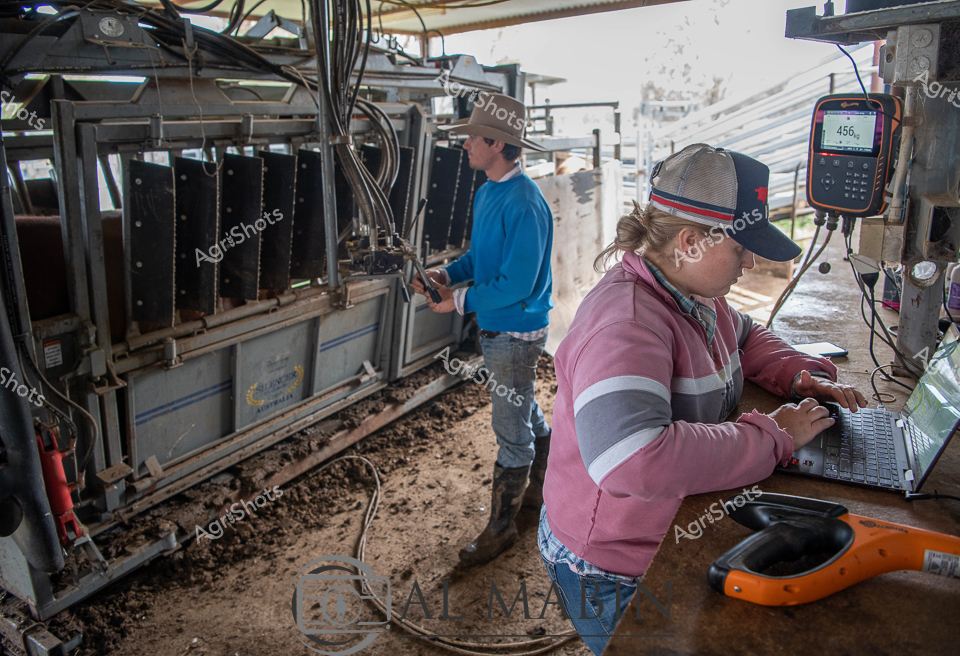
Precision livestock management unfolds in a weathered cattle handling facility, where agricultural technology meets hands-on expertise. A worker in a vibrant blue sweater operates the robust Gallagher cattle crush, carefully managing livestock movement and restraint. Beside him, a woman in a pink and grey jacket focuses intently on a laptop, meticulously recording data and tracking individual animal information on the digital screen. The industrial steel infrastructure surrounds them, with hydraulic systems, metal gates, and electronic monitoring equipment creating a high-tech workspace amid the dusty, utilitarian environment. Winter light filters across the shed, casting soft shadows on the concrete floor and highlighting the sophisticated safety equipment and vaccination protocols integral to modern agricultural practices. This scene powerfully illustrates the evolution of farming, where technical skill, digital innovation, and animal husbandry converge to ensure livestock health and operational efficiency.
 Image
Image
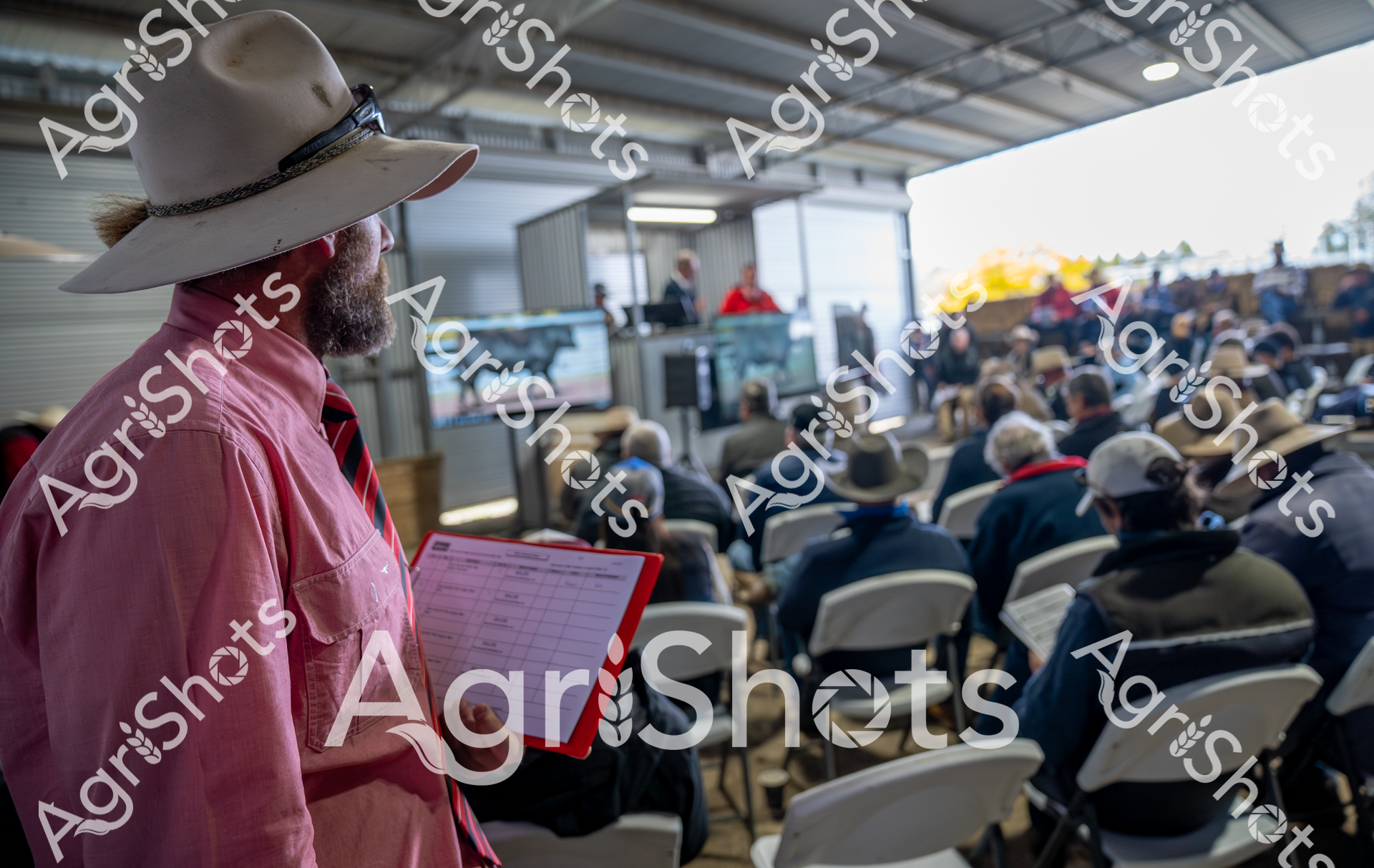
In the bustling indoor auction arena of a New England region stud cattle sale, a bearded stockman in a dusty pink work shirt and classic wide-brimmed felt hat stands attentively, clipboard in hand. The winter light filters through industrial skylights, illuminating rows of seated farmers and cattle buyers bundled in heavy jackets and rural workwear. Folding chairs fill the space, creating an atmosphere of focused anticipation typical of premium Angus bull sales in New South Wales. The stockman's vantage point overlooks the crowd, suggesting his role as a key organizer or auctioneer in this critical agricultural marketplace. Screens and technical equipment hint at the modern methods now integrated into traditional livestock trading, while the sea of weathered hats and purposeful postures speaks to the enduring community spirit of rural agricultural transactions. This scene captures the essence of Australian stud cattle breeding - a blend of heritage, commerce, and deep agricultural expertise.