About this image
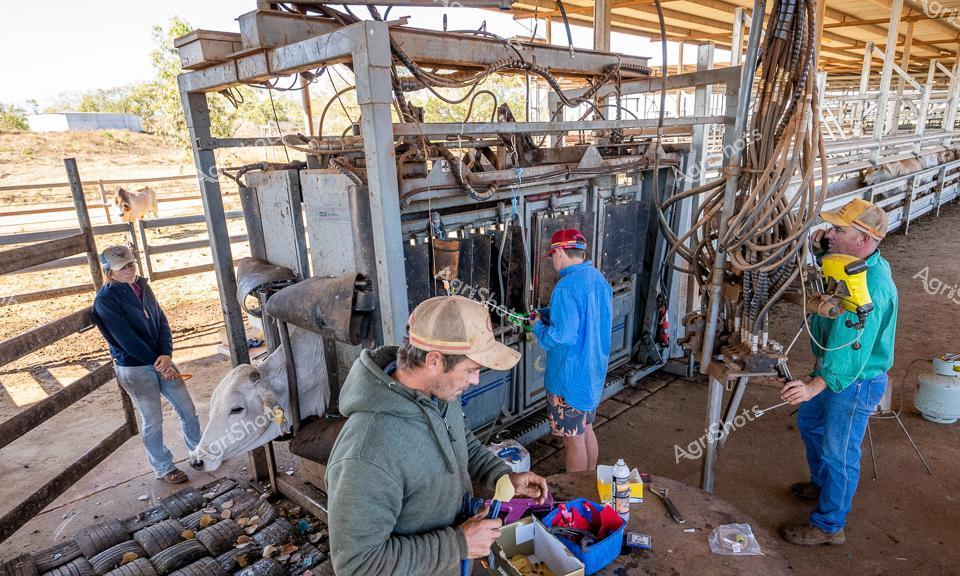
Brahman cattle undergo routine processing in a robust steel cattle yard, nestled in the rugged Northern Territory landscape. A seasoned team of stockmen collaborate efficiently around the hydraulic cattle crush, each wearing distinctive workwear - forest green, bright blue, and safety yellow jackets contrasting against the metallic industrial framework. One worker prepares medical supplies while another manages the animal's movement, demonstrating the precise choreography of cattle station operations. The steel infrastructure, worn and weathered, speaks to generations of agricultural practice, with intricate hydraulic systems and handling equipment designed to minimize stress during essential veterinary procedures. Sunlight filters across the dusty paddock, casting long shadows and highlighting the muscular white Brahman breed, renowned for their heat tolerance and importance to Australia's northern cattle industry. This scene captures the intersection of traditional pastoral skills and modern agricultural technology, where human expertise and mechanical precision ensure livestock health and station productivity.
Similar media
 Image
Image
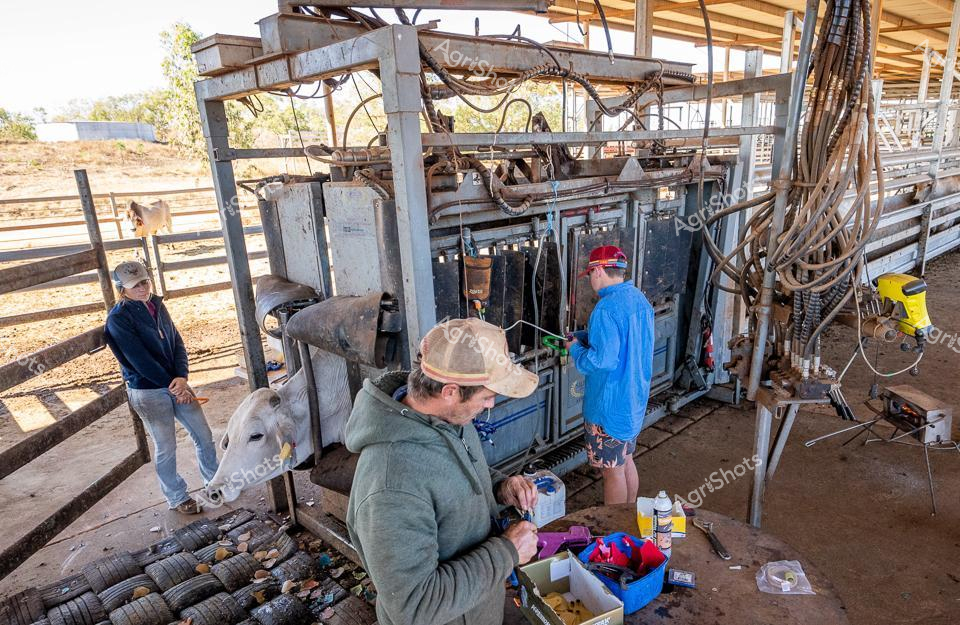
Scorching Northern Territory midday sun streams into a robust cattle processing facility, where seasoned station workers methodically manage a mob of pale Brahman cattle through an industrial hydraulic cattle crush. A worker in a sage green fleece carefully prepares medication or vaccination supplies, while another in a vivid blue shirt operates the complex machinery of the steel livestock handling equipment. The rugged metal infrastructure - with its intricate network of hydraulic pipes, gates, and mechanical components - reveals the precision engineering required to safely manage these powerful tropical cattle breeds. Worn rubber mats underfoot and scattered industrial supplies hint at the daily rhythms of pastoral work, where animal welfare and operational efficiency intersect. The weathered steel yards and specialized equipment demonstrate the technological sophistication of modern Australian cattle stations, where generations of knowledge combine with cutting-edge agricultural practices to manage livestock in challenging environments. The scene pulses with quiet concentration, the workers moving with practiced efficiency under the unforgiving Northern Territory sun.
 Image
Image
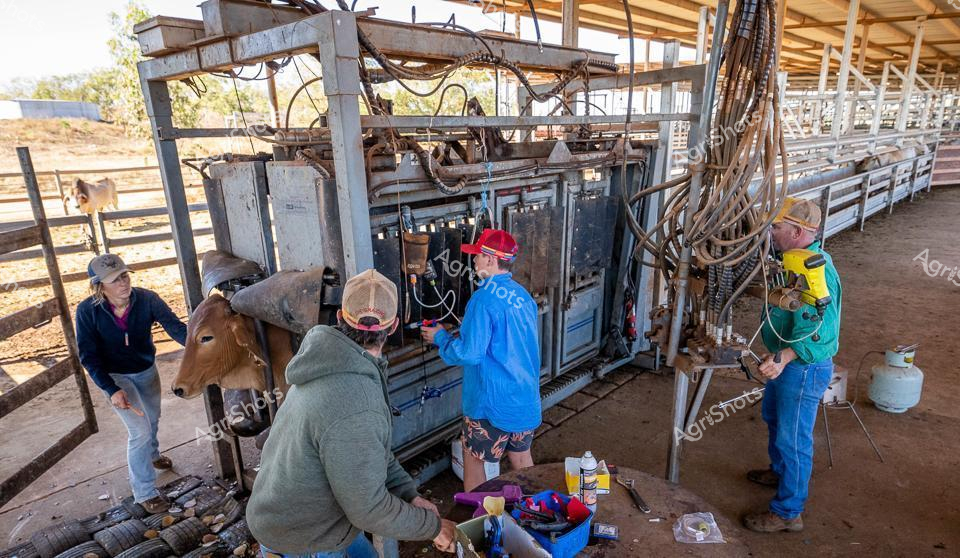
Brahman cattle processing unfolds with precision and care in a dusty Northern Territory cattle yard. A robust hydraulic cattle crush stands centrally, its steel framework bristling with hydraulic lines and control mechanisms, while ranch workers in a vibrant palette of blue, green, and grey work collaboratively around the robust Brahman beast. The metallic infrastructure suggests decades of agricultural engineering, with weathered wooden rails and complex mechanical systems designed to safely manage and treat livestock. Soft desert light filters across the scene, highlighting the textural contrast between the sleek machinery, rugged working attire, and the tawny hide of the bovine. One worker in a red cap operates the sophisticated equipment, while others manage supplies and provide support, embodying the coordinated teamwork essential to successful station management. The atmosphere pulses with quiet concentration - a moment of controlled intervention in the rhythmic cycles of pastoral life, where animal husbandry meets technical precision under the expansive skies of Australia's agricultural heartland.
 Image
Image
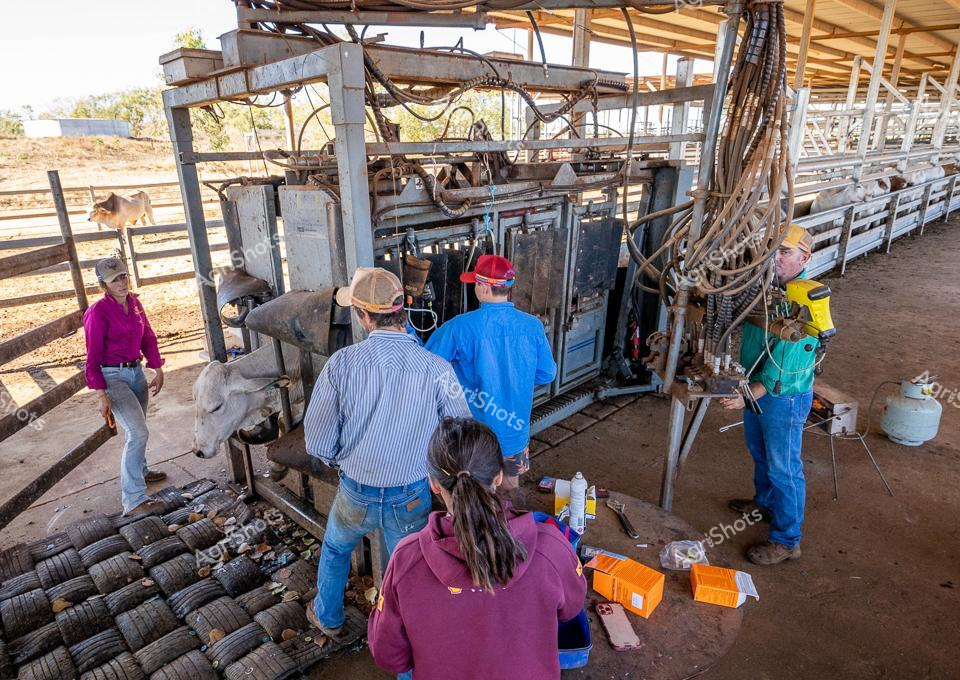
Brahman cattle gather in the weathered steel yards of a Northern Territory cattle station, awaiting their routine health checks and processing. A team of experienced stockworkers move with practiced efficiency around the robust metal cattle crush, dressed in practical workwear - blue shirts, yellow safety vests, and sturdy jeans that speak to the harsh pastoral environment. The morning light casts long shadows across the dusty ground, highlighting the intricate network of metal gates, hydraulic equipment, and well-worn rubber mats that form the backbone of modern cattle management. Propane tanks and veterinary supplies stand ready, indicating an upcoming animal health intervention, likely vaccinations or induction procedures typical of large-scale cattle operations. The workers' body language suggests a calm, methodical approach, with each team member positioned strategically around the sophisticated Catagra cattle handling equipment. In the background, the expansive cattle yards and glimpse of open landscape underscore the scale of Australian pastoral agriculture - a testament to the skill, technology, and dedication required to manage livestock in challenging tropical environments. The scene captures the intersection of animal husbandry, workplace safety, and agricultural innovation, with the distinctive pale Brahman cattle central to this quintessential Northern Territory station workflow.
 Image
Image
Brahman cattle processing unfolds in the golden light of a dry season morning at a Northern Territory cattle station. A robust hydraulic cattle crush stands at the center of a weathered steel yard, surrounded by a team of agricultural workers in a choreographed dance of animal husbandry. Worn rubber mats cushion the ground, while industrial equipment and medical supplies suggest a precise animal health intervention is underway. A pale Brahman beast waits patiently, its distinctive humped silhouette a testament to the breed's adaptability to harsh Australian landscapes. Workers dressed in practical station attire - blue shirts, jeans, and broad-brimmed hats - move with practiced efficiency, their yellow and blue safety gear highlighting the professional approach to livestock management. The scene captures the intersection of traditional pastoral skill and modern agricultural technology, where generations of cattle station expertise meet contemporary animal welfare practices under the vast, open skies of the Territory.
 Image
Image
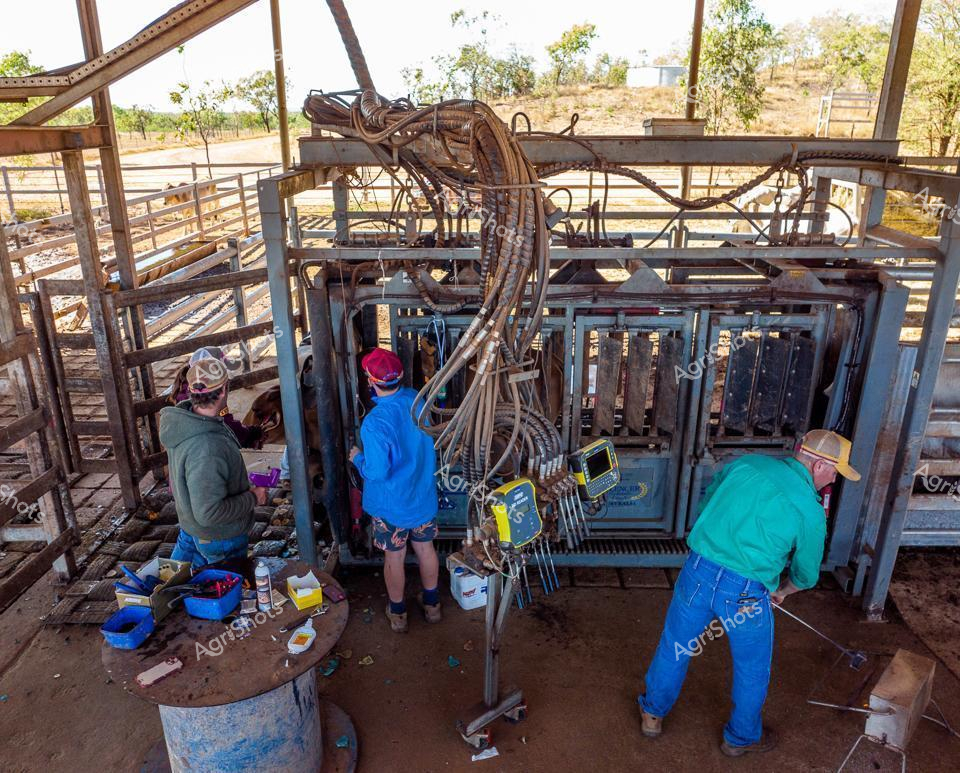
Cattle processing unfolds with precision at a remote Northern Territory cattle station, where three skilled workers operate a robust hydraulic cattle crush. Dressed in a palette of blues, greens, and earth tones, the team works methodically around the heavy-duty metal infrastructure, managing complex hydraulic lines and equipment. A yellow electronic monitoring device sits ready, indicating modern agricultural technology integrated into traditional livestock management practices. The rugged, sun-drenched landscape stretches beyond the wooden and metal yards, with sparse trees and open terrain typical of Australia's northern pastoral regions. Specialized equipment like the Silencer cattle handling system demonstrates the careful balance of animal welfare and operational efficiency in beef production. The scene captures the technical expertise and collaborative effort required in managing Brahman cattle, a breed renowned for its adaptability to harsh tropical environments.
 Image
Image
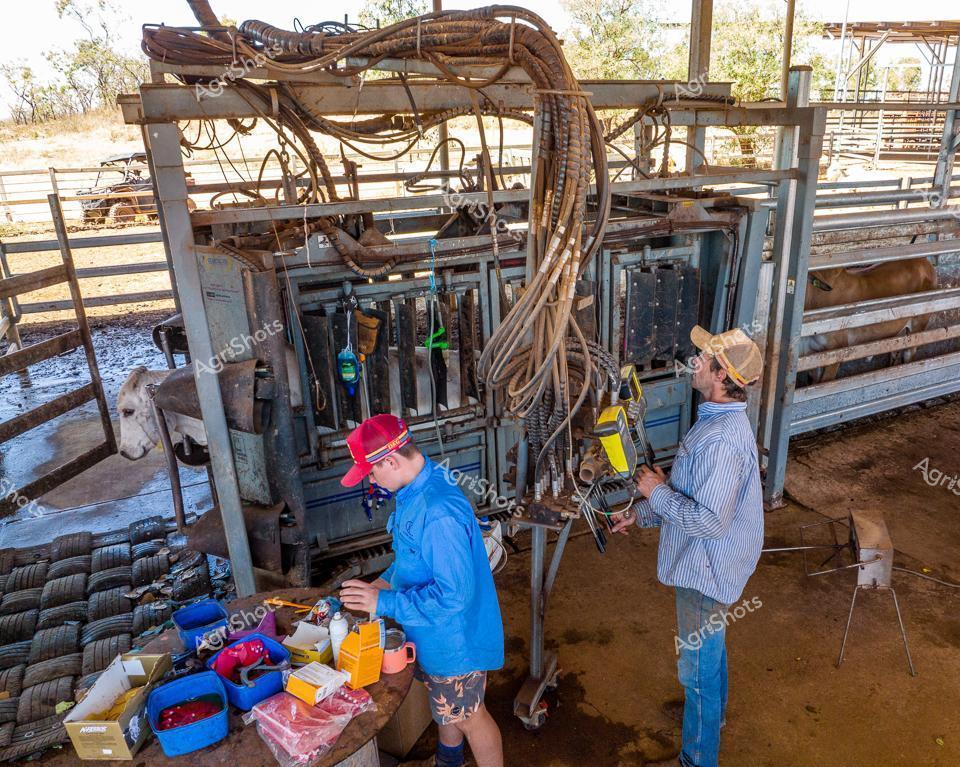
In the dusty cattle yards of the Northern Territory, two workers tend to livestock processing with practiced efficiency. A complex metal cattle crush stands as the centerpiece, its rusted hydraulic arms and tangled cables revealing years of hard service under the harsh Australian sun. A worker in a bright blue jacket and red cap carefully prepares equipment alongside another in a striped shirt and wide-brimmed hat, surrounded by colorful plastic containers of supplies and tools. A pale Brahman cattle beast waits patiently in the adjacent pen, its distinctive loose skin and heat-adapted features marking it as quintessentially suited to this challenging landscape. The scene captures the methodical rhythm of station life - a blend of technical precision and raw agricultural practicality, where animal health management meets the unforgiving beauty of the Australian outback. Utilitarian and workmanlike, every element speaks to the careful, considered approach required to manage livestock in one of the world's most demanding agricultural environments.
 Image
Image
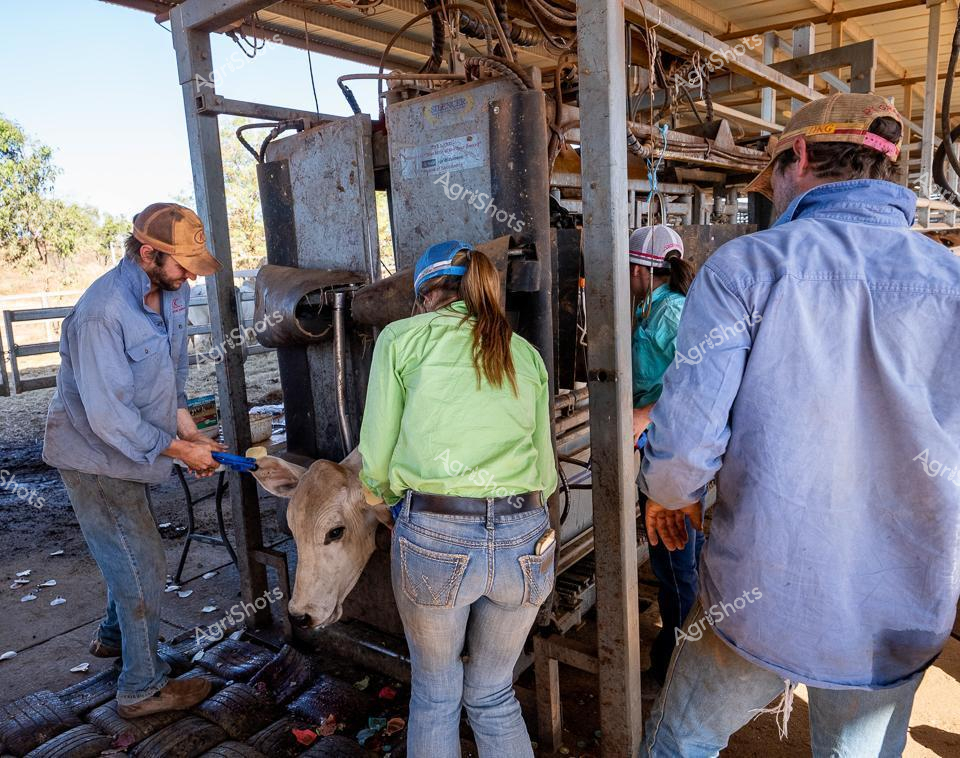
Cattle processing unfolds in a robust Northern Territory cattle station yard, where a sleek Brahman heifer stands steady in a metal cattle crush. Experienced station workers in practical workwear - blue chambray shirts, denim jeans, and protective caps - carefully manage the animal's induction process. A worker in a bright lime-green shirt administers treatment or identification, while another in a weathered cap assists from the side. The industrial metal infrastructure of the crush provides a stark mechanical contrast to the organic movement of the livestock, capturing the precision of modern agricultural practice. Harsh sunlight filters across the scene, casting sharp shadows and highlighting the textural details of worn machinery, dusty work boots, and the heifer's smooth coat. This image encapsulates the methodical, professional approach of Australian cattle station management - a blend of animal husbandry, technical skill, and rural workplace safety.
 Image
Image
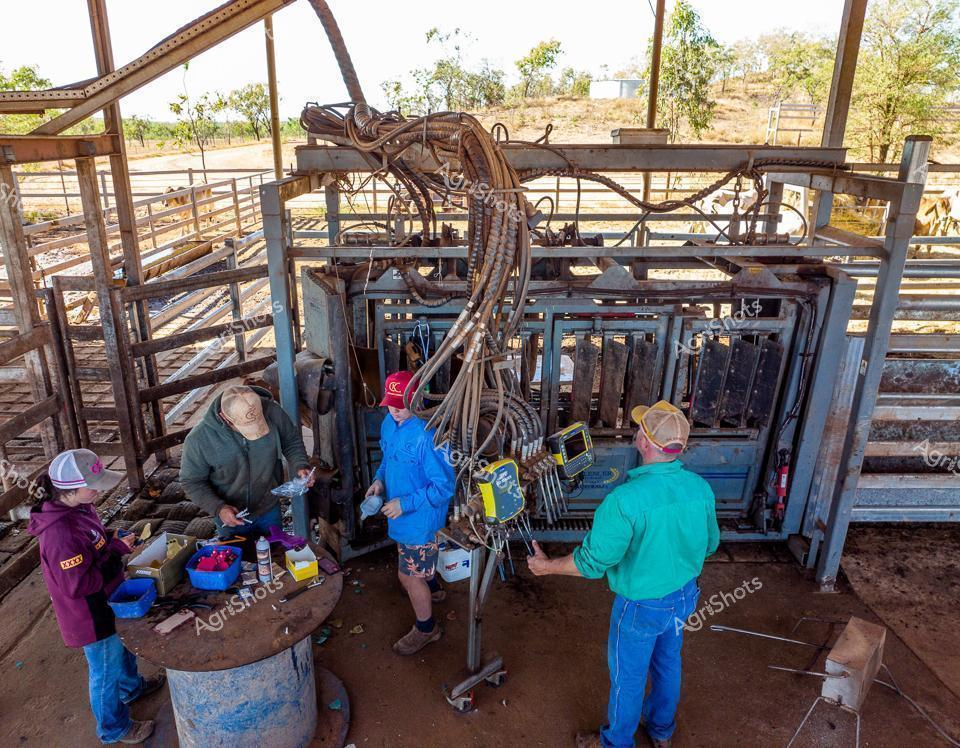
Brahman cattle processing unfolds at a remote Northern Territory cattle station, where a seasoned crew operates a robust hydraulic cattle crush with practiced efficiency. Wrapped in layers of practical workwear - purple, blue, green, and khaki - the team orchestrates the livestock induction with methodical precision. Hydraulic pipes and mechanical arms of the heavy-duty Silencer cattle crush frame the scene, surrounded by weathered steel yards under the bright, harsh light of a dry season morning. Plastic medication containers, digital monitoring equipment, and well-worn work tools scatter across a blue barrel, signaling the technical and care-driven nature of modern cattle management. The landscape beyond reveals sparse woodland and fenced paddocks, a quintessential Australian pastoral backdrop that speaks to generations of agricultural resilience. This moment captures the intersection of animal husbandry, technological innovation, and human skill that defines contemporary northern Australian cattle operations.