About this image
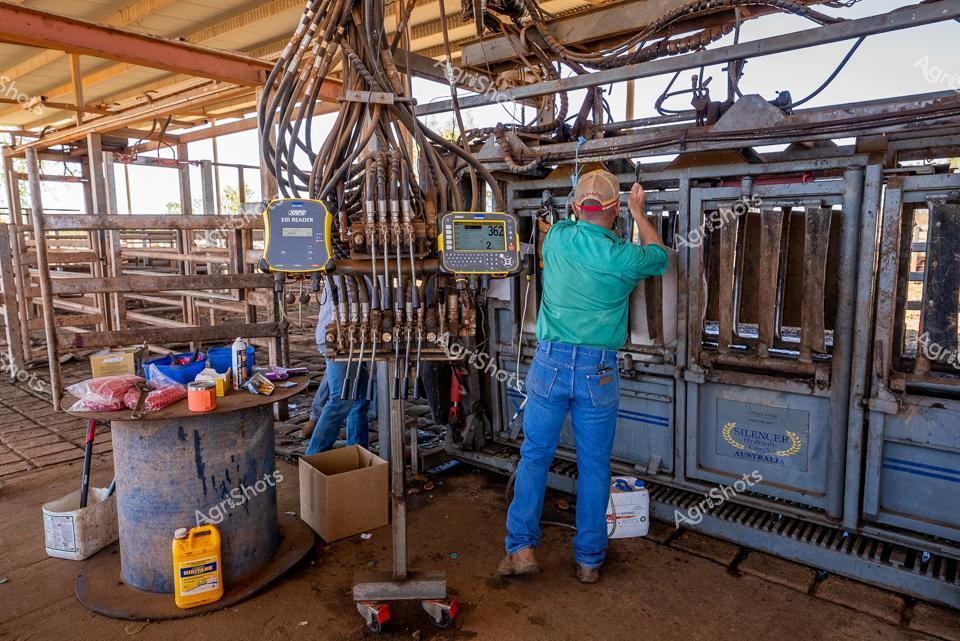
Silent witness to the rhythms of Australian cattle management, a stockman stands within a bustling cattle processing facility, surrounded by robust industrial equipment. The Silencer cattle yard infrastructure dominates the scene, with complex piping and metal gates creating an intricate mechanical landscape. Wearing a teal work shirt, blue jeans, and a cap, the worker adjusts settings on digital monitoring equipment, indicating precise technological integration in modern cattle station operations. Yellow Jerry cans and industrial containers scatter the workspace, suggesting preparedness and the practical necessities of remote agricultural environments. Multiple digital displays - including scales and monitoring units - underscore the technical sophistication of contemporary cattle handling techniques. The metallic infrastructure, with its intricate network of pipes and gates, reflects the Northern Territory's harsh yet systematically managed agricultural landscape, where technology and traditional stockmanship converge to ensure efficient livestock processing and animal welfare.
Similar media
 Image
Image
Cattle processing unfolds in a robust Northern Territory livestock yard, where seasoned station workers orchestrate the intricate dance of animal husbandry. Three workers stand amid the industrial steel infrastructure of a cattle crush, their postures deliberate and focused. A green-shirted worker faces the complex machinery, while others collaborate nearby, surrounded by essential processing equipment including an electronic ID reader and yellow work containers. The industrial setting speaks of hard-won efficiency - weathered metal yards, strategic hydraulic mechanisms, and practical workwear defining the landscape of modern cattle station management. Dusty blue and khaki clothing blends with the metallic infrastructure, suggesting these workers are as much a part of this mechanical ecosystem as the equipment itself. The scene captures the precision and resilience of Australian beef production, where technology and traditional agricultural skills converge in the unforgiving environment of the Northern Territory's cattle country.
 Image
Image
Outback cattle processing unfolds with precision in a rugged Northern Territory station workshop. Two seasoned stockmen operate a robust cattle crush, their movements deliberate and practiced as they manage livestock induction equipment. The industrial workspace is a symphony of weathered machinery - a blue-grey cattle handling unit dominates the scene, surrounded by essential tools, lubricant containers, and well-worn work surfaces. A green-shirted worker carefully manages electronic monitoring equipment while his colleague in neutral tones prepares processing materials, reflecting the practical, no-nonsense approach of Territory cattle station operations. The dirt floor and complex overhead pipe infrastructure speak to the harsh, functional environment of remote Australian cattle management. Yellow safety containers and industrial equipment underscore the technical sophistication behind seemingly traditional agricultural practices. This is a moment of controlled efficiency, where generations of agricultural knowledge merge with modern technological precision - quintessential Northern Territory cattle station work capturing the resilience and skill of Australian agricultural professionals.
 Image
Image
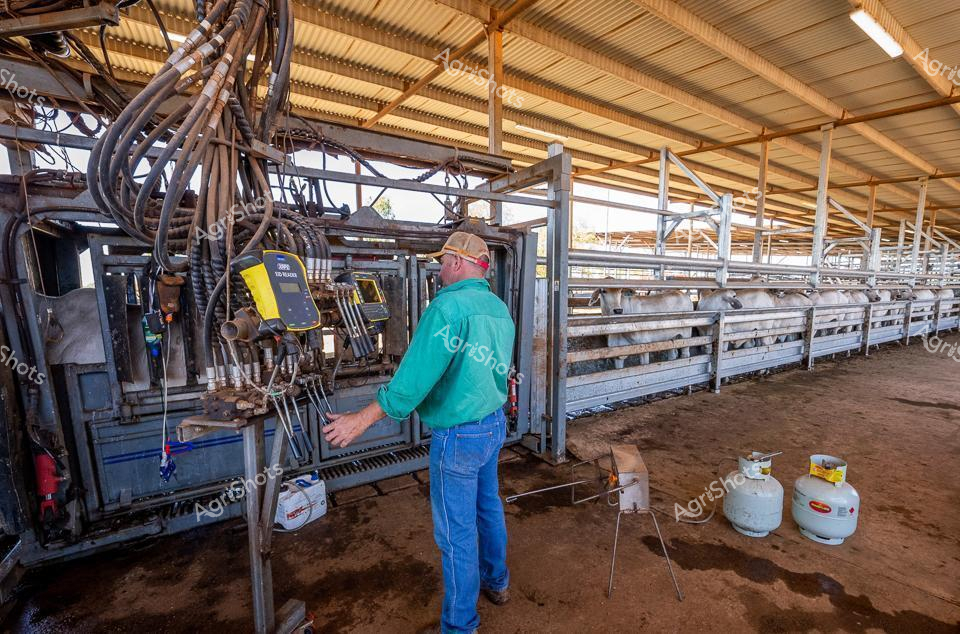
A seasoned livestock handler in a vibrant teal shirt and well-worn blue jeans stands within a meticulously engineered steel cattle processing facility, operating a sophisticated cattle crush with practiced precision. Gleaming corrugated iron sheets filter warm, golden sunlight across the expansive shed, casting long shadows on the muddy floor where industrial propane tanks wait nearby. Advanced electronic monitoring equipment and hydraulic mechanisms frame the worker, suggesting a high-tech approach to cattle management typical of Australia's northern pastoral stations. The steel yard panels stretch into the distance, revealing a series of precisely constructed holding pens designed for efficient cattle movement and handling. Sleek metallic infrastructure and carefully designed workflow demonstrate the agricultural innovation of modern cattle stations, where technology meets traditional livestock management. This scene captures the essence of Northern Territory beef production - a blend of rugged experience, technological precision, and deep understanding of animal handling and welfare.
 Image
Image
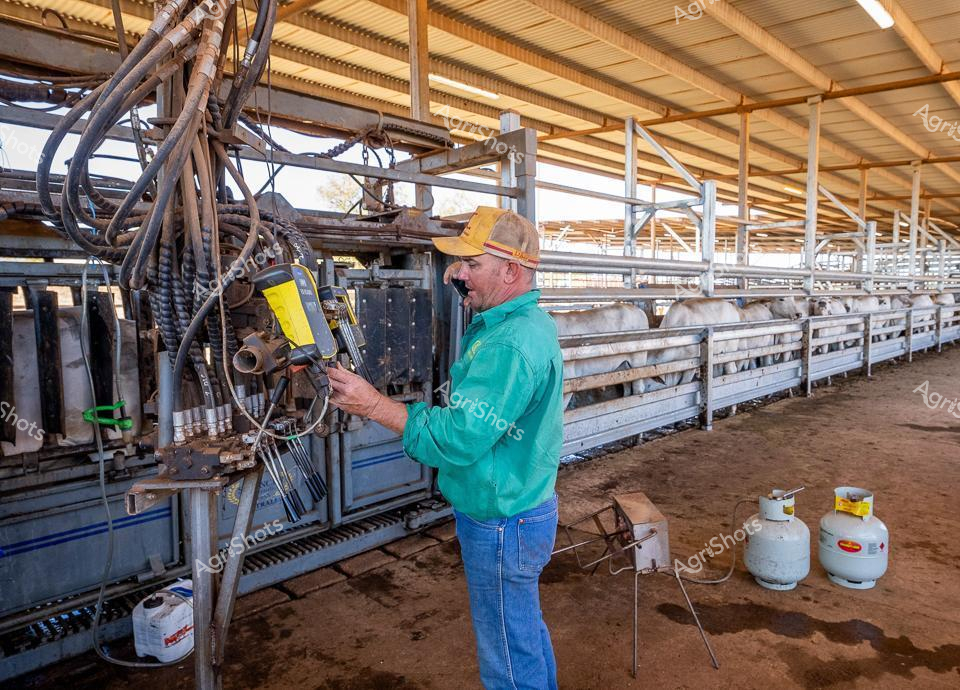
A seasoned station worker in a bright turquoise shirt and yellow cap operates a sophisticated cattle processing machine within a expansive steel-framed livestock yard. The robust machinery, part of a sophisticated cattle crush system, stands ready to safely manage and treat Brahman cattle, a breed renowned for its resilience in Northern Territory conditions. Propane tanks sit nearby, suggesting the equipment requires specialized fuel or heating elements for operational procedures. Sunlight filters through the corrugated metal roof, casting warm shadows across the concrete floor and highlighting the intricate network of hydraulic pipes and mechanical components. The worker's focused posture and careful handling of the control system reflect decades of agricultural expertise, embodying the precision and care integral to modern cattle station management. This scene captures the intersection of traditional pastoral skills and advanced agricultural technology, quintessential to Australia's beef production infrastructure.
 Image
Image
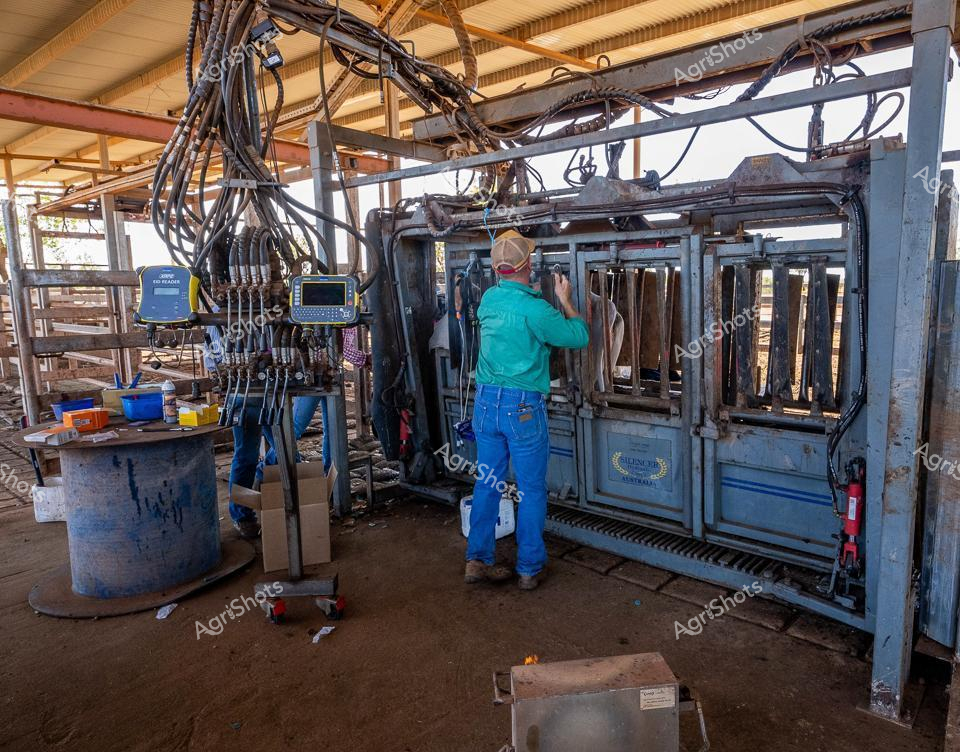
In the heart of Australia's Northern Territory, a seasoned livestock handler works methodically within a robust cattle processing facility. Dressed in a bright turquoise shirt and classic blue jeans, the worker operates a sophisticated Catagra cattle crush, a precision-engineered piece of equipment designed to safely manage and assess livestock during station operations. Intricate hydraulic systems and control panels surround the blue metal infrastructure, with tangled cables and mechanisms highlighting the technical complexity of modern agricultural handling. The interior of the shed reveals a weathered, functional space typical of remote cattle stations - rugged, efficient, and purpose-built to withstand harsh environmental conditions. A blue digital monitoring system stands ready, indicating the station's commitment to data-driven livestock management and animal welfare protocols. The scene captures the sophisticated intersection of traditional pastoral skills and contemporary agricultural technology, showcasing the meticulous care and technological precision required in Australia's expansive beef production industry.
 Image
Image
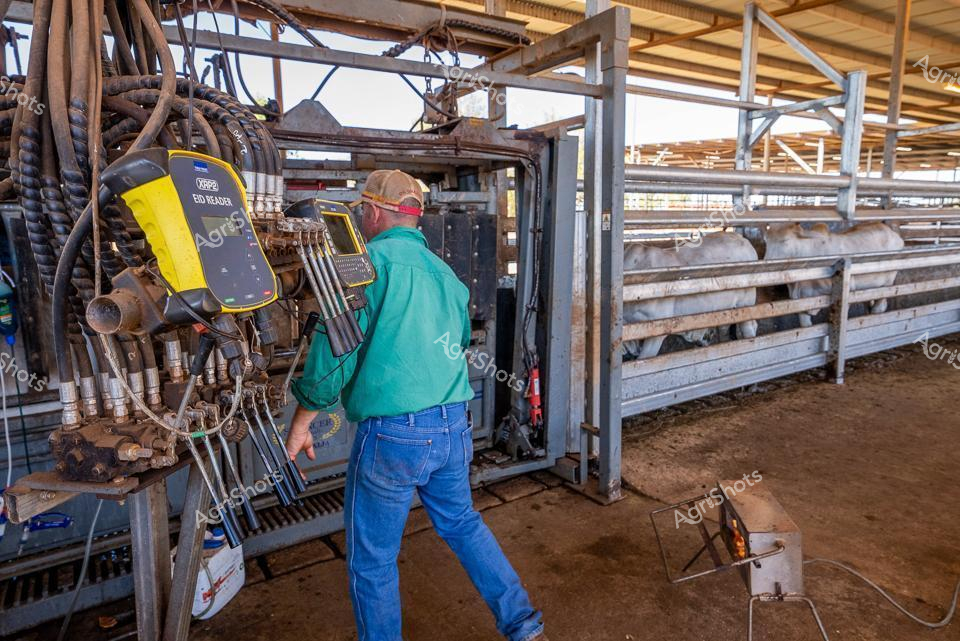
Cattle processing unfolds with precision at a Northern Territory cattle station, where advanced technology meets traditional livestock management. A worker in a bright teal shirt and blue jeans operates a sophisticated cattle crush, surrounded by complex hydraulic machinery and metal livestock handling infrastructure. Yellow-accented digital equipment stands ready to log data and monitor the cattle's movement, reflecting the high-tech approach to modern pastoral operations. Sturdy metal pens in the background contain Brahman cattle, their pale hides visible through the robust metal framework, indicating the rugged landscape of the Northern Territory. The scene captures the intersection of animal husbandry, technological innovation, and the skilled labor that drives Australia's beef industry, with muted earth tones and industrial equipment creating a atmosphere of controlled efficiency and professional agricultural practice.
 Image
Image
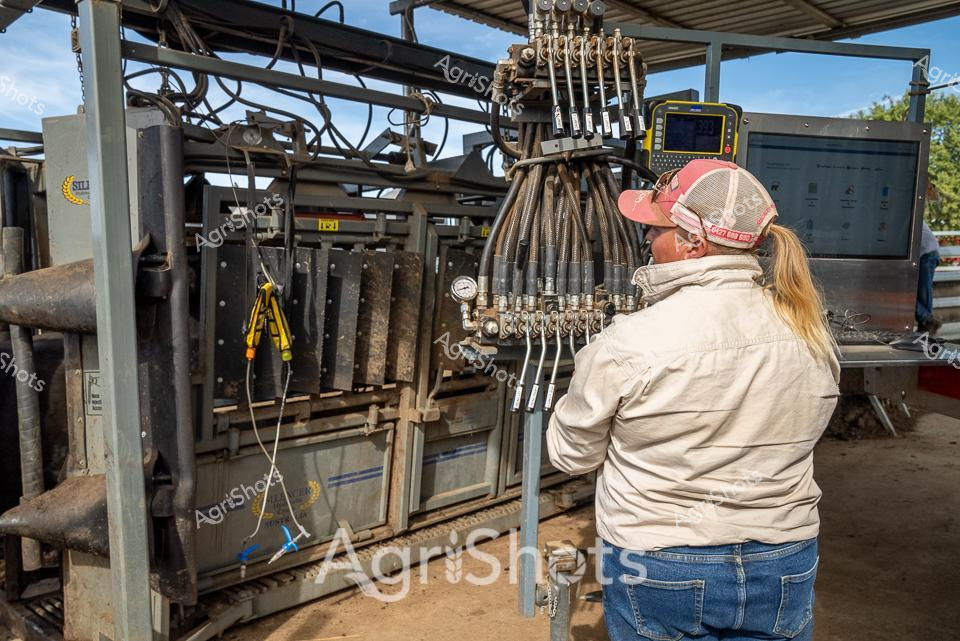
Wrapped in a crisp white jacket and a red-trimmed cap, a farm worker stands focused at the controls of a sophisticated cattle handling system. The robust steel cattle crush, part of a cutting-edge livestock management setup, gleams with precision engineering and multiple hydraulic connections. Intricate piping and control mechanisms suggest advanced animal handling technology, with a yellow digital monitoring system providing real-time data and insights. This scene captures the intersection of agricultural expertise and technological innovation, likely situated in a modern cattle yard in rural New South Wales. The metallic infrastructure, with its complex network of pipes and measurement tools, represents the meticulous approach to animal welfare and livestock management in contemporary Australian agriculture. The worker's careful positioning and attentive stance demonstrate the skill and precision required in modern agricultural practices, highlighting the sophisticated approach to animal health and safety in the industry.
 Image
Image
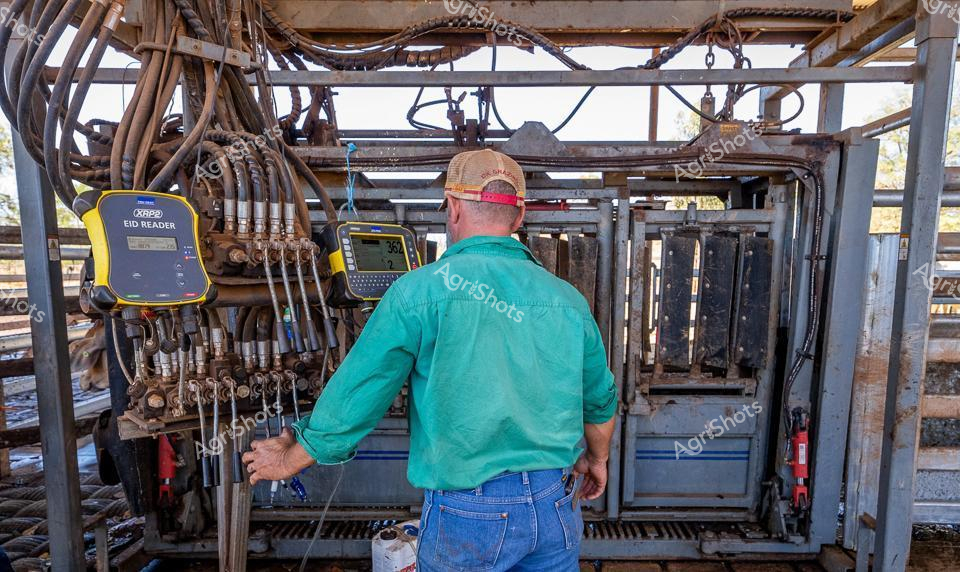
A stockworker in a vibrant teal shirt and cap operates a high-tech cattle processing station, capturing the precision of modern northern Australian agricultural practices. The robust steel cattle crush - a critical piece of livestock handling equipment - stands ready, surrounded by a complex network of hydraulic controls, digital readers, and industrial machinery. Yellow digital EID (Electronic Identification) readers and control panels suggest advanced tracking and management technology integral to contemporary cattle station operations. The weathered metal infrastructure and industrial setting evoke the rugged Northern Territory landscape, where sophisticated livestock management meets harsh environmental conditions. Every component of this scene speaks to the technical expertise and careful animal handling required in large-scale cattle production, highlighting the intersection of traditional stockmanship and cutting-edge agricultural technology. The muted industrial colors - teal, steel gray, yellow - and the worker's focused posture communicate the serious, methodical nature of cattle station work.