About this image
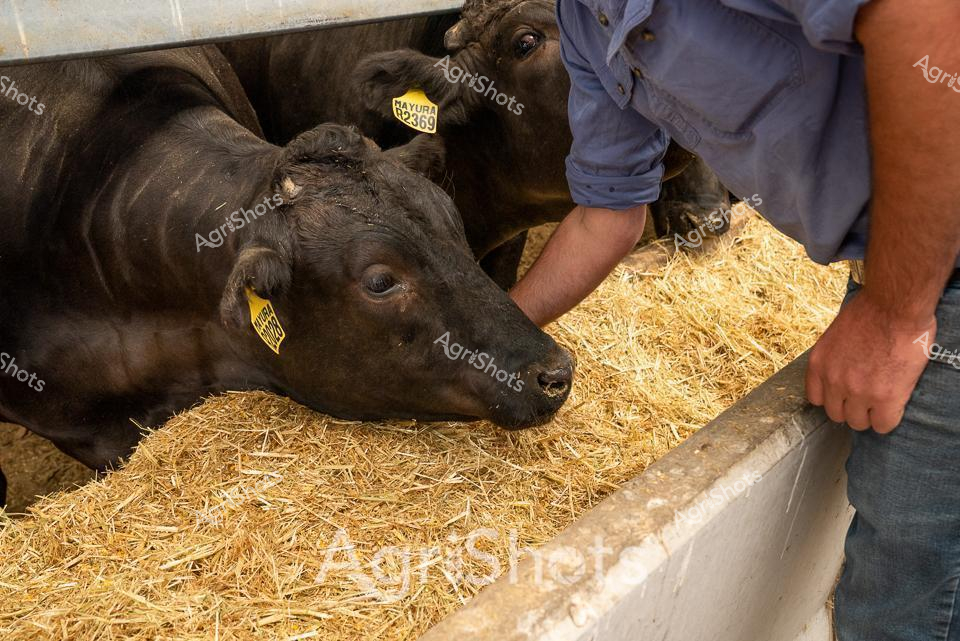
Nestled in a South Australian feedlot, a jet-black Wagyu beef heifer rests on golden straw bedding, her numbered identification tag gleaming yellow against her sleek coat. A farmworker's weathered hand reaches out, offering gentle care and close monitoring in the controlled environment of the feeding pen. The animal's deep, soulful eye reflects the careful husbandry of premium beef production, with her muscular frame and rich coloration highlighting the superior genetics of Wagyu cattle. Soft blue-gray work clothing blends with the muted concrete and straw surroundings, creating a scene of quiet agricultural precision. The close-up perspective reveals the intimate relationship between livestock and caretaker, showcasing the meticulous attention to animal welfare in modern beef production. This image captures the essence of South Australian cattle farming - a blend of advanced agricultural techniques, animal care, and the ongoing commitment to producing world-class beef.
Similar media
 Image
Image
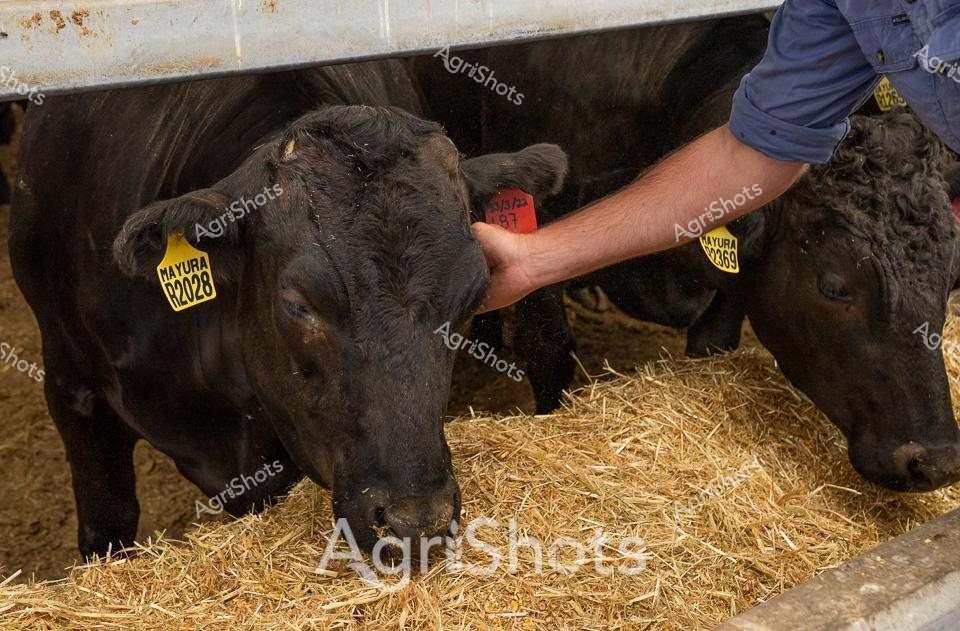
Wagyu cattle rest on a bed of golden straw within a meticulously managed feedlot pen. Two deep black bovines wear distinctive yellow ear tags - "MAYURA 13028" - signaling careful livestock tracking and management. A strong, weathered hand gently touches the muscular shoulder of one animal, suggesting attentive animal husbandry and connection between farmer and livestock. The rich, textured straw provides insulation and comfort, while the controlled concrete and steel environment speaks to modern agricultural precision. These premium beef cattle represent the pinnacle of Australian agricultural breeding programs, with their glossy dark coats and robust frames indicating superior genetic lines. The intimate framing reveals the careful, considered approach of professional cattle producers in South Australia, where animal welfare and genetic quality are paramount in premium beef production.
 Image
Image
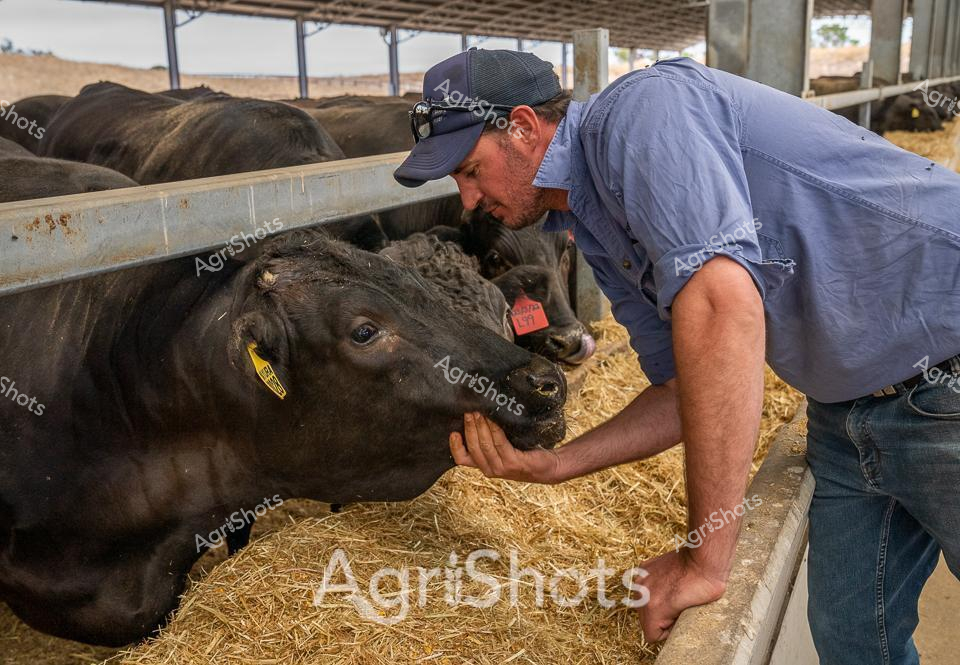
Tender connection between farmer and Wagyu cattle in a sunlit feedlot shed. A weathered agricultural worker in a blue chambray shirt and navy cap leans intimately close to a dark, glossy black Wagyu bovine, gently touching its muzzle with genuine care and attentiveness. Straw bedding covers the concrete feed bunk, providing soft comfort for the premium beef cattle, each marked with bright yellow identification tags. Soft natural light filters through the steel-framed sheltered feeding area, highlighting the muscular contours of the cattle and the lines of compassion on the farmer's face. Multiple cattle rest quietly in the background, creating a sense of calm productivity typical of modern Australian cattle management. The scene captures the nuanced relationship between agricultural professionals and the livestock - a moment of quiet communication that speaks to the skill, respect, and deep understanding required in contemporary cattle farming.
 Image
Image
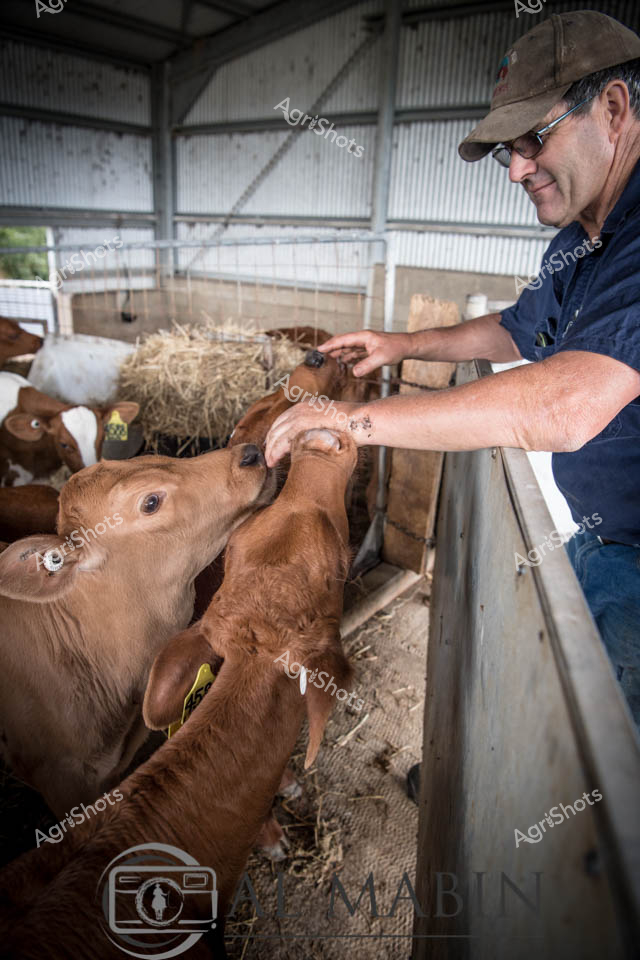
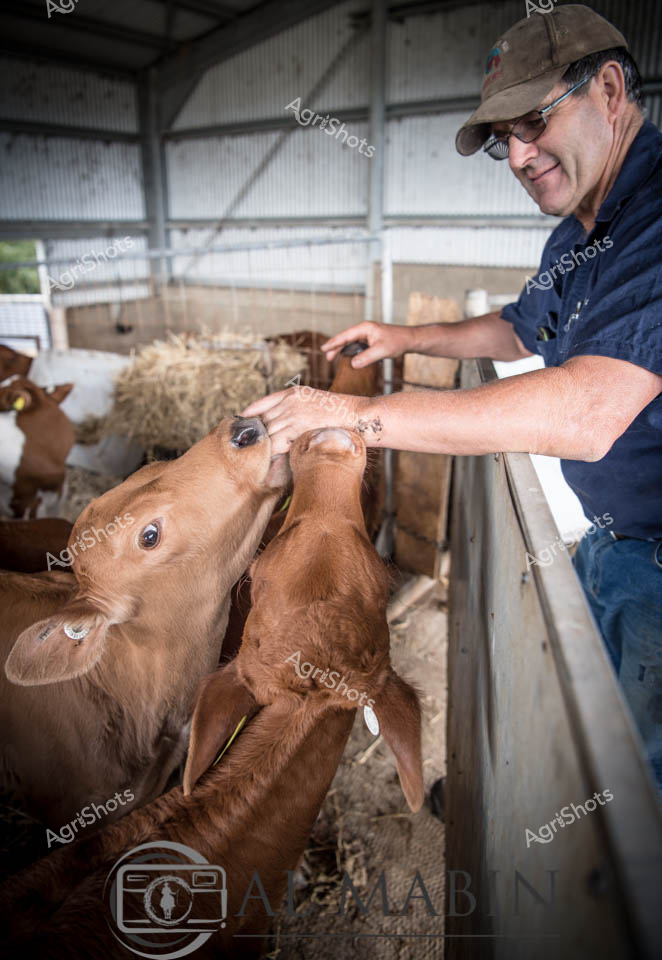
A man working as a dairy farmer gently pets and feeds young Australian Dairy Red calves in a modern dairy facility in South Australia's Limestone Coast Region. The brown and reddish-colored calves gather eagerly around the feeding area while the farmer, wearing a cap and dark shirt, tends to them with care. The scene captures the hands-on nature of dairy farming, with hay bales visible in the background of the well-ventilated cattle shed.
 Image
Image
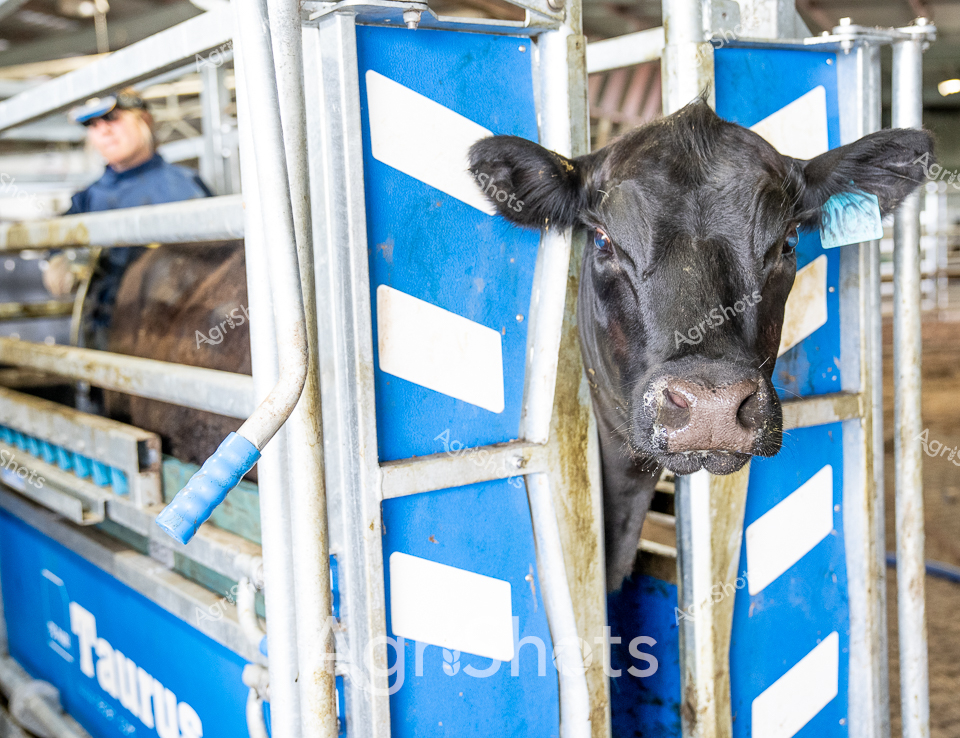
A sleek black Angus heifer stands quietly within the confines of a Te Pari cattle crush, her dark coat gleaming against the striking blue and white striped panels. The robust metal handling system, a critical piece of agricultural infrastructure, provides secure restraint for essential livestock management procedures like pregnancy testing. In the background, a farm worker maintains a watchful presence, embodying the careful and professional approach of modern agricultural practices. The crisp blue and white colors of the crush reflect the precision and technological advancement of contemporary cattle handling equipment, while the close-up perspective captures the calm demeanor of the animal. This scene represents a quintessential moment in livestock management, where animal welfare, technological innovation, and skilled human intervention converge. The controlled environment of the cattle yards speaks to the meticulous care and strategic approach of Australian agricultural professionals, highlighting the important role of women in agriculture and the sophisticated systems that support rural productivity.
 Image
Image
Black Angus cattle stand resolute in a precision-engineered Te Pari cattle crush, the blue and white striped panels creating a stark geometric frame around the animal's muscular form. A professional agricultural worker stands in the background, signaling this is a routine livestock management procedure, likely pregnancy testing or health assessment. The robust metal infrastructure speaks to modern farming precision, with clean lines and industrial blue coloring typical of contemporary agricultural equipment in Victoria's livestock sectors. The cow's deep black coat contrasts sharply against the metallic framework, her alert expression and glistening nose suggesting calm attentiveness during the veterinary procedure. Soft ambient lighting filters through the shed, highlighting the textural details of worn wooden elements and gleaming metal surfaces, capturing the pragmatic beauty of agricultural working environments. This image epitomizes the professional, technology-driven approach of contemporary Australian cattle farming, where animal welfare and technical efficiency intersect.
 Image
Image
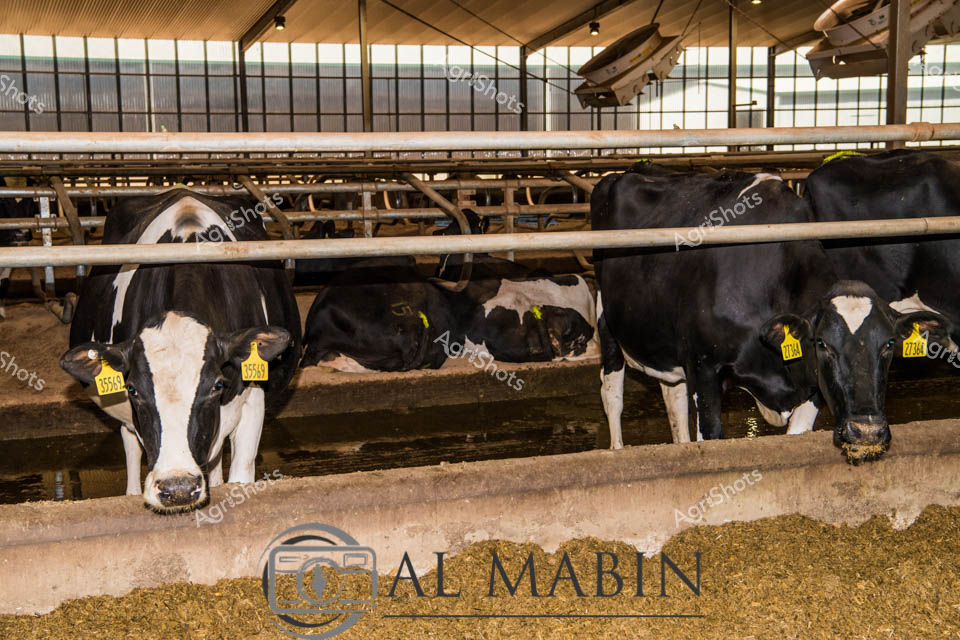
Holstein dairy cows stand attentively in a precisely engineered feed pad, their black and white coats creating a striking contrast against the golden silage bedding and industrial shed structure. Numbered yellow ear tags identify each animal, reflecting modern agricultural management practices that track individual cow performance. The controlled environment - with its robust metal framing, structured feeding trough, and carefully distributed feed - represents the pinnacle of contemporary dairy farming efficiency in regional New South Wales. Soft indirect light filters through the translucent shed walls, creating a calm, methodical atmosphere where these high-productivity cattle can access nutrient-rich silage with minimal stress. The precise alignment of the cows, their muscular frames and distinct Holstein markings, speaks to generations of selective breeding focused on maximizing milk production. This image captures the sophisticated intersection of animal husbandry, agricultural engineering, and scientific nutrition that defines modern Australian dairy operations.
 Image
Image
A farmer feeds young Australian Dairy Red calves in a modern dairy facility in South Australia's Limestone Coast Region. The man extends his hand toward the reddish-brown calves who eagerly approach the feeding rail, their ears perked forward with anticipation. The covered barn structure with metal roofing provides shelter for the growing dairy herd, representing the region's commitment to quality milk production and livestock care.
 Image
Image
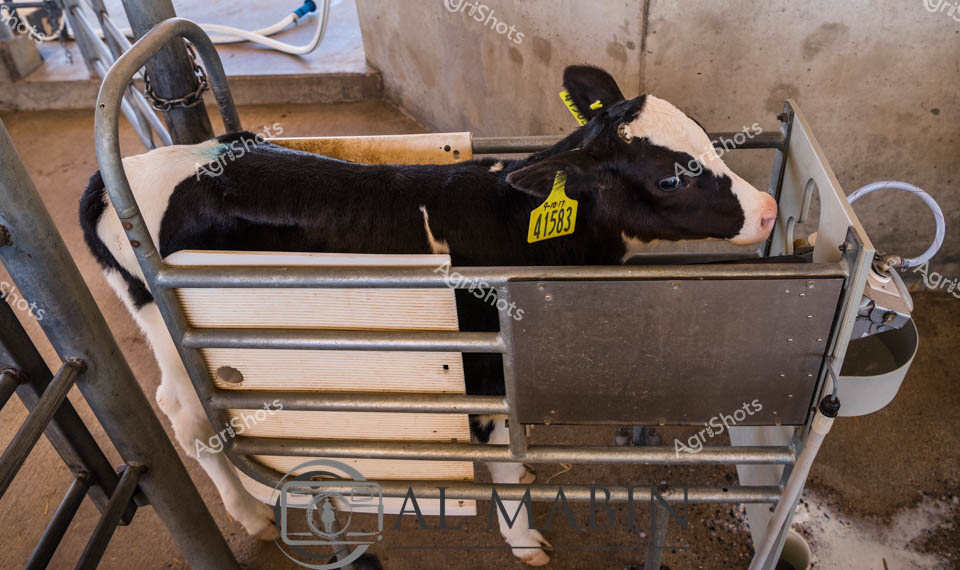
A Holstein dairy calf rests quietly in a precision-engineered rearing pen, her black and white coat marked with a yellow identification tag numbered 41583. The sturdy metal containment unit, crafted with clean lines and practical design, reflects the modern approach to animal husbandry in Australian dairy farming. Smooth wooden slats and metallic panels provide structured support and protection, creating a controlled environment for young livestock development. Soft concrete surroundings and clinical infrastructure suggest a professional, hygienic facility typical of contemporary agricultural practices in New South Wales. The calf appears calm and well-supported, her distinctive coloration and alert posture indicating robust health and careful management. This scene captures the intersection of animal welfare and agricultural technology, showcasing the meticulous care fundamental to successful dairy production in the Australian agricultural sector.