About this image
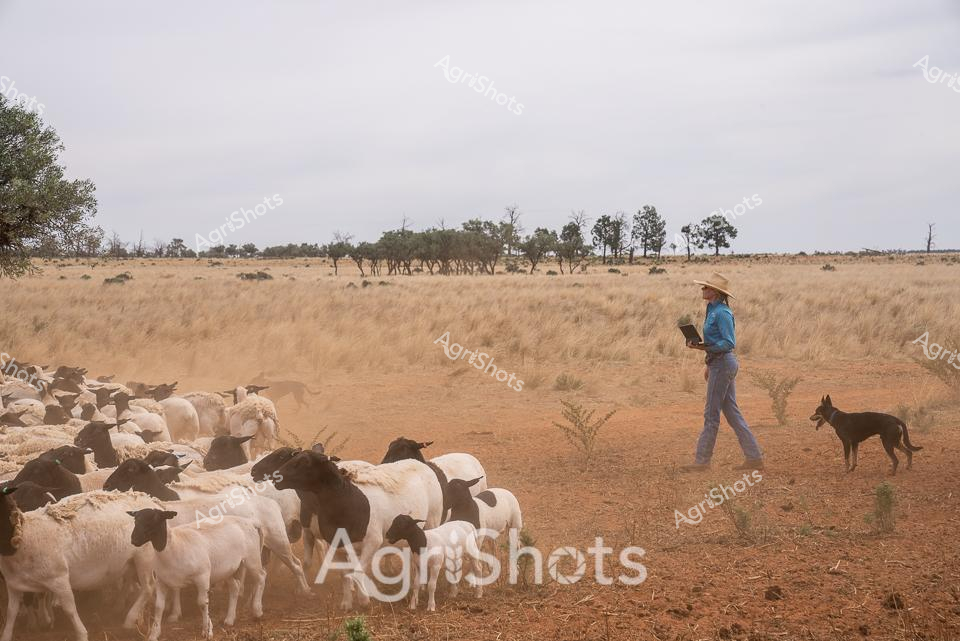
Dust-laden paddocks stretch beneath a muted grey sky in this quintessential Australian pastoral scene. A station hand in a blue work shirt and wide-brimmed hat walks purposefully across the dry landscape, iPad in hand, accompanied by a vigilant working dog. A mob of Dorper sheep - distinguished by their distinctive white bodies and black heads - cluster together, their woolly forms creating a textural contrast against the sun-bleached grasslands. Scattered trees punctuate the distant horizon, suggesting this is likely a station in rural New South Wales, perhaps within the Murray Region. The image captures the essence of modern agricultural work, where traditional stock management meets digital technology, with the worker using a tablet to track or document the flock's movement. The scene radiates a sense of quiet determination, showcasing the resilience of Australian agricultural workers who navigate challenging environmental conditions with pragmatic skill and connection to the land.
Similar media
 Image
Image
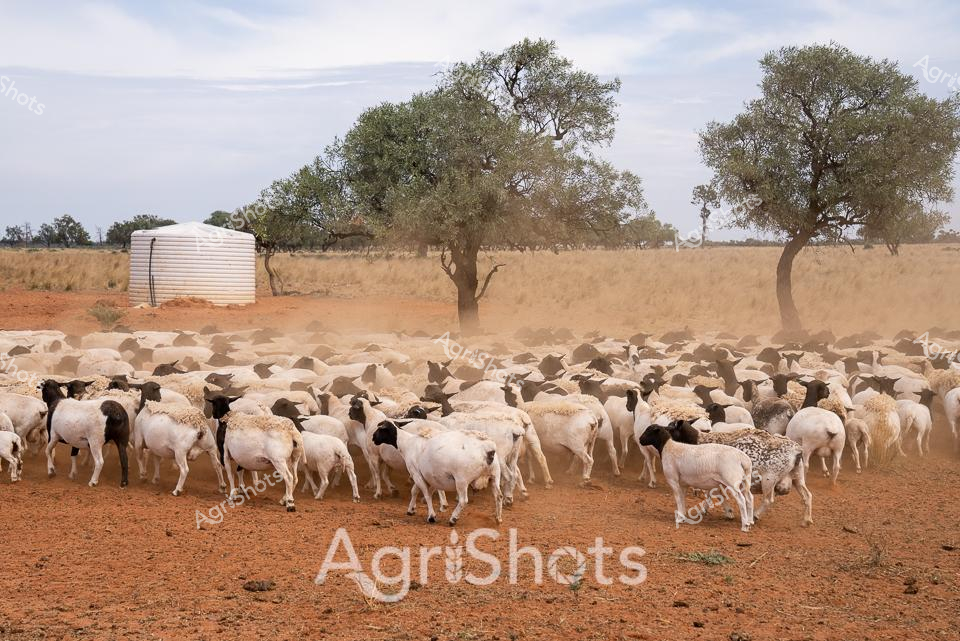
Dorper sheep cluster across the dusty ochre paddock, their white bodies with distinctive black heads creating a living mosaic against the rust-red earth. Sparse olive-grey gum trees punctuate the landscape, offering minimal shade beneath an overcast sky typical of the Murray Region in late winter. A weathered water tank stands sentinel, a crucial infrastructure element on this expansive station, supporting livestock through the challenging dry season. The flock moves with a quiet, purposeful energy - hardy Dorper breeding showing in their robust frames, perfectly adapted to Australia's harsh inland environments. Fine bulldust rises in subtle clouds around their hooves, illustrating the arid conditions of this New South Wales agricultural landscape. The scene captures the resilience of pastoral farming: animals, landscape, and essential infrastructure working in delicate harmony under the vast, muted Australian sky.
 Image
Image
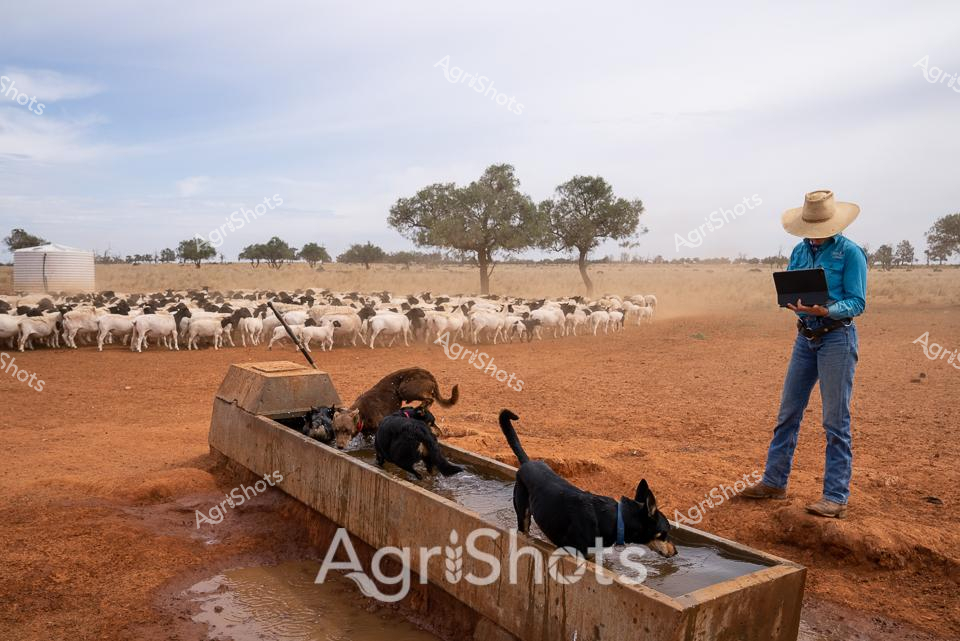
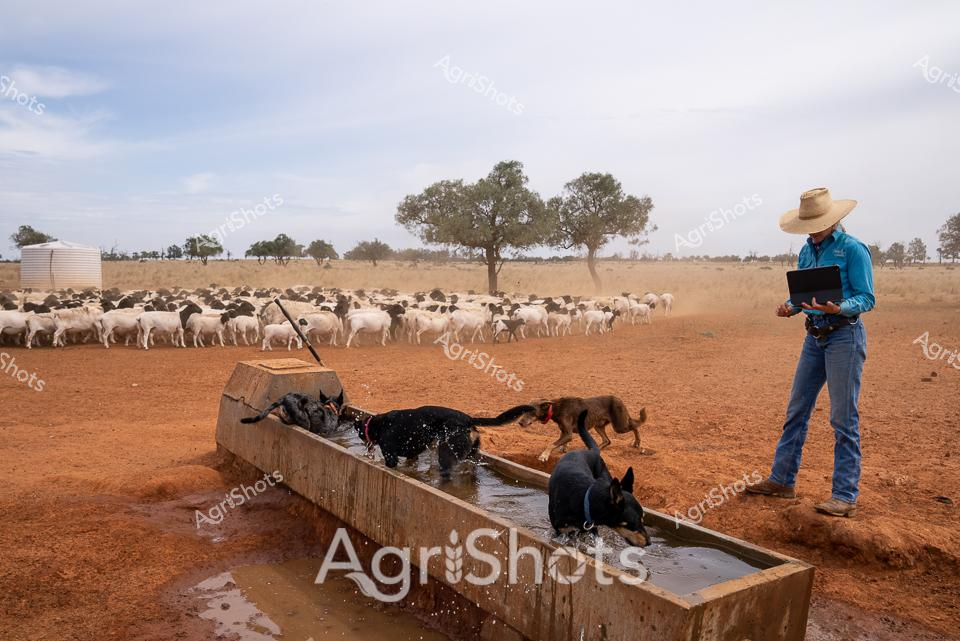
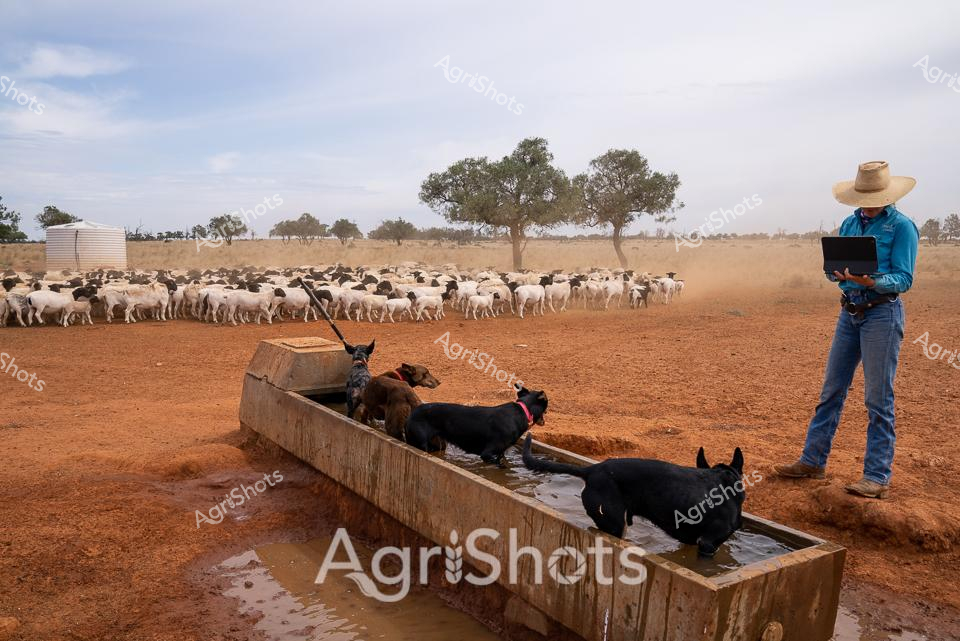
Beneath a pale grey sky stretching over the dusty red earth of the Murray Region, a station hand manages a large flock of Dorper sheep. Dressed in a crisp blue work shirt, jeans, and a wide-brimmed sun hat, the worker stands beside a concrete water trough where several working dogs drink and cool themselves. The trough, a crucial lifeline in this arid landscape, provides hydration for both animals and working companions. A substantial mob of white and black Dorper sheep grazes in the background, their woolly forms creating a living canvas against the sparse paddock dotted with weathered gum trees. The scene captures the essence of modern Australian agriculture - where traditional pastoral practices meet digital technology, as evidenced by the iPad in the worker's hand, likely used for livestock management and station record-keeping. This image speaks to the resilience, innovation, and hard work of rural Australian farmers who maintain their herds under challenging environmental conditions.
 Image
Image
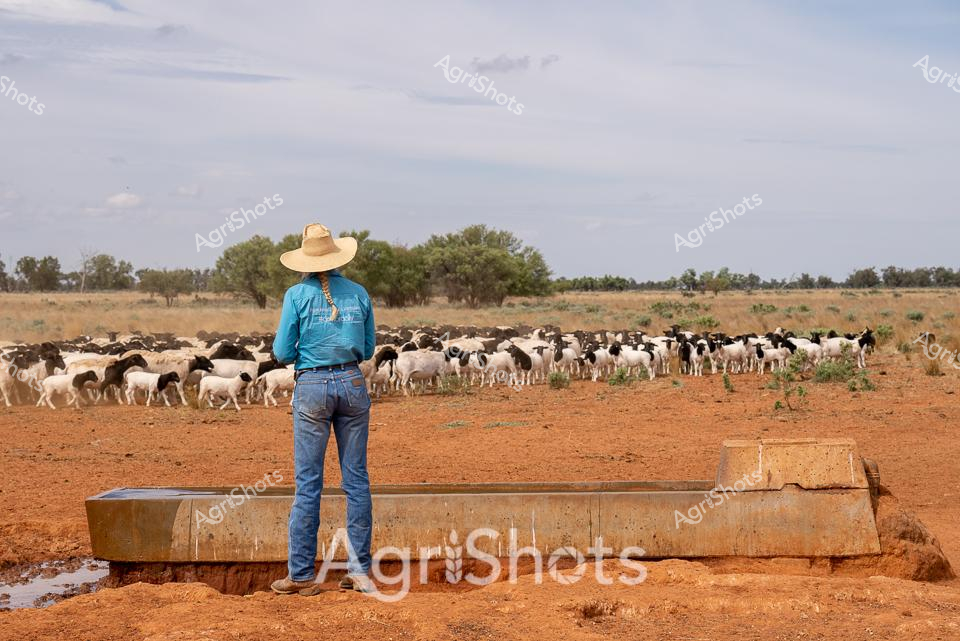
A stockman stands sentinel over a robust herd of Dorper sheep, his sun-bleached straw hat casting a shadow across the arid Murray Region landscape of New South Wales. Dressed in a crisp blue work shirt and well-worn denim, he surveys the flock clustered near a weathered water trough, the rich ochre earth contrasting sharply with the woolly white and black bodies of the livestock. The grey sky stretches endlessly above sparse paddock trees, suggesting the challenging conditions of tthe station country where resilience is measured in survival. The Dorper breed - a hardy cross between Dorset Horn and Blackhead Persian sheep - demonstrates remarkable adaptation to these harsh environments, grazing quietly on sparse vegetation. The stockman's stance speaks of generations of agricultural knowledge, his back straight and watchful, embodying the quiet strength of Australian pastoral workers who manage livestock across vast, unforgiving landscapes. This image captures the essence of Australian agricultural resilience: a lone figure managing a sustainable flock against a backdrop of elemental simplicity, where water, earth, and survival intersect in a timeless dance of rural productivity.
 Image
Image
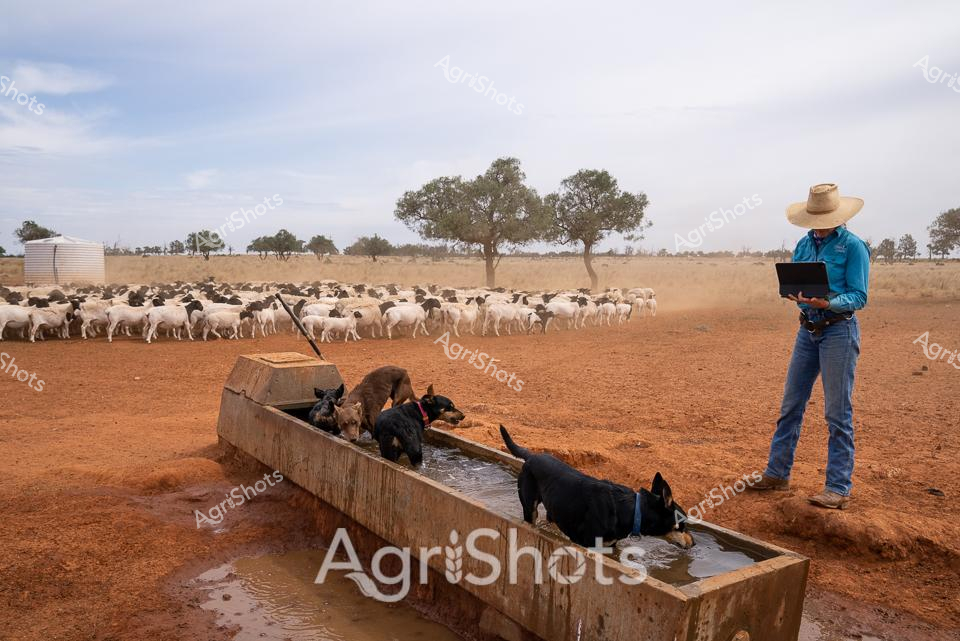
Beneath an overcast sky, a vast golden paddock stretches to distant treelines, where mature gum trees punctuate the arid landscape of inland New South Wales. A substantial flock of Dorper sheep - their white bodies contrasting sharply against the rust-red earth - grazes quietly while working dogs cool themselves in a concrete water trough. A station hand in classic rural attire - wide-brimmed akubra, blue work shirt, and denim jeans - stands contemplatively, tablet in hand, surveying the livestock and monitoring their condition with modern agricultural technology. Several black working dogs splash and drink from the trough, their muscular forms moving with practiced efficiency. A white water tank stands sentinel in the background, a typical feature of remote Australian agricultural infrastructure. The scene captures the essence of contemporary pastoral management - where traditional livestock farming meets digital oversight, and the harsh beauty of the Australian rural landscape provides both challenge and opportunity for those who work the land.
 Image
Image
Australian sheep station in the Murray Region of New South Wales: A classic rural landscape where modern technology meets traditional farming. A station hand in a crisp blue long-sleeved shirt and wide-brimmed sun hat stands alongside a water trough, holding an iPad while managing a sizeable flock of Dorper sheep. The dusty red earth and sparse grey-green trees define the arid background, with a herd of white and black Dorper sheep grazing across the paddock. Working dogs drink from the concrete water trough, cooling themselves during what appears to be a warm, overcast day. The scene captures the intersection of agricultural tradition and digital innovation - a lone worker using technology to monitor and manage livestock across a vast, challenging Australian pastoral landscape. Sparse trees and a water tank in the distance emphasize the remote, challenging environment where modern farmers leverage both traditional skills and contemporary tools to work the land.
 Image
Image
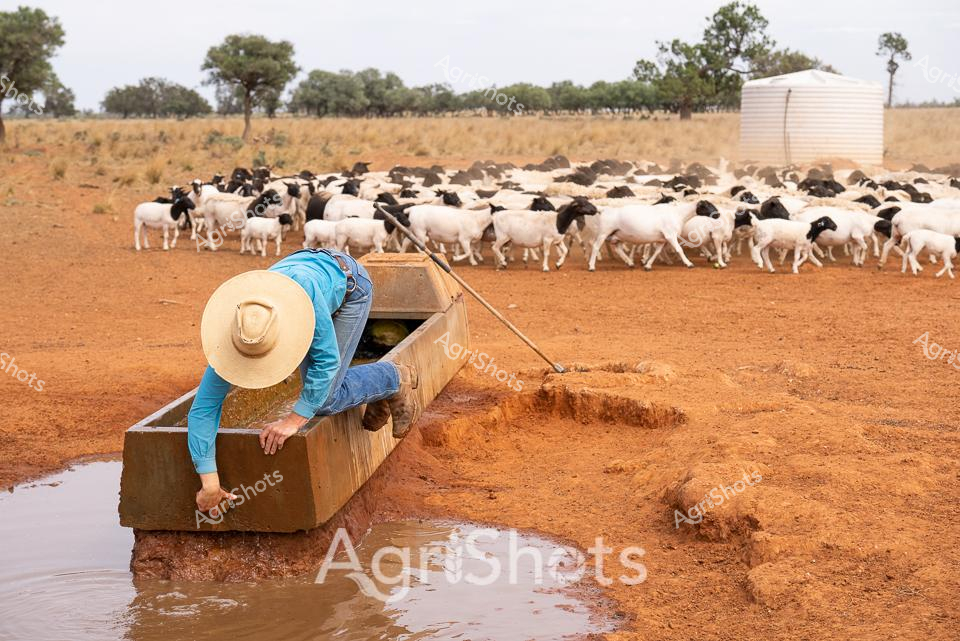
Dorper sheep cluster across a rust-red earth paddock, their black and white coats stark against the arid landscape. A station hand in a vivid blue workshirt and wide-brimmed straw hat leans over a weathered water trough, carefully managing the crucial water supply for the flock. The grey, overcast sky suggests the challenging climate of the Murray Region in New South Wales, where pastoral agriculture demands resilience and careful resource management. Metal water infrastructure - a white tank visible in the background and the steel trough in the foreground - provides lifeline infrastructure for livestock survival in this sparse, tree-scattered environment. The scene captures the essence of Australian agricultural practice: a lone worker tending a substantial flock, demonstrating the solitary yet critical work of station hands who maintain livestock health in unforgiving terrain. Every element speaks to the pragmatic, robust nature of rural Australian farming - functional clothing, practical equipment, and an expansive landscape that tests human and animal endurance.
 Image
Image
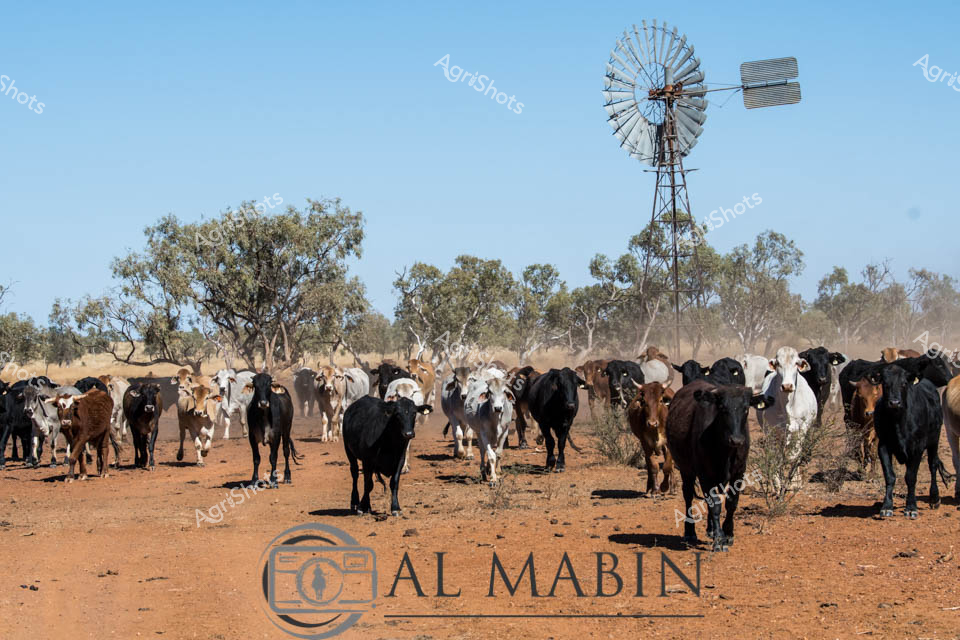
Brahman and Murray Grey cattle cluster around a classic Australian windmill on a scorching outback station in central Queensland. The deep red earth kicks up fine dust as the herd moves across the dry landscape, their varied coat colors ranging from stark white to rich chocolate brown. Sturdy steel windmill blades stand tall against a cloudless cerulean sky, a timeless symbol of rural resilience in this unforgiving terrain. Scattered gum trees provide sparse shade, their pale leaves a muted contrast to the arid ground, highlighting the harsh conditions these robust cattle endure. The herd appears calm and purposeful, likely moving between grazing areas or approaching a water source powered by the windmill's ancient pumping mechanism. This scene epitomizes the rugged beauty of Australian cattle country - a testament to generations of pastoral farming and the adaptive strength of both livestock and landscape.
 Image
Image
Dust billows across the sun-baked paddock as a seasoned station hand stands sentinel, iPad in hand, overlooking a substantial flock of Dorper sheep. Black working dogs cool themselves in a concrete water trough, their lean bodies partially submerged against the parched earth of what appears to be a New South Wales station in the Murray Region. The landscape is sparse yet purposeful - scattered gum trees punctuate the distant horizon, a water tank glints metallic in the background, and the reddish soil speaks to generations of pastoral enterprise. The handler, dressed in classic Australian rural attire - wide-brimmed hat, blue work shirt, and sturdy denim - represents the modern agricultural worker who blends traditional livestock management with digital technology. These Dorper sheep, known for their adaptability to harsh conditions, stand clustered together, their white and dark markings creating a subtle mosaic against the ochre ground. The scene captures the essence of Australian agriculture - resilience, technological adaptation, and an intrinsic connection between humans, animals, and an unforgiving landscape.