About this image
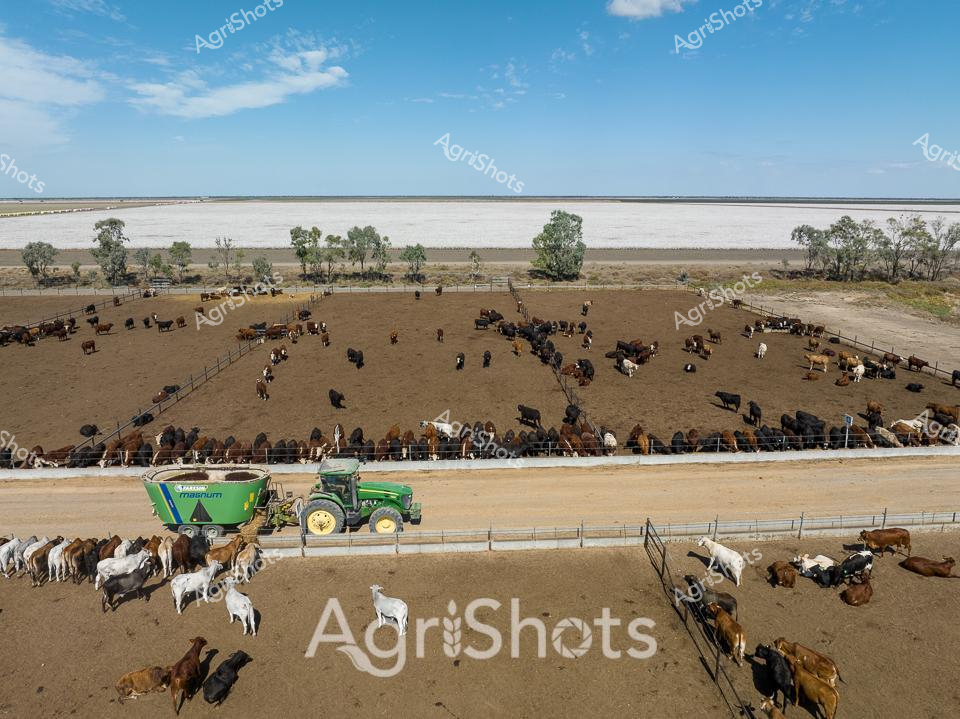
An aerial view of a large cattle feedlot in New South Wales, showing multiple fenced paddocks filled with numerous beef cattle of various colors, primarily black and white. A green tractor is visible near the feedlot, with a salt flat or dry landscape in the background. The image captures the scale of modern agricultural livestock operations in the Walgett Shire region.
Similar media
 Image
Image
Aerial view of a sprawling cattle feedlot in the arid landscapes of New South Wales, where a vibrant green John Deere tractor with a Faresin feed mixer stands ready to distribute nutrition across meticulously organized livestock paddocks. Dozens of beef cattle - a diverse mix of rich browns, blacks, and white-marked breeds - cluster in strategic groups, representing the precision of modern Australian cattle production. The expansive property stretches toward a distant horizon, framed by scattered eucalyptus trees and a stark white salt pan or cotton field in the background, highlighting the challenging environmental conditions of the Walgett Shire region. Fenced compartments create a geometric pattern of dusty earth and disciplined animal management, showcasing the agricultural engineering that enables cattle farming in this harsh climate. The cloudless azure sky and bright midday light emphasize the ordered, industrious nature of contemporary agricultural operations, where technology and careful livestock management intersect to produce high-quality beef for domestic and international markets.
 Image
Image
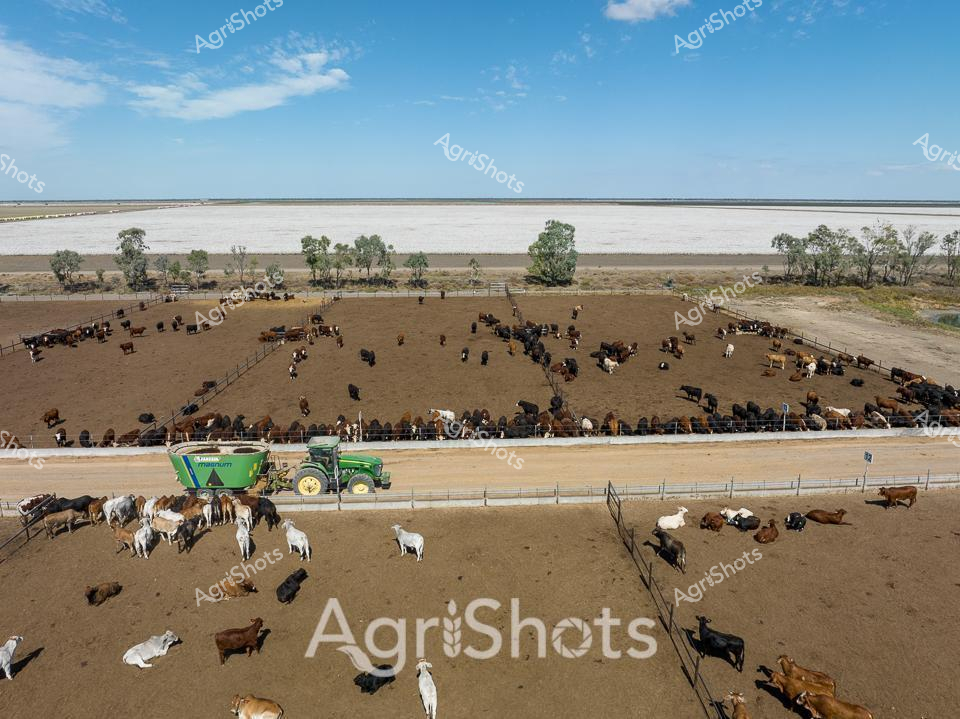
Aerial view of a sprawling cattle feedlot near Walgett in New South Wales, where a verdant John Deere tractor with a Faresin feed mixer stands ready to distribute nutrition to a diverse herd of beef cattle. The expansive, dusty holding pens are divided into carefully managed sections, populated by a mix of dark and light-colored cattle - predominantly black Angus and white Brahman breeds - resting and grazing under the vast, azure Australian sky. Dry, packed earth surrounds the feeding areas, with scattered gum trees providing minimal shade in the distance and a salt lake or dried water basin visible on the horizon. The crisp, clear lighting suggests an early morning or late afternoon scene, capturing the harsh yet meticulously organized agricultural landscape of inland New South Wales. Robust fencing and carefully planned infrastructure highlight the precision of modern Australian cattle production, where advanced machinery and strategic animal management converge to support the nation's significant beef industry.
 Image
Image
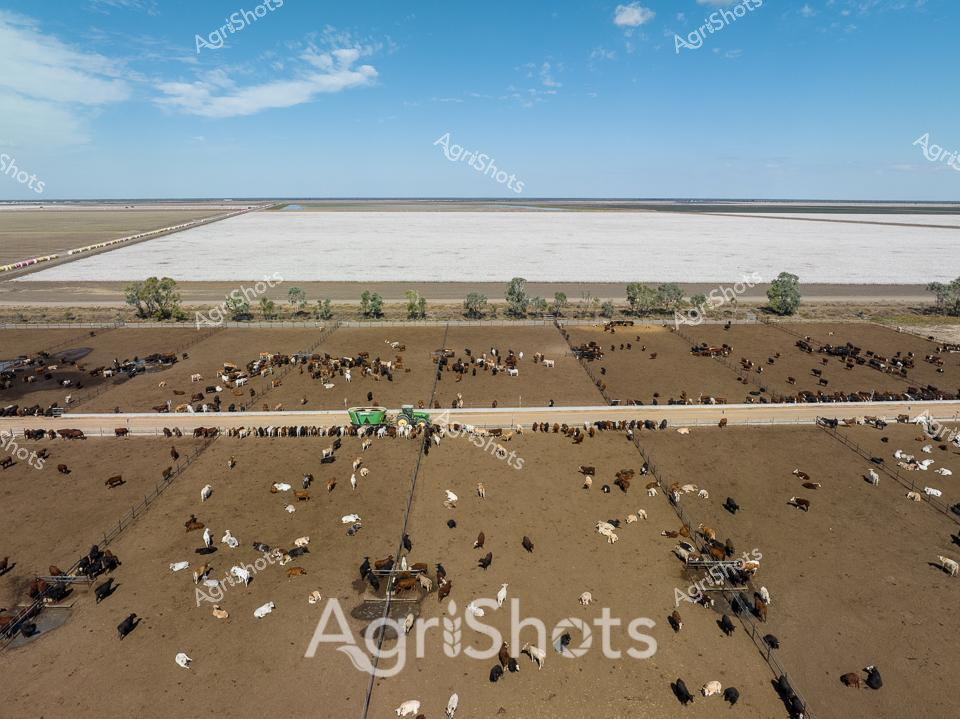
Nestled in the expansive plains of New South Wales' Walgett Shire, this aerial view captures a meticulously managed cattle feedlot during the dry season. Hundreds of beef cattle—a mix of black, white, and mixed-colored breeds—are strategically distributed across carefully demarcated paddocks, with a central feeding station providing uniform nutrition. The stark landscape reveals the precision of modern Australian agricultural practices, with disciplined fencing and a green-and-white agricultural service vehicle positioned centrally among the herds. In the background, a brilliant blue sky meets a white salt-crusted landscape, suggesting the challenging environmental conditions of inland Australia. Dusty earth tones dominate the ground, contrasting with the scattered gum trees providing sparse shade for the livestock. This scene epitomizes the resilience and technological sophistication of Australian beef production, where careful management and infrastructure enable cattle raising in some of the continent's most demanding agricultural territories.
 Image
Image
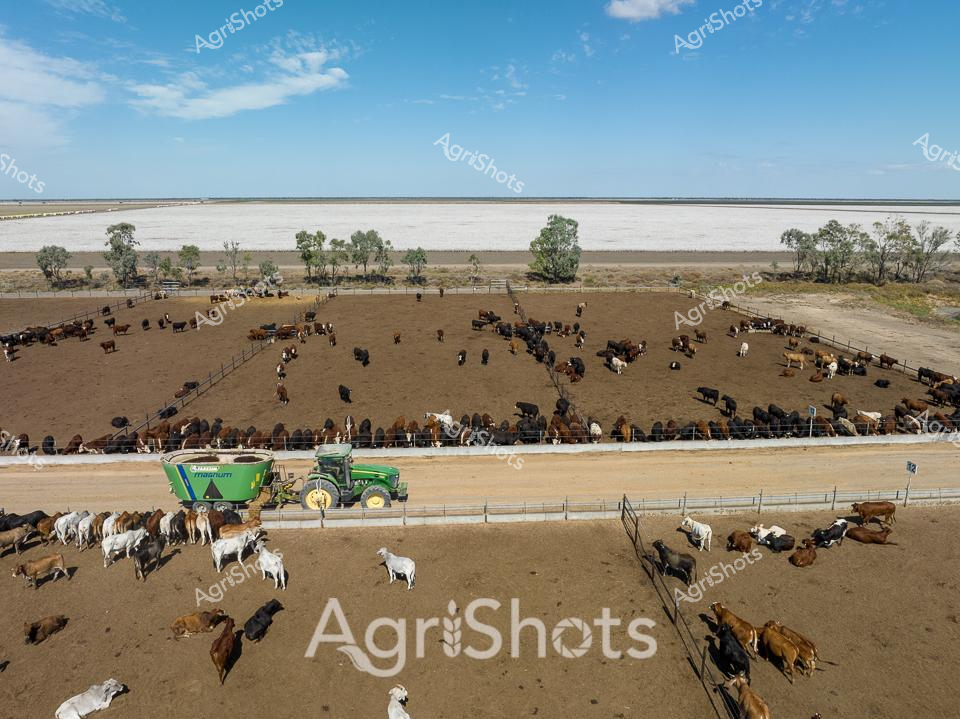
Expansive dryland cattle feedlot captures the stark beauty of agricultural production in northwest New South Wales. A fleet of white and grey cattle crowd the dusty, fenced paddocks, clustered around feeding lanes where a gleaming John Deere tractor pulls a green Faresin feed mixer wagon. The landscape stretches dramatically - a patchwork of bare earth enclosures against a pale salt lake or dry floodplain horizon, punctuated by scattered eucalyptus trees weathered by endless summers. Predominately dark brown and black Angus and Brahman-cross cattle populate the feedlot, with some striking white Charolais animals providing visual contrast. The aerial perspective reveals the precision of modern agricultural infrastructure - carefully designed feed lanes, multiple interconnected holding paddocks, and strategic water and feeding points that enable large-scale livestock management in an arid environment. Brilliant blue sky with wispy clouds suggests mid-morning light, highlighting the geometric patterns of agricultural engineering against the raw, uncompromising Australian pastoral landscape.
 ▶ Video
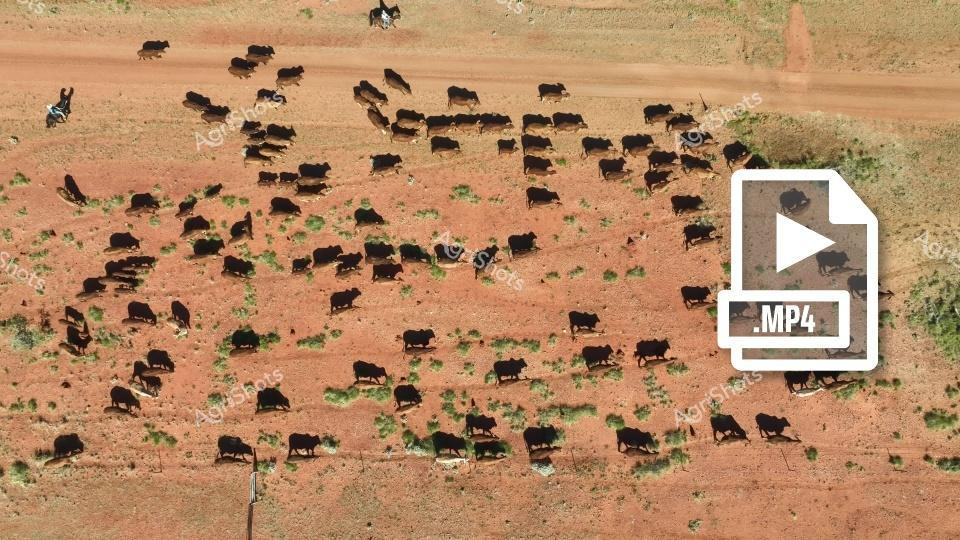
An aerial view of a large herd of Brahman cattle scattered across a dry, reddish-brown landscape in Queensland, Australia. Several motorbikes and horses can be seen helping with the cattle muster, indicating an active ranching or mustering operation typical of the region's beef industry.
 Image
Image
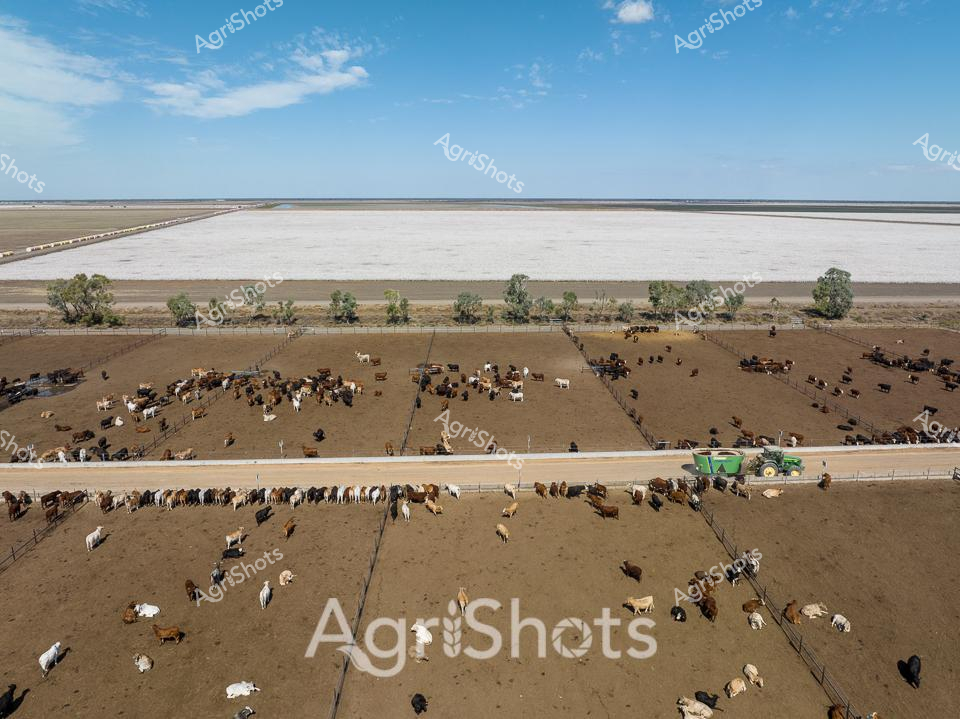
Aerial vista of a sprawling cattle feedlot in the arid western plains of New South Wales, where carefully managed livestock paddocks stretch beneath an expansive blue sky. Hundreds of beef cattle - a mix of white, brown, and black breeds - are strategically grouped across fenced dirt enclosures, creating a living mosaic of agricultural productivity. A green John Deere tractor moves deliberately along the central feeding lane, distributing nutrition to the herds with mechanical precision. Mature eucalyptus trees line the boundary, providing sparse windbreak against the harsh landscape, while a distant salt lake or dried agricultural basin reflects a stark white horizon. The scene captures the intricate balance of modern Australian cattle production - where technology, landscape management, and animal husbandry converge in a sophisticated agricultural ecosystem. The environment speaks to resilience: dusty earth, controlled livestock movements, and strategic water and feed management in a challenging climate.
 Image
Image
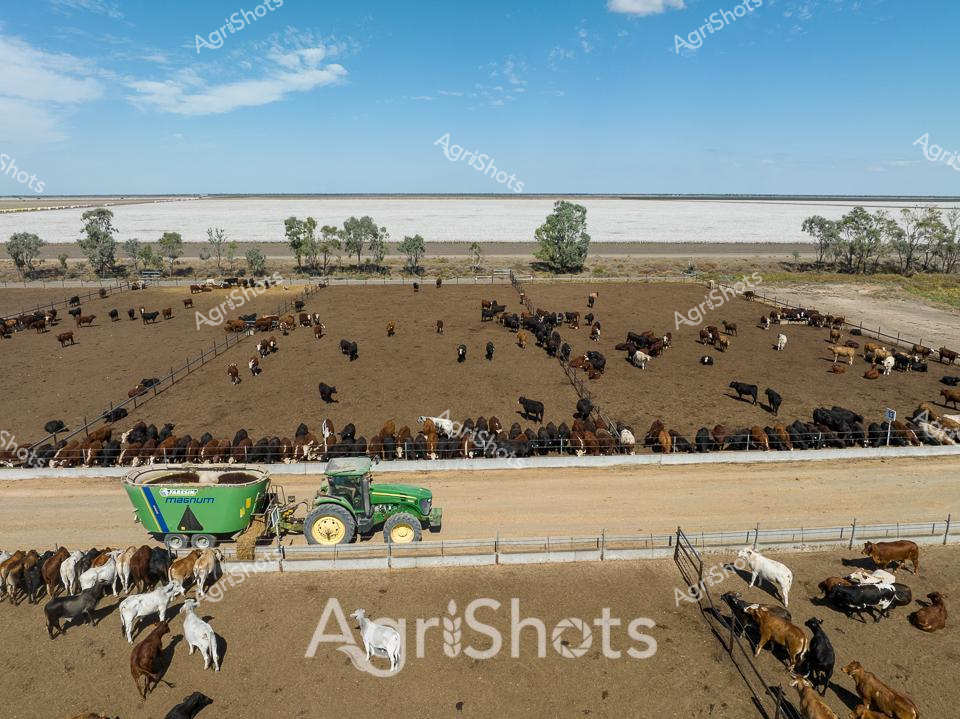
Dusty earth and brilliant blue skies frame this expansive aerial view of a modern cattle feedlot in northwest New South Wales. A striking green John Deere tractor with a Faresin feed mixer navigates between fenced paddocks densely populated with mixed breed cattle - black Angus, white Brahman, and various brown crossbreeds. The livestock cluster in strategic groups across the dry, compacted ground, representing a carefully managed agricultural operation in the cotton-growing region around Walgett Shire. Salt flats shimmer on the distant horizon, punctuated by scattered eucalyptus trees, highlighting the challenging yet productive agricultural landscape of inland Australia. The mechanical precision of the feed distribution contrasts beautifully with the organic movement of the cattle, capturing the sophisticated balance of contemporary livestock management. This image epitomizes the resilience and technological advancement of Australian beef production, where sophisticated equipment and strategic animal husbandry techniques transform arid landscapes into productive agricultural ecosystems.
 Image
Image
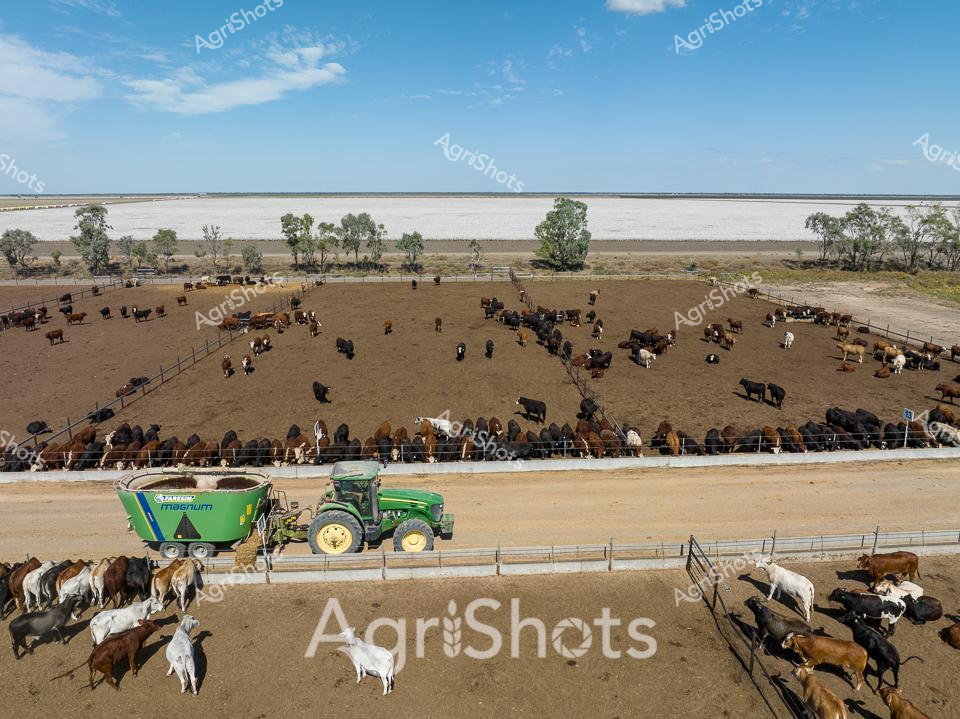
A sprawling feedlot in northwestern New South Wales captures the industrial scale of modern beef production, with hundreds of cattle clustered across dusty, fenced paddocks under an expansive blue sky. A vibrant green John Deere tractor pulls a Faresin feed mixer, methodically distributing nutrition to the densely packed herd of predominantly black and brown cattle, with a scattering of white and piebald animals. The landscape stretches to a distant salt lake or dry flood plain, punctuated by scattered eucalyptus trees, revealing the harsh yet productive agricultural environment of the Walgett Shire region. Precise agricultural infrastructure - multiple interconnected paddocks with robust fencing - enables efficient livestock management in this arid setting, where every element of production is carefully controlled. The overhead perspective showcases the systematic approach to cattle farming, with animals grouped strategically and feeding equipment moving with mechanical precision. The scene embodies the complex intersection of technology, animal husbandry, and challenging Australian rural landscapes, where agricultural innovation meets environmental resilience.