
About this image
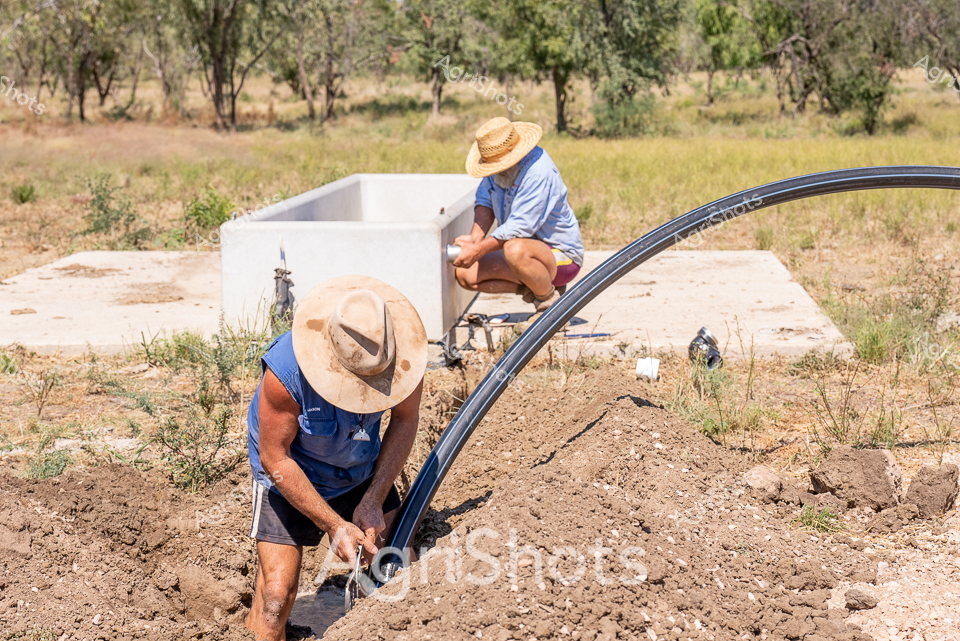
Rural Water Infrastructure Installation in West Australian Pastoral Landscape Beneath sprawling eucalyptus trees and golden grasslands, two rural workers carefully lay a curved poly pipe irrigation line near a pristine white water storage trough. Wearing wide-brimmed sun hats that shield them from the intense Western Australian midday heat, the workers methodically trench the ground, preparing critical water infrastructure for a remote pastoral station. One worker crouches attentively near the rectangular concrete water trough, while the other carefully positions the black polyethylene pipe in the freshly dug trench, ensuring precise alignment for optimal water distribution. The arid landscape surrounding them speaks to the challenging environment where strategic water management is essential for agricultural sustainability. Dusty ochre earth contrasts sharply with the gleaming new water infrastructure, representing ongoing agricultural innovation in one of Australia's most demanding agricultural regions. This scene captures the quiet determination of rural workers adapting infrastructure to support livestock and land in a harsh, sun-drenched landscape.
Similar media
 Image
Image
Rural hydration infrastructure under construction in the West Australian rangelands. Two agricultural workers wearing wide-brimmed straw sun hats labour together to install a critical water supply pipeline, their blue work shirts and shorts indicating intense physical effort in the arid landscape. One worker carefully aligns a curved black poly pipe into a concrete water trough, while his colleague crouches nearby, supporting the installation process. Sparse eucalyptus trees and dry grassland stretch across the rocky terrain, suggesting a remote pastoral station where water infrastructure is essential for livestock survival. The curved pipe gleams against the dusty earth, representing precision engineering adapted to challenging agricultural environments. Harsh sunlight and open ground reveal the demanding physical work required to maintain agricultural systems in Western Australia's unforgiving rural regions.
 Image
Image
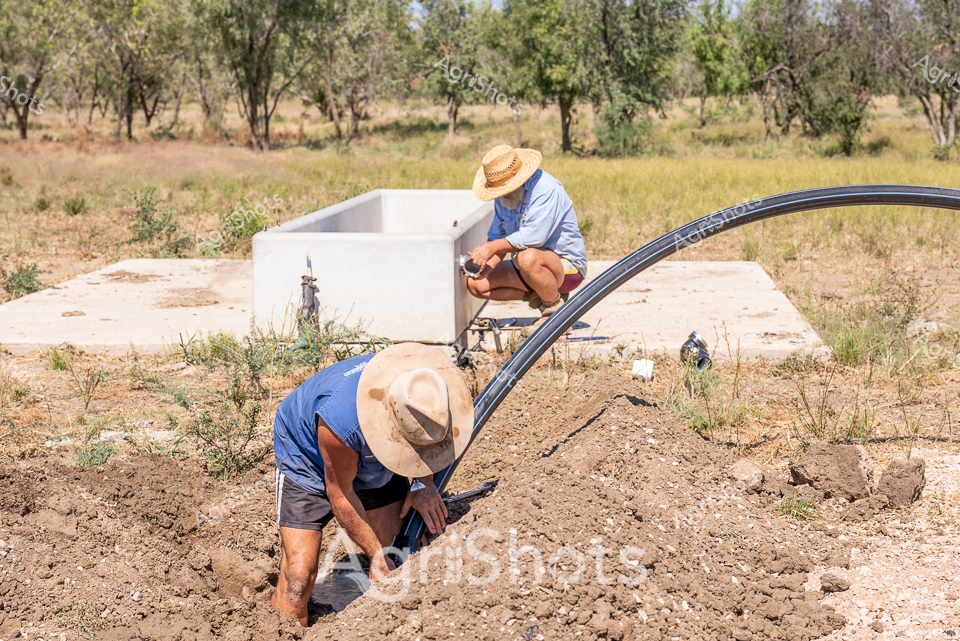
Rural waterworks maintenance under the harsh Western Australian sun. Two workers in wide-brimmed sun hats labor at an isolated station water point, surrounded by sparse eucalyptus woodland and dry grassland. One worker bends low, carefully manipulating underground poly piping, while the other crouches near a white water trough, likely performing hydraulic system repairs or installation. The ground is parched and rocky, revealing the challenging agricultural landscape of inland Western Australia. Weathered blue work shirts and khaki shorts speak to practical station attire designed for extreme environmental conditions. A curved black poly pipe arches dramatically across the foreground, highlighting the critical infrastructure that enables livestock water supply in this arid region, where water management is essential for pastoral survival. The scene captures the meticulous, physical nature of remote agricultural maintenance - workers quietly executing precise technical tasks that are fundamental to sustaining pastoral enterprises across vast, unforgiving terrains. Muted earth tones of brown, tan, and dusty green create a quintessential Australian rural aesthetic, emphasizing the resilience required to work in such demanding environments.
 Image
Image
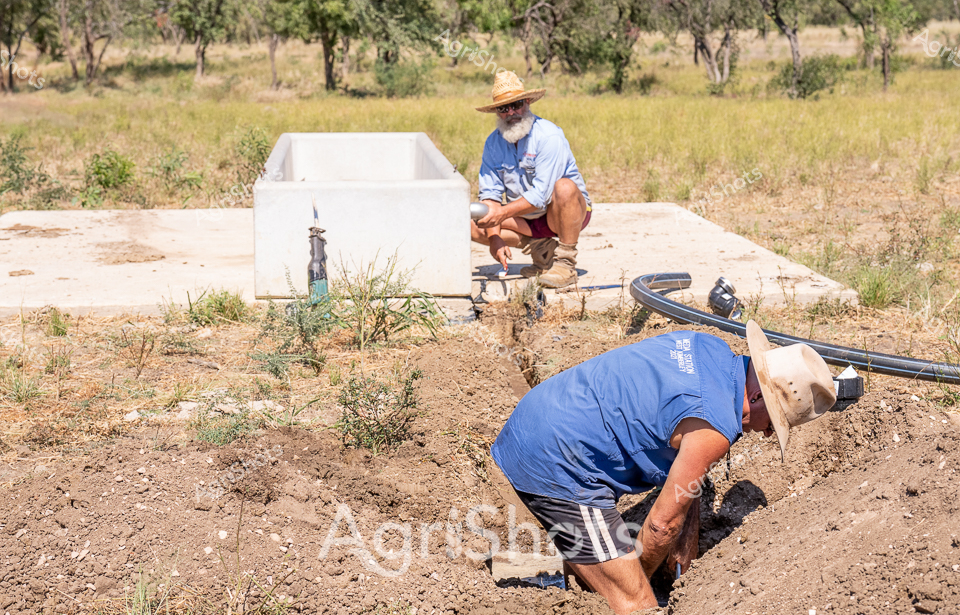
Rural water infrastructure maintenance unfolds under the harsh Western Australian sun, capturing the resilience of agricultural workers managing critical station resources. An experienced worker in a blue shirt and wide-brimmed hat carefully excavates around a white water infrastructure point, revealing pipes and fittings essential for livestock water supply. The rugged pastoral landscape surrounds them - sparse eucalyptus trees, dry golden grasses, and red-brown earth characterizing the challenging agricultural terrain of Western Australia's remote regions. Another worker observes from a crouched position near a concrete water storage structure, their collaborative effort highlighting the precision and physical demands of maintaining water systems across expansive agricultural properties. Plasson pipe fittings and robust irrigation infrastructure suggest a methodical approach to water management in an environment where reliable water access is crucial for livestock survival. The scene radiates a sense of quiet determination, with muted blues, browns, and the weathered textures of working attire reflecting the uncompromising nature of agricultural life in this arid landscape.
 Image
Image
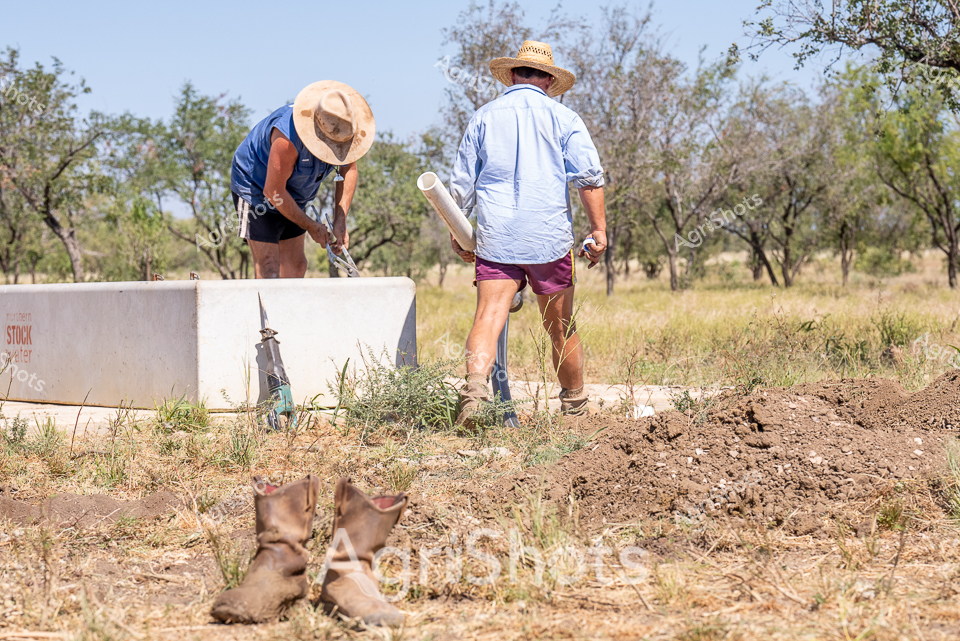
Rural water infrastructure maintenance unfolds under the harsh midday sun of Western Australia's pastoral landscape. Two workers wearing wide-brimmed straw hats - one in a blue shirt and another in a light blue button-up and burgundy shorts - carefully manage water supply equipment near a concrete storage tank. A Plasson pipe fitting and white conduit tube suggest they are engaged in repairing or installing critical stock water infrastructure essential for livestock survival in this arid environment. The dry grassland surrounds them, dotted with sparse trees and scrubby vegetation typical of a northern Western Australian station. In the foreground, several small animals - possibly young foxes or dingoes - rest on the disturbed earth near the work site, adding an unexpected wildlife element to this agricultural scene. The workers' robust physical labor and protective clothing reflect the challenging conditions of remote agricultural work. Rough ground, scattered rocks, and mechanically exposed soil indicate active infrastructure maintenance, highlighting the constant effort required to sustain agricultural operations in Australia's unforgiving rural landscapes. The muted earth tones, sun-bleached vegetation, and industrial equipment create a quintessential image of outback resilience and practical necessity.
 Image
Image
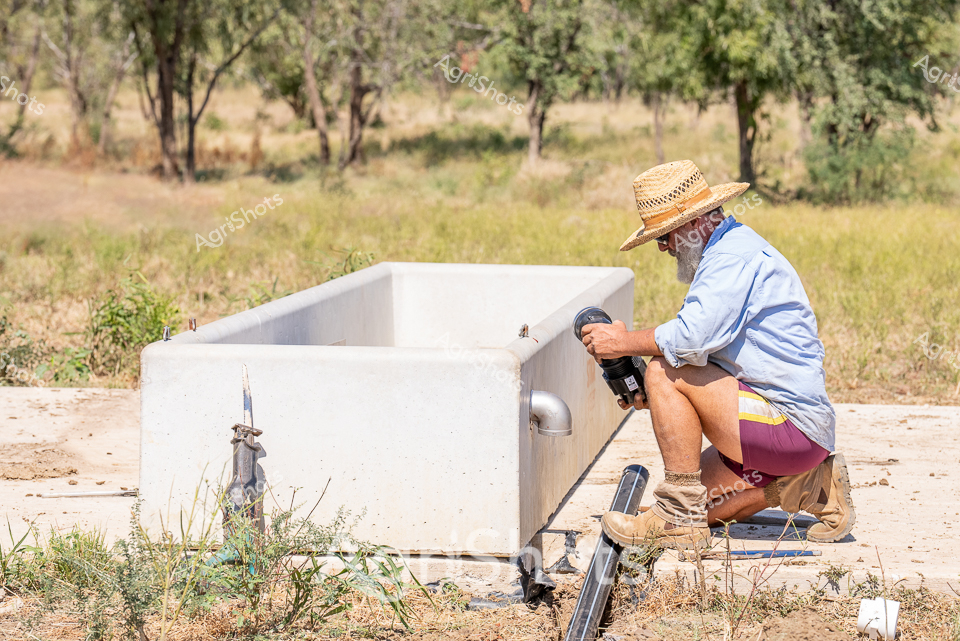
Beneath the dappled shade of scrub woodland, an experienced rural worker crouches beside a gleaming white water trough, meticulously adjusting pipe fittings with practiced hands. Wearing a classic wide-brimmed straw sun hat, a light blue chambray shirt, and rugged work shorts, the individual represents the seasoned expertise of Australian agricultural maintenance workers. The landscape surrounding him is quintessential Western Australian pastoral terrain - sparse eucalyptus trees punctuating a dry, golden grassland under bright, clear sunlight. A Plasson water connection system lies partially dismantled, suggesting careful repair or reconfiguration of critical station infrastructure. The pristine white water trough stands in stark contrast to the dusty, textured ground, a testament to the essential water management technologies that sustain livestock in challenging arid environments. Every careful movement speaks to the methodical approach required in remote station operations, where reliable water infrastructure can mean survival for herds across vast, unforgiving landscapes. The scene captures a moment of quiet concentration, embodying the resilience and technical skill integral to Australian agricultural workers managing critical rural water resources.
 Image
Image
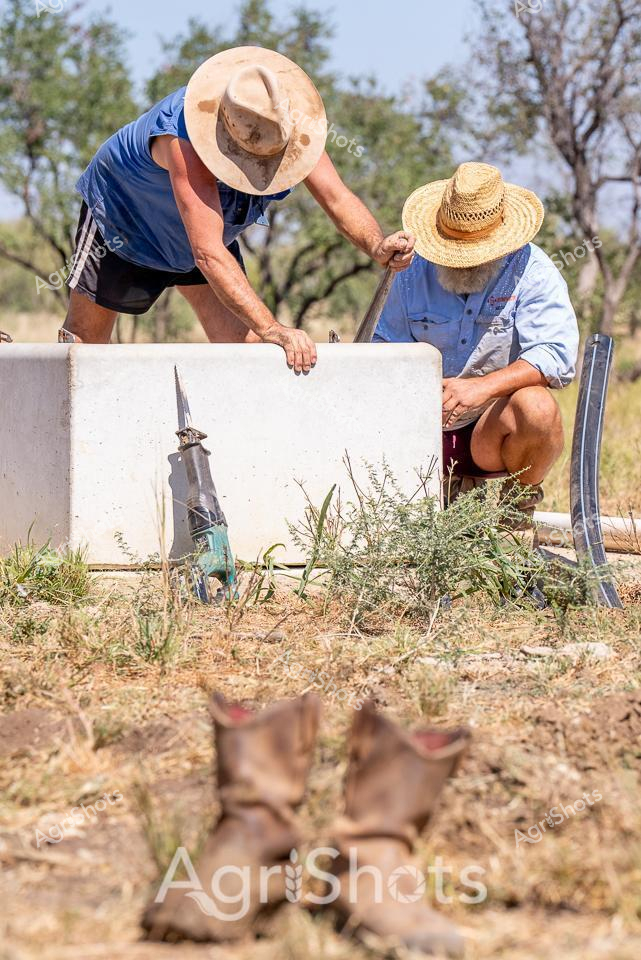
Rural Water Management in the West Australian Rangelands Beneath a sun-bleached sky, two rural workers wearing broad-brimmed straw hats collaborate around a white water infrastructure installation. Dressed in blue work shirts and shorts, they carefully inspect a water trough and pipe fitting, likely a Plasson connection, surrounded by sparse grassland and scattered eucalyptus trees typical of Western Australia's arid pastoral regions. The golden-brown ground and weathered vegetation suggest late summer conditions, when water management becomes critically important for livestock survival. In the foreground, two kangaroos rest motionless on the parched earth, blending seamlessly with the landscape's muted tones - an iconic reminder of the challenging environmental conditions faced by Australian agricultural workers. The scene captures the meticulous care and constant maintenance required to sustain livestock in remote station country, where water infrastructure means the difference between survival and drought-related losses. The workers' careful, collaborative approach reflects the resilience and practical problem-solving skills embedded in Australian rural culture, working harmoniously with the harsh but beautiful rangelands environment.
 ▶ Video
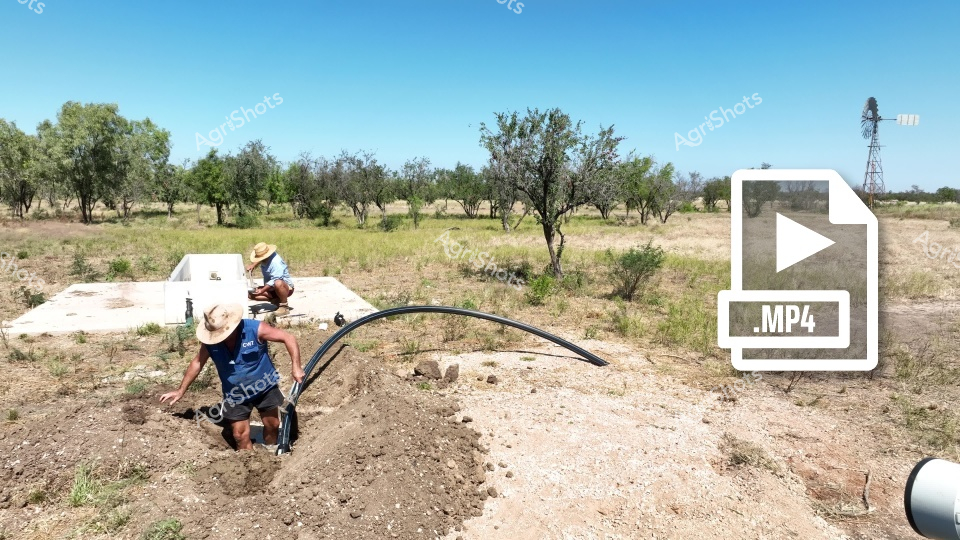
Two workers in rural Western Australia are installing a water infrastructure system, laying a curved black pipe near a water trough with a windmill in the background. The dusty, arid landscape shows scattered trees and rocky terrain, typical of the northern stock water region, as the men work to improve water access in this remote agricultural setting.
 Image
Image
Rural Irrigation Preparation in the West Australian Landscape A seasoned agricultural worker carefully manages irrigation infrastructure amid a sun-drenched olive grove in Western Australia. Dressed in a light blue shirt, khaki shorts, and a protective straw hat, the worker arranges a stack of black poly pipes essential for water distribution across the dry pastoral terrain. The surrounding landscape reveals sparse, rugged trees characteristic of the region's arid agricultural zones, with scattered low vegetation and dusty ground indicating the challenging growing conditions. Plasson fittings glint among the pipes, signaling professional-grade equipment designed for reliable water management in harsh environments. The worker's careful handling suggests meticulous preparation for the upcoming growing season, balancing physical labor with strategic agricultural planning. Soft blue skies and the muted green-grey palette of the landscape create a quintessential West Australian agricultural scene, capturing the resilience and technical expertise required to cultivate productive farmland in a challenging climate.