About this image
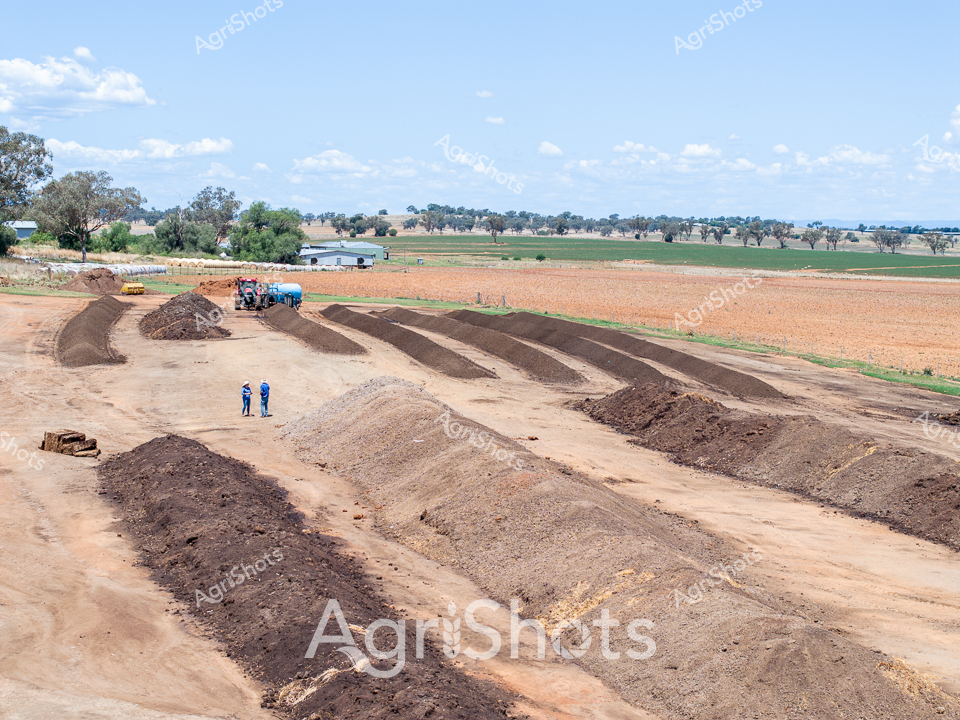
Rows of dark, rich compost windrows curve across a sun-drenched rural landscape in regional New South Wales, revealing a sophisticated regenerative agricultural process. Two workers in bright blue uniforms confer near agricultural machinery, overseeing the carefully managed organic waste recycling operation. The undulating mounds of decomposing material, ranging from deep chocolate to russet brown, represent a critical stage in transforming agricultural and organic waste into nutrient-dense soil amendment. Scattered eucalyptus trees punctuate the distant horizon, their silvery-green foliage contrasting against golden paddocks and a soft blue sky dotted with wispy clouds. This meticulously organized composting site demonstrates cutting-edge sustainable farming practices, where waste reduction and soil health restoration become a seamless, integrated process. The expansive, orderly layout speaks to the precision and environmental consciousness of modern Australian agricultural techniques, showcasing how innovative approaches can transform waste into valuable agricultural resources.
Similar media
 Image
Image
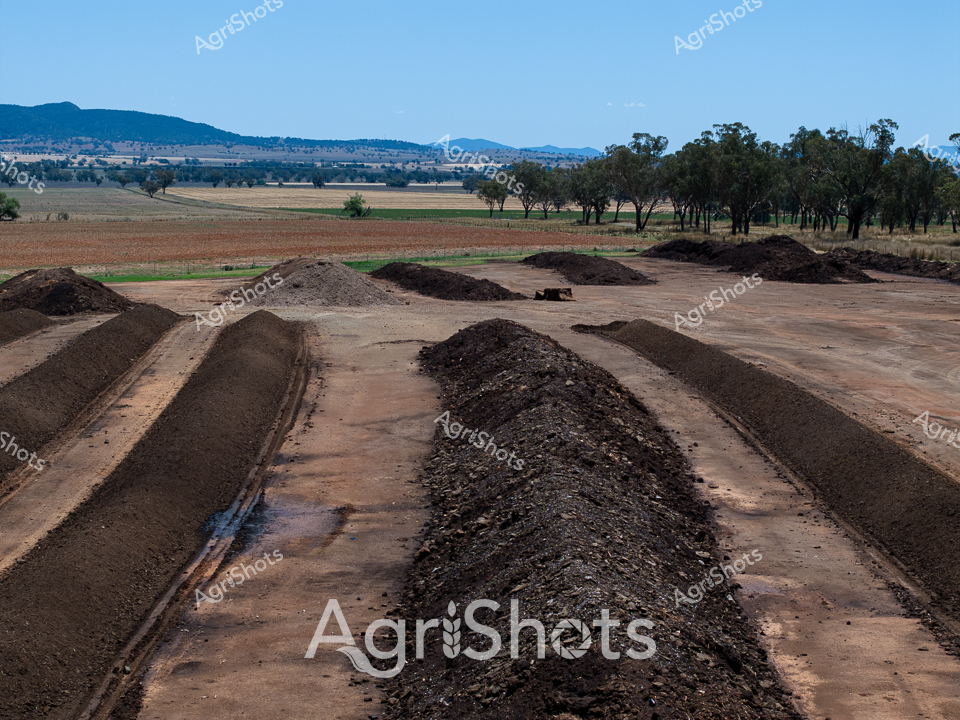
Windrows of rich, dark compost stretch across a sun-drenched rural landscape in New South Wales, revealing the intricate process of regenerative farming. Carefully constructed organic matter mounds rise in parallel lines, transforming agricultural waste into nutrient-dense soil amendment against a backdrop of rolling hills and sparse eucalyptus trees. The earthy browns and greys of the composting material contrast sharply with the terracotta-hued earth and distant green pastures, showcasing a sustainable approach to land management. These meticulously arranged composting bays represent a critical technique in modern agricultural practice, where waste recycling and soil health become interconnected strategies for environmental stewardship. Distant blue mountains frame the scene, suggesting a vast, open agricultural region where innovative farming techniques are transforming traditional land use. The crisp, clear light and expansive horizon speak to the potential of regenerative agricultural methods in restoring and enhancing ecosystem vitality.
 Image
Image
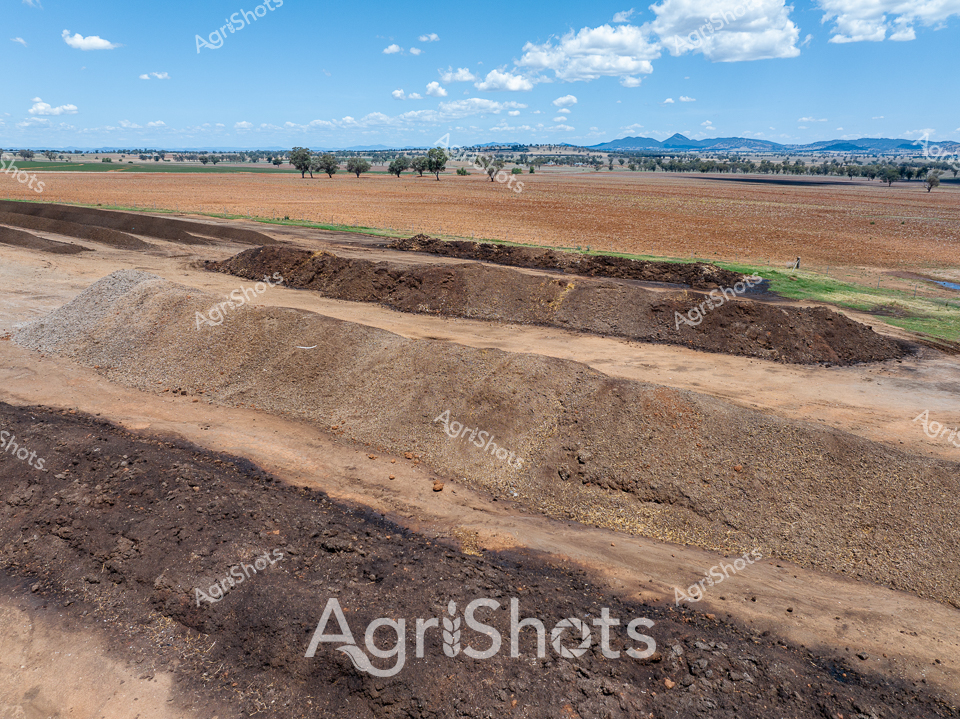
Regenerative soil preparation unfolds across an expansive agricultural landscape in rural New South Wales, revealing carefully engineered composting terraces. Dark, rich earth mounds undulate in strategic layers, capturing the intricate process of transforming organic waste into nutrient-dense agricultural fertilizer. Scattered olive trees punctuate the distant horizon, their silvery-green canopies contrasting against russet-brown ploughed fields and soft blue mountain ranges. These meticulously constructed compost banks represent cutting-edge sustainable farming techniques, demonstrating how agricultural waste can be recycled into valuable soil amendments that enhance biodiversity and crop productivity. The scene captures the intersection of scientific precision and natural cycles, with carefully graduated soil mounds suggesting a methodical approach to regenerative land management. Brilliant white clouds drift across an azure sky, casting gentle shadows on the textured earthen landscape and highlighting the harmonious relationship between agricultural innovation and environmental stewardship.
 Image
Image
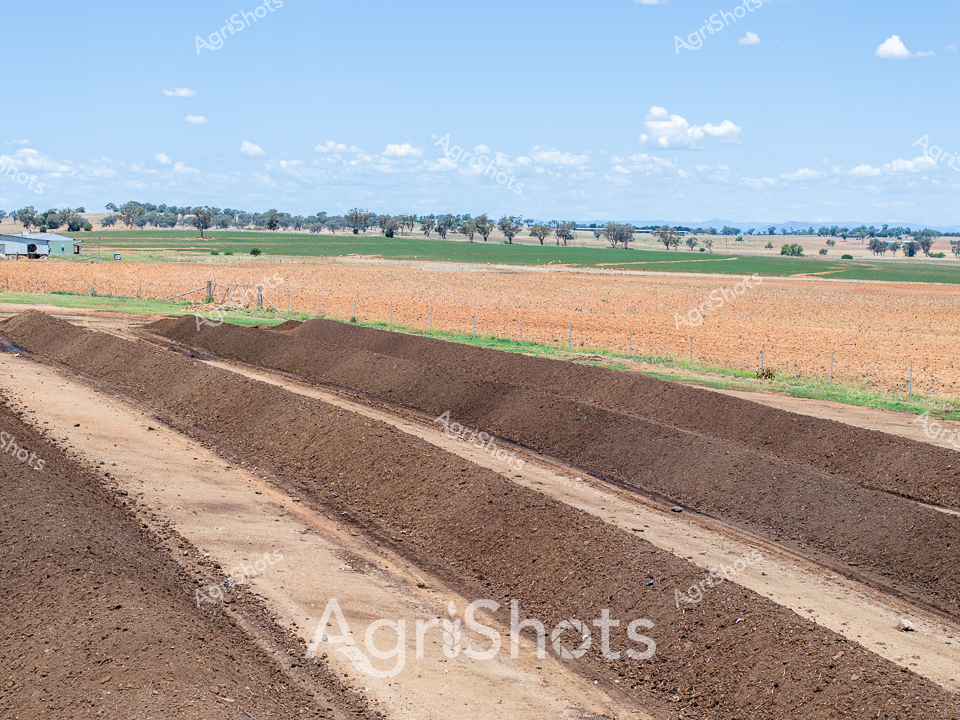
Nutrient-rich compost mounds rise like earthen waves across a quintessential New South Wales agricultural landscape. Dark, fertile soil has been carefully layered and managed, representing advanced regenerative farming techniques that focus on organic matter recycling and sustainable land management. The rich brown compost banks contrast brilliantly against the rust-orange tilled fields and soft green pastures dotted with scattered eucalyptus trees in the distant background. Expansive azure skies with delicate white clouds frame this pastoral scene, highlighting the wide-open agricultural terrain typical of inland Australian farming regions. These meticulously constructed compost rows demonstrate sophisticated waste reduction strategies, transforming agricultural and organic waste into valuable soil amendments that enhance biodiversity and soil health. The precise geometric lines of the compost mounds reflect modern agricultural precision, showcasing how innovative farmers are embracing circular economy principles to improve crop productivity and environmental sustainability.
 Image
Image
Regenerative Composting Landscape in Rural New South Wales Undulating mounds of rich, dark compost rise like earthen waves across a meticulously prepared agricultural site, capturing the essence of sustainable farming practices. The raw organic material—a blend of agricultural waste, manure, and plant residues—transforms into nutrient-dense soil amendments, promising renewed fertility for the surrounding farmlands. Rolling hills and scattered eucalyptus trees frame the distant landscape, creating a quintessential Australian rural backdrop of muted greens and soft blues. Each carefully constructed compost windrow represents a critical step in regenerative agriculture, where waste becomes a valuable resource and soil health is paramount. The textured browns of the decomposing material contrast sharply with the dusty earth paths between the rows, highlighting the meticulous process of organic matter recycling. This scene embodies the innovative spirit of modern Australian agriculture—turning waste into wealth, rebuilding soil ecosystems, and creating sustainable solutions for food production in a challenging environment.
 Image
Image
Rows of rich, dark compost mounds stretch across a rural paddock in New South Wales, revealing the intricate process of regenerative agricultural practices. Carefully constructed windrows of organic matter create a textured landscape of browns and blacks, demonstrating sophisticated waste recycling techniques. Surrounding eucalyptus trees frame the scene, providing a quintessential Australian agricultural backdrop of open grasslands and scattered woodland. These meticulously arranged compost banks represent an innovative approach to soil health, transforming agricultural waste into valuable fertiliser through controlled decomposition. The earthy tones of the compost piles contrast beautifully with the pale dirt pathways and the soft blue sky, highlighting the sustainable farming methods that are crucial to modern agricultural resilience. Each carefully managed mound represents a commitment to soil biodiversity, carbon sequestration, and reducing agricultural waste through intelligent organic recycling techniques.
 ▶ Video
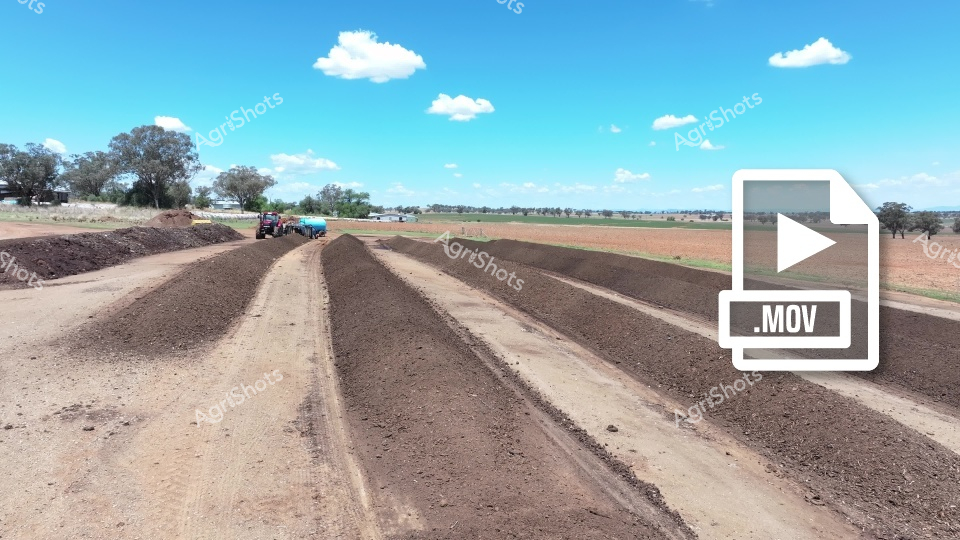
Rows of dark, rich organic compost stretch across a sun-drenched agricultural landscape near Heathcote in rural New South Wales. Carefully formed windrows of deep brown composting material line a wide dirt path, revealing an innovative regenerative farming practice that transforms agricultural waste into nutrient-dense soil amendments. Scattered eucalyptus trees punctuate the horizon, their silvery-green foliage contrasting against the vivid blue sky dotted with pristine white clouds. A blue agricultural vehicle sits in the background, suggesting active farm management and the systematic approach to sustainable waste processing. The meticulously constructed compost beds demonstrate a commitment to soil health, biodiversity, and ecological farming techniques that are increasingly crucial in Australian agricultural systems. The expansive, orderly landscape captures the precision and environmental consciousness of modern regenerative agriculture, transforming organic materials like manure and plant waste into valuable resources that enhance soil structure and fertility.
 Image
Image
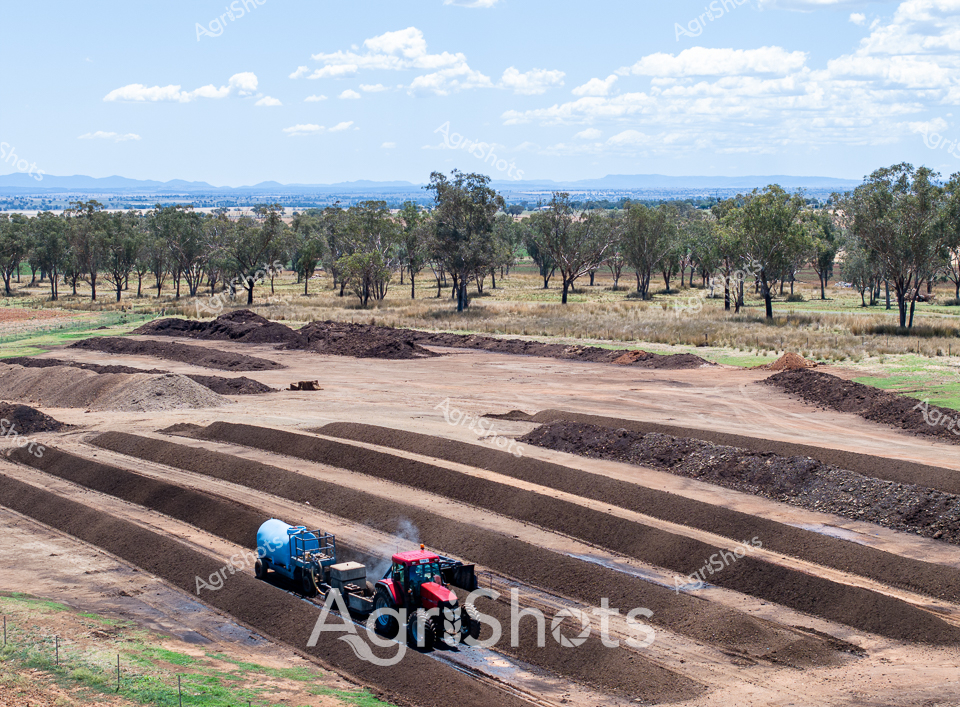
Nestled in the expansive rural landscape of New South Wales, a Case tractor with a blue tank attachment meticulously works across a series of carefully constructed composting rows. Rich, dark organic matter is systematically arranged in long, parallel banks, representing an innovative approach to regenerative farming and soil health. The surrounding eucalyptus woodland creates a quintessential Australian agricultural backdrop, with distant mountains and a soft, cloud-scattered sky providing a sense of open, fertile terrain. The composting process unfolds against a palette of earthy browns, muted greens, and dusty agricultural textures, highlighting the intricate relationship between machinery and sustainable land management. The tractor, in striking red and blue, moves deliberately across the prepared ground, spreading and treating organic waste materials that will eventually transform into nutrient-rich soil amendment. This scene captures the precision and environmental consciousness of modern Australian agricultural practices, where waste reduction and soil regeneration are paramount. The methodical arrangement of composting banks demonstrates a sophisticated approach to recycling agricultural and organic waste, converting potential refuse into valuable resources that will support future crop cultivation and maintain ecological balance.
 Image
Image
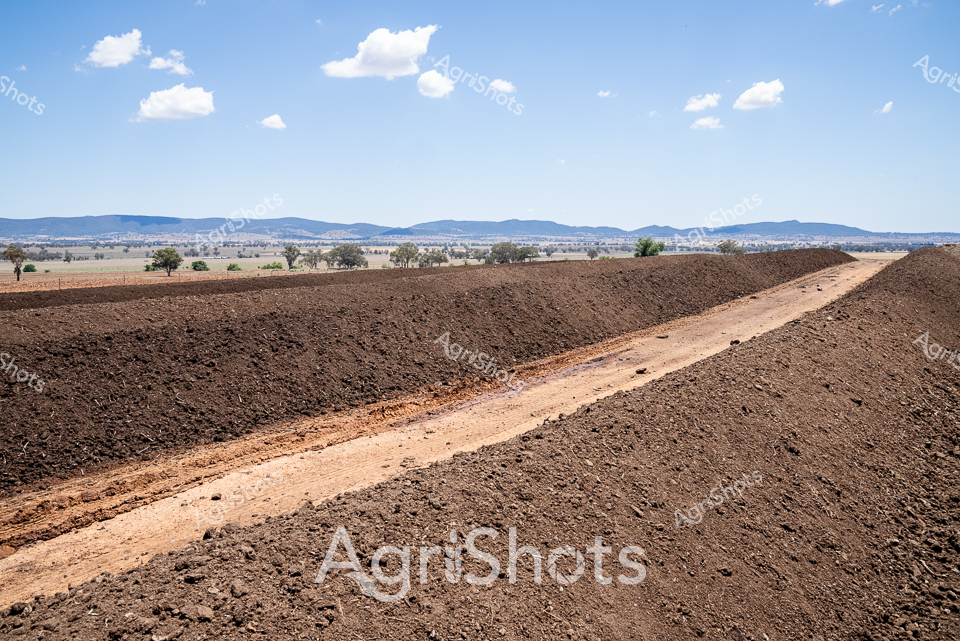
Rows of freshly turned dark brown soil stretch across a sun-drenched rural landscape, revealing the precision of modern regenerative agricultural practices. This expansive field in New South Wales displays meticulously prepared earth, rich with organic matter and ready for planting, with neat raised beds creating geometric patterns against the distant blue mountain ranges. A dusty dirt track bisects the rich, textured soil, indicating recent mechanical cultivation work - likely part of an advanced composting or soil regeneration process. Scattered eucalyptus trees punctuate the horizon, their muted green canopies contrasting against the crisp blue sky dotted with soft white clouds. The landscape speaks to sustainable farming techniques, where soil health is paramount, demonstrating how careful land management can transform agricultural ecosystems. The warm earth tones and clean lines capture the intersection of scientific precision and natural beauty, highlighting Australia's sophisticated approach to agricultural innovation.