About this image
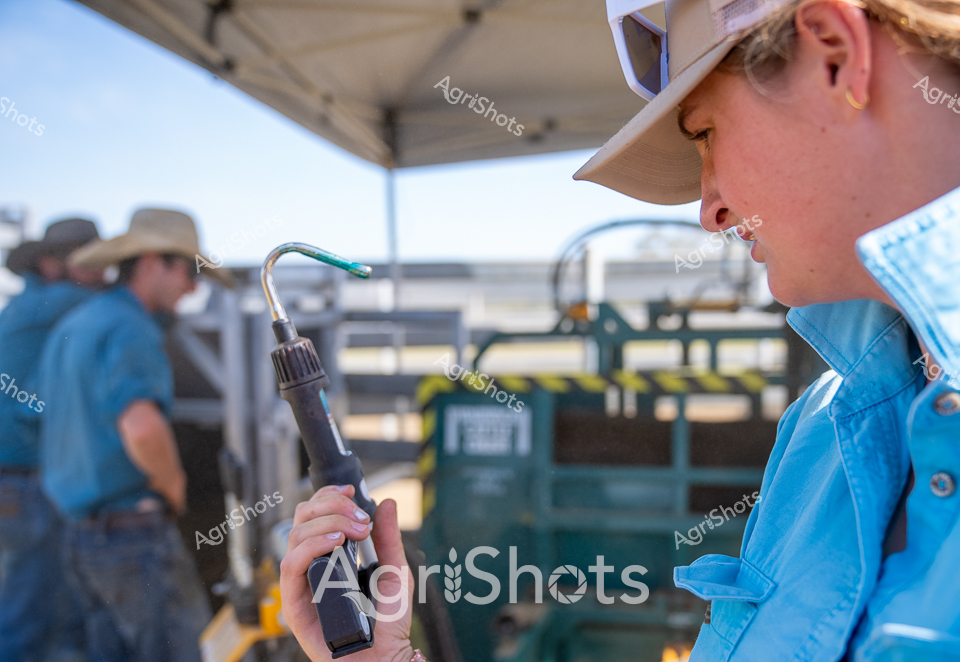
Autumn sunlight bathes the cattle yards, casting a warm glow over the livestock processing area. A focused agricultural worker in a vibrant blue jacket and protective hat carefully handles a drenching gun, preparing to administer animal health treatment to young calves. The precision equipment of a Warwick Cattle Crush stands ready in the background, its robust green frame a testament to the sophisticated technology supporting modern livestock management. In the distance, another worker observes, their stance reflecting the collaborative nature of agricultural work in New South Wales' New England region. The scene captures the essence of women in agriculture, highlighting the technical skill and careful attention required in contemporary cattle farming. Crisp safety equipment, industrial infrastructure, and the controlled environment of the yards speak to the professional approach of modern agricultural practitioners.
Similar media
 Image
Image
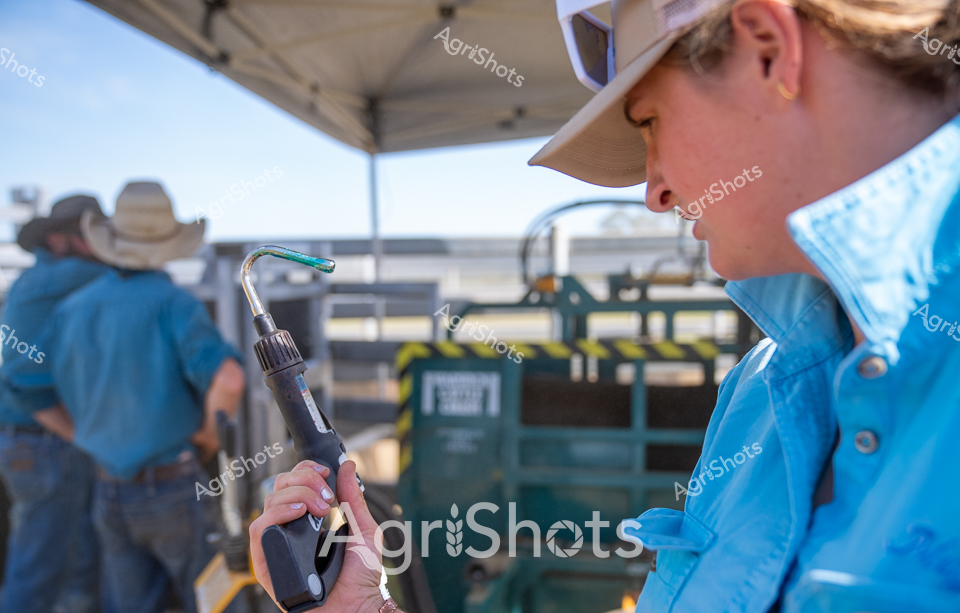
Under the shade of a white marquee in the dusty cattle yards of New England, New South Wales, a skilled agricultural worker prepares for calf marking and health management. Dressed in a vibrant blue jacket and a protective white cap, she carefully handles a veterinary drenching gun, a critical tool for administering medication to young livestock. In the background, another worker in a wide-brimmed hat monitors the operation, with a sturdy cattle crush providing a safe restraint for the animals. The summer sunlight casts a warm glow across the scene, highlighting the precision and care fundamental to modern agricultural practices. This moment captures the intersection of animal welfare, technological innovation, and the expertise of women in agriculture, showcasing the meticulous health management techniques essential to sustainable cattle farming. The image embodies the resilience, skill, and dedication of rural professionals working to maintain the health and productivity of their herds.
 Image
Image
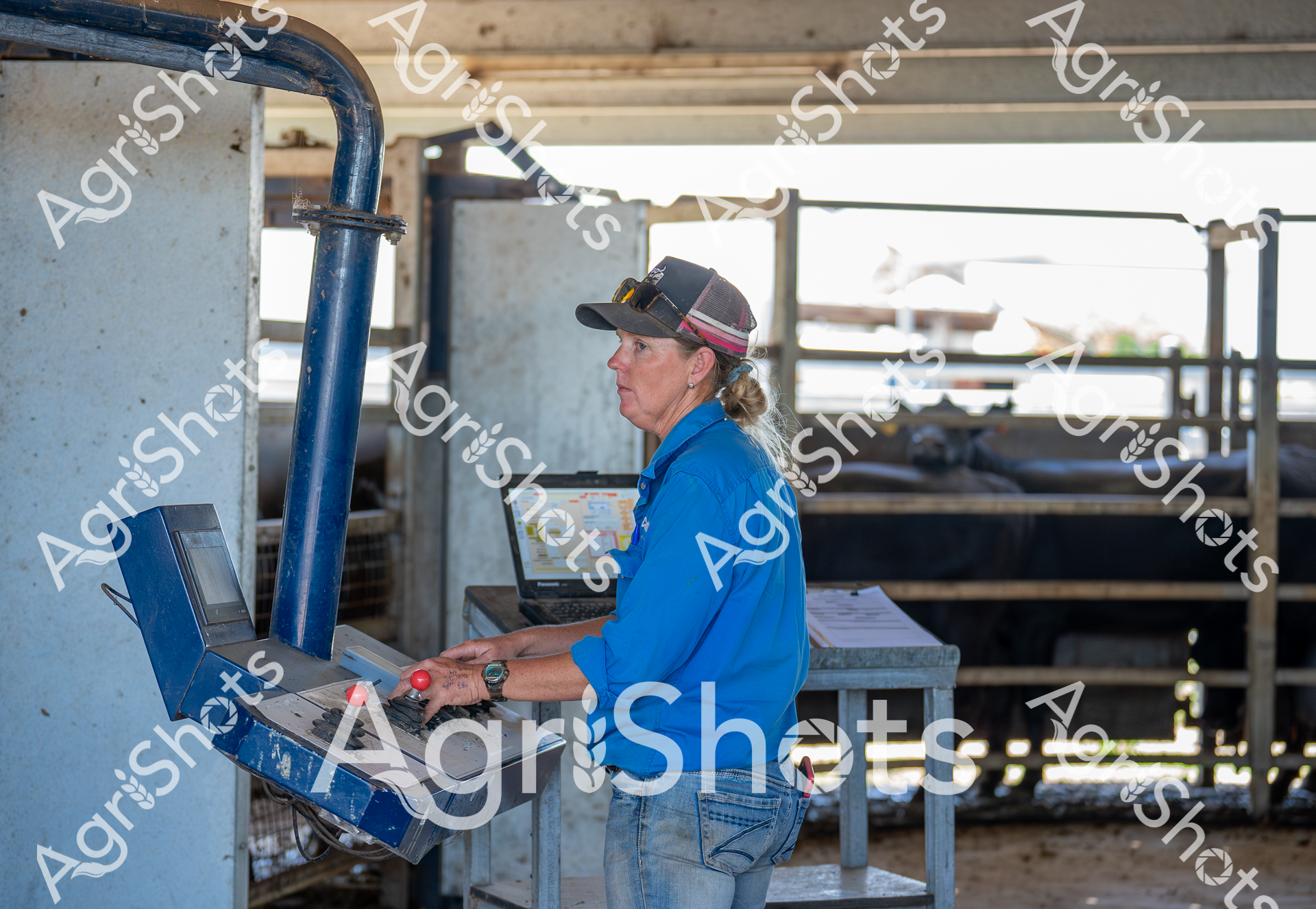
A dedicated agricultural professional stands poised at the control panel of a robust cattle handling system, her blue work shirt and cap signaling her expertise in livestock management. The blue metal control station sits within a sturdy concrete and steel cattle yard, with metallic railings and pens visible in the background, suggesting a modern agricultural facility in Queensland's Queensland. Her confident posture and focused gaze reveal years of experience as she operates the sophisticated data recording technology, likely preparing livestock for transport or health monitoring. A laptop sits nearby, reinforcing the intersection of traditional farming practices with contemporary digital tracking methods. The scene captures the evolving role of women in agriculture, showcasing technical skill and precision in a traditionally male-dominated industry. Soft natural light filters through the shed, highlighting the metallic blues of the equipment and creating a sense of quiet concentration in this critical moment of farm operations.
 Image
Image
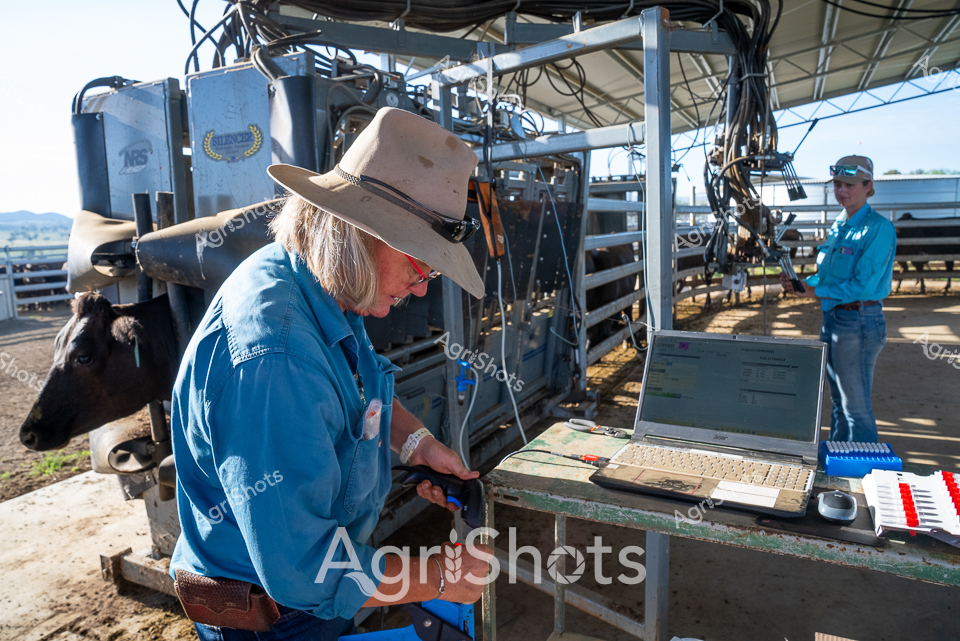
Bathed in the warm summer light of New England, New South Wales, agricultural innovation unfolds in this precision cattle management scene. A seasoned farmer in a blue work shirt and weathered beige hat carefully operates technological equipment near a sophisticated cattle crush, her focused demeanor highlighting the intricate dance between traditional farming and modern data collection. A laptop sits ready to record genomic information, suggesting advanced DNA testing of what appears to be high-value Wagyu cattle. The metallic blue cattle handling equipment gleams against the dusty yard, with another worker standing attentively in the background, underscoring the collaborative nature of contemporary agricultural practices. The scene captures a moment of technological integration, where generations of farming knowledge meet cutting-edge genetic analysis, demonstrating the sophisticated approach of modern Australian livestock management. Every detail - from the protective equipment to the strategic positioning of the data collection tools - speaks to a meticulous and scientific approach to animal husbandry.
 Image
Image
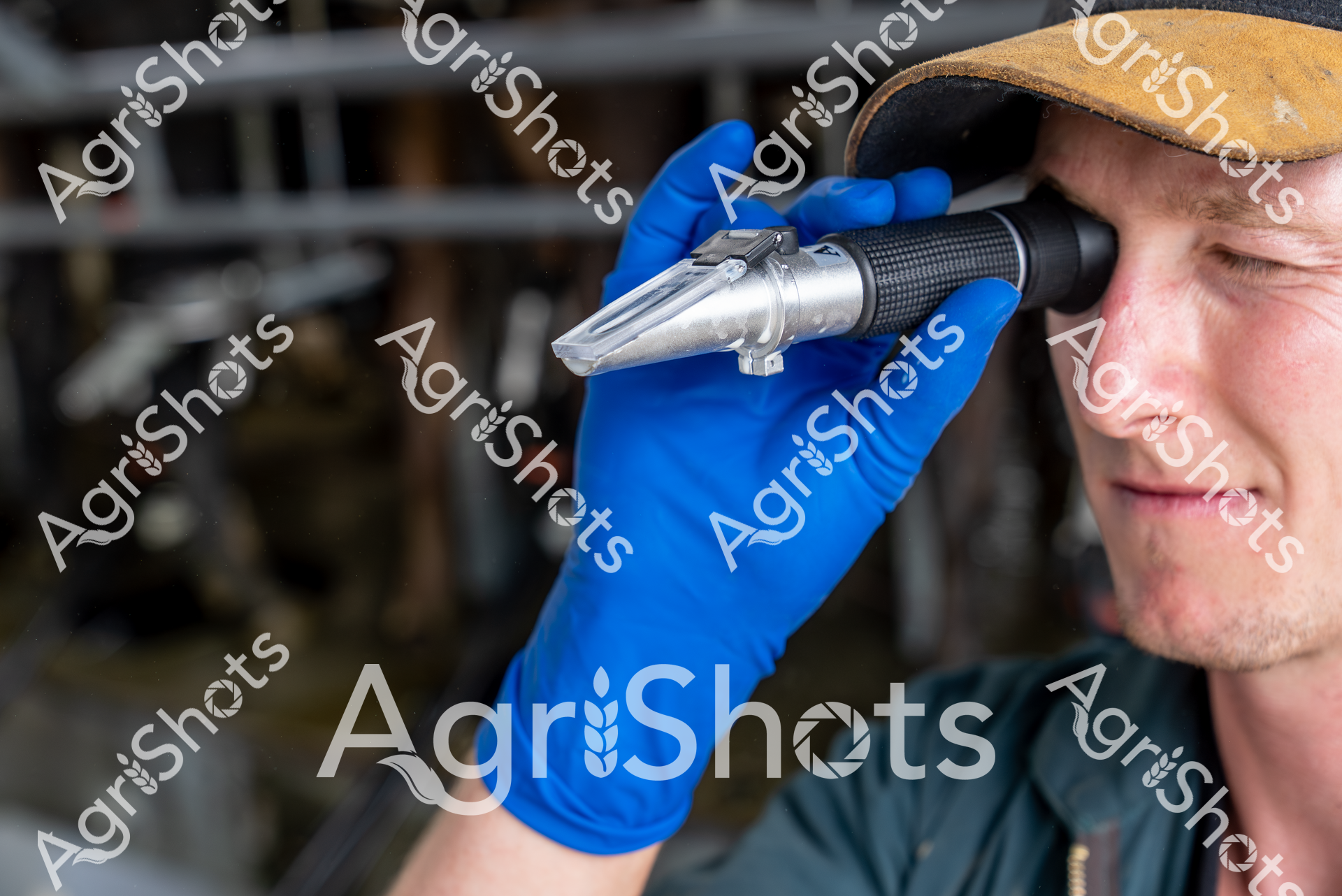
A skilled dairy technician carefully calibrates a handheld refractometer while wearing vivid blue nitrile safety gloves, his focused gaze peering through the precision optical instrument. The scene captures a critical moment of milk quality testing within a modern rotary dairy, likely situated in the rich agricultural landscape of South Canterbury, New Zealand. Soft ambient light illuminates the technician's careful movements, highlighting the metallic sheen of the refractometer against the protective blue glove. A tan-brimmed cap partially frames the worker's concentrated profile, suggesting the meticulous nature of dairy science and quality control. This image embodies the intersection of agricultural expertise, technological precision, and rigorous food safety protocols that define contemporary dairy production. The close-up perspective emphasizes the importance of individual skill and attention to detail in maintaining the high standards of New Zealand's renowned dairy industry.
 Image
Image
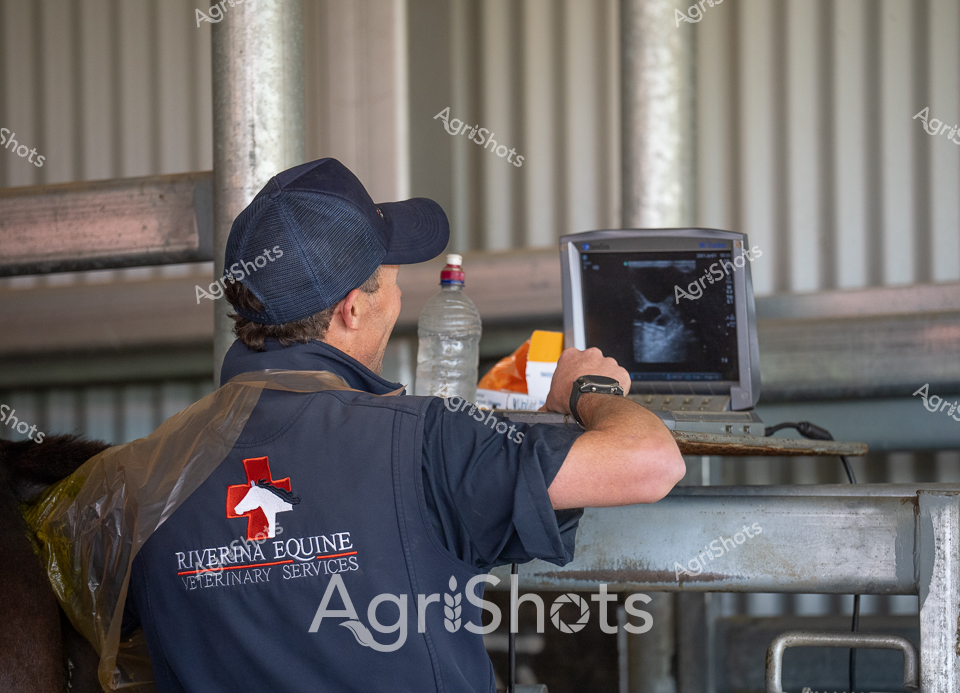
A seasoned equine veterinarian from Riverina Equine Veterinary Services stands focused in a metal livestock yard, performing a critical pregnancy ultrasound scan on a mare. Dressed in a navy mesh-backed cap and branded service jacket, the professional leans intently towards a portable veterinary monitor, tracking the detailed grayscale image of an equine pregnancy. Water bottle and towel nearby suggest a methodical, prepared approach to reproductive health monitoring, typical of sophisticated thoroughbred stud management in rural New South Wales. The industrial steel yards and screening equipment frame a moment of precision agricultural practice, where advanced veterinary science meets hands-on animal husbandry. Soft ambient lighting filters through the shed's corrugated walls, highlighting the careful, technical nature of modern horse breeding management. This scene captures the intersection of technological expertise and traditional agricultural skill, embodying the meticulous care invested in premium horse breeding operations.
 Image
Image
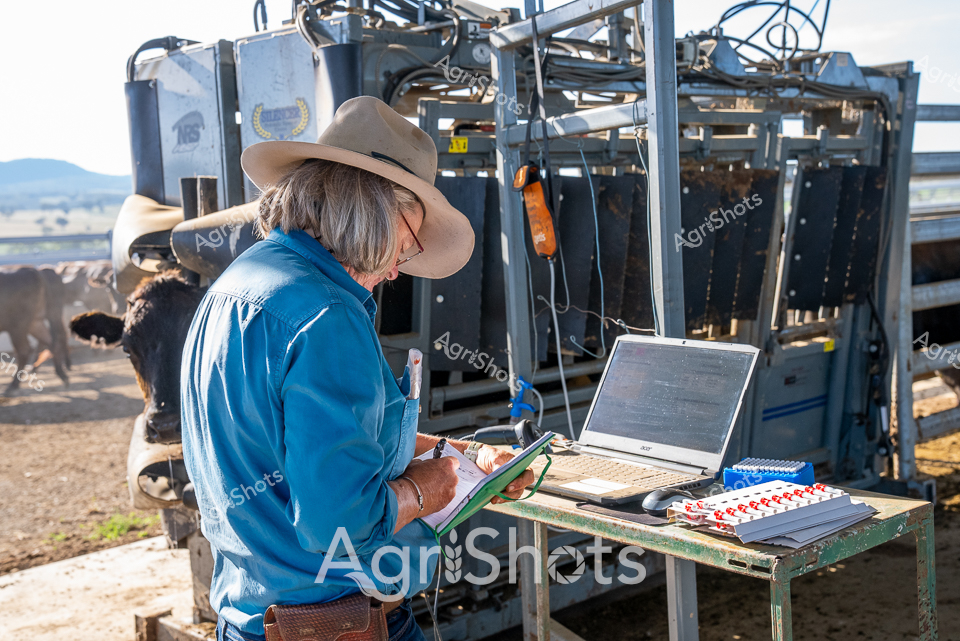
A seasoned agricultural researcher documents cattle data on a sun-drenched summer morning in the New England region of New South Wales. Wearing a classic wide-brimmed hat and a vibrant blue jacket, the professional stands beside a sophisticated cattle crush, her posture focused and precise. A laptop and recording equipment sit on a weathered green table, surrounded by technological tools for DNA testing and livestock management. Black Wagyu cattle wait patiently in the nearby yards, their dark forms contrasting against the dusty, arid landscape and distant mountain ranges. The scene captures the intricate blend of traditional farming practices and modern agricultural technology, highlighting the meticulous record-keeping and scientific approach of contemporary livestock management. Every element—from the sophisticated silencer crush to the carefully arranged data collection materials—speaks to the sophisticated, data-driven nature of contemporary Australian agricultural research.
 Image
Image
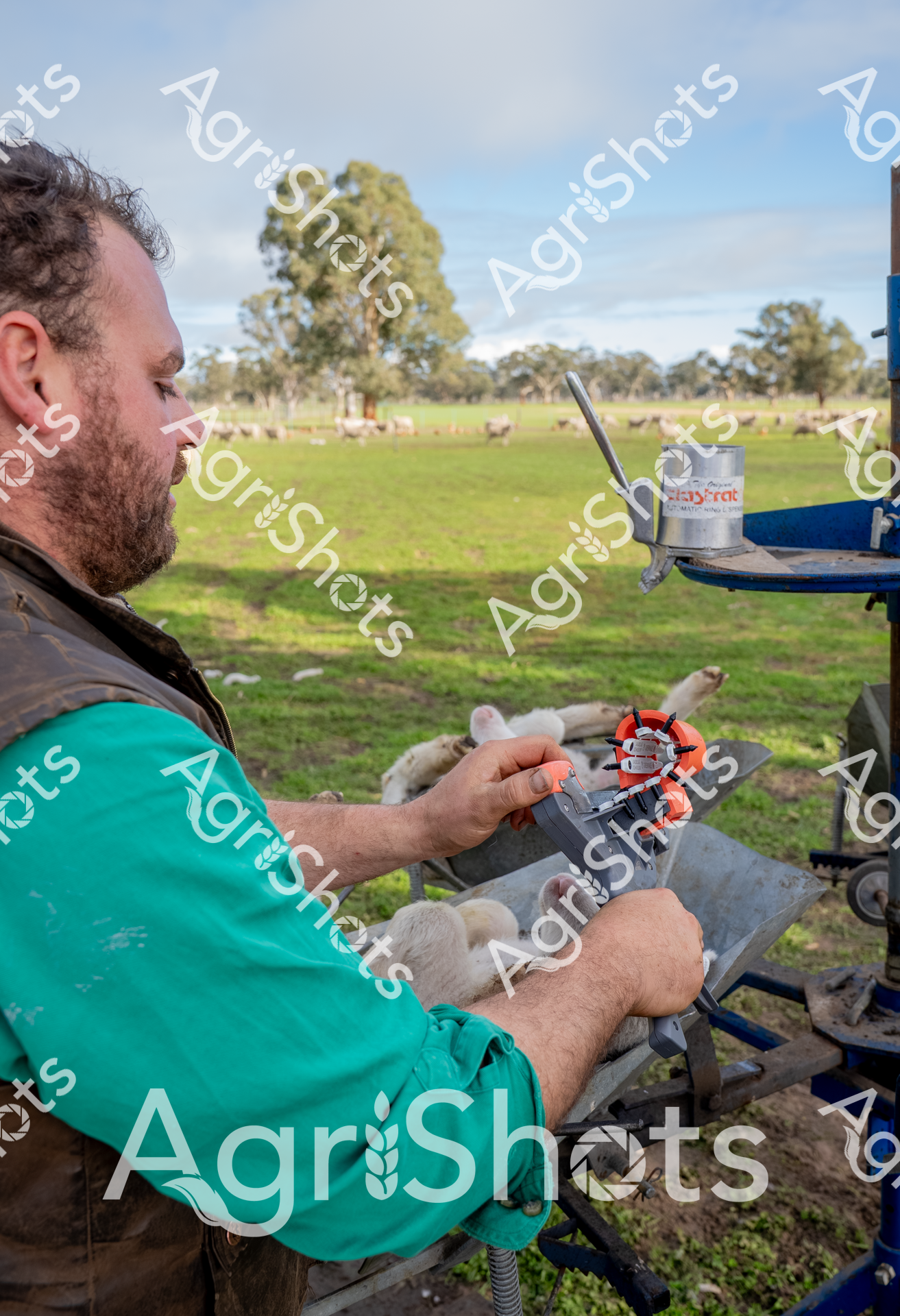
A farmworker pauses during lamb marking, his teal-green work jacket a vivid contrast against the muted winter pasture. Sheep graze softly in the background beneath scattered eucalyptus trees, revealing a classic South Australian agricultural landscape experiencing a "green drought" - grasslands looking lush but moisture-stressed. The worker carefully operates an Allflex electronic identification (EID) ear tagging device, methodically marking young lambs as part of critical livestock management practices. Rugged rural equipment stands ready - a metal tagging station, a tin mug steaming in the cool morning light, suggesting hard work and practical efficiency. His weathered hands move with practiced precision, demonstrating the skill and care inherent in sheep farming. The scene captures the essence of Australian agricultural work: pragmatic, resilient, deeply connected to the land and its seasonal rhythms.
 Image
Image
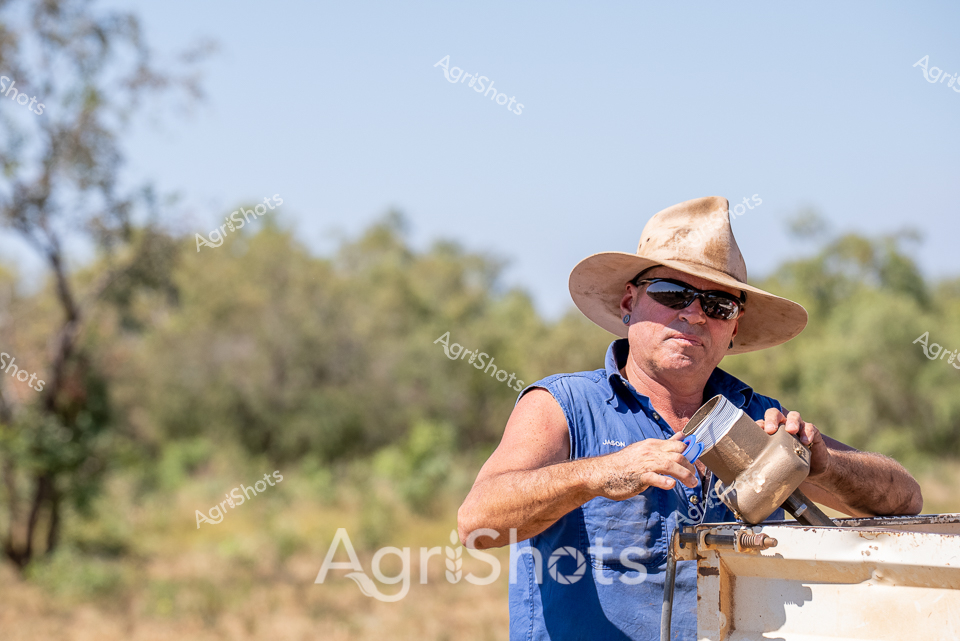
Weathered by decades of outback resilience, a seasoned station worker pauses during a scorching mid-morning in Western Australia's rugged interior. Wearing a sun-bleached wide-brimmed hat and protective sunglasses, he carefully adjusts a pipe fitting on a weathered water infrastructure system, his blue work shirt a stark contrast against the dusty, eucalyptus-studded landscape. His tanned, muscular arms reveal years of manual labor under the unforgiving Australian sun, demonstrating the quiet skill and constant maintenance required to manage water resources in remote pastoral regions. The metallic glint of the pipe connection and his focused concentration speak to the critical importance of water management in this arid environment, where every drop is precious. The surrounding landscape—a mix of dried grasses, scattered gum trees, and pale blue sky—epitomizes the challenging yet beautiful terrain of Western Australia's agricultural heartland. This moment captures the essence of rural resilience: a solitary worker maintaining essential infrastructure with expertise, patience, and an unspoken understanding of the land.