About this image
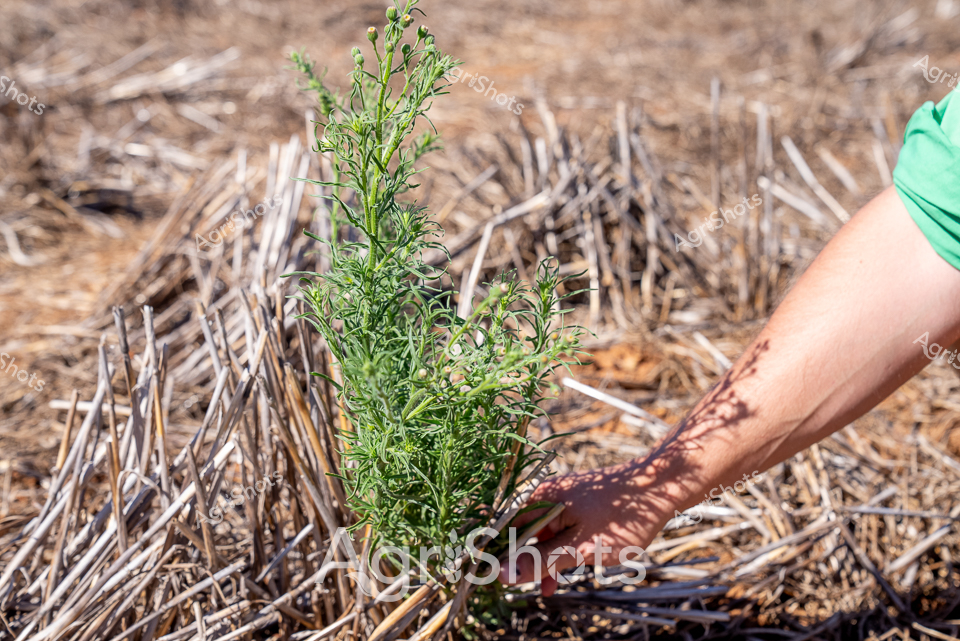
Precision weed management unfolds across a stubble-strewn field, where an agricultural worker's hand carefully inspects a vibrant green weed among dried crop remnants. The stark contrast between the lush, feathery green plant and the golden-brown wheat stubble captures the ongoing battle against invasive species in Australian broadacre farming. A green-sleeved worker reaches out, likely assessing the weed's species and determining the most appropriate removal or management strategy. The dry, textured ground of what appears to be a post-harvest paddock suggests late summer or early autumn conditions, when crop residues create a complex landscape of agricultural renewal. Careful hand identification of weeds represents a critical moment in sustainable farming practice, where manual intervention can prevent potential crop competition and reduce reliance on broad-spectrum herbicides. This image embodies the meticulous approach of modern agricultural management, where each plant is considered with strategic intent.
Similar media
 Image
Image
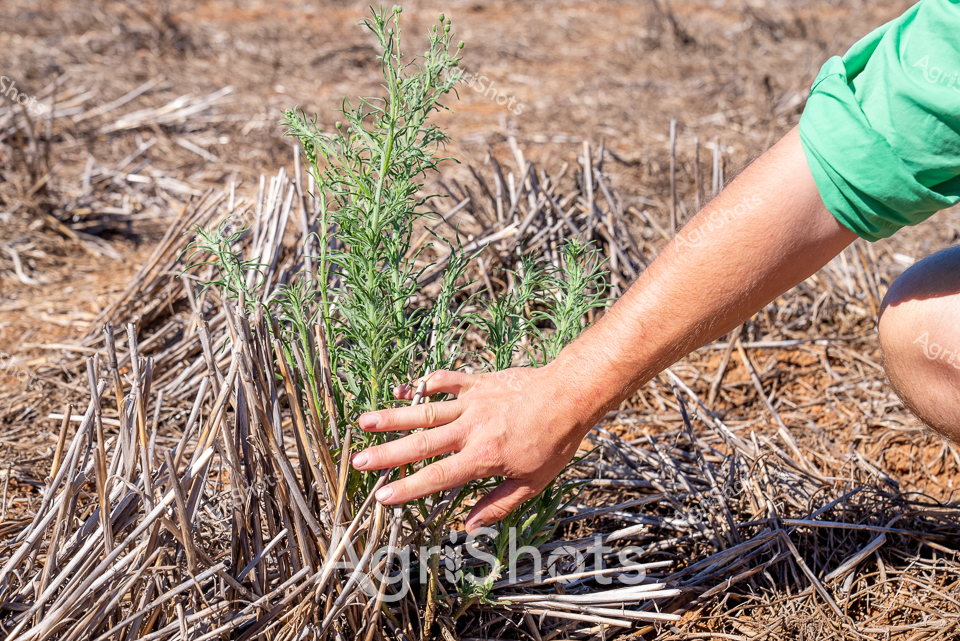
A weathered agricultural hand reaches into a dry, stubble-strewn field, grasping a vibrant green fleabane weed emerging amid the golden-brown remnants of a recent harvest. The scene captures the intricate dance of crop management in the Riverina region of New South Wales, where summer transitions into autumn and farmers battle invasive plant species. Dried wheat or barley stubble creates a textured carpet across the ground, its pale, brittle stalks a testament to the recently completed grain harvest. The green sleeve of the worker suggests careful, deliberate intervention - likely a strategic approach to weed control known as brown manure, where weeds are terminated before they can set seed, protecting the productivity of the agricultural landscape. Soft earth tones dominate the image, broken by the fresh green of the fleabane and the worker's bright clothing, symbolizing the constant human effort to maintain balance in dryland farming systems. This moment encapsulates the meticulous care and ongoing challenge of agricultural land management in the Australian grain belt.
 Image
Image
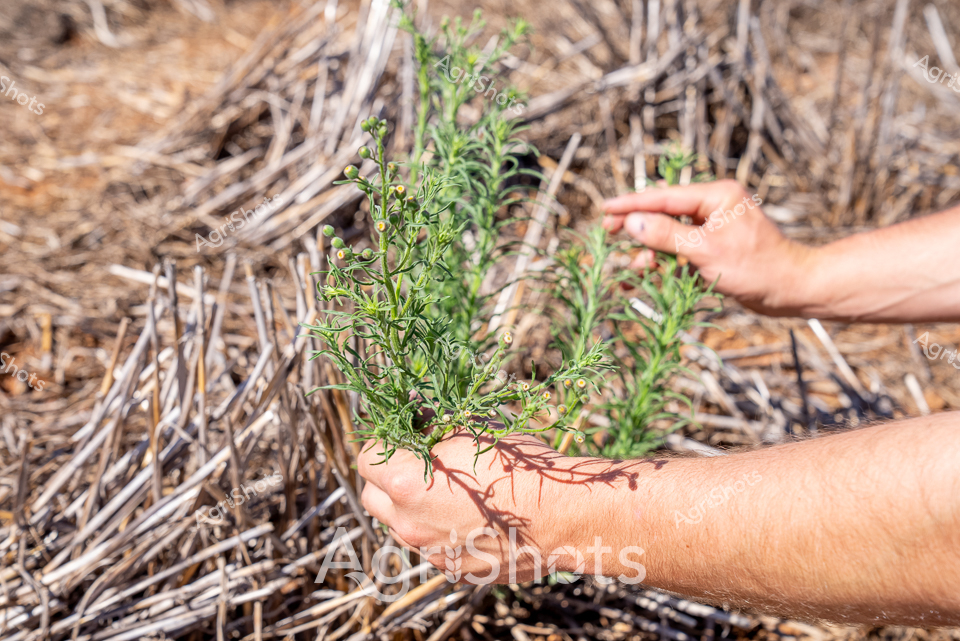
Dusty stubble from a recent harvest blankets the ground of a Riverina district paddock in late summer, where calloused hands gently examine a cluster of green fleabane emerging between wheat stubble. The delicate weed rises with intricate, feathery leaves and a network of fine roots, demonstrating the persistent botanical life that springs from agricultural soil. Autumn's approaching light casts soft shadows across the brown, dry ground, highlighting the contrast between the brittle crop remnants and the vibrant green plant. A farmer's weathered hand, tanned and lined from seasons of outdoor work, carefully assesses the fleabane's growth - likely considering its impact on crop rotation and soil management strategies. This moment captures the nuanced relationship between agricultural land management and the resilient plant life that challenges and enriches cropping systems. The image speaks to the constant vigilance and ecological understanding required in modern broadacre farming across New South Wales.
 Image
Image
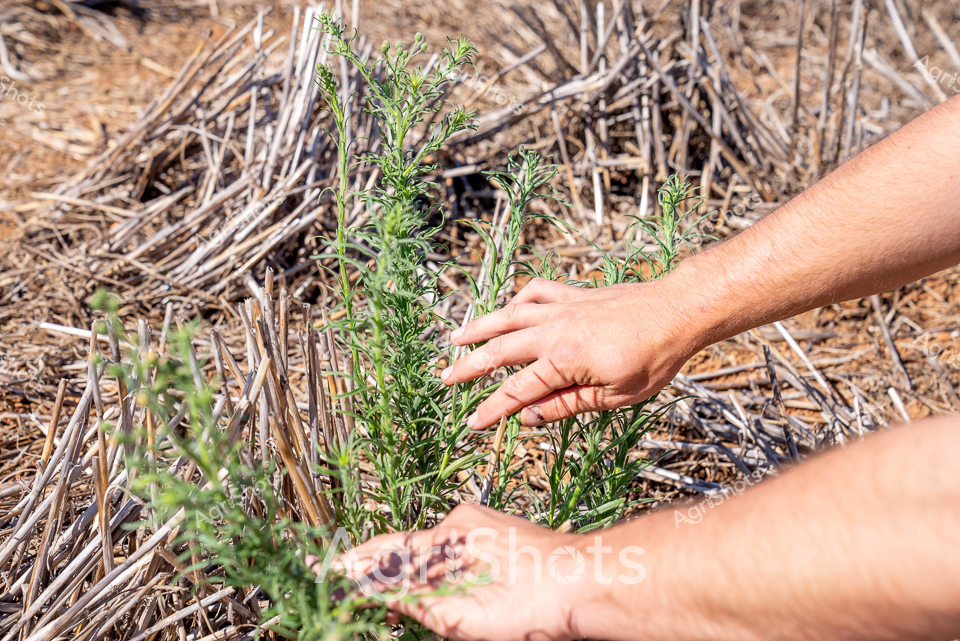
Autumn unfolds across the Riverina's golden stubble-strewn landscape, where hands carefully inspect a cluster of emerging fleabane weeds among the wheat or barley stubble. Weathered dry crop remnants create a complex textural backdrop of silvered and tawny stalks, contrasting with the vibrant green botanical intruders. A farmer's sun-bronzed hand reaches deliberately among the plant stems, likely assessing weed density and potential agricultural management strategies critical to sustainable cropping practices. The scene captures a moment of precise agricultural observation, where careful monitoring of emerging vegetation determines future field interventions. Stubble retention - visible in the intricate matrix of broken crop stalks - represents modern conservation farming techniques prevalent throughout New South Wales' broadacre agricultural zones. Soft autumnal light illuminates the delicate weed structures, highlighting the nuanced relationship between intentional crop management and opportunistic plant growth. This image eloquently portrays the continuous vigilance required in dryland farming systems, where every emerging plant represents a potential challenge or opportunity within the broader ecological management framework of contemporary Australian agriculture.
 Image
Image
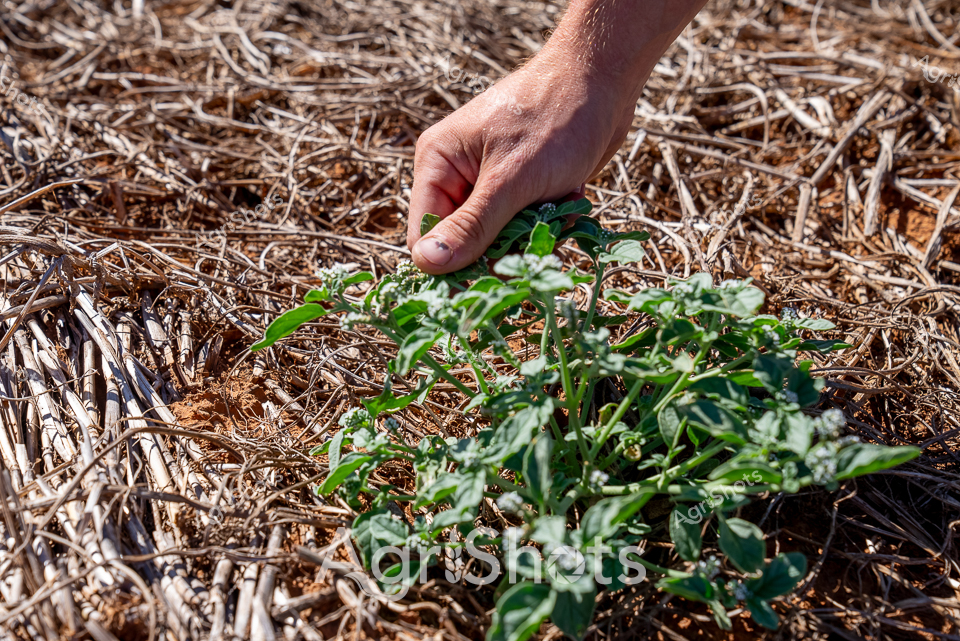
Summer's harsh embrace descends on the Riverina's cropping landscape, where a weathered hand gently investigates a cluster of resilient green weeds emerging through golden stubble. Dry wheat stalks blanket the ground in a intricate mat of weathered browns and tans, testament to the recent harvest and the unforgiving Australian agricultural cycle. The vibrant green plant stands in stark contrast - a defiant splash of life amidst the parched, post-harvest terrain, symbolizing nature's persistent regenerative power. A single, sun-tanned finger probes the weed's foliage, likely assessing its potential threat to future crop potential or soil health. This intimate moment captures the meticulous care and constant vigilance required of farmers managing their land through challenging seasonal conditions. The image epitomizes the nuanced relationship between human intervention and natural growth in the broad-acre farming systems of New South Wales, where every plant and every touch carries economic and ecological significance.
 Image
Image
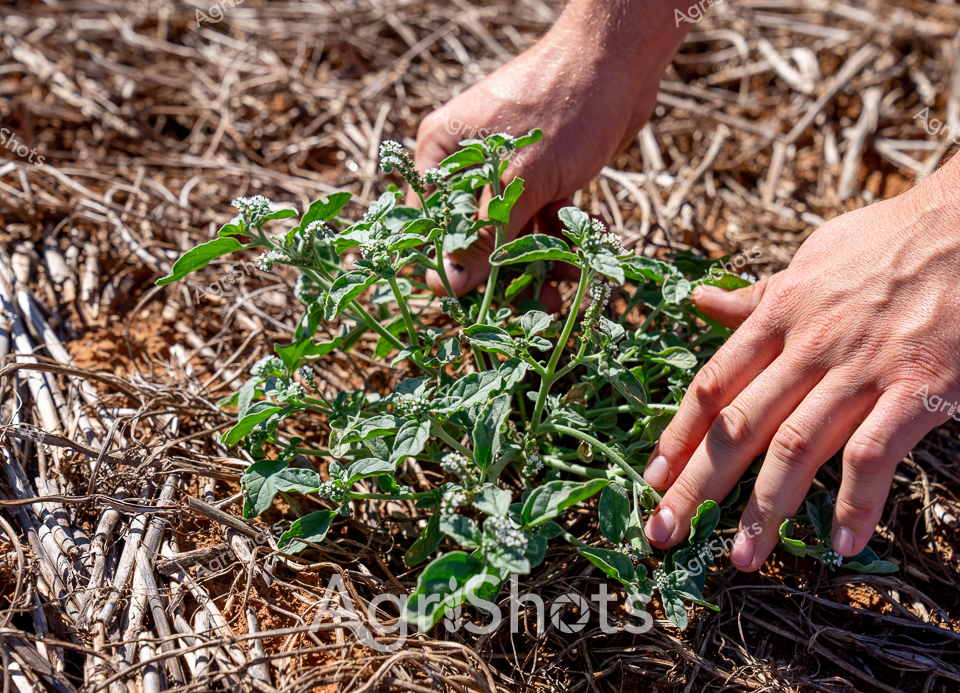
Delicate white flower clusters crown vibrant green foliage as careful hands gently inspect a young weed nestled among the golden-brown stubble of a post-harvest field. The rich, textured landscape of dry crop remnants spreads across the frame, telling a story of the Riverina's agricultural precision. Fingers probe and examine the plant's growth, revealing the meticulous attention farmers give to managing emerging vegetation between cropping cycles. Sunlight catches the edges of dried stalks, creating a warm palette of wheat and umber tones that contrast sharply with the plant's lush green leaves. This intimate moment captures the constant vigilance of agricultural management, where every emerging plant is assessed for its potential impact on future crop health. The close-up perspective invites viewers into the intricate world of agricultural stewardship, highlighting the careful balance between cultivation and control in the Australian farming landscape.
 Image
Image
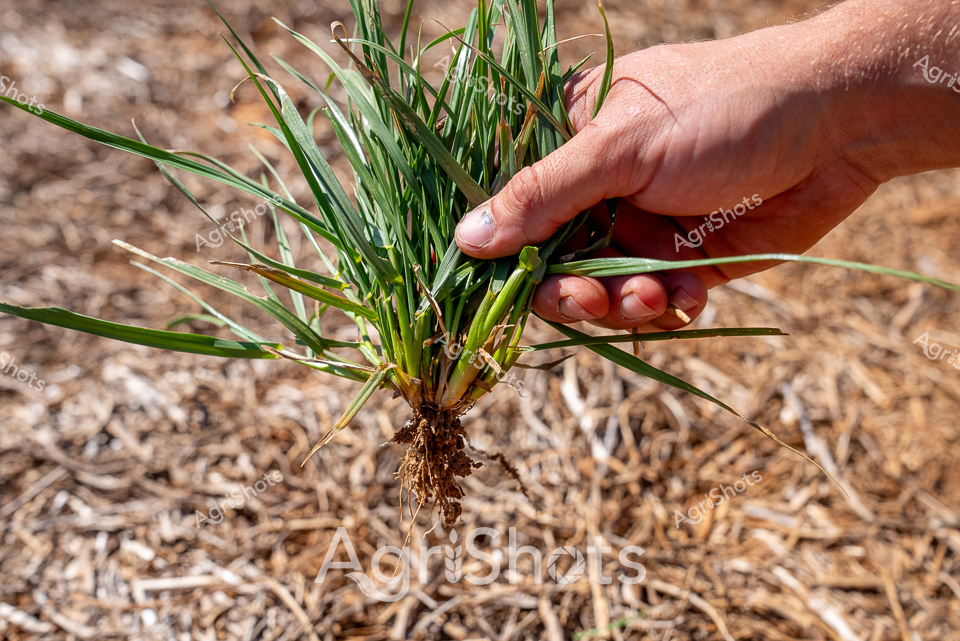
A weathered hand gently cradles a tussock of native grass, revealing the intricate root system against a backdrop of dry, textured stubble. The vibrant green blades contrast sharply with the parched earth, capturing the harsh resilience of agricultural landscapes in the Riverina region of New South Wales. This close-up reveals the delicate ecosystem of a paddock during the challenging transition between summer and autumn, where every plant tells a story of survival. The slender grass - potentially a ryegrass or hairy panic variety - demonstrates the complex relationship between farmers and unwanted vegetation. Roots exposed, the plant becomes a living specimen of the ongoing battle with weeds and managing ground cover in drought-affected regions. The intimate framing emphasizes the tactile connection between human intervention and natural growth, with each weathered finger telling its own story of agricultural expertise. The muted browns and rich earth tones speak to the cyclical nature of farming, where seemingly insignificant plants can dramatically impact crop health and soil management. This image captures a moment of careful assessment, a testament to the nuanced knowledge required in Australian agricultural practice.
 Image
Image
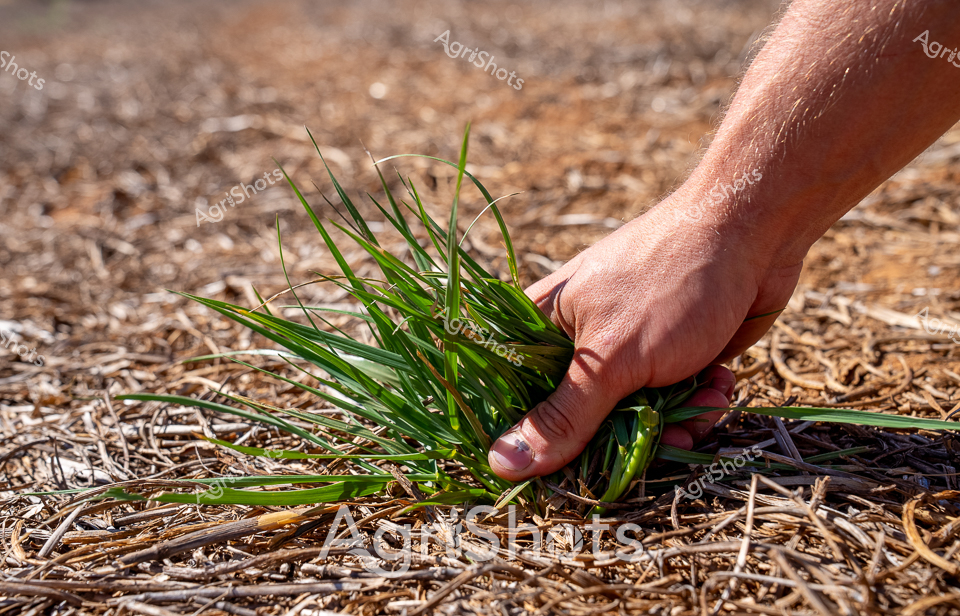
A weathered hand grasps a clump of vibrant green ryegrass, its slender blades contrasting sharply against the dry, golden stubble of a harvested paddock in the Riverina region of New South Wales. The close-up reveals the intricate texture of the weed, its bright green shoots standing defiantly amid the brown, cracked earth typical of an Australian summer or early autumn landscape. Fingers curl around the invasive plant, showcasing the constant battle farmers face with persistent vegetation like Hairy Panic and ryegrass that threaten crop productivity. The ground tells a story of resilience - scattered straw and dried plant matter speak to recent harvesting and the challenging agricultural conditions of the region. Sunlight casts a warm, harsh glow across the landscape, highlighting the textural contrast between the lush green grass and the parched, weathered ground beneath. This intimate moment captures the daily struggle of agricultural management, where every handful of vegetation represents a critical decision in crop maintenance and land stewardship.
 Image
Image
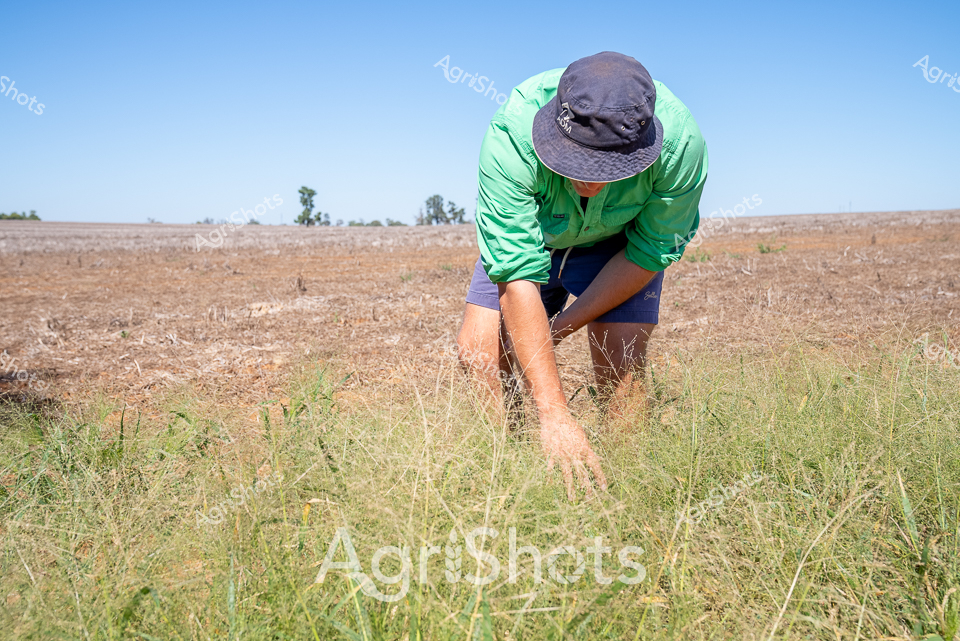
Sunlight blazes across the parched Riverina landscape as an agricultural worker bends intently in a field of scattered grasses and dry stubble. Wearing a bright green long-sleeved shirt and a dark protective sun hat, the worker carefully examines the ground, reaching down among the sparse vegetation with a focused gesture. The surrounding terrain tells a story of challenging growing conditions - a mix of yellowed grasses, bare earth, and scattered sparse vegetation stretching toward a distant treeline under an expansive blue sky. This image captures the meticulous work of crop management, potentially investigating the invasive "hairy panic" grass that can challenge agricultural productivity in drought-affected regions of New South Wales. The worker's bent posture speaks to the demanding, hands-on nature of agricultural work, where every patch of ground requires careful assessment and intervention. The stark landscape and the worker's concentrated action embody the resilience and detailed attention required in Australian dryland farming.