About this image
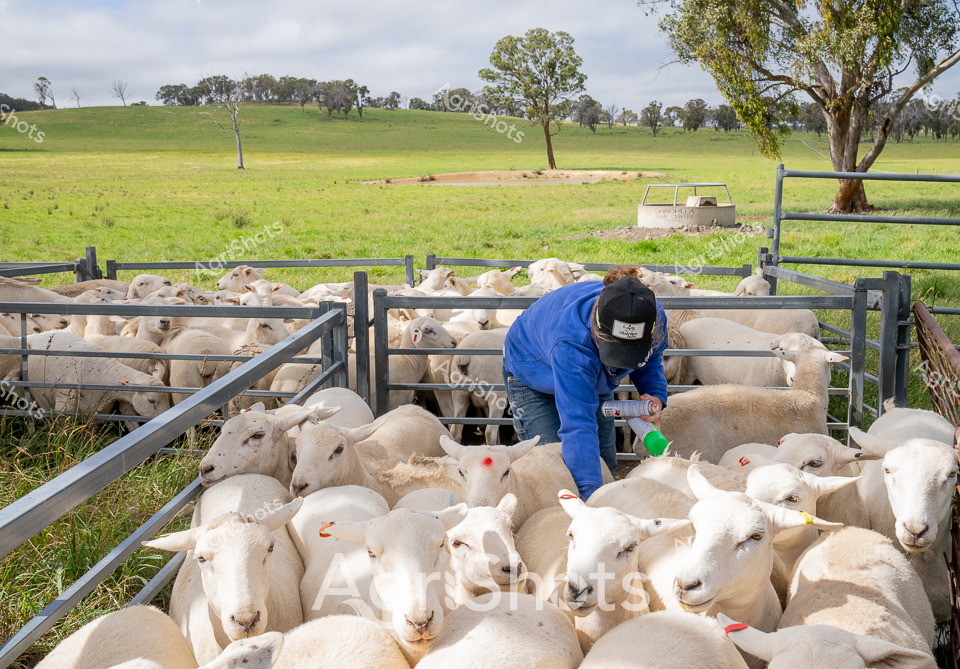
In the rolling green pastures of New South Wales's New England region, a skilled farmworker tends to a mob of pristine white ewes during the late summer season. Dressed in a vivid blue jacket and black cap, the agricultural worker carefully administers vaccinations or treatments to the densely packed flock within sturdy metal sheep yards. The lush green paddock stretches out behind, dotted with elegant eucalyptus trees standing sentinel against a soft, cloudy sky, creating a quintessential Australian rural landscape. Dozens of uniform white sheep crowd together, their woolly bodies pressed close, marked with small colored tags indicating individual identification. The scene captures the meticulous care and precision of modern sheep farming, where each animal receives individual attention to maintain the health and productivity of the flock. This image embodies the quiet dedication of agricultural workers, the beauty of pastoral landscapes, and the importance of livestock management in Australian agriculture.
Similar media
 Image
Image
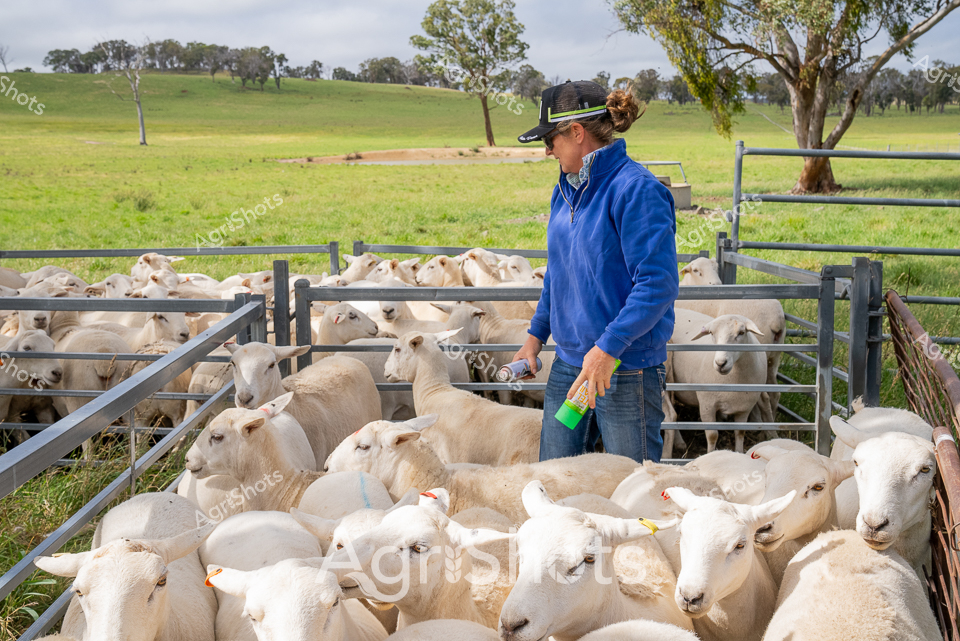
Merino ewes cluster tightly within metal livestock yards, their pristine white fleeces gleaming against the lush green pasture of New England's rolling countryside. A farmer wearing a vibrant blue fleece and agricultural cap stands attentively beside the flock, green marking tool in hand, preparing to identify or manage the animals during a routine husbandry task. The soft autumn light filters through scattered eucalyptus trees, casting gentle shadows across the verdant paddock and highlighting the pastoral tranquility of this New South Wales agricultural scene. These carefully tended sheep represent the backbone of Australian wool production, their precise breeding and meticulous care evident in their uniform appearance and healthy condition. The metal yard gates and surrounding landscape speak to generations of agricultural expertise, where skilled farmers like this woman maintain world-class livestock standards. The image captures a moment of quiet concentration, reflecting the deep connection between farmer, animals, and landscape that defines rural Australian agricultural practice.
 Image
Image
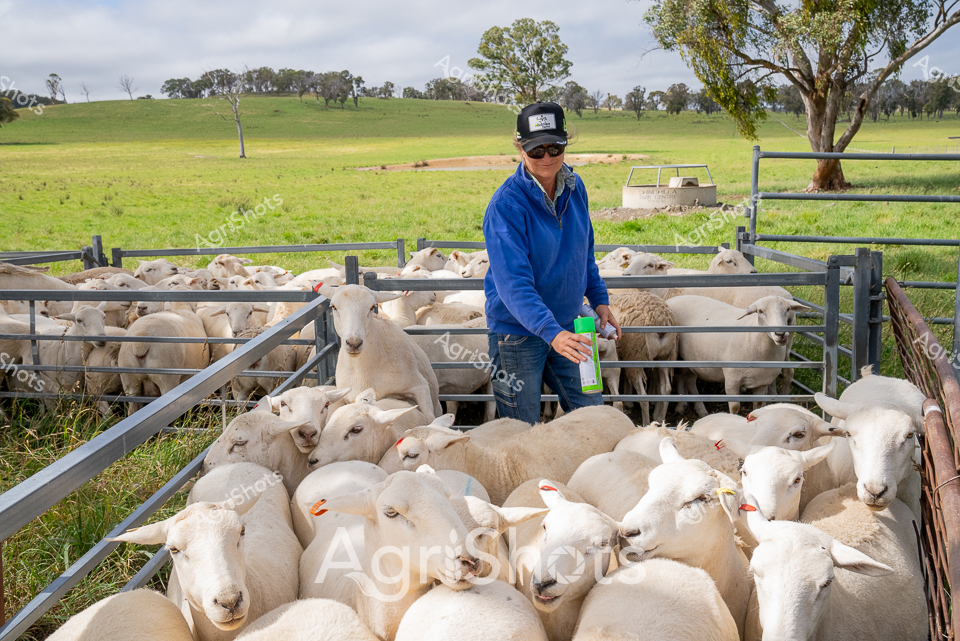
A seasoned farm worker in a vibrant blue jacket and black cap stands amidst a lush green paddock, carefully managing a pen of pristine white Aussie White ewes. The late summer landscape of New South Wales's New England region unfolds behind her, with scattered eucalyptus trees and rolling green pastures creating a quintessential Australian agricultural backdrop. Sheep yards frame the scene, their sturdy metal gates containing a dense cluster of woolly bodies - their clean white fleeces a testament to careful breeding and farm management. The worker holds a green bottle, likely medication or supplement for the flock, moving with practiced ease among the animals. Soft overcast light diffuses across the scene, highlighting the verdant grasslands and the sheep's uniform coloration. This image captures the quiet expertise of women in agriculture, showcasing the careful, methodical work of livestock management in one of Australia's most productive sheep-farming regions.
 Image
Image
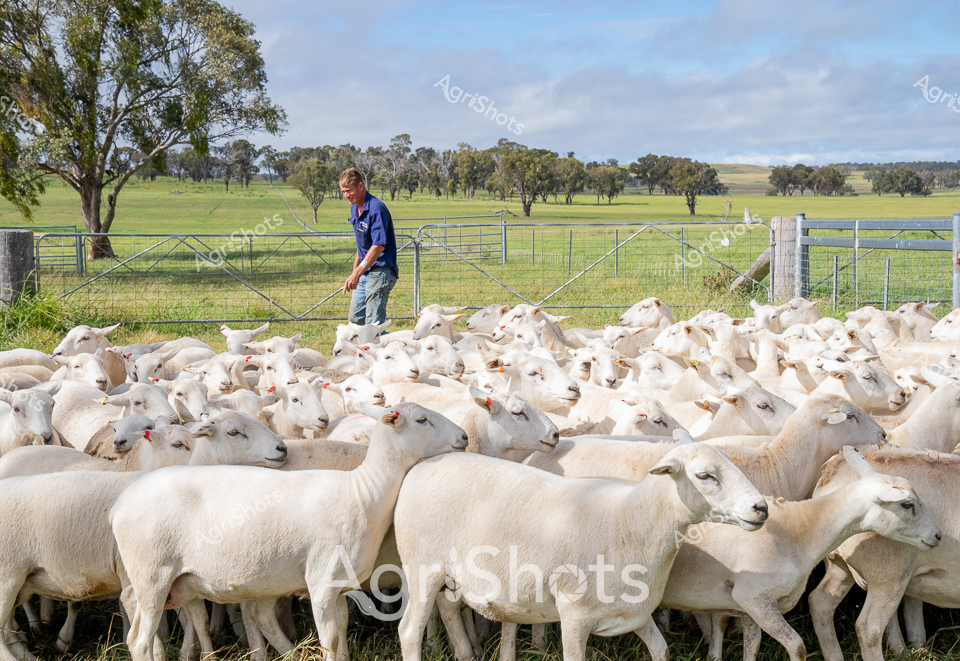
A seasoned farmer stands amid a pristine flock of white Dorper ewes in a lush New England pasture of New South Wales. Brilliant green grasslands stretch toward scattered eucalyptus trees under a softly clouded late summer or early autumn sky, creating a quintessential Australian agricultural landscape. The uniformly white sheep, with their distinctive smooth coats and red ear tags, cluster closely around the farmer dressed in a blue polo shirt and work jeans, representing the precision and care of modern sheep breeding. Each animal appears healthy and well-maintained, their clean fleeces reflecting the high-quality livestock management typical of this region's agricultural practices. The meticulously constructed rural fence line and carefully tended paddock underscore the professional approach to farming in this productive New South Wales district. This image captures the serene yet industrious spirit of Australian pastoral agriculture, where generations of expertise converge with contemporary farming techniques to produce world-class livestock.
 Image
Image
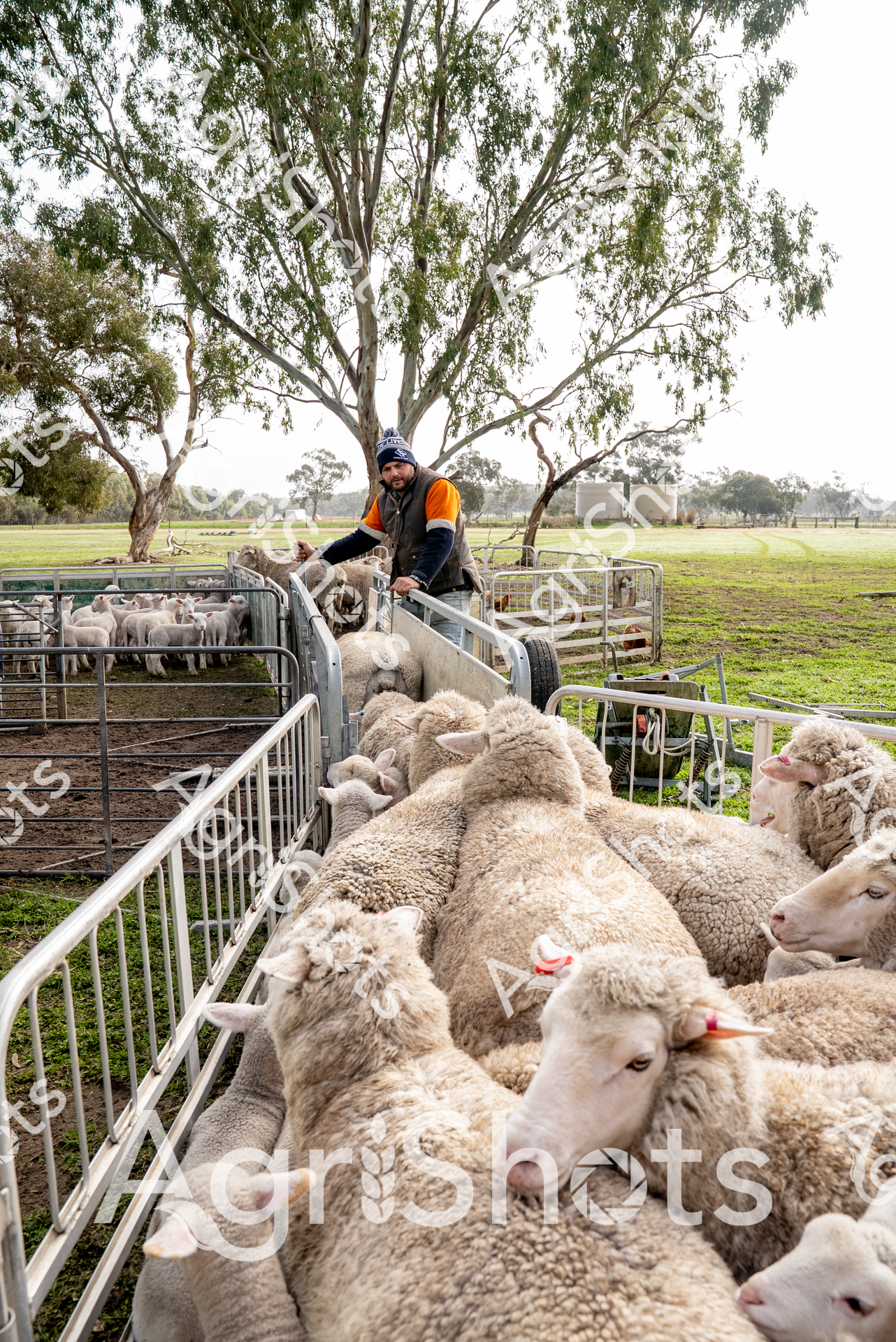
Merino ewes crowd a mobile livestock handler during a winter morning's lamb marking in South Australia's southeast. A farm worker in a high-visibility orange and dark jacket stands atop the galvanized steel drafting gates, carefully managing the woolly flock against a backdrop of classic eucalyptus trees and expansive pastureland. The scene captures the rhythm of agricultural life during a "green drought" - where grasslands appear lush but water resources remain scarce. Soft white and cream-colored sheep press together, their dense fleeces suggesting robust Merino genetics bred for harsh Australian conditions. Red ear tags punctuate the woolly masses, marking each animal for identification and management. The landscape speaks of resilience - scattered gum trees standing sentinel over carefully tended livestock, representing generations of agricultural expertise in navigating challenging environmental conditions.
 Image
Image
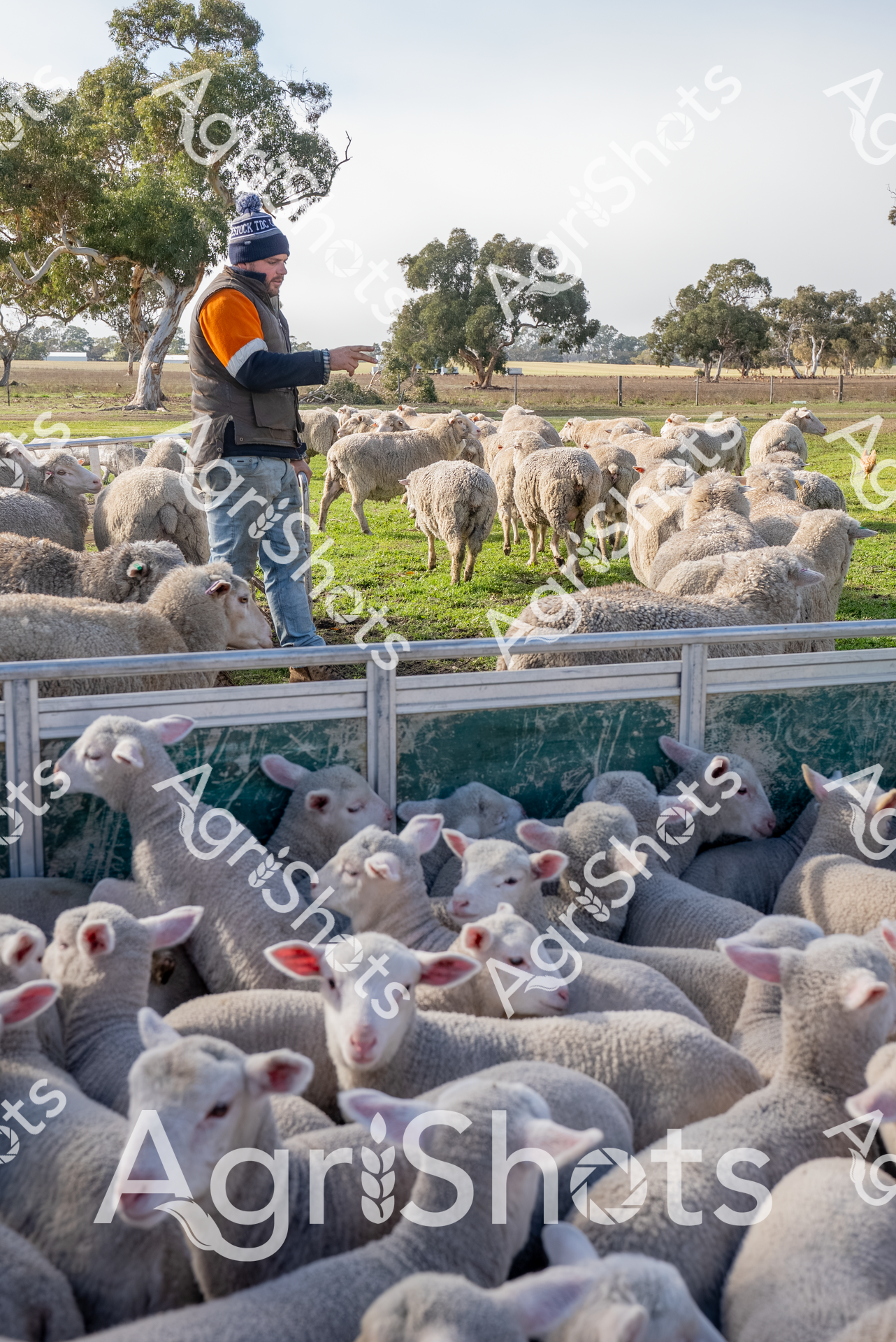
Rugged pastoral winter unfolds across South Australia's southeast region, where a seasoned stock manager manages a flock of pristine merino lambs. Bundled in a high-visibility orange vest, navy beanie, and layered clothing, the farmer stands amid a sea of woolly bodies, carefully counting and monitoring the young stock. The pasture reveals a "green drought" phenomenon - lush grass belying the underlying water scarcity, with scattered eucalyptus trees casting long shadows across the undulating landscape. Hundreds of pure white lambs cluster in the foreground, their soft fleeces and pink ears creating a textural contrast against the weathered livestock yards and verdant paddock. Each lamb represents potential, their uniform appearance a testament to careful breeding and agricultural management. This scene captures the nuanced art of sheep farming - a delicate balance of human expertise, animal husbandry, and environmental adaptation that defines Australian agricultural resilience.
 Image
Image
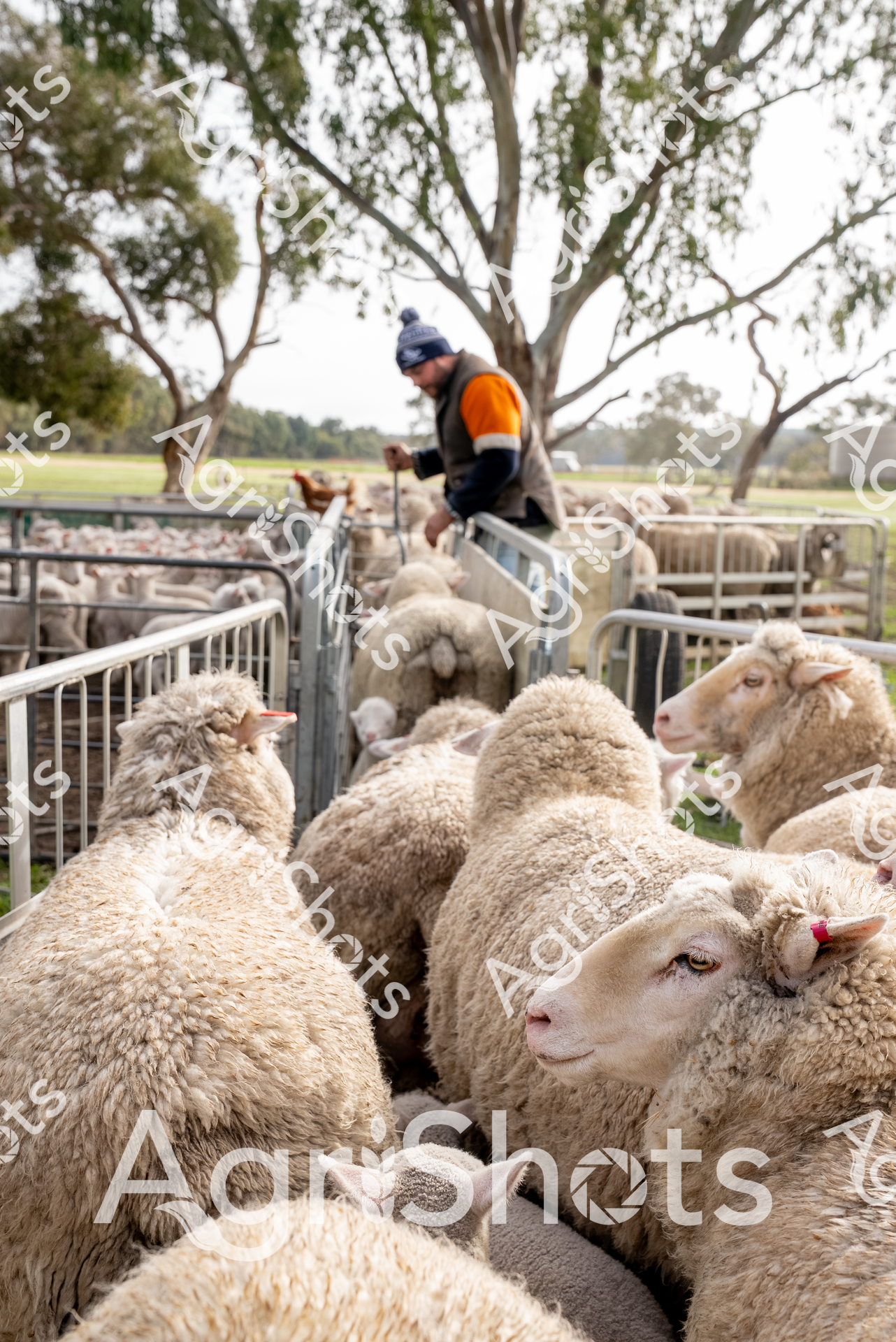
Merino ewes cluster tightly in metal livestock yards during a green drought, their dense, creamy fleeces creating a textural landscape of woolly forms. A farm worker in a high-visibility orange and navy jacket stands amid the flock, carefully managing the sheep during routine husbandry activities. The surrounding landscape reveals scattered eucalyptus trees and soft winter light filtering through a muted, overcast South Australian morning, characteristic of the region's southeast. Ear tags and the orderly metal yard infrastructure signal professional livestock management, while the close-packed animals suggest careful stock handling techniques. The scene captures the quiet intensity of agricultural work - a moment of controlled precision amidst the natural rhythms of livestock farming. Each sheep displays the robust characteristics of well-managed Merino breeding stock, their substantial bodies testament to careful genetic selection and pastoral care.
 Image
Image
Merino ewes huddle tightly in metal yard gates under the soft winter light of South Australia's southeast region, awaiting livestock management. A skilled farm worker stands strategically among the woolly flock, wearing a navy beanie and high-visibility orange vest - standard attire for critical seasonal tasks like lamb marking. The expansive paddock backdrop reveals scattered eucalyptus trees and distant farm infrastructure, capturing the quintessential Australian agricultural landscape during a "green drought" period where pastures retain some moisture but stock management remains challenging. These dense-fleeced Merino sheep demonstrate the robust genetics central to Australia's sheep industry, their thick winter wool showing variations of cream and light grey against the muted green landscape. The scene represents a precise moment of agricultural practice - careful animal husbandry that balances economic necessity with animal welfare, showcasing the intricate relationship between farmer and flock that has defined rural Australian communities for generations.
 Image
Image
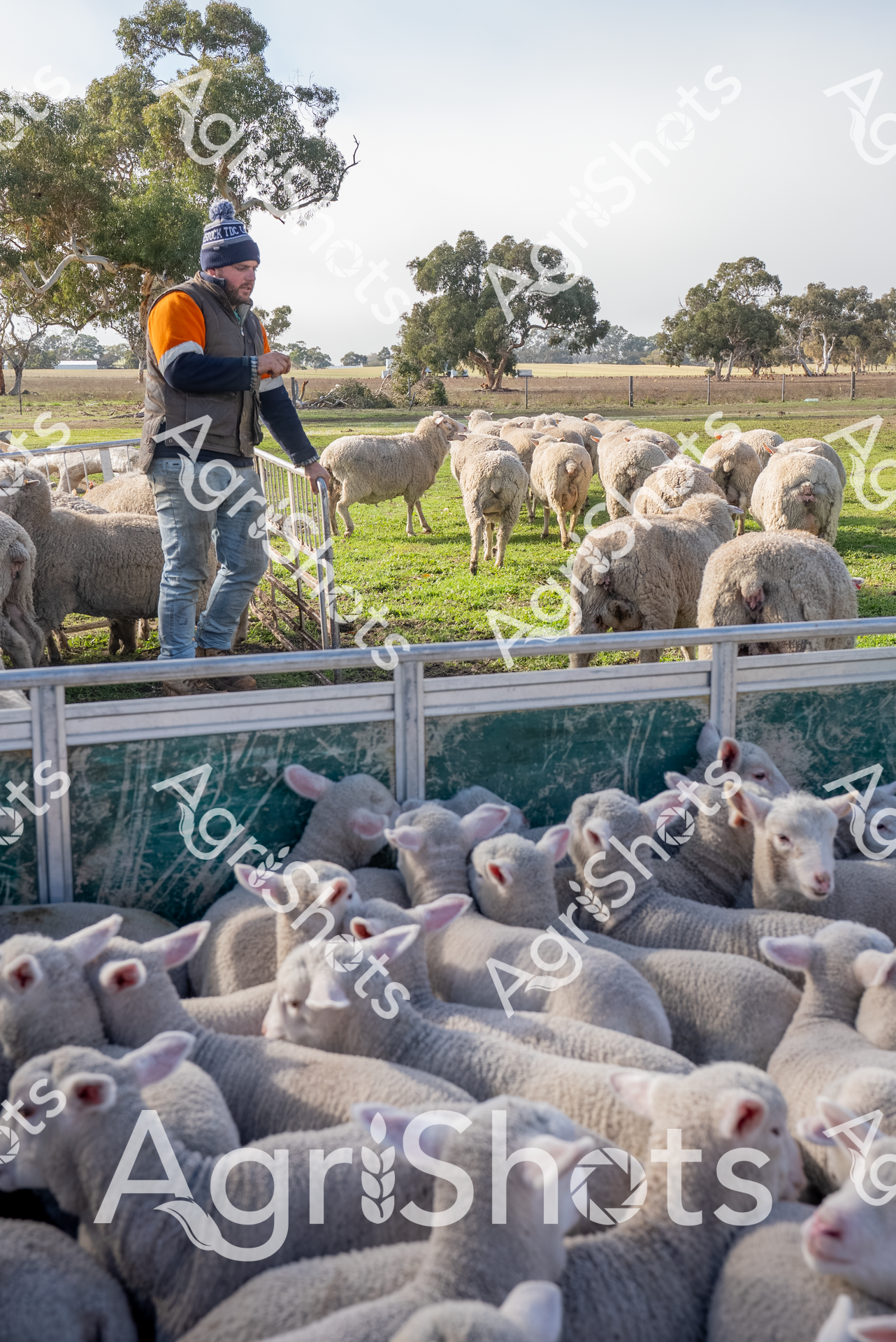
A seasoned sheep farmer stands amid a verdant pasture, surrounded by a flock of robust merino ewes and their young lambs during the winter season in South Australia's southeast region. Dressed in a vibrant orange and navy safety vest and a warm knitted beanie, the farmer carefully monitors the livestock from behind a metal gate, his stance reflecting years of agricultural experience. The landscape reveals a classic Australian rural setting, with scattered eucalyptus trees dotting the horizon and a lush green paddock providing nourishing feed during what appears to be a "green drought" - a period of seemingly adequate ground cover but limited agricultural productivity. In the foreground, a cluster of young lambs huddles together in a holding pen, their soft white fleeces and pink ears creating a stark contrast against the metal fencing. The older ewes graze methodically on the pasture, their thick woolly coats testament to the breed's resilience in challenging environmental conditions. This scene captures the intricate process of lamb marking and inventory management, a critical task in the sheep farming calendar that involves tracking and caring for the next generation of the flock.