About this image
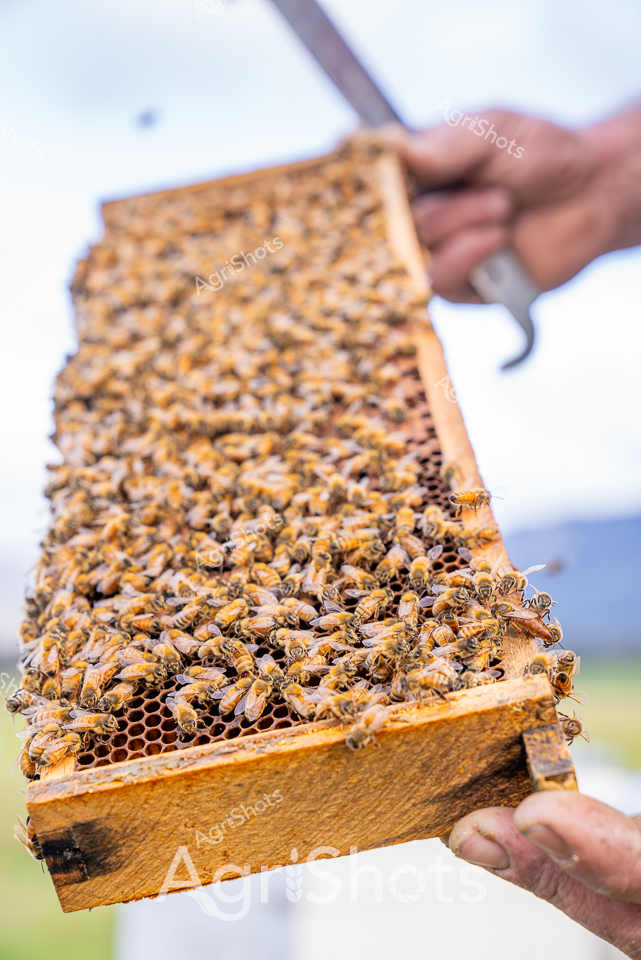
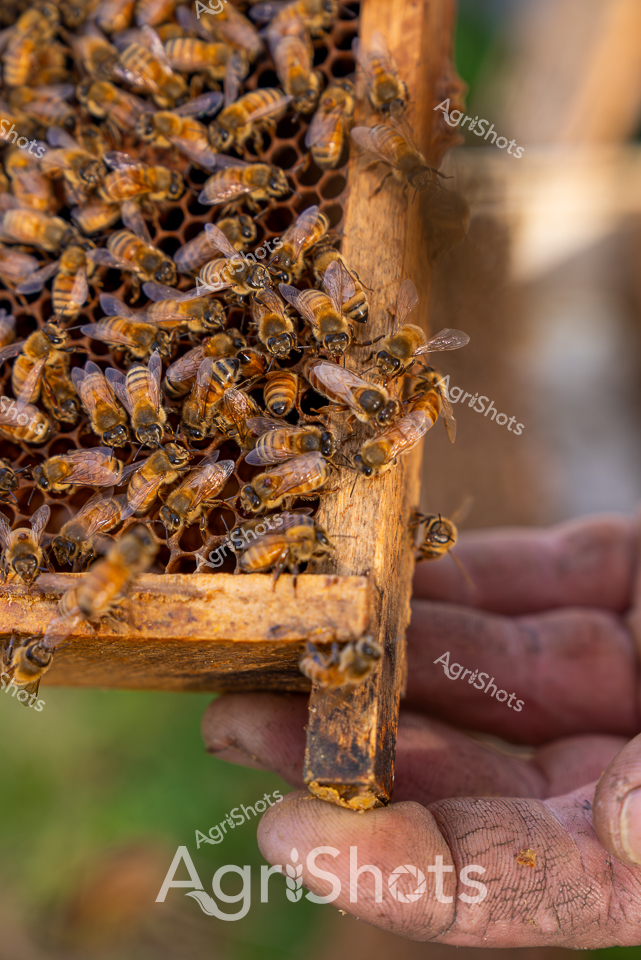
Honeycomb laden with thousands of industrious worker bees blankets a wooden hive frame, held carefully by weathered hands against a soft Tasmanian winter landscape. Golden-amber bees cluster densely across the intricate hexagonal wax cells, their collective movement creating a living, breathing texture of agricultural productivity. Delicate antennae and tiny legs interweave across the honeycomb, revealing the complex social structure of this thriving bee colony. Soft blue-grey mountains blur in the background, suggesting a pristine rural setting typical of Tasmania's agricultural regions. The hands gripping the frame demonstrate the careful, practiced touch of an experienced apiarist, highlighting the intimate relationship between humans and these critical pollinators. This intimate portrait captures the precise moment of hive inspection, showcasing the meticulous craft of beekeeping and the remarkable organization of a healthy bee population.
Similar media
 Image
Image
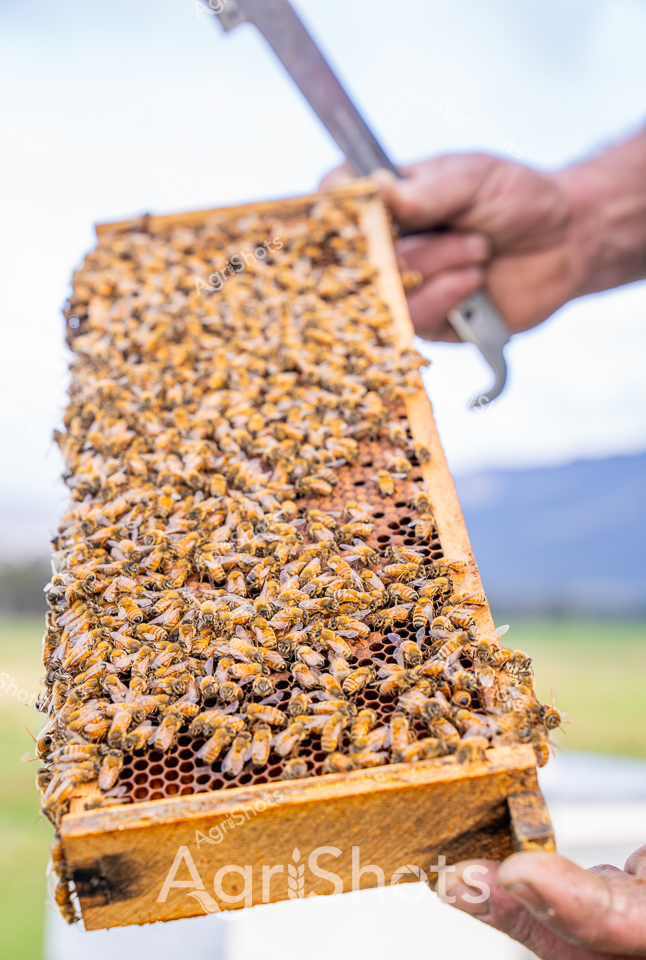
A dense colony of honeybees blankets a wooden hive frame, their golden-amber bodies clustered tightly across the honeycomb's intricate hexagonal structure. Weathered hands gently hold the frame, silhouetted against a soft, misty Tasmanian landscape of distant mountain ranges and muted green pastures. The bees appear industrious and healthy, their collective movement creating a living tapestry of pollinators vital to agricultural ecosystems. Soft winter light illuminates the frame, highlighting the rich amber and brown tones of the bees and the raw wooden hive, suggesting this is a carefully managed apiary during the cooler seasonal months. Each bee seems precisely positioned, reflecting the complex social organization of the hive and the meticulous care of the beekeeper. The image captures the delicate balance of agricultural stewardship - a quiet moment of interaction between human hands and the remarkable insect workforce that supports broader agricultural productivity.
 Image
Image
A bustling apiary scene captures hundreds of bees swarming across wooden hive frames during spring pollination season in Tasmania's Upper Mersey Valley Region. White smoke drifts through the active bee colony as the insects move energetically across the honey-laden hive structures. The wooden bee hives reveal the intricate workings of a productive apiary, with bees clustered densely on multiple frames. This dynamic spring activity showcases the essential role of bees in Tasmania's agricultural pollination cycle.
 Image
Image
A close-up view of a bustling bee hive reveals hundreds of honey bees clustered densely across the hexagonal honeycomb structure in Tasmania's Upper Mersey Valley Region. A beekeeper's finger gently points into the frame, demonstrating hands-on apiary management during the active spring pollination season. The golden-brown bees move purposefully across their wax cells, some with heads deep in the comb tending to brood or honey stores, while others patrol the surface in the organized chaos typical of a thriving hive. This intimate perspective captures the intricate world of bee hives and the vital role these industrious insects play in agricultural pollination throughout the Tasmanian landscape.
 Image
Image
A beekeeper's gloved hand carefully examines a thriving honeycomb frame teeming with busy bees during spring in Tasmania's Upper Mersey Valley Region. The active hive displays hundreds of worker bees clustered across the golden honeycomb cells, showcasing the vital pollination work occurring within this well-maintained apiary. The close-up perspective captures the intricate detail of the bees' natural behavior as they tend to their honey production and hive maintenance activities.
 Image
Image
A dense, golden carpet of honeybees blankets a wooden honeycomb frame, their amber-hued bodies teeming across the hexagonal wax cells in a mesmerizing display of collective industry. Each bee moves with purposeful precision, their translucent wings catching the light and creating a shimmering texture across the hive surface. The close-up perspective reveals the intricate social structure of this bee colony, where thousands of individuals work in perfect synchronization to sustain their community. Captured during the cooler Tasmanian winter months, this image speaks to the resilience of these remarkable pollinators, who maintain their complex social networks even during the most challenging seasonal conditions. The rich amber and brown tones of the bees contrast beautifully with the warm wooden tones of the hive frame, creating a visual symphony that celebrates the essential role of bees in agricultural ecosystems. This photograph represents the delicate balance of agricultural life, where tiny creatures play an enormous role in sustaining broader ecological and food production systems.
 Image
Image
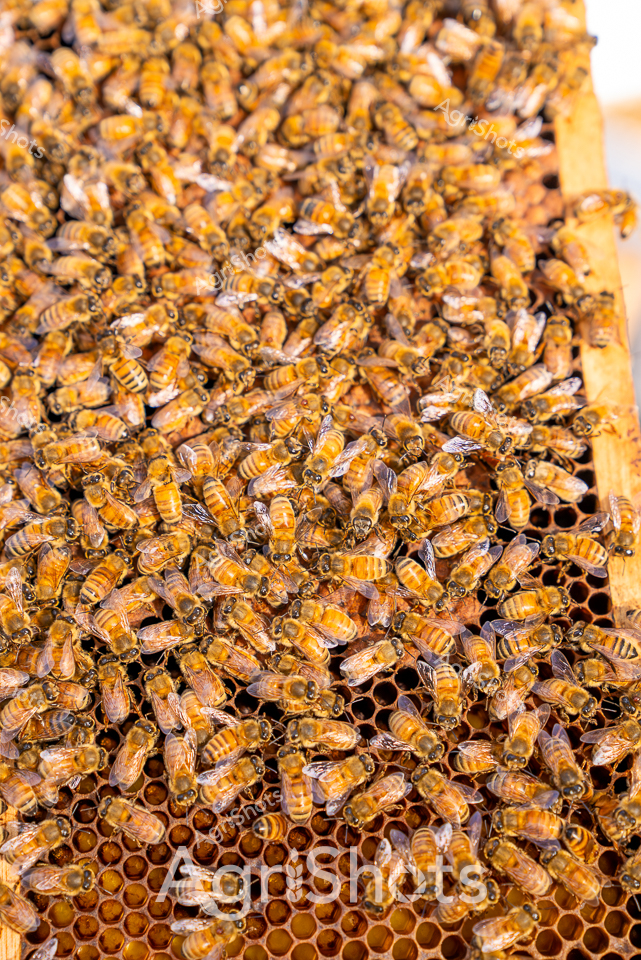
Honeybees cluster densely across golden hexagonal honeycomb cells, their amber-toned bodies creating a living tapestry of agricultural productivity. Captured in intimate detail, this close-up reveals the intricate world of a thriving apiary, likely situated in Tasmania's rich agricultural landscape during the cooler winter months. Each bee moves with purpose, their translucent wings catching the light as they navigate the precisely constructed wax structure, representing the remarkable organizational complexity of a honey bee colony. The rich amber and brown tones of the bees contrast beautifully with the warm golden hexagons of the honeycomb, creating a mesmerizing pattern of natural geometry and collective labor. This image celebrates the critical role of pollinators in agricultural ecosystems, showcasing the meticulous work of beekeepers who maintain these delicate and essential insect communities. The tight clustering of bees suggests a strategic response to winter conditions, huddling together to maintain the hive's core temperature and protect their queen.
 Image
Image
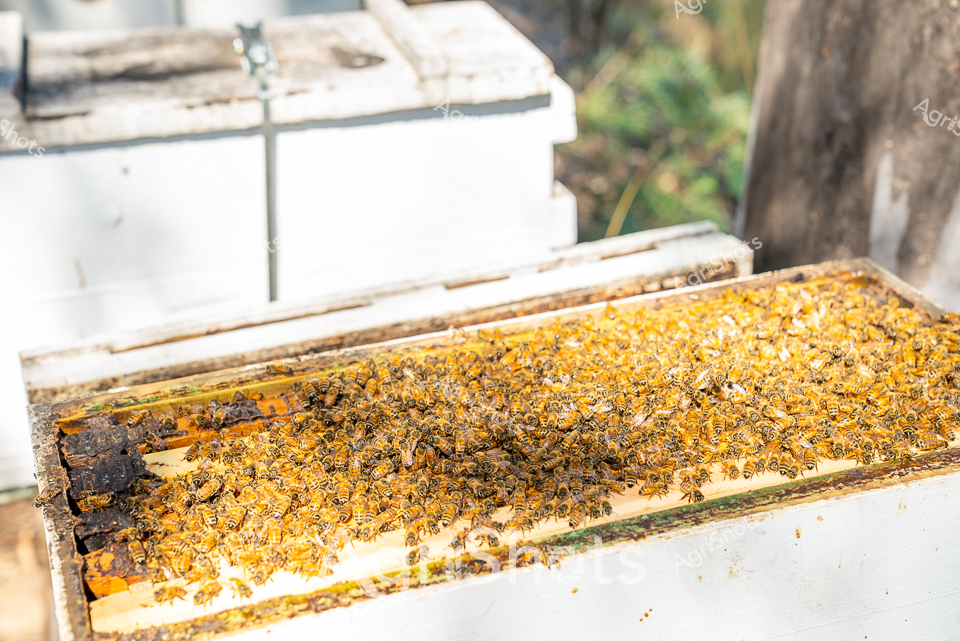
Honey-golden worker bees swarm densely across the wooden hive frame, their collective movement creating a living, breathing carpet of industrious insects. Nestled in the lush green backdrop of Queensland's Lockyer Valley, this apiary scene captures the vibrant energy of spring beekeeping. Stark white hive boxes stand sentinel in the background, providing a clean contrast to the rich amber and brown tones of the bee-covered frame. Soft natural light illuminates the intricate textures of the wooden hive, highlighting the bees' precise hexagonal workspaces and the glistening surfaces of honey-in-progress. The dense cluster of bees suggests a healthy, active colony at the peak of seasonal productivity, with hundreds of individuals moving in synchronized purpose. This image embodies the delicate symbiosis of agricultural stewardship - a testament to the careful management and respectful cultivation of these essential pollinators in the rich agricultural landscape of rural Queensland.
 Image
Image
Honeybees cluster densely across a weathered wooden hive frame, their golden-amber bodies shimmering with intricate detail against the soft-focused background. Calloused, work-worn fingers carefully support the frame, revealing the delicate ecosystem of a thriving apiary during the quiet Tasmanian winter months. Each bee moves with purposeful precision, their collective energy transforming the wooden structure into a living, breathing organism of complex social interaction. The rich amber and brown tones of the bees contrast beautifully with the aged timber, telling a story of agricultural craftsmanship and the symbiotic relationship between beekeeper and colony. Soft winter light gently illuminates the scene, highlighting the hexagonal wax cells and the countless tiny creatures moving in synchronized harmony. This intimate portrait captures the resilience and beauty of apiculture in Tasmania, where beekeeping represents not just a livelihood, but a profound connection to the natural world.